Citânia De Briteiros From Braga: Portugal's Great Castro Hillfort Day Trip
Citânia de Briteiros is an Iron Age hillfort in the hills between Braga and Guimarães, one of the most important castro culture sites in Portugal. Here is what the ticket costs, when it opens and how to plan the day trip from Braga.
Short answer
Citânia de Briteiros costs about 5 EUR for a normal ticket, 2.50 EUR reduced, and the ticket includes the Museu da Cultura Castreja. It is open daily 09:30 to 12:30 and 14:00 to 18:00 from 27 March to 31 October, and Tuesday to Sunday 09:30 to 12:30 and 14:00 to 17:00 in winter. Most visitors reach it by car from Braga or Guimarães.
Braga, the city in Portugal's Minho region, sits surrounded by hillfort country. Long before the Roman city of Bracara Augusta grew on the valley floor, the people of the castro culture built their settlements on fortified hilltops across the region, and the greatest of the survivors is Citânia de Briteiros, a walled hilltop town of stone houses and paved lanes in the hills between Braga and Guimarães. It is one of the most striking archaeological sites in northern Portugal, and it makes an unusual, rewarding day trip from Braga for anyone who has had their fill of Baroque churches and wants to see how people lived here two thousand years ago. This guide from Braga Travel Guide covers the verified ticket prices, the seasonal opening hours, how to get there and how to fit it into a day in the Minho.
What Is Citânia De Briteiros?
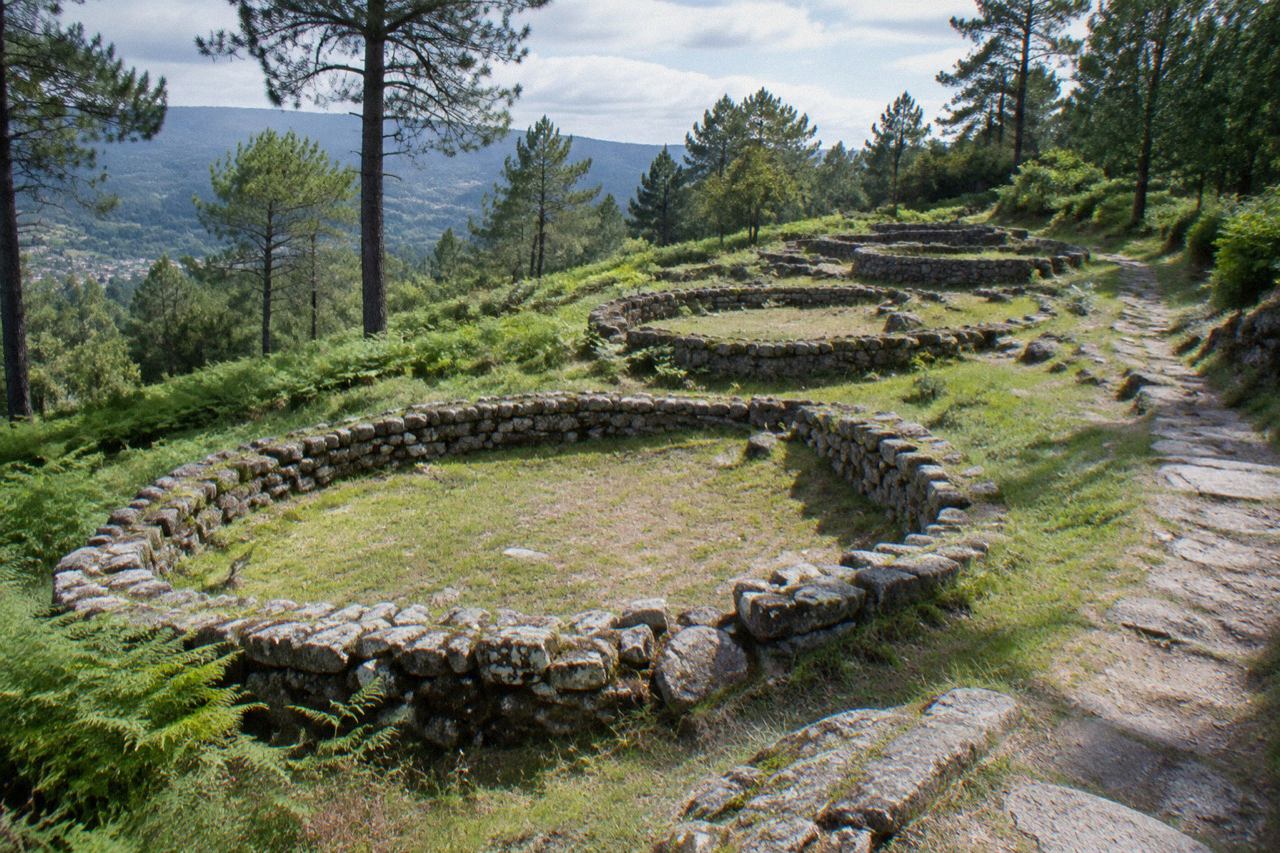
Citânia de Briteiros is a fortified hilltop settlement of the Iron Age castro culture, later partly rebuilt under Roman influence, where the stone footings of round and rectangular houses, paved streets and defensive walls are visible today. It sits on a hill in the hills between Braga and Guimarães, and a normal ticket costs about 5 EUR, reduced 2.50 EUR, including entry to the Museu da Cultura Castreja.
The word "citânia" itself tells you what kind of place this is: a large, densely built hillfort settlement, of which several are scattered across the Minho and the neighbouring regions. Briteiros is the best known of them. The site was excavated over a long campaign of archaeological work, and the excavation is inseparable from the name of Francisco Martins Sarmento, the Guimarães scholar whose society still runs the site and the museum today. What the excavators uncovered was a whole town: family compounds with round houses, later some rectangular Roman-style buildings, a network of paved and guttered streets, and two defensive wall circuits around the summit.
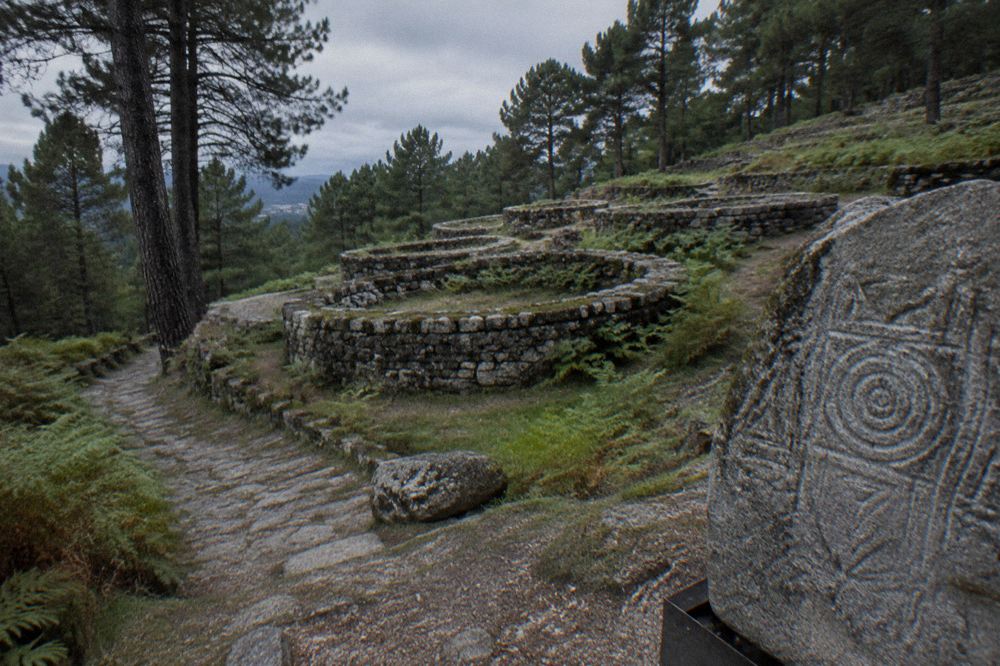
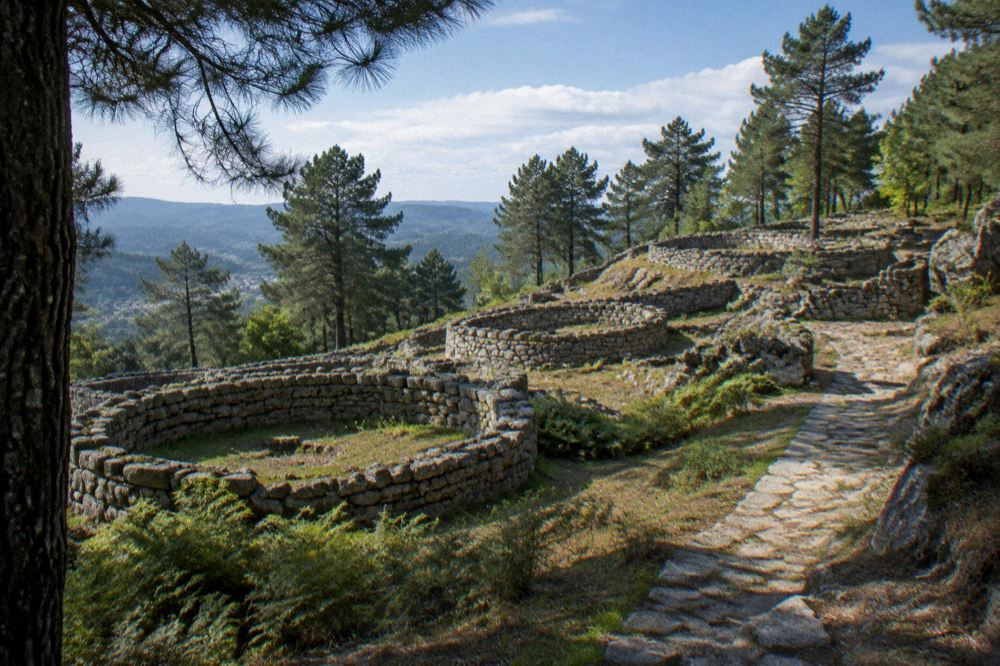
Walking it now, you read the site through its stones. The round house footings are the castro signature; the rectangular ones show the settlement living on into the Roman period and changing its architecture under Roman influence. The paved main street, with its drainage gutters, is one of the features visitors remember most, because it makes the place feel engineered rather than improvised. The site is open ground, grass and granite, with views over the Ave valley, and the museum at the entrance holds the artefacts: ceramics, tools, jewellery and the famous carved stone figures from the castro world.
For a sense of the deep time of the region, pair the citânia with Braga's own archaeology. The Museu de Arqueologia D. Diogo de Sousa in the city centre, covered at Braga's archaeology museum, displays the Roman and pre-Roman material from Bracara Augusta and its surroundings, and the Roman baths on the Alto da Cividade site belong to the same story of the valley floor taking over from the hills.
How Much Do Citânia De Briteiros Tickets Cost?
A normal ticket to Citânia de Briteiros costs about 5 EUR, and a reduced ticket costs 2.50 EUR, with the ticket including the Museu da Cultura Castreja in the price. The operator publishes no city-pass or combined regional pass covering the site, so you buy the ticket at the site itself, and there is no separate charge for the museum on top of the admission.
The prices are modest for what you get, because the ticket is really two attractions in one: the hillfort itself, walked in the open air, and the museum, which holds the movable finds and the interpretation. The reduced ticket of 2.50 EUR applies to the usual categories the operator lists; check the ticket office page for the current list before assuming your group qualifies.
| Ticket type | Price | What it covers |
|---|---|---|
| Normal | about 5 EUR | Citânia de Briteiros site and the Museu da Cultura Castreja |
| Reduced | about 2.50 EUR | Same access, for eligible visitors listed by the operator |
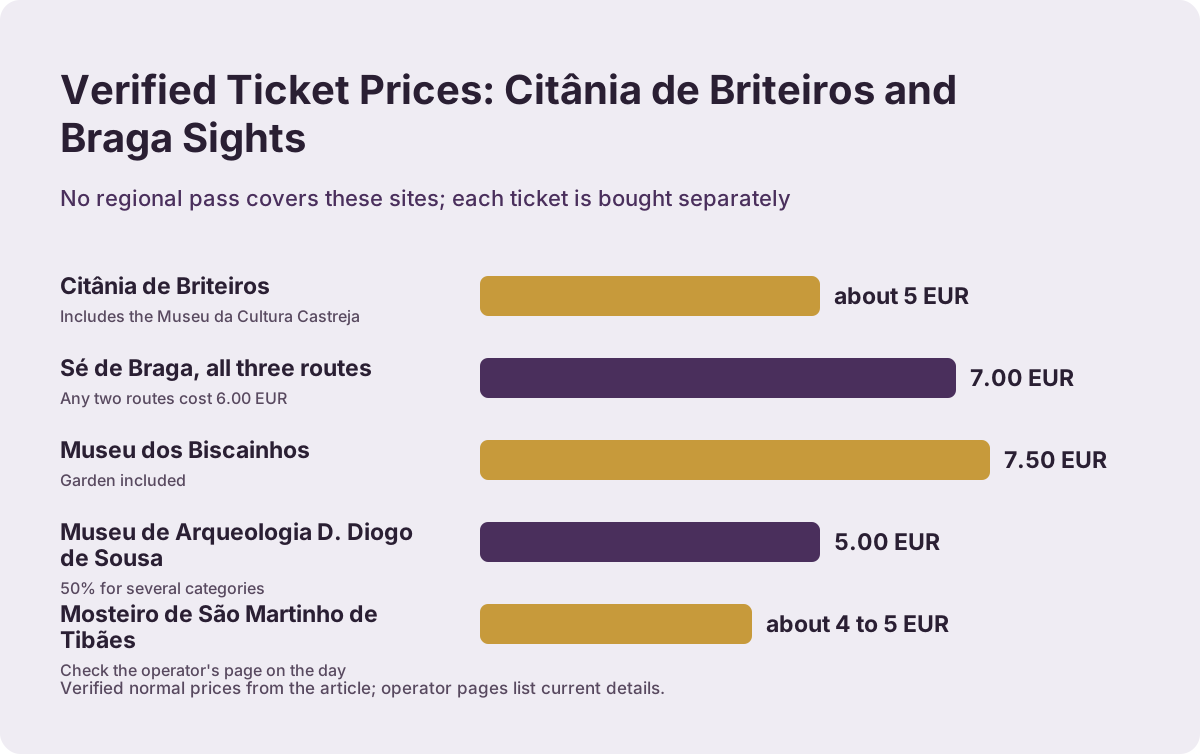
There is a wider point about tickets in this region worth knowing before you plan. No city-wide attraction pass is on sale in Braga, so the idea of buying one card that covers Briteiros, the Sé de Braga and the museums does not exist yet. You buy each ticket separately. For Braga itself, the verified prices are: the cathedral's three visit routes at 3.00 EUR each or 7.00 EUR for all three combined, the Museu dos Biscainhos at 7.50 EUR, the Museu de Arqueologia D. Diogo de Sousa at 5.00 EUR, and the Mosteiro de São Martinho de Tibães at about 4 to 5 EUR.
| Attraction | Verified normal price | Notes |
|---|---|---|
| Citânia de Briteiros | about 5 EUR | Includes the Museu da Cultura Castreja |
| Sé de Braga, all three routes | 7.00 EUR | Any two routes cost 6.00 EUR |
| Museu dos Biscainhos | 7.50 EUR | Garden included |
| Museu de Arqueologia D. Diogo de Sousa | 5.00 EUR | 50% for several categories |
| Mosteiro de São Martinho de Tibães | about 4 to 5 EUR | Check the operator's page on the day |
If you are building a Minho itinerary around archaeology and monasteries, the Tibães monastery makes a natural pairing with Briteiros: both sit in the countryside just outside the cities, and both reward an unhurried visit.
How Do You Get To Citânia De Briteiros From Braga?
There is no verified direct public bus from Braga to Citânia de Briteiros, and no train serves the site, so most visitors arrive by car, by taxi or as part of a guided day trip that crosses the Minho. The hillfort sits in the hills between Braga and Guimarães, which makes it practical to combine with either city, and the site has its own parking at the entrance.
With no direct bus to the hillfort, book a rental car here.
Be careful with transport research here. The verified regional bus lines from Braga bus station, operated by AITC, run to Guimarães, Ponte de Lima, Arcos de Valdevez, Caldas do Gerês, Esposende, Póvoa de Varzim and Famalicão, but no line to the citânia itself is verified, and regional bus fares and journey times are not published in a form this site can confirm. The honest position: if you want to reach Briteiros by public transport, check the current AITC timetables and the site's own information before you travel, because the practical route, if one exists on a given day, will involve getting close on a Guimarães or Caldas das Taipas service and covering the last stretch otherwise. Most visitors do not attempt it.
By car, the site is a straightforward drive from Braga or from Guimarães, both of which are covered in the site's day-trip guides to Guimarães and the wider Minho. The site's car park is at the entrance, so the walk from vehicle to ticket office is short, and the hillfort itself is then explored on foot.
If you would rather not drive in Portugal, the realistic alternative is a guided day trip that covers Braga and Guimarães in one day. The Braga & Guimarães Tour with Bom Jesus & Castle is this site's featured option for the region: it starts from Porto, not Braga, and covers the two cities with transport and a guide included. Check availability if that structure suits your trip.
What Can You Actually See At The Site?
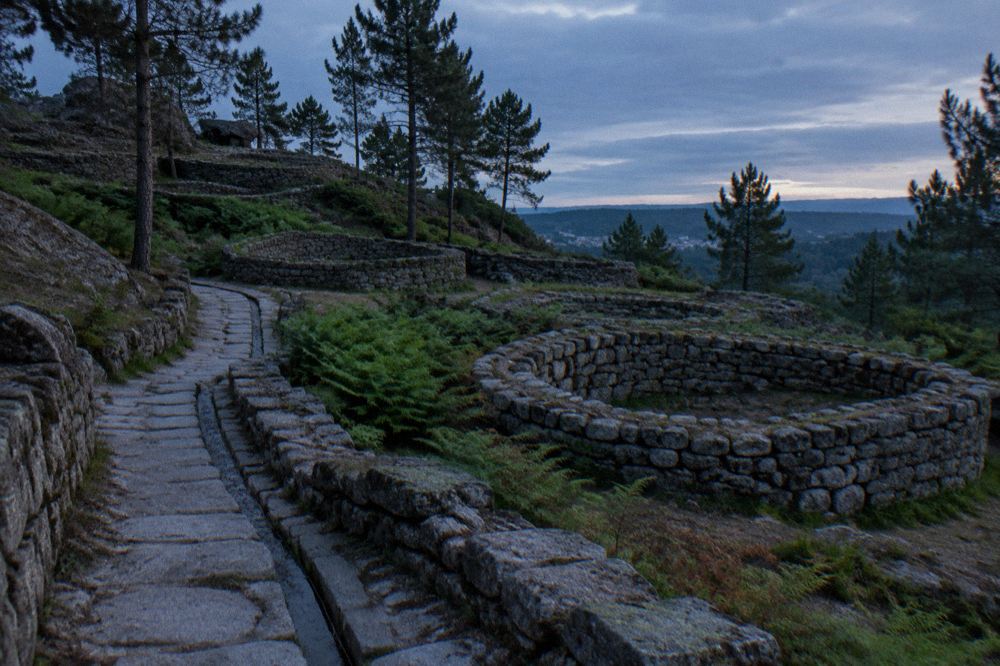
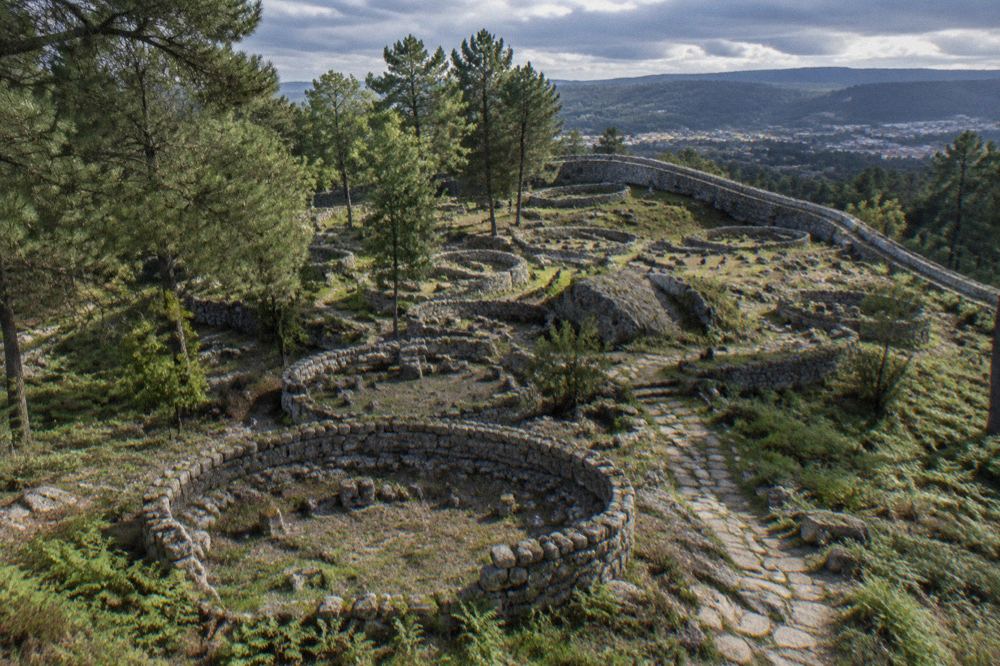
You can see the stone footings of dozens of houses, both round castro-style dwellings and rectangular Roman-period buildings, a paved main street with drainage gutters, the remains of the defensive walls that ringed the summit, and reconstructed house structures that show how the buildings once looked. The whole circuit is walked in the open, on grass and granite, with views over the valley below.
The citânia rewards slow walking. The site is laid out as a town, with family compounds grouped around shared courtyards, and the footings let you read the plan of a pre-Roman settlement in a way that few sites in Portugal allow. The round houses are the classic castro form, with their doorways and interior divisions still traceable in stone. Where the settlement continued into the Roman era, the architecture shifted: rectangular footings appear among the round ones, and you can see the transition in the stonework itself.
The paved street is the highlight for most visitors. It runs up through the settlement with guttered drainage channels alongside, engineered to carry water away from the houses, and it gives the citânia its strange modernity: this was a planned settlement with urban infrastructure, centuries before the valley cities. The defensive walls, in more than one circuit, frame the whole ensemble and explain why the site survived in this condition, protected on its hill.
A few practical notes for the walk itself. The ground is uneven, grassy and rocky in places, so ordinary city shoes are a poor choice. There is little shade on the hilltop, which matters in summer. And the site is at its most photogenic in the low light of morning or late afternoon, when the house footings throw shadows and the granite reads at its best.
What Is The Museu Da Cultura Castreja?
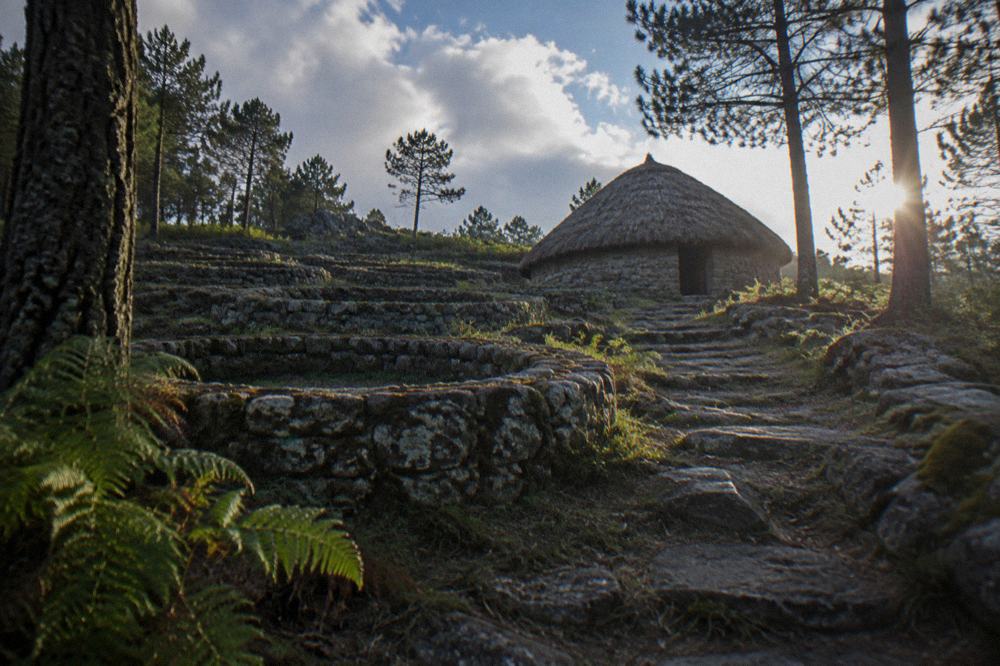
The Museu da Cultura Castreja is the museum attached to the citânia, included in the site ticket, and it holds the artefacts excavated from Briteiros and the wider castro world: ceramics, tools, personal ornaments and the carved stone figures that define the culture's art. It is the place where the stones you have just walked among acquire their objects and their context.
The museum matters because the hillfort itself, for all its atmosphere, is footings and walls: the things people owned, used and buried are in the museum cases. The carved stone figures of the castro culture, with their enigmatic geometric faces, are the signature pieces of this world, and the museum's collection is built around the excavation legacy of Francisco Martins Sarmento and the society that bears his name.
For visitors coming from Braga, the museum also completes a regional picture. The castro world of the hills, the Roman city of Bracara Augusta on the valley floor, and the medieval and Baroque city that followed are three layers of the same place, and the archaeology museum in Braga carries the Roman layer of that story. Seen together, on the same trip or on successive days, the two museums give you the whole sweep of the region's early history.
How Long Does A Visit Take And When Is The Best Time To Go?
A visit to the citânia and museum together typically fills half a day, with the hillfort circuit itself taking a comfortable couple of hours at reading pace, and the museum adding another hour or so. The best months are late spring through early autumn, when the full daily opening hours apply from 27 March to 31 October, and the weather is dry enough to enjoy an exposed hilltop.
The seasonal split in the hours matters more here than at a city museum, because the site is outdoors. In the summer season the citânia opens every day, morning and afternoon; in the winter season, from 1 November to 26 March, it closes on Mondays and the afternoon window ends earlier, at 17:00. Last entry is 30 minutes before closing in both seasons, and the lunchtime closure, 12:30 to 14:00, catches out visitors who arrive at midday expecting continuous opening.
| Season | Dates | Days | Hours | Last entry |
|---|---|---|---|---|
| Summer | 27 March to 31 October | Daily | 09:30 to 12:30 and 14:00 to 18:00 | 30 min before close |
| Winter | 1 November to 26 March | Tuesday to Sunday | 09:30 to 12:30 and 14:00 to 17:00 | 30 min before close |
For weather, the IPMA 1991 to 2020 normals for the Braga / Merelim station give a fair picture of the region's climate, though the hilltop will run a little cooler and windier than the valley station. The wettest months of the year are October, December and January, averaging 197.8 mm, 190.3 mm and 179.5 mm of rain respectively, and rain days of 1 mm or more run 12 to 13 a month from October through January. July and August are the driest and warmest months, with mean maxima of 28.2 and 28.7 C, but they are also the months with the least shade and the most sun exposure on an open hillfort.
| Period | Regional conditions (IPMA normals, Braga / Merelim) | Suitability for the citânia |
|---|---|---|
| May to June | Mean maxima 23 to 26 C, rain 40 to 90 mm | Excellent: warm, mostly dry, green landscape |
| July to August | Mean maxima 28 to 29 C, rain under 35 mm | Very good, but no shade on the hilltop; go early |
| September | Mean max 26.9 C, rain 67.6 mm | Very good, and quieter than August |
| October | Rain 197.8 mm, 12 rain days | Changeable; full daily hours still apply until 31 October |
| November to March | Cooler, wetter, winter hours and Monday closure | Feasible, but pick a dry window and check the day |
The practical sweet spot, combining hours and climate, is May, June or September: full daily opening, moderate temperatures, and landscape at its best. Whatever the month, check the operator's notice before you go, because a hillfort site can close its outdoor circuit in bad weather.
Can You Combine Citânia De Briteiros With Guimarães Or Braga In One Day?
Yes, combining the citânia with Guimarães or with Braga in one day is the standard way to visit it, because the site sits between the two cities and a half-day at the hillfort leaves the other half for one city. The most common pairing is Briteiros with Guimarães, since both lie on the same eastern side of the region, but Braga plus the citânia works just as well with a car.
Guimarães is the natural partner. The city is known as the medieval cradle of Portugal, with its castle and ducal palace and a historic centre of granite, and the citânia adds the prehistoric layer that the castle town cannot: between them you cover two thousand years of the region's story in a single day. The Guimarães day-trip guide covers the city side of that plan, and there is no direct train from Braga to Guimarães, so the pairing is done by car or on a guided tour.
The Braga pairing works the other way around: start in the city with the Sé de Braga and the historic centre, then head out to the hillfort in the afternoon, or reverse it to catch the citânia in the cooler morning. Braga's own layers, from the castle keep to the Baroque Santa Bárbara Garden, sit on the same deep history the citânia represents.
If you would rather have the whole day arranged for you, the guided options that cover this country are the From Porto day trips. The Braga & Guimarães Tour with Bom Jesus & Castle runs nine hours from Porto with both cities and the Bom Jesus sanctuary on the route. Travellers who want a smaller group and a historical focus can also look at the Authentic Braga & Guimarães Small Historical Group Tour, an eight-hour From Porto trip with lunch and green wine included.
Both of these start in Porto, so they suit travellers sleeping there rather than in Braga; if you are based in Braga, the citânia is the part of the region you reach yourself, by car or taxi, and the guided tours are the fallback for the two cities.
For a longer Minho loop, the citânia slots into an itinerary that takes in Ponte de Lima and the Lima valley, or Viana do Castelo on the coast, though those are fuller days with more driving. The pilgrim route covered in the Camino from Braga guide also crosses this hillfort country on its way toward Santiago.
What Should You Bring And Know Before You Go?
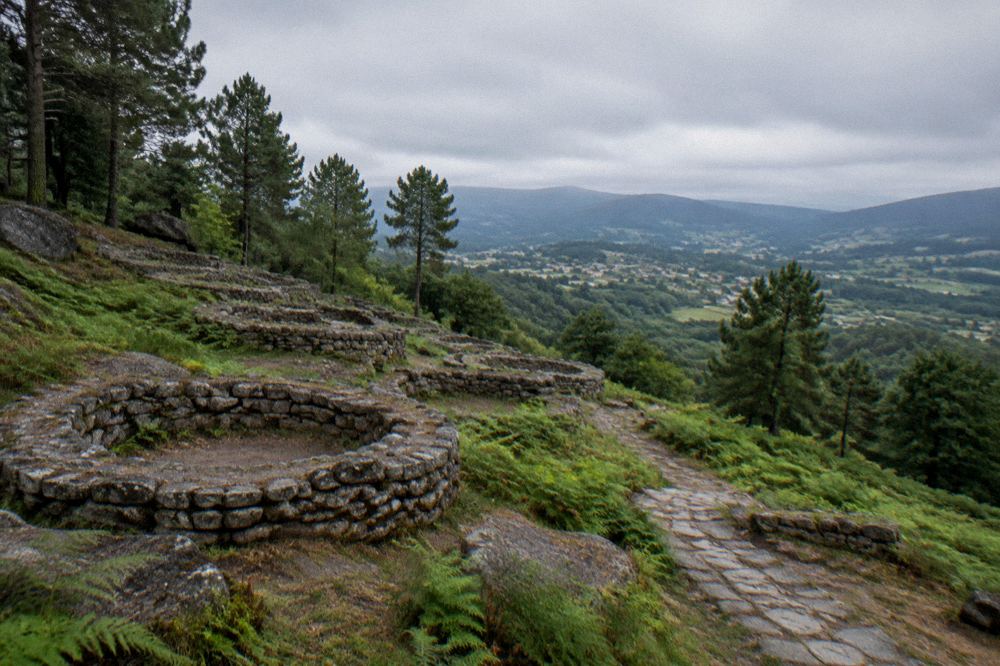
You should bring walking shoes with grip, sun protection and water in summer, layers for the wind on the exposed hilltop, and cash or a card for the ticket office, and you should know that the site closes over lunchtime, that winter season brings Monday closure, and that the outdoor circuit is uneven underfoot. A modest level of fitness is needed, because the hilltop involves slopes and stone.
The citânia is not a museum with a roof. It is a hill, and it behaves like one: hot in high summer, windswept in winter, slippery after rain. The footings and paved streets are genuine archaeology, which means genuine trip hazards for anyone not watching their feet. Footwear is the single most important packing decision.
| Item | Why it matters at the citânia |
|---|---|
| Shoes with grip | Paved streets, stone footings and grass slopes are uneven underfoot |
| Sun hat and sunscreen | There is little to no shade on the hilltop between May and September |
| Water | No verified refreshment point on the site itself; carry what you need |
| Windproof layer | The summit is exposed; valley conditions understate the wind |
| Camera or phone | Low morning and late afternoon light make the granite footings read at their best |
Timing your arrival around the lunchtime closure is the most common planning error. Arrive for opening at 09:30 and you have the morning window; arrive at 13:00 and you wait until 14:00. If you are pairing the site with Guimarães, the lunch hour in between is the natural moment to drive into the city and eat.
One more thing worth knowing: the citânia is one of several castro sites and early monuments in this corner of the Minho. The Póvoa de Lanhoso castle and the São Frutuoso chapel, one of the rare pre-Romanesque survivals in Portugal, both lie in the countryside around Braga and extend the same deep-history theme across a fuller day of driving.
How Does Citânia De Briteiros Compare With Other Minho Day Trips?
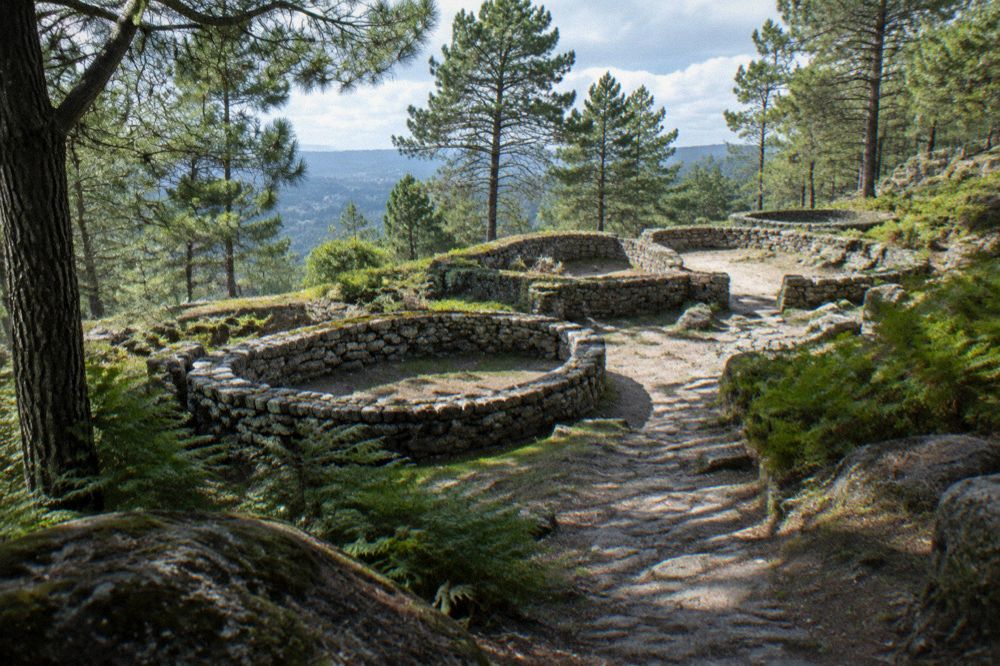
Citânia de Briteiros is the region's day trip for deep history, where Guimarães is its medieval day, Braga its Baroque and religious day, and the Peneda-Gerês National Park its landscape day. It is the choice for visitors who want archaeology rather than another historic centre, and it costs less than most city attractions, at about 5 EUR, with the museum included.
The Minho is small enough that day trips from Braga overlap and compete for your time, so the honest comparison is by theme rather than by ranking.
| Day trip from Braga | What it offers | Verified cost anchor |
|---|---|---|
| Citânia de Briteiros | Iron Age hillfort, paved streets, castro museum | about 5 EUR, museum included |
| Guimarães | Medieval castle, ducal palace, historic centre | No verified entry prices on this build |
| Braga itself | Sé de Braga, Bom Jesus do Monte, Baroque churches | Cathedral routes 3.00 EUR each, 7.00 EUR combined |
| Ponte de Lima | Riverside old town, Roman bridge, green landscape | See the Ponte de Lima worth-visiting answer |
| Peneda-Gerês | Mountains, waterfalls, trails | Park entry free; summer access limits in one section |
| Barcelos | Thursday market town, riverside Minho | See the Barcelos day-trip guide |
The Peneda-Gerês National Park is the outdoors alternative on the same map, with the verified AITC bus lines 201 and 200 reaching the Caldas do Gerês side of the park from Braga, and summer access to the Mata de Albergaria section limited and charged in the warm months. The citânia is the calmer, cheaper, more contemplative half-day; Gerês is the full mountain day.
For travellers based in Porto rather than Braga, the From Porto tours are the practical way to see this country without a car. The Best of Braga and Guimaraes Day Trip from Porto is the high-volume option with more than three thousand reviews, and the From Porto: Viana do Castelo, Braga and Guimarães Day Tour stretches the loop to the coast.
Is Citânia De Briteiros Worth The Trip From Braga?
Citânia de Briteiros is worth the trip for anyone with an interest in archaeology, pre-Roman Europe or landscapes with views, and it is the single best place in the Minho to understand the castro culture that predates the region's famous cities. It is less suited to visitors with limited mobility, given the slopes and uneven stone, and less suited to those who prefer furnished interiors to open ruins.
The case for going is simple: nowhere else in the region gives you a whole pre-Roman town to walk through, with its streets and walls and house plans legible in the ground, plus a museum of the finds on the same ticket for about 5 EUR. The case against is equally simple: it is outdoors, it is unshaded, it is not a guided narrative unless you arrange one, and it needs a car or a tour to reach comfortably.
The deciding factor is usually the rest of your itinerary. If your Minho days already include Braga's churches and Guimarães' castle, the citânia is the variation that stops the trip feeling like a tour of historic centres. If you have only one day, a From Porto guided tour that covers Braga and Guimarães will show you more, more easily, and the citânia becomes a reason to come back.
Common Questions About Citânia De Briteiros
How much does Citânia de Briteiros cost?
A normal ticket costs about 5 EUR and a reduced ticket about 2.50 EUR, with the Museu da Cultura Castreja included in the price. There is no regional pass covering the site, so you buy the ticket at the entrance.
What are the opening hours of Citânia de Briteiros?
From 27 March to 31 October it is open daily, 09:30 to 12:30 and 14:00 to 18:00. From 1 November to 26 March it opens Tuesday to Sunday, 09:30 to 12:30 and 14:00 to 17:00, and closes on Mondays. Last entry is 30 minutes before closing in both seasons.
How do I get to Citânia de Briteiros from Braga?
There is no verified direct bus or train to the site, so most visitors arrive by car, by taxi or on a guided day trip that crosses the Minho. The hillfort sits in the hills between Braga and Guimarães, and it pairs naturally with either city.
How long should I spend at Citânia de Briteiros?
Plan on half a day: a comfortable couple of hours for the hillfort circuit and around an hour for the Museu da Cultura Castreja. Arrive for the 09:30 opening or after 14:00, because the site closes over lunchtime.
Is Citânia de Briteiros suitable for children?
Children generally take well to the site, because the round house footings and paved streets are tangible and fun to explore. Keep in mind the uneven ground, the lack of shade in summer, and the need to keep an eye on younger visitors around the stone footings.
Can you visit Citânia de Briteiros and Guimarães in one day?
Yes, and that is the standard pairing: the citânia for the morning window, then Guimarães for lunch and the afternoon, with the medieval castle and historic centre completing the day. The pairing is easiest with a car or on a guided From Porto tour that covers the region.
The citânia is the Minho at its oldest, and it earns its half-day from Braga: buy the ticket at the gate, walk the paved street slowly, and let the museum explain the rest.