Is Ponte De Lima Worth Visiting?
Ponte de Lima, the riverside town in Portugal's Minho region an AITC bus ride from Braga, earns its place on most northern Portugal itineraries. Here is what to expect and how to plan the day.
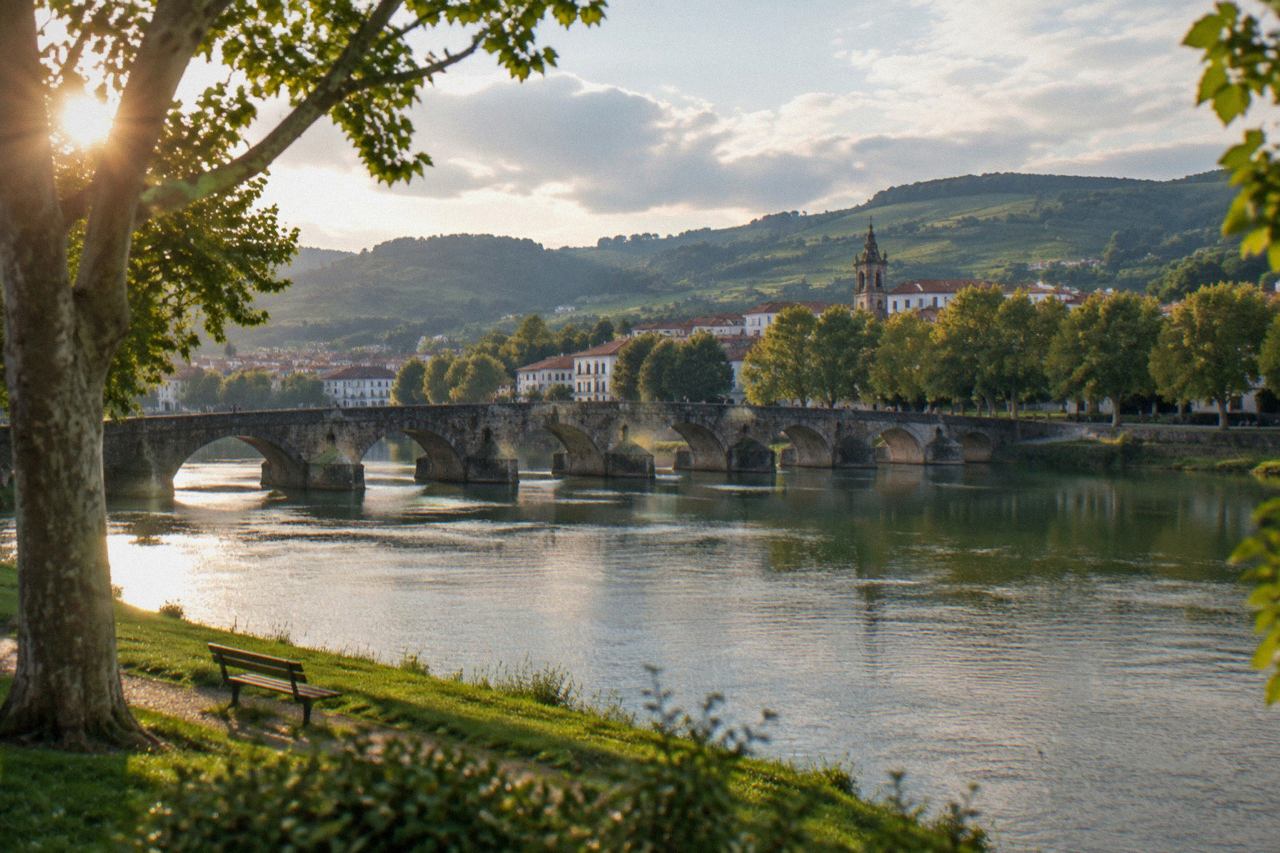
Ponte de Lima is a small riverside town in the Minho region of northern Portugal, the same corner of the country as Braga, and the honest answer for most travellers is that yes, it earns a day of your trip. The town wraps around a broad stretch of the River Lima, with a medieval bridge at its heart, formal gardens along the bank and a slow, green countryside that feels nothing like the baroque granite of Braga's historic centre. Reaching it from Braga is straightforward: AITC, the regional intermunicipal transport authority, runs Line 105 from Braga's bus station directly to Ponte de Lima, so the trip needs no car and no train change.
Is Ponte De Lima Worth Visiting?
Yes, for most travellers Ponte de Lima is worth visiting, provided the day is planned around what the town actually is: a quiet riverside market town rather than a packed museum city. Its medieval bridge, the riverside park and the formal gardens give it a distinct character from Braga, and it works best as a slow half or full day of walking, eating and sitting by the water rather than as a checklist of monuments.
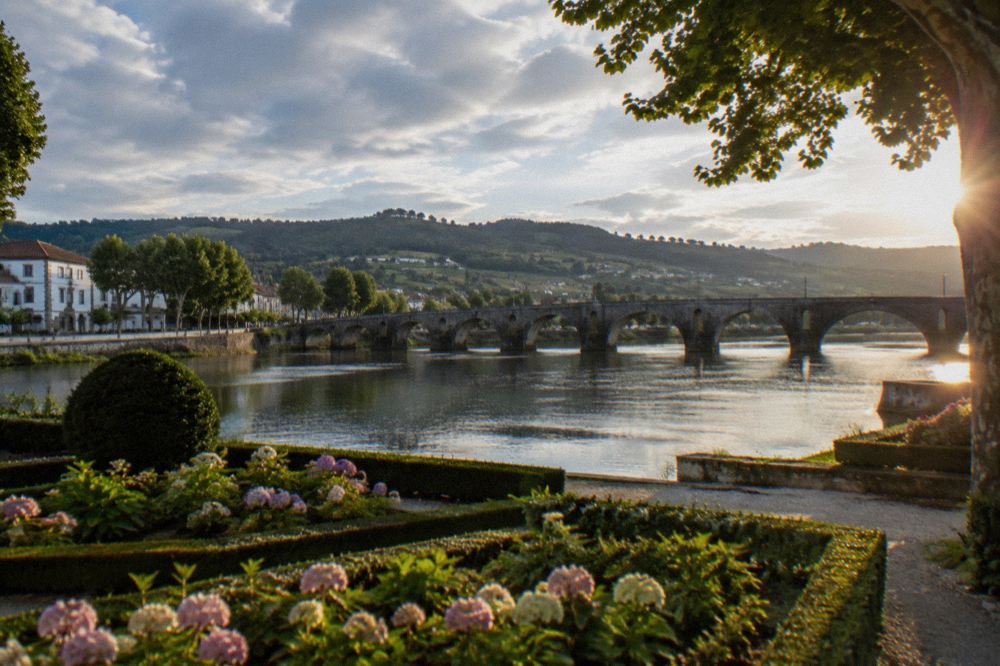
The case for the town rests on three things. First, the bridge: the stone crossing over the Lima gives the town its name and its shape, and the riverside walk on either bank is the town's main pleasure. Second, the gardens: Ponte de Lima is known in Portugal for its garden culture, including the International Garden Festival that has made the town a reference point for landscape design. Third, the setting: the Lima valley is Vinho Verde country, and the town is the natural base for tasting the region's light, young wines.
The case against is equally honest. Ponte de Lima is small, and a visitor who moves quickly will see the core of it in a couple of hours. It has no single blockbuster monument on the scale of Braga's Bom Jesus do Monte, and in the middle of a wet winter's day the riverside can feel exposed. If your northern Portugal time is limited to two or three days and you are based in Braga, the fuller answer to whether this town fits is on is Braga Portugal worth visiting, which sets out how the city itself uses up time.
For a fuller rundown of the town's sights, see what to do near Ponte de Lima and the site's Ponte de Lima day trip guide.
How Do You Get To Ponte De Lima From Braga?
You take AITC regional bus Line 105 from Braga's bus station, the Centro Coordenador de Transportes, which runs directly to Ponte de Lima with no transfer. There is no useful train option: the regional rail network does not serve the town, so the bus is the only public transport link from Braga. Timetables are published per line by the intermunicipal transport authority and were re-issued during 2026, so check the current PDF before travelling.
That is the whole practical picture, and it is a simple one. Braga's bus station is the region's hub, and Line 105 is the dedicated Ponte de Lima service. Because regional bus fares and journey times are not published in a form this site can stand behind, the honest advice is to treat the ride as roughly an hour of Minho countryside and confirm the fare with the driver or at the ticket counter when you buy.
| AITC Line | Route From Braga Bus Station | Destination Region |
|---|---|---|
| 105 | Braga to Ponte de Lima | Lima valley |
| 100 | Braga via Vila Verde | Arcos de Valdevez |
| 101 | Braga to Guimarães (via the A11) | Ave valley |
| 109 | Braga to Famalicão | South Minho |
| 107 | Braga via Esposende | Póvoa de Varzim coast |
The table shows the useful side effect of Braga's position: the bus station is not just the way out of the city, it is the way around the whole Minho. Ponte de Lima pairs naturally with Arcos de Valdevez, which sits further up the Lima valley on Line 100, and the two are covered together in the site's Arcos de Valdevez and Ponte da Barca guide. Anyone weighing the Lima valley against other options can also compare it with is Barcelos Portugal worth visiting and is Guimarães Portugal worth visiting.
What Makes The Town Different From Braga?
Ponte de Lima gives you open river, flat walking and garden design, where Braga gives you granite baroque, stairways and church interiors. The town's identity is built on the river and the bridge rather than on monuments, its riverside parkland is the largest green space of any Minho town this size, and the pace of a visit is set by sitting, strolling and eating rather than by ticketed sights.
Braga's days are spent on sights like the Sé de Braga, whose three visit routes cost 3.00 EUR each or 7.00 EUR combined, and the Santuário do Sameiro on its hill. Ponte de Lima inverts that. The bridge and the riverbank cost nothing and carry the visit. The formal gardens, the festival site and the walking paths along the Lima are the attractions, and the town's restaurants serve the same Minho cooking you find in Braga, from cod dishes to the roasted kid the region is known for.
The contrast is the reason to do both rather than to choose. A practical pattern many visitors follow is to spend a first day inside Braga itself, covering the historic centre compactly, and then give the second day to the Lima valley. For the Braga day, the tuk tuk option is worth knowing about: the Braga tuk tuk city tour covers the centre in a vehicle that handles the city's slopes for you, and it runs from 30 minutes up to two hours depending on the option chosen. Check availability if that sounds like the right way to save your legs for the countryside.
When Is The Best Time Of Year To Visit?
Late spring through early autumn is the best window for Ponte de Lima, because the gardens and riverside walks are the point of the town and they are at their best in warm, dry weather. The nearest verified climate series, the IPMA 1991 to 2020 normals for the Braga / Merelim station, shows July as the driest month with 27.9 mm of rain and only 4 rain days, while October is the wettest with 197.8 mm across 12 rain days.
The Lima valley is green for a reason, and the rain numbers explain the rhythm of a visit. From October to January the region averages 12 to 13 days of measurable rain per month, which is fine for Braga's churches and museums but punishes a day built around riverbank walking. May and June sit in a sweet spot: the series shows May with a mean maximum of 23.0 C and June 26.1 C, with rain falling on 8.9 and 5.7 days respectively. July and August are the driest and warmest months, with mean maxima of 28.2 C and 28.7 C.
Two seasonal notes matter. First, the garden festival programme is a summer-and-shoulder-season affair, so check the town's current programme before travelling specifically for it. Second, the same wet winter that keeps the valley green keeps the river high, and the riverside park can look its most dramatic in early spring even when the sky is grey.
How Does Ponte De Lima Compare With Other Minho Day Trips?
Ponte de Lima is the best Minho day trip for visitors who want scenery, gardens and a riverside pace, while Guimarães is the choice for history and a castle, Barcelos for its market culture, and the Peneda-Gerês National Park for mountain hiking. It is also the most relaxed of the four: the town spreads its sights along the river rather than stacking them, so it suits a slow day better than a packed one.
The comparison is easiest to see as a table of what each trip does best and what it costs you in verified figures where they exist.
| Day Trip From Braga | What It Is Known For | Verified Figure Where One Exists |
|---|---|---|
| Ponte de Lima | Medieval bridge, river parkland, garden festival | AITC Line 105, direct bus |
| Guimarães | Historic centre, castle, palace | AITC Line 101, via the A11 |
| Barcelos | Weekly market, rooster legend, riverside | Train via a change at Nine |
| Citânia de Briteiros | Iron Age hilltop settlement | About 5 EUR admission, 2.50 EUR reduced, includes the Museu da Cultura Castreja |
| Peneda-Gerês | National park, waterfalls, hiking | Summer car access to the Mata de Albergaria section is limited and charged |
One pairing deserves a special mention. Citânia de Briteiros, the reconstructed Iron Age settlement on its hilltop, is open daily from 27 March to 31 October between 09:30 and 12:30 and 14:00 and 18:00, and in winter from Tuesday to Sunday, and it sits close enough to the road between Braga and Guimarães that it slots into a two-stop day. The site's dedicated guide covers it in full. Ponte de Lima does not pair that way: it is a destination in its own corner of the valley, and cutting a Ponte de Lima day short to bolt on a second town wastes both.
For anyone building a wider northern Portugal route, the site's coverage of the Minho region and of is the Gerês National Park worth visiting sets out how the valley fits alongside the mountains and the coast.
If the plan is a Braga morning followed by an afternoon bus out to the Lima valley, a walking tour that keeps the city leg short is the right shape, and the flexible historic-centre walking tour is built exactly for that kind of compressed morning.
Common Questions About Ponte De Lima
Is Ponte de Lima worth visiting?
Yes. For travellers already in Braga or the wider Minho, the town offers a riverside landscape, a medieval bridge and a garden culture that no other stop in the region matches, and it is a direct AITC bus ride from Braga on Line 105.
How do I get from Braga to Ponte de Lima?
Take AITC regional bus Line 105 from Braga's bus station, the Centro Coordenador de Transportes. There is no train to Ponte de Lima, so the bus is the only public transport link. Check the current timetable PDF on the intermunicipal transport authority's site before you travel.
Is Ponte de Lima a day trip or an overnight stop?
For most visitors it is a day trip, and a relaxed one at that. The town's core sights, the bridge, the riverbank and the gardens, can be walked in a few hours. An overnight stay suits travellers who want to eat slowly, walk the riverside paths at dusk or use the town as a base for the wider Lima valley.
Does Ponte de Lima pair well with other towns?
It pairs best with Arcos de Valdevez and Ponte da Barca further up the Lima valley, though doing so realistically needs a car or careful bus planning. It does not pair naturally with Guimarães or Barcelos, which sit in different directions from Braga.
What is Ponte de Lima known for?
The medieval bridge over the River Lima that gives the town its name, its formal gardens and International Garden Festival, its riverside parkland, and its position in the Vinho Verde producing country of the Lima valley.
The short version, then: Ponte de Lima is worth the bus fare for anyone whose trip already touches Braga, and it is the Minho at its calmest, a town where the attraction is the river itself. Plan it as a slow day, check the Line 105 timetable the evening before, and let the rest of the itinerary, as laid out across Braga Travel Guide, do the running around.