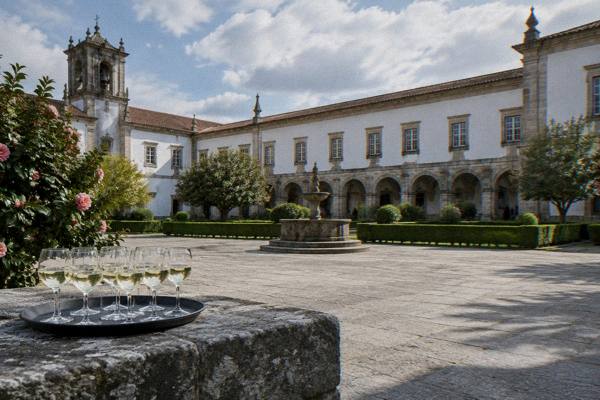
Tibaes Monastery In Braga
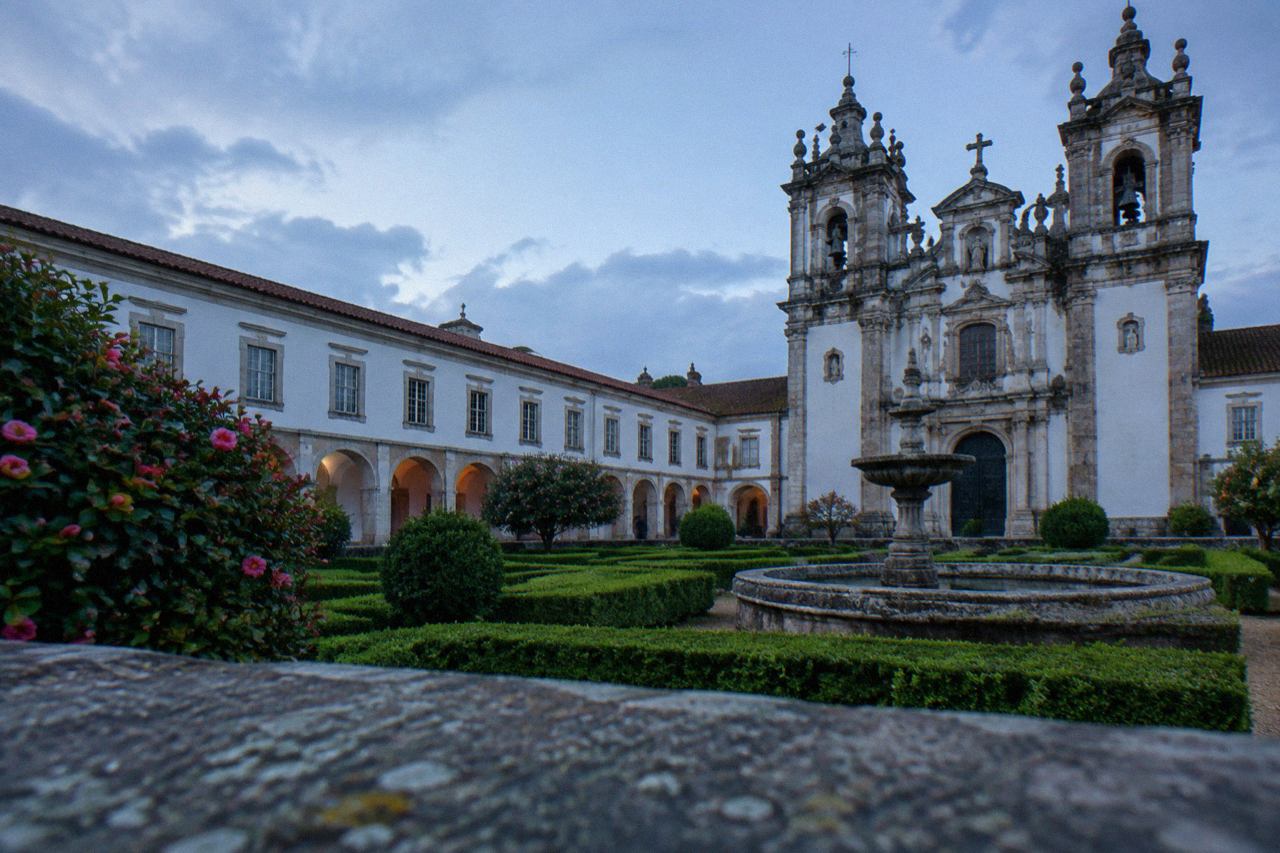
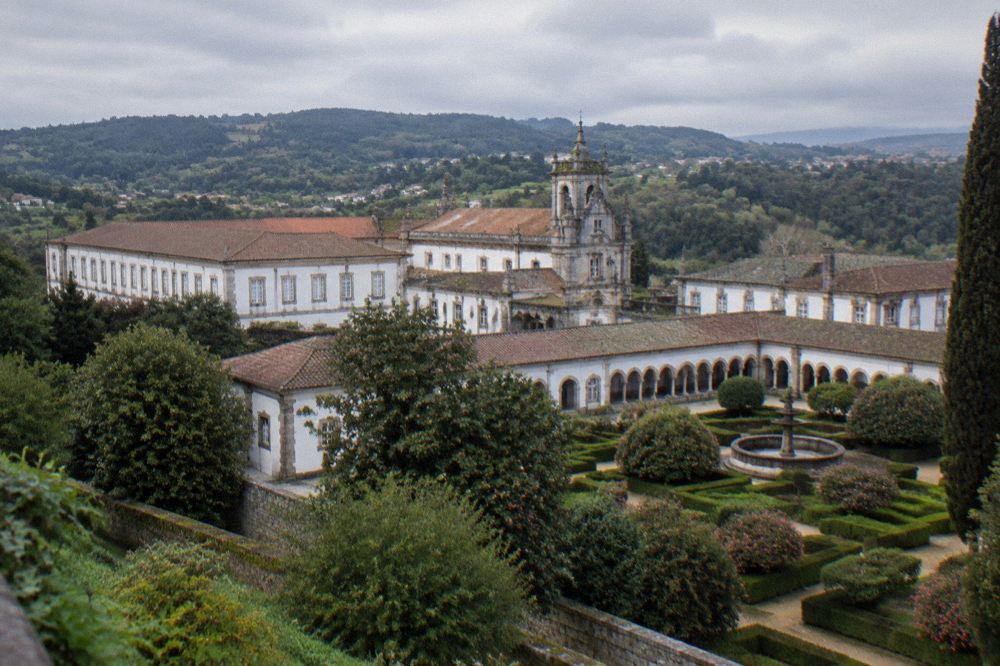
The Monastery of São Martinho de Tibães sits on the hills just outside Braga, in the Minho region of northern Portugal, and it is one of the great monastic houses of the region.
Short answer
The Monastery of São Martinho de Tibães is open Tuesday to Sunday, 10:00 to 18:00 in winter and 10:00 to 19:00 in summer, closed Mondays, with general admission of about 4 to 5 EUR and reduced tickets for students and visitors over 65.
The Monastery of São Martinho de Tibães, usually shortened to Tibães, stands on the green hills just outside the historic centre of Braga, the city in the Minho region of northern Portugal. It is a working monument with a church, monastic quarters and grounds, run today as a state cultural site, and it draws visitors who want the baroque side of the Minho without the crowds that gather at Bom Jesus do Monte. The municipality of Braga lists it among its own museums and heritage sites, and the monastery celebrated forty years of Portuguese state ownership in August 2026, an anniversary marked with public events on the site itself.
What Is The Monastery Of São Martinho De Tibães?
The Monastery of São Martinho de Tibães is a former Benedictine monastic house on the outskirts of Braga, Portugal, owned by the Portuguese state for four decades and open to the public as a heritage and museum site. It keeps a church, monastic buildings and grounds, closes on Mondays and a handful of public holidays, and charges admission of about 4 to 5 EUR, with reduced tickets for students and visitors over 65.
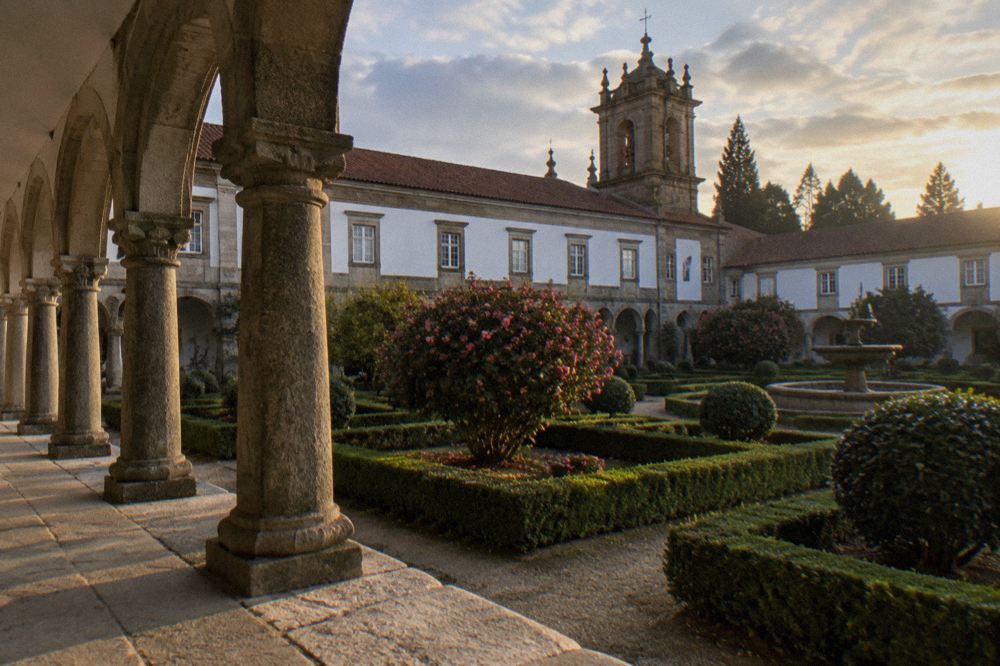
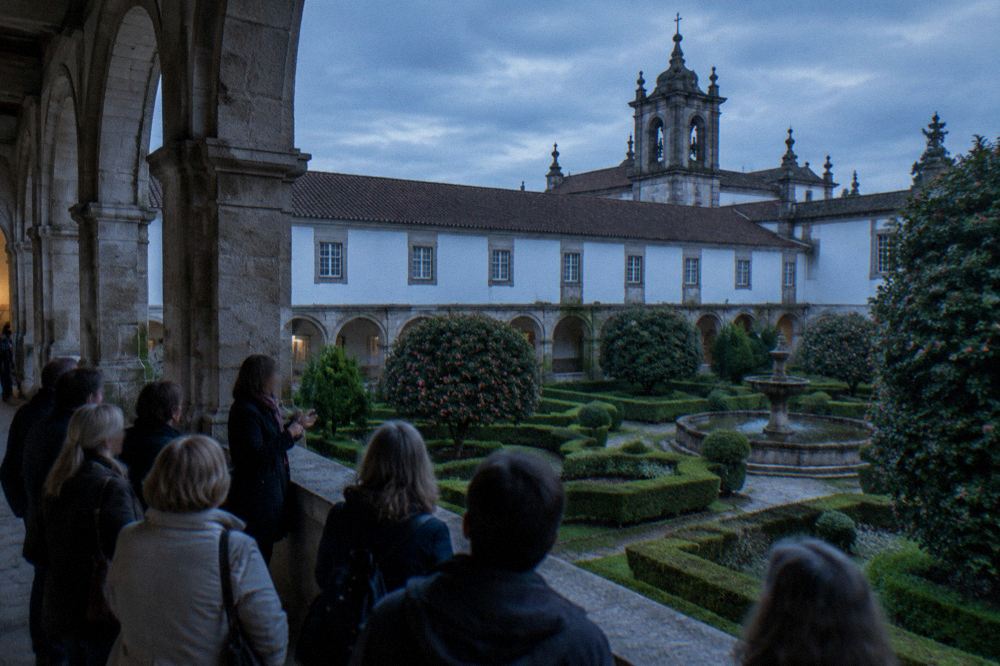
That is the short version. The longer version is that Tibães belongs to the same family of hill monuments as the Santuário do Sameiro and the sanctuary of Bom Jesus do Monte, but it is quieter, more architectural and less processional. Where Bom Jesus is a stairway and a viewpoint, Tibães is an enclosed world: a church, cloistered spaces, refectory buildings and gardens that were designed for a community rather than for pilgrims.
The site has been through a long conservation programme funded by Portugal's recovery and resilience plan, covering roofs, the church's electrical systems and stonework. The most visible piece of that work closed the monastery church for a stretch that ended around 15 March 2026, when worship was relocated while the works ran. Since then the church has reopened, and the broader conservation has continued in phases around the visiting circuit, so a visit today may pass scaffolding on one wing while the church itself is fully open.
The monastery is also a living venue. In August 2026 it hosted public commemorations of the fortieth anniversary of its acquisition by the state, and the municipality's cultural agenda regularly lists concerts and exhibitions there, including early music programmes that suit the building's acoustics. Check the cultural agenda before you go if you would like to catch one.
Where Is Tibães And How Do You Get There From Braga?
Tibães sits on the hills a short way outside Braga's historic centre, inside the Braga municipality but beyond walking distance for most visitors, and it is reached by car, taxi or local transport. The monastery is a separate destination from the city's downtown sights, so treat it as a half-day excursion rather than a stop on a walking route, and check current transport options before you set out.
The geography matters here. Braga is a city, a municipality and a district, and Tibães belongs to the municipality, on the wooded slopes that also carry Sameiro and Falperra. If you are staying in the historic centre around Praça da República or the Sé de Braga, the monastery is a deliberate trip out, best combined with the other hill monuments rather than squeezed between downtown stops.
By car, the monastery has its own parking, and the hill roads are signed. Many visitors fold Tibães into a loop that takes in the Santuário do Sameiro and the Santa Maria Madalena da Falperra church on the Serra da Falperra, since all three sit on the same belt of hills. That loop is one of the most rewarding drives in the Minho, ending back in the city for dinner.
Without a car, your options depend on the day of the week and the season, and the sources for local bus services to the monastery specifically are thin, so check with the Braga transport centre or the tourist office on Avenida da Liberdade before relying on a bus. Guided tours and taxis from the centre are the practical alternatives, and a tuk tuk or private arrangement can turn the hill loop into a comfortable afternoon.
A tuk tuk tour of the city, like the Braga tuk tuk city tour, is a good way to cover the downtown before you head for the hills, since the historic centre's streets reward a slow roll and the monastery rewards a dedicated block of time. The tour runs from thirty minutes up to two hours depending on the option, and it is rated 4.8 from 179 reviews on the operator's live listing, with prices from 22.66 USD per person.
What Are The Opening Hours And Ticket Prices At Tibães?
The monastery is open Tuesday to Sunday, 10:00 to 18:00 in winter and 10:00 to 19:00 in summer, and closed every Monday plus 1 January, Easter Sunday, 1 May, 24 June and 25 December. General admission runs about 4 to 5 EUR depending on the ticket type and circuit, with reduced tickets for students and visitors over 65, and children under 12 enter free.
Those hours come from the municipality's own heritage pages, which list Tibães alongside the city's museums. The summer extension to 19:00 is worth having if you are visiting in June or July, when the long Minho evenings make an end-of-day visit pleasant, and the grounds keep some shade even when the middle of the day is hot.
| Season | Days open | Hours | Closed |
|---|---|---|---|
| Winter | Tuesday to Sunday | 10:00 to 18:00 | Mondays |
| Summer | Tuesday to Sunday | 10:00 to 19:00 | Mondays |
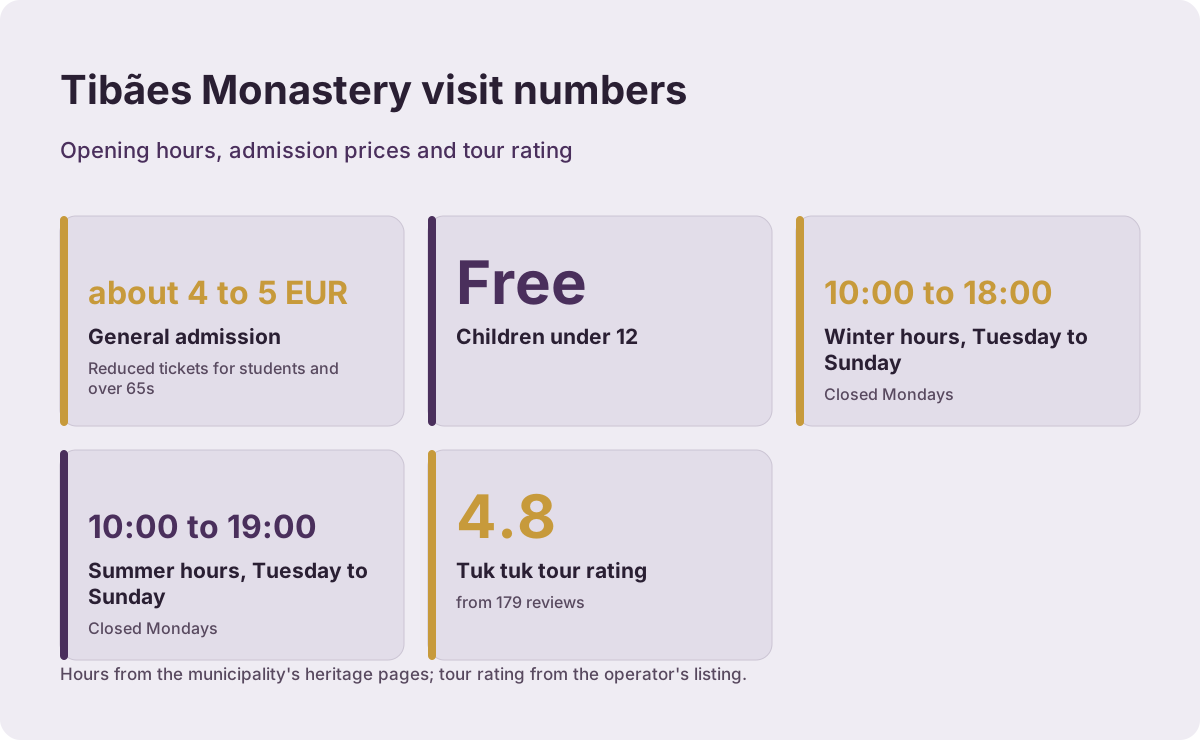
On the price side, resist the urge to pin a single figure. Different ticket types and circuits at the monastery's booking channels are listed at 4 and 5 EUR, and the honest planning number is "about 4 to 5 EUR" for a standard adult visit, with reductions for students and over-65s. If a precise figure matters to your budget, check the booking page on the day, because circuits and prices have shifted during the conservation programme.
| Ticket | Price |
|---|---|
| General admission | About 4 to 5 EUR depending on circuit |
| Students and over 65s | Reduced rate, check the booking page |
| Children under 12 | Free |
The fixed closures are the ones to plan around, and they match the pattern used across Braga's public museums.
| Date | Status at Tibães |
|---|---|
| 1 January | Closed |
| Easter Sunday | Closed |
| 1 May | Closed |
| 24 June, Braga's municipal holiday | Closed |
| 25 December | Closed |
| Every Monday | Closed |
Note the 24 June closure. The Festas de São João de Braga peak on the night of 23 June into the municipal holiday, and visitors sometimes plan a quiet monastery visit for the holiday itself, only to find the site shut. If you are in Braga for São João, spend the 24th at the festivities and come to Tibães on another day, as covered in the São João guide.
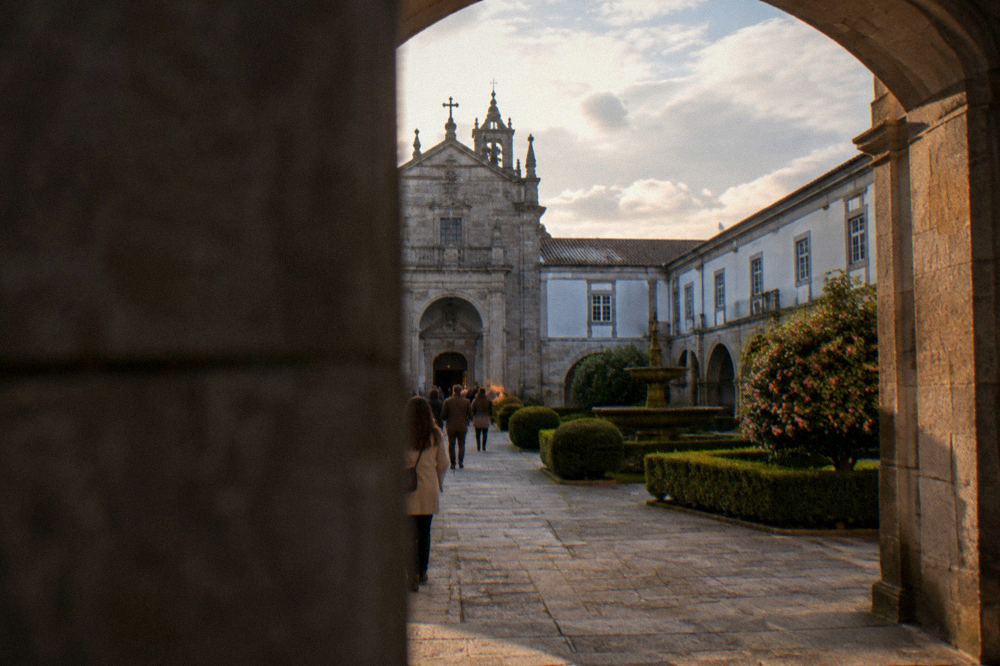
Guided visits inside the monastery are available, subject to prior booking and availability, and they are the best way to understand a building whose most interesting spaces are not self-explanatory. Book ahead through the contact channels on the official site, especially in summer, and ask at the entrance what is open that day, since conservation work has moved around the site in phases.
What Can You See Inside The Monastery And Its Church?
The visiting circuit takes in the monastery church with its gilded interior, the monastic quarters around the cloister, and the grounds and garden spaces that frame the complex, with guided visits available by prior booking for the deeper spaces. The church reopened in March 2026 after a closure for conservation works, and the site's recovery-plan programme has also covered roofs, electrical systems and stonework across the wider complex.
The church is the emotional centre of a visit. It was closed for works until around 15 March 2026, with worship temporarily relocated, so if you read an older travel forum thread claiming the church is shut, that information is out of date. What you see now is a fully reopened interior, with the gilded woodwork that Minho baroque is famous for, and the February 2026 closure is worth remembering mainly as evidence of how actively the site is being conserved.
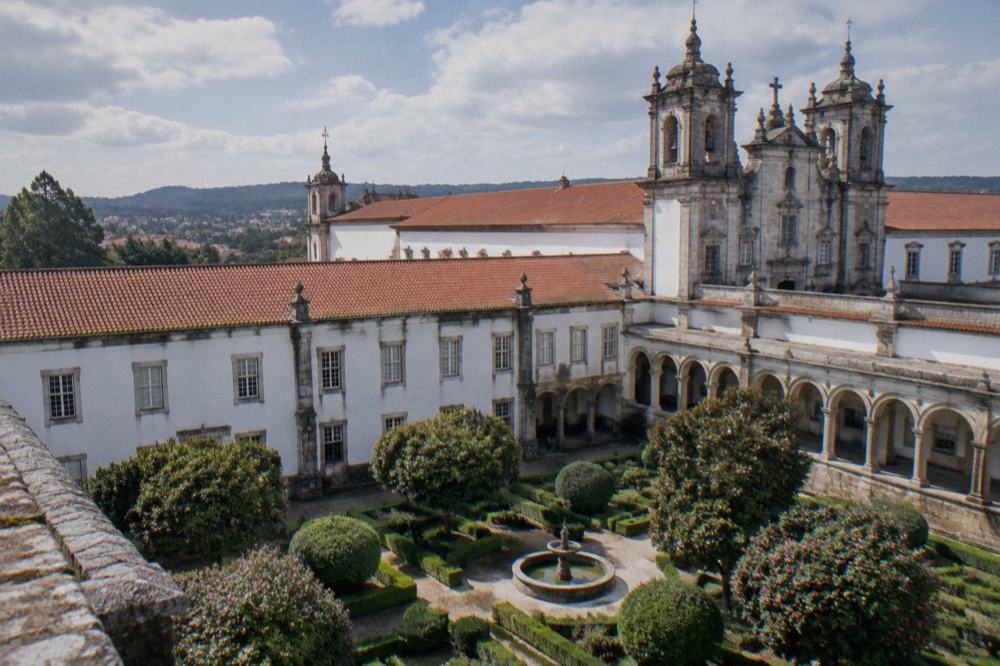
Around the church, the monastic buildings tell the story of a community: the cloister walks, the refectory and the service ranges. The state, which acquired the monastery forty years ago, has run a sustained programme of conservation funded through Portugal's recovery plan, and the works have touched roofs, the church's electrical installation and stairways. Some of that work was still under way in 2026, so expect the odd fenced-off corner rather than a pristine set piece.
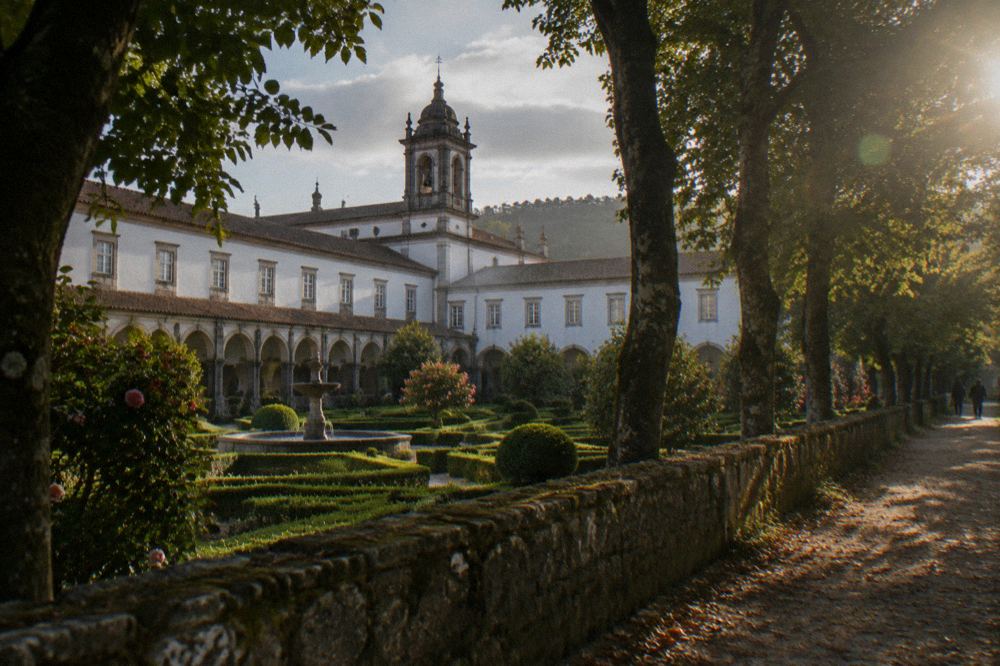
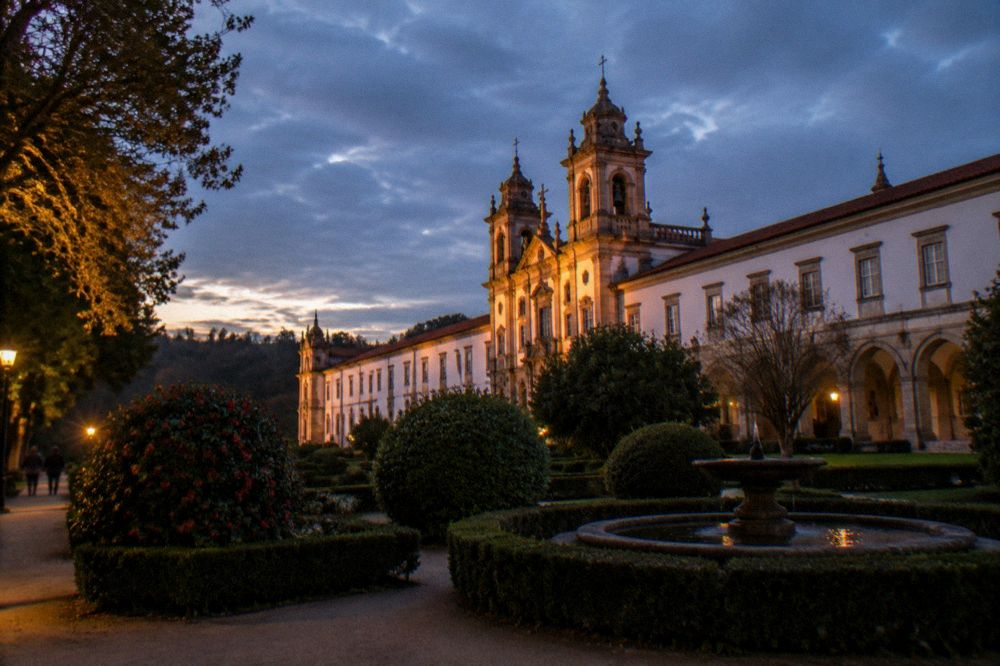
The grounds deserve more time than most visitors give them. Tibães sits in a designed landscape of walled gardens, orchard and woodland, and the hillside setting means the light changes through the day. Late afternoon, in summer, is when the facade and the tree canopy photograph best.
| Part of the site | What it offers | Practical note |
|---|---|---|
| The church | Gilded Minho baroque interior | Reopened after works ended around March 2026 |
| Cloister and monastic quarters | Enclosed architecture, chapter spaces | Guided visits by prior booking |
| Grounds and gardens | Walled gardens, woodland, hillside views | Best light late afternoon in summer |
| Conservation works | Roofs, electrics, stonework in phases | Some areas may be fenced off |
How Does Tibães Compare With Braga'S Other Monuments And Museums?
Tibães is priced in the same band as Braga's mid-range museums, at about 4 to 5 EUR, cheaper than the Museu dos Biscainhos at 7.50 EUR and the Sé de Braga's full three-route ticket at 7.00 EUR, and comparable to the Museu Pio XII at 4 EUR for the whole museum. It offers architecture and landscape rather than collections, which is why it pairs well with, rather than substitutes for, the city's museums.
If you are budgeting a full sightseeing day in Braga, the table below shows how the main paid sites stack up. The cathedral's three visit routes cost 3.00 EUR each, or 7.00 EUR combined, and the museums each charge their own admission, with no city-wide pass on sale in Braga, so you buy each ticket separately. Everything else covered here is indexed on Braga Travel Guide.
| Site | Adult price | Open |
|---|---|---|
| Monastery of São Martinho de Tibães | About 4 to 5 EUR | Tuesday to Sunday |
| Sé de Braga, one route | 3.00 EUR | Daily, limited Sunday mornings |
| Sé de Braga, all three routes | 7.00 EUR | Daily, limited Sunday mornings |
| Museu dos Biscainhos | 7.50 EUR, garden included | Tuesday to Sunday |
| Museu de Arqueologia D. Diogo de Sousa | 5.00 EUR | Tuesday to Sunday |
| Museu Pio XII, whole museum | 4.00 EUR | Tuesday to Saturday |
| Museu Nogueira da Silva | 3.00 EUR, card payment only | Tuesday to Saturday |
| Theatro Circo guided tour | 3.50 EUR, 45 minutes | Scheduled dates only |
The pairing logic is simple. Spend a morning in the historic centre on the Sé de Braga and the Museu de Arqueologia D. Diogo de Sousa, whose Roman and pre-Roman collections explain the ground Braga stands on, then take the afternoon out to Tibães for the monastic and baroque counterpoint. The Museu dos Biscainhos comparison is also instructive: Biscainhos gives you the domestic baroque of a Braga townhouse, Tibães the institutional baroque of a religious community, and together they explain why the Minho's gilded woodwork has a reputation.
For a fuller argument about how to split a short visit, the one day in Braga planning pages on this site cover the trade-offs, including whether the hill monuments are worth the transport effort on a tight schedule.
What Should You Combine With Tibães On The Same Day?
The natural combination is the hill loop: Tibães, the Santuário do Sameiro and the Santa Maria Madalena da Falperra church, all on the slopes around Braga, followed by a return to the historic centre for the evening. Sameiro's whole precinct is free and open around the clock, its basilica dome viewpoint charges 2 EUR, and Falperra's church has limited access, so plan Sameiro for the views and Tibães for the architecture.
Sameiro is the obvious companion. The sanctuary's precinct is open 24 hours a day, every day, free of charge, with the basilica open daily on a seasonal schedule and the dome viewpoint, the zimbório, costing 2 EUR at the back of the church. Its opening days for the dome vary by season and even between official pages, so check on the day. Bom Jesus do Monte completes the trio of hill sanctuaries, though its famous funicular has been out of service since 26 September 2026, with a replacement shuttle running every day between the portico and the sanctuary, a situation covered in detail on the Bom Jesus pages.
| Hill site around Braga | Admission | Notes |
|---|---|---|
| Monastery of São Martinho de Tibães | About 4 to 5 EUR | Closed Mondays |
| Santuário do Sameiro precinct | Free, open 24 hours | Basilica on seasonal hours |
| Sameiro dome viewpoint (zimbório) | 2 EUR | Opening days vary, check on the day |
| Santa Maria Madalena da Falperra | Limited access | No regular public hours published |
| Bom Jesus do Monte grounds and basilica | Free | Funicular out of service since 26 September 2026 |
Back in the city, the Capela de São Frutuoso de Montélios is the pre-Romanesque gem that most visitors skip, and it makes a quiet contrast with the baroque excess of Tibães. If your day runs long, the Santa Cruz church in the centre is worth a stop on the way to dinner, and the city's café tradition, including the historic A Brasileira, will absorb whatever evening energy you have left.
For visitors building a wider Minho trip, Tibães also sits on the natural line between Braga and the region's smaller towns, and the Camino from Braga and the Ponte de Lima pages cover the routes onward. The Citânia de Briteiros Iron Age settlement, with admission of about 5 EUR including its museum, is the prehistoric counterweight to Tibães and a strong second-day excursion.
When Is The Best Time Of Day And Year To Visit Tibães?
The best months for Tibães are May through September, when Braga's weather is driest and warmest, and the best time of day is late afternoon, when the summer closing time of 19:00 lets you catch the evening light across the grounds. Avoid Mondays and the five annual closure days, and expect the grounds to be damp from October to January, when Braga records its heaviest rain.
The climate record for the Braga station makes the seasonal case plainly. July is the driest month on average, with 27.9 mm of rain, and August the warmest, with a mean maximum of 28.7 C. October, by contrast, is the wettest month of the whole year, with 197.8 mm on average and about twelve rain days, and December and January are almost as wet. A monastery visit involves outdoors walking between buildings, so the dry months genuinely change the experience.
| Month | Mean max temp | Rain mm | Rain days 1mm+ |
|---|---|---|---|
| May | 23.0 C | 89.8 | 8.9 |
| June | 26.1 C | 40.6 | 5.7 |
| July | 28.2 C | 27.9 | 4.0 |
| August | 28.7 C | 34.6 | 3.8 |
| September | 26.9 C | 67.6 | 6.2 |
| October | 22.2 C | 197.8 | 12.0 |
Late afternoon has a second advantage: crowds. Group visits tend to come in the morning, and the last hours before closing are usually the quietest, especially on weekdays outside the summer festivals. If you are visiting during Semana Santa or the São João festivities, the city will be full, but the hill monuments stay comparatively calm, and a monastery afternoon can be the restorative half of a festival day.
Winter visits are perfectly feasible, with the 18:00 closing leaving less evening light, and the monastery's indoor spaces make it a reasonable rainy-day option alongside the museums covered in the rainy day guide. Just check that no special closure applies, and bring a coat for the walk between buildings.
Is A Guided Tour Of Braga Worth Combining With A Tibães Visit?
A guided city tour is worth it before a Tibães visit, because the monastery makes most sense when you already know the religious and baroque context of Braga, and the city's walking tours run from free, tip-based GuruWalk walks to small-group and private options. The monastery itself offers guided visits by prior booking, which is the deepest option, so a city tour plus a booked monastery visit covers both layers.
Braga's tour offer splits into three bands. The free walks, run on GuruWalk, are genuine free tours with named gurus: The Essential Free Tour of Braga (guided in Spanish) with its blue-umbrella guide, the Essential Free Tour Braga (guided in Spanish) with a green-umbrella guide, and a sunset and night free walk, all tip-based and around two hours. They cost nothing up front, and tipping is at your discretion.
The paid small-group tours add depth and structure. The Explore the Portuguese Rome, the City of Braga walk runs about an hour and a half, from 35.35 USD, rated 4.9 from 68 reviews, and the Personal and Flexible Walking Tour in Historic Center runs three hours from 11.33 USD, rated 4.7 from 62 reviews. For a monastery-focused day, a private guide can build the religious history into the route.
The tuk tuk option deserves its own mention for visitors with mobility constraints or tight schedules. The Braga tuk tuk city tour starts from 22.66 USD per person, runs from thirty minutes to two hours depending on the option chosen, and carries a 4.8 rating from 179 reviews on the operator's live listing. It covers the historic centre's main monuments, from the Sé to the Arco da Porta Nova, and it leaves your afternoon free for the hills.
For those who prefer to walk at their own pace, the Portuguese Rome tour is the classic introduction, and this site's Braga walking tours coverage compares the full range, including the self-guided scavenger hunt option that turns the historic centre into a game for a few dollars.
Common Questions About The Monastery Of São Martinho De Tibães
Is the Monastery of São Martinho de Tibães open on Mondays?
No. The monastery closes every Monday, plus 1 January, Easter Sunday, 1 May, 24 June, which is Braga's municipal holiday, and 25 December. On every other day it opens at 10:00 and closes at 18:00 in winter or 19:00 in summer.
How much does it cost to visit Tibães Monastery?
General admission runs about 4 to 5 EUR depending on the ticket type and circuit, with reduced tickets for students and visitors over 65 and free entry for children under 12. Prices have shifted during the conservation programme, so check the booking page for the circuit you want on the day of your visit.
Is the church at Tibães open after the restoration works?
Yes. The church was closed for recovery-plan conservation works, with worship temporarily relocated, until around 15 March 2026, and it has since reopened. Broader works on roofs, electrical systems and stonework have continued in phases, so parts of the wider complex may still be fenced off.
Can you visit Tibães without a car?
Yes, but it takes planning. The monastery sits on the hills outside Braga's historic centre, beyond comfortable walking distance, and public transport options to the site specifically are thin and change with the seasons, so check with the Braga transport centre or tourist office before relying on a bus. Taxis and guided arrangements from the centre are the practical alternatives.
How long should you spend at the Monastery of São Martinho de Tibães?
Most visitors give it a relaxed half-day trip from the centre, including travel, with the on-site portion covering the church, the monastic quarters and the grounds at an unhurried pace. Book a guided visit if you want the deeper spaces explained, since guided visits run subject to prior booking and availability.
What else is near Tibães Monastery?
The monastery shares its belt of hills with the Santuário do Sameiro, whose precinct is free and open around the clock, the Santa Maria Madalena da Falperra church with limited access, and Bom Jesus do Monte, whose grounds are free and whose funicular is currently out of service with a replacement shuttle running. A hill loop covering several of these sites is the standard day plan.
The Short Version For Your Planning
Plan Tibães as a half-day hill excursion from Braga, on any day except Monday, arriving for the late afternoon in summer when closing is 19:00, budgeting about 4 to 5 EUR per adult, and pairing it with Sameiro or Bom Jesus on the same loop. Book the guided visit inside the monastery in advance, check the operator's notice for any conservation closures on the day, and keep the 24 June municipal holiday off your list.
That is the whole shape of it. Braga rewards visitors who treat the city and its hills as one system, and the monastery is the calmest, most architectural piece of that system. Arrive after the morning groups have gone, walk the grounds while the light is still moving, and let the gilded church be the last thing you see before the drive back down. For everything else in the city, from the Sé de Braga to the Sameiro sanctuary, the rest of this site's coverage carries the practical detail, and a flexible walking tour of the historic centre is the easiest way to fill the morning before the hills.