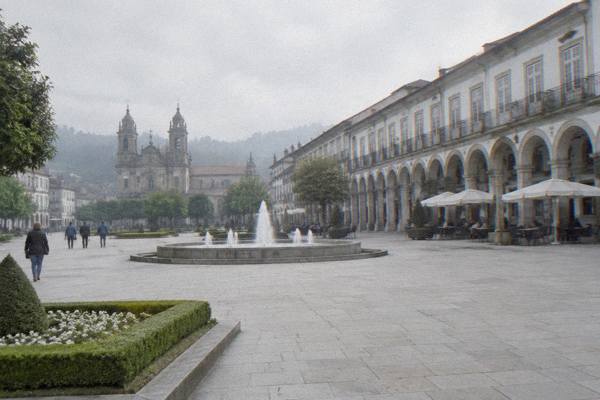
The Camino From Braga: Walking The Portuguese Way To Santiago
Braga, in Portugal's Minho region, is one of the most rewarding places to begin a Camino de Santiago pilgrimage, with the Portuguese Way's Central route within reach and a city full of pilgrim history to explore first.
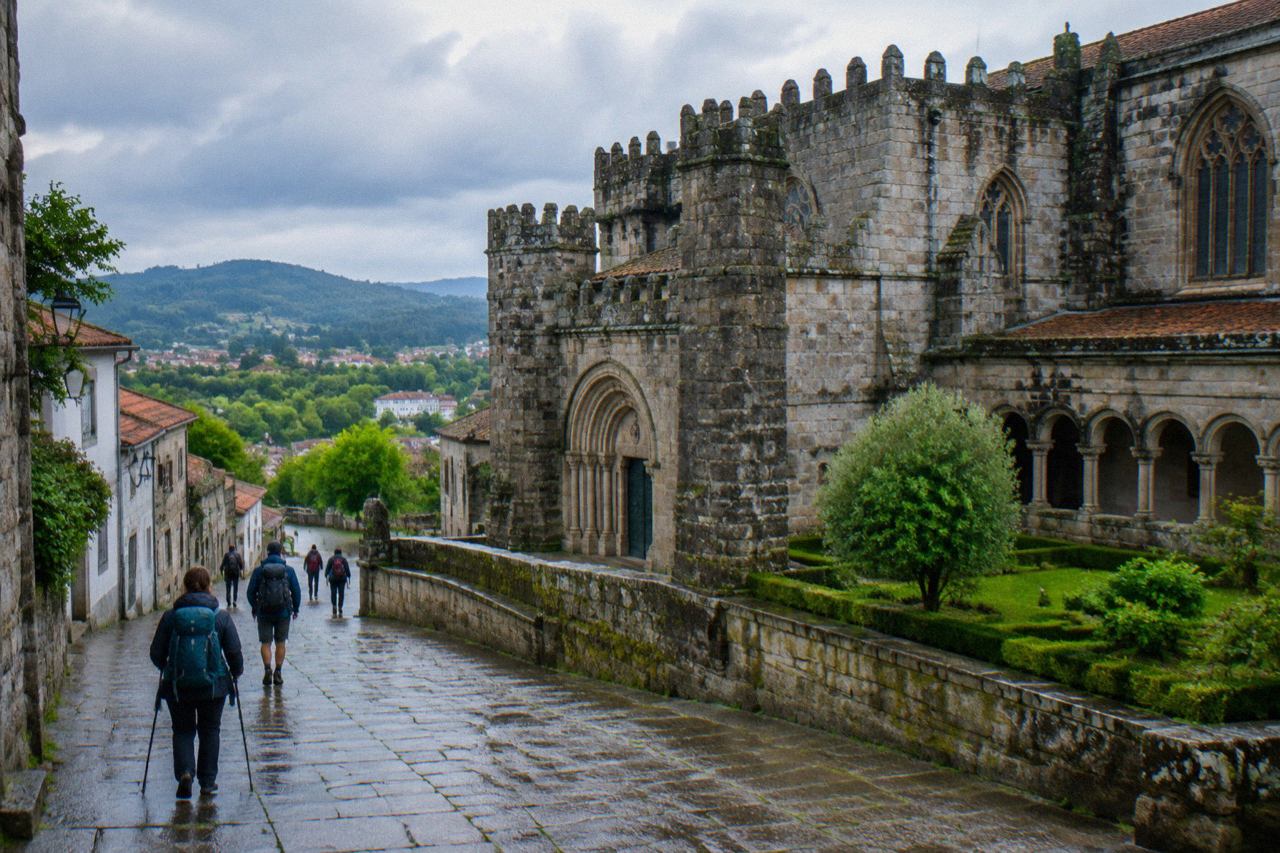
Short answer
Braga connects to the Camino Portugués, the Portuguese Way to Santiago de Compostela. Pilgrims walk south to rejoin the Central route or start from the city, collecting stamps in Braga's cathedral and churches before setting out.
Braga, the city in the Minho region of northern Portugal, has been a pilgrim city for centuries, and it sits close enough to the Portuguese Way to Santiago de Compostela to serve as either a staging point or a starting point for the walk to Santiago. The Camino de Santiago from Braga is not a single marked trail with a fixed length, it is a practical question of how a pilgrim in this city joins the Caminho Português, the Portuguese Way, the pilgrim route that runs from Portugal north into Spanish Galicia and ends at the tomb of Saint James in Santiago de Compostela. This guide covers what the route is, how to reach it from Braga, where to collect the credential stamps that prove the pilgrimage, when to walk, and what to see in Braga itself before the first day of walking begins. The city rewards the time: Braga Travel Guide covers every corner of it, from the Sé de Braga cathedral to the Bom Jesus do Monte sanctuary on the hill.
What Is The Camino From Braga?
The Camino from Braga is the joining of the Caminho Português, the Portuguese Way to Santiago de Compostela, from a city that sits west of the route's Central branch. Braga is a pilgrim city in its own right, with a cathedral that has welcomed travellers for centuries, and pilgrims based here either walk out to rejoin the Central route or follow local paths north. The route itself is the Portuguese Way, one of the main pilgrim routes to Santiago, running from Portugal into Galicia in Spain.
The Caminho Português is the collective name for the pilgrim routes that start in Portugal and converge on Santiago de Compostela, across the border in Spain's Galicia region. Its Central branch, the most walked of the Portuguese variants, runs north through the Minho's river valleys and crosses into Spain before turning toward Santiago. Other branches and variants exist, including the Coastal route along the Atlantic, and pilgrims choose between them based on season, terrain and time available.
Braga's relationship to the pilgrimage is old and layered. The city has been a religious centre for as long as Portugal has existed, and its position in the Minho, the green northern region between the Douro and the Spanish border, put it squarely in the path of medieval travellers moving between Portugal and Galicia. A pilgrim arriving in Braga today walks streets where that traffic was constant for centuries, past churches, convents and the Sé de Braga, the cathedral that anchors the city.
What Braga is not, and this matters for planning, is the most common starting point for the Portuguese Way. Most pilgrims start in Porto, Lisbon or points along the coast, and the infrastructure, the albergues and the marked trail, is densest on those lines. Starting from Braga means accepting a slightly less-trodden beginning in exchange for a city that is one of the most rewarding in northern Portugal to spend a rest day in. For a fuller picture of the city itself, the things to do in Braga guide covers the whole range, and the Santiago de Compostela day trip page covers the destination at the end of the walk.
Which Camino Route Do Pilgrims Join From Braga?
Pilgrims in Braga join the Central branch of the Caminho Portugués, the Portuguese Way. Braga sits inland of the route's main line, so walkers leaving the city head toward the Central route's path through the Minho and continue north to the Spanish border and on to Santiago de Compostela. The Coastal branch, along the Atlantic, is an alternative that requires a different direction out of the region.
The Central route is the classic inland line of the Portuguese Way. It is the branch most pilgrims picture when they think of the Caminho Portugués: river crossings, small towns, stone paths and a steady northward drift toward the Minho river, which forms the border between Portugal and Spain before the route crosses into Galicia. From the Braga area, the practical logic is simple: the Central route passes through the Minho region to the city's east, and pilgrims rejoin it by walking or transferring to a point on the line.
The Coastal route is the other main option. It runs along the Atlantic coast, through Esposende, Viana do Castelo and Caminha, before rejoining the inland paths near the border or crossing the river by ferry. Braga sits inland, so choosing the Coastal branch from here means travelling west first, toward the coast at Esposende, where the regional AITC bus line 107 runs from Braga bus station. Line 106 also serves Póvoa de Varzim on the coast. No fare or journey time for those regional buses is published in a verified source, so check the current timetable at the bus station before committing.
A third consideration is direction. Some pilgrims use Braga as a stop on a longer Portuguese walk, arriving from the south and continuing north. Others treat the city as a base and start the pilgrimage from here directly. Both are legitimate ways to make the pilgrimage, and the credential, the pilgrim's passport that collects stamps along the way, does not care where the walk began, only that the stamps accumulate as the pilgrim moves.
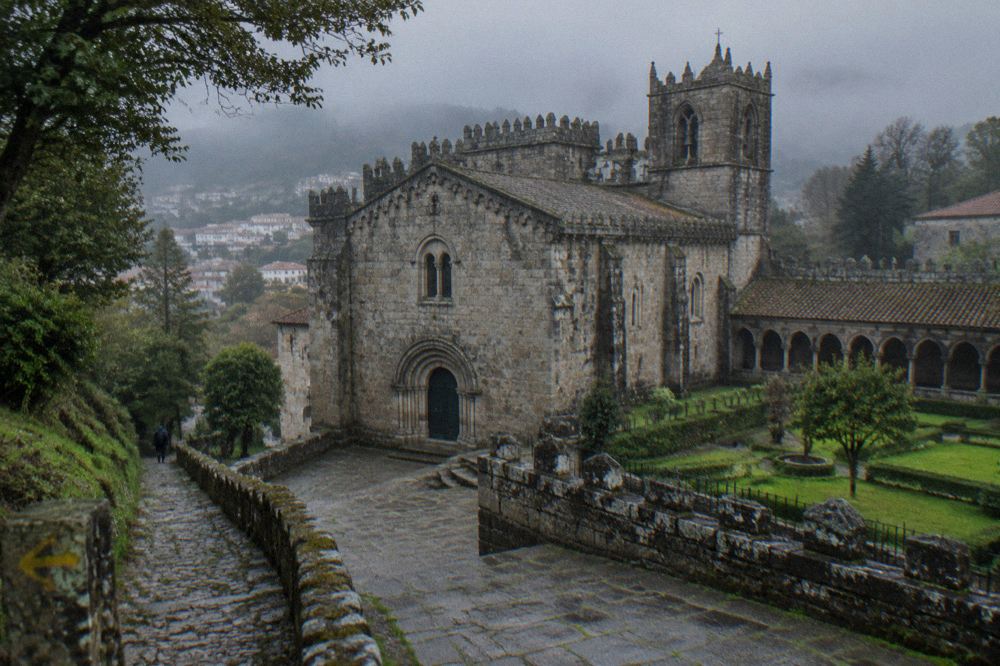
Before the walking starts, there is a case for seeing the city efficiently. Braga's pilgrim and historic landmarks are concentrated in the historic centre but the hills around it hold the sanctuaries, and a tuk tuk tour covers the spread without spending the legs you will need on the trail. The Braga tuk tuk city tour is the site's featured pick for exactly this: a short ride that takes in the centre and the viewpoints, from $22.66 per person, rated 4.8 from 179 reviews, running between 30 minutes and 2 hours depending on the option chosen.
How Do Pilgrims Get Out Of Braga Toward The Route?
Pilgrims leave Braga on foot, by urban bus or by regional bus from the city's bus station. The TUB urban network covers the city and its hills, including Line 2 to Bom Jesus do Monte, and the regional AITC lines run from the Central de Camionagem to Guimarães, Ponte de Lima, the coast and the Gerês park. On foot, the historic centre is compact and the walking starts at the door of your accommodation.
Braga's own transport is cheap and simple. The 2026 TUB tariff, in force since 21 February 2026, prices an on-board single at 1.55 EUR for one zone and 2.00 EUR for two zones, while a pre-bought or digital ticket costs 0.75 EUR or 1.50 EUR. The tourist ticket is better value for a pilgrim's rest day: 3.35 EUR for one day of the whole network, 6.05 EUR for two days and 8.05 EUR for three. TUB Line 2 runs to Bom Jesus do Monte, terminating at the Pórtico at the foot of the sanctuary's stairway. Note one standing fact: the Bom Jesus funicular has been out of service since 26 September 2026, with a replacement shuttle running daily 09:00 to 20:00, roughly every 30 minutes, between the Pórtico and the sanctuary, and no return date published. Check the operator's notice before assuming a ride.
The regional buses all leave from the Central de Camionagem, the bus station on Avenida General Norton de Matos. The verified AITC lines are: 101 to Guimarães, 105 to Ponte de Lima, 100 to Vila Verde and Arcos de Valdevez, 201 to Caldas do Gerês, 200 to Covide via Campo do Gerês, 107 to Esposende and Póvoa de Varzim, 106 to Póvoa de Varzim and 109 to Famalicão. Fares and journey times for these regional lines are not published in verified sources, so confirm at the ticket window. There is no direct train from Braga to Guimarães; the bus is the link.
| Transport in Braga | What it covers | Verified fare (2026) |
|---|---|---|
| TUB on-board single, 1 zone | Urban network, one zone | 1.55 EUR |
| TUB on-board single, 2 zones | Urban network, two zones | 2.00 EUR |
| TUB pre-bought / digital, 1 zone | Urban network, one zone | 0.75 EUR |
| TUB pre-bought / digital, 2 zones | Urban network, two zones | 1.50 EUR |
| TUB tourist ticket, 1 day | Whole network, one day | 3.35 EUR |
| TUB tourist ticket, 2 days | Whole network, two days | 6.05 EUR |
| TUB tourist ticket, 3 days | Whole network, three days | 8.05 EUR |

Pilgrims arriving in Braga from Porto by train land at the Braga railway station, a short walk from the historic centre, and the urban train from Porto is priced by zone, a few euros for the single journey. The getting around Braga guide has the full local picture, and the Porto to Braga and Porto airport to Braga pages cover the arrival from the south.
Sorting out your rail journey to the pilgrim city. Book a train ticket here.
What Should Pilgrims See In Braga Before Setting Out?
The essential pilgrim stops in Braga are the Sé de Braga cathedral, the city's mother church, the Igreja de Santa Cruz, the Capela de São Frutuoso de Montélios, one of the oldest Christian sites in the region, and the Bom Jesus do Monte sanctuary on the hill. The cathedral offers a reduced ticket to pilgrims on the Santiago route, and its treasury, chapels and choir are open to visitors outside service times.
The Sé de Braga is the heart of the pilgrimage city. Tickets are bought at the reception point in the cloister, reached from Rua do Cabido or the side entrance by Rua D. Diogo de Sousa, and there are three visit routes: the Tesouro-Museu (Treasury-Museum), the Capelas e Coro (funerary chapels and high choir), and the cathedral itself. Each route costs 3.00 EUR, any two cost 6.00 EUR, and all three together cost 7.00 EUR. The cathedral's own ticketing lists a reduced ticket for Santiago pilgrims, among other groups, so present the credential at the desk. Tourist visits are suspended during services, and the visit hours published by the municipal tourism office are Monday to Saturday 09:30 to 13:00 and 14:30 to 17:00, Sunday 09:30 to 10:45 and 14:30 to 17:00, with last entry 30 minutes before closing.
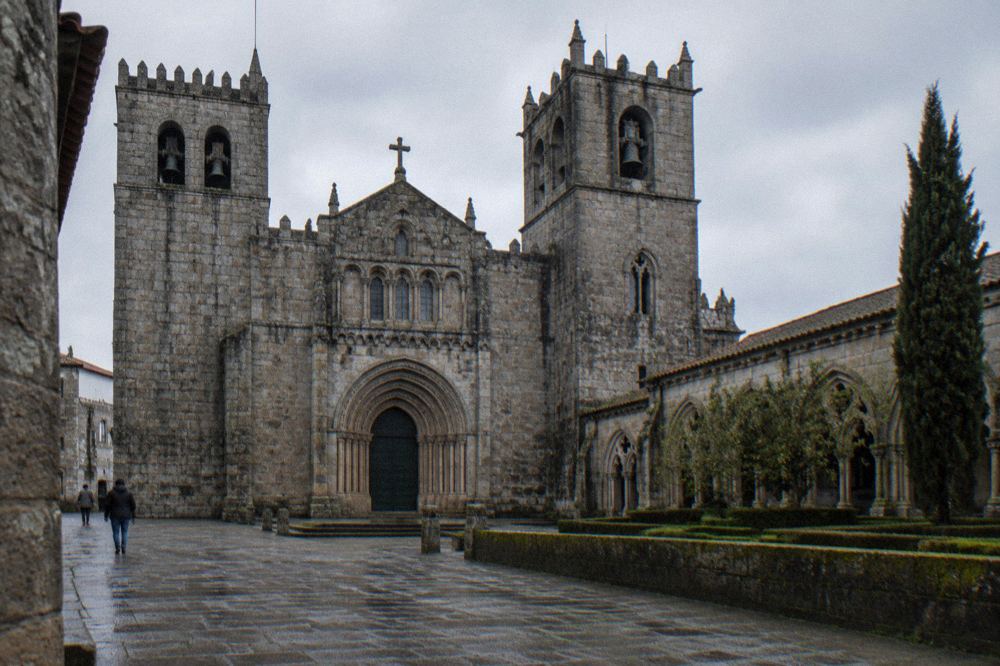
Beyond the cathedral, the Santa Cruz church and the castle keep sit in the historic centre within a few minutes' walk of each other, and the São Frutuoso chapel is the region's most striking early Christian monument, a pre-Romanesque chapel on the outskirts. The D. Diogo de Sousa museum holds the Roman archaeology of Bracara Augusta, the Roman city beneath modern Braga, and costs 5.00 EUR, with 50% off for over-65s, ages 13 to 24 and families. It is closed Mondays, as are most of the city's museums, so plan a rest day accordingly.
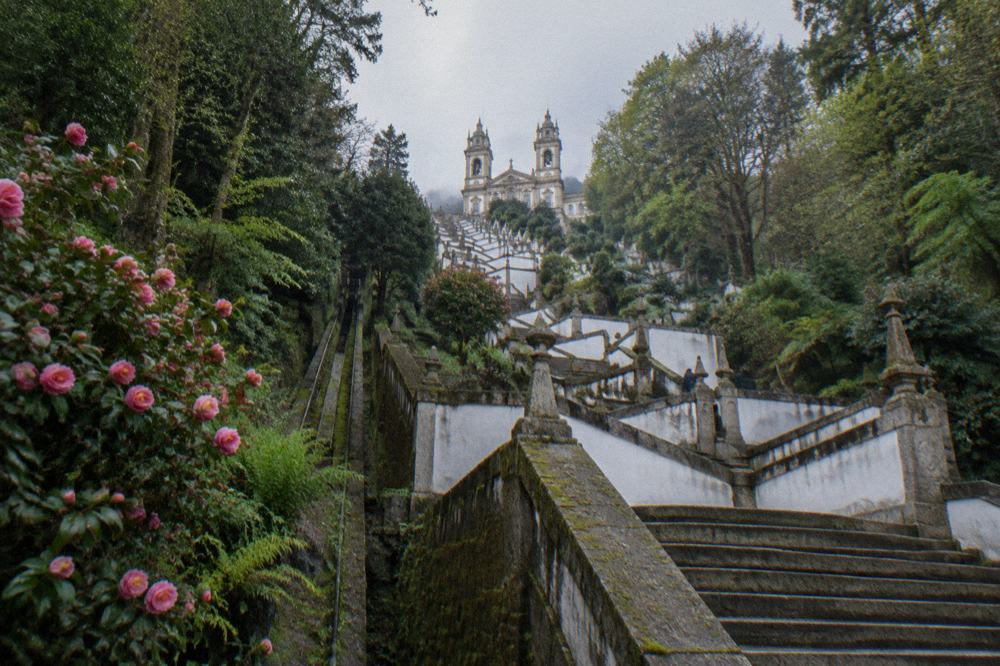
The hill sanctuaries are the half-day excursion. Bom Jesus do Monte, the UNESCO-listed sanctuary whose stairway climbs 566 steps by the Confraria's count, 615 metres long with 116 metres of ascent, is reached on TUB Line 2. The Santuário do Sameiro, the Marian sanctuary further along the ridge, is open around the clock and free. The how to get to Bom Jesus do Monte guide has the full access detail, including the current shuttle arrangement while the funicular is out of service.
Where Do Pilgrims Collect Credential Stamps In Braga?
Pilgrims collect sellos, the stamps that fill the credential, at the Sé de Braga cathedral, at the city's churches, at the tourist office on Avenida da Liberdade and at accommodations along the route. The credential itself is the pilgrim passport issued by pilgrim associations and cathedral authorities, and it must be stamped as the pilgrim progresses so that the pilgrim office in Santiago can issue the Compostela certificate at the end.
The credential is a small folded document with spaces for stamps. It is issued by pilgrim associations in most countries, and in Portugal it can be obtained from pilgrim organisations and from churches along the route. The rule of thumb, which every pilgrim office applies, is that the credential should be stamped at least twice a day on the walking stages, with at least one stamp from a church, albergue or official body each day, so that the record of the pilgrimage is continuous and credible. The exact requirement is set by the pilgrim office in Santiago, and pilgrims should check its current wording before the walk. The wider set of guides lives on Braga Travel Guide.
In Braga, the natural first stamps are the cathedral and the parish churches. The tourist office at Avenida da Liberdade 1 is open Monday to Friday 09:00 to 18:30, with weekend hours of 09:30 to 13:00 and 14:00 to 17:30, and it is the place to ask about local route conditions and the nearest point to rejoin the Central route. Hotels and guesthouses in the city will also stamp the credential, as they do along the whole route.
One practical note: the stamps in Braga are the record that the pilgrimage began here, and a pilgrim starting from Braga should have the city's stamps dated on the day the walking begins or the day before. A credential full of Braga stamps but with no walking record after the city will not support a Compostela claim, because the certificate recognises the walked journey, not the visited city. Collect the stamps, then walk.
What Should You Pack For The Camino From Braga?
Pack light, with broken-in walking shoes, layered clothing for the Minho's changeable weather, rain protection, a credential, a first-aid kit for blisters, and little else. The Minho is the wettest region of Portugal, with October averaging 197.8 mm of rain at the Braga station and July the driest month at 27.9 mm, so rain gear is not optional for most of the year, and the total pack weight should stay well under a tenth of body weight.
The single biggest packing decision is footwear and its preparation. Shoes that have not been walked in will blister, and blisters end more Camino attempts than any other injury. Layers matter more than bulk: the climate normals for the Braga station show July and August mean maximums of 28.2 and 28.7 degrees, but January nights average 3.1 degrees with 8.5 nights below zero, and spring and autumn swing between both in a single day.
| Packing category | What to bring | Why it matters in the Minho |
|---|---|---|
| Footwear | Broken-in walking shoes or boots, spare laces | Wet paths and cobblestones in every season |
| Rain gear | Packable rain jacket, pack cover | 197.8 mm average rain in October, the wettest month |
| Clothing | Two or three layers, quick-dry fabrics | Mean temperatures swing from 3.1 C nights in January to 28.7 C days in August |
| Documents | Credential, passport, EHIC or travel insurance card | The credential is checked at the pilgrim office in Santiago |
| Feet care | Blister plasters, needle, antiseptic, tape | The most common Camino injury |
| Daily carry | Water bottles or reservoir, snacks, sun cream | Long gaps between services on some stages |
| Sleeping | Silk liner or light sleeping bag | Albergues provide bunks, not always bedding |
Money is a small but real consideration. Portugal uses the euro, and Braga levies a municipal tourist tax of 1.55 EUR per person per night, up to a maximum of 4 nights, charged by hotels and local accommodation all year and applying to guests aged 16 and over. Budget for it at every stop in the municipality. On tipping, Turismo de Portugal's own guidance is that service is included in restaurant bills, with an additional tip of about 5 to 10% customary, and taxi tips of 5 to 10% or a rounded-up fare.
When Is The Best Time Of Year To Walk The Camino From Braga?
The best months to walk the Camino from Braga are May, June and September, which combine the region's lowest rainfall with comfortable walking temperatures. July and August are the driest and warmest months but the busiest, while October through January is the wettest period, with October averaging 197.8 mm of rain and 12 rain days at the Braga station, and winter brings nights below zero.
The IPMA's 1991 to 2020 climate normals for the Braga / Merelim station give the honest picture of the Minho's weather. The rainfall numbers are the deciding factor. October is the wettest month on average at 197.8 mm, December follows at 190.3 mm and January at 179.5 mm, with 12 to 13 days of measurable rain in each of those months. July, at 27.9 mm over 4 rain days, and August, at 34.6 mm over 3.8 days, are the driest. May sits in the middle at 89.8 mm over 8.9 days, and June at 40.6 mm over 5.7 days.
| Month | Mean max C | Mean min C | Rain mm | Rain days (1 mm+) |
|---|---|---|---|---|
| Jan | 14.1 | 3.1 | 179.5 | 13.1 |
| Feb | 15.5 | 3.4 | 111.1 | 9.6 |
| Mar | 17.8 | 5.9 | 150.1 | 11.8 |
| Apr | 19.6 | 7.8 | 127.9 | 12.0 |
| May | 23.0 | 10.4 | 89.8 | 8.9 |
| Jun | 26.1 | 13.2 | 40.6 | 5.7 |
| Jul | 28.2 | 14.3 | 27.9 | 4.0 |
| Aug | 28.7 | 14.0 | 34.6 | 3.8 |
| Sep | 26.9 | 12.4 | 67.6 | 6.2 |
| Oct | 22.2 | 10.1 | 197.8 | 12.0 |
| Nov | 17.0 | 6.0 | 170.1 | 12.9 |
| Dec | 14.9 | 3.7 | 190.3 | 13.3 |
Two details in that table surprise people. September is warmer at the top end than June, a mean maximum of 26.9 against 26.1, and it is also wetter, 67.6 mm against 40.6. And the heat of July and August is real but bounded: the station records an average of about ten days at or above 30 degrees in August, against a record high of 42.2 degrees. Winter walking is possible but demands proper gear, with January averaging 8.5 nights below zero at the station.
Where Should You Eat Well In Braga Before The Walk?
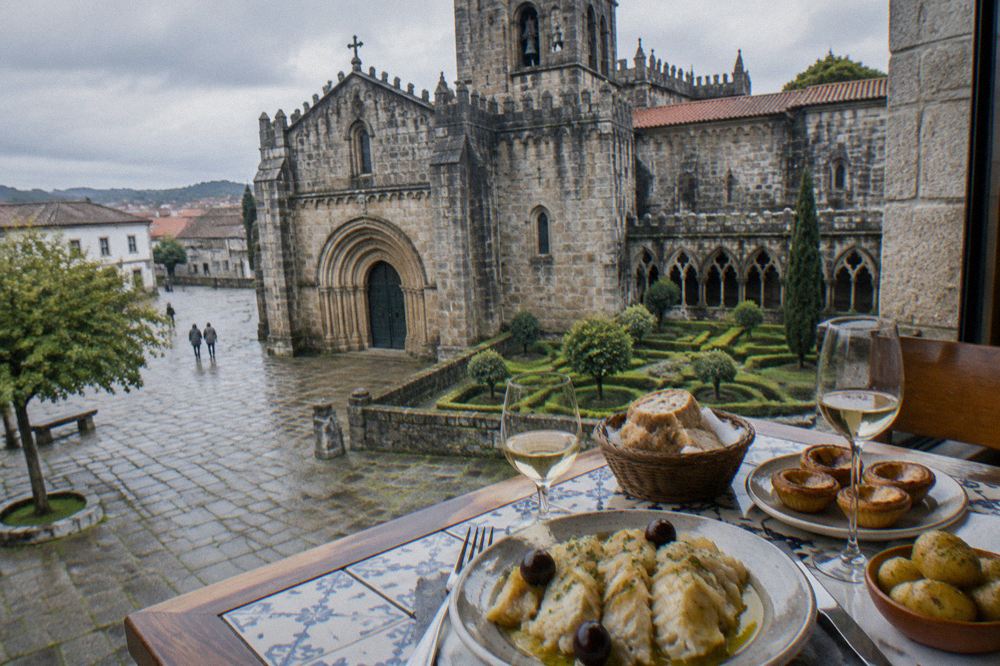
Eat the Minho's table before leaving Braga: bacalhau à Braga, the city's salt cod dish, the frigideiras and pastries of the historic centre, the Pudim Abade de Priscos, a caramel egg pudding, and the local Vinho Verde, the young wine of the Minho. The municipal market, Praça, Mercado Municipal de Braga, is open and running for supplies, and the city's cafés and restaurants cover everything from a pilgrim's cheap meal to a long dinner.
Braga's food identity is the Minho's: hearty, cod-centred and sweet. The city's signature dish, bacalhau à Braga, is salt cod fried with potatoes, onions and olives, and the bacalhau à Braga guide covers where to find the best versions. The Pudim Abade de Priscos is the region's most famous dessert, a rich pudding with origins in a nearby monastery kitchen, and the frigideiras and Braga pastries tradition is the city's other sweet tooth.
Vinho Verde deserves a paragraph of its own because pilgrims walk through its vineyards. It is the Minho's wine, light and young, and the Vinho Verde guide explains the styles, from the crisp whites to the region's rosés and reds. The Braga market is the place to assemble walking snacks, and the Braga restaurants and Braga cafés guides cover where to sit down and do it properly.
Can You Combine The Camino With Sightseeing Around Braga?
Yes, and you should: the Minho around Braga holds Guimarães, Ponte de Lima, the Citânia de Briteiros hillfort, the Peneda-Gerês National Park and the Atlantic coast at Esposende, all reachable by regional bus from the city's bus station. A rest day or two before the walk turns the pilgrimage into a fuller trip, and the AITC bus lines reach every one of these places, with line 101 to Guimarães, line 105 to Ponte de Lima and line 107 to the coast.
Guimarães, the historic town east of Braga, is the region's other great city, and the Guimarães guide covers it in full. There is no direct train from Braga to Guimarães, the bus line 101 is the link, and the Braga and Guimarães in one day page shows how the pairing works for visitors short on time. The Citânia de Briteiros hillfort, one of the region's great Iron Age sites, costs about 5 EUR with the reduced rate at 2.50 EUR, includes the Museu da Cultura Castreja, and keeps daily hours from 27 March to 31 October, 09:30 to 12:30 and 14:00 to 18:00, with a winter schedule from 1 November to 26 March, Tuesday to Sunday.
| Minho side trip from Braga | How to reach it | What it is |
|---|---|---|
| Guimarães | AITC bus line 101 from the bus station | Historic town, castle and ducal palace |
| Ponte de Lima | AITC bus line 105 | Riverside town, old bridge, on pilgrim paths |
| Citânia de Briteiros | Regional bus toward Guimarães, then local connection | Iron Age hillfort, about 5 EUR entry |
| Peneda-Gerês National Park | AITC line 201 to Caldas do Gerês, line 200 to Covide | Portugal's only national park, mountains and waterfalls |
| Esposende coast | AITC line 107 | Atlantic beaches and the Coastal Camino |
| Mosteiro de São Martinho de Tibães | Short hop from the city | The former mother house of the Portuguese Benedictines |
The Mosteiro de São Martinho de Tibães is the closest of these, a monastery on Braga's outskirts that was the mother house of the Portuguese Benedictine congregation, with general admission around 4 to 5 EUR depending on the circuit, closed Mondays. Further out, the Peneda-Gerês National Park guide covers the mountains to the northeast, where summer car access to the Mata de Albergaria section is limited and charged, and the Ponte de Lima page covers the riverside town on the pilgrim paths.
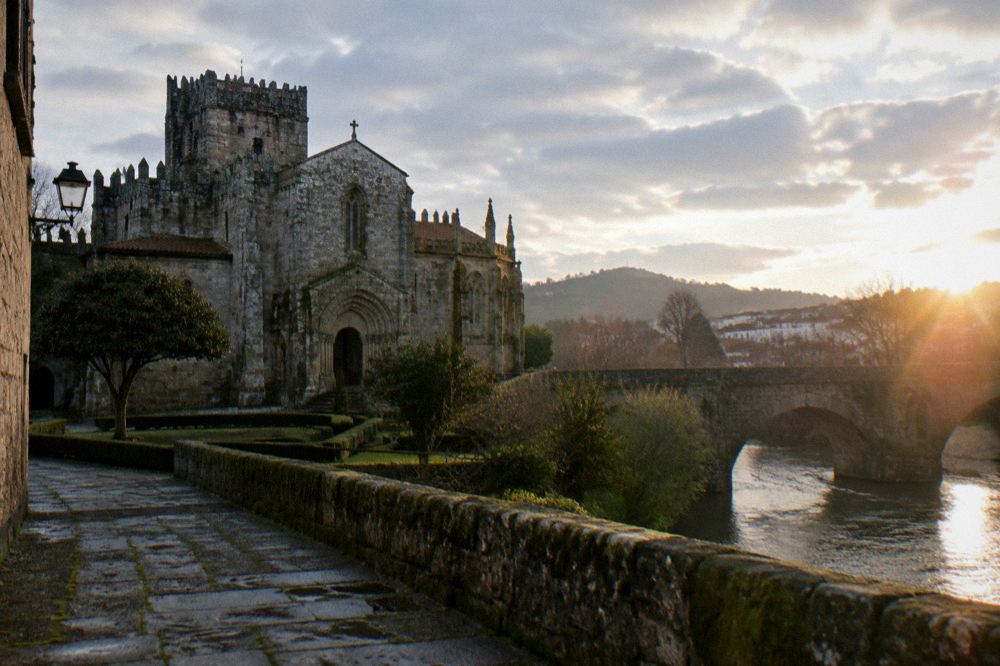
For pilgrims who want a guided send-off rather than a self-guided one, the city has options at several price points. The Explore the Portuguese Rome tour is a 1.5-hour guided walk of the historic centre from $35.35 per person, rated 4.9 from 68 reviews, and the personal and flexible walking tour runs three hours from $11.33 per person, rated 4.7 from 62 reviews, with a guide who adapts the route to what the group wants to see. Both are city tours, not Camino stages, but they are a sound way to learn the streets before you leave them.
Common Questions About The Camino From Braga
Can you start the Camino de Santiago from Braga?
Yes. Pilgrims start the Portuguese Way from Braga by joining the Central route of the Caminho Portugués from the city, collecting credential stamps in Braga's cathedral and churches before setting out. The credential records the journey from wherever the pilgrim begins, and the pilgrim office in Santiago assesses the walked stages, not the starting city.
Which Camino route goes through Braga?
The Caminho Portugués, the Portuguese Way, is the route of the region. Its Central branch passes through the Minho east of Braga, and the Coastal branch runs along the Atlantic to the west. Braga itself sits between the two, and pilgrims join either line from the city.
Do Santiago pilgrims get a discount at Braga Cathedral?
Yes. The cathedral's own ticketing lists a reduced ticket for Santiago pilgrims, alongside reductions for schools, catechism and scout groups. Present the credential at the reception point in the cloister. Single routes cost 3.00 EUR each, any two 6.00 EUR, and all three 7.00 EUR.
How wet is the Camino from Braga?
Wet for much of the year. The IPMA's 1991 to 2020 normals for the Braga station show October as the wettest month at 197.8 mm of rain over 12 rain days, with December and January close behind. July is the driest at 27.9 mm. May, June and September offer the best balance of dry days and comfortable temperatures.
Is Braga worth a rest day on the Camino?
Yes. Braga is one of the Minho's most rewarding cities, with the Sé de Braga cathedral, the Bom Jesus do Monte sanctuary with its 566-step stairway, the Sameiro sanctuary, museums and a strong food scene. The tourist tax is 1.55 EUR per night up to four nights, and the TUB tourist day ticket at 3.35 EUR covers the whole urban network for a day of sightseeing.
Do I need to book accommodation ahead on the Camino from Braga?
In the peak summer months, booking ahead is wise, as July and August are the busiest months on the Portuguese Way. In spring and autumn, pilgrims can often decide day to day. Albergues, the pilgrim hostels along the route, work on a first-come basis in many places, and the credential is shown at check-in.
The Camino from Braga is a pilgrimage that begins in a city worth slowing down in, and the walk north through the Minho's green country is the reward for leaving it. Collect the stamps, check the weather table, pack light, and start walking.