São Frutuoso Chapel In Braga: A Complete Visitor Guide
The Capela de São Frutuoso de Montélios, a small stone chapel on the slopes above Braga in northern Portugal, is one of the country's most remarkable early Christian buildings. This guide explains what it is, how to get there and what to combine it with.
Short answer
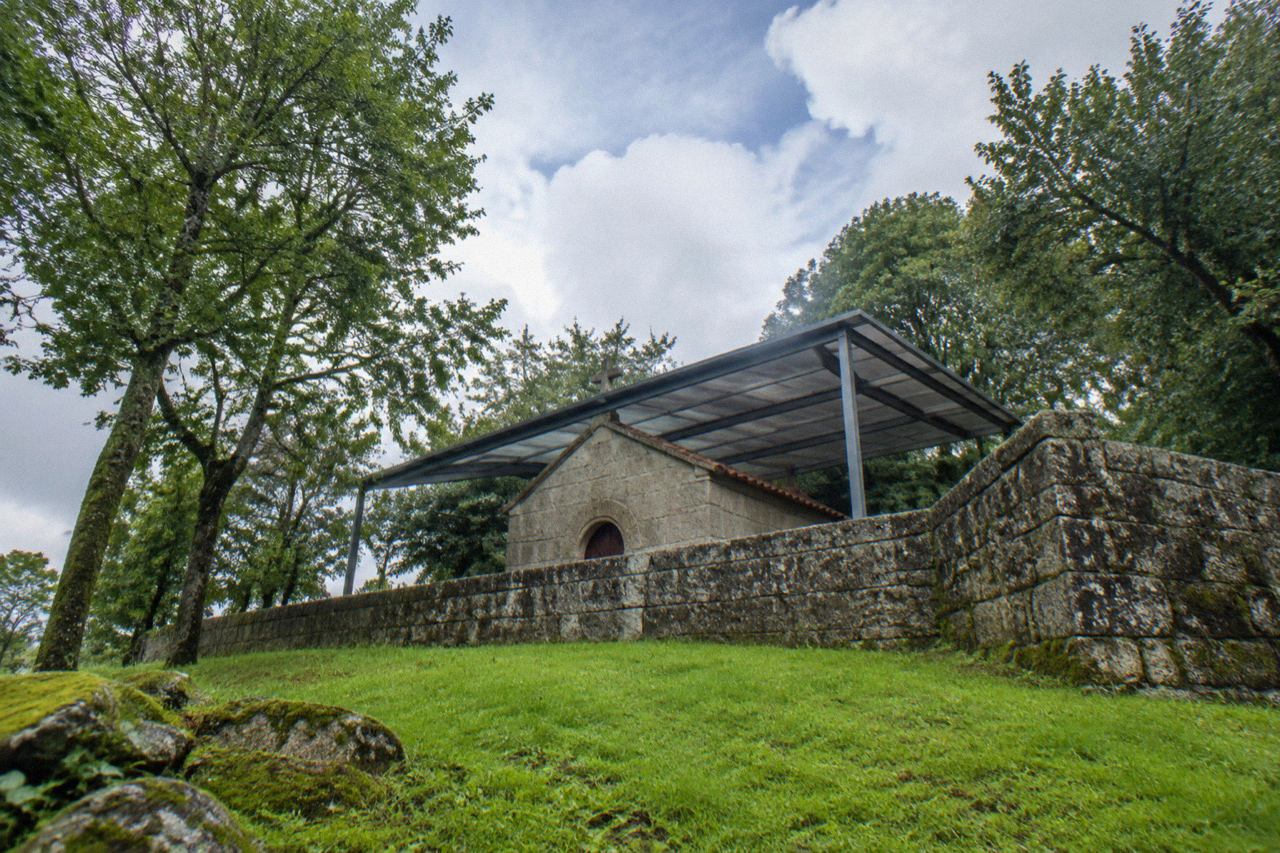
The Capela de São Frutuoso de Montélios is a rare surviving pre-Romanesque chapel on the hillside of Montélios, within the municipality of Braga in the Minho region of Portugal. It is a short trip from the historic centre, it is usually visited as a quiet half-hour stop, and it pairs naturally with Monte Picoto, Sameiro or the São Vítor area.
The Capela de São Frutuoso de Montélios stands on the wooded slopes above Braga, the city in the Minho region of northern Portugal, and it belongs to a category of building almost nothing else in the country can claim. Portugal retains very little architecture from before the Romanesque period, and this small granite chapel, with its plain walls, its horseshoe-arched doorway and its severe, ancient silhouette, is one of the few survivors. It is dedicated to Saint Fructuosus, an early bishop of Braga and one of the great monastic figures of the Iberian church, and it sits in the Montélios area on the edge of the city, a short distance from the São Vítor neighbourhood and the green hill of Monte Picoto.
This is not a big-attraction visit. It is a quiet, contemplative stop that rewards visitors who have already seen the Sé de Braga and the Bom Jesus do Monte sanctuary and want to understand the deeper layer of Braga's religious history. The chapel's setting, on a lane above the city with views back over the urban bowl, is as much a part of the experience as the architecture itself. This guide from Braga Travel Guide covers what the chapel is, how to reach it, what to combine it with, and how it fits into a wider trip to Braga.
What Is The Capela De São Frutuoso?
The Capela de São Frutuoso de Montélios is a small pre-Romanesque chapel on the hillside above Braga, dedicated to Saint Fructuosus of Braga, an early bishop and monastery founder. It is counted among the very few buildings surviving in Portugal from before the Romanesque period, and its plain granite walls, narrow proportions and distinctive arching make it one of the most architecturally significant early Christian monuments in the country.
The chapel's importance is easiest to grasp by comparison. Almost everything a visitor sees in Braga's historic centre, the Sé de Braga, the baroque churches, the tiled facades of Rua do Souto, belongs to the medieval and early modern centuries. São Frutuoso belongs to an earlier stratum entirely. Its forms, the thick walls, the narrow window slits and the arch that crowns its doorway, carry the memory of the Visigothic period, the era between the fall of Roman Bracara Augusta and the arrival of the Moors, when the church in Iberia was building in a vocabulary that had not yet settled into Romanesque.
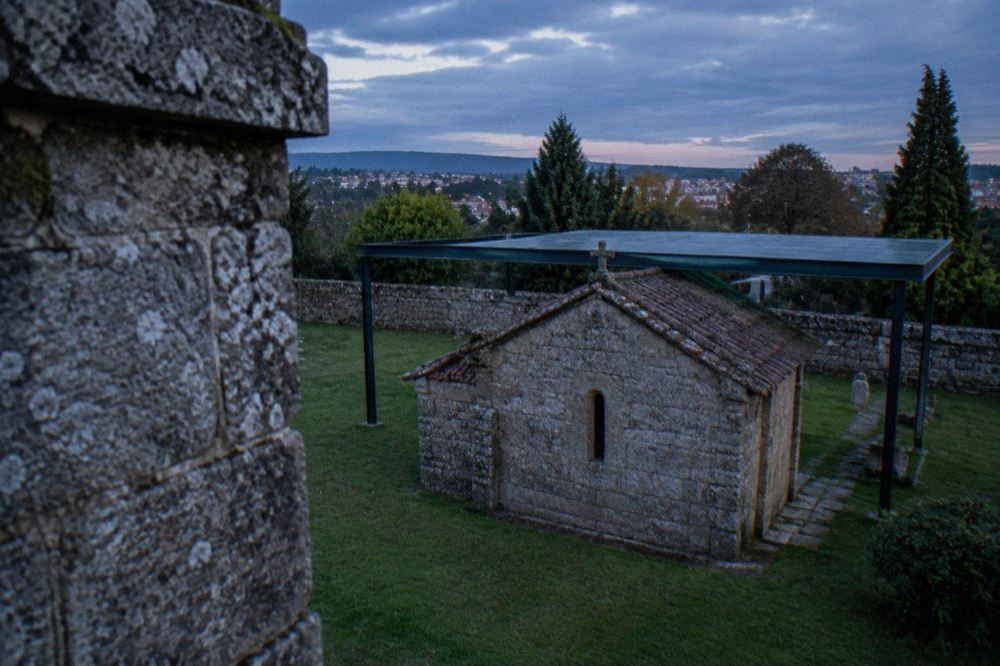
Saint Fructuosus himself matters to the story. A bishop of Braga and a prolific founder of monasteries across the Iberian northwest, he became one of the most venerated figures of the northern Portuguese church, and the chapel at Montélios carries his name and his cult. The connection between the saint, the hillside and the city below is why the site has been a place of local devotion for so many centuries, long after its architectural period passed out of living memory.
What the visitor encounters today is deliberately austere. There is no gilding, no azulejo panel, no carved retable. The chapel's power is in its mass and its age: the sense, standing inside a space barely larger than a large room, of being inside one of the oldest enclosed Christian spaces on Portuguese soil. Visitors who arrive expecting a cathedral-scale monument sometimes leave disappointed; visitors who arrive knowing what they are looking at rarely do.
Where Is São Frutuoso Chapel Within Braga?
The chapel stands in the Montélios area, on the slopes at the northwestern edge of Braga's urban area, within the municipality of Braga and close to the São Vítor neighbourhood and the Monte Picoto park. It is outside the historic centre, uphill and away from the main visitor zone, which is why it sees a fraction of the foot traffic of the Sé de Braga or the Santa Bárbara Garden.
The geography matters for planning. Braga's visitor core, the Praça da República, the cathedral quarter and the Avenida da Liberdade, sits in a shallow urban bowl. Montélios is on the rising ground above it, in the direction of the green belt that also holds Monte Picoto, the wooded hill with its viewpoint and park. A visit to São Frutuoso is therefore a hillside excursion, not a city-centre stroll, and it makes most sense combined with other things in the same direction.
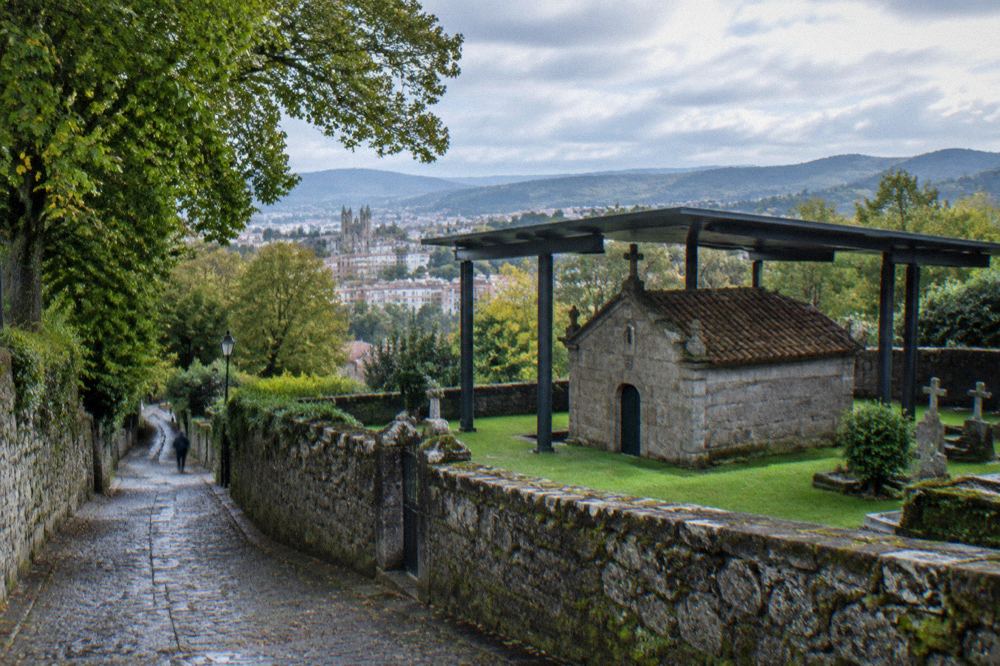
The São Vítor area, which spreads across the slopes nearby, is one of Braga's traditional outer parishes, and the chapel has served this community for centuries. The immediate setting is quiet and residential, with lanes, walls and gardens rather than shops and crowds. That quiet is a genuine part of the appeal: this is one of the few significant monuments in Braga where you can stand alone with the building.
For orientation, think of the chapel as the northwestern anchor of a hillside circuit that could include Monte Picoto's park and viewpoint and, with a car or a longer walk, the sanctuaries that crown Braga's other hills. The Sameiro sanctuary sits on a different hill to the southeast, and Bom Jesus beyond it, so a hillside day in Braga can be split into two natural halves.
A guided visit takes the guesswork out of this kind of routing. The Small-Group Braga Half-Day Tour with Bom Jesus Sanctuary covers the historic centre and the sanctuary in three hours with a local guide, from $68.15 per person, rated 4.8 from 24 reviews, and it suits visitors who want the city's religious geography explained rather than merely walked.
How Do You Get To The Capela De São Frutuoso From Braga City Centre?
The chapel is reached from Braga's centre by a short uphill trip on foot, by local bus or by car, since it sits outside the walkable historic core on the slopes of Montélios. There is no direct rail link and no river or metro system in Braga; the practical choices are walking the climb, riding a TUB urban bus outward from the centre, or driving and parking on the lanes near the site.
Braga's public transport is run by TUB, Transportes Urbanos de Braga, and its 2026 tariff, in force since 21 February 2026, is simple and cheap. The table below shows what a visitor pays.
| Ticket type | 1 zone | 2 zones | Notes |
|---|---|---|---|
| On-board single | 1.55 EUR | 2.00 EUR | Bought from the driver |
| Pre-bought or digital single | 0.75 EUR | 1.50 EUR | Via the TUB mobile app or pre-purchase |
| Tourist day ticket, whole network | 3.35 EUR | 3.35 EUR | 1 day, unlimited rides |
| Tourist 2-day ticket | 6.05 EUR | 6.05 EUR | Per person |
| Tourist 3-day ticket | 8.05 EUR | 8.05 EUR | Per person |
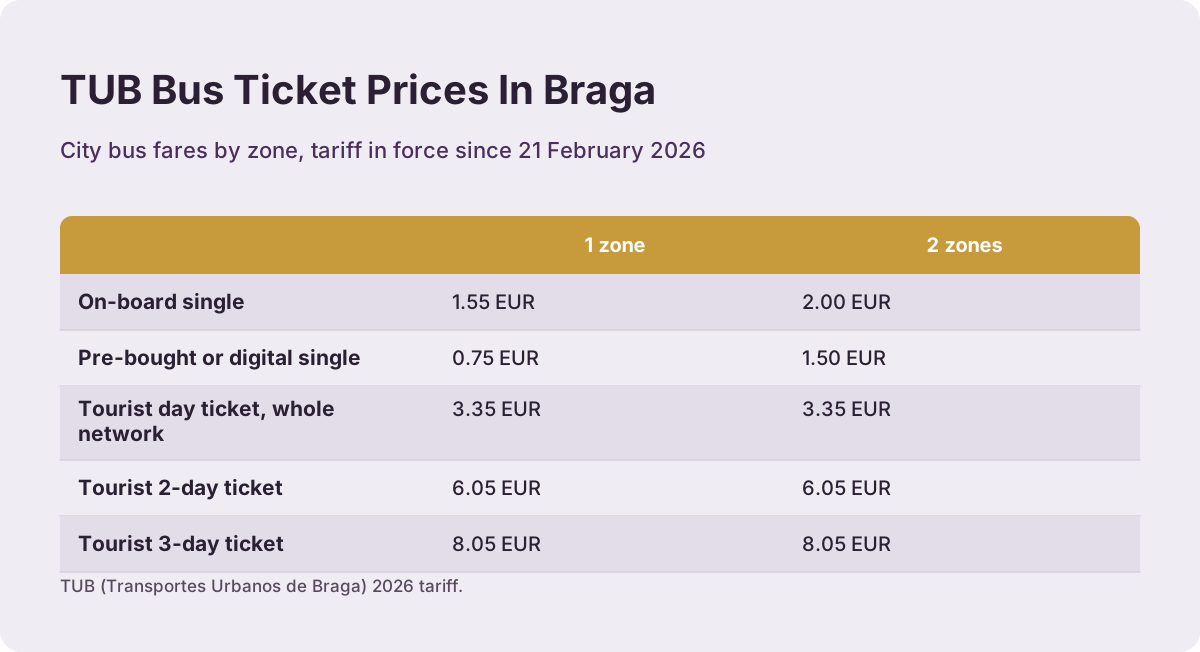
Transfer validity from first validation is one hour on a one-zone ticket and one and a half hours on a two-zone ticket, which is generous for a hillside round trip with a stop. Check the TUB route maps for the stop closest to Montélios before setting out, since services on the outer slopes are less frequent than the city-centre corridors, and confirm the last bus back if you are visiting late in the day.
On foot, the walk from the centre is a genuine climb, on streets that rise steadily once you leave the flat bowl around Praça da República. Visitors who enjoy hill walking will find it a pleasant route through ordinary Braga neighbourhoods; visitors who do not should take the bus outward and walk the final stretch, or drive. By car, the lanes around Montélios are narrow but passable, and street parking in the area is typically easier than in the historic centre, though you should never assume a specific space will be free.
A tuk tuk tour is a third option that suits this kind of spread-out geography particularly well, since the electric vehicles handle Braga's slopes without effort and the drivers know the outer lanes. The Braga Tuk Tuk City Tour runs from $22.66 per person, rated 4.8 from 179 reviews, over 30 minutes to 2 hours depending on the option.
What Can You See At The Chapel Itself?
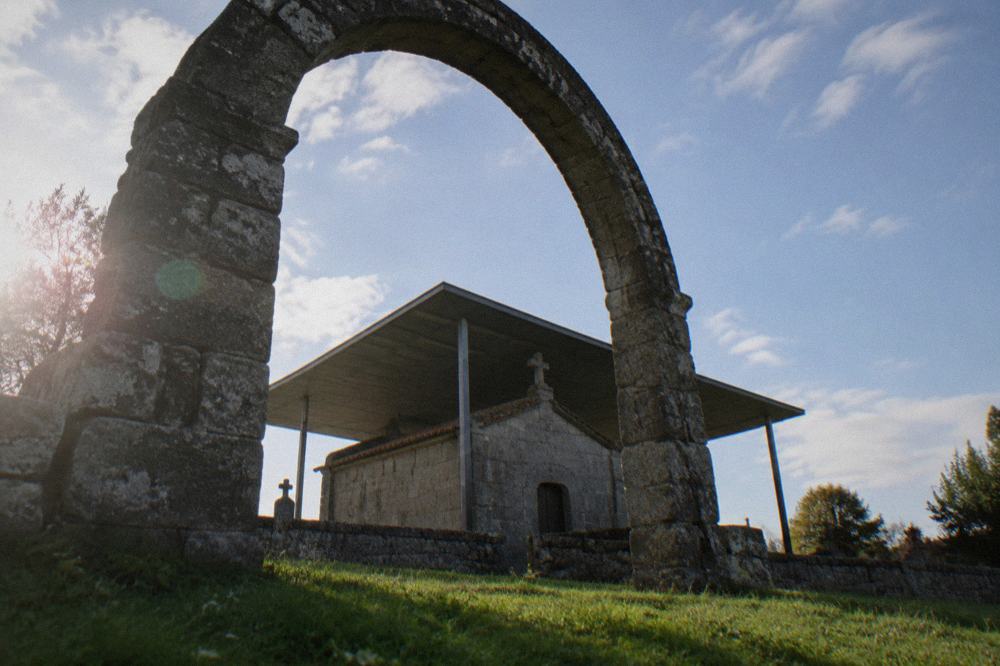
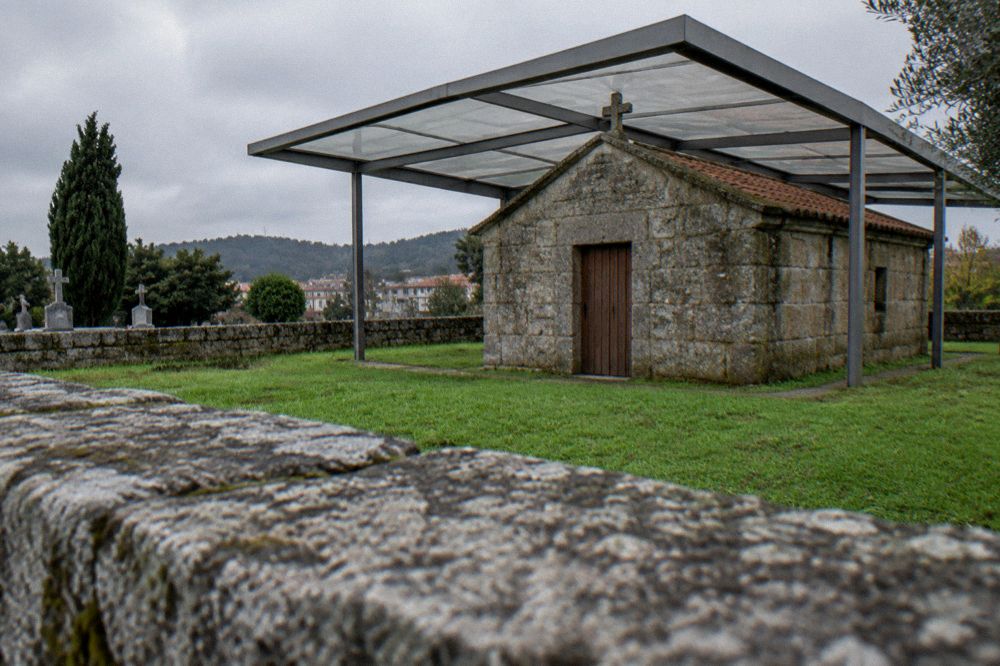
The chapel's exterior is the main sight: plain granite walls, a narrow arched doorway, small slit windows and a low, heavy profile that reads as ancient even to an untrained eye. Inside, the space is small and severe, with the same stonework continuing, and the experience is one of atmosphere and proportion rather than decoration. There is no shop, no cafe and no museum wing; the building and its hillside setting are the entire visit.
Give the exterior time. Walk around the whole chapel, because the light changes the stonework through the day and the different elevations show the building's construction plainly. The doorway arch is the detail most visitors come to see, and photographers should aim for the golden hours when the low sun rakes across the granite and gives the walls depth.
Inside, the scale is the thing. The interior is intimate, dim and cool, and the contrast with Braga's baroque churches, all gold leaf and painted plaster, is total. This is a building that predates that entire visual world by centuries, and standing in it recalibrates your sense of how old the Christian presence in this region is.
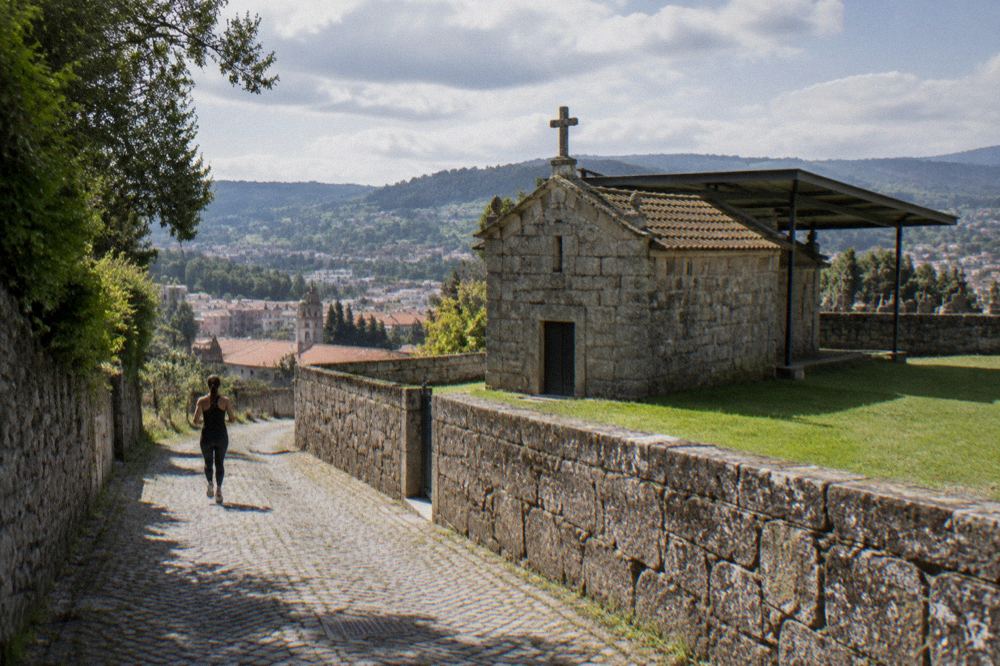
The hillside setting deserves the rest of your time. The lane approaches, the trees and the views back toward the city give the site its character, and the walk around the immediate area takes only a few minutes but rounds out the visit. Bring water in summer, since the slopes are exposed in places, and note that there are no visitor facilities at the site itself.
Are There Opening Hours And Admission Fees For São Frutuoso?
No reliable opening hours or admission fees for the Capela de São Frutuoso can be published here, because no official source stating them has been verified. The chapel is a small, living religious building rather than a ticketed attraction, and access in practice depends on the day. Check the notice at the site or ask at Braga's tourist office, on Avenida da Liberdade 1, before making a special trip.
This is an honest gap, and it is worth explaining why it matters. Braga's major monuments, the cathedral, the museums, the sanctuaries, publish hours and prices that can be checked and planned around. A small hillside chapel does not always work that way. Visitors who arrive expecting guaranteed access can be disappointed, and the safe pattern is to treat São Frutuoso as a flexible stop on a hillside loop rather than the fixed anchor of a day.
If the chapel is closed on arrival, the surrounding area still rewards the trip: the lanes, the views and the proximity of Monte Picoto mean the journey is not wasted. And because Braga's ticketed sights are cheap by the standards of most European cities, a day built around the verified sites below costs very little.
| Braga sight | Verified admission | Verified hours |
|---|---|---|
| Sé de Braga, one route | 3.00 EUR | Mon-Sat 09:30-13:00, 14:30-17:00; Sun 09:30-10:45, 14:30-17:00 |
| Sé de Braga, all three routes combined | 7.00 EUR | Same visit hours, last entry 30 min before closing |
| Museu dos Biscainhos | 7.50 EUR, garden included | Tue-Sun 10:00-12:30, 14:00-17:30 |
| Museu de Arqueologia D. Diogo de Sousa | 5.00 EUR | Tue-Sun 10:00-17:30 |
| Museu Pio XII, whole museum | 4.00 EUR | Tue-Sat 09:30-12:30, 14:30-18:00 |
| Santuário do Sameiro, precinct | Free, open 24 hours | Always open |
| Bom Jesus do Monte, sanctuary and grounds | Free | Basilica summer 08:00-19:00, winter 08:00-18:00 |
One live operational note for anyone planning a hillside day: the Bom Jesus funicular has been out of service since 26 September 2026, with a replacement shuttle running every day from 09:00 to 20:00, roughly every 30 minutes each way, between the Portico and the sanctuary. Check the operator's notice before you go if a ride on it forms part of your plan.
How Does São Frutuoso Compare With Braga'S Other Sacred Buildings?
São Frutuoso occupies a category of its own in Braga: it is the city's window into the earliest Christian centuries, whereas the Sé de Braga, the Sameiro sanctuary and the Tibães monastery represent the Romanesque, baroque and monastic golden ages respectively. A visitor who sees all four in sequence effectively walks through a thousand years of Portuguese religious architecture in a single day.
The comparison is easiest to see in a table, because the four buildings answer different questions.
| Building | Architectural world | What it shows best | Best paired with |
|---|---|---|---|
| Capela de São Frutuoso | Pre-Romanesque | Survival, austerity, early monastic Christianity | Monte Picoto and the São Vítor slopes |
| Sé de Braga | Romanesque core, later layers | The cathedral as a living, evolving institution | The historic centre and the castle keep |
| Mosteiro de São Martinho de Tibães | Monastic baroque | The power and wealth of the religious orders | A half-day trip to the Tibães side of the municipality |
| Santuário do Sameiro | Monumental modern pilgrimage architecture | Pilgrimage at scale, hilltop views | Bom Jesus and the hillside circuit |
The Sé de Braga rewards the most time of the four. Its three visit routes, the Treasury-Museum, the funerary chapels and high choir, and the cathedral itself, each cost 3.00 EUR, with a combined ticket at 7.00 EUR and any two routes at 6.00 EUR. Tickets are bought at the reception point in the cloister, reached from Rua do Cabido or the side entrance by Rua D. Diogo de Sousa, and visits are suspended during services.
The Tibães monastery is the closest thing Braga has to a great monastic ensemble, the mother house of the Portuguese Benedictine congregation, with church, cloisters and grounds that fill an easy half-day. Admission is about 4 to 5 EUR depending on the circuit, and the monastery is closed on Mondays. São Frutuoso and Tibães make a natural pairing for visitors interested in the monastic centuries, one showing the cell, so to speak, and the other the cathedral of the order.
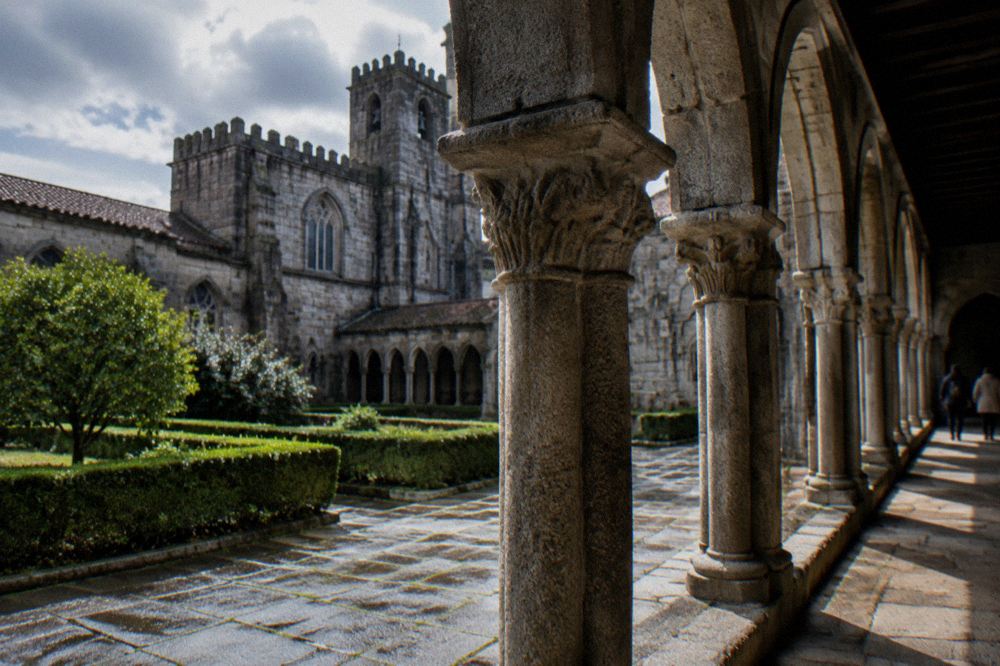
For the Roman layer that underlies all of this, the Museu de Arqueologia D. Diogo de Sousa displays the material evidence of the Roman city that the chapel's builders inherited and remembered. At 5.00 EUR, Tuesday to Sunday 10:00 to 17:30, it is the best single stop for context, and its collection turns an afternoon of chapels and cloisters into a coherent story.
What Else Is There To Do Near São Frutuoso?
The chapel's immediate surroundings offer Monte Picoto's park and viewpoint, the ordinary streets and lanes of the São Vítor area, and easy onward routes toward the city's other hillside sights. Because Montélios sits at the edge of the built-up area, the neighbourhood is one of the best in Braga for a walk that mixes heritage with green space, all within the municipality and without needing a car once you are up there.
Monte Picoto is the obvious companion stop. The park covers a wooded urban hill with a 360-degree viewpoint at its summit, walking and cycling paths, picnic areas and free entry, which makes it the natural place to spend the hour after seeing the chapel. Families in particular will find it a better half of a hillside morning than the chapel alone, and it features in the site's wider guide to things to do in Braga.
The São Vítor area itself is worth a slow look. It is not a monument district but a lived-in Braga neighbourhood, and walking its streets is the kind of low-key experience that gives a trip texture: small shops, gardens, the sounds of an ordinary Portuguese morning. Visitors walking between the chapel and Monte Picoto will pass through it anyway.
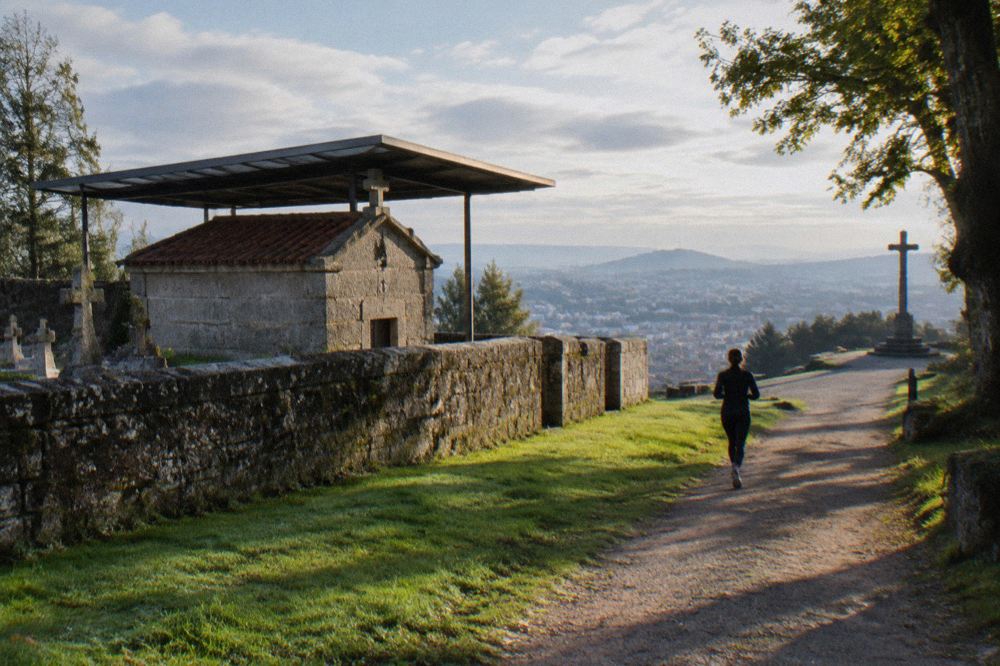
Further afield but in the same spirit of early and medieval Portugal, the Citânia de Briteiros iron-age settlement, reachable as a day trip from Braga, adds the pre-Roman layer to the story: its hillfort ruins, at about 5 EUR admission including the Museu da Cultura Castreja, sit in the hills of the neighbouring Guimarães side of the region. And for visitors walking the pilgrim road, the Camino from Braga heads out through exactly this kind of northern hill country toward Santiago de Compostela, a route whose medieval piety is the direct descendant of the world that built São Frutuoso.
When Is The Best Time Of Year To Visit São Frutuoso?
The best months to visit are May, June, September and early October, when Braga's hillside is warm enough for walking but before the October rains arrive, with July and August hotter but drier and May and June the greenest. Winter visits are perfectly possible, but the slopes around Montélios feel the season, and rain days cluster heavily from October through January.
The numbers behind that advice come from IPMA's 1991 to 2020 climate normals for the Braga / Merelim station, the official record for the city itself.
| Month | Mean max C | Mean C | Rain mm | Days with 1 mm or more |
|---|---|---|---|---|
| May | 23.0 | 16.7 | 89.8 | 8.9 |
| Jun | 26.1 | 19.7 | 40.6 | 5.7 |
| Jul | 28.2 | 21.2 | 27.9 | 4.0 |
| Aug | 28.7 | 21.4 | 34.6 | 3.8 |
| Sep | 26.9 | 19.7 | 67.6 | 6.2 |
| Oct | 22.2 | 16.1 | 197.8 | 12.0 |
| Nov | 17.0 | 11.5 | 170.1 | 12.9 |
| Dec | 14.9 | 9.3 | 190.3 | 13.3 |
Two details in that table surprise people. October, not a winter month, is Braga's wettest on average at 197.8 mm, wetter even than December. And September is actually warmer at the top end than June, with a mean maximum of 26.9 C against June's 26.1 C, while still being a relatively dry month. That makes September an excellent hillside month: warm, green after the summer, and before the October deluge.
For visitors with flexibility, the festival calendar adds another layer. Braga's Holy Week processions, the Semana Santa, fill the historic centre in the week before Easter, and the São João festivities peak on the night of 23 June into the 24 June municipal holiday. Both make the city busy and memorable, and both change the character of a hillside walk, since the slopes are where many locals retreat when the centre fills up.
Should You Visit São Frutuoso On A Guided Tour?
Most guided tours of Braga focus on the historic centre and Bom Jesus and do not include São Frutuoso, so the chapel is usually a self-guided stop, but a private guide can build it into a custom route and the standard tours still give you the context that makes the chapel meaningful. The practical answer: take a standard tour for the city, then visit the chapel yourself, or book a private tour and ask for Montélios by name.
For a free introduction to the city's story, book a free walking tour here. (Guided in English, Spanish and Portuguese)
The standard products are strong. The Small-Group Braga Half-Day Tour with Bom Jesus Sanctuary, three hours from $68.15 per person and rated 4.8 from 24 reviews, is the site's featured pick for good reason: it covers the centre and the sanctuary in one morning or afternoon, with a guide who can answer the questions this article can only pose. Check availability if that combination fits your dates.
For visitors who want São Frutuoso itself on the itinerary, the private option is the one that bends. The Braga Private Walking Tour with a Professional Guide runs two hours from $259.43 per person, rated 5 from 3 reviews, and a private route is where a custom hillside loop including Montélios is realistic; raise the chapel when you book and the guide will build the morning around it.
The budget-friendly middle ground is the tuk tuk. The Braga Tuk Tuk City Tour, from $22.66 per person and rated 4.8 from 179 reviews, covers the spread-out geography that tires walkers, and its longer options reach beyond the centre, so ask the driver about extending toward the northwestern slopes.
There is also a genuinely free option in the city's walking tours. The Essential Free Tour of Braga (guided in Spanish) on GuruWalk, led by a guide with a blue umbrella, runs about two hours, is free with tips, and is rated 4.58 from 586 reviews. GuruWalk's pay-what-you-want model means no fixed price at all; you tip the guru at the end. It covers the centre rather than Montélios, but as an orientation before a self-guided hillside day it is hard to beat.
How Does São Frutuoso Fit Into A Braga Itinerary?
The chapel fits best as the anchor of a hillside half-day: São Frutuoso, Monte Picoto and the São Vítor lanes in the morning, then the historic centre and the cathedral in the afternoon, with Bom Jesus or Sameiro on a separate day if your stay allows. One day in Braga can include it as a quick stop; two or three days let you give the hillside its own morning without rushing.
A sample hillside morning looks like this. Head out from the centre by bus or on foot after breakfast, reach Montélios while the light is still low and raking across the stonework, spend twenty unhurried minutes at the chapel, then walk on to Monte Picoto for the viewpoint and a rest in the park. Come down through São Vítor, and you are back in the centre by early afternoon with the hardest walking of your whole trip already done.
The table below shows how the chapel slots into stays of different lengths.
| Stay length | Where São Frutuoso fits | Suggested shape |
|---|---|---|
| One day | Optional morning stop if you start early | Centre and cathedral first, hillside only if time allows |
| Two days | Anchor of the second morning | Day one centre, day two hillside and sanctuary |
| Three days | Relaxed hillside half-day | Full morning at Montélios, Monte Picoto, then Sameiro |
| Day trip from Porto | Usually skipped | Focus on the centre and Bom Jesus instead |
Visitors on a day trip from Porto should generally not attempt the chapel: the round trip is short, and the centre plus Bom Jesus already fills it comfortably. São Frutuoso rewards the slower visitor, the one with a second morning to spend. That is not a defect. It is precisely why the chapel still feels like a discovery.
Before any stay, two practical notes. Braga charges a municipal tourist tax of 1.55 EUR per person per night, for up to four nights, all year, collected by your accommodation. And if your trip continues onward toward the coast or the Lima valley, the Ponte de Lima area makes a gentle contrast to Braga's granite and hills.
Common Questions About The São Frutuoso Chapel
What is the Capela de São Frutuoso?
It is a small pre-Romanesque chapel at Montélios, on the slopes above Braga in northern Portugal, dedicated to Saint Fructuosus, an early bishop of Braga and monastery founder. It is one of the few buildings surviving in Portugal from before the Romanesque period.
Is the São Frutuoso Chapel in Braga city centre?
No. It stands in the Montélios area on the hillside at the northwestern edge of Braga's urban area, near the São Vítor neighbourhood and the Monte Picoto park, outside the walkable historic core.
How much does it cost to visit the Capela de São Frutuoso?
No verified admission fee or opening hours can be published, because no official source stating them has been confirmed. Check the notice at the site or ask at Braga's tourist office on Avenida da Liberdade 1 before making a special trip.
How do I get to São Frutuoso from Braga centre?
On foot via a steady uphill walk, by TUB urban bus, or by car. A TUB on-board single costs 1.55 EUR for one zone, a pre-bought or digital single 0.75 EUR, and a whole-network tourist day ticket 3.35 EUR, under the tariff in force since 21 February 2026.
What should I combine with the São Frutuoso Chapel?
Monte Picoto's park and viewpoint are the natural companions, both on the same hillside. With more time, the Sameiro sanctuary and the Tibães monastery extend the sacred-architecture theme, and the Museu de Arqueologia D. Diogo de Sousa adds the Roman context underneath it all.
Is the Capela de São Frutuoso worth visiting on a short Braga trip?
Only if you have a second morning. On a one-day visit the historic centre, the Sé de Braga and Bom Jesus do Monte are better uses of your time; the chapel rewards slower itineraries and visitors with a specific interest in early medieval architecture.
Whether you reach it on a quiet Tuesday morning or at the end of a long hillside loop, the Capela de São Frutuoso de Montélios gives you something Braga's grander monuments cannot: a direct, unmediated encounter with the oldest layer of the city's faith, standing in plain granite above the rooftops.