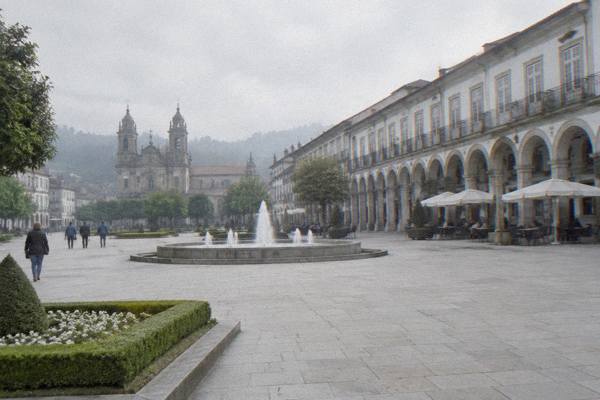
Dom Diogo De Sousa Museum In Braga: Tickets, Hours And What To See
The Museu de Arqueologia D. Diogo de Sousa in Braga, Portugal, holds the Roman past of Bracara Augusta: mosaics, inscriptions, ceramics and everyday objects dug from the city under your feet. Here are its verified hours, ticket prices and what a visit covers.
Short answer
The Dom Diogo de Sousa Museum in Braga, Portugal, is the city's archaeology museum, open Tuesday to Sunday from 10:00 to 17:30. A normal ticket costs 5.00 EUR, with half price for over-65s, ages 13 to 24 and families, and free entry for under-12s with an adult. It closes on Mondays, 1 January, Easter Sunday, 1 May, 24 June and 25 December.
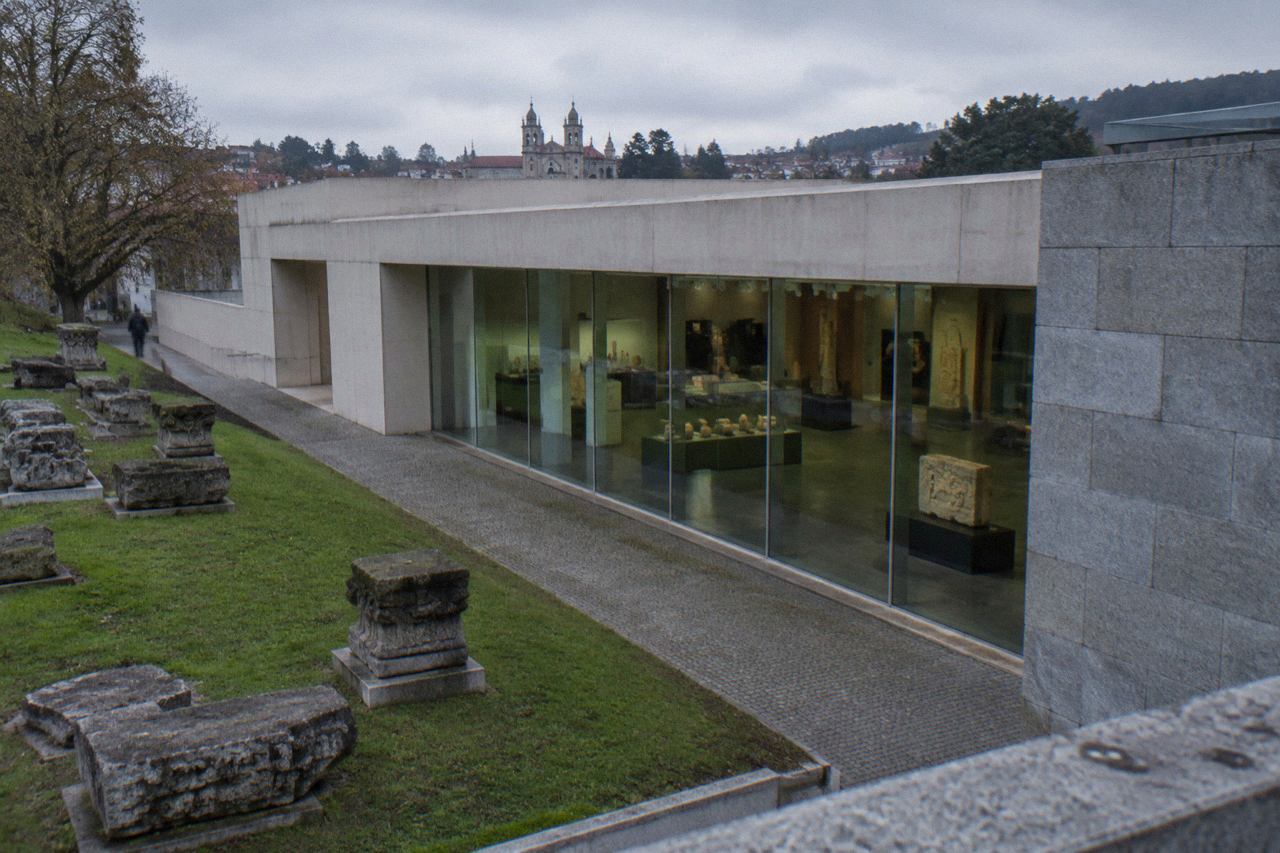
The Museu de Arqueologia D. Diogo de Sousa in Braga, Portugal, is the city's archaeology museum, and its subject is the city itself: the Roman town of Bracara Augusta, the settlements that came before it and the centuries that followed, all read from objects recovered in and around Braga. The museum is named after D. Diogo de Sousa, the archbishop whose name also survives in the street that runs beside the Sé de Braga, and it exists because Braga is one of those places where almost any hole dug in the centre turns up something Roman. For visitors, it answers a question the streets cannot: what lies underneath the granite you are walking on.
Most of the collection is Roman, from the era when Bracara Augusta was an important town of the province, but the museum also covers the Iron Age communities of the region and the medieval period. If your trip includes the Sé de Braga and the other historic-centre sights, this museum is the one place that puts all of it into a single timeline.
What Is The Dom Diogo De Sousa Museum In Braga?
The Dom Diogo de Sousa Museum is Braga's municipal archaeology museum, devoted to the material remains of Bracara Augusta and the surrounding region, from pre-Roman settlements through the Roman era and into the Middle Ages. It is named after D. Diogo de Sousa, an archbishop of Braga, and its collection is built around finds excavated within the city. A normal ticket costs 5.00 EUR, and the museum is open Tuesday to Sunday from 10:00 to 17:30.
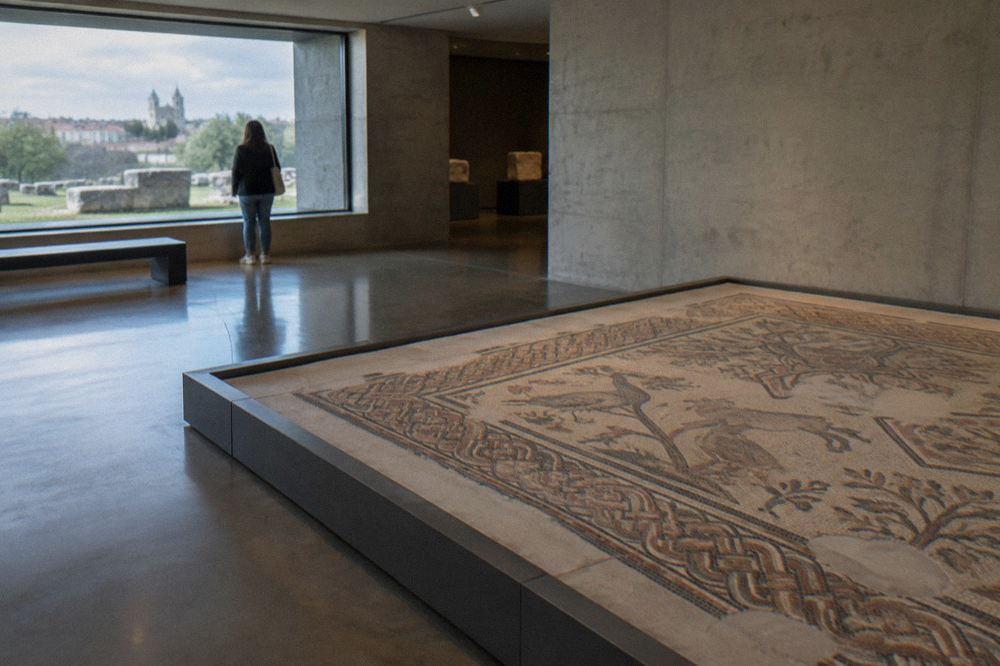
Braga's Roman past is unusually close to the surface. The city was an important Roman town, and the modern streets still follow parts of the ancient grid. Excavations for buildings, basements and infrastructure have recovered mosaics, tombstones, pottery, coins, glass and tools, and the museum gathers this material into a coherent story. Where the historic centre shows you the Roman inheritance in the shape of the streets, the museum shows you the objects themselves.
The museum's approach is chronological and thematic rather than spectacular. You will not find blockbuster pieces here; you will find inscriptions that name the people who lived in Bracara Augusta, mosaic floors from Roman houses, ceramics from everyday life, and material from the Iron Age hill forts of the region, including objects connected to sites such as Citânia de Briteiros, which you can visit as a day trip from Braga. For many travellers this is the appeal: the museum explains the city, and the city then explains the museum.
It is also a museum of manageable size. The galleries can be read in an hour or so at a steady pace, or longer if you read every label. That makes it a natural pairing with the cathedral, which stands a short walk away: the Braga Cathedral visit routes and the archaeology museum together cover the two deepest layers of the city's history, Roman and medieval, in a single morning.
What Are The Opening Hours And Ticket Prices At The Dom Diogo De Sousa Museum?
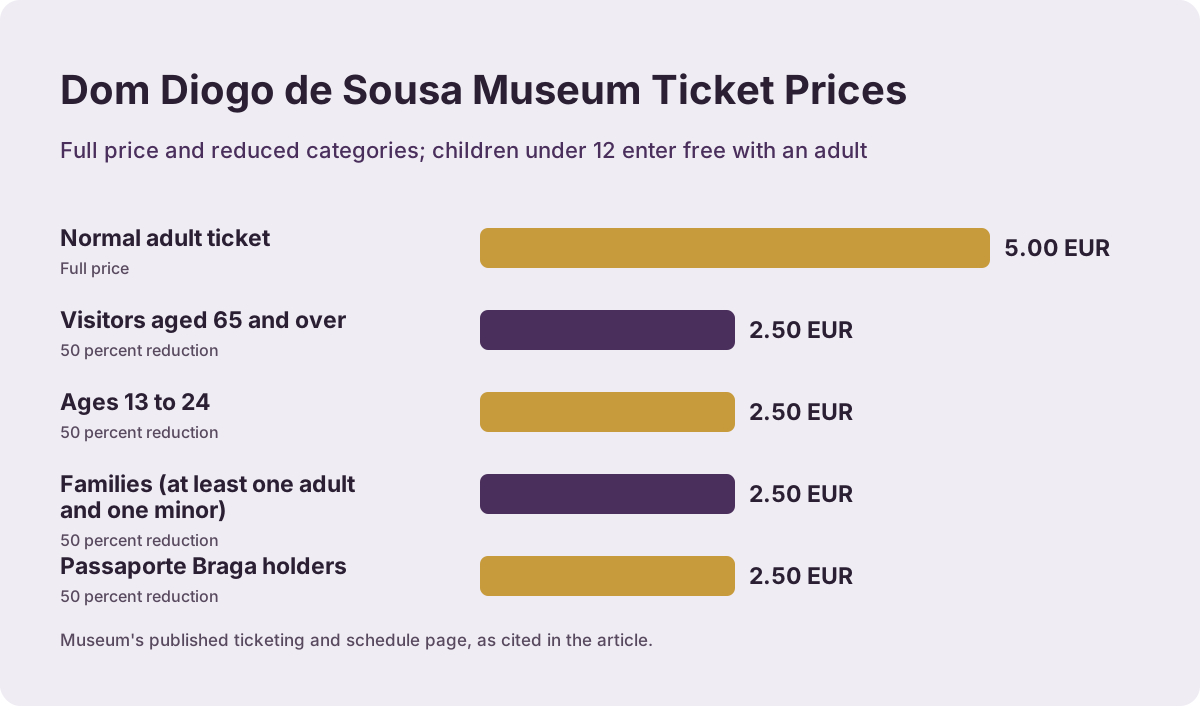
The Dom Diogo de Sousa Museum is open Tuesday to Sunday from 10:00 to 17:30, and a normal ticket costs 5.00 EUR. Half price, 2.50 EUR, applies to visitors aged 65 and over, ages 13 to 24, and families with at least one adult and one minor. Children under 12 enter free with an adult. The museum closes on Mondays plus 1 January, Easter Sunday, 1 May, 24 June and 25 December.
Those are the museum's own published hours and prices, read from its ticketing and schedule page. The half-price category is broader than many visitors expect: a family visiting with teenage children pays 2.50 EUR for the teenagers and 2.50 EUR for the family rate on the adult tickets, and under-12s cost nothing. Holders of the "Passaporte Braga" also qualify for the 50 percent reduction.
| Category | Price | Notes |
|---|---|---|
| Normal adult ticket | 5.00 EUR | Full price |
| Visitors aged 65 and over | 2.50 EUR | 50 percent reduction |
| Ages 13 to 24 | 2.50 EUR | 50 percent reduction |
| Families (at least one adult and one minor) | 2.50 EUR | 50 percent reduction |
| Passaporte Braga holders | 2.50 EUR | 50 percent reduction |
| Children under 12 | Free | Must be accompanied by an adult |
| Day | Hours |
|---|---|
| Tuesday to Sunday | 10:00 to 17:30 |
| Monday | Closed |
| 1 January | Closed |
| Easter Sunday | Closed |
| 1 May | Closed |
| 24 June (Braga municipal holiday) | Closed |
| 25 December | Closed |
Note the 24 June closure in particular. Braga's municipal holiday falls on 24 June, during the Festas de São João, and while the city is at its liveliest that week, several museums including this one shut for the day. If your visit coincides with São João, plan the museum for another day and enjoy the festivities instead.
One further rule matters for longer stays: residents of Portugal can enter free on 52 days a year of their own choosing, with proof of residence. That rule is specific to this museum among Braga's municipal museums and does not apply to short-term foreign visitors.
A guided visit is one way to see the museum in context, and the Braga Small-Group Walking Tour & Bom Jesus covers the historic centre with a guide who can point out where the Roman stones sit inside the modern city, before heading up to the sanctuary on the hill. Check availability
Want the Roman layer explained on foot? Book a free walking tour here. (Guided in English, Spanish and Portuguese)
What Will You See Inside The Museum'S Galleries?
The museum's collection runs from the Iron Age to the medieval period, with Roman Bracara Augusta as its core: mosaic floors, Latin inscriptions, tombstones, ceramics, glass, coins and everyday tools recovered from excavations in and around Braga. The displays also cover the pre-Roman hill-fort culture of the Minho region and the early medieval city, so the visit reads as a timeline of the place rather than a single-era showcase.
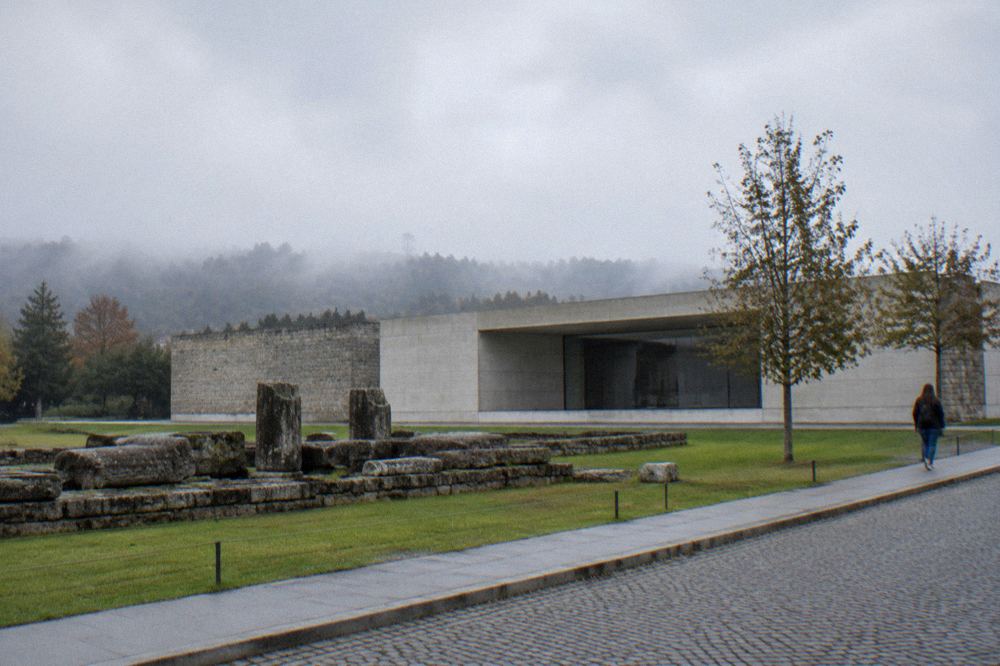
The Roman galleries carry the weight of the visit. Bracara Augusta's inscriptions are the closest thing the city has to the voices of its Roman inhabitants: tombstones naming the dead, dedications naming officials, fragments that record the ordinary bureaucracy of a provincial town. Alongside them sit the domestic material, the amphorae, the fine tableware, the glass vessels and the coins, which together sketch what a Roman household in northern Iberia actually owned. Mosaic floors excavated from the town are displayed so you can walk around them and read the geometry the way their owners did.
The pre-Roman material connects Braga to the wider region. Before the Romans, the hills of the Minho were dotted with fortified hill settlements, the castros, whose stone foundations still stand at sites like Citânia de Briteiros. The museum's Iron Age objects, the ceramics, tools and ornaments, come from that world, and seeing them first makes sense of what the Romans replaced or absorbed. If a hill-fort visit is on your itinerary, do the museum beforehand and the stones will mean more.
The medieval section closes the story. Braga remained an important city after Rome fell away, with the cathedral at its heart, and the museum's later material bridges the gap between the archaeological and the architectural. Visitors heading on to the Biscainhos Museum or the Pio XII Museum and Medieval Tower will find this section a useful primer.
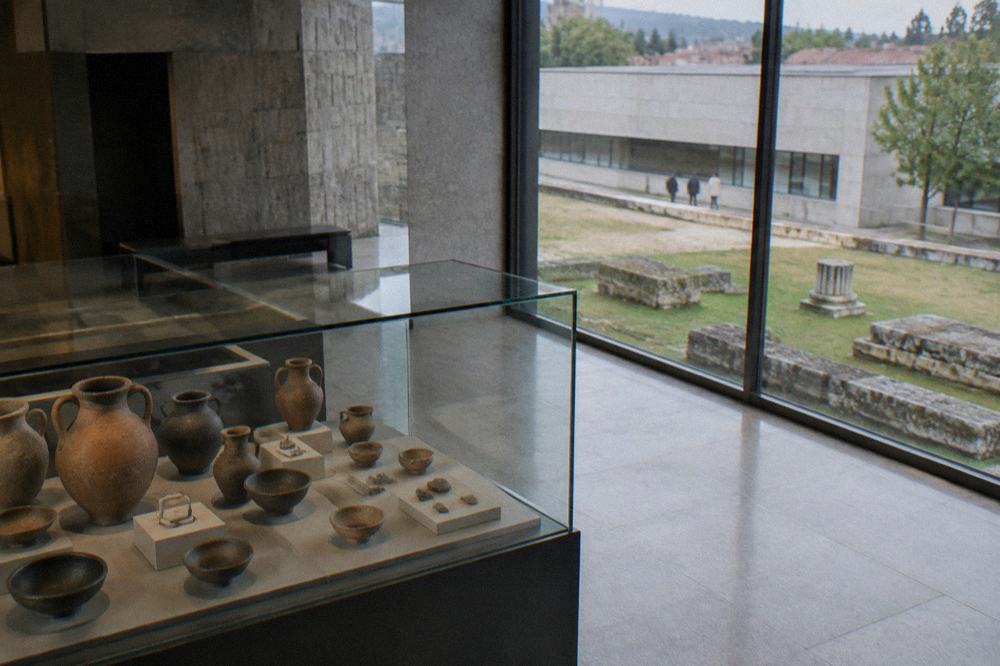
Labels are in Portuguese, and the presentation is that of a serious regional museum rather than a tourist attraction. That said, the objects speak plainly enough. If you want a narrative rather than a case-by-case read, a guided tour of the city that includes the museum district is the better format, and the private option allows the pace to be set around your interests.
For travellers who prefer to move at their own pace but still want the Roman layer explained well, the small-group format is the middle path: a fixed route through the historic centre and up to Bom Jesus do Monte, with a guide doing the interpreting and a group small enough to ask questions. Whichever format suits you, the museum itself needs no booking at all outside the busiest summer weeks.
How Long Does A Visit Take, And Is The Museum Good For Families?
A steady visit to the Dom Diogo de Sousa Museum takes about an hour to ninety minutes, longer if you read the labels in detail, and the museum works well for families with school-age children because the collection is visual and the under-12 and family pricing keeps costs low. There are no blockbuster crowd-pulls, so the pace is set by curiosity rather than by queues.
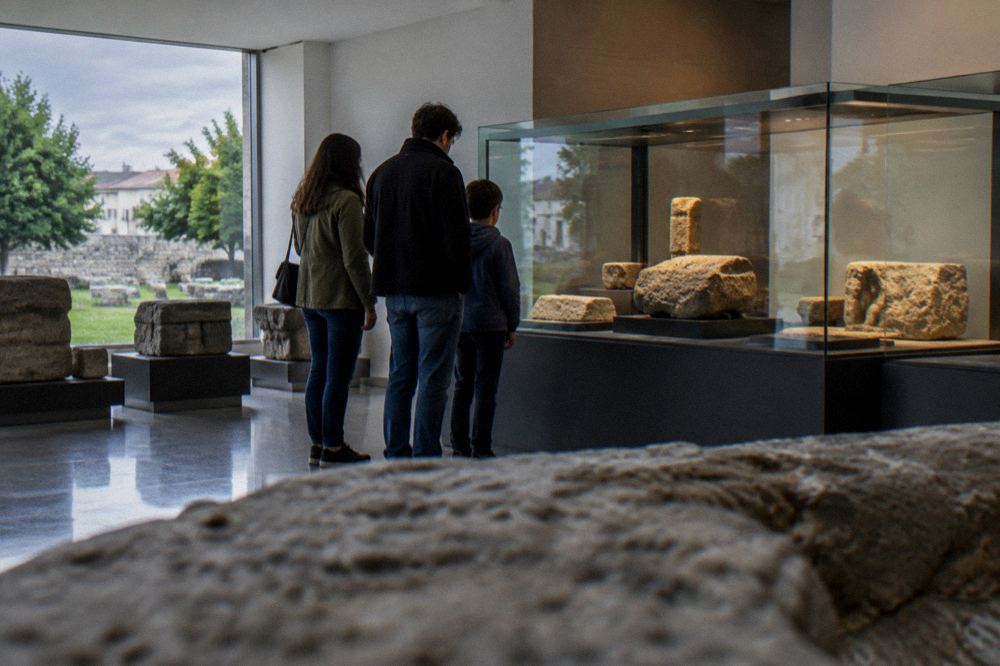
The pricing structure is genuinely family-friendly. Under-12s enter free with an adult, and the family rate halves the per-person cost for a group with at least one adult and one minor. A family of four with two teenagers pays 2.50 EUR for each family-category ticket, so a full visit costs less than a round of coffees and pastries around the corner. Children who have studied the Romans at school tend to engage with the mosaics, the coins and the tombstones, because those objects are concrete in a way textbooks are not. The wider set of guides lives on Braga Travel Guide.
For adults, the realistic planning window is an hour and a half, which pairs neatly with a morning at the cathedral. The Sé's three visit routes, the Treasury-Museum, the chapels and high choir, and the cathedral itself, each cost 3.00 EUR on their own or 7.00 EUR combined, and its tourist-visit hours run Monday to Saturday 09:30 to 13:00 and 14:30 to 17:00, Sunday 09:30 to 10:45 and 14:30 to 17:00. A morning that takes in the cathedral at opening time, then the archaeology museum, covers both eras of Braga's history before lunch.
Visitors with limited mobility or other access needs should check with the museum directly before visiting, as the building's layout and facilities are not detailed in the published material this guide can rely on. The same applies to photography rules and large bags: policies of that kind are set by the museum and are best confirmed on the day.
How Do You Get To The Dom Diogo De Sousa Museum?
The Dom Diogo de Sousa Museum stands inside Braga's historic centre, within the zone you explore on foot, a short walk from the Sé de Braga and the other central sights, so no transport is needed once you are in the centre. Braga itself is reached by train to the city's station or by direct coach from Porto Airport, and the whole historic core is compact enough that walking is the normal way between sights.
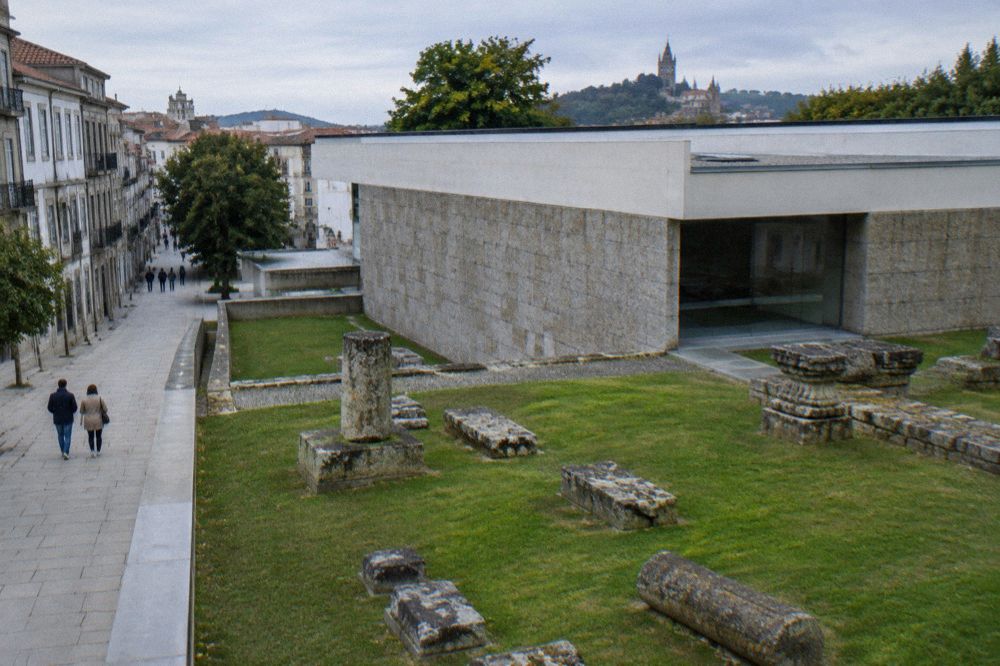
Braga's historic centre is small by the standards of a municipality of 193,324 residents at the 2021 census, and the museum district sits within the walkable core. The practical advice is simple: arrive in the centre, park or step off the train, and walk. The Sé de Braga is the obvious landmark to navigate by, and the street named after the same archbishop, Rua D. Diogo de Sousa, runs beside the cathedral precinct, which places the whole museum quarter in relation to the city's most visible building.
For getting around the wider city, TUB, the urban bus operator, sells a tourist ticket covering the whole network at 3.35 EUR for one day, 6.05 EUR for two days and 8.05 EUR for three days per person, valid since the tariff of 21 February 2026. A single pre-bought or digital ticket costs 0.75 EUR for one zone and 1.50 EUR for two, while buying on board costs 1.55 EUR and 2.00 EUR respectively, so pre-buying saves money if you plan to use the buses more than once. Line 2 is the verified route for reaching Bom Jesus do Monte, ending at the Pórtico at the foot of the stairway.
If walking the whole centre sounds like more than your legs fancy, a tuk tuk tour covers the ground between the central sights without the legwork, and can be a good option for visitors with small children or limited mobility in the group.
What Else Is Near The Dom Diogo De Sousa Museum?
The museum sits in a district dense with sights: the Sé de Braga with its three visit routes, the Santa Bárbara Garden, the castle keep, the Biscainhos Museum and the Theatro Circo are all part of the same walkable centre, so a single morning or afternoon can combine the archaeology museum with two or three other stops without any transport. The museum also pairs naturally with the Tibães monastery a little further out.
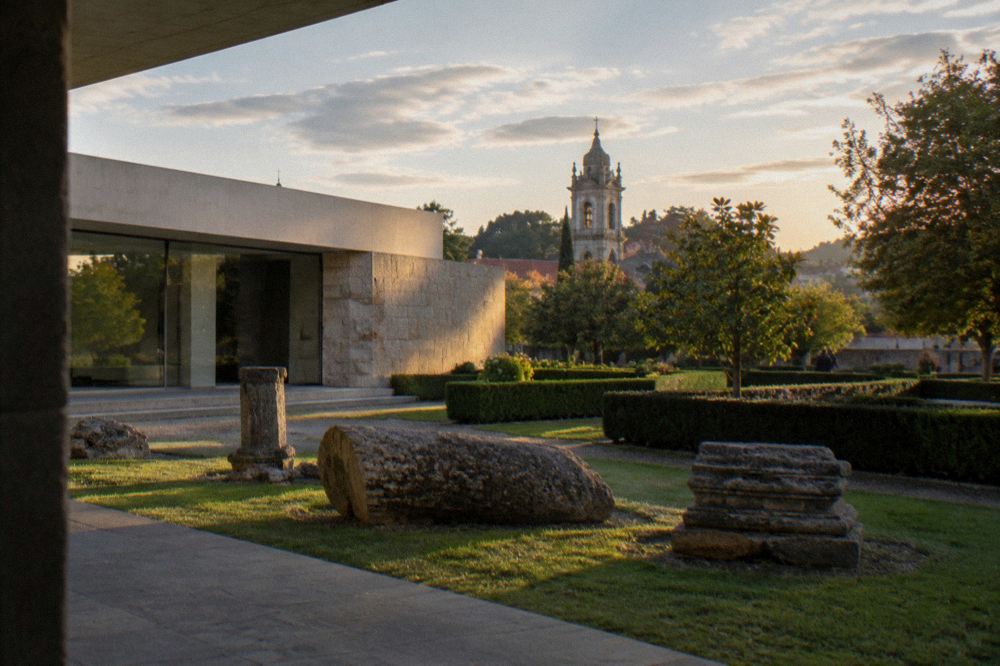
The most natural pairing is the cathedral, both because it is close and because the two visits together tell one continuous story. The Sé's combined ticket for all three routes costs 7.00 EUR, or 6.00 EUR for any two routes, with each route at 3.00 EUR on its own; visits are suspended during services, so check the service times if you are planning a tight morning. The Biscainhos Museum, a palace-museum with gardens on the other side of the centre, charges 7.50 EUR for a normal ticket with the garden included, Tuesday to Sunday 10:00 to 12:30 and 14:00 to 17:30, and makes a good afternoon counterpart to the archaeology museum's morning.
| Sight | Normal ticket | Hours | Closed |
|---|---|---|---|
| Dom Diogo de Sousa Museum | 5.00 EUR | Tue-Sun 10:00-17:30 | Mondays, 1 Jan, Easter Sunday, 1 May, 24 Jun, 25 Dec |
| Sé de Braga (all three routes) | 7.00 EUR | Mon-Sat 09:30-13:00, 14:30-17:00; Sun 09:30-10:45, 14:30-17:00 | Visits suspended during services |
| Biscainhos Museum | 7.50 EUR | Tue-Sun 10:00-12:30, 14:00-17:30 | Mondays, 1 Jan, Easter Sunday, 1 May, 25 Dec |
| Pio XII Museum (whole museum) | 4.00 EUR | Tue-Sat 09:30-12:30, 14:30-18:00 | Sundays, Mondays, 25 Dec, 1 Jan, Easter Sunday |
| Nogueira da Silva Museum | 3.00 EUR | Tue-Fri 10:00-12:30, 14:00-18:00; Sat 14:00-19:00 | Sundays, Mondays, public holidays |
| Theatro Circo guided tour | 3.50 EUR | Scheduled dates only, 45 minutes | Depends on programme |
| Mosteiro de São Martinho de Tibães | About 4 to 5 EUR | Winter 10:00-18:00; summer 10:00-19:00 | Mondays, 1 Jan, Easter Sunday, 1 May, 24 Jun, 25 Dec |
The pattern to notice is the shared closing calendar. Almost everything municipal shuts on Mondays, and the 24 June municipal holiday closes the archaeology museum, the Tibães monastery and the Biscainhos museum for the day. Tuesday is therefore the safest day for a museum-heavy itinerary, and Sunday needs care: the Pio XII museum lists no Sunday opening at all, while the cathedral's Sunday morning visit window is short, 09:30 to 10:45, before reopening at 14:30.
For a fuller circuit, the Santa Bárbara Garden offers a free green pause between museums, and the Tibães Monastery to the north of the centre extends the story from Bracara Augusta into the monastic centuries. Visitors with a car or a longer stay can push out to the Roman-era hill fort at Citânia de Briteiros, whose museum and ruins charge about 5 EUR, and see in the ground what the Dom Diogo de Sousa Museum shows under glass.
Who Gets Free Entry And Discounts At Braga'S Museums?
At the Dom Diogo de Sousa Museum, free entry applies to children under 12 with an adult, and residents of Portugal may enter free on 52 days a year of their choosing with proof; half price applies to over-65s, ages 13 to 24, families and Passaporte Braga holders. Across Braga's museums there is no city-wide pass on sale, so each ticket is bought separately, and the TUB tourist ticket is the only multi-use product that exists.
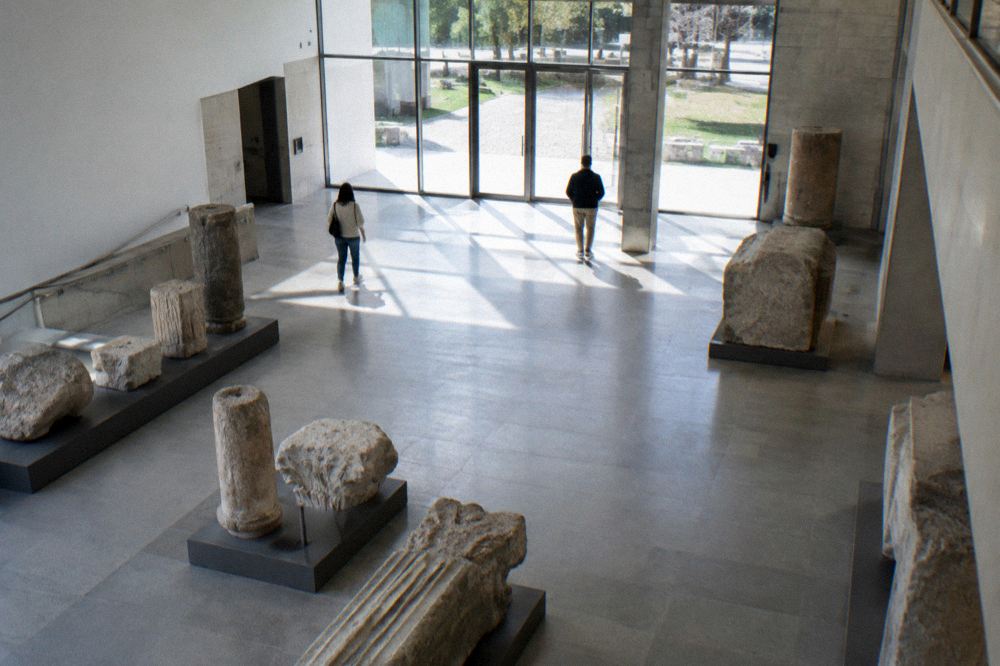
The 52-day resident rule is the most distinctive concession in the city's museum landscape: residents of Portugal choose their own free days, with identification, rather than waiting for a designated free Sunday. That rule is published for this museum and for the D. Diogo de Sousa specifically; do not assume it applies elsewhere, and do not assume any museum in Braga is free on Sunday mornings, because no such rule was verified for the cathedral or the other municipal museums.
The practical consequence for visitors from abroad is that there is no shortcut to a discount beyond the age and family categories. A couple aged 30 pays full price at every museum in the table above. The savings come instead from choosing well: the cathedral's 7.00 EUR combined ticket beats buying routes individually, the TUB tourist ticket at 3.35 EUR a day beats on-board singles if you ride more than twice, and the free sights, the Santa Bárbara Garden, the historic streets themselves and the sanctuary grounds at Bom Jesus do Monte, cost nothing at all.
Common Questions About The Dom Diogo De Sousa Museum
Is the Dom Diogo de Sousa Museum open on Mondays?
No. The museum is open Tuesday to Sunday from 10:00 to 17:30 and closed on Mondays, as well as on 1 January, Easter Sunday, 1 May, 24 June and 25 December. Most of Braga's municipal museums follow a similar Monday closure, so plan museum days for Tuesday onwards.
How much does the Dom Diogo de Sousa Museum cost?
A normal ticket costs 5.00 EUR. Visitors aged 65 and over, ages 13 to 24, families with at least one adult and one minor, and Passaporte Braga holders pay 2.50 EUR. Children under 12 enter free with an accompanying adult.
How long should I spend at the Museu de Arqueologia D. Diogo de Sousa?
About an hour to ninety minutes covers the galleries at a steady pace. If you read the labels in detail or pair the visit with the nearby Sé de Braga, allow a full morning for both together.
Is the Dom Diogo de Sousa Museum worth visiting with kids?
Yes, particularly for school-age children studying the Romans. The collection is visual and concrete, mosaics, coins, tombstones and pottery, and the pricing is favourable: under-12s enter free and the family rate halves the ticket price for groups with at least one adult and one minor.
Can residents of Portugal enter the museum for free?
Yes. Residents of Portugal may enter free on 52 days a year of their own choosing, with proof of residence. This rule is published for this museum and should not be assumed to apply to other Braga museums.
Is there a combined museum pass for Braga?
No. No city-wide pass or attraction card is on sale in Braga; each museum ticket is bought separately. The only multi-use product is the TUB tourist bus ticket, at 3.35 EUR for one day, 6.05 EUR for two days and 8.05 EUR for three days per person.
The Dom Diogo de Sousa Museum is not the loudest attraction in Braga, but it is the one that makes the rest of the city legible: an hour among the inscriptions and mosaics of Bracara Augusta, and the streets outside the door stop being merely picturesque and start being a readable, two-thousand-year text.