Vinho Verde From Braga: The Minho Wine Style And Where To Taste It
Vinho verde is the wine style of the Minho, the green, rain-fed corner of northern Portugal that Braga sits at the heart of. This guide explains what it is, how it tastes, and where to drink it around the city.
Short answer
Vinho verde is a wine style from the Minho region of northern Portugal, typically light, fresh and lightly sparkling, made from local grape varieties in white, red and rosé form. Braga, in the middle of the region, is one of the best bases for tasting it.
Braga, the city at the heart of Portugal's Minho region, sits surrounded by the vineyards that produce vinho verde, the light, fresh wine style that has become one of northern Portugal's best-known exports. The name means "green wine", but it refers to the wine's youth rather than its colour, and the style covers whites, reds and rosés. The region's rainy Atlantic climate, the same weather that keeps Braga's gardens so green, is what shapes the wine: high acidity, low alcohol by the standards of southern Portugal, and a characteristic light prickle of bubbles in the glass.
This guide from Braga Travel Guide covers what vinho verde actually is, which grapes go into it, how it tastes, and how to build a tasting day around Braga without needing to drive yourself. If you are still deciding whether the city deserves your time, start with our is Braga worth visiting overview before planning the wine.
What Is Vinho Verde, Exactly?
Vinho verde is a protected wine style from the Minho region of northern Portugal, not a single grape or colour, and the "green" in the name refers to youth: the wine is bottled and drunk soon after harvest, typically within a year, which keeps it light, fresh and high in acidity. The style spans white, red and rosé wines, though the whites are what most visitors encounter, and a gentle natural sparkle is a traditional feature rather than a fault.
The Minho is the wettest corner of Portugal. IPMA's 1991 to 2020 normals for the Braga / Merelim station show the city receiving 1387.3 mm of rain across a typical year, with October the wettest month at 197.8 mm and July the driest at 27.9 mm. That moisture, and the cool Atlantic air that comes with it, is the whole story of the wine. Grapes that would ripen into big, alcoholic wines further south stay lean, tart and aromatic here, and the traditional response of local winemakers was to pick early, ferment fast and drink young.
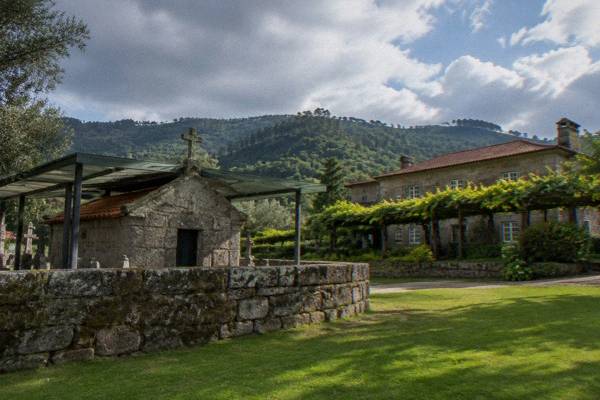
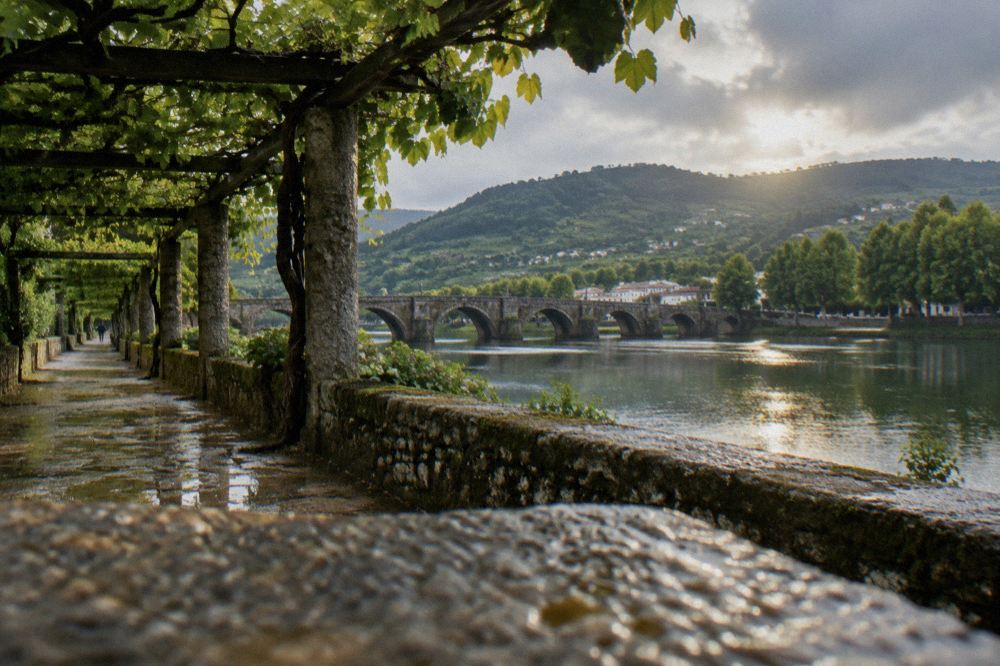
The style has deep roots in the landscape around Braga. In the traditional Minho system, vines were trained high up granite posts, pergolas and even the edges of fields, so that vegetable crops could grow underneath them, a practice born of smallholdings where every square metre had to earn its keep. Many older estates in the hills around the city still show traces of this trellising, and it is one of the reasons the region's vineyards look so different from the low, wall-to-wall rows of the Douro or the Alentejo.
Which Grape Varieties Go Into Vinho Verde?
The style is built on local Portuguese varieties, above all Alvarinho and Loureiro for whites, each with its own clear personality: Alvarinho gives fuller, stone-fruit-driven wines, while Loureiro is more aromatic, floral and laurel-scented. Other white varieties include Arinto, Avesso and Trajadura, and there are local red varieties too, though the reds are a regional curiosity rarely seen outside the Minho. Most bottles you will taste around Braga are either single-variety wines or blends of two or three of these grapes.
The table below summarises the varieties you are most likely to see on labels in the region. No single one defines the style on its own; the winemaker's choice of grape, and of blending or bottling alone, does as much as the terroir to shape what lands in your glass.
| Variety | Colour | Typical character |
|---|---|---|
| Alvarinho | White | Fuller-bodied, structured, stone fruit and citrus, the region's prestige grape |
| Loureiro | White | Aromatic, floral, laurel and citrus notes, crisp and perfumed |
| Arinto | White | High acidity, mineral, lemon-driven, adds freshness to blends |
| Avesso | White | Rounder texture, peach and apricot, more body than Loureiro |
| Trajadura | White | Softer, slightly sweet-edged fruit, used to round out blends |
| Espadeiro | Red | Light reds and rosés, fresh red-berry fruit |
| Vinhão | Red | Deeply coloured, tart, tannic, the traditional Minho red |
If you want to go deeper on the flavour question, our sweet or dry explainer and the comparison with Sauvignon Blanc unpack the two things visitors most often get wrong: assuming all vinho verde is sweet, and assuming it is simply Portugal's answer to a familiar international grape.
The best way to meet these varieties is with someone who can pour them side by side. The Braga Experience guided tour with tastings pairs a walk through the city with local products, and you can Check availability on the operator's live listing. For a fuller look at the city's walking options, see our Braga walking tours guide.
What Does Vinho Verde Taste Like, And How Should You Serve It?
Expect a pale, bright wine with a sharp citrus and green-apple edge, low alcohol relative to most Portuguese table wines, a light natural spritz on the tongue, and a clean, mouth-watering finish; whites dominate, rosés are fresh and berry-scented, and the reds, mostly from Vinhão, are tart, inky and unlike anything in the rest of the country. Serve whites and rosés well chilled, between eight and ten degrees, in a normal white-wine glass, and drink them within a year of the vintage.
The slight sparkle deserves a word, because it surprises people. It is not added carbonation in most traditional bottles: it comes from a small amount of residual carbon dioxide kept in the wine at bottling, a habit from the days when the wine finished its fermentation in the bottle or tank. Some modern producers, aiming at export markets, make fully sparkling versions, and some make still ones, but the gentle prickle remains the style's signature for most drinkers.
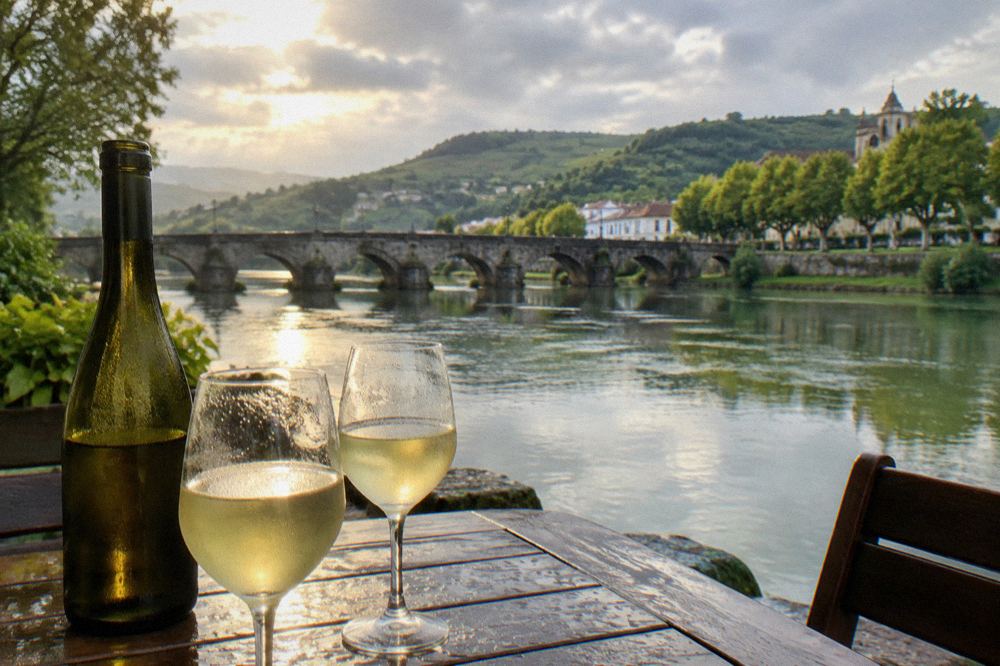
Temperature matters more with this style than with almost any other. Serve it too warm and the acidity turns harsh; serve it straight from the fridge and the aromatics close up. The sweet spot is cool but not ice-cold, and it is worth letting a glass sit for a couple of minutes before drinking. The wine's lightness is also why it is such a warm-weather drink: on a July or August evening in Braga, when IPMA's normals put the average daytime high at 28.2 and 28.7 degrees, almost nothing else works as well.
The Main Styles At A Glance
| Style | What it looks like | When to reach for it |
|---|---|---|
| White vinho verde | Pale straw, citrus and green apple, light spritz | Aperitifs, seafood, warm evenings |
| Rosé vinho verde | Pale pink, red berries, crisp | Light lunches, salads, picnics |
| Red vinho verde | Deep purple, tart, tannic, served cool | A regional curiosity, traditional food |
| Sparkling vinho verde | Fine persistent bubbles, fuller | Celebrations, richer fish dishes |
| Single-variety Alvarinho | Fuller, drier, more age-worthy | When you want the region's top tier |
For help choosing a bottle, our guide to which vinho verde is considered the best sets out what to look for on the label, and the explainer on why vinho verde is so cheap explains the economics behind the price tags you will see in Braga's shops.
Where Can You Taste Vinho Verde Around Braga?
The region's wine estates sit in the countryside around the city, in the river valleys of the Minho, and several can be visited as half-day or full-day trips from Braga, while in the city itself the practical options are guided tours with tastings, restaurants with strong local lists, and the municipal market's regional produce. Estate visits usually need a car or a booked tour; the in-city options need nothing but a pair of shoes.
The estates of the region are scattered rather than clustered, which is what makes a guided or pre-booked visit easier than improvising. Some sit among the hills toward the east of the municipality, others in neighbouring valleys, and opening arrangements vary with the season and the harvest calendar, so always check the estate's own notice before setting out. Harvest time in early autumn is the most atmospheric window, but also the busiest.
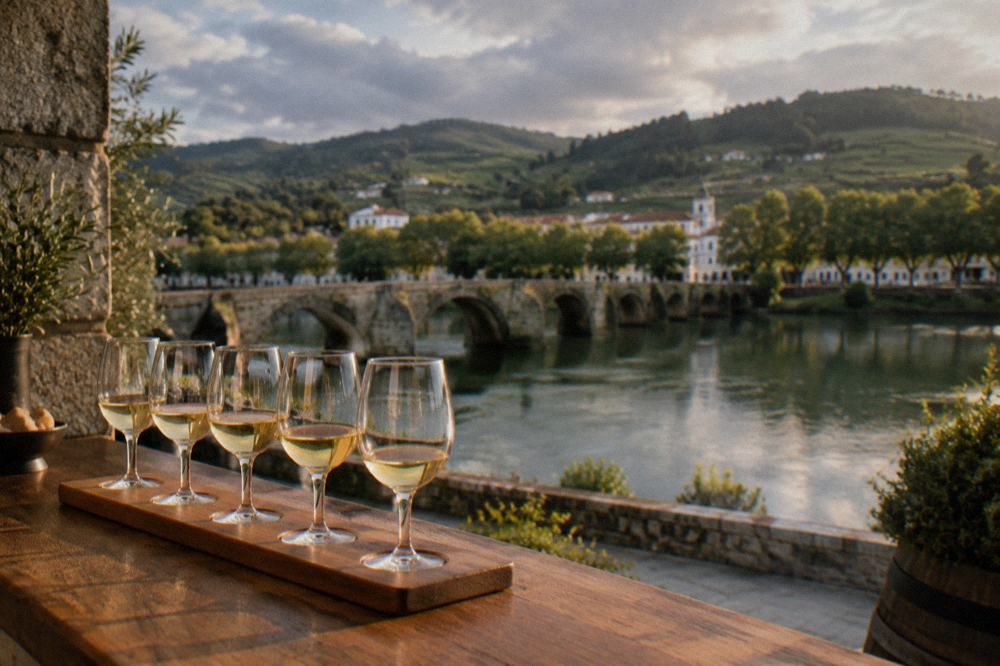
In the city, the Mercado Municipal is branded "Praça, Mercado Municipal de Braga" and is a reliable place to see and buy regional products, and Braga's restaurant scene treats the local wine as a default rather than a specialty. Our Braga restaurants guide covers where the regional kitchen does its best work, and the style pairs naturally with the dishes the Minho is known for.
Three tasting experiences stand out for visitors based in the city. The first is an estate visit with a guided tasting:
To meet these varieties at an estate, book a vinho verde tasting here. (Starts in Celorico de Basto)
The second is a sommelier-led tasting that keeps you in the city centre and still covers the region's range:
And the third is a quinta tasting that introduces the estate side of the style in a compact session:
Which Braga Tours Pair Wine With The City Itself?
If you would rather taste the wine as part of a day that also covers Braga's streets, squares and monuments, the city has guided options that combine a walk with tastings, and the strongest of them is the Braga Experience tour, a roughly three-hour guided walk with tastings of local products, rated 4.6 from 12 reviews on the operator's listing and priced from $55.48 per person.
It works well as a first-day orientation: you see the historic centre, you finish with the region's food and wine, and you never need to organize transport.
The Braga Experience guided tour and tastings runs about three hours and fits neatly into a schedule that also includes the Sé de Braga, the Bom Jesus do Monte sanctuary, or an afternoon in the Jardim de Santa Bárbara, all covered in our historic centre guide.
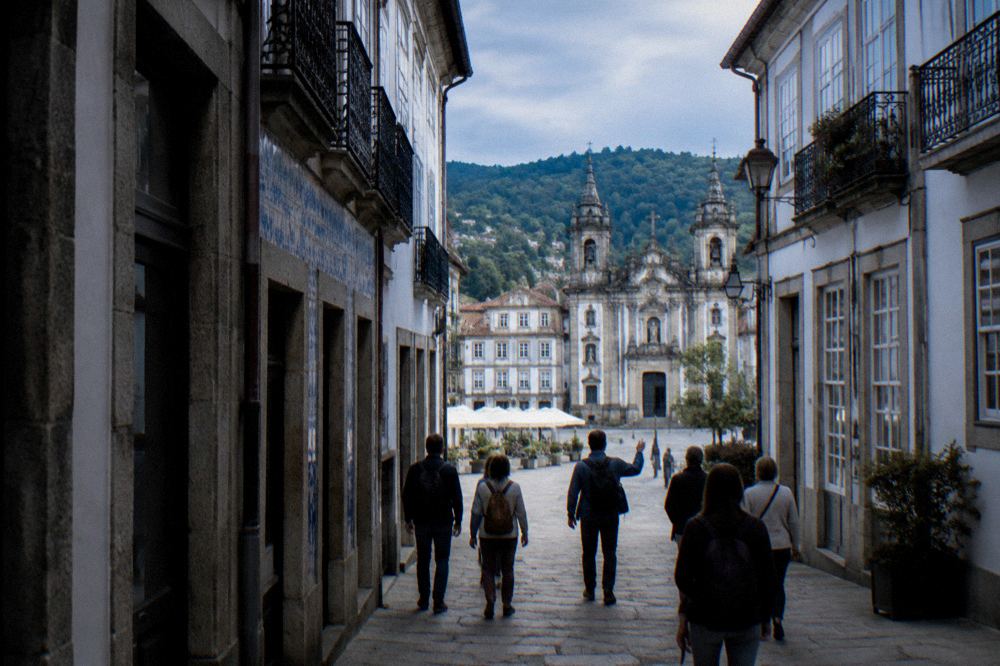
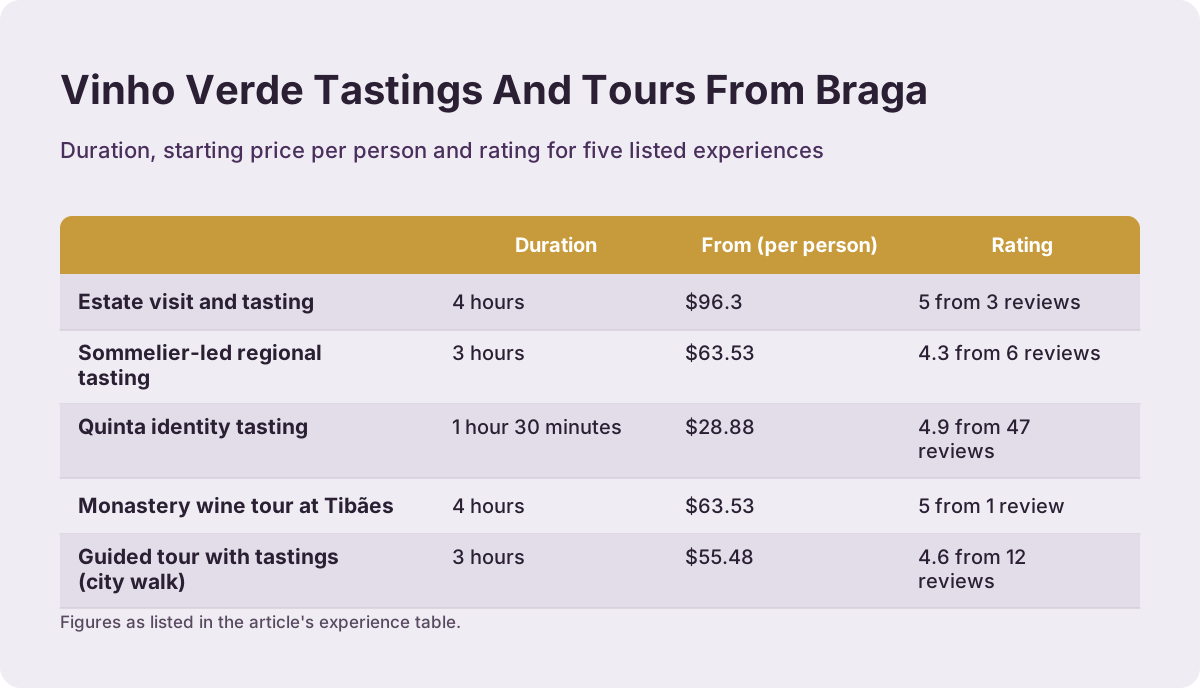
For comparison, the table below shows the wine-focused experiences you can book from Braga, with the details as listed by the operators. Prices are per person and ratings are as shown on the live listings.
| Experience | Area | Duration | From (per person) | Rating |
|---|---|---|---|---|
| Estate visit and tasting | Braga region | 4 hours | $96.30 | 5 from 3 reviews |
| Sommelier-led regional tasting | Braga | 3 hours | $63.53 | 4.3 from 6 reviews |
| Quinta identity tasting | Braga region | 1 hour 30 minutes | $28.88 | 4.9 from 47 reviews |
| Monastery wine tour at Tibães | Braga region | 4 hours | $63.53 | 5 from 1 review |
| Guided tour with tastings (city walk) | Braga | 3 hours | $55.48 | 4.6 from 12 reviews |
The monastery tour is a distinctive option because it pairs the wine with the Mosteiro de São Martinho de Tibães, one of the region's great monuments, covered in its own Tibães guide. If you are building a wider northern Portugal trip, our northern Portugal itinerary pages help with the sequencing.
How Do You Plan A Vinho Verde Day From Braga?
A comfortable plan is one estate visit in the morning, lunch at a restaurant with a strong regional list, and the afternoon in the city or at one of the hill sanctuaries, keeping the driving to a single round trip; visitors without a car should book a tasting experience that includes transport, or stay in the city and use a guided tour with tastings instead.
The region's estates are spread out, so a day that tries to visit two or three of them becomes a driving day rather than a tasting day.
Timing matters. The harvest falls in early autumn, and September is a month when the vineyards are at their most active; the tasting rooms are busiest then, and appointments are wise. Late spring and early summer show the vines at their greenest, which is the landscape the wine is named for. Our best time to visit Braga guide walks through the seasons in detail, and the Braga weather guide has the month-by-month numbers.
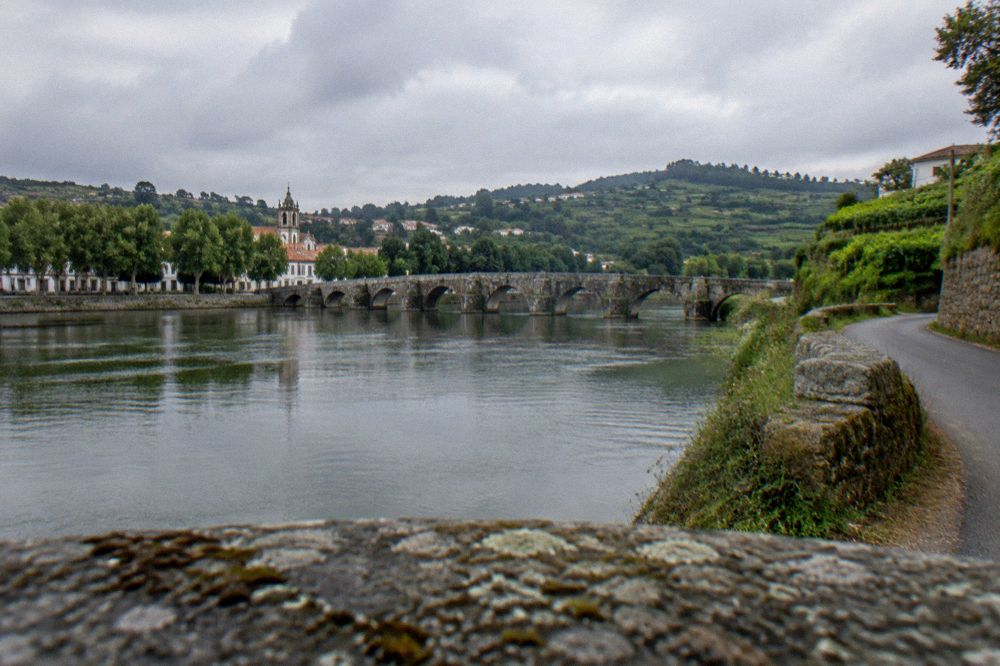
For transport, the practical split is simple. Estate visits need a car, and our car rental in Braga guide covers that; city tastings and guided tours need nothing but the TUB network or a pair of shoes, and the getting around Braga guide explains the buses, including the TUB tourist ticket at 3.35 EUR for one day of unlimited rides. If you are arriving from further afield, the Porto to Braga guide and the Porto Airport to Braga guide cover the approaches.
A sample day, kept deliberately loose:
| Time of day | Activity | Notes |
|---|---|---|
| Morning | Estate visit and tasting | Book ahead; check the estate's notice for harvest-period changes |
| Midday | Regional lunch in the city or on the road back | Bacalhau à Braga or roast pork with a glass of the local white |
| Early afternoon | Sé de Braga or the historic centre | Tickets for the cathedral's three routes cost 3.00 EUR each, 7.00 EUR combined |
| Late afternoon | Jardim de Santa Bárbara and a café stop | The garden sits beside the ruins of the medieval castle keep |
| Evening | Dinner with a sommelier-led tasting or a night tour | The city's evening walking options cover the lit-up baroque centre |
The cathedral figures come from the Sé's own ticket-office page, which lists the three visit routes at 3.00 EUR each and the combined ticket at 7.00 EUR. Our Braga cathedral guide has the full detail on routes and hours.
What Food Pairs With Vinho Verde?
The style's high acidity and light body make it one of the most food-friendly wines in Portugal: whites with grilled fish, seafood, salads and the region's vegetable dishes, rosés with lighter meats and picnic fare, and the tart reds with the Minho's traditional roast pork and fatty dishes, where the acidity cuts through richness that would flatten a softer wine. In Braga the natural pairings are the local classics, bacalhau à Braga, roast pork, and the region's rice dishes.
The Minho kitchen is built around the same rainy landscape as the wine. Bacalhau à Braga, the city's signature salt-cod dish, is exactly the kind of rich, onion-and-oil cooking that a chilled Loureiro refreshes between mouthfuls. Rojões and sarrabulho, the region's pork dishes, are the traditional partners for the reds. And the frigideiras and pastries of Braga's cafés, covered in our frigideiras and Braga pastries guide, sit well beside a glass of the slightly sweeter commercial whites that the region also produces.
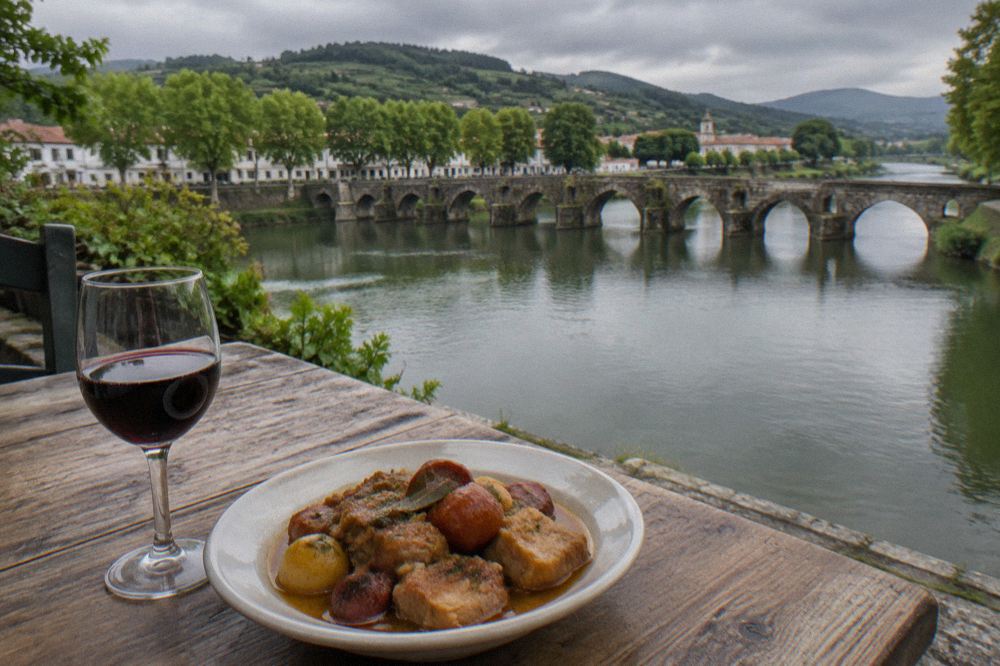
| Dish | Style to pour | Why it works |
|---|---|---|
| Bacalhau à Braga | White, Loureiro or Arinto | Acidity lifts the oil and onions |
| Rojões (roast pork) | Red Vinhão, lightly chilled | Tartness cuts the richness |
| Grilled river fish | White, Alvarinho | Body matches the fish, fruit echoes the char |
| Frigideiras and pastries | Off-dry white | A touch of sweetness meets the pastry |
| Regional rice dishes | White, Avesso | Rounder texture bridges the starch |
The deep-dive pages on the food side are worth the detour: the bacalhau à Braga guide and the what to eat in Braga overview cover the regional kitchen in full.
When Should You Come To Braga For The Wine?
The best months for a wine-focused visit are May through September: the vines are in leaf from late spring, the weather is reliably warm, and the September harvest brings the estates to life, while the winter months, though mild, are the region's wettest season, with October averaging 197.8 mm of rain and December 190.3 mm at the Braga / Merelim station, which makes countryside visits a gamble. For the full experience of the landscape the wine comes from, early September is the sweet spot.
The climate table tells the story plainly. Braga's summer is warm but not southern-Portugal hot, with average daytime highs of 28.2 degrees in July and 28.7 in August, and the rain that defines the region retreats to 27.9 mm and 34.6 mm in those months. By October the rain returns in force, and the vineyards turn from green to autumn gold, which is beautiful in its own right but a different trip.
| Month | Mean daytime high (C) | Rain (mm) | Rain days (1 mm or more) | Vineyard scene |
|---|---|---|---|---|
| May | 23.0 | 89.8 | 8.9 | Vines flowering, hills at their greenest |
| June | 26.1 | 40.6 | 5.7 | Fast growth, long evenings |
| July | 28.2 | 27.9 | 4.0 | Peak green, driest month |
| August | 28.7 | 34.6 | 3.8 | Grapes ripening, warmest month |
| September | 26.9 | 67.6 | 6.2 | Harvest, estates at their busiest |
| October | 22.2 | 197.8 | 12.0 | Autumn colour, first heavy rain |
All figures are IPMA's 1991 to 2020 climate normals for the Braga / Merelim station. If your dates are fixed by one of the city's festivals, the Semana Santa guide and the city's June São João celebrations are the two anchors of the Braga year, and both fall in months when the wine tastes particularly good.
Before locking in dates, it is worth checking the current tour picture. The city's guided experiences run year-round, and the operators' listings carry the live schedules:
Common Questions About Vinho Verde In Braga
Is vinho verde always a white wine?
No. The style covers white, red and rosé wines, though the whites are by far the most widely exported and the ones most visitors taste first. The reds, mostly from the Vinhão grape, are deeply coloured, tart and traditionally served cool, and they remain mostly a Minho specialty.
Does "vinho verde" mean the wine is green?
The name refers to youth, not colour. The wine is bottled and consumed young, typically within a year of the vintage, and the light prickle of carbonation in many bottles is a traditional feature of that early bottling rather than a deliberate sparkling style.
Can you visit vinho verde estates from Braga without a car?
Yes, but plan for it. The estates are scattered across the Minho countryside, so the practical car-free options are booked tasting experiences that include transport, or sommelier-led tastings held in the city itself. Our getting-around guide covers the bus and taxi picture for the rest.
Is vinho verde sweet or dry?
Most quality vinho verde is dry or off-dry, with high acidity that reads as fresh rather than sweet. Some commercial bottles are made in a softer, slightly sweet style aimed at casual drinking, which is why the style has an unfair sweetness reputation; the single-variety Alvarinho and Loureiro bottlings are the driest and most structured.
What food should you eat with it in Braga?
The regional classics: bacalhau à Braga with a white, roast pork dishes with the local red, and grilled fish with an Alvarinho. The wine's acidity is built to cut through the onion, oil and richness of the Minho kitchen.
When is vinho verde harvest season around Braga?
The harvest falls in early autumn, with September the busiest month at the region's estates. It is the most atmospheric time to visit, and also the time when appointments matter most, since tasting rooms and tours compete with the work of bringing the grapes in.
Vinho verde is the taste of the Minho's green landscape in a glass, and Braga, sitting in the middle of that landscape with the estates on its doorstep and a kitchen built to match, is the most natural place in Portugal to drink it.