What To Eat In Braga
Braga, the city in Portugal's Minho region, eats well and heavily: salt cod, pork in every form, convent-style sweets and the light young wine of the region. This guide explains what each dish is and how to fit them into a visit.
Short answer
Eat bacalhau à Braga (salt cod fried with potatoes and cabbage), rojões and sarrabulho pork dishes, frigideiras pastries, and pudim Abade de Priscos, a caramel egg pudding, all alongside vinho verde, the light Minho wine style.
Braga, the city in the Minho region of northern Portugal, is one of the country's great eating towns, and its kitchen is built on salt cod, pork, convent sweets and the light, slightly sparkling wines of the region. This is not tapas country or a place of small delicate plates: portions are generous, meat is treated seriously, and dessert is considered a civic institution rather than an option. The dishes below are the ones that keep appearing on menus across the historic centre, and each one has a story that is worth knowing before the plate arrives.
What Should You Actually Eat In Braga?
The five dishes that define Braga's table are bacalhau à Braga, rojões à moda do Minho, sarrabulho, frigideiras and pudim Abade de Priscos, and almost every traditional restaurant in the city serves some or all of them. Around them sit the wider classics of Minho cooking: caldo verde soup, grilled meats, cozido and the region's vinho verde wines. Order two or three of the five across a stay and you will have eaten the city honestly.
Bacalhau à Braga is the city's signature plate: desalted cod, floured and fried, served with fried potatoes, shredded cabbage, garlic, bay leaf and a generous pour of olive oil. It is a dish of contrast, crisp fish against soft cabbage, and it is the thing to order when a menu offers "the house speciality". Rojões are cubes of pork marinated in vinho verde and garlic, then fried until the edges caramelise; sarrabulho is the region's festive pork dish, rice cooked in a rich dark broth thickened with pork blood, a Minho tradition that appears on winter menus rather than summer ones.
The sweet half of the city's reputation comes from its convent-style pastry tradition. Frigideiras are small sweet pastries filled with spiced minced meat, a combination that surprises visitors the first time and converts most of them by the second. Pudim Abade de Priscos, a caramel egg pudding, is the dessert most closely tied to Braga's name, and it appears on nearly every traditional menu in the municipality. The Braga Travel Guide restaurant coverage goes deeper on where to sit down for each of these; this page is about what the dishes are.
| Dish | What it is | When to order it |
|---|---|---|
| Bacalhau à Braga | Fried salt cod with potatoes, cabbage, garlic and olive oil | Any time; the city's signature plate |
| Rojões à moda do Minho | Pork cubes marinated in vinho verde and garlic, fried | Lunch or dinner, year-round |
| Sarrabulho | Rice in a dark pork broth, a festive Minho dish | Winter and festival seasons |
| Frigideiras | Sweet pastry cases with spiced minced meat | As a snack or starter |
| Pudim Abade de Priscos | Caramel pudding with bacon fat and port wine | Dessert, always |
What Is Bacalhau À Braga And Why Is It The City'S Signature?
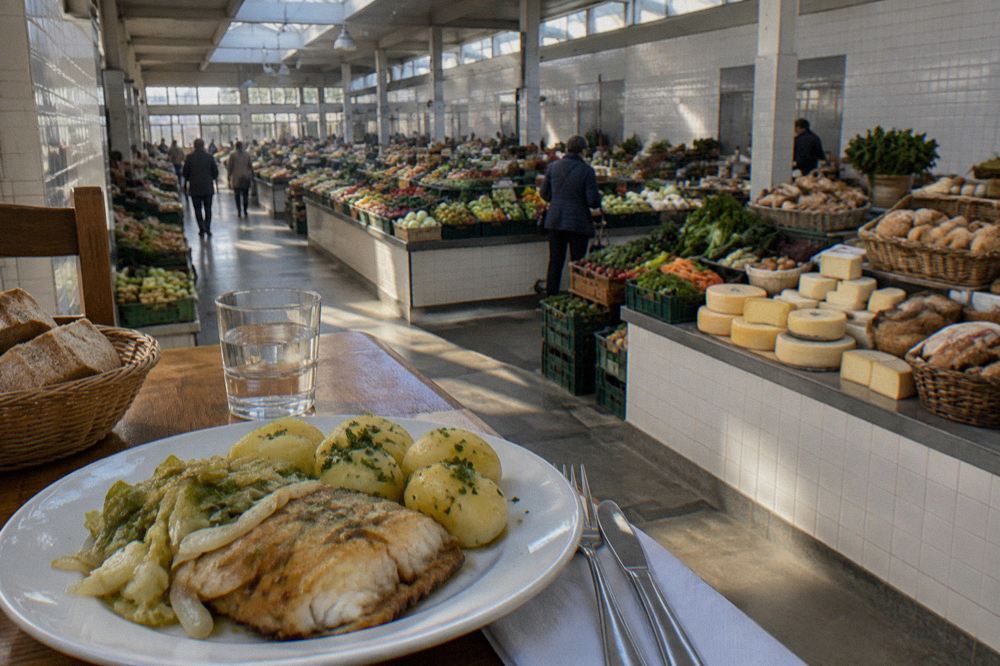
Bacalhau à Braga is salt cod, rehydrated and lightly floured, fried in olive oil and served with fried potatoes, shredded cabbage, garlic and bay leaf, and it is the dish most strongly attached to the city's name. It belongs to Portugal's enormous salt-cod tradition, but the Braga version stands out for its simplicity: no cream, no onion stew, just well-dried fish and good oil. Every traditional restaurant in the city carries some version of it.
Portugal's relationship with salt cod is the background to the dish. The fish is preserved in salt, and every kitchen that serves it must first desalt it in water over a day or more, which is why good bacalhau tastes clean and sweet rather than salty. The Braga treatment keeps the fish in pieces rather than flaking it, dusts them in flour so the surface crisps, and fries them hard. The cabbage is shredded and softened in the same oil, picking up the garlic and the bay.
Order it with a glass of white vinho verde and you have the city on one plate. The dish is hearty enough that a full portion is a meal in itself, so a shared starter of frigideiras or a soup beforehand is plenty for most appetites. If a menu lists both bacalhau à Braga and a more elaborate cod dish, the local instinct is the fried one.
What Is Pudim Abade De Priscos?
Pudim Abade de Priscos, a caramel egg pudding, sugar, port wine and bacon fat, and it is the city's best-known dessert. The bacon fat is not a gimmick: it gives the pudding a silky texture and a faint savoury depth under the caramel. It appears on traditional menus across Braga and in pastry shops around the historic centre.
The pudding belongs to Portugal's convent-sweets tradition, in which monastic kitchens built desserts from eggs, sugar and whatever richness the house had to hand. The Braga version carries the name of the Abade de Priscos, a cleric of the region, and it has become as much an emblem of the city as any church tower. The port wine in the mix keeps the caramel from tasting flat, and the result is denser and more aromatic than a plain crème caramel.
It divides first-time visitors for about one spoonful, then wins most of them over. Order it after bacalhau à Braga and the meal forms the city's classic arc: salt, fat, sweetness. Pastry shops in the centre also sell individual portions, which makes it possible to try the pudding without committing to a full restaurant meal.
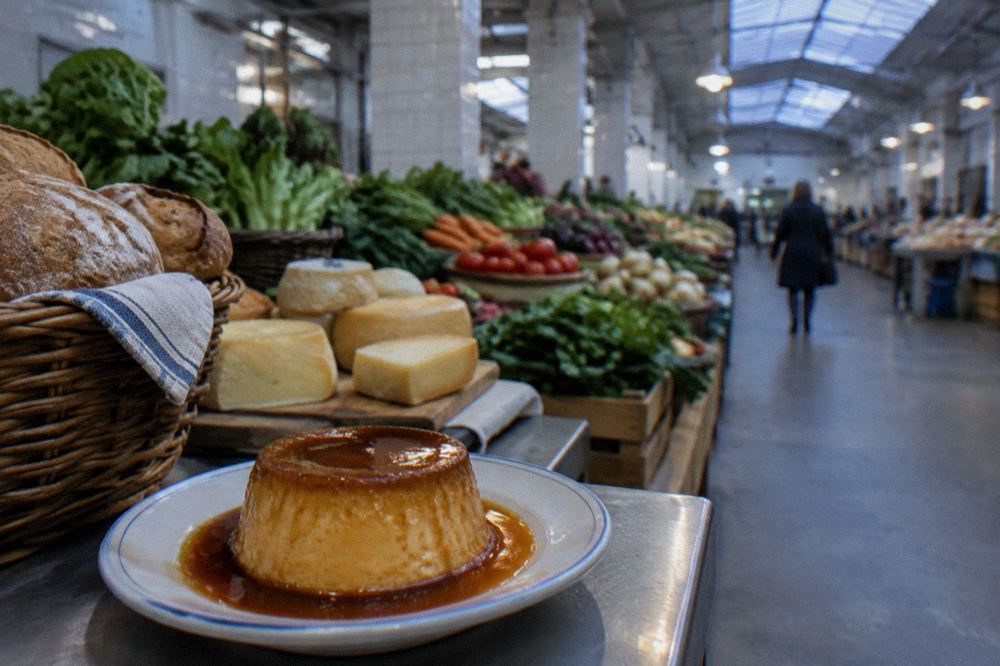
A guided option is worth considering here, because the traditional dishes are spread across a historic centre that is compact but dense with restaurants. The Braga Authentic Small-Group Food & Tasting Tour covers tastings with a local guide, and you can Check availability on the operator's live listing.
What Are Frigideiras And The Other Braga Pastries?
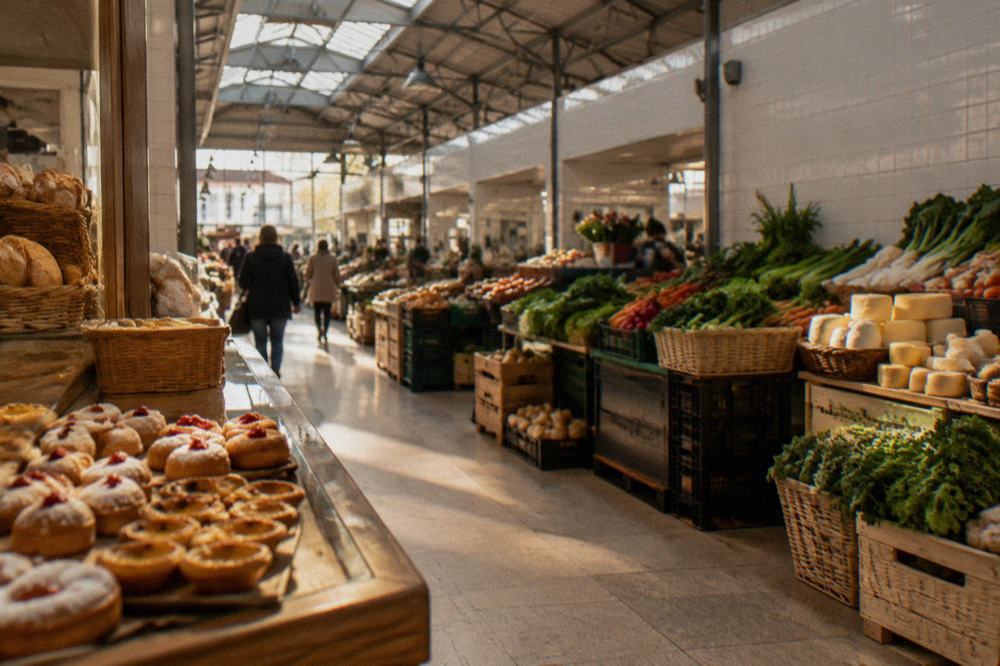
Frigideiras are small round pastries with a sweet, slightly crisp dough and a filling of minced meat spiced with cinnamon and other warm spices, and they are Braga's most distinctive savoury-sweet snack. Around them the city bakes the wider Portuguese repertoire: pastéis de nata, bolo rei at Christmas, and regional sweets that vary by season and by baker. The sweet-and-meat combination of the frigideira is the thing to try at least once.
The frigideira is named after the frying pan, and older versions were cooked in one. The dough is sweet, closer to a brioche than to a savoury pastry, and the filling is usually pork or beef minced with onion and spice. Eaten warm they are a snack; eaten in threes they are lunch. They are closely associated with the Bom Jesus pilgrimage route and with the city's festival calendar, when stalls and bakeries produce them in quantity.
Braga's pastry shops also carry the national classics, and the café tradition here runs deep. A Brasileira, the ornate café near the top of the city's main shopping street, is a Braga landmark of the type: a place to stand at the counter with a coffee and a sweet rather than a museum piece. For a fuller treatment of the café scene, see the guide to where to eat in Braga, which covers restaurants and cafés across the centre.
| Pastry or sweet | What it is | How it is usually eaten |
|---|---|---|
| Frigideiras | Sweet pastry with spiced minced-meat filling | Warm, as a snack or starter |
| Pastéis de nata | Custard tarts with blistered tops | Any time, with coffee |
| Pudim Abade de Priscos | Caramel pudding with port and bacon fat | Dessert in restaurants |
| Bolo rei | Crown-shaped fruited bread | Christmas season |
| Rabanadas | Portuguese-style fried bread with sugar and cinnamon | Christmas and Holy Week |
What Is Vinho Verde And Why Does Braga Drink It Everywhere?
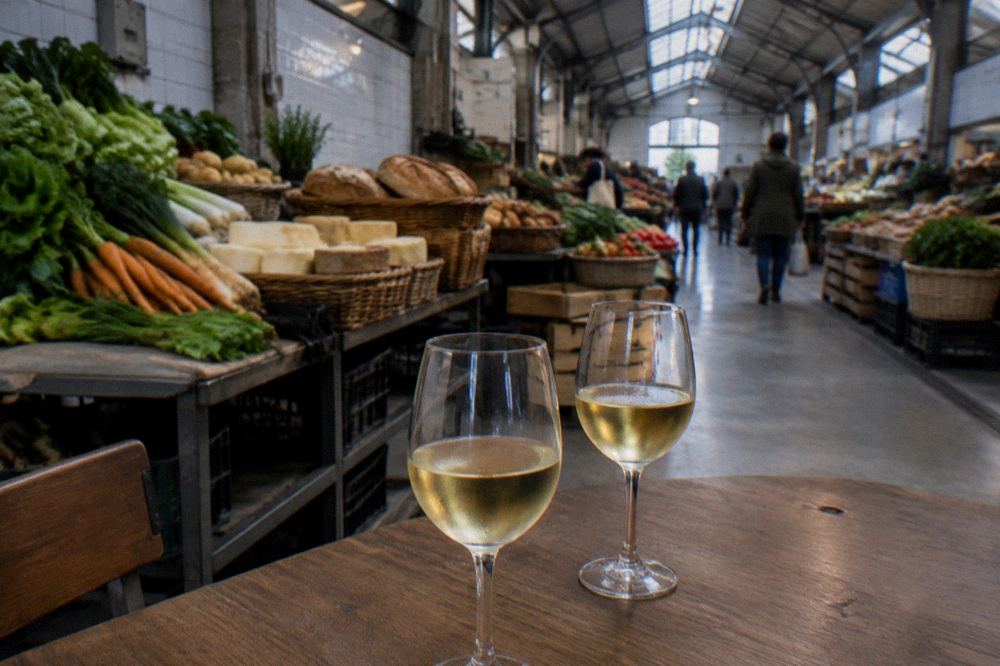
Vinho verde is the light, usually young and often slightly sparkling wine style of the Minho region, the part of northern Portugal that Braga sits at the heart of, and it is the default pour in the city's restaurants and cafés. It comes in white, red and rosé, though white is what most visitors encounter. It is a style rather than a single grape, and its name refers to the wine's youth, "green" meaning young, not to the colour.
The Minho is the wettest part of Portugal, and its wine tradition grew around high-acidity white grapes such as Alvarinho, Loureiro, Arinto and Avesso, along with the light red Vinhão. The wines are typically low in alcohol, fresh, and in many bottles faintly fizzy from a small amount of carbon dioxide retained at bottling. That spritz is a feature, not a fault, and it is why vinho verde reads as a lunch wine even in a city that takes long lunches seriously.
Braga's position matters: the city is surrounded by the estates and river valleys that produce the style, so the pours in local restaurants are often local in a way that is not true of bigger cities. The vinho verde guide covers the styles and grapes in depth. If a structured tasting appeals, the Sommelier-Led Wine Tasting is one way to try a guided flight of the region's bottles.
| Vinho verde type | Character |
|---|---|
| White (branco) | Light, high acid, often faintly sparkling; the everyday pour |
| Rosé (rosado) | Fresh and fruity, usually off-dry |
| Red (tinto) | Light-bodied, tart, deep in colour; a traditional local taste |
| Alvarinho-based | Fuller and more aromatic, from the region's premium grape |
| Loureiro-based | Floral and aromatic, one of the region's signature grapes |
Where Do Locals Buy Food In Braga?
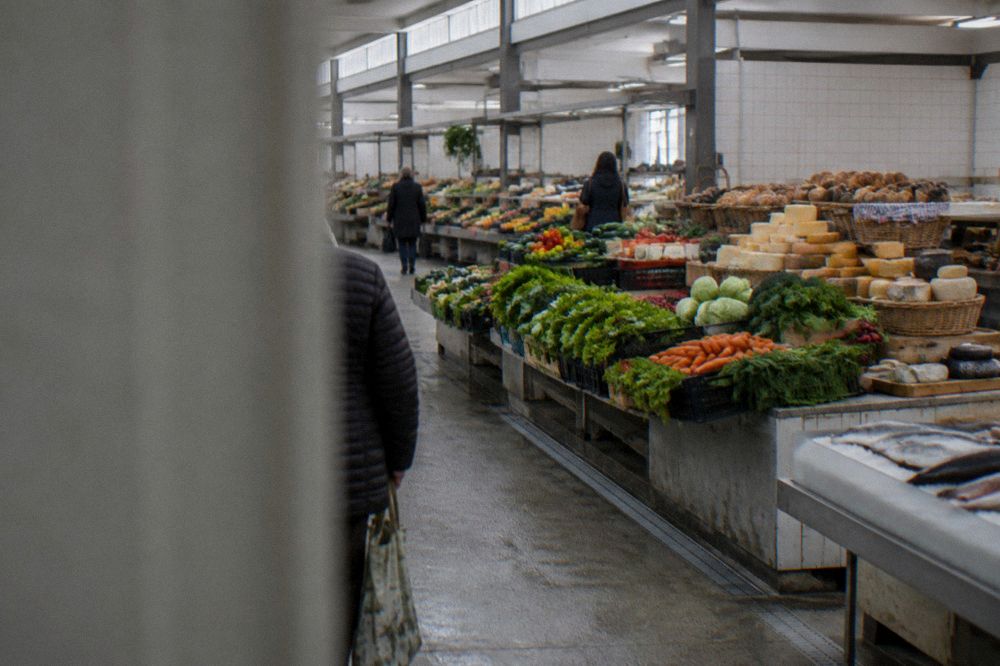
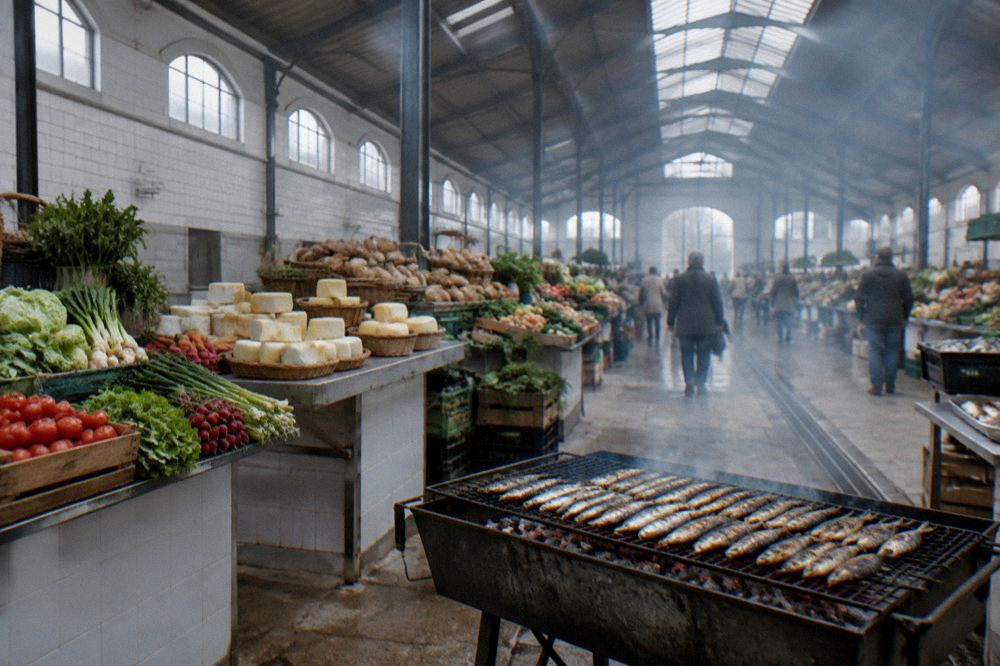
The Mercado Municipal, branded Praça, Mercado Municipal de Braga, is the city's central market and the anchor of local food shopping, surrounded by butcher shops, fishmongers, bakeries and grocery stores across the historic centre and its neighbourhoods. Weekly shopping in Braga still runs through small specialist shops: the fishmonger for cod and fresh fish, the butcher for pork, the bakery twice a day. The market is open and operating under its Praça branding.
The market building is where the city's cooks buy vegetables, fish, cheese and olives, and it is worth walking through even with no shopping to do, because it is the clearest picture of what the Minho region produces. Around it, the streets of the historic centre hold the bakeries that supply the frigideiras and the pudding, and the grocers that stock the olive oil, the garlic and the cured sausages that underpin the cooking. The Braga market guide covers what to look for stall by stall.
For visitors, the practical value of the market is twofold. First, it is the place to assemble a picnic: bread, cheese, olives, cured pork and fruit, eaten in one of the city's gardens on a dry day. Second, it sets expectations for restaurant menus. Whatever is piled at the fish counter in the morning is what is fried on plates at lunch, and the seasonal vegetables on the stalls are the ones in the soups.
How Does A Food Day In Braga Fit Together?
A satisfying food day in Braga runs coffee and a pastry in the morning, a frigideira or soup at midday, the city's signature dishes at a long lunch, a market or garden walk in the afternoon, and pudim Abade de Priscos after dinner, all on foot inside the historic centre. The city is compact enough that every meal can be reached on foot, and the gaps between meals are filled by churches, gardens and shops rather than by travel. Nothing about the day requires a car.
The rhythm matters because Portuguese meal times are later than many visitors expect. Lunch typically starts around 12:30 and runs to mid-afternoon; dinner rarely begins before 19:30 and often later. A visitor who eats at 18:00 will find kitchens closed or just opening, and one who treats the afternoon coffee stop as optional will struggle by 21:00. Build the day around two proper meals and two small stops, and the eating becomes a structure rather than a series of accidents.
| Moment of the day | What to eat | Where it fits in the city |
|---|---|---|
| Morning | Coffee and a pastry at a counter café | Historic centre, near Avenida da Liberdade |
| Midday | Frigideiras or caldo verde as a starter | Before the main lunch, in the same restaurant |
| Lunch | Bacalhau à Braga or rojões, with white vinho verde | Traditional restaurants in the centre |
| Afternoon | Market walk or picnic in a garden | Mercado Municipal and the city's gardens |
| Evening | Pudim Abade de Priscos to finish | Any traditional menu |
A walking structure helps, and there are two good ways to get one. The Braga Small-Group Walking Tour & Bom Jesus pairs the historic centre with the sanctuary on the hill. For a fully private version, the Braga Private Walking Tour with a Professional Guide can be built around your interests, including food.
When Does Food In Braga Get Festival-Sized?
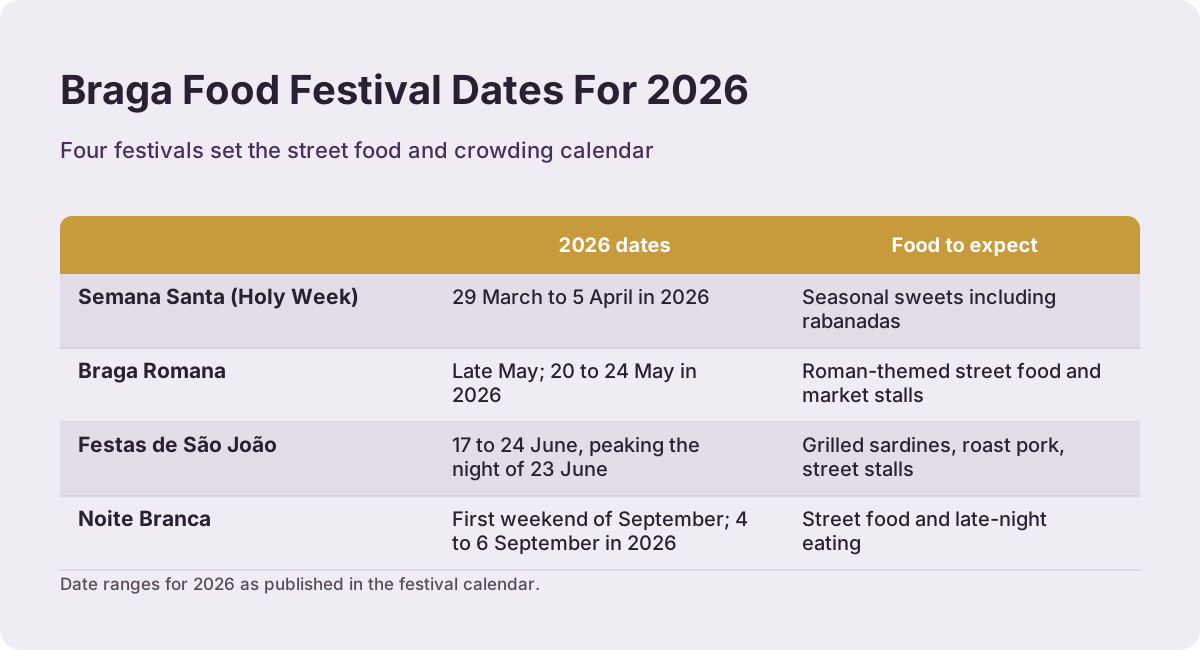
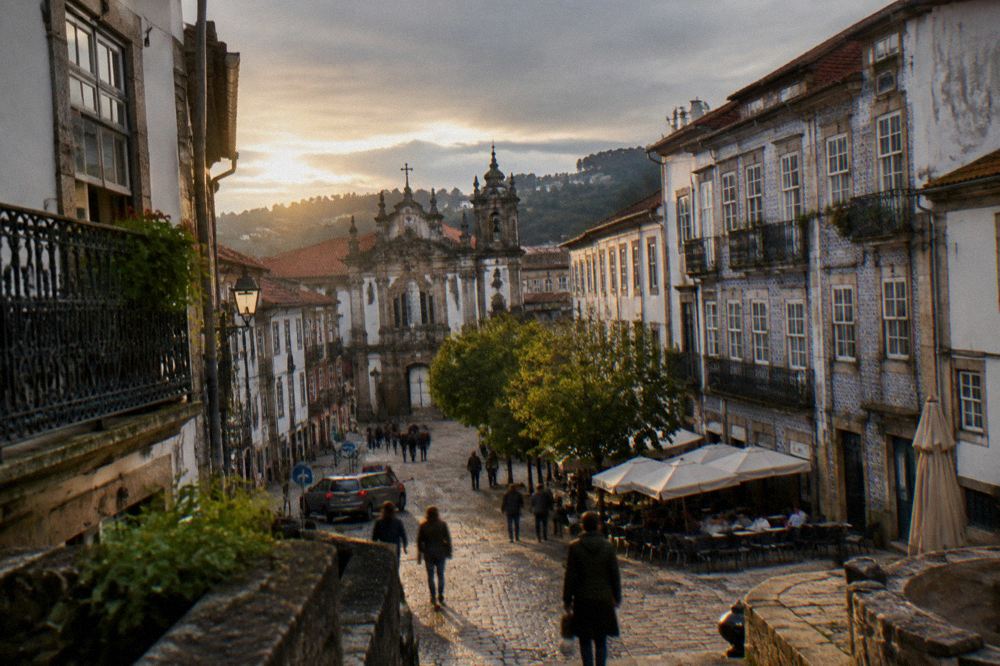
Braga's food traditions peak at two moments in the calendar: Semana Santa, Holy Week, which ran from 29 March to 5 April in 2026, and the Festas de São João, which ran from 17 to 24 June 2026, when the city fills with grilled sardines, roast pork, street stalls and the sweets of the season. Between them, Braga Romana in late May and Noite Branca in early September turn the centre into open-air eating grounds. Festival days are when the city's cooking is at its most public.
Holy Week is Braga's most solemn and most famous celebration, a registered piece of Portugal's intangible cultural heritage, and it changes the rhythm of the centre: restaurants fill after processions, and the sweets of the season, including rabanadas, appear in bakery windows. São João in June is the opposite in mood, a week of street parties that peaks on the night of 23 June into the municipal holiday of 24 June, with sardines grilling on charcoal in the streets and fireworks over the city. The Semana Santa guide covers the processions in detail.
For planning purposes, the festival calendar is also the crowding calendar. A visit during São João offers food experiences no other week can match, but it also means booked-out restaurants and a centre that stays loud into the small hours. The best time to visit Braga guide weighs the seasons against each other, and the Braga weather page gives the climate context: October is the wettest month on record at the city's station, July the driest.
| Festival | Timing | Food to expect |
|---|---|---|
| Semana Santa | The week before Easter; 29 March to 5 April in 2026 | Seasonal sweets including rabanadas; full restaurants after processions |
| Braga Romana | Late May; 20 to 24 May in 2026 | Roman-themed street food and market stalls |
| Festas de São João | 17 to 24 June, peaking the night of 23 June | Grilled sardines, roast pork, street stalls |
| Noite Branca | First weekend of September; 4 to 6 September in 2026 | Street food and late-night eating across the centre |
Do You Need A Food Tour To Eat Well In Braga?
No, you can eat very well in Braga alone, because the signature dishes appear on nearly every traditional menu in the historic centre. But a food tour adds three things a solo visit does not: a local guide who knows which kitchen does which dish best, tastings arranged without language friction, and the context behind each plate. For a short stay, a tour compresses the learning curve of a whole trip into a single afternoon.
The honest case against is that Braga's food is not hidden. Bacalhau à Braga is on the menu with its name on it, the pudding is not a secret, and a visitor with this page and a willingness to point at other tables' plates will eat well. The honest case for is that the difference between a good plate of rojões and a great one is invisible from the street, and that the stories, which frigideira belongs to which pilgrimage, what sarrabulho means at a family table, arrive faster from a guide than from a search box.
The practical middle path is to book the Braga Authentic Small-Group Food & Tasting Tour for a first evening, then return alone to whatever it opened the door to. Visitors combining Braga with the coast can also read up on what food Barcelos is known for, since the neighbouring town's Thursday market tradition overlaps with this region's cooking.
Common Questions About Food In Braga
What is the most famous dish in Braga?
Bacalhau à Braga, fried salt cod served with potatoes, shredded cabbage, garlic and olive oil. It is the plate that carries the city's name and appears on virtually every traditional menu in the municipality.
What is pudim Abade de Priscos?
A caramel pudding made with eggs, sugar, port wine and bacon fat, associated with an abbot of the region whose name it carries. The bacon fat gives it a silky texture and a savoury undertone beneath the caramel, and it is Braga's signature dessert.
What are frigideiras?
Small sweet pastries filled with minced meat spiced with cinnamon and warm spices, closely associated with Braga and with the Bom Jesus pilgrimage tradition. They are eaten warm as a snack or starter.
What wine should you drink with food in Braga?
Vinho verde, the light, often faintly sparkling wine style of the Minho region that surrounds Braga. White is the everyday pour and suits the city's fried cod and pork dishes; the style is a regional tradition rather than a single grape.
Is food in Braga expensive?
Portugal generally, and the Minho specifically, remain among western Europe's more affordable eating destinations, and Braga's traditional restaurants are priced for locals rather than visitors. The city also levies a small municipal tourist tax on overnight stays, charged per person per night for up to four nights.
When is the best time to visit Braga for food?
Festival periods. São João in late June fills the streets with grilled sardines and roast pork, Holy Week pairs processions with full restaurants, and Noite Branca in early September turns the centre into a night of open-air eating. Any of these beats a quiet Tuesday for spectacle, though a quiet Tuesday has its own advantages for getting a table.
Eating your way through Braga is not a scavenger hunt for hidden gems: the city's best food is labelled, in plain Portuguese, on menus a few minutes' walk from wherever you are standing. Order the cod, the pork, the pastries and the pudding, pour the local white, and the Minho does the rest.