Braga Weather By Month
Braga, in the Minho region of northern Portugal, has a mild Atlantic climate: warm, dry summers and wet winters, with October the rainiest month of the year. Here is what each month actually delivers.
Short answer
Braga's mean annual temperature is 14.9 C, with July and August the warmest months (mean maxima of 28.2 and 28.7 C) and January the coolest (mean 8.6 C). October is the wettest month on average (197.8 mm) and July the driest (27.9 mm).
Braga, the city in the Minho region of northern Portugal, sits far enough north and close enough to the Atlantic that its weather has a personality of its own: warm, reliably dry summers, green wet winters, and shoulder seasons that can swing between the two in a single afternoon. IPMA's 1991 to 2020 normals for the Braga / Merelim station show a mean annual temperature of 14.9 C and 1,387.3 mm of rain spread over 113.5 days a year, which makes Braga one of the wetter cities in mainland Portugal. This guide breaks that down month by month, so a visitor can judge what any given stretch of the year is likely to deliver and what to pack for it.
What Is The Weather Like In Braga Overall?
Braga has a temperate Atlantic climate with a mean annual temperature of 14.9 C at the city's own weather station. Summers are warm and mostly dry, with July and August averaging mean maxima of 28.2 C and 28.7 C, while winters are cool and wet, with January averaging 8.6 C overall. Rain totals 1,387.3 mm a year over 113.5 days, and the wettest stretch runs from October to January.
Those figures all come from IPMA's climate normals for the Braga / Merelim station, number 622, which sits at 68.4 m altitude inside the municipality. That matters more than it sounds. Plenty of weather pages quote Porto numbers, or averages for the wider district of Braga, which stretches into the hills of the Peneda-Gerês National Park and is a different climate story. The numbers here are the city's own.
Two details shape the year. First, the rain is heavily concentrated: the four months from October to January carry roughly 738 mm between them, more than half the annual total, while July gives just 27.9 mm over about four days. Second, the transition is fast. May still averages 89.8 mm of rain, June drops to 40.6 mm, and by July the city is effectively in its dry season. Spring arrives earlier than in northern Europe but is not the dry, settled season many visitors imagine.
The practical consequence is simple: summer itineraries can be planned around long days outdoors, while winter itineraries need indoor anchors, of which Braga has plenty, from the Sé de Braga to the city's museums. The braga museums and braga churches pages collect the options that work whatever the sky is doing.
What Is The Braga Weather Month By Month?
The table below gives the monthly means for temperature, rain and rain days at the Braga / Merelim station, from IPMA's 1991 to 2020 climate normals. January is the coolest month at 8.6 C mean, August the warmest at 21.4 C mean, October the wettest at 197.8 mm, and July the driest at 27.9 mm. No month averages a mean maximum below 14 C.
| Month | Mean C | Mean max C | Mean min C | Rain mm | Days with 1 mm or more |
|---|---|---|---|---|---|
| January | 8.6 | 14.1 | 3.1 | 179.5 | 13.1 |
| February | 9.5 | 15.5 | 3.4 | 111.1 | 9.6 |
| March | 11.9 | 17.8 | 5.9 | 150.1 | 11.8 |
| April | 13.7 | 19.6 | 7.8 | 127.9 | 12.0 |
| May | 16.7 | 23.0 | 10.4 | 89.8 | 8.9 |
| June | 19.7 | 26.1 | 13.2 | 40.6 | 5.7 |
| July | 21.2 | 28.2 | 14.3 | 27.9 | 4.0 |
| August | 21.4 | 28.7 | 14.0 | 34.6 | 3.8 |
| September | 19.7 | 26.9 | 12.4 | 67.6 | 6.2 |
| October | 16.1 | 22.2 | 10.1 | 197.8 | 12.0 |
| November | 11.5 | 17.0 | 6.0 | 170.1 | 12.9 |
| December | 9.3 | 14.9 | 3.7 | 190.3 | 13.3 |
Read the table with the seasons in mind. Winter, December to February, is cool rather than cold: mean maxima stay between 14.1 C and 15.5 C, so midday in January can feel genuinely pleasant in the sun, while nights fall to between 3.1 C and 3.7 C. Spring warms steadily but stays wet, with March and April each delivering 11 to 12 rain days. Summer, June to August, is the dry core of the year, and September is a quieter, softer version of it, actually slightly wetter than June (67.6 mm against 40.6 mm) but with a mean maximum of 26.9 C.
A guided walk is the most weather-flexible way to see the city, because a guide reroutes around showers and knows which churches and cloisters open onto covered space. The half-day small-group tour that pairs the historic centre with the Bom Jesus sanctuary is the natural fit, since it covers the two halves of a Braga visit in three hours with transport between them, and it can be booked at short notice if the forecast turns.
What Is The Rainiest Month In Braga?
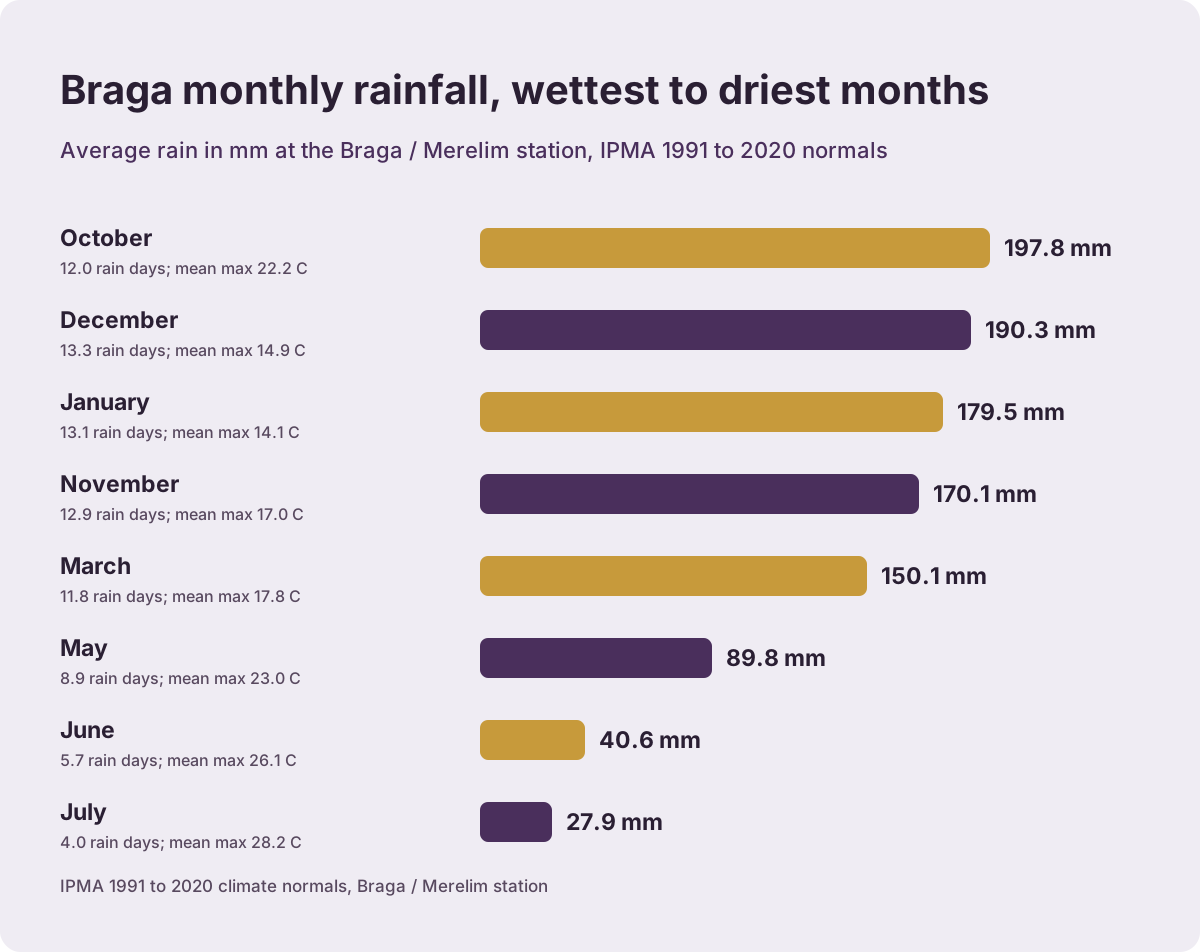
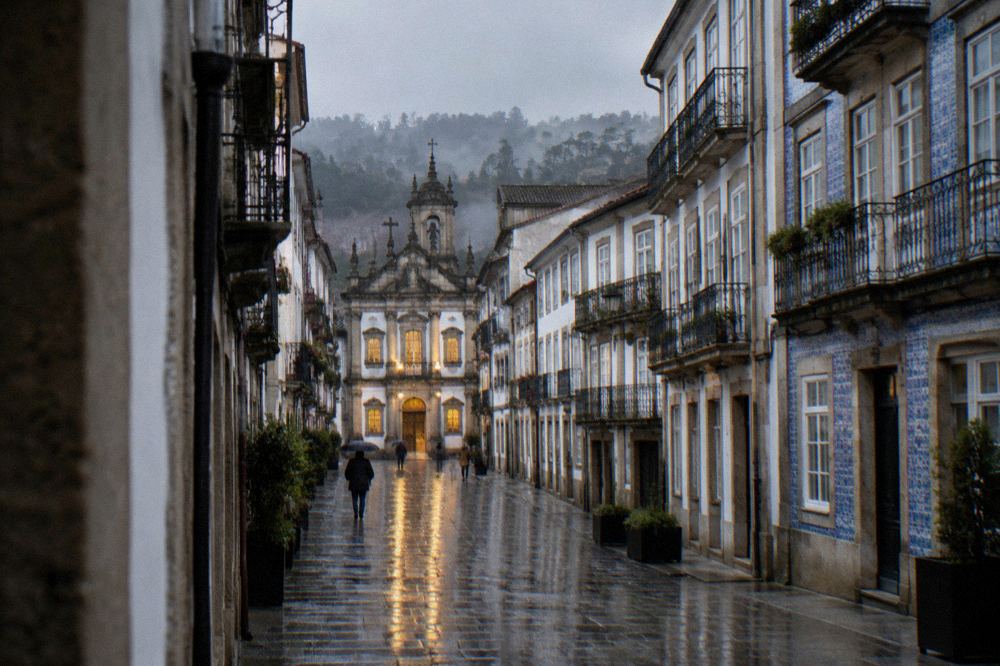
October is the rainiest month in Braga on average, with 197.8 mm of rain over about 12 rain days at the city's weather station. December is a close second at 190.3 mm, followed by January at 179.5 mm and November at 170.1 mm. The wettest single day on record at the station dumped 110.9 mm, also in October.
That October figure surprises visitors who associate autumn with gentle decline. In Braga, the first autumn month is the pivot of the whole year: the mean maximum is still a comfortable 22.2 C, but the Atlantic fronts return in force, and the station records 12 days with a millimetre or more of rain. From October through January, the city averages between 12 and 13 such days every month.
The rain is rarely the all-day drizzle of northern Europe, though. The Minho's winter rain more often arrives in frontal bursts, heavy for hours and then done, which is why the same months can still produce bright, sharp afternoons. The practical rule for a winter visit is to plan one indoor anchor per day, and to treat the morning forecast as advisory rather than binding.
| Rank | Month | Rain mm | Rain days (1 mm or more) |
|---|---|---|---|
| 1 | October | 197.8 | 12.0 |
| 2 | December | 190.3 | 13.3 |
| 3 | January | 179.5 | 13.1 |
| 4 | November | 170.1 | 12.9 |
| 5 | March | 150.1 | 11.8 |
| 6 | April | 127.9 | 12.0 |
The pattern matters for trip planning beyond Braga itself, because the rain question comes up for the whole country. The site's answer page on the rainiest month in Portugal covers the national picture, and the Minho, Braga's region, is consistently among the wettest corners of the mainland.
What Is The Hottest Month In Braga?
August is the hottest month in Braga on average, with a mean maximum of 28.7 C and a monthly mean of 21.4 C, and July is barely behind at 28.2 C and 21.2 C. The station records 10.4 days at or above 30 C in August and 9.8 in July. The record high for the station is 42.2 C, set in August.
Heat in Braga is daytime heat. Even in August, the mean minimum is 14.0 C, so nights cool enough to sleep, and mornings before 11:00 are usually fresh. The 30 C days are real but concentrated: across the whole year the station averages 38.7 of them, almost all in the June-to-September window (6.7 in June, 9.8 in July, 10.4 in August, 7.4 in September).
Visitors planning summer sightseeing should simply invert the winter logic: do the open, exposed things early and late, and keep the middle of the day for churches, museums and long lunches. The climb up the Escadório do Pórtico at Bom Jesus do Monte, 566 steps by the Confraria's count, is a different proposition at 09:00 than at 15:00 in August, and the sanctuary's grounds offer shade that the city centre's granite streets do not.
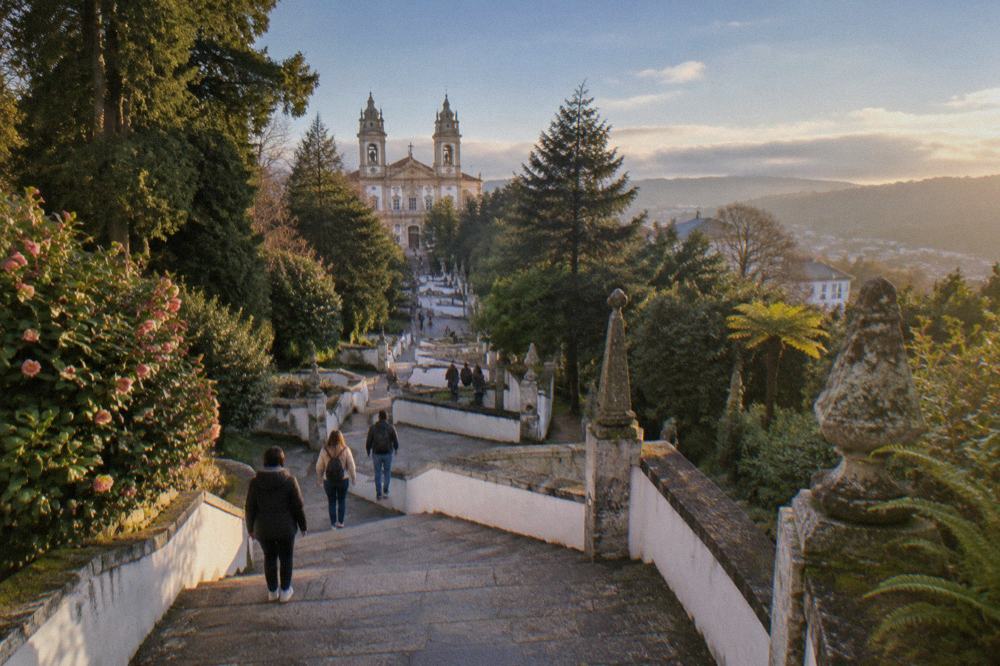
One operational note belongs here because it interacts with summer heat and with any visit: the Bom Jesus funicular has been out of service since 26 September 2026, with a replacement shuttle running daily between the Pórtico and the sanctuary, and no return date published. Check the operator's notice before planning a ride, and if the stairway is on the itinerary, treat it as a morning activity in the hot months. The how to get to Bom Jesus do Monte page covers the transport side, including TUB Line 2 to the Pórtico.
When Is The Best Time Of Year To Visit Braga?
May, June and September are the best months to visit Braga for most travellers: May averages a mean maximum of 23.0 C with 8.9 rain days, June 26.1 C with 5.7 rain days, and September 26.9 C with 6.2 rain days. July and August are the driest but the hottest, while October to March is wetter and cooler but far from hostile.
The choice is really between three windows. Late spring, May and June, gives warm days, green landscapes and rain that is fading rather than gone. High summer, July and August, is the safest bet for uninterrupted outdoor plans but carries the heat and the peak-season crowds around the Semana Santa-to-summer span. Early autumn, September, is the connoisseur's month: the sea-warmed air keeps the mean maximum at 26.9 C, the rain has not yet returned in force, and the light is softer for photography. The full index of guides sits on Braga Travel Guide.
| Month | Mean max C | Rain mm | Rain days | Best for |
|---|---|---|---|---|
| May | 23.0 | 89.8 | 8.9 | Green hills, comfortable walking |
| June | 26.1 | 40.6 | 5.7 | Dry warmth, long evenings |
| July | 28.2 | 27.9 | 4.0 | Guaranteed dry, hottest |
| August | 28.7 | 34.6 | 3.8 | Peak heat, peak season |
| September | 26.9 | 67.6 | 6.2 | Warm, softer light, quieter |
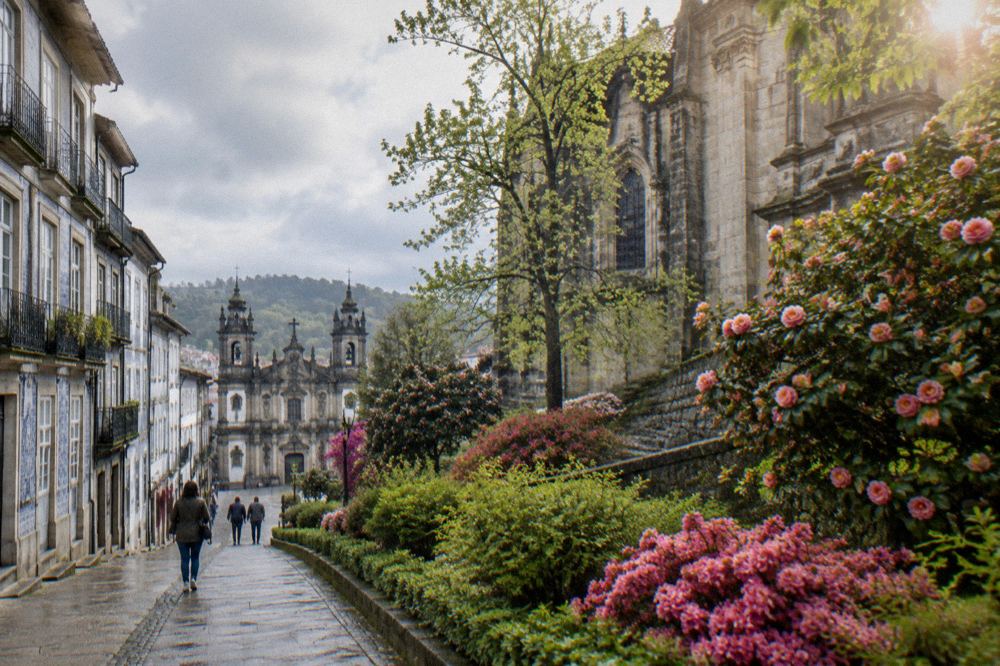
There is also a case for the months the table leaves out. Holy Week, the week before Easter, is Braga's biggest cultural moment, and late March can deliver processions under a cool, changeable sky that suits the occasion better than heat would. The best time to visit Braga page weighs the calendar of events against the climate in more detail, and the Semana Santa in Braga page covers the week itself.
For visitors who want a guide's judgment rather than their own guesswork, a private walking tour with a professional guide can be adapted on the day to whatever the sky is doing, which is the whole point of paying for one.
What Should You Pack For Braga?
Pack for two climates in one bag: light layers and sun protection for the summer months, a proper waterproof and warm layers for October to April, and an umbrella in every month except July and August. Nights are the trap, with mean minima of 3.1 C in January and 14.0 C in August, so a warm layer matters even at the height of summer.
The gap between day and night is the detail most visitors underestimate. In April, a mean maximum of 19.6 C can feel like late spring at lunchtime, while the 7.8 C mean minimum makes the evening a different wardrobe. The same applies in October, when 22.2 C days give way to 10.1 C nights. Braga's historic centre is a walking city of granite and shade, so comfortable shoes matter more than any single clothing choice.
| Season | Typical day | Typical night | Pack |
|---|---|---|---|
| December to February | 14.1 to 15.5 C max | 3.1 to 3.7 C min | Waterproof jacket, warm layers, umbrella |
| March to May | 17.8 to 23.0 C max | 5.9 to 10.4 C min | Layers, light rain shell, umbrella |
| June to August | 26.1 to 28.7 C max | 13.2 to 14.3 C min | Sun hat, sunscreen, light layers, one warm layer |
| September to November | 17.0 to 26.9 C max | 6.0 to 12.4 C min | Layers, waterproof from October, umbrella |
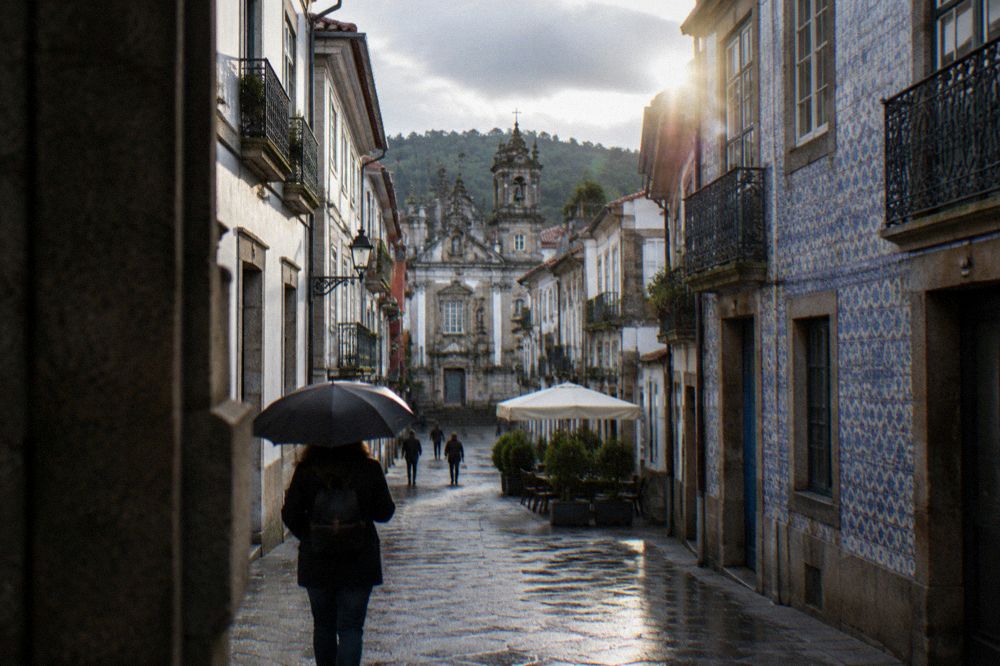
Footwear deserves one extra line. The 566-step stairway at Bom Jesus do Monte and the cobbled lanes around the Sé de Braga both punish thin soles in the wet, and the granite becomes genuinely slick after rain. A shoe with grip is the single most useful item in the bag for any season.
Does It Ever Freeze Or Snow In Braga?
Braga records frost but almost never snow. The station averages 24.3 nights a year with a minimum below 0 C, concentrated in January (8.5 nights), December (7.0) and February (5.5), and the record low is -6.4 C, set in December. The city's low altitude of 68.4 m and Atlantic influence keep genuine snowfall rare.
Frost in Braga is a dawn phenomenon, and by mid-morning the mean maxima of 14.1 C in January and 14.9 C in December have usually melted it. Visitors arriving between December and February should expect cold, damp mornings rather than a winter-sports climate, and the frost nights are precisely the nights when the city's restaurants and cafés earn their keep. The what to eat in Braga page is the companion piece for cold-weather eating, from bacalhau à Braga to the region's vinho verde.
The hills around the city are a different story. The district of Braga climbs into the Peneda-Gerês National Park, where winter brings real cold and the landscape turns properly alpine, but that is the park's climate, not the city's, and the numbers on this page should not be transferred to it.
How Does The Weather Affect Getting Around Braga?
Rain affects Braga itineraries more than heat does, because the city's core sights are outdoors and its public transport is cheap: a TUB tourist ticket covering the whole network costs 3.35 EUR for one day, 6.05 EUR for two and 8.05 EUR for three, which buys dry transport on wet days. On-board single fares are 1.55 EUR for one zone and 2.00 EUR for two.
The 2026 TUB tariff lists those tourist tickets as the only multi-day transport product in the city, and they suit a weather-driven style of sightseeing: on a wet afternoon, a bus hop between the Museu dos Biscainhos, the D. Diogo de Sousa museum and the covered arcades of the centre costs less than a coffee in many European cities. The getting around Braga page explains the network in full.
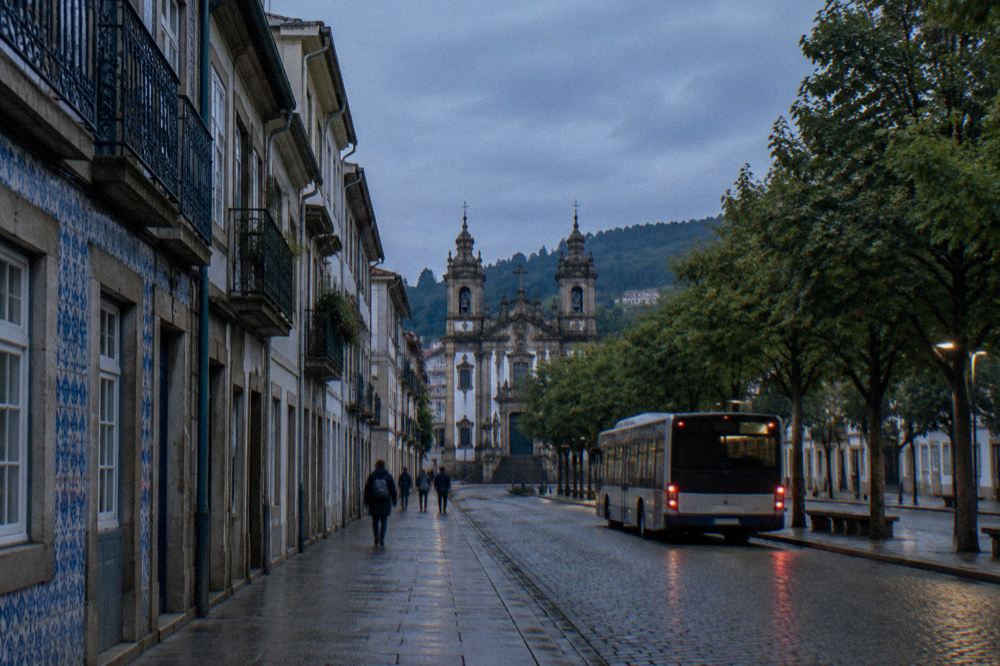
For the Bom Jesus leg, the weather question interacts with the current works. With the funicular out of service, the choice is the shuttle, the 566-step stairway on foot, or TUB Line 2 to the Pórtico and then the climb, and in July's heat or January's rain the shuttle is the sensible option. The tuk tuk city tour is the other weather-proof format, since the vehicle covers the centre's main sights in a short loop without long exposed walks.
Does Braga Weather Change What A Day Trip Or Tour Costs?
Weather does not change Braga's tour prices, but it changes which tours are worth booking: outdoor formats like the Bom Jesus half-day tour and tuk tuk loops suit the May-to-September window, while museum-heavy days and food tours carry a wet October-to-March afternoon better. The city's paid sights stay open year-round, with only the funicular currently suspended.
The honest framing is seasonal fit rather than price. The half-day small-group tour that leads this site's picks works in any month, because its three hours are split between the walkable centre and the sanctuary, with transport in between, and the braga walking tours page compares the formats in detail. A rainy-day plan is covered separately on the rainy day in Braga page.
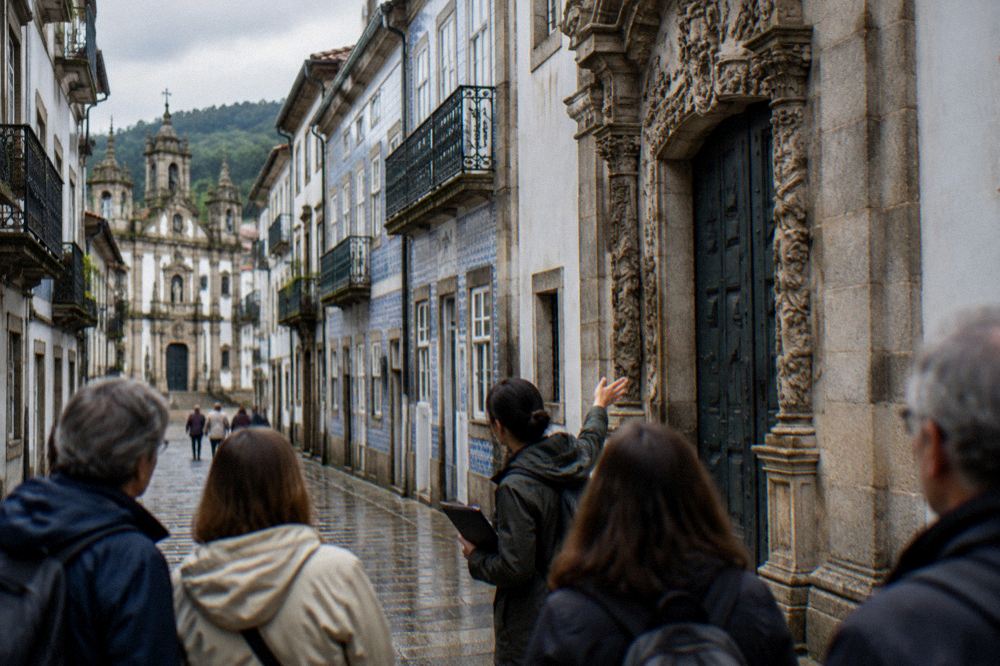
For travellers arriving from further afield, the weather question extends to the journey. The Porto to Braga, Porto Airport to Braga and Lisbon to Braga pages cover the routes, and winter rain on those corridors is a scheduling matter more than a safety one: trains and coaches run all year, and the wettest months simply reward booking a slightly later start so the morning's heaviest front can pass.
The half-day small-group tour is the one to check first for any season, since it pairs the historic centre with Bom Jesus and can be joined on short notice when a forecast window opens.
Common Questions About Braga Weather
What is the rainiest month in Braga?
October, with 197.8 mm of rain on average over about 12 rain days, per IPMA's 1991 to 2020 normals for the Braga / Merelim station. December (190.3 mm) and January (179.5 mm) are close behind.
What is the hottest month in Braga?
August, with a mean maximum of 28.7 C and a monthly mean of 21.4 C, plus 10.4 days at or above 30 C on average. The station's record high is 42.2 C, also set in August.
What is the coldest month in Braga?
January, with a mean temperature of 8.6 C, a mean maximum of 14.1 C and a mean minimum of 3.1 C. The station's record low is -6.4 C, set in December.
Does it snow in Braga?
Almost never in the city. The station averages 24.3 frost nights a year, concentrated in December to February, but the city's altitude of 68.4 m and Atlantic influence keep snowfall rare. The district's mountains are a different, colder climate.
Is Braga rainy compared with the rest of Portugal?
Yes. The Minho region is among the wettest in mainland Portugal, and Braga's 1,387.3 mm annual average over 113.5 rain days reflects that, against a dry summer that is broadly in line with the rest of the country.
What is the best month to visit Braga?
For most travellers, May, June or September: warm mean maxima of 23.0 to 26.9 C, rain days down to 5.7 to 8.9, and fewer crowds than July and August. Event-driven visits should follow the calendar instead, especially Holy Week.
Braga's climate rewards visitors who plan around its two clear seasons: book the outdoor itinerary for the dry stretch from June to September, and give the wetter months an indoor anchor a day, and the city delivers in either.