Car Rental In Braga
Braga's historic centre is compact and largely walkable, so a rental car is a decision about the Minho region, not about the city itself.
Short answer
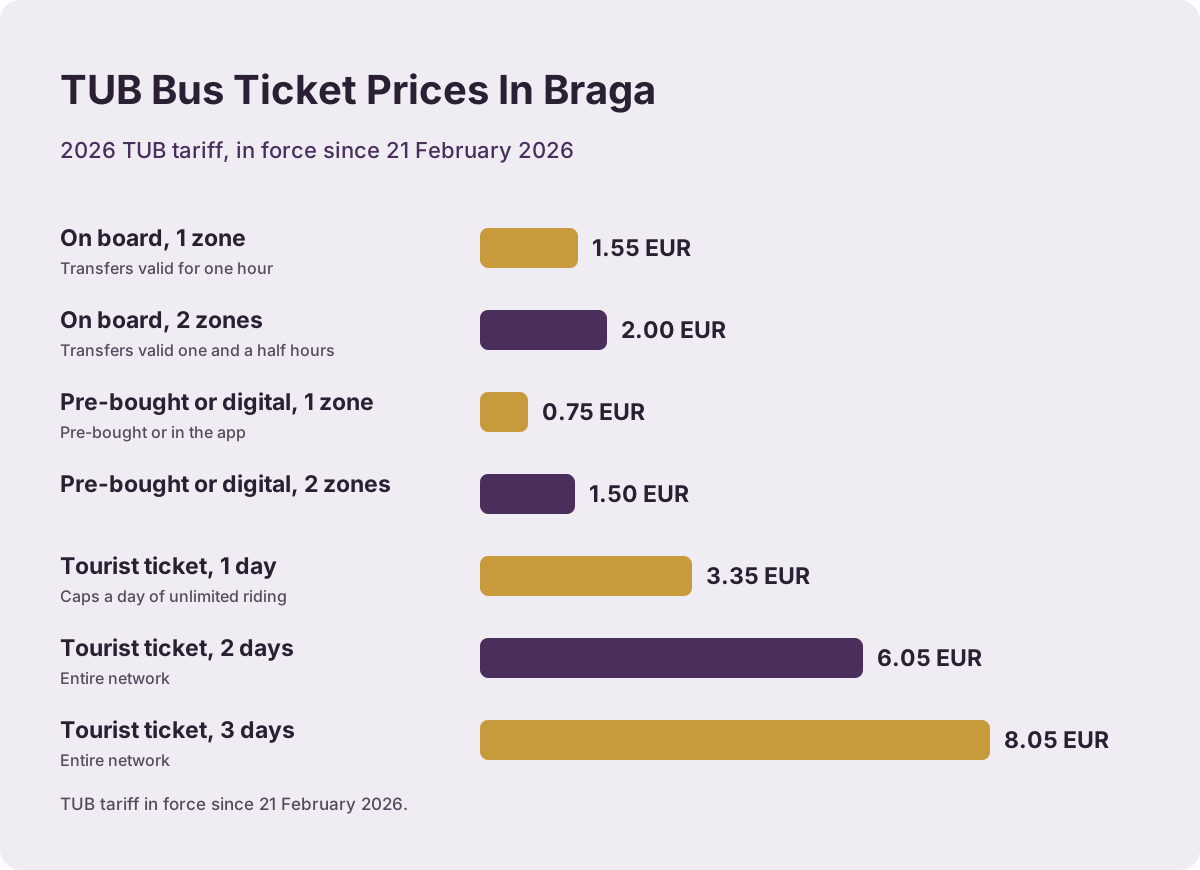
You do not need a car inside Braga: the historic centre is walkable, TUB buses cost 1.55 EUR on board or 0.75 EUR pre-bought, and a 1-day tourist ticket covering the whole network costs 3.35 EUR. A car pays off only if you plan several day trips to places such as Peneda-Gerês, Ponte de Lima or the coast, where buses run a few times a day.
Braga, the city in Portugal's Minho region, is one of the easiest small cities in northern Portugal to explore without a car: the historic centre folds into itself around the Sé de Braga, Rua do Souto and Praça da República, and the hills that hold the big sanctuaries are served by bus. Renting a car in Braga is therefore a decision about the region around the city, the Gerês mountains, the Lima valley and the Atlantic coast, rather than about the streets themselves.
Do You Need A Car In Braga?
No, you do not need a car to see Braga itself. The historic centre is compact enough to cross on foot in well under an hour, TUB buses cover the whole urban network for 1.55 EUR on board or 0.75 EUR pre-bought per one-zone trip, and a tourist ticket for the entire network costs 3.35 EUR for one day.
A car only starts to pay for itself once you add day trips to the Minho hills or the coast, where buses run a handful of times a day.
The arithmetic is the place to start. The 2026 TUB tariff, in force since 21 February 2026, prices a one-zone journey at 1.55 EUR bought on board and 0.75 EUR pre-bought or in the app; a two-zone journey costs 2.00 EUR on board and 1.50 EUR pre-bought. Transfers are valid for one hour on a one-zone ticket and one and a half hours on a two-zone ticket. For a visitor making three or four hops a day, the tourist ticket is the better product: 3.35 EUR for one day, 6.05 EUR for two days and 8.05 EUR for three days, per person, across the whole network.
| TUB ticket | Price |
|---|---|
| On board, 1 zone | 1.55 EUR |
| On board, 2 zones | 2.00 EUR |
| Pre-bought or digital, 1 zone | 0.75 EUR |
| Pre-bought or digital, 2 zones | 1.50 EUR |
| Tourist ticket, 1 day | 3.35 EUR |
| Tourist ticket, 2 days | 6.05 EUR |
| Tourist ticket, 3 days | 8.05 EUR |
Against that, a rental car sitting in a car park while you walk the centre is pure cost. The pages on getting around Braga and things to do in Braga cover how much of the city a pedestrian can cover; the answer is nearly all of it. The only time a car changes the day inside the city limits is a wet one, and even then the rainy-day options are mostly indoors and central.
Where Do You Pick Up A Rental Car For Braga?
Most visitors collect a Braga rental car either in the city itself or at Porto Airport, which is linked to Braga by the Getbus direct coach from 9.00 EUR each way and roughly 45 minutes, running every day including holidays. The airport desk route makes sense if your itinerary starts with the Minho countryside; the in-city desks make sense if you arrive by train and only want the car for the second half of the stay.
Porto Airport is the practical rental hub for the whole region, and the transfer into Braga is well documented: Getbus runs a non-stop coach from the airport's P8 stop to platform 20 inside Braga bus station, from 9.00 EUR one way, with departures spread across the day. The full detail, including where the stop sits and how early to be there, is on the Porto Airport to Braga page. If you would rather ride a train into the city first, the Porto to Braga and Lisbon to Braga guides cover the rail options, and the Braga train station page describes the station itself.
The decision that matters is sequencing. Braga's own rental desks serve the city well, but the region's biggest draws, Peneda-Gerês and the northern coast, sit on roads where you will want the car for two or three consecutive days. Collecting at the airport on arrival, driving the Minho first and finishing with a car-free stretch in Braga is often the smoother order, because it ends the trip in the one place where walking is genuinely the best way around. The where to stay in Braga guide helps you pick a base that works for that final car-free phase.
A walking tour on your first car-free day does more than orient you; it tells you how little of the city you will ever need to drive in. The Explore the Portuguese Rome tour of Braga runs about 90 minutes and covers the historic core, and there is a fuller write-up on the Braga walking tours page.
How Does A Rental Car Compare With Braga'S Buses And Trains?
Inside the city the car loses outright: TUB covers the urban network for 0.75 EUR per pre-bought one-zone trip, and the tourist ticket caps a day of unlimited riding at 3.35 EUR, so no parking charge or fuel spend can compete. Outside the city the comparison flips, because regional buses on the Minho lines run only a few times a day and no train reaches Guimarães from Braga at all, while a car turns the same territory into a flexible loop.
The regional bus network from Braga bus station, run by the Cávado intermunicipal authority, is real and useful, but it is built for commuters and villagers rather than for a day loop. The verified lines tell the story:
| Regional bus line from Braga | Destination |
|---|---|
| Line 101 | Guimarães (Central), via the A11 |
| Line 105 | Ponte de Lima |
| Line 100 | Vila Verde and Arcos de Valdevez |
| Line 201 | Caldas do Gerês |
| Line 200 | Covide, via Campo do Gerês |
| Line 107 | Esposende and the Apúlia coast |
| Line 106 | Póvoa de Varzim |
| Line 109 | Famalicão |
Those line numbers are verified; the fares and journey times on them are not published in a form this site can quote, so check the timetable at the bus station before relying on a connection. What a car buys you here is not speed but freedom: the ability to stop at the Citânia de Briteiros on the way to Guimarães, or to leave the coast road when the light turns good, without consulting a departure board. The trade-off is honest: for a single day trip to one town, the bus or an organised excursion usually wins; for two days across three or four places, the car usually does.
If the plan is one base in Braga with occasional excursions, a guided walk of the centre plus the bus network covers the city end completely, and the car becomes a hill-and-valley tool only. The Explore the Portuguese Rome walk is the natural first evening's orientation, and booking is flexible through the operator's live listing.
Where Does Parking Matter Most Around Braga?
The two places where parking genuinely shapes the day are the Bom Jesus do Monte hill, where the Confraria's own information page lists car parking at 1.00 EUR for cars and motorcycles, and the historic centre, where on-street space is tight and the dedicated car parks are the saner choice. On the hill, parking is cheap and close; in the centre, the car is often better left in a garage for the whole stay.
Bom Jesus do Monte is the clearest case. The Confraria's information page prices the car park at 1.00 EUR for cars and motorcycles, 10.00 EUR for caravans and minibuses and 15.00 EUR for coaches, and the sanctuary grounds and basilica themselves carry no admission charge. That makes the hill the one big Braga sight where driving up is cheap and painless, with one standing caveat: the funicular has been out of service since 26 September 2026, with a replacement shuttle running daily between the Portico and the sanctuary, so check the operator's notice before promising anyone the ride. The stairway itself is 566 steps by the Confraria's count, 615 metres long with 116 metres of ascent, which is why many visitors prefer to ride up and walk down. TUB Line 2 ends at the Portico if you would rather not drive at all; the how to get to Bom Jesus do Monte page covers every option.
| Hill sight | Car parking | Admission |
|---|---|---|
| Bom Jesus do Monte | 1.00 EUR (cars and motorcycles) | Grounds and basilica free |
| Bom Jesus funicular | Replacement shuttle while out of service | Funicular fare 2.50 EUR single when running |
| Bom Jesus high choir and bell tower | Same car park | 1.00 EUR |
| Santuário do Sameiro | On-site parking, check on the day | Precinct free, zimbório viewpoint 2.00 EUR |
| Mosteiro de São Martinho de Tibães | On-site parking | About 4 to 5 EUR, check at the ticket office |
In the centre, the advice reverses. The parking in Braga guide covers the car parks and the street rules in detail; the short version is that the historic streets were laid out long before the motor car and the experience of threading a rental through Rua do Souto on a Saturday is not one to recommend. Park once, walk everywhere, and let the car rest.
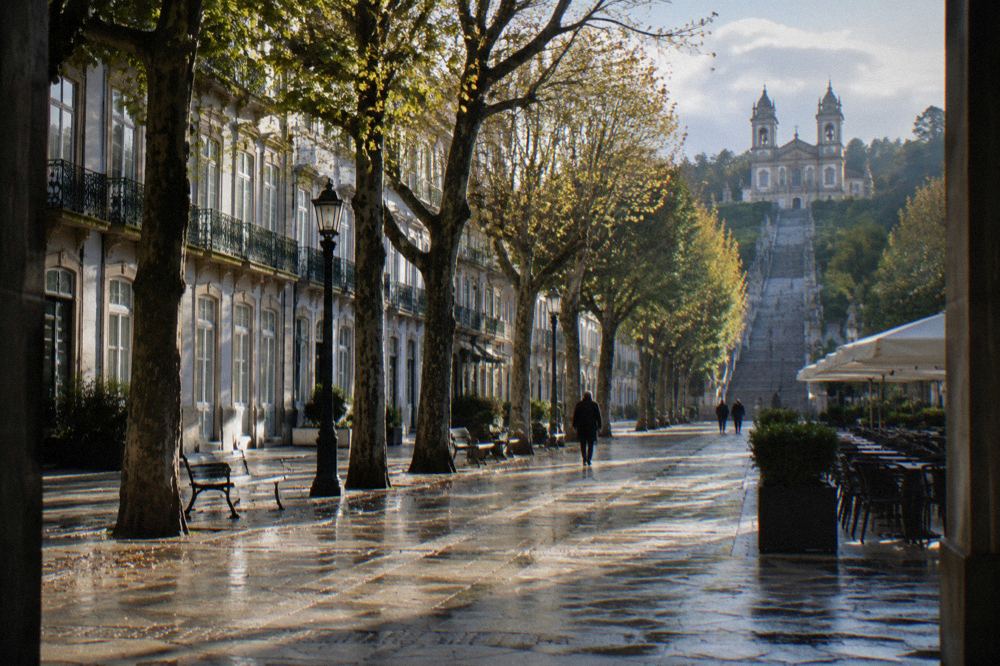
When Does A Car Actually Pay Off Around Braga?
A rental car pays off in the Minho when your itinerary stacks at least two or three scattered destinations into the same day or two: Peneda-Gerês, Ponte de Lima, the Esposende coast and the Póvoa de Varzim beaches all sit on regional bus lines that run a few times a day, and a car converts them from timetabled single visits into a free-running loop. For one destination per day, the bus or a tour usually wins.
Planning a Minho loop of your own? Book a rental car here.
The Gerês case is the strongest. Peneda-Gerês National Park is the region's biggest draw, and the bus lines that reach it, Line 201 to Caldas do Gerês and Line 200 to Covide, are real but sparse; the park itself is free to enter, though summer car access to the Mata de Albergaria section is limited and charged. A car lets you string the park's viewpoints, river beaches and short walks together at your own pace, which is exactly what the sparse bus timetable prevents. The trade-offs and the access rules are covered in the Peneda-Gerês National Park guide.
The second case is the coast. Lines 106 and 107 reach Póvoa de Varzim and the Esposende beaches, and a car makes it possible to combine a morning on the sand with an afternoon in Viana do Castelo or Ponte de Lima, something no single bus ticket does. The third case is the border towns: Valença and Monção and Arcos de Valdevez and Ponte da Barca sit at the end of long bus lines, and a car turns them from an all-day commitment into a comfortable half-day each.
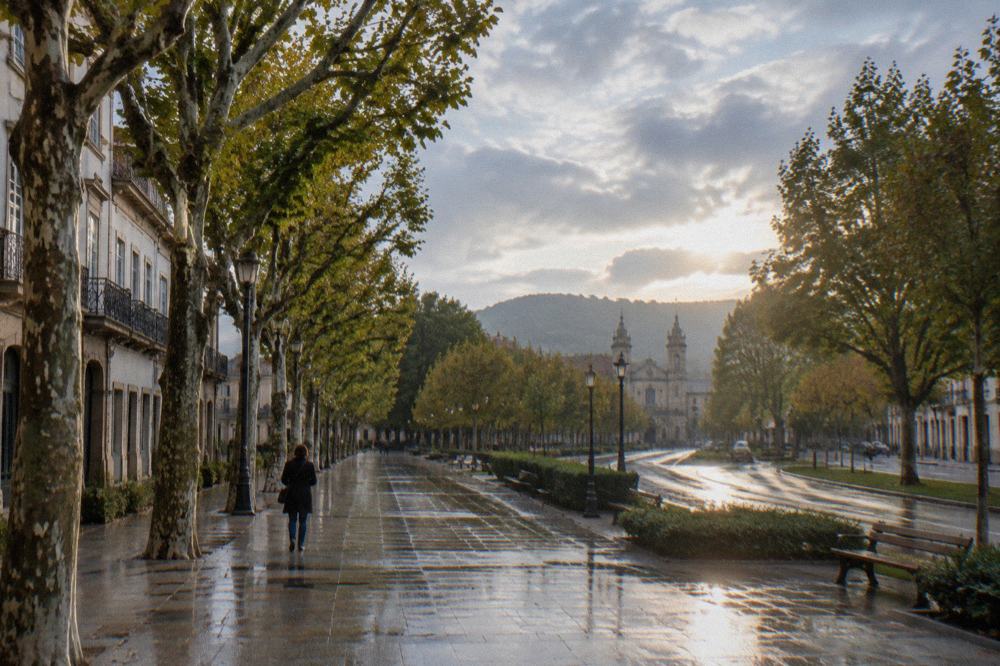
What Should You Check Before Booking A Rental Car In Braga?
Check four things before you book: whether the desk is in Braga or at Porto Airport, what the fuel and mileage policy is, whether the car suits mountain roads if Gerês is on the plan, and what the cross-border rules are if Spain is. Rental pricing is dynamic, so this site never quotes a rate; the operator's live listing or the desk's own terms are the only sources for what you will actually pay.
The desk location matters more than it sounds. A car collected at Porto Airport can be dropped in Braga or vice versa on many contracts, but not all, and a one-way fee may apply; confirm the drop-off city in writing before paying. Inside Braga, desks cluster around the station and the main avenues, which pairs well with a car-free first phase of the trip.
The mountain question is practical, not romantic. The roads into Gerês are paved and well maintained, but they are steep, winding and, in the wet months, frequently wet: IPMA's 1991 to 2020 normals for the Braga / Merelim station show October as the wettest month on average at 197.8 mm of rain and 12 days of 1 mm or more, with December close behind at 190.3 mm. A small car manages those roads; what it does not manage comfortably is a full family plus luggage on them, so size the vehicle to the itinerary, not just to the price.
| Month | Mean max (C) | Rain (mm) | Days of 1 mm or more |
|---|---|---|---|
| January | 14.1 | 179.5 | 13.1 |
| February | 15.5 | 111.1 | 9.6 |
| March | 17.8 | 150.1 | 11.8 |
| April | 19.6 | 127.9 | 12.0 |
| May | 23.0 | 89.8 | 8.9 |
| June | 26.1 | 40.6 | 5.7 |
| July | 28.2 | 27.9 | 4.0 |
| August | 28.7 | 34.6 | 3.8 |
| September | 26.9 | 67.6 | 6.2 |
| October | 22.2 | 197.8 | 12.0 |
| November | 17.0 | 170.1 | 12.9 |
| December | 14.9 | 190.3 | 13.3 |
That table is also the answer to when to rent at all: the best time to visit Braga and Braga weather guides go deeper, but the pattern is clear. July and August are the driest months by far, 27.9 mm and 34.6 mm respectively, and the months from October to January each carry 12 to 13 rain days, which is when a car's shelter starts to feel worth having even inside the city.
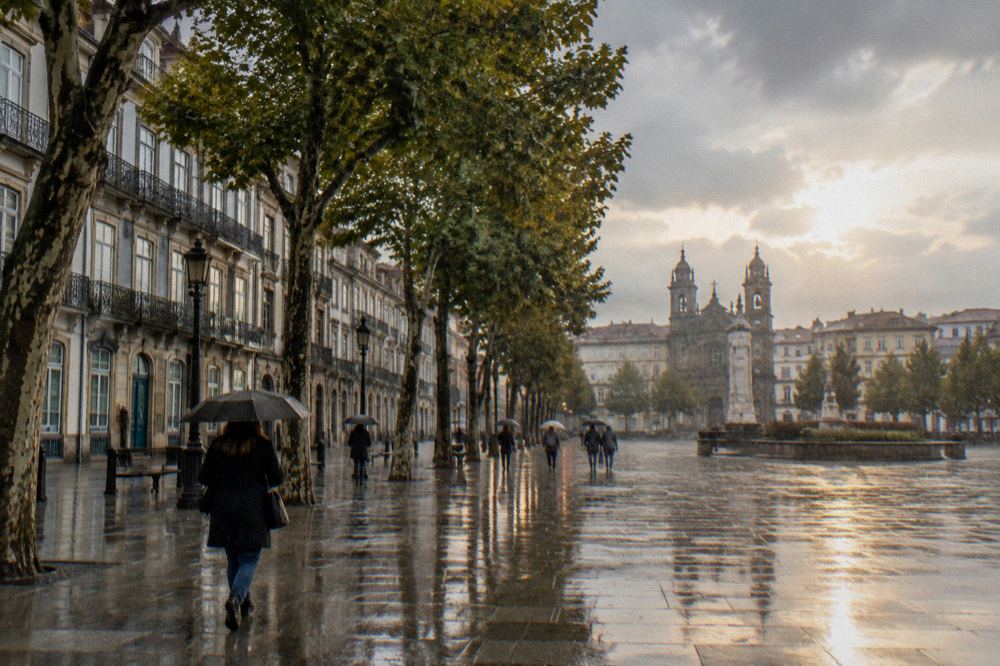
What Should You Check At The Rental Desk In Braga?
Check the insurance excess and what actually reduces it, photograph the car's existing damage on all four corners before driving off, confirm whether the fuel policy is full-to-full, and ask specifically about taking the car into Spain if Vigo or Valença is on the plan. None of these are Braga-specific quirks, but the Spain question catches people out here more than anywhere else in Portugal, because the border is under an hour's drive away.
The Spain point deserves its own sentence: not every Portuguese rental contract permits cross-border driving, and those that do may attach conditions. The Vigo and Santiago de Compostela pages cover the Spanish side of the border region; if either is on your list, settle the cross-border question at the desk, in writing, before you sign.
The rest is universal discipline. Walk the car with the attendant, photograph every panel, confirm the fuel level matches the contract, and check that the spare wheel or repair kit exists. On the hill roads around Braga, also confirm the car's pass includes no mileage cap that a Gerês loop would breach; the distances are not extreme, but a tightly capped contract turns a free-running day into arithmetic.
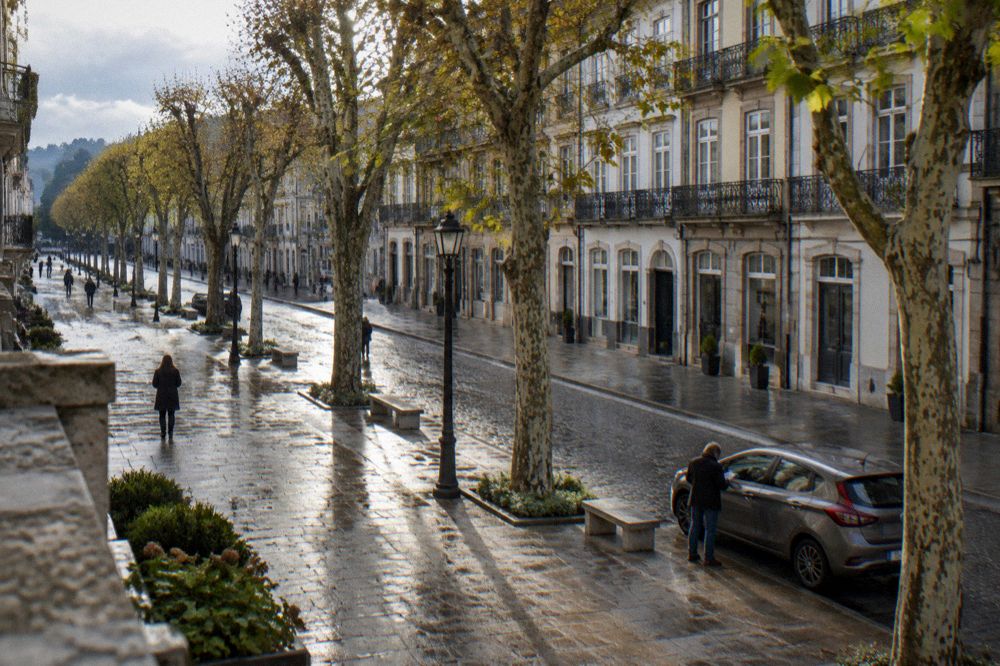
What Can You Still See Without A Car In Braga?
Everything central and all three hill sanctuaries are reachable without a car: the Sé de Braga charges 3.00 EUR per visit route with a 7.00 EUR combined ticket, Museu dos Biscainhos costs 7.50 EUR, the D. Diogo de Sousa museum 5.00 EUR, and TUB Line 2 reaches the foot of the Bom Jesus stairway, from where the shuttle or the 566 steps take you up. A car adds comfort on the hills, not access.
The city's core sights sit within a few minutes of each other on foot, and their prices are modest enough that no pass logic is needed; in fact, no city-wide attraction pass is on sale in Braga at all, so each ticket is bought separately at the door. The Braga attraction tickets and passes page carries the full breakdown.
| Sight | Adult admission |
|---|---|
| Sé de Braga, one visit route | 3.00 EUR |
| Sé de Braga, all three routes combined | 7.00 EUR |
| Museu dos Biscainhos, garden included | 7.50 EUR |
| Museu de Arqueologia D. Diogo de Sousa | 5.00 EUR |
| Museu Pio XII, whole museum | 4.00 EUR |
| Theatro Circo guided tour | 3.50 EUR |
| Santuário do Sameiro zimbório viewpoint | 2.00 EUR |
The hills are the part visitors worry about, and they are manageable. Line 2 ends at the Portico, the shuttle covers the climb while the funicular is out of service, and Sameiro and Tibães sit on the same hill roads that a car makes trivial. A tuk tuk tour is a third way to see the spread without driving it at all, and the small electric vehicles are a genuinely popular compromise for the centre-and-hills circuit.
For a deeper dive into the city on foot, a private tour with a professional guide covers the historic core and can be shaped around your interests; the operator's live listing has the current times.
Is Driving In Braga Itself Difficult?
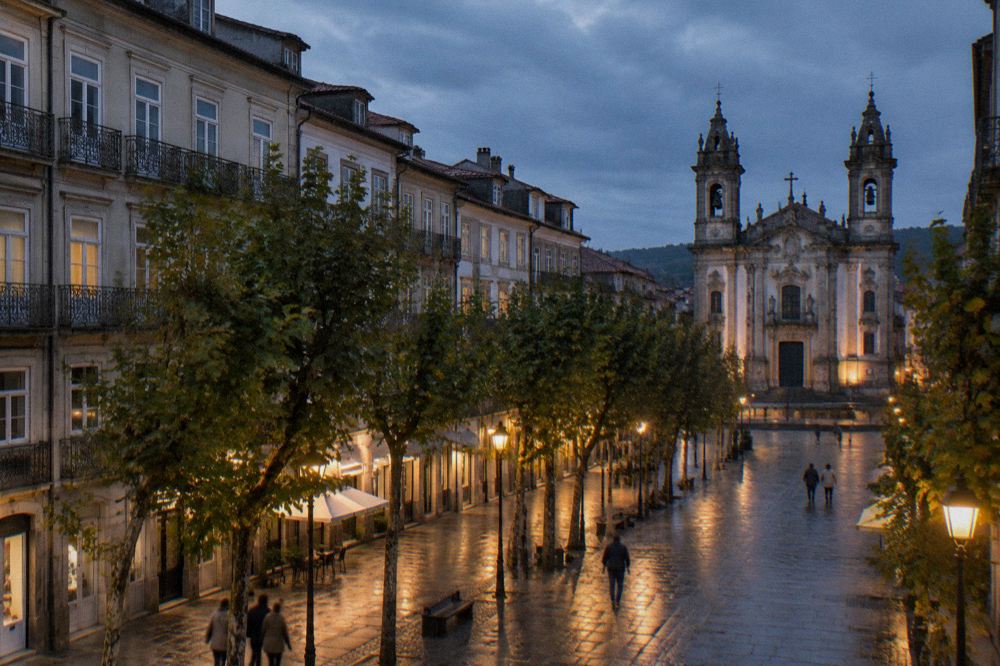
Driving inside Braga's ring is easy, but driving inside the historic centre is not: the streets are narrow, partly pedestrianised around Rua do Souto, and busier than a town of this size suggests, so the standard pattern is to use the ring road to reach a car park and then not touch the car until departure. The hills add gradients and switchbacks, and the wet months add rain on polished cobbles, which is the one combination to respect.
The ring-and-park pattern is what locals do. Avenida da Liberdade and the surrounding avenues carry most through traffic, and the car parks sit within a short walk of the centre; the details are in the parking in Braga guide. The is Braga safe page covers the broader safety picture, including road conditions, and the honest summary is that Braga is a calm place to drive by Portuguese city standards, with the caveat that pedestrian-priority streets in the centre must be taken at walking pace.
One operational note that belongs in any honest rental guide: the funicular outage at Bom Jesus means more shuttle and private traffic on the hill road than usual, and the hill car park fills earlier on weekends and event days as a result. The Confraria's own information page is the place to check on the day.
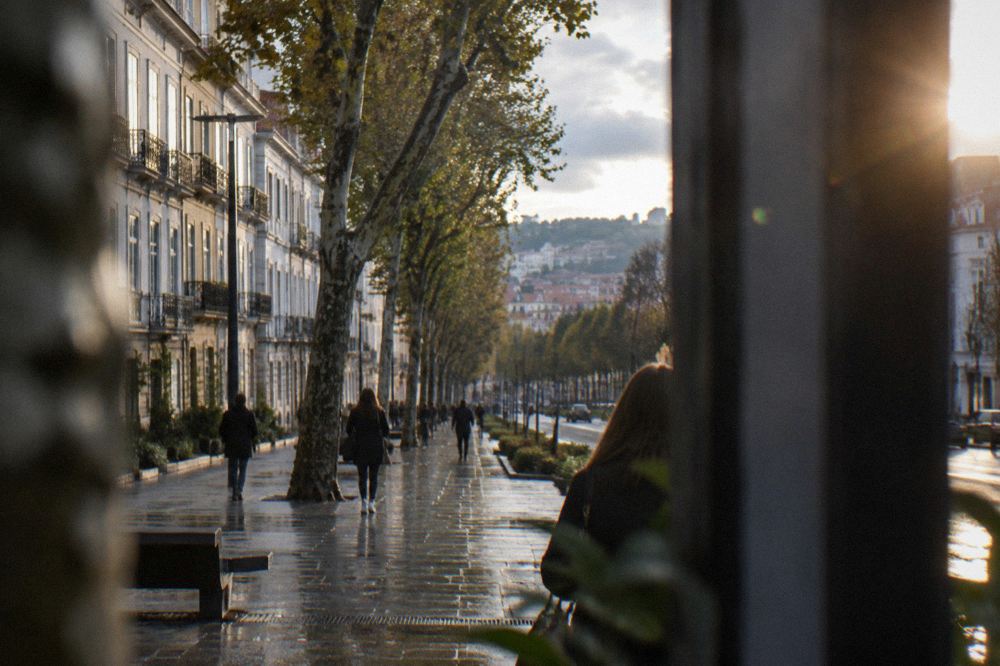
Whichever way you split the trip, the pattern that works for most visitors is this: walk the centre, bus or shuttle the hills, and reserve the rental car for the Minho beyond the city, where the region's real distances live. The Explore the Portuguese Rome tour of Braga remains the site's recommended first activity on any car-free evening in the city, and Braga Travel Guide carries the transport detail for every destination the car might take you to next.
Common Questions About Renting A Car In Braga
Do I need a car in Braga itself?
No. The historic centre is walkable, TUB buses cost 1.55 EUR on board or 0.75 EUR pre-bought for a one-zone trip, and a whole-network tourist ticket costs 3.35 EUR for one day. A car is for the region, not the city.
Where is the best place to collect a rental car for Braga?
Either at a desk in Braga itself, close to the station and the main avenues, or at Porto Airport, which is linked to Braga by the Getbus direct coach from 9.00 EUR one way in roughly 45 minutes, every day including holidays.
Can I park at Bom Jesus do Monte?
Yes. The Confraria's information page lists car parking at 1.00 EUR for cars and motorcycles, 10.00 EUR for caravans and minibuses and 15.00 EUR for coaches, and the sanctuary grounds and basilica are free to enter.
Is the Bom Jesus funicular running?
It has been out of service since 26 September 2026, with no end date published. A replacement shuttle runs daily from 09:00 to 20:00, roughly every 30 minutes each way, between the Portico and the sanctuary. Check the operator's notice before you go.
Can I take my rental car into Spain from Braga?
Sometimes. Cross-border permission depends on the rental contract, not on the border, which is open. Ask at the desk and get the answer in writing before you sign, especially if Vigo or Santiago de Compostela is on your plan.
Are the roads to Gerês difficult?
They are paved and well maintained but steep and winding, and the wet months make them wet: IPMA's 1991 to 2020 normals for the Braga / Merelim station show October averaging 197.8 mm of rain. A standard rental car manages them; size the vehicle to the itinerary rather than to the price.