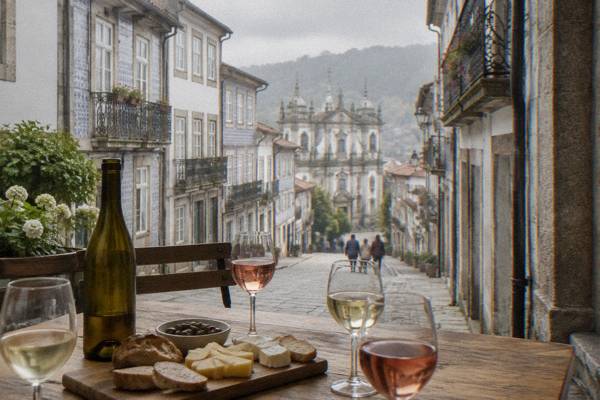
Which Vinho Verde Is Considered The Best?
Which Vinho Verde is considered the best? An honest answer for visitors to Braga, in the Minho region of Portugal: what the style is, which varieties lead, and how to taste it well.
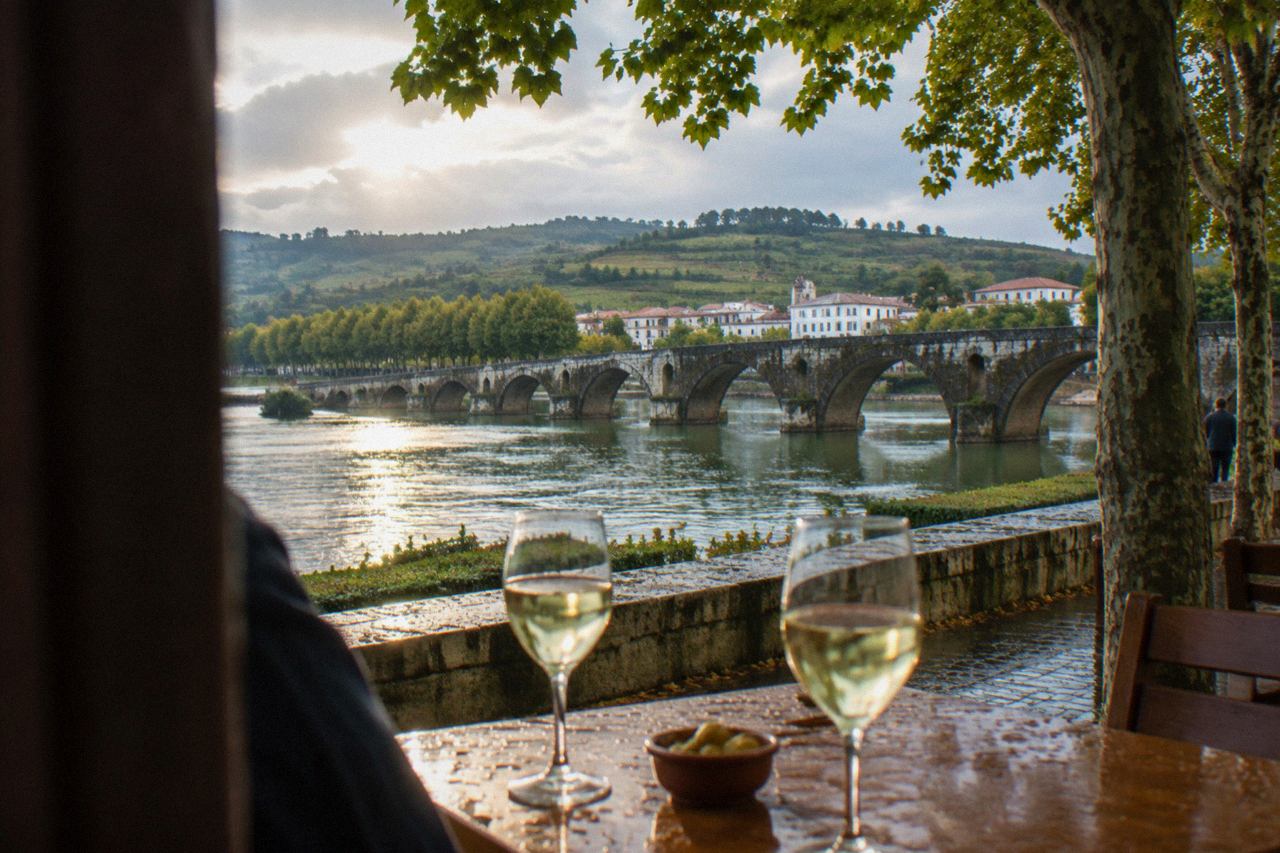
Vinho Verde is the light, often slightly sparkling wine style of the Minho region of northern Portugal, and Braga, the historic city at the heart of that region, is one of the best places in the country to drink it well. Ask which bottle is considered the best and the honest answer is that no single wine holds that crown: the style covers white, red and rosé, several grape varieties and a wide span of quality, and the wines that collect the most consistent praise are the single-variety Alvarinho and Loureiro whites from the sub-regions that specialise in them. What follows is a plain account of how the style works, which categories of it rise to the top, and how a visitor based in Braga can taste the difference without a sommelier's vocabulary. For the basics of the style itself, the companion page on Vinho Verde, the Minho's wine covers the region and the wine in more depth.
Which Vinho Verde Is Considered The Best?
No single wine is considered the best Vinho Verde, because the name covers a whole regional style rather than one product, but the whites made from the Alvarinho and Loureiro varieties are the ones that consistently top the category. Alvarinho, at its best, gives the style body and structure; Loureiro gives it perfume. Single-variety bottles from these two grapes, rather than the blended everyday whites, are what producers and critics point to when the question is about quality.
The reason the question has no single answer is worth understanding before you order a bottle. Vinho Verde is a demarcated region, not a grape and not, despite the name, a guarantee that the wine is green or young. The region spans much of northwestern Portugal, and the wine most visitors meet is a blended white: light in alcohol by the standards of warmer regions, fresh with acidity, and frequently carrying a gentle prickle of carbonation, the "agulha" that comes from a small amount of retained carbon dioxide rather than full sparkling-wine fermentation.
Within that broad style sit several distinct tiers. At the everyday end, blended whites are made for immediate drinking and are priced accordingly, a point covered in detail on the page about why Vinho Verde is so cheap. At the top end, single-variety wines, aged briefly on fine lees by many producers, behave like serious white wines anywhere in the world: they can develop for a few years, they reward attention, and they cost more. Between those poles sit the rosés and the light reds, the latter a traditional local style that most visitors encounter only if they seek it out.
Which Grape Varieties Make The Best Vinho Verde?
Alvarinho and Loureiro are the two white varieties that define the top of the category. Alvarinho, grown mainly in the Monção e Melgaço sub-region near the Spanish border, produces the fullest and most structured whites of the region. Loureiro, at home in the Lima valley, produces the most aromatic ones, with floral and laurel-scented notes. Avesso, from the Baião area, is the third name worth knowing for its balance between richness and freshness.
These three varieties answer the "best" question in practice, because the wines that carry a variety name on the label are the ones producers have chosen to showcase. Alvarinho from Monção e Melgaço is the region's flagship in the way that a village wine is the flagship of its hillside: it has a defined home, a reputation built over decades, and a price to match. Loureiro from the Lima valley, south and west of Braga, is usually a little lighter and more perfumed, and many people who find everyday blended Vinho Verde thin discover, on tasting a good Loureiro, that the style was never the problem.
| Variety | Character of the wine | Where it is grown | What it is best for |
|---|---|---|---|
| Alvarinho | Fullest body, stone fruit, structure | Monção e Melgaço, near the Minho river border | The region's premium white, worth savouring |
| Loureiro | Aromatic, floral, laurel notes, high acidity | The Lima valley | A perfumed aperitif, fish and shellfish |
| Avesso | Balanced richness and freshness | The Baião area, at the region's southern edge | A middle path between the two above |
| Arinto | Citrus, mineral, very fresh | Across several sub-regions | Blending, and crisp single-variety whites |
| Espadeiro | Light red, tart red fruit | Widespread in the region | The traditional local red, served cool |
The reds deserve one honest sentence: Espadeiro and Vinhão make wines that are intensely coloured and fiercely tart, and they divide opinion sharply even among locals. A visitor curious about tradition should try one glass, poured cool, and decide from there. The rosés, made from the same red grapes with brief skin contact, are a safer and increasingly polished middle ground.
Where Should You Taste Vinho Verde Around Braga?
Braga itself is one of the best bases for tasting Vinho Verde, because the city sits inside the wine's home region and its restaurants and bars pour a wide range of it, from everyday blended whites to single-variety Alvarinho and Loureiro. The estates and Quintas of the surrounding Minho countryside make visits and tastings, and several organised experiences from Braga combine the city with local wine tasting.
The practical advantage is geography. The Vinho Verde region surrounds Braga on nearly every side, so the wine on a Braga table is local in the way Alentejo wine is local in Évora: short travelled, familiar, and poured everywhere from neighbourhood tascas to the restaurants around the Sé de Braga. A visitor does not need a car to taste a representative range, though a trip out to a quinta in the surrounding countryside turns a glass into an afternoon.
Two organised options suit this well. The Braga Experience guided tour with tastings pairs a walk through the historic centre with local food and wine tastings, three hours, from $55.48 per person, rated 4.6 from 12 reviews on the operator's live listing, and it is a sensible choice for a first day in the city. For a wider view of the region's produce, the Quinta de Santa Cristina tasting puts you at an estate in the Vinho Verde country, from $28.88 per person, rated 4.9 from 47 reviews. If the question is which experience answers "the best Vinho Verde" most directly, the estate visit does, because it shows the variety in the glass next to the vines it came from. You can Check availability for the guided tour before you travel.
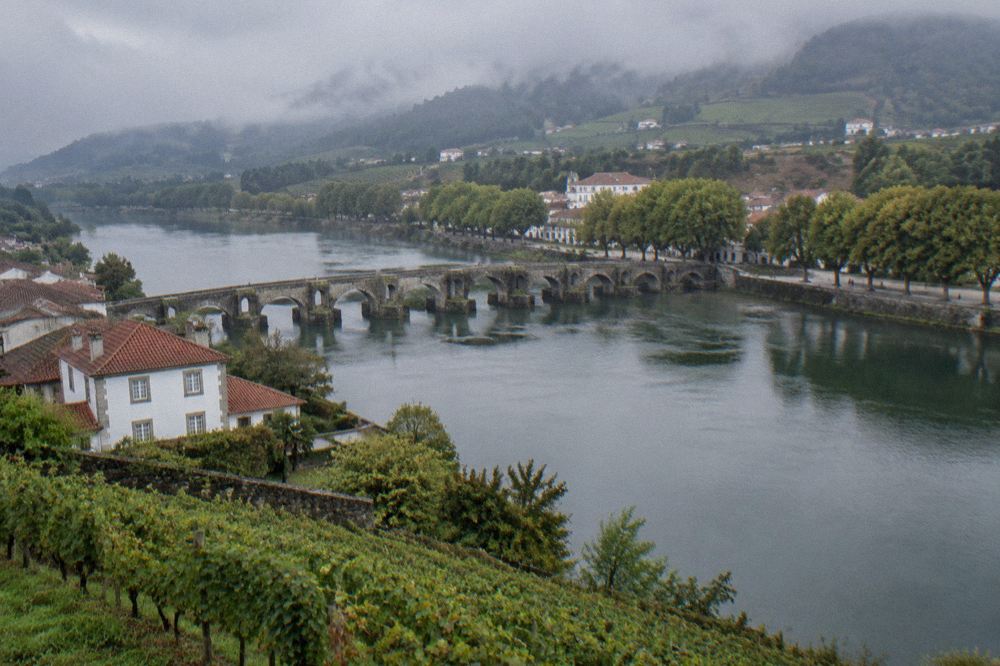
How Do You Pick A Good Bottle Without A Sommelier?
Look for a named grape variety and a named sub-region on the label, because those two signals separate the top of the style from the everyday blend. A bottle marked Alvarinho or Loureiro, with a vintage year and a sub-region such as Monção e Melgaço, is the category's quality tier. A label with no variety and no vintage is the light blended style the region produces in the largest volume, good for a casual lunch but not the answer to this question.
Three label habits cover most of what matters. First, the variety: a named grape means the producer is making a claim about that grape, and the claim is checkable in the glass. Second, the sub-region: Monção e Melgaço for Alvarinho, the Lima valley for Loureiro, Baião for Avesso, and these names on a label are a stronger signal than any front-of-bottle flourish. Third, the price ladder: within the region, more money generally buys more of the first two signals, and the step from a basic blend to a single-variety white is the single largest quality jump available. The wider set of guides lives on Braga Travel Guide.
Serving matters more than visitors expect. Vinho Verde of every tier is best cold, and the light reds in particular need refrigerator temperature to show anything other than tartness. The slight sparkle in the everyday whites fades as the wine warms, which is one reason a bottle opened at a table in Braga often tastes better than the same bottle poured slowly at home. And the question of sweetness, which trips up many visitors expecting a sugary wine, has its own full answer on the page is Vinho Verde a sweet or dry wine: the great majority of the style is dry, and the gently sweet versions are labelled as such.
Is The Best Vinho Verde The Same As The Most Expensive?
No, and the gap between the two is smaller in this region than almost anywhere else in Europe. The top Alvarinho and Loureiro wines cost more than the everyday blends, but the style's ceiling is modest by the standards of famous wine regions, and a mid-priced single-variety bottle from a good producer delivers most of what the category can do. Paying more buys structure and perfume, not a different drink.
This is one of the style's genuine pleasures for a visitor. The Vinho Verde region has no grand-cru price culture, no allocation lists and no auction market, and its best bottles sit at price points that would not buy the cheapest wine of several more famous European regions. The practical consequence for a traveller in Braga is that the experiment is cheap: order the house blended white at one meal and a single-variety Alvarinho at the next, and the difference in the glass answers the "best" question more convincingly than any article can.
The comparison with better-known international grapes is a fair one to make at the table, and it has a dedicated page: is Vinho Verde like Sauvignon Blanc. The short version is that the resemblance is real but partial, in aroma more than in body, and that Loureiro's laurel-and-floral perfume has no exact counterpart elsewhere.
What Should A Braga Visitor Actually Order?
Order a Loureiro with fish, an Alvarinho when you want the region's most serious white, and the house Vinho Verde whenever the meal is casual, because in Braga even the house white is local. The city's position inside the region means the floor is high: the ordinary glass poured at a neighbourhood restaurant is still the Minho's own wine, and the ceiling is one menu line away.
Braga's food traditions pair naturally with this. The city's dishes, from bacalhau à Braga to the roast pork and the region's freshwater fish, are the food of a cool, green, Atlantic-influenced countryside, and the wine of that same countryside is built to sit beside them: low in alcohol relative to southern Portuguese wines, high in acidity, and refreshing in a way that resets the palate between courses. The food and drink traditions of Braga are worth a page of their own, and the wine is only one thread of that cloth.
For visitors assembling a trip rather than a dinner, the arithmetic is simple. A first day in Braga can be a walking one, with the Portuguese Rome tour of the city covering the historic centre in about an hour and a half, from $35.35 per person, rated 4.9 from 68 reviews, and a tuk tuk city tour covering similar ground for those who prefer to ride, from $22.66 per person. Either leaves the late afternoon free for a long glass of something local, which is the point of the whole exercise.
Common Questions About Vinho Verde In Braga
Which Vinho Verde is considered the best?
No single bottle holds the title, but single-variety Alvarinho from Monção e Melgaço and Loureiro from the Lima valley are the two wines most consistently placed at the top of the category. Around Braga, ask for either by grape name and you will be drinking the region's quality tier.
Is Vinho Verde always sparkling?
No. Most versions carry a slight prickle from a small amount of retained carbon dioxide, but the top single-variety wines are often still, and none of the category is fully sparkling in the champagne sense.
Should Vinho Verde be aged?
The everyday blends are made to be drunk young, within a year or two of the vintage. The best Alvarinho and Loureiro wines can develop for a few years, but this is a region whose strength is freshness, not cellaring.
Is there a red Vinho Verde?
Yes, and it is one of the region's most traditional styles. The reds, usually from Vinhão or Espadeiro grapes, are deep in colour and sharply tart, and they divide opinion even among locals. Try one glass, served cold, before committing to a bottle.
Where is the best place to try Vinho Verde?
Braga is a strong base because the city sits inside the wine's home region. A guided tasting experience in the city, or a visit to a quinta in the surrounding Minho countryside, will put the everyday blend and the top single-variety wines side by side, which is the fastest way to taste the difference.
The honest summary for anyone planning a visit: come to Braga, order by grape name, and let the Loureiro and the Alvarinho argue it out between themselves. Whichever wins your vote, you will be tasting the answer in the region that makes it.