Why Is Vinho Verde So Cheap?
Why Vinho Verde, the light Minho wine poured across Braga and northern Portugal, costs less than most European wines, and where to taste it around Braga.
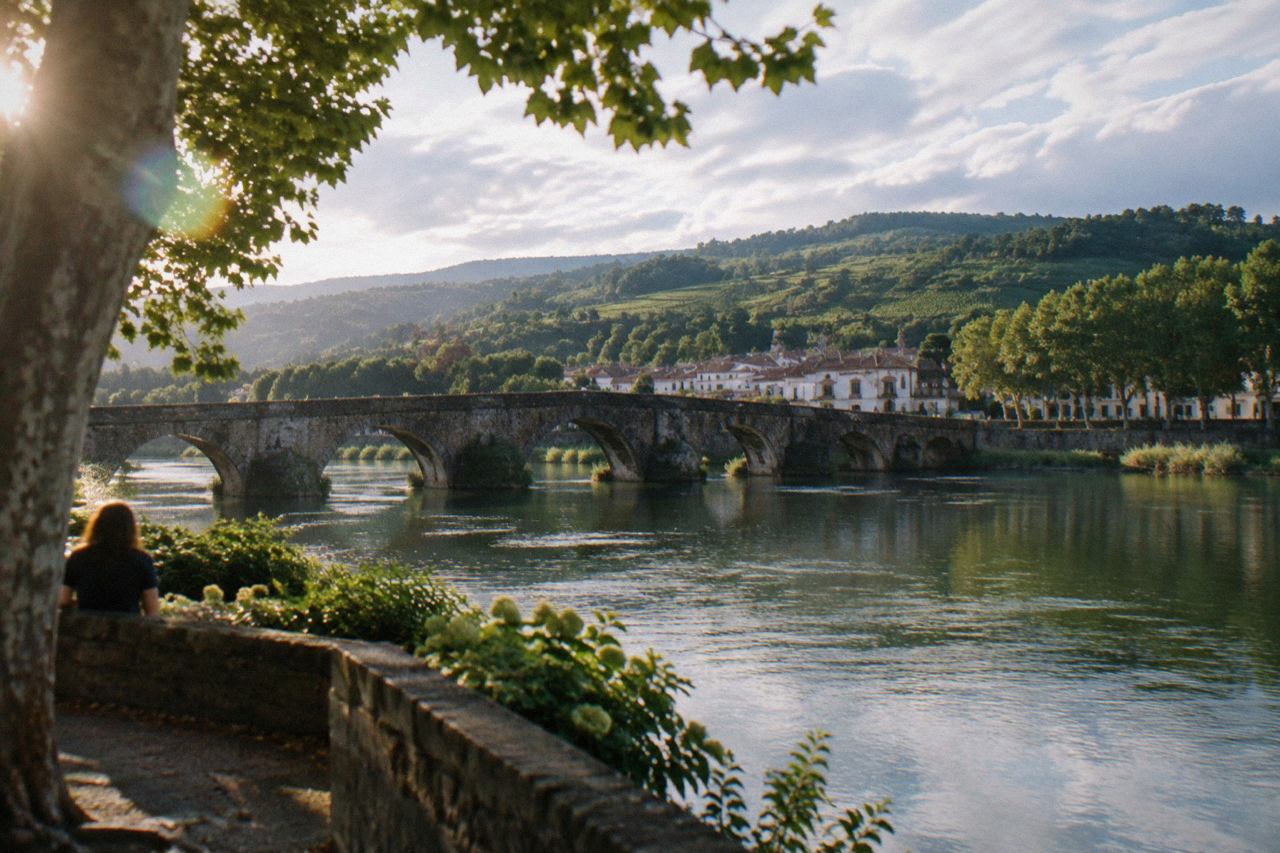
Vinho Verde is the wine of the Minho, the green, rain-fed corner of northern Portugal where Braga sits, and it is the bottle most likely to appear on a table here without anyone asking for it. It is also, reliably, one of the cheapest wines on any list in the city. That price surprises visitors who assume a low price means a low standard, and the surprise is worth unpacking, because the reasons are agricultural, historical and commercial rather than a mark of poor quality.
Why Is Vinho Verde So Cheap?
Vinho Verde is cheap mainly because of how and where it is made: the Minho's cool, wet climate produces large harvests of high-acid grapes that ripen early, the wine is bottled young without expensive oak or long ageing, and thousands of small growers sell through large regional cooperatives that keep costs low and volumes high. None of that implies poor quality; it describes a wine style built for drinking fresh, in the year it is made, at a price ordinary Portuguese households can pay daily.
The economics start in the vineyard. The Minho is the wettest wine region in Portugal, and IPMA's 1991 to 2020 normals for the Braga / Merelim station show why: October alone averages 197.8 mm of rain and January 179.5 mm, against July's 27.9 mm. Abundant water means vigorous vines, generous yields and grapes that keep fresh acidity rather than piling on sugar. Sugar is what becomes alcohol, and alcohol is what a wine's raw material cost is largely built on, so a naturally lighter, lower-alcohol wine starts life cheaper to produce than a big, ripe red from a hot, irrigated plain.
Then comes the cellar. Vinho Verde is deliberately a young wine, released months after harvest, and the modern style is finished with a light, deliberate sparkle, the faint prickle that comes from a small controlled dose of carbon dioxide at bottling. No oak barrels, no years in bottle, no storage capital tied up. Every one of those skipped steps is a cost other wine regions pay and pass on.
Finally there is the structure of the trade. The region has a very large number of small growers, many tending plots their families have held for generations, and much of the fruit flows into big cooperative and commercial wineries that bottle at scale for supermarkets across Portugal and for export. Big volume, thin margins, a product meant for everyday tables rather than collectors' cellars. That is the whole price story in one sentence.
Where Does Vinho Verde Come From And What Does The Name Mean?
The name translates as "green wine," but "green" means young, not the colour: it is wine made to be drunk within roughly a year of the harvest. The Vinho Verde region is the Minho, the whole rainy northwest of Portugal, and Braga sits in the middle of it, surrounded by the same granite soils and trellised vineyards that produce the wine. Whites, rosés and reds all exist under the name, though the pale, lightly sparkling white is what most people meet.
That point about the name trips up a lot of people. A red Vinho Verde is not a contradiction, it is simply a young red, and the region's reds are a traditional farmhouse drink that most visitors never encounter because the export trade is overwhelmingly white. The style is a Minho wine style, often light and slightly sparkling, and that description is the honest limit of what should be said about it in the abstract: the rest you learn by tasting, and Braga is one of the best places in Portugal to do exactly that, as the Braga Travel Guide explains across its food and drink pages.
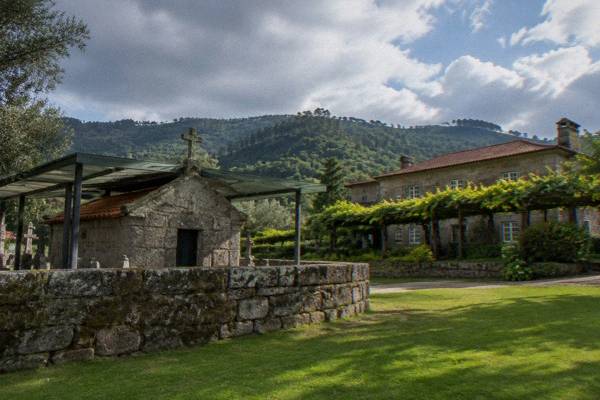
The region's wet climate does more than set the price. It shaped the vine training you will still see on drives out of the city: vines lifted on pergolas, trellises and even the crowns of trees, historically to keep the grapes away from damp ground and to let a family grow vegetables underneath. Those sculpted canopies are part of the landscape of the Minho, and they are one of the reasons the region looks the way it does.
How Should You Taste Vinho Verde Around Braga?
The most practical way is to book a tasting-led experience rather than trying to visit wineries cold: Braga has guided food and wine tours that pour local Minho wines with someone explaining them, a free tip-based GuruWalk history walk that ends in the historic centre's cafés, and estate tastings in the surrounding countryside. A guided tour also solves the language and logistics questions in one move, since rural producers outside the city are not always set up for walk-in visitors.
For a first evening, a guided tasting walk in the historic centre is the easiest entry point. The Braga Experience: Guided Tour and Tastings pairs a three-hour walk through the city with local food and wine tastings, from $55.48 per person, rated 4.6 from 12 reviews, and it is the tour this site points readers at for exactly this question. You can read more about it on its own page or Check availability for your dates.
If you would rather build your own evening, the free-walking-tour route works well. GuruWalk lists a History and Culture Tour of Braga, free and tip based, rated 4.19 from 21 reviews, led by a local guru who walks you through the historic centre; tip the guru what the walk was worth to you at the end. Combine that with an evening in the cafés around Rua do Souto and the Sé de Braga and you have a low-cost day built almost entirely around the city's tables.
Beyond the city, the countryside options are the estate experiences. Quinta de Santa Cristina's Identity Tasting runs from $28.88 per person, rated 4.9 from 47 reviews, and there are monastery and sommelier-led options too, including a wine tour at Mosteiro de Tibães with an exclusive tasting, from $63.53 per person. The monastery itself, Mosteiro de São Martinho de Tibães, is one of Braga's major monuments, and pairing it with a tasting is a very Minho way to spend an afternoon. For the wider picture of the wine in regional food culture, start with what Vinho Verde actually is on the sweet-to-dry spectrum and the site's guide to Vinho Verde in and around Braga.
Is Cheap Vinho Verde Actually Good Wine?
Yes, cheap Vinho Verde is generally good at what it is designed to be: a fresh, high-acid, low-alcohol wine for food and warm weather, judged by freshness rather than depth. It will not taste like an aged red and it is not supposed to. The quality signal to look for is not the price but the vintage date, because the style fades after roughly a year, so a current or recent vintage at a low price is exactly what the region intends you to drink.
This is where the price question flips on itself. In most wine categories, a very low price suggests something was done wrong. In Vinho Verde, a low price suggests the system is working: the grower sold quickly, the cooperative bottled efficiently, the wine reached the glass in the year it was made. The expensive version of Vinho Verde, the single-estate, seriously structured Alvarinho from the Monção sub-region, exists and is worth seeking out, but it answers a different question. For more on that ladder of quality, see which Vinho Verde is considered the best.
The comparison people reach for is usually Sauvignon Blanc, and it is a fair starting point in the glass even if the two wines come from different worlds. If that is your reference point, the site's piece on whether Vinho Verde is like Sauvignon Blanc breaks down where the resemblance ends.
What Do The Different Vinho Verde Styles Taste Like?
Vinho Verde is a family of styles, not one wine: the pale, lightly sparkling white is the common one, fresh and citric; rosés are dry and fruity; and the traditional young red, rarely exported, is deeper in colour with a tannic, farmhouse character. All share the region's high acidity and low alcohol, which is why the style pairs so easily with the fish, pork and pastry-heavy cooking of Braga and the Minho.
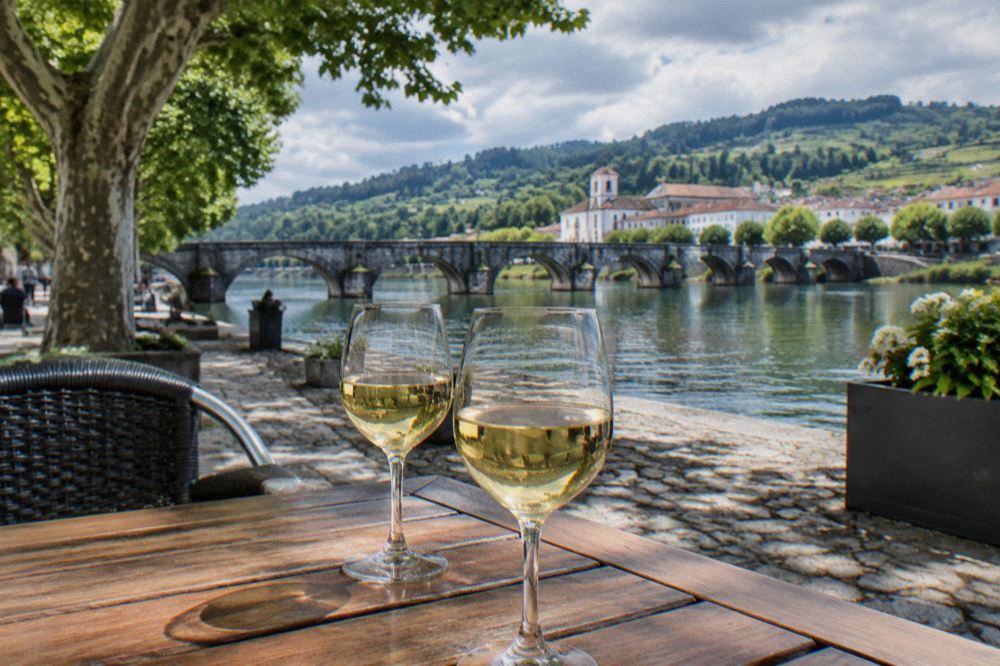
The practical way to think about it is by occasion. A cold white on a terrace in July is the style's natural home. The same wine poured alongside bacalhau à Braga, the city's shredded-salt-cod dish, is where the acidity earns its keep, cutting through the oil. And the sparkling versions, fully fizzy rather than the faint prickle, are the local answer to celebration wine, poured at São João in June, when the city's biggest festival peaks on the night of 23 June into the municipal holiday of 24 June.
| Style | Typical character | Best moment around Braga |
|---|---|---|
| White Vinho Verde | Pale, citric, high acid, faint sparkle | Aperitif on a café terrace, or with fish dishes |
| Rosé Vinho Verde | Dry, red-berried, still fresh and light | Warm afternoons in the Jardim de Santa Bárbara |
| Red Vinho Verde | Traditional farmhouse style, tannic, served cool | Rural tabernas and festival tables, rarely exported |
| Sparkling Vinho Verde | Fully fizzy, made by the bottle-fermented method | São João and family celebrations |
How Does Braga'S Cost Of Living Keep The Price Low?
Vinho Verde stays cheap in Braga partly because everything around it is cheap by northern European standards: the city's restaurants, cafés and local accommodation price for a Portuguese public, not an international one, and the wine is made a short drive from the tables it is poured on, with no import duty, long shipping chains or middle-market markups. The 2026 municipal tourist tax of 1.55 EUR per person per night, capped at four nights, is the only fixed extra a visitor pays on top.
The short distance from vineyard to glass matters more than it sounds. In Britain or the United States, a bottle of Vinho Verde carries shipping, import duty, excise and several margins before it reaches a shelf. In Braga, the wine was grown in the same region, bottled in the same region and bought by the restaurant from a regional distributor. The same label that reads as a modest mid-priced import abroad sits at the bottom of the list here. If you are weighing the whole budget, the site's answer to whether Braga is expensive covers what a visit actually costs.
Common Questions About Vinho Verde
Why is Vinho Verde so cheap?
Because of high yields in a wet climate, a wine made to be sold young without oak or ageing costs, and a cooperative trade built for volume. The low price reflects the region's production model, not a quality problem.
Does "Vinho Verde" mean the wine is green?
No. "Verde" means young, as in wine from the most recent harvest, drunk within about a year. The wine comes in white, rosé and red versions.
Is Vinho Verde a sparkling wine?
Most bottles have only a slight, deliberate prickle from a small dose of carbon dioxide at bottling. Fully sparkling bottle-fermented versions also exist and are the festive style.
Where can I taste Vinho Verde near Braga?
Guided tasting tours in the historic centre, estate tastings in the surrounding Minho countryside, and the city's cafés and restaurants. The Braga Experience: Guided Tour and Tastings is the most practical starting option.
Is a cheap bottle still worth drinking?
Yes, if the vintage is recent. The style is designed for freshness, so check the year on the label and buy the youngest bottle at whatever price suits your budget.
The short version is that Vinho Verde is cheap for good reasons, and Braga is one of the easiest places in Portugal to test that claim glass by glass. Order the youngest bottle on the list, let it come cold, and decide for yourself whether low price and high pleasure can share a table. In this city, they usually do.