Getting Around Braga
Braga, the city in Portugal's Minho region, is compact enough to walk and cheap enough to ride: here is how the buses, trains, airport coaches and hill shuttles actually work.
Short answer
Braga's historic centre is walkable end to end, and the TUB bus network covers everything else. A single pre-bought bus ticket costs 0.75 EUR, a one-day tourist ticket 3.35 EUR, and Line 2 runs to the foot of the Bom Jesus do Monte stairway, where a replacement shuttle continues to the sanctuary while the funicular is out of service.
Braga, the city in Portugal's Minho region, is one of the easiest small cities in northern Europe to move around: the historic centre is compact and pedestrian-friendly, the municipal bus network is cheap, and the two hill sanctuaries that sit outside the centre are both served by public transport.
What Is The Best Way To Get Around Braga?
For almost every visitor the answer is on foot inside the historic centre and by TUB bus everywhere else. The centre's key sights, from the Sé de Braga to the Arco da Porta Nova, sit within a few minutes' walk of one another, the bus network covers the hills and outer districts for less than a euro a ride when tickets are bought in advance, and a one-day tourist ticket covering the whole network costs 3.35 EUR.
That combination is unusual for a city that also holds a UNESCO World Heritage sanctuary on a hill above it. Bom Jesus do Monte, Santuário do Sameiro and Mosteiro de São Martinho de Tibães all sit outside the walkable core, but each is reachable by public transport, and the TUB tariff in force since 21 February 2026 makes the rides genuinely cheap. A pre-bought single for one zone is 0.75 EUR; the same ticket bought from the driver costs 1.55 EUR.
Want the hills without the legwork? Book a tuk tuk city tour here.
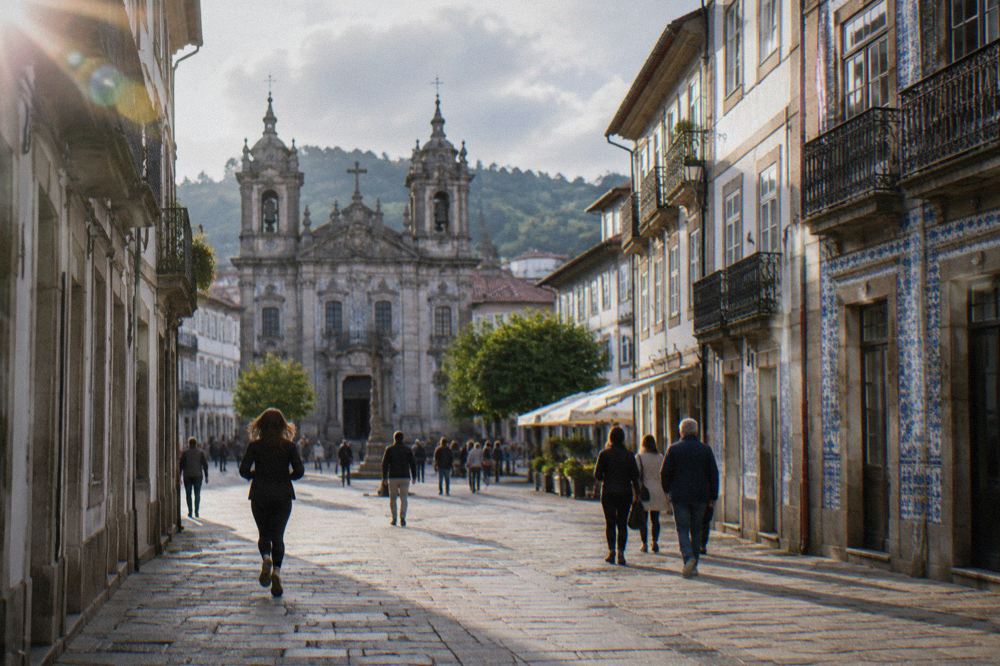
The practical split is simple. Stay inside the ring of the old city and you will walk almost everywhere, which is why the where to stay in Braga decision matters more than any transport choice. Head for the hills, the stadium or a day trip, and you will use a bus, a train or a coach. The sections below give the verified numbers for each.
How Do Braga'S TUB Buses And Tickets Work?
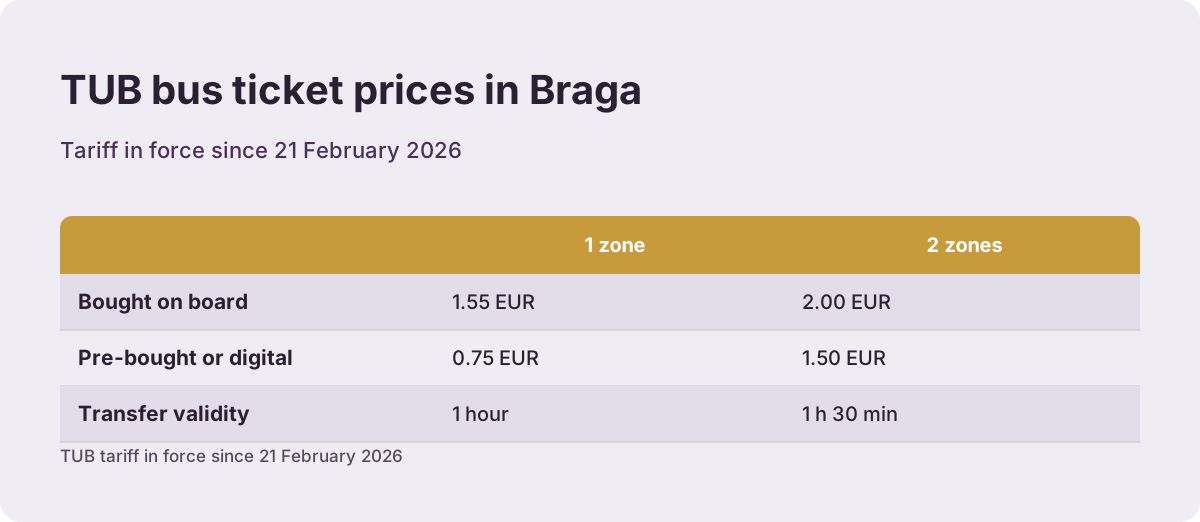
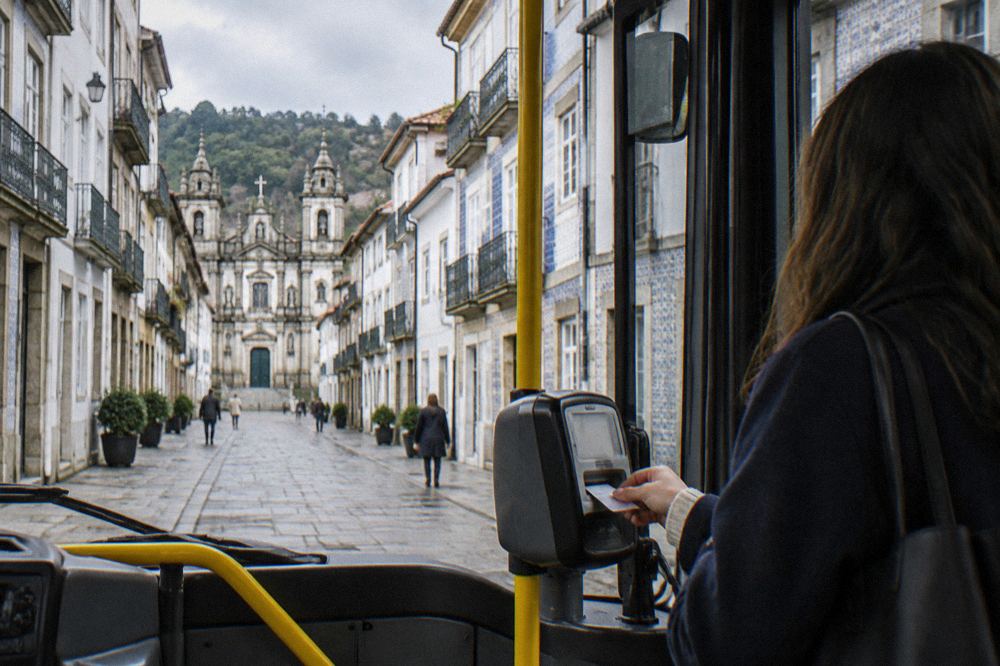
TUB, Transportes Urbanos de Braga, runs the city buses on a tariff in force since 21 February 2026. A single ticket bought on board costs 1.55 EUR for one zone and 2.00 EUR for two zones, while the same journey on a pre-bought or digital ticket costs 0.75 EUR or 1.50 EUR. Transfers are valid for one hour on a one-zone ticket and one and a half hours on a two-zone ticket.
The price gap between buying on board and buying in advance is the single most useful thing to know about Braga public transport. Half the fare disappears if the ticket is loaded before boarding, through the ticket machines or the TUB mobile app. For a visitor making three or four rides a day, that difference adds up quickly.
| TUB ticket type | 1 zone | 2 zones |
|---|---|---|
| Bought on board | 1.55 EUR | 2.00 EUR |
| Pre-bought or digital | 0.75 EUR | 1.50 EUR |
| Transfer validity | 1 hour | 1 h 30 min |
For longer stays the tourist tickets are the better buy. They cover the whole network, one person per ticket, and the card itself costs 1.50 EUR.
| Tourist ticket | Price per person |
|---|---|
| 1 day | 3.35 EUR |
| 2 days | 6.05 EUR |
| 3 days | 8.05 EUR |
| Group of 5, 1 day | 13.95 EUR |
| Group of 10, 1 day | 25.85 EUR |
Two cautions from the tariff itself. Fare-dodging fines start at 30 EUR, so validate the ticket even when the bus looks informal. And the tariff says nothing about contactless bank cards working on board, so do not plan on tapping a card as you step on: buy a ticket in advance or pay the driver in cash. TUB passes were cut by 14% from March 2026, but that reduction applies to monthly passes, not to the single and tourist tickets a visitor uses.
If a bus is not what the day needs, a guided walk is the other cheap way to cover the centre. The Explore the Portuguese Rome, the City of Braga tour runs about an hour and a half with a local guide, from $35.35 per person, and Check availability takes under a minute.
How Do You Get To Bom Jesus Do Monte Without A Car?
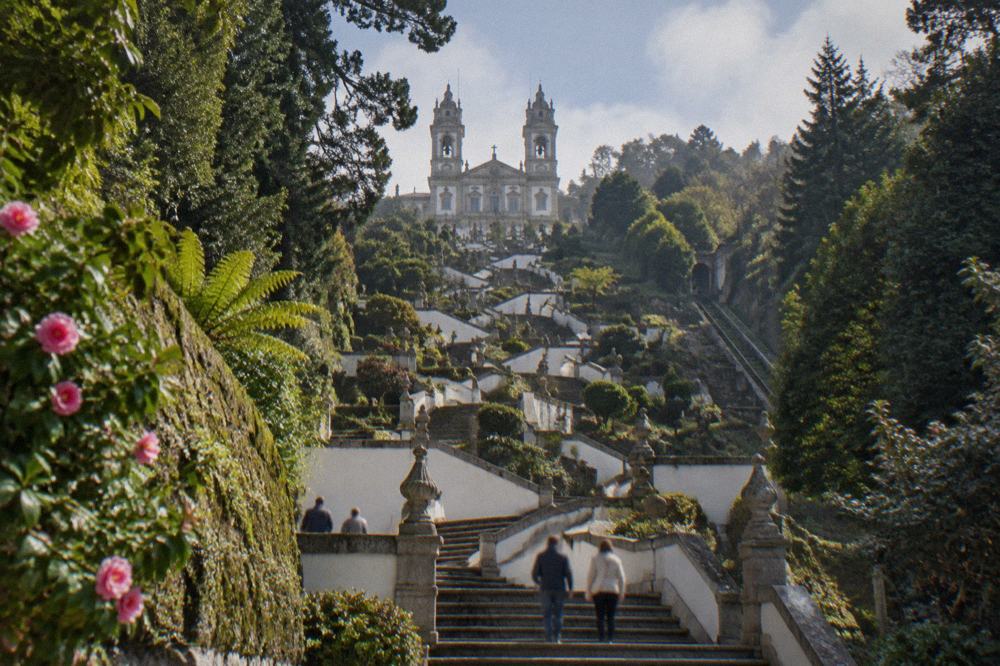
TUB Line 2 runs from the city centre to the Portico, the foot of the Bom Jesus do Monte stairway, and from there a free-flowing replacement shuttle runs every day from 09:00 to 20:00, roughly every 30 minutes each way, up to the sanctuary, because the historic funicular has been out of service since 26 September 2026 with no end date published. The stairway itself is 566 steps by the Confraria's count.
The funicular's stoppage is the biggest change to Braga public transport in years. The notice published by TUB on 26 September 2026 says the Elevador do Bom Jesus is out of service for maintenance, with no return date given, and that a shuttle bus covers the gap between the Portico, where Line 2 ends, and the sanctuary. Anyone promising a ride on the 1882 water-counterweight funicular is working from an old page; check the operator's notice before you go.
| Option for Bom Jesus do Monte | What it costs | Status |
|---|---|---|
| TUB Line 2 to the Portico | 0.75 EUR pre-bought, 1 zone | Running, ends at the foot of the stairway |
| Replacement shuttle Portico to sanctuary | See the operator's notice | Daily 09:00 to 20:00, about every 30 min each way |
| The stairway on foot | Free, 566 steps | Always open |
| Funicular (2.50 EUR single, 4.00 EUR return) | Out of service since 26 September 2026, no end date published |
Climbing the Escadório do Pórtico on foot costs nothing and is the way the sanctuary was designed to be approached: the Confraria's own page counts 566 steps over 615 metres and 116 metres of ascent, in three named sections. Going up is a real climb; coming down is the easier direction, and the shuttle can carry you one way. The full picture, including parking fees on the hill if you do drive, is in the how to get to Bom Jesus do Monte guide.
Santuário do Sameiro, the other great hill sanctuary in the municipality, is also reachable by bus, but the sources disagree on which line number serves it, so the honest advice is to check the TUB journey planner on the day. The sanctuary precinct itself is open around the clock and free, and the dome viewpoint costs 2 EUR.
How Walkable Is Braga'S Historic Centre?
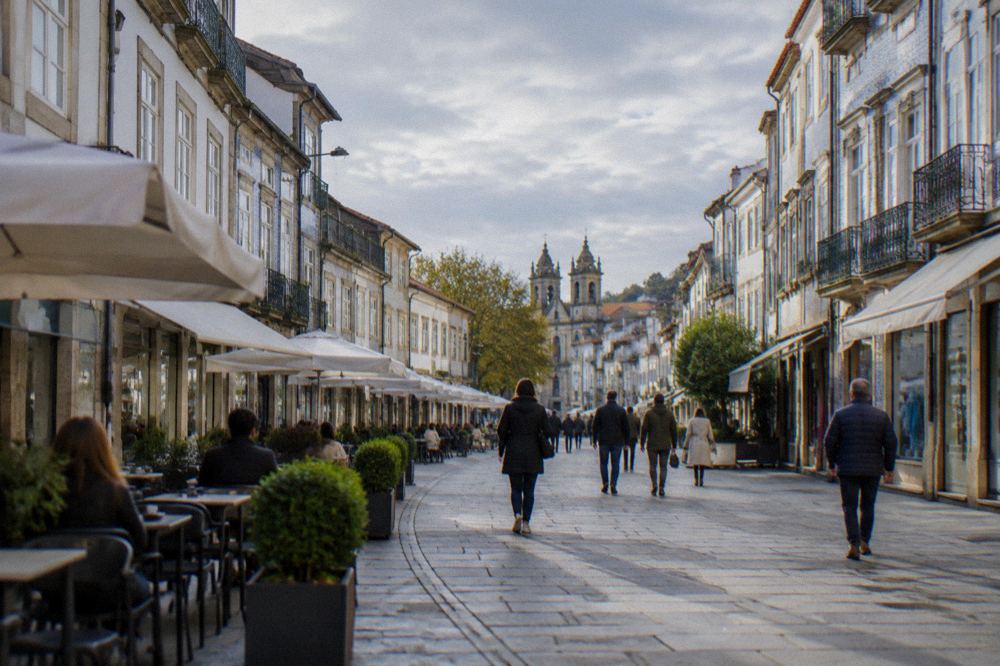
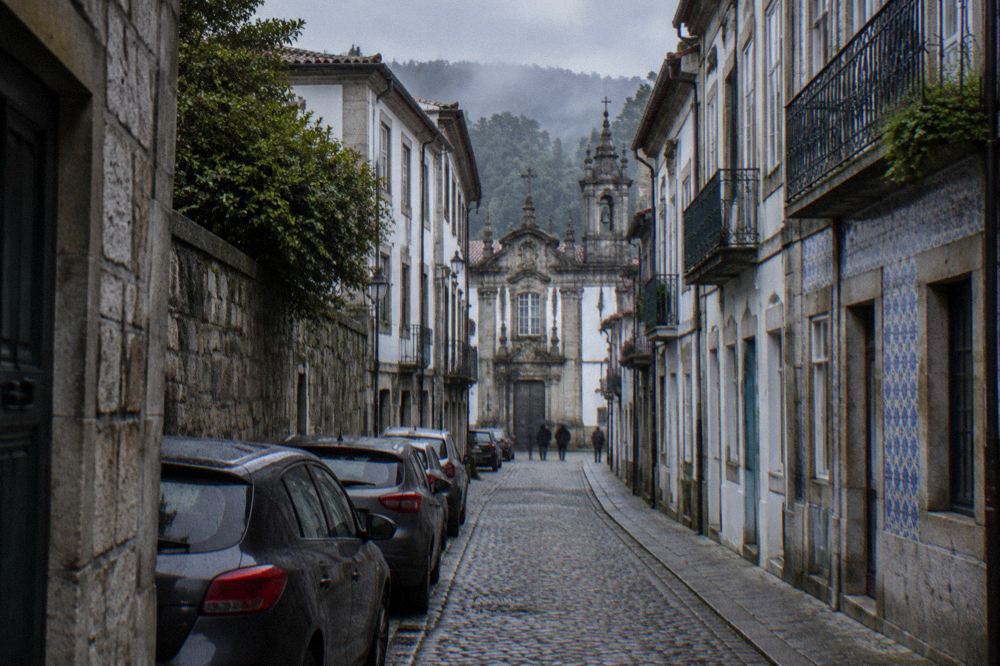
The historic centre of Braga is genuinely walkable: the Sé de Braga, the Praça da República, the Santa Bárbara Garden and the Arco da Porta Nova all sit close together on largely pedestrianised streets, and Rua do Souto, the main shopping street, is a pedestrian zone. A visitor staying centrally can pass an entire weekend without boarding a single bus.
The geography explains it. The old city sits on a shallow plateau, the streets between the cathedral and the Avenida da Liberdade are short, and the main obstacles are crowds and café tables rather than traffic. The BRT metrobus project that once threatened years of construction work has been suspended, so no busway works disrupt the centre in 2026.
Walking the centre with a guide is where the city's two thousand years of layered history become visible rather than decorative. The Braga Private Walking Tour with a Professional Guide runs two hours with a guide to yourself, from $259.43 per person, and the operator's live listing shows the current calendar.
For travellers who prefer to move at their own pace, the Braga walking tours guide compares the guided options, including the free GuruWalk walks, where the guide works for tips and no price is ever fixed in advance. The free tours on GuruWalk are bookable without payment, and the individual guru is named on each listing.
How Do You Get From Porto Airport To Braga?
Getbus runs a direct, non-stop coach from Porto Airport to Braga bus station, from 9.00 EUR one way, taking about 45 minutes, with the operator's page listing 16 departures a day each way on the current timetable: from the airport between 05:00 and 00:45, and from Braga between 04:00 and 23:45. The coach stops inside Braga bus station at platform 20.
For most visitors flying into northern Portugal, this is the whole airport answer. No transfer, no metro leg, no taxi: the coach leaves from the airport's P8 bus stop and arrives at the Centro Coordenador de Transportes de Braga, the city's central bus station, which sits within a short walk or a single bus ride of the historic centre.
| Porto Airport (OPO) to Braga, Getbus | Detail |
|---|---|
| One-way fare | From 9.00 EUR |
| Journey | Direct, non-stop, about 45 minutes |
| Departures | 16 each way per day on the current listing |
| Airport stop | P8, Bus Stop |
| Braga stop | Braga bus station, platform 20 |
| Tickets | Online, at the airport office on the arrivals floor, or from the driver |
Getbus asks passengers to be at the stop 15 minutes early with a legible printed or digital ticket, and a flexible ticket allows a late arrival to ride the next departure. Other coach operators also serve the airport to Braga corridor with dynamic fares, but the fares quoted for those vary by booking time and are not fixed figures worth printing. The full comparison, including the metro-plus-train alternative via Porto, is in the Porto Airport to Braga guide, and the wider question of the city's own connections is covered in how to get to Braga.
Do Trains Help You Get Around Braga Itself?
No: Braga's train station is a long-distance terminus, not a city transit hub. The trains that serve Braga connect it to Porto and Lisbon, with the Alfa Pendular from Porto Campanhã taking roughly 38 to 42 minutes at 17.00 EUR in second class, and the fastest direct Lisbon Alfa Pendular taking about 3 hours 20 minutes at 38.50 EUR, but none of them moves you between points inside the city.
Inside Braga, the train is irrelevant to daily movement. It matters for arrival and for day trips. The urban service from Porto São Bento via Campanhã and Nine takes a little over an hour, and its fare is priced by zone, so expect a few euros rather than a fixed printed figure; the reusable Siga card the ticket loads onto costs 0.50 EUR.
| Train route to Braga | Journey | Full single fare |
|---|---|---|
| Alfa Pendular, Porto Campanhã to Braga | About 38 to 42 minutes | 17.00 EUR (2nd class), 23.30 EUR (1st) |
| Alfa Pendular, Lisbon to Braga, direct | About 3 h 20 min at fastest | 38.50 EUR (2nd), 54.60 EUR (1st) |
| CP urban train, Porto to Braga | A little over an hour | Priced by zone, a few euros |
The current urban timetable has been valid since 26 July 2026, and the long-distance one since December 2025. CP has also run promotions, including Alfa Pendular seats to Braga from 8 EUR on selected October 2026 dates, so it is worth checking the operator's own site before booking. The station itself, and how to get from its platforms into the centre, is covered in the Braga train station guide, and the Porto run in detail in Porto to Braga.
One trap to know: there is no direct train from Braga to Guimarães. The two cities are linked by bus, AITC line 101, which runs via the A11 motorway; the fare is not published on the operator's site, so check at the bus station counter. Barcelos by train needs a change at Nine.
Do You Need A Car In Braga?
No, a visitor does not need a car in Braga, and for the historic centre a car is actively unhelpful: the old streets are narrow, parking is limited and charged, and every major sight is reachable on foot or by bus. A car only earns its keep for a multi-stop day across the Minho region, calling at places like Ponte de Lima or the Peneda-Gerês National Park, where the regional buses are infrequent.
The regional bus network from Braga bus station is better than most visitors expect, with AITC lines reaching Guimarães (101), Ponte de Lima (105), Caldas do Gerês (201), Esposende and Póvoa de Varzim (107 and 106) and Famalicão (109). The line numbers are verified; the prices are not.
| AITC regional bus from Braga | Destination |
|---|---|
| Line 100 | Vila Verde and Arcos de Valdevez |
| Line 101 | Guimarães, via the A11 |
| Line 105 | Ponte de Lima |
| Line 106 | Póvoa de Varzim |
| Line 107 | Esposende and Póvoa de Varzim, the beach line |
| Line 109 | Famalicão |
| Line 200 | Covide, via Campo do Gerês |
| Line 201 | Caldas do Gerês |
If the day trip plan is Peneda-Gerês, the trade-offs are laid out in the Peneda-Gerês National Park guide, including the guided hiking and canyoning options that remove the driving question entirely. Inside the city, parking rules, charged zones and the practical alternatives are covered in parking in Braga, and the rental-counter questions, including whether an automatic is even needed, in car rental in Braga.
What About Tuk Tuks And Guided Tours?
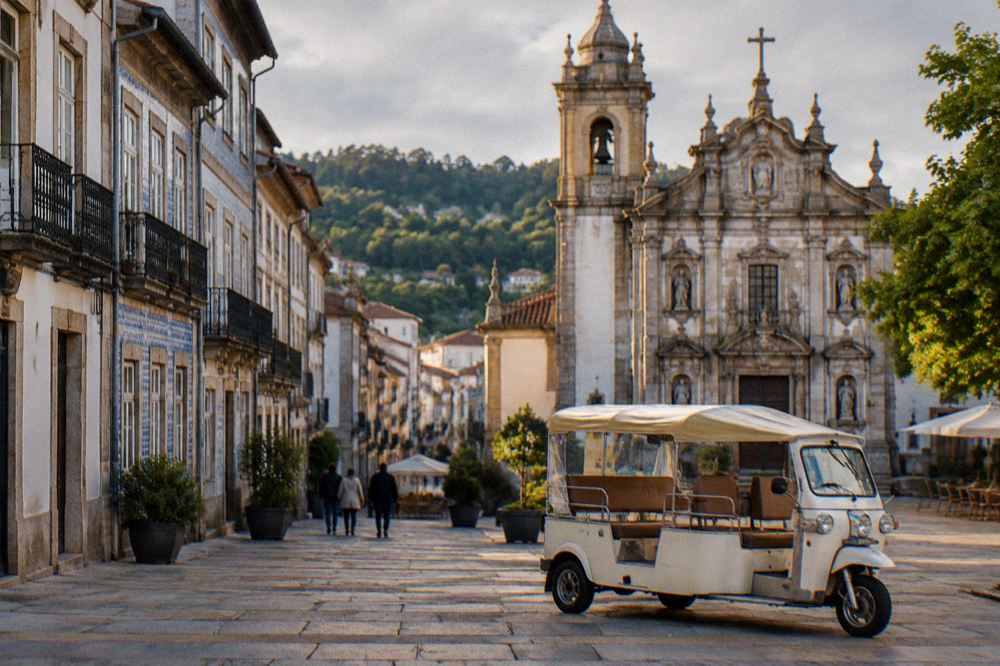
A tuk tuk city tour is the motorised middle ground in Braga: the Braga Tuk Tuk City Tour runs from $22.66 per person, rated 4.8 from 179 reviews, over 30 minutes to two hours depending on the option, and it covers the centre and the hill viewpoints without a single step climbed. It is the only wheeled option that doubles as a sightseeing activity rather than a transfer.
The tuk tuk suits visitors with limited mobility, tight schedules or small children, and it pairs naturally with the Braga with kids planning question. It does not replace the bus for practical journeys, and it costs more per kilometre than any TUB ticket, but as a first-day orientation it is the fastest way to see how the city fits together.
The guided-tour layer above the transport layer is worth naming, because in Braga the two overlap. A walking tour is transport plus commentary; a tuk tuk is transport plus commentary plus a seat. The Braga Travel Guide site compares all of them, and the walking options in detail in the Braga walking tours guide, including the GuruWalk free tours where the price is whatever the walker chooses to tip the named guru at the end.
For travellers who want the whole question handled, a guided day covering both Braga and Guimarães removes the need to read any bus timetable at all. The Braga and Guimarães in one day itinerary explains how the pairing works, and the day-trip products that cover it, starting from Porto, are compared in the trio below.
Common Questions About Getting Around Braga
How much is a bus ticket in Braga?
A TUB single bought on board costs 1.55 EUR for one zone and 2.00 EUR for two zones. Pre-bought or digital tickets cost 0.75 EUR and 1.50 EUR for the same journeys, on the tariff in force since 21 February 2026.
Is there a tourist bus pass for Braga?
Yes. TUB sells tourist tickets covering the whole network at 3.35 EUR for one day, 6.05 EUR for two days and 8.05 EUR for three days, per person, with the card itself at 1.50 EUR. There is no city-wide attraction pass on sale in Braga; buy sight tickets separately, as the Braga attraction tickets and passes guide explains.
Is the Bom Jesus funicular running?
No. The funicular has been out of service since 26 September 2026, with no end date published. A replacement shuttle runs every day from 09:00 to 20:00, roughly every 30 minutes each way, between the Portico, where TUB Line 2 ends, and the sanctuary. Check the operator's notice before you go.
Can you pay by contactless card on Braga buses?
There is no verified confirmation that contactless bank cards work on board TUB buses. Buy a ticket in advance from a machine or the TUB app, or pay the driver the on-board fare.
Is Braga walkable without a car?
Yes. The historic centre is compact and largely pedestrianised, and the hill sanctuaries are reachable by TUB Line 2 and the replacement shuttle. A car only helps for multi-stop day trips across the Minho region.
How do I get from Braga to Guimarães?
By bus: AITC line 101 runs from Braga bus station to Guimarães via the A11. There is no direct train between the two cities, and the bus fare is not published on the operator's site, so check at the bus station counter.
The short version of all of this: walk the centre, ride Line 2 to the Portico and the shuttle to the sanctuary, and reach the city by coach from Porto Airport or train from Porto and Lisbon. Everything else, from tuk tuks to guided walks, is a comfort layer on top of a public transport system that already works.