3 Days In Braga
Three days is the right length for Braga, Portugal: one for the historic centre, one for the hill sanctuaries, and one for a day trip into the Minho.
Short answer
Three days in Braga covers the historic centre and Sé de Braga on day one, Bom Jesus do Monte and Sameiro on day two, and a day trip to Guimarães, Gerês or the coast on day three. Buy tickets separately, budget 1.55 EUR per night in tourist tax, and check the funicular status before you go.
Braga, the city in Portugal's Minho region of northern Portugal, rewards exactly the amount of time a long weekend gives you. One day is enough for the historic centre and a rushed glance at Bom Jesus do Monte, but three days let you climb the sanctuary stairway at your own pace, add the hill sanctuaries of Sameiro and Falperra, and still spend a full day in Guimarães or the Peneda-Gerês National Park. This itinerary spreads the city across two days and gives the third to the Minho, with verified prices for every ticketed stop.
Is 3 Days In Braga Enough?
Yes, three days is the sweet spot for Braga: long enough for the historic centre, the Sé de Braga, Bom Jesus do Monte, Sameiro and one full day trip, without the padding a fourth day would need. Two days work if you skip the day trip, and one day covers only the centre and a quick Bom Jesus visit. The city's walkable core is compact, so the real question is how many of the hill sanctuaries and Minho towns you want to add.
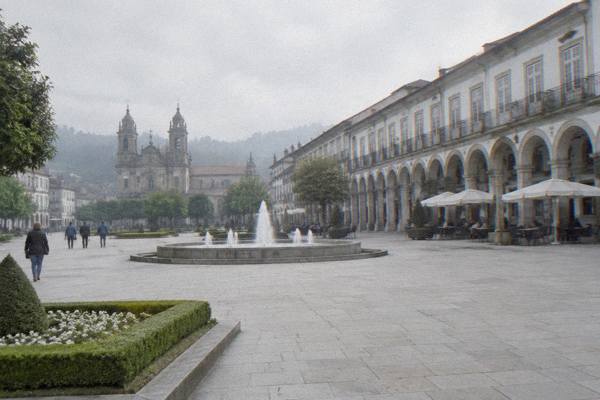
The municipality counts 193,324 residents (Census 2021), but almost everything a visitor wants sits inside a historic centre you can cross on foot in twenty minutes. The Avenida da Liberdade runs south from the Arco da Porta Nova down to the Praça da República and the Rua do Souto, the pedestrian spine that carries most of the bars and restaurants. The historic centre holds the cathedral, the Museu dos Biscainhos, the Jardim de Santa Bárbara and the Theatro Circo within a few blocks of each other.
What pushes the trip to three days is the hills. Bom Jesus do Monte, Sameiro and Falperra all sit on the ridges east of the city, and each one eats half a day once you include the bus ride, the climb and the views. Then there is the Minho beyond the municipality: Guimarães, the Gerês park, Barcelos and Ponte de Lima are all reachable as day trips, and the district of Braga (which is a different thing from the city) contains most of them. If you are weighing two days against three, the 2-day itinerary squeezes the city into a weekend; three days lets you breathe.
How Should You Split 3 Days In Braga?
Split it as one day for the historic centre, one day for the hill sanctuaries, and one day for a trip out: that order keeps the walking day first, the climbing day second and the travel day last, when you will welcome sitting on a bus. Do the centre on day one while your legs are fresh, Bom Jesus and Sameiro on day two, and Guimarães, Gerês or the coast on day three. Swap days two and three if rain is forecast for the hills.
The order matters more than it looks. The centre is flat and sheltered, so it absorbs a wet day better than an exposed hilltop. Bom Jesus is the one unmissable stop, and it deserves a morning, before the car park fills and the stairway gets busy. The day trip comes last because it is the most flexible piece: if your flight leaves on the evening of day three, you can cut it short or replace it with a slow final morning in the cafés around the Rua do Souto.
Here is the whole trip at a glance:
| Day | Base | Morning | Afternoon | Evening |
|---|---|---|---|---|
| Day 1 | Historic centre | Sé de Braga and cloister | Museu dos Biscainhos, Jardim de Santa Bárbara | Dinner off the Rua do Souto |
| Day 2 | East hills | Bom Jesus do Monte stairway and basilica | Santuário do Sameiro, Zimbório dome | Quiet night, or the Theatro Circo |
| Day 3 | The Minho | Guimarães, Gerês or Barcelos | Same destination, continued | Last walk through the Arco da Porta Nova |
If you would rather have a guide handle the first day, the Small-Group Braga Walking Tour & Bom Jesus covers the centre and the sanctuary in three hours with a local guide, which pairs well with this itinerary's day one and day two. It is the tour this site features for the city, rated 5 from 10 reviews and priced from $66.85 per person on the operator's live listing. Check availability
What Should You Do On Day 1 In Braga'S Historic Centre?
Start day one at the Sé de Braga, where a single visit route costs 3.00 EUR and all three routes together cost 7.00 EUR, then walk the Avenida da Liberdade to the Praça da República, and finish at the Museu dos Biscainhos, whose normal ticket with garden is 7.50 EUR. The whole route is under two kilometres on foot, and every stop sits within the ring of the old city walls.
Buy your cathedral tickets at the reception point in the cloister, reached from Rua do Cabido or the side entrance by Rua D. Diogo de Sousa. The Sé de Braga runs three visit routes: the Treasury-Museum, the funerary chapels and high choir, and the cathedral itself, at 3.00 EUR each, 6.00 EUR for any two, and 7.00 EUR for all three. Visit Braga lists the tourist-visit hours as Monday to Saturday 09:30 to 13:00 and 14:30 to 17:00, Sunday 09:30 to 10:45 and 14:30 to 17:00, with last entry 30 minutes before closing; the building itself opens earlier for worship.
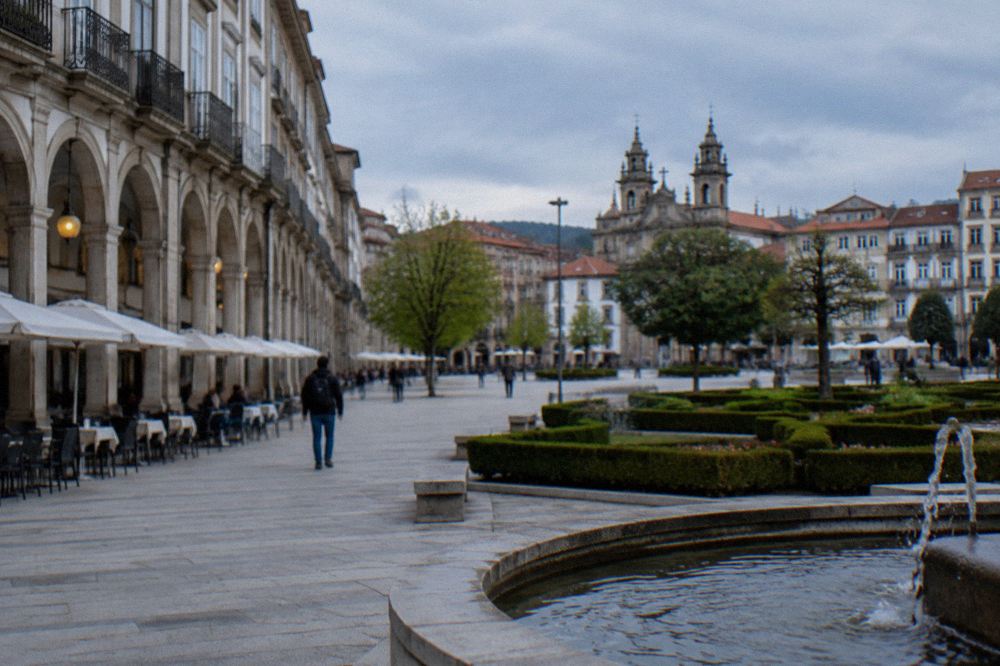
From the cathedral, drop downhill to the Arco da Porta Nova, the eighteenth-century gate that opens the Avenida da Liberdade, and follow it to the Praça da República. The Rua do Souto begins here, pedestrianised and lined with the cafés and pastry shops that make Braga a good morning-coffee city. The Jardim de Santa Bárbara sits a few blocks east, a small formal garden of clipped box hedges that photographs best before noon.
Give the afternoon to the Museu dos Biscainhos no further, and instead to the museum itself: a palace turned folk-art and archaeology museum, open Tuesday to Sunday 10:00 to 12:30 and 14:00 to 17:30, closed Mondays, with a normal ticket of 7.50 EUR including the garden. The museum reopened in 2025 after a major restoration, and its garden is one of the quietest corners of the centre. If you still have legs, the Palácio do Raio stands a short walk north on the Rua do Raio, its tiled baroque facade one of the most photographed buildings in the city.
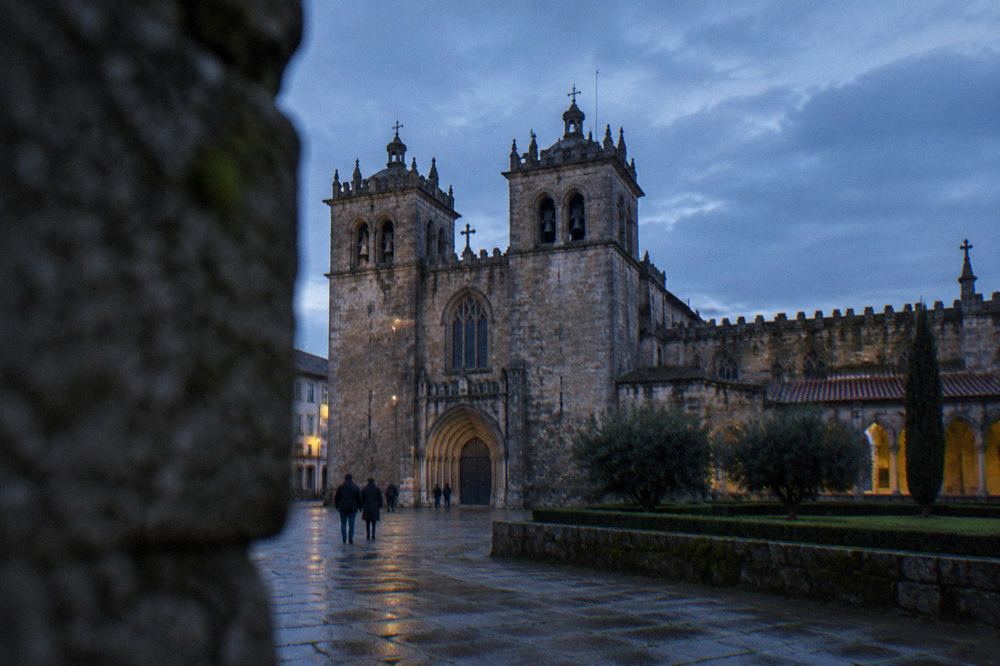
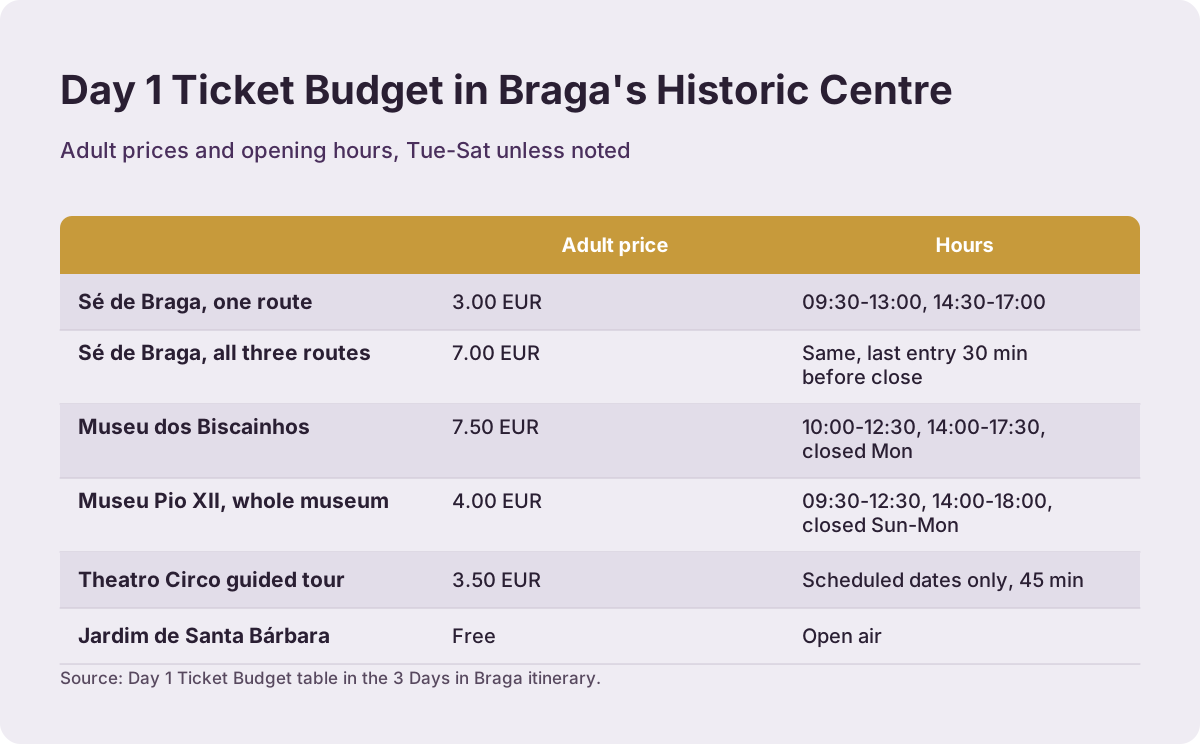
Day 1 Ticket Budget
| Stop | Adult price | Hours (Tue-Sat unless noted) |
|---|---|---|
| Sé de Braga, one route | 3.00 EUR | 09:30-13:00, 14:30-17:00 |
| Sé de Braga, all three routes | 7.00 EUR | Same, last entry 30 min before close |
| Museu dos Biscainhos | 7.50 EUR | 10:00-12:30, 14:00-17:30, closed Mon |
| Museu Pio XII, whole museum | 4.00 EUR | 09:30-12:30, 14:00-18:00, closed Sun-Mon |
| Theatro Circo guided tour | 3.50 EUR | Scheduled dates only, 45 min |
| Jardim de Santa Bárbara | Free | Open air |
If you prefer someone else to carry the history, a guided option saves you the guidebook. A small-group walk puts the cathedral, the gates and the garden into context in a single morning, and the guides who work the centre daily know which cloister door is open and which fountain is running. For travellers with limited mobility, or anyone who simply wants to sit down between stops, the tuk tuk city tour is a low-effort way to see the whole centre in 30 minutes to two hours, from $22.66 per person and rated 4.8 from 179 reviews. It runs several times a day and needs no advance planning beyond a spare hour after lunch.
What Should You Do On Day 2 At Bom Jesus Do Monte And Sameiro?
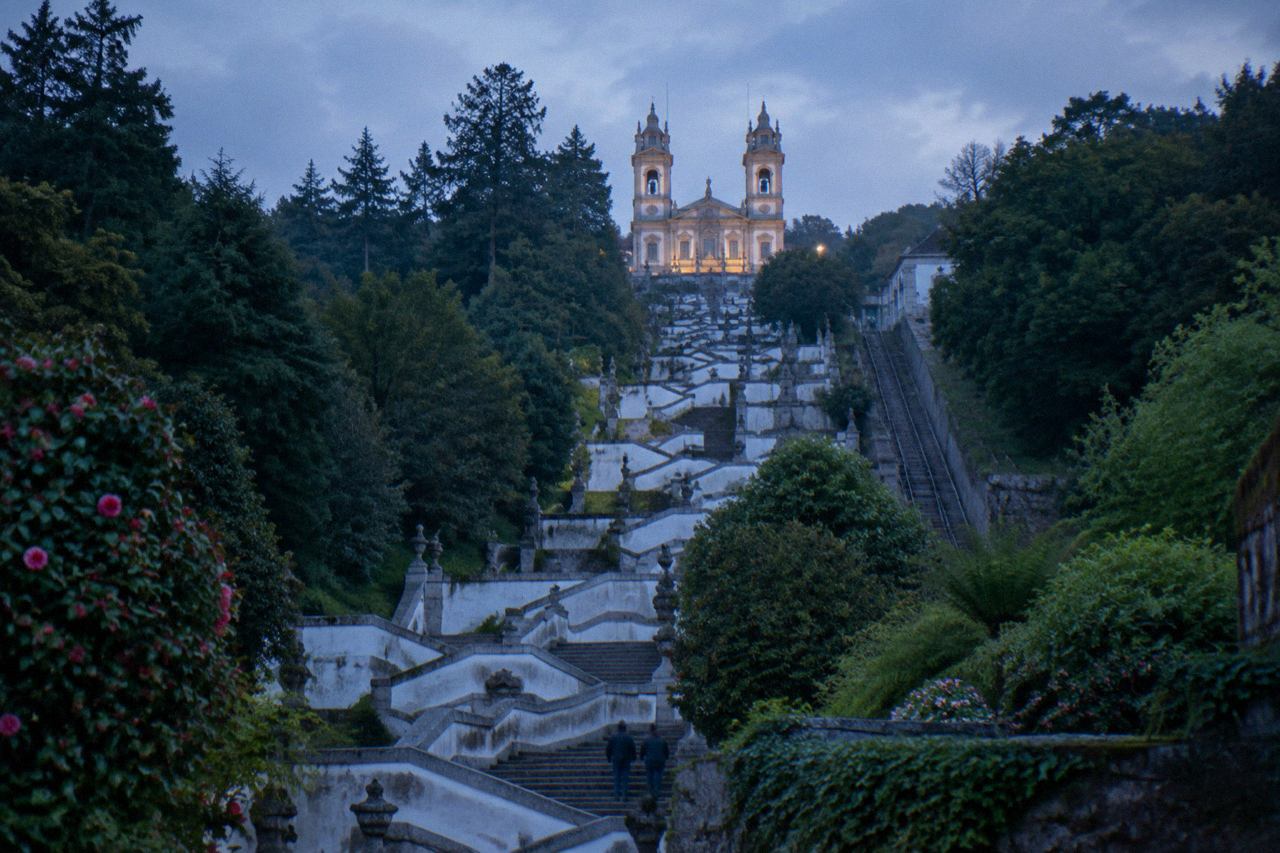
Day two belongs to the east hills: take TUB Line 2 to the Portico and climb the 566 steps of the Escadório do Pórtico to the Bom Jesus do Monte sanctuary, free to enter, then continue to the Santuário do Sameiro, whose basilica is free and whose Zimbório dome viewpoint costs 2 EUR. The funicular has been out of service since 26 September 2026, so a replacement shuttle runs from the Portico every day from 09:00 to 20:00.
The Confraria do Bom Jesus do Monte's own page counts 566 steps, 615 metres long with 116 metres of ascent, in three named sections: the Escadório do Pórtico, the Escadório dos Cinco Sentidos and the Escadório das Virtudes. The sanctuary was inscribed by UNESCO in 2019 as "Sanctuary of Bom Jesus do Monte in Braga", and the information page lists no admission charge for the grounds or the basilica, which opens every day at 08:00, until 19:00 in summer and 18:00 in winter. The high choir and bell tower inside the basilica cost 1 EUR, and rowing boats on the lake run at 3 EUR per person per 15 minutes.
The water-counterweight funicular, normally 2.50 EUR single and 4.00 EUR return, is the oldest in service in the world using that system by the Confraria's own claim, inaugurated on 25 March 1882. But the TUB notice of 26 September 2026 put it out of service with no end date published, and a replacement shuttle now covers the climb, roughly every 30 minutes each way between the Portico (where Line 2 ends) and the sanctuary. Check the operator's notice before you promise anyone a funicular ride. The full guide to the hill, including the bus in detail, is at Bom Jesus do Monte.
In the afternoon, a short taxi or bus ride south brings you to the Santuário do Sameiro. The whole precinct is open 24 hours a day, seven days a week, free; the basilica keeps shorter hours, and the Zimbório, the dome viewpoint at the back of the basilica, charges 2 EUR with hours that shift by season, so check on the day. The view from the dome across the Minho is the widest you will get without a car.
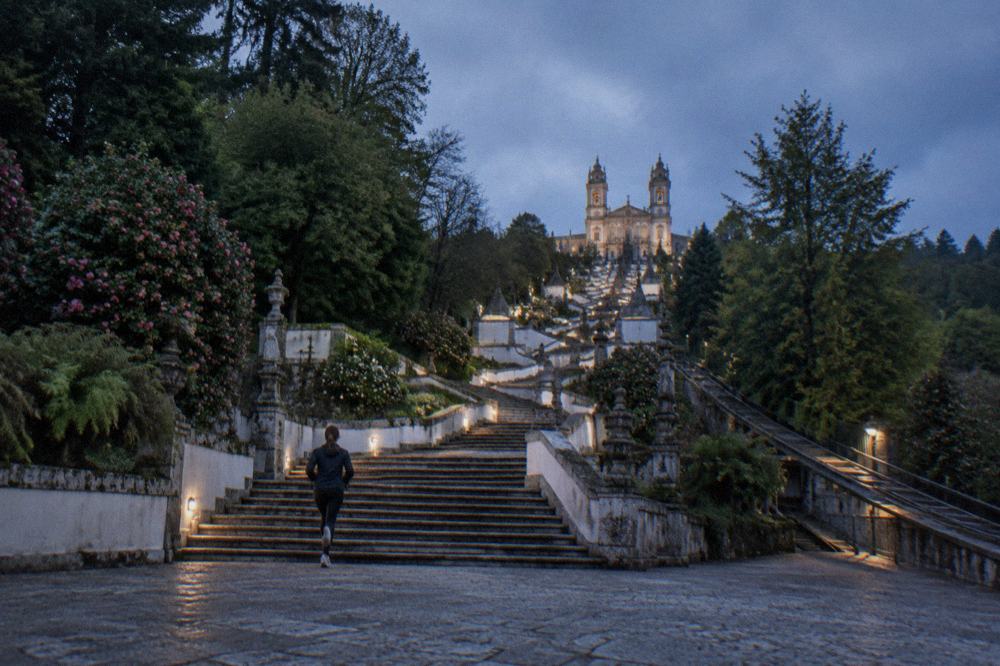
Day 2 Hill Sanctuaries At A Glance
| Site | Admission | Getting there |
|---|---|---|
| Bom Jesus grounds and basilica | Free | TUB Line 2 to the Portico |
| Bom Jesus high choir and bell tower | 1 EUR | Inside the basilica, closed during services |
| Bom Jesus funicular | Out of service since 26 Sep 2026 | Replacement shuttle 09:00-20:00, every ~30 min |
| Santuário do Sameiro precinct | Free, open 24 hours | Bus or taxi from the centre |
| Sameiro Zimbório dome | 2 EUR | Entrance at the back of the basilica |
| Bom Jesus car park, cars | 1.00 EUR | If you drive |
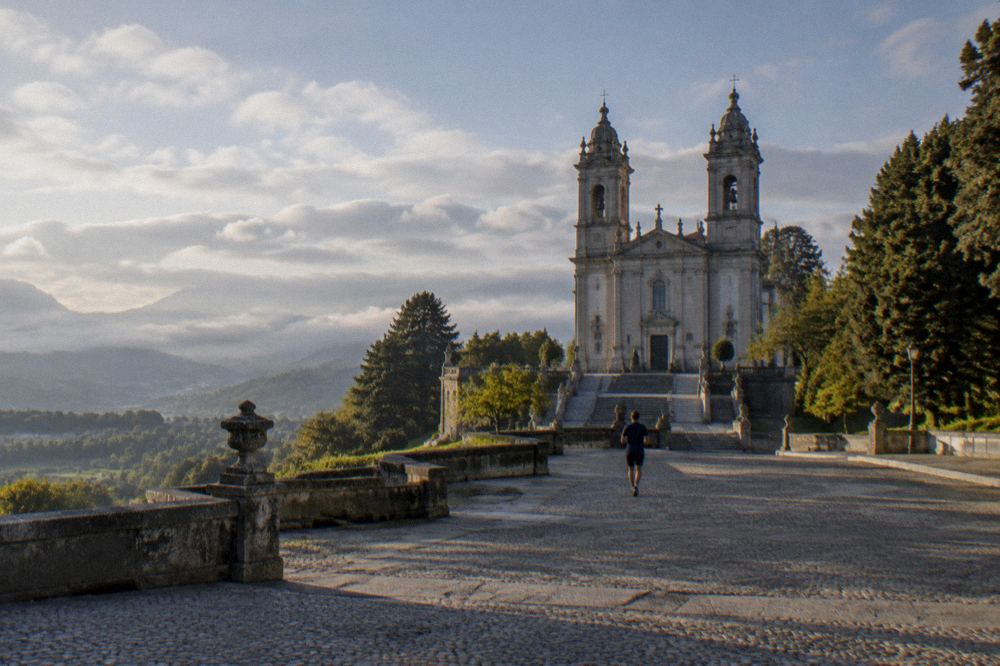
What Should You Do On Day 3 Around Braga?
Day three is the day trip: Guimarães by AITC bus line 101 from Braga bus station is the easiest option, the Peneda-Gerês National Park by line 201 to Caldas do Gerês is the wildest, and Barcelos, with its Thursday market and its train connection via a change at Nine, is the most local. There is no direct train from Braga to Guimarães, so the bus is the only public-transport route there.
Guimarães, the birthplace-of-Portugal town half an hour from Braga, pairs a hilltop castle with a beautifully restored old town, and the Guimarães day-trip guide covers it in full. AITC line 101 runs from Braga's Central de Camionagem to Guimarães central; the fare is not published on the operator's own site, so pay on board and expect a few euros. If you would rather not plan it yourself, the Braga & Guimarães small-group day tours that start from Porto pass through both cities, but from Braga itself the public bus is simpler and the two centres are an easy walk from each other's stations.
The other strong candidate is the Peneda-Gerês National Park, Portugal's only national park, where AITC line 201 runs from Braga to Caldas do Gerês with five departures a day. Park entry is free, though summer car access to the Mata de Albergaria section is limited and carries a small seasonal charge.
Keen to see the wild side of Peneda-Gerês? Book a waterfall day tour here. (Starts in Gerês)
Closer to home, Barcelos holds its famous Thursday market, and the train there requires a change at Nine. Ponte de Lima, on AITC line 105, is Portugal's oldest chartered town, with a Roman bridge and a riverside setting; the Ponte de Lima guide has the detail. If the weather has turned, swap the whole day for the rainy-day plan and the museums you skipped on day one.
| Day trip | Transport from Braga | Best for |
|---|---|---|
| Guimarães | AITC bus line 101, Central de Camionagem | Old town and castle |
| Caldas do Gerês | AITC bus line 201, 5 departures a day | Waterfalls, canyoning, hiking |
| Barcelos | Train with a change at Nine | Thursday market |
| Ponte de Lima | AITC bus line 105 | Roman bridge, riverside |
| Viana do Castelo | Regional bus | Coast and basilica on the hill |
| Porto | CP urban train from Braga station | City, from a few euros by zone |
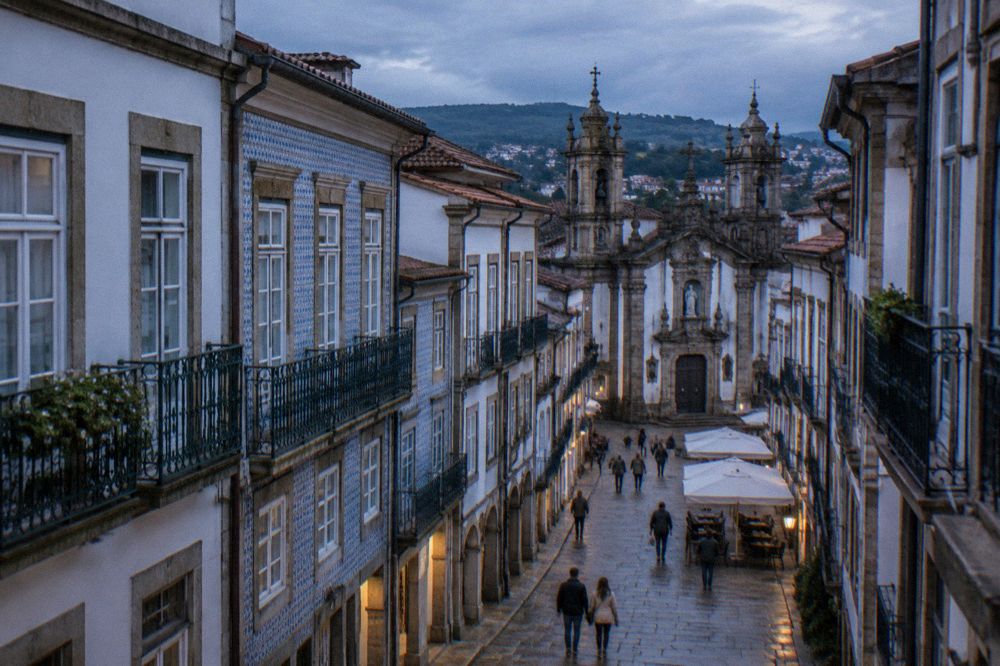
What Will 3 Days In Braga Cost?
A couple spending three days in Braga should budget 1.55 EUR per person per night in municipal tourist tax (up to 4 nights), a few euros per urban train or bus ride, and meals at mid-range restaurant prices, with the TUB tourist ticket at 3.35 EUR for one day of unlimited city buses the cheapest transport add-on. There is no city card or attraction pass on sale in Braga, so buy each ticket separately.
Single on-board fares are 1.55 EUR for one zone and 2.00 EUR for two; pre-bought or digital tickets drop to 0.75 EUR and 1.50 EUR. The tourist tax is charged by hotels and local accommodation to guests aged 16 and over, whatever the booking channel.
Museum tickets are the main variable. The cathedral's three routes, Biscainhos and the Pio XII museum cost 7.00, 7.50 and 4.00 EUR respectively at full price; add the D. Diogo de Sousa archaeology museum at 5.00 EUR and the Mosteiro de São Martinho de Tibães at about 4 EUR and the cultural budget is still under 30 EUR. The monastery, the mother house of the Portuguese Benedictine congregation, sits just outside the city and makes a good half-day add-on if your day three stays local; its hours are 10:00 to 18:00 in winter and 10:00 to 19:00 in summer, closed Mondays.
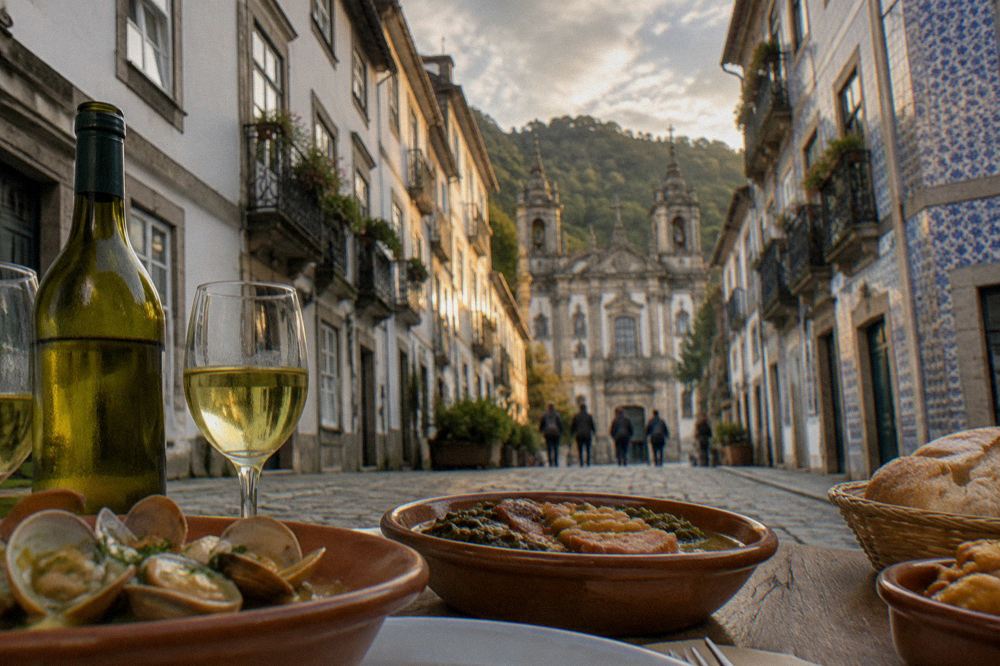
Sample 3-Day Budget Per Person
| Item | Cost | Notes |
|---|---|---|
| Cathedral, all three routes | 7.00 EUR | Or 3.00 EUR per single route |
| Museu dos Biscainhos | 7.50 EUR | Garden included, closed Mondays |
| Museu de Arqueologia D. Diogo de Sousa | 5.00 EUR | 2.50 EUR for 65+, 13-24, families |
| Mosteiro de São Martinho de Tibães | About 4 EUR | Students and 65+ pay 2 EUR |
| Sameiro Zimbório dome | 2.00 EUR | Basilica and precinct free |
| TUB tourist ticket, 3 days | 8.05 EUR | Whole urban network |
| Tourist tax, 3 nights | 4.65 EUR | 1.55 EUR per night, guests 16+ |
| Bom Jesus high choir and bell tower | 1 EUR | Closed during services |
Tipping follows the national rule: Turismo de Portugal's own wording says service is included in the bill, though it is customary to leave an additional tip of about 5 to 10%, and normal to tip taxi drivers the same or round up to the nearest euro. Nobody working on this site has eaten in Braga, so for where to eat, the what to eat in Braga pages and the restaurant guide carry the regional dishes, from bacalhau à Braga to the Pudim Abade de Priscos.
Where Should You Stay For 3 Days In Braga?
Stay inside the historic-centre ring for all three nights: every stop on days one and two is then walkable or one bus away, the evening restaurant scene is on your doorstep, and you avoid packing twice. Pick a hotel between the Avenida da Liberdade and the Praça da República for the shortest walks, or near the Rua do Souto for the cafés. Moving to Guimarães or the coast for one night saves nothing and costs a checkout.
The centre has the full range, from guesthouses in converted townhouses to the four-star Lince Braga, which opened in summer 2025 in the former Hotel da Falperra building and holds a Michelin Key in the 2026 guide. The Esperança Hotel, a city-centre conversion of two buildings, was scheduled to open in September 2026. For a three-night stay, location beats amenities: the bus station, the train station and the TUB stops that matter for days two and three are all within a fifteen-minute walk of the centre, and the tourist office on Avenida da Liberdade 1 is open Monday to Friday 09:00 to 18:30 if you want paper maps and event listings.
If your trip is really a Porto holiday with Braga attached, read how many days you need in Braga before you commit; the honest answer for most visitors is that three nights in the city itself suits the Minho-focused trip, while two with a Porto base suits a shorter one. The one-day itinerary exists for the day-trip case, and the day trip from Porto page covers the train-and-back version.
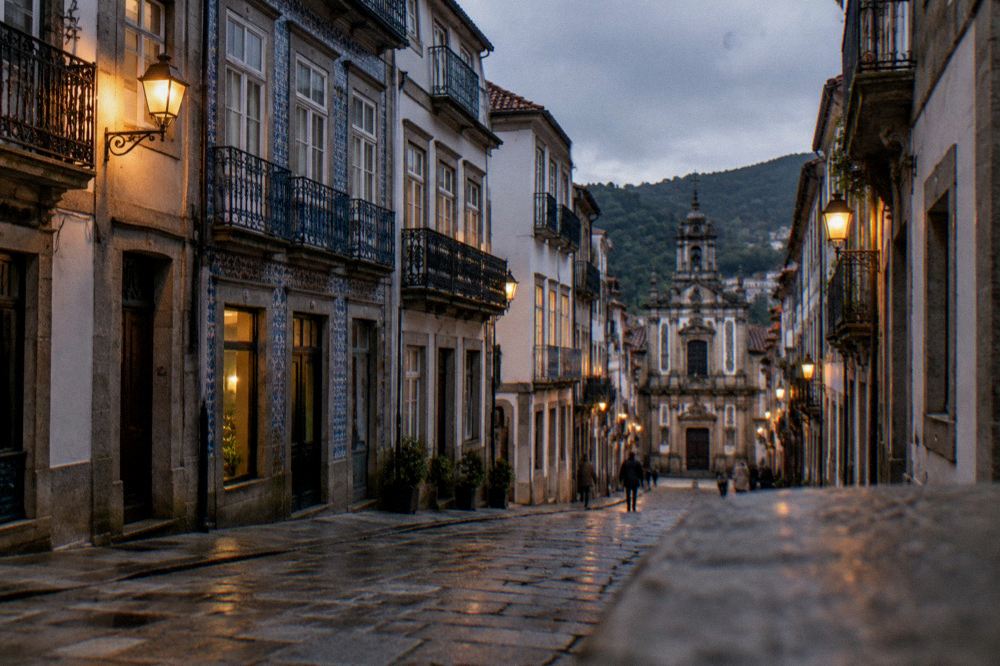
For travellers who want the whole three days interpreted rather than self-guided, a private guide changes the character of the trip entirely. The private walking tour with a professional guide runs two hours from $259.43 per person and is rated 5 from 3 reviews on the listing.
When Is The Best Time For 3 Days In Braga?
The most reliable three-day window in Braga is June or September: IPMA's 1991 to 2020 normals for the Braga / Merelim station show June averaging a 26.1 C daily high with 40.6 mm of rain and September a 26.9 C high with 67.6 mm, while July and August are hotter and drier, and October is the wettest month of the year at 197.8 mm. May works too, at a 23.0 C high and 89.8 mm of rain.
The table the IPMA normals give is counterintuitive in one place: September is warmer at the top end than June (26.9 C against 26.1 C mean maximum) and wetter (67.6 mm against 40.6 mm), so the choice between them is heat versus rain risk. Rain days of one millimetre or more run 12 to 13 a month from October to January, which is why the autumn and winter versions of this itinerary keep the museums flexible. July is the driest month at 27.9 mm, with 9.8 days at 30 C or above; August is the only month with a higher mean maximum, 28.7 C, and the station's record high of 42.2 C was set in August.
Event weeks change the maths. Semana Santa, Holy Week, fills the centre with processions, with the 2026 edition running 29 March to 5 April; the Festas de São João run 17 to 24 June, peaking on the night of 23 June into the 24 June municipal holiday; Braga Romana falls in late May; and Noite Branca opens the first weekend of September. None of these has 2027 dates announced, so check the municipal pages before you plan around one. The trade-off is simple: festival weeks are the best time to see Braga at its most alive and the worst time to find a quiet hotel room.
Common Questions About 3 Days In Braga
Is 3 days in Braga too much?
No. Two days cover the historic centre and Bom Jesus do Monte, but the third day buys you Sameiro, the Tibães monastery, or a full day trip to Guimarães or the Peneda-Gerês National Park, none of which fit comfortably into a shorter stay.
Can you visit Bom Jesus do Monte without the funicular?
Yes. The funicular has been out of service since 26 September 2026, with no return date published, and a replacement shuttle runs every day from 09:00 to 20:00, roughly every 30 minutes, between the Portico and the sanctuary. The 566-step stairway, by the Confraria's count, is always walkable.
Do you need a car for 3 days in Braga?
No. TUB buses cover the city and Line 2 reaches the Bom Jesus Portico, AITC regional buses reach Guimarães, Gerês and Ponte de Lima from the bus station, and the train reaches Porto and Barcelos (with a change at Nine). A car only earns its keep if you want Falperra, the coast or remote corners of the Gerês park on your own schedule.
What is the tourist tax in Braga?
Braga charges a municipal tourist tax of 1.55 EUR per person per night, for up to 4 consecutive nights, all year, charged by hotels and local accommodation to guests aged 16 and over. A three-night stay adds 4.65 EUR per person to your bill.
Is there a city pass for Braga?
No. No city card or attraction pass is on sale in Braga; the "Braga Card" announced in 2025 has no purchase page. Buy each attraction ticket separately, and use the TUB tourist ticket (3.35, 6.05 or 8.05 EUR for one, two or three days) for the buses.
Should day 3 be Guimarães or Gerês?
Guimarães if you want architecture, history and an easy walkable old town; the Peneda-Gerês National Park if you want waterfalls, canyoning and mountain scenery. There is no direct train to Guimarães, so both days start with a bus from Braga's Central de Camionagem.
Three days in Braga, split between the centre, the hills and the Minho beyond, is the version of the trip where nothing feels rushed, and the Braga Travel Guide homepage carries the full set of attraction, day-trip and food pages to fill any gaps in your plan.