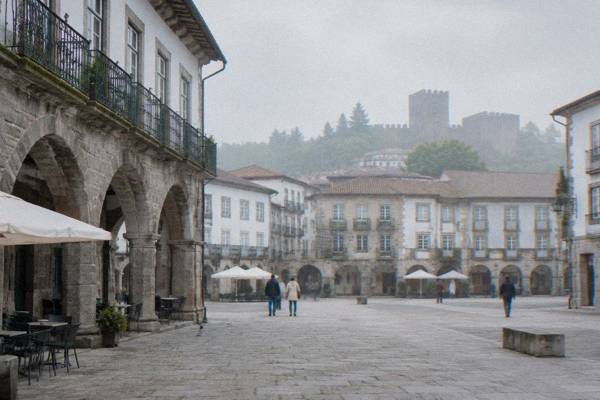
The Minho Region: A Complete Guide From Braga
The Minho is the green northern corner of Portugal where Braga sits, a region of granite towns, Vinho Verde vineyards, a national park and an Atlantic coast, all reachable from one small city.
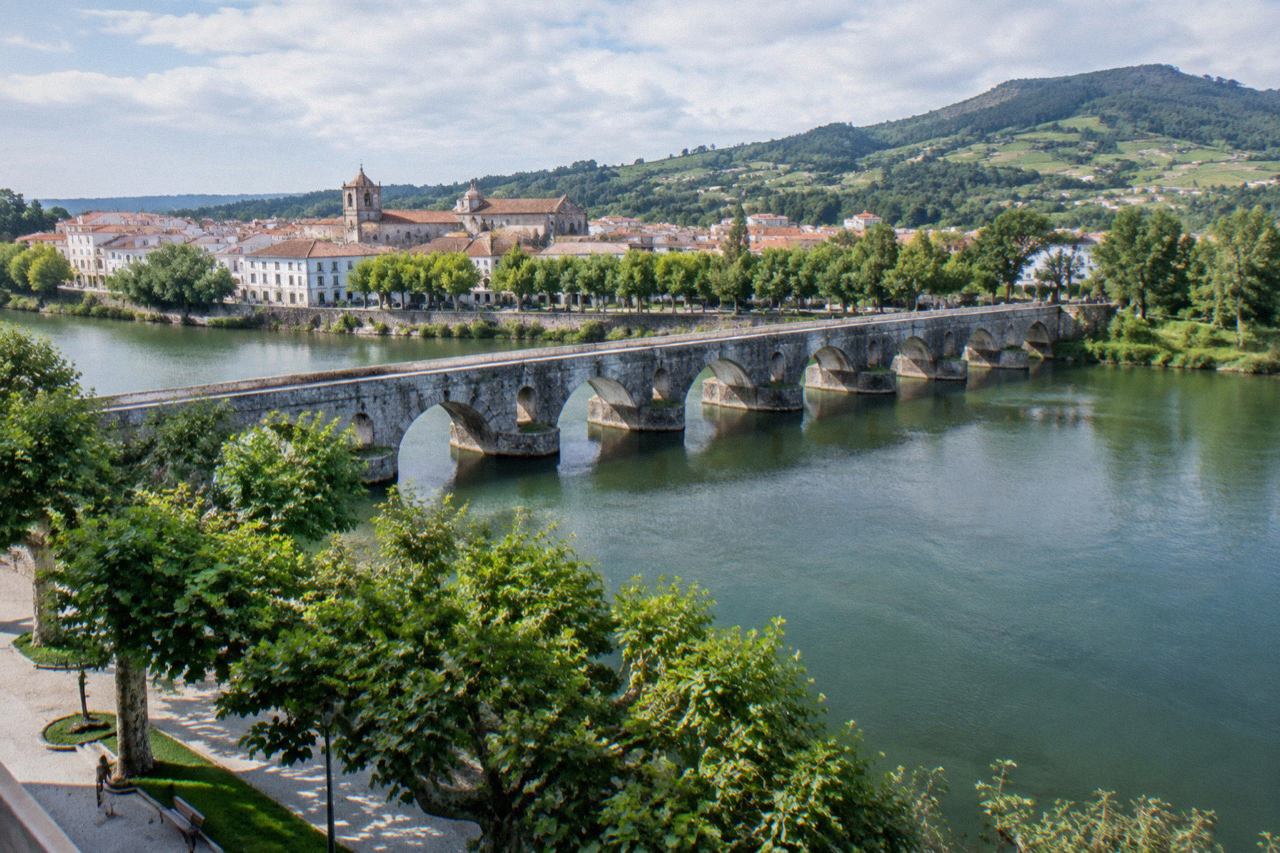
Short answer
The Minho region is the forested northern strip of Portugal around Braga, Guimarães, Viana do Castelo and the Peneda-Gerês National Park, best visited between May and September and easily explored by regional bus or train from Braga.
Braga sits in the middle of the Minho, the green, rain-fed northern region of Portugal that stretches from the Atlantic coast to the Spanish border and down toward the Douro. The city of Braga is the region's ecclesiastical capital and its most practical base: the municipality counted 193,324 residents at the 2021 census, the regional bus station sits a short walk from the historic centre, and the UNESCO-listed sanctuary of Bom Jesus do Monte rises on a hill inside the municipality itself. This guide covers the Minho as a destination, using Braga as the anchor point, because that is how most visitors actually experience it.
The Minho is not an official administrative unit with a border on a map, which is the first thing to understand about it. It is a historical and cultural name for the territory between the Minho river, which forms the border with Spain, and the Lima, Cávado and Ave valleys to the south. Administratively it overlaps the districts of Braga and Viana do Castelo, and the district of Braga is a larger area than the city: it contains Guimarães, Barcelos, Famalicão and part of the Peneda-Gerês National Park. When a timetable or a weather warning says "Braga", check whether it means the city, the municipality or the district, because the three are different things.
What Is The Minho Region Of Portugal?
The Minho is the northernmost coastal region of Portugal, named after the Minho river that separates it from Galicia in Spain, and it covers the Braga and Viana do Castelo districts. It is the wettest, greenest part of the country, and it produces Vinho Verde, the lightly sparkling young wine sold across Portugal and abroad. Its headline sights are Braga's Bom Jesus do Monte sanctuary, inscribed by UNESCO in 2019, and the Peneda-Gerês National Park.
The name causes real confusion, so it helps to be precise. The Minho river is the border; the Minho region is south of it. The city of Braga is the region's biggest urban centre by population, though the municipality's 193,324 residents (Census 2021) is the only population figure this site publishes, because no city-proper or district figure was verified. Guimarães is the region's other famous city, known as the cradle of Portugal's medieval kingdom; Viana do Castelo is its Atlantic port town; Barcelos holds one of the country's largest weekly markets; Ponte de Lima claims the oldest chartered fair in Portugal. Each of those claims belongs to the towns themselves and is best checked against their own visitor pages.
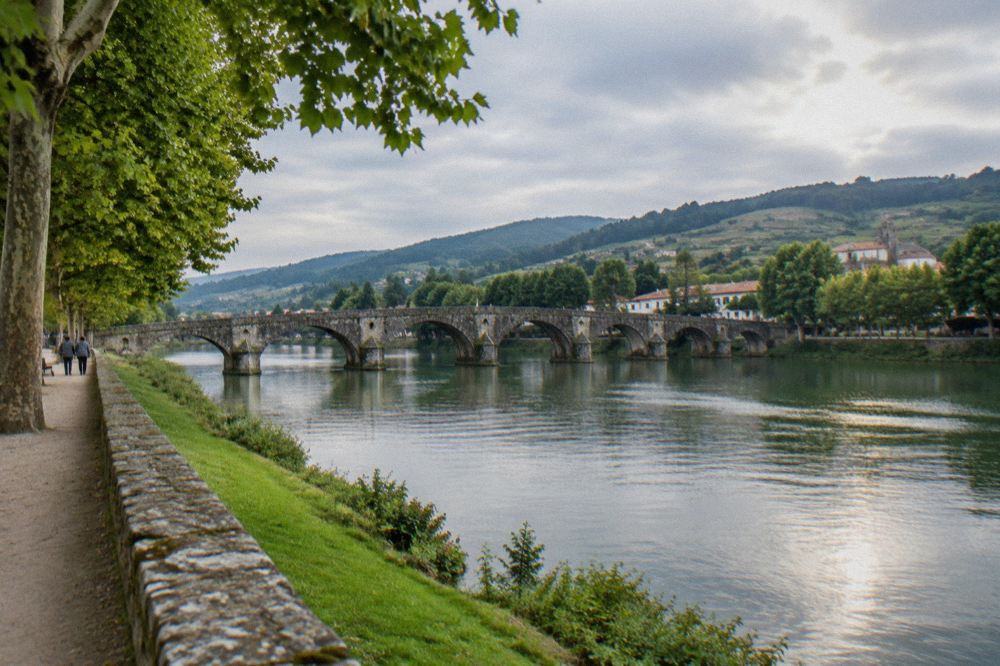
What holds the region together, more than any border, is geography. The granite hills of the Peneda-Gerês massif rise in the east, the Lima and Cávado rivers cut west through forested valleys toward the ocean, and the coastal strip runs flat and sandy from Caminha down to Esposende and Póvoa de Varzim. Rain is the defining fact of the place: IPMA's 1991 to 2020 normals for the Braga / Merelim station record 1,387.3 mm across an average year, with October the wettest month at 197.8 mm and July the driest at 27.9 mm. That rain is why the Minho is green when the rest of Portugal has gone gold by August, and it is why the region, not the south, grows Vinho Verde.
What Are The Best Places To Visit In The Minho?
The five places most visitors come to the Minho for are Braga itself, with the Bom Jesus do Monte sanctuary and the Sé de Braga cathedral; Guimarães, with its medieval castle and ducal palace; the Peneda-Gerês National Park; Viana do Castelo on the coast; and Ponte de Lima, the river town on the pilgrim route to Santiago de Compostela. Barcelos, the Citânia de Briteiros hill fort and the coastal towns of Esposende and Caminha fill out a second week.
Braga deserves two or three days on its own. The Bom Jesus do Monte sanctuary, a World Heritage Site since 2019, climbs a baroque stairway of 566 steps by the Confraria's count, 615 metres long with 116 metres of ascent, through chapels, fountains and formal gardens. The Escadório do Pórtico, the stairway's first section, is the postcard view of the region. Note one thing before planning: the Bom Jesus funicular has been out of service since 26 September 2026 with no end date published, and a replacement shuttle runs daily 09:00 to 20:00, roughly every 30 minutes each way, between the Pórtico and the sanctuary. The Sé de Braga cathedral sells three visit routes at 3.00 EUR each, or 7.00 EUR combined for all three.
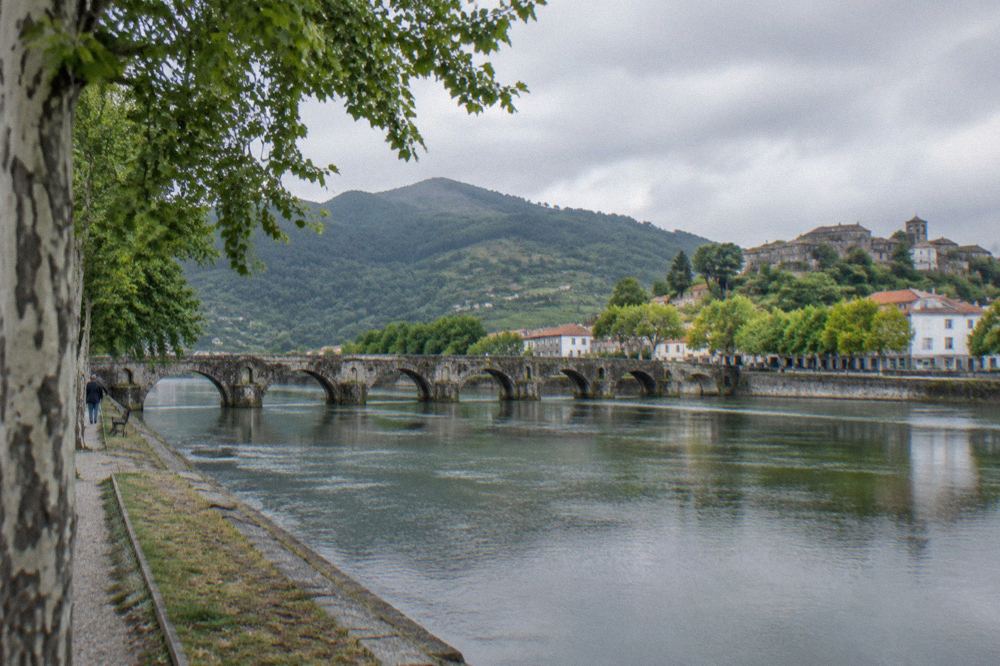
Guimarães is the region's second city and its historical counterweight to Braga: where Braga is the church, Guimarães is the castle. There is no direct train from Braga to Guimarães, so the bus is the practical link. Ponte de Lima is the river town between them, on the Portuguese Way to Santiago, with a Roman bridge and a long riverside park. Viana do Castelo sits at the mouth of the Lima river facing the Atlantic, with a mountaintop basilica above it and a shipyard history below. The Peneda-Gerês National Park fills the eastern edge of the region with granite peaks, waterfalls and hot springs, and summer car access to the Mata de Albergaria section is limited and charged, so check the park's notices before driving in.
For prehistory, the Citânia de Briteiros, south of Guimarães, is the region's great Iron Age hill fort, with circular stone house foundations and a paved main street. Admission is about 5 EUR, 2.50 EUR reduced, and includes the Museu da Cultura Castreja; it opens daily 09:30 to 12:30 and 14:00 to 18:00 from 27 March to 31 October, and Tuesday to Sunday 09:30 to 12:30 and 14:00 to 17:00 in winter. The table below is the shortlist in one place.
| Place | What it is | Why go | Where to read more |
|---|---|---|---|
| Braga | The region's church capital, Bom Jesus do Monte, Sé de Braga | Baroque stairway, cathedral treasury, café life | Things to do in Braga |
| Guimarães | Medieval castle town | Castle, ducal palace, old quarter | Guimarães guide |
| Peneda-Gerês | Portugal's national park in the Minho's east | Waterfalls, hikes, thermal baths | Peneda-Gerês guide |
| Viana do Castelo | Atlantic port city | Basilica on the hill, riverside centre | Viana do Castelo guide |
| Ponte de Lima | River town on the pilgrim route | Roman bridge, riverside walks | Ponte de Lima guide |
| Barcelos | Market town on the Cávado | Weekly market, rooster legend | Barcelos guide |
How Do You Get Around The Minho Region?
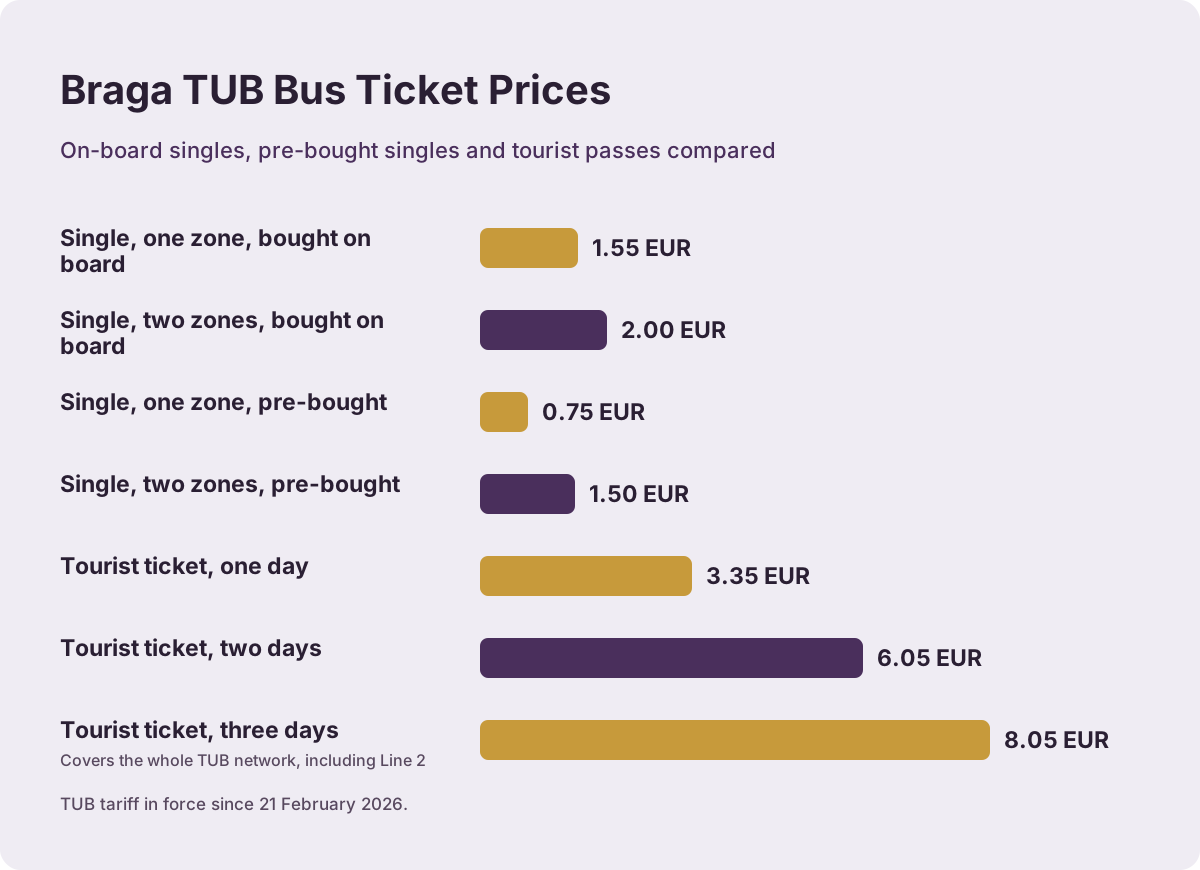
The Minho is best explored without a car if you base yourself in Braga: CP trains connect Braga to Porto and Lisbon, AITC regional buses run from Braga bus station to Guimarães (line 101), Ponte de Lima (105), Caldas do Gerês (201) and the coast (107 and 106), and TUB city buses cover Braga itself with a 1-day tourist ticket at 3.35 EUR. A car earns its keep only for Peneda-Gerês and the smaller villages, where bus frequency thins out.
Rail access to the region runs through Braga station, the terminus of CP's Braga line from Porto São Bento. The urban train takes a little over an hour from Porto and costs a few euros, priced by zone, loaded onto a reusable Siga card that costs 0.50 EUR. From Lisbon, the Alfa Pendular runs direct to Braga in about 3 hours 20 minutes at fastest, with the full single fare from 1 January 2026 at 38.50 EUR in Turística class and 54.60 EUR in Conforto. From Porto Campanhã to Braga, the Alfa Pendular fare is 17.00 EUR Turística. The Porto to Braga guide has the full rail picture, and the Braga train station guide covers arrival.
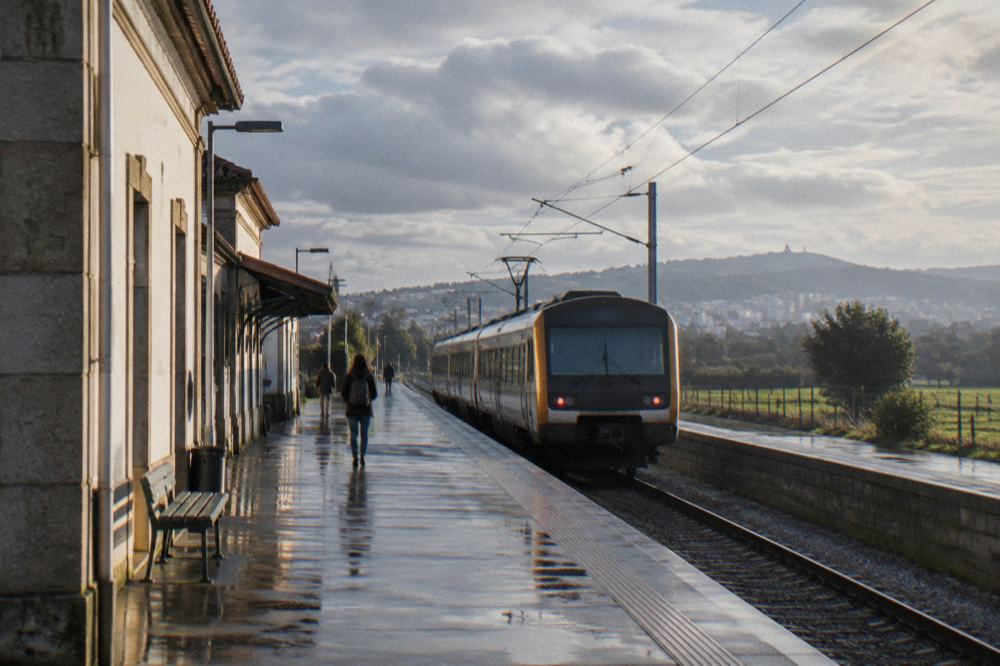
Regional buses leave from Braga's bus station, the Centro Coordenador de Transportes on Avenida General Norton de Matos. The AITC line numbers are verified and worth writing down: 101 to Guimarães via the A11, 105 to Ponte de Lima, 100 to Vila Verde and Arcos de Valdevez, 201 to Caldas do Gerês, 200 to Covide via Campo do Gerês, 107 to Esposende and Póvoa de Varzim, 106 to Póvoa de Varzim and 109 to Famalicão. Regional bus fares and journey times are not published on the operator's site in a form this site could verify, so check the timetable PDFs at the station or on the operator's page before committing to a day plan. There is no direct train from Braga to Guimarães at all, and Barcelos by rail needs a change at Nine.
| Route from Braga | Mode | Line or service | Notes |
|---|---|---|---|
| Porto (São Bento) | CP urban train | Linha de Braga | A few euros, priced by zone; Siga card 0.50 EUR |
| Lisbon | CP Alfa Pendular | Direct, about 3 h 20 min | 38.50 EUR Turística full fare 2026 |
| Guimarães | AITC bus | Line 101, via the A11 | No direct train exists |
| Ponte de Lima | AITC bus | Line 105 | On the pilgrim route |
| Caldas do Gerês | AITC bus | Line 201 | Gateway to the park |
| Póvoa de Varzim / coast | AITC bus | Lines 107 and 106 | Esposende beaches |
| Porto Airport | Getbus coach | Direct, 45 minutes | From 9.00 EUR one way |
Inside Braga, TUB city buses use a tariff in force since 21 February 2026: an on-board single is 1.55 EUR for one zone and 2.00 EUR for two, dropping to 0.75 EUR and 1.50 EUR pre-bought or digital. The tourist ticket is the best tool for a visitor doing the rounds: 3.35 EUR for one day, 6.05 EUR for two, 8.05 EUR for three, covering the whole network including TUB Line 2 to the foot of the Bom Jesus stairway. The getting around Braga guide explains the system in detail, and the car rental guide helps you decide whether you need wheels at all.
When Is The Best Time To Visit The Minho?
The best months to visit the Minho are May, June and September: IPMA's 1991 to 2020 normals for the Braga / Merelim station show mean highs of 23.0 C in May, 26.1 C in June and 26.9 C in September, with rainfall of 89.8 mm, 40.6 mm and 67.6 mm respectively, far below the October peak of 197.8 mm. July and August are the driest and warmest but busiest.
The rain numbers deserve attention because they surprise people who know Portugal only from the Algarve. The Braga / Merelim station records 13.1 days of rain of 1 mm or more in January and 13.3 in December, against 3.8 in August. Even summer is not bone dry: June averages 40.6 mm. The trade-off is that the region's green, its rivers and its gardens exist because of exactly this water, and the Braga weather guide and best time to visit guide break the year down month by month.
The event calendar also shapes the year. Semana Santa de Braga, the Holy Week processions registered in the National Inventory of Intangible Cultural Heritage, ran 29 March to 5 April in 2026 and moves with Easter each year. The Festas de São João ran 17 to 24 June 2026, peaking on the night of 23 June into the 24 June municipal holiday. Braga Romana, the Roman festival, fell in late May, and Noite Branca, the all-night arts festival, on the first weekend of September, 4 to 6 September in 2026. The Semana Santa guide covers the biggest of these. The 2027 dates were not announced, so treat the pattern, not the calendar, as the planning fact.
| Month | Mean high C | Mean low C | Rain mm | Rain days (1 mm+) | Verdict |
|---|---|---|---|---|---|
| March | 17.8 | 5.9 | 150.1 | 11.8 | Cool, green, processions |
| May | 23.0 | 10.4 | 89.8 | 8.9 | Best all-round month |
| June | 26.1 | 13.2 | 40.6 | 5.7 | Warm, São João festival |
| July | 28.2 | 14.3 | 27.9 | 4.0 | Driest, busiest |
| August | 28.7 | 14.0 | 34.6 | 3.8 | Peak heat, peak crowds |
| September | 26.9 | 12.4 | 67.6 | 6.2 | Warm sea, Noite Branca |
| October | 22.2 | 10.1 | 197.8 | 12.0 | Wettest month of the year |
What Should You Eat And Drink In The Minho?
The Minho's table is built on Vinho Verde, the young wine of the region's rainy vineyards, and on hearty northern dishes: Braga's own bacalhau à Braga and pudim Abade de Priscos, the region's frigideiras pastries, caldo verde soup, and the roasted kid and river fish of the Gerês valleys. Tasting fees at the region's quintas usually run from around 25 to 100 USD per person depending on the estate and the depth of the visit, so check the room before booking.
Vinho Verde is the region's signature export and the reason the Minho's agriculture looks the way it does. The wine is not a grape but a style, made across the region from varieties like Alvarinho and Loureiro, and it is covered in full on the Vinho Verde guide. In the city, the what to eat in Braga and Braga restaurants pages map where to eat bacalhau à Braga, the layered salt cod and potato dish, and pudim Abade de Priscos, a caramel egg pudding. The pastries of the region, including the frigideiras do Bacalhau, have their own page too.
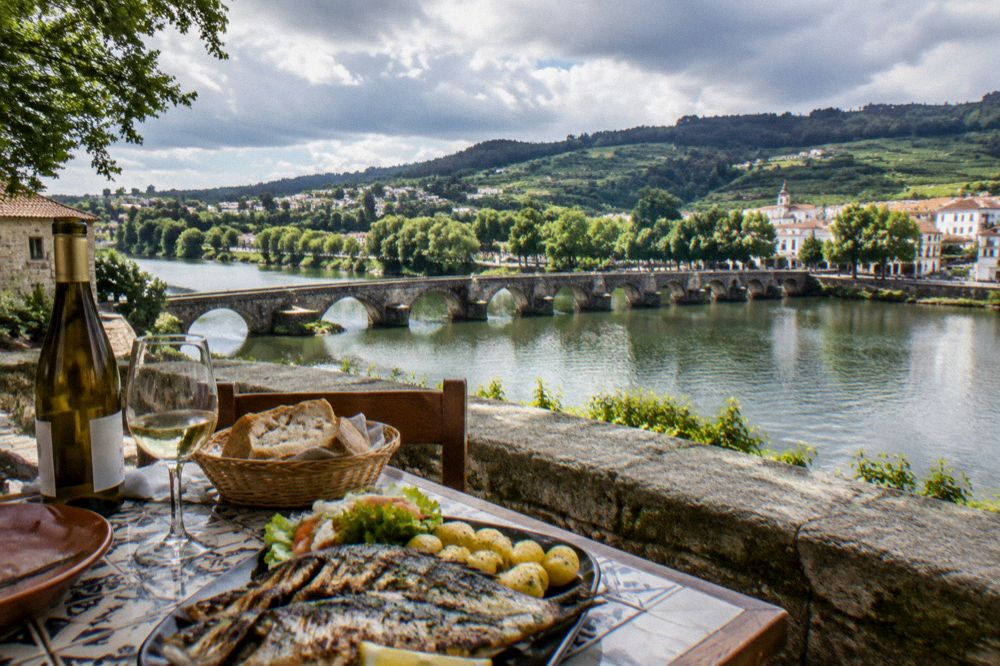
Two verified wine experiences sit inside the municipality or just outside it. The Quinta de Santa Cristina estate runs an identity tasting, listed from 28.88 USD per person and rated 4.9 from 47 reviews, about an hour and a half in the vineyard. The Mosteiro de Tibães, the restored mother house of the Portuguese Benedictine congregation on Braga's eastern edge, hosts a wine tour with an exclusive tasting, listed from 63.53 USD per person, four hours including the monastery itself, whose general admission is about 4 to 5 EUR. Tasting the region's wine where it grows, rather than only with dinner, is the single most Minho thing a visitor can do.
| Dish or drink | What it is | Where it belongs |
|---|---|---|
| Vinho Verde | Young, lightly sparkling wine of the Minho | Every table; quintas for tasting |
| Bacalhau à Braga | Salt cod layered with potatoes and onions | Braga restaurants |
| Pudim Abade de Priscos | Caramel and port wine egg pudding | Braga, invented here |
| Frigideiras | Fried cod and bread pastries | Braga cafés |
| Caldo verde | Green cabbage, potato and chouriço soup | Everywhere in the north |
| Roasted kid | Mountain lamb-style dish of the valleys | Gerês and Ponte de Lima |
What Are The Best Day Trips From Braga?
The best day trips from Braga are Guimarães by AITC bus line 101, the Peneda-Gerês National Park by line 201 to Caldas do Gerês, Ponte de Lima by line 105, the coast at Esposende or Póvoa de Varzim by lines 107 or 106, and the Citânia de Briteiros hill fort. Every one of them is doable by public bus from Braga's single bus station, and none of them needs an overnight unless you want the park's trails in full.
Guimarães is the classic pairing with Braga, and the two cities together form the standard Minho itinerary; the Braga and Guimarães in one day page explains how the split works. Visitors based in Porto should note that this site's full-day Minho tours all start from Porto and are labelled "From Porto" on every card, so they belong on the day trip from Porto page rather than in a Braga-based plan. From Braga itself, the regional buses are the honest, cheap way to move, and the northern Portugal itinerary stitches the region into a week-long route for those with more time.
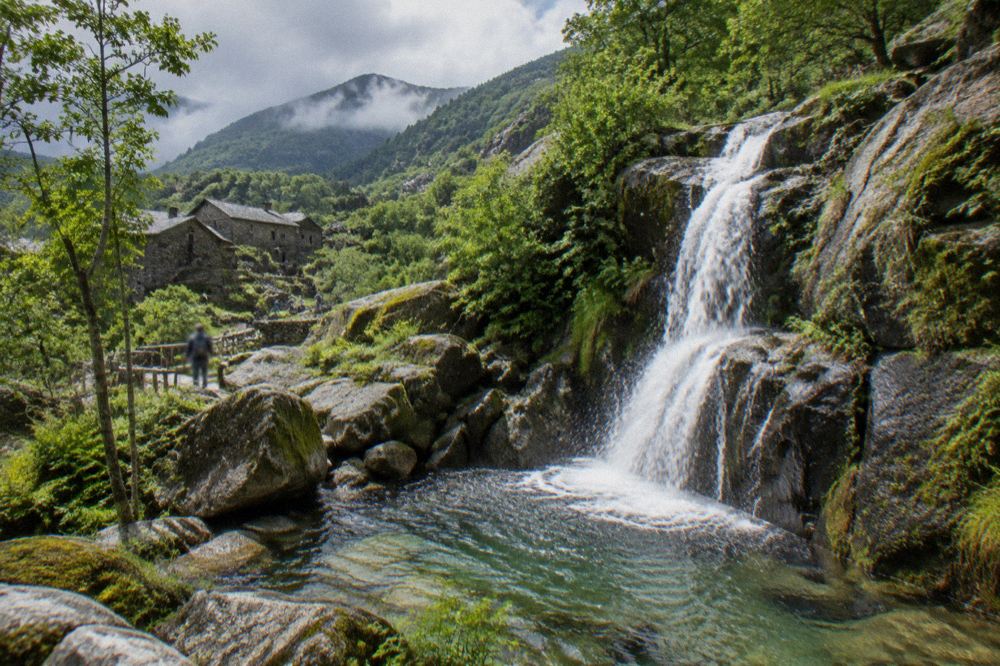
Peneda-Gerês deserves a full day, not an afternoon. The park occupies the region's granite spine along the Spanish border, and its access points from Braga are the Caldas do Gerês spa town on line 201 and the Covide route on line 200. Summer visitors driving in should know that access to the Mata de Albergaria section is limited and charged in the warmer months, with traffic controls at the boundary. For the coast, Esposende and Póvoa de Varzim offer Atlantic beaches within the region's own borders, and the beaches near Braga page ranks them. The hiking near Braga page covers the trail options closer to the city for days when the park feels too far.
Before setting out to any of these towns, it pays to know Braga's own centre first, because almost every day trip starts and ends at the bus station beside it. A short guided walk of the historic quarter gives the region its context: the city that the rest of the Minho grew up around.
How Many Days Do You Need For The Minho?
Three days covers Braga plus one day trip; five to seven days covers the honest Minho, adding Guimarães, Peneda-Gerês and either the coast or Ponte de Lima; ten days lets you add Viana do Castelo, Barcelos and the Citânia de Briteiros without rushing. Braga rewards two of those days itself, because Bom Jesus do Monte, the Sé de Braga, Tibães and the historic centre do not fit into one.
The one-day and two-day itineraries on this site, one day in Braga, 2 days in Braga and 3 days in Braga, show how quickly the city fills up. The cathedral alone sells three separate visit routes at 3.00 EUR each, or 7.00 EUR for all three combined, and the Treasury-Museum closes on Mondays. The Museu dos Biscainhos, a state museum in a baroque palace with gardens, costs 7.50 EUR with the garden included and also closes Mondays. The Museu de Arqueologia D. Diogo de Sousa, the region's Roman archaeology collection, costs 5.00 EUR, with 50% off for over-65s, ages 13 to 24 and families. A rainy-day plan for the Minho is really a museum plan for Braga, and the rainy day guide exists because the rain statistics above are not theoretical.
For the park and the coast at your own pace, book a rental car here.
Practical Facts For Minho Visitors
A Minho trip needs four practical facts: Braga charges a municipal tourist tax of 1.55 EUR per person per night for up to four nights, all year; the euro is the currency and card payment is near universal, though the Museu Nogueira da Silva is card only; and the EU's Entry/Exit System (EES) has been fully operational at Schengen borders since 10 April 2026 for non-EU nationals. ETIAS, the travel authorisation for visa-exempt visitors, is not yet in operation.
The tourist tax is charged by hotels and local accommodation and applies to guests aged 16 and over. Tipping follows the national custom: Turismo de Portugal's own wording is that service is included in restaurant bills, though it is customary to leave an additional 5 to 10%, and normal to tip taxi drivers 5 to 10% or round up to the nearest euro. For arrival logistics, the Porto Airport to Braga page covers the Getbus coach, from 9.00 EUR one way and 45 minutes direct, and the where to stay in Braga page sorts the city's neighbourhoods. No city-wide attraction pass is on sale in Braga, so budget each ticket separately; the attraction tickets guide lists every verified price in one table.
A private guide is the efficient way to compress Braga into a single informed morning: the private walking tour with a professional guide runs about two hours from 259.43 USD per person and is rated 5 from 3 reviews. For a lighter, faster orientation, the tuk tuk city tour covers the main squares and viewpoints in 30 minutes to two hours from 22.66 USD, rated 4.8 from 179 reviews.
Common Questions About The Minho Region
What is the Minho region known for?
The Minho is known for Vinho Verde wine, the greenest and wettest landscape in Portugal, the Peneda-Gerês National Park, the baroque sanctuary of Bom Jesus do Monte at Braga, and the medieval town of Guimarães. Braga's Holy Week processions, registered in the National Inventory of Intangible Cultural Heritage, are the region's biggest annual event.
Is the Minho the same as the district of Braga?
No. The Minho is a historical region covering roughly the Braga and Viana do Castelo districts. The district of Braga is an administrative area that contains the city of Braga plus Guimarães, Barcelos, Famalicão and part of the Peneda-Gerês park, and it is larger than the city itself.
Can you visit the Minho without a car?
Yes, with planning. CP trains link Braga to Porto and Lisbon, AITC regional buses run from Braga bus station to Guimarães (line 101), Ponte de Lima (105), Caldas do Gerês (201) and the coast (107 and 106), and TUB city buses cover Braga with a 3.35 EUR tourist day ticket. A car is only worth it for the deeper valleys of Peneda-Gerês.
What is the rainiest month in the Minho?
October, by IPMA's 1991 to 2020 normals for the Braga / Merelim station: 197.8 mm on average, with December (190.3 mm) and January (179.5 mm) close behind. July is the driest at 27.9 mm.
Is there a train from Braga to Guimarães?
No, there is no direct train between the two cities. The AITC line 101 bus runs from Braga bus station to Guimarães via the A11. Barcelos by rail also needs a change of trains at Nine.
How much does the Braga tourist tax cost?
Braga charges 1.55 EUR per person per night, for a maximum of four consecutive nights per stay, applied all year to guests aged 16 and over. It is collected by your hotel or accommodation, whatever platform you booked through.
The Minho rewards the visitor who treats Braga as a base rather than a whistle-stop: the buses fan out from one station, the trains run south to Porto and Lisbon, and the region's best sanctuary, monastery and museums sit inside the municipality itself. Plan around the rain calendar, book the cathedral and Bom Jesus for the mornings, and the rest of the region opens up from there, as this Braga Travel Guide lays out neighbourhood by neighbourhood.