São João In Braga: The June Festival Guide
Braga, the city in Portugal's Minho region, celebrates São João with eight days of processions, music and street food, peaking on the night of 23 June into the municipal holiday of 24 June.
Short answer
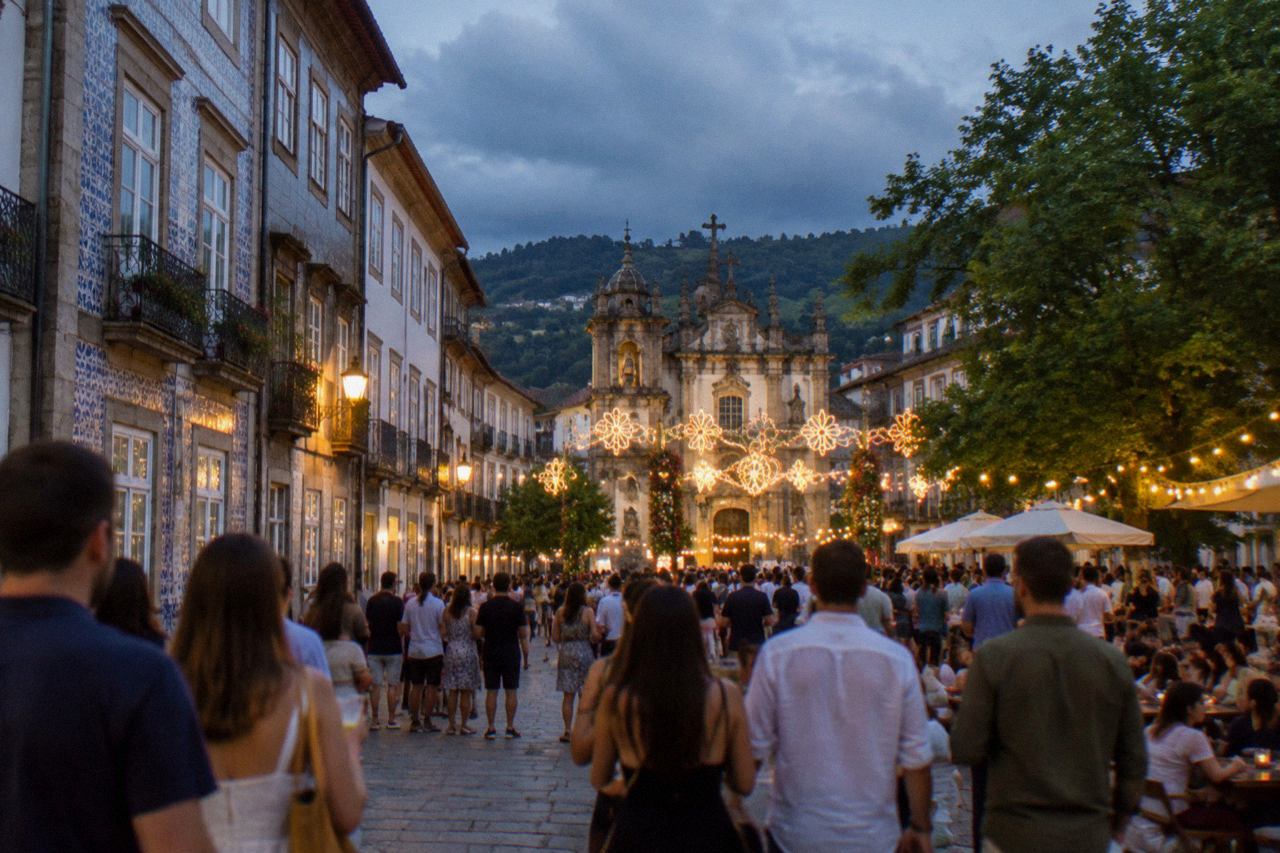
The Festas de São João de Braga ran 17 to 24 June in 2026, organised by the Associação de Festas de São João de Braga, and peak on the night of 23 June, when the Cortejo da Mordomia and the official ceremony fill the historic centre ahead of the 24 June municipal holiday.
Braga, the city in Portugal's Minho region, does not merely mark São João each June, it hands the whole city over to it for eight days. The Festas de São João de Braga ran from 17 to 24 June in 2026, organised by the Associação de Festas de São João de Braga, and they peaked on the night of 23 June into the 24 June municipal holiday, when the historic centre filled with processions, music, grilled sardines and the odd plastic hammer to the head. It is the biggest party of the Braga year, and unlike Porto's riverside version, it is concentrated in a compact historic centre that a visitor can walk end to end between events.
What Is São João In Braga?
São João is the feast of Saint John the Baptist, and in Braga it is an eight-day municipal festival organised by the Associação de Festas de São João de Braga, centred on the historic centre and finishing on 24 June, the city's municipal holiday. The 2026 edition ran 17 to 24 June. It combines religious ceremonies, including a procession and an official ceremony on the main night, with concerts, street food stalls and popular traditions such as plastic hammers, basil pots and paper lanterns.
Saint John's night, the night of 23 to 24 June, is celebrated across northern Portugal, and each city does it differently. Braga's version is distinctive precisely because the city is distinctive: a compact baroque core of churches, arcaded squares and granite streets, with the Sé de Braga at its heart, means the sacred and the profane parts of the festival happen within a few minutes' walk of each other. A religious procession can pass a sardine grill on one street while a concert sets up on the next.
The festival's anchor is the calendar itself. The 24th of June is Braga's municipal holiday, listed by the municipality among the days when its museums close, so the whole city has the day off and the night before becomes the natural climax. The Associação de Festas de São João de Braga, the festival's organiser, publishes the programme on its own page, and that is where to check the coming edition's dates, because no 2027 dates have been announced.
For visitors, the appeal is straightforward. This is the one week of the year when Braga's streets stay lively deep into the night, when the historic centre fills with people who live here rather than only tourists, and when the city's food traditions, from sardines to vinho verde, move outdoors onto grills and trestle tables.
When Does São João De Braga Take Place Each Year?
The Festas de São João de Braga run across the second half of June, ending on 24 June, Braga's municipal holiday. In 2026 the festival ran 17 to 24 June, with the peak on the main night of 23 June, when the Cortejo da Mordomia and the official ceremony took place. The festival is fixed to the saint's day, so the pattern repeats every year, but exact dates and programme details for each edition are published by the organiser in spring.
The fixed point is 24 June. Everything else is arranged around it. The 2026 edition stretched the festivities across a full week and a day, from the 17th to the 24th, which gave the city a long run-up of smaller events, concerts and neighbourhood celebrations before the main night. The main night itself, 23 June, is when the Cortejo da Mordomia, the festival's ceremonial procession, wound through the centre and the official ceremony took place, as local coverage of the 2026 edition reported.
Because 24 June is a municipal holiday, the museums and municipal sites that list it among their closing days shut their doors, so a visitor planning museum time should treat the 24th as a street day rather than an indoor one. The Biscainhos museum closure list is an example of how the holiday is handled across the city's institutions.
Here is how the 2026 edition was structured, which is a fair guide to the shape of any edition:
| Period | What happened in 2026 | What it means for a visitor |
|---|---|---|
| 17 to 22 June | Build-up days: neighbourhood events, concerts and smaller celebrations | Livelier streets than usual, but the centre is still walkable |
| 23 June, daytime | Preparations, street stalls, growing crowds | Book dinner early, expect queues at popular spots |
| 23 June, evening and night | Cortejo da Mordomia and the official ceremony, the festival's peak | The night to be in the historic centre |
| 24 June | Municipal holiday, final day of festivities | Museums closed, streets busy, city quiet by evening |
For the coming edition, the organiser's page is the source: dates are announced there, and none for 2027 have been published. As a planning rule, expect the festival to end on 24 June and work backwards.
A guided walk is one way to anchor yourself in the city before the festival crowds build, and the Personal & Flexible Walking Tour in Historic Center covers exactly the streets where the main night happens, in a small-group format that adapts to what is open.
What Happens On The Night Of 23 June In Braga?
The night of 23 June is the festival's peak: the Cortejo da Mordomia, a ceremonial procession, and the official ceremony fill the historic centre, while the streets around it fill with sardine grills, music stages, basil sellers and crowds carrying plastic hammers. In 2026 this was the main day of the festival, and it ran late into the night ahead of the 24 June municipal holiday, when the whole city is off work.
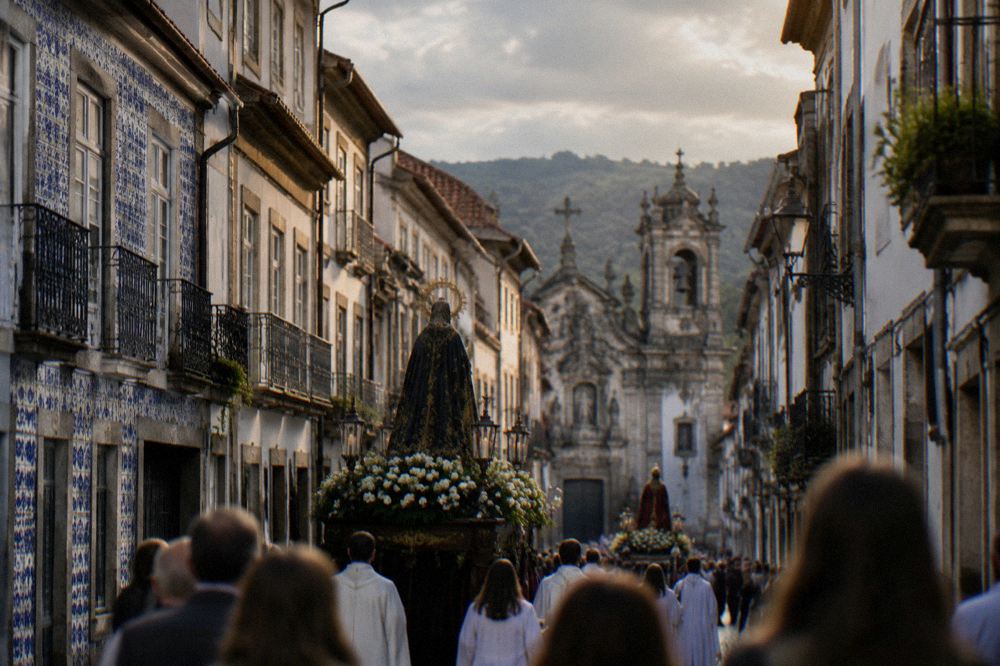
The Cortejo da Mordomia is the formal heart of the evening. It is a procession in the Braga tradition, the kind of structured, costumed parade this city does exceptionally well, as anyone who has seen the Semana Santa processions will recognise, and it draws large crowds along its route through the centre. The official ceremony follows, and together they give the night a civic and religious spine beneath the street party.
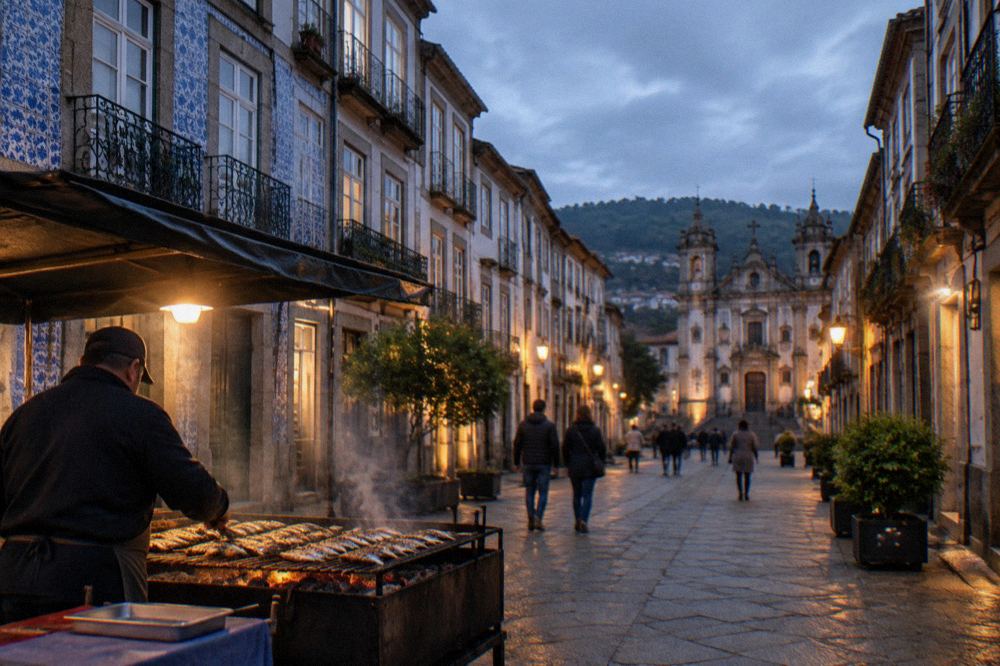
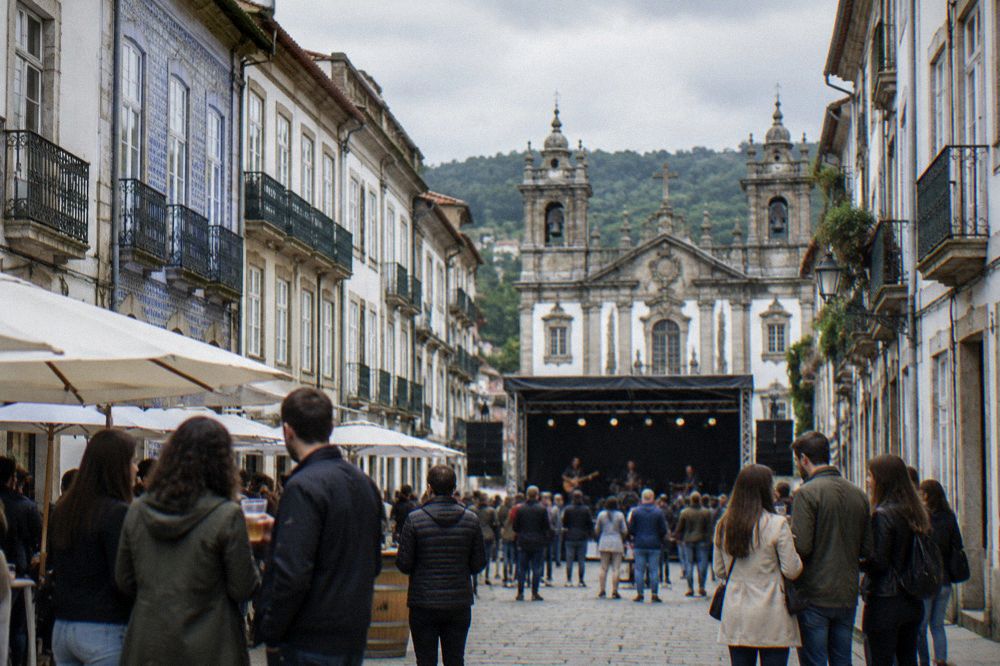
Around that spine, the streets do what Minho streets do in June. Grills come out and the air smells of sardines and smoke. Stages carry live music, and in 2026 the programme included named national acts alongside local performers. Families walk with children late into the night, because this is a festival the whole city attends, not a tourist event with a local audience.
Practicalities matter on this night more than any other:
| Thing to plan | What to expect on 23 June |
|---|---|
| Dinner | Sardine stalls and street food everywhere; restaurants in the centre fill early, book ahead or eat street food |
| Transport | Streets in the centre close to traffic; walk in, or use TUB to the edge of the festivities |
| Timing | The procession and ceremony are in the evening; crowds build from early evening and stay past midnight |
| Footwear | Granite streets, standing for hours, possible broken glass by late night |
| Children | Present everywhere; the night is family-heavy early, adult later |
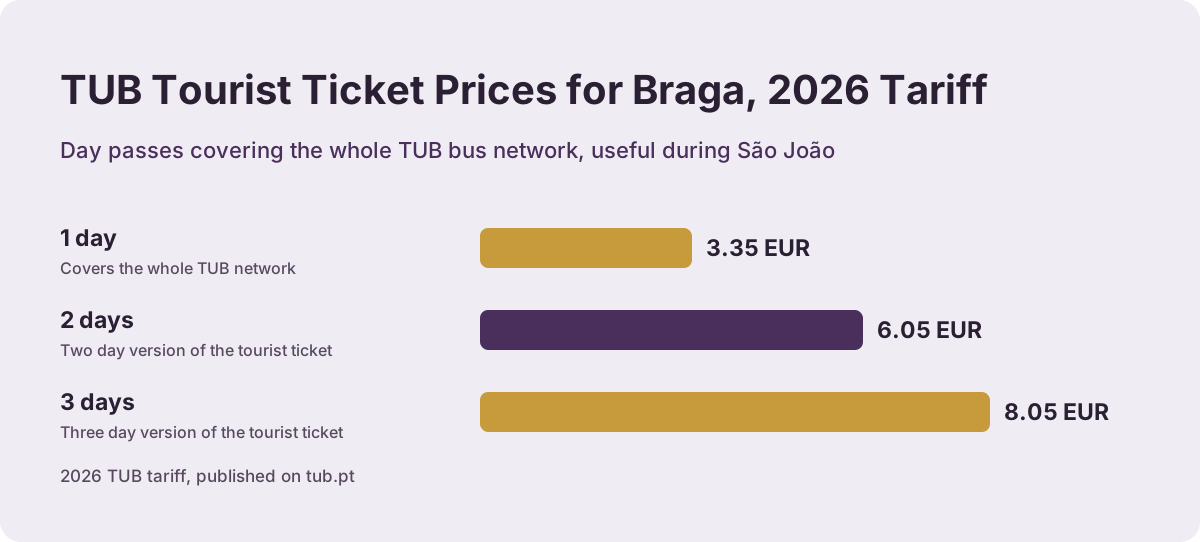
The TUB network is the practical way in and out. A tourist ticket covering the whole network cost 3.35 EUR for one day in 2026, with two and three day versions at 6.05 and 8.05 EUR, per the 2026 tariff, and details are on the getting around Braga page.
What Are The São João Traditions: Hammers, Basil And Sardines?
The three traditions every visitor meets are the plastic hammer, the basil pot and the grilled sardine. The hammer is a light plastic toy used to tap strangers on the head, friendly and inescapable; the basil pot, manjericos, is a small aromatic plant sold on the streets and given as a token of affection; and sardines, grilled over charcoal at street stalls, are the festival's food, eaten with bread and vinho verde throughout the night.
The plastic hammer is the one that needs explaining, because nothing prepares a first-time visitor for being bopped on the head by a smiling stranger. It is playful, entirely good-natured and universal on the night, children and adults alike carry them, and the correct response is to get one and reciprocate. Vendors sell them on every corner during the festival.
The basil pot, the manjerico, carries a small verse, a quadra, and the tradition of buying one for someone is a courtship and friendship custom from the Minho. The plants are sold at stalls throughout the festival, and by the end of the night the whole city smells faintly of basil and charcoal smoke.
The sardine is the food of the festival, and Braga's own food culture surrounds it. The city's restaurants and cafés, covered in detail on the what to eat in Braga and Braga restaurants pages, extend onto the street during São João, and the drink alongside is vinho verde, the region's light, slightly sparkling wine, which you can read about on the vinho verde page.
| Tradition | What it is | How to take part |
|---|---|---|
| Martelinho (plastic hammer) | A soft plastic hammer used to tap people on the head, a friendly greeting | Buy one from a street vendor and tap back |
| Manjerico (basil pot) | A small basil plant with a verse, given as a token of affection | Buy one for someone, read the quadra |
| Sardinhas assadas | Sardines grilled over charcoal, served with bread and salad | Eat at a street stall, standing, with vinho verde |
| Balões de São João | Paper hot-air balloons released into the night sky (where permitted) | Watch for launches, keep clear of landing areas |
| Foguetes (fireworks) | Firework displays at set points in the programme | Check the programme for times and locations |
Where Do The São João Festivities Happen In Braga?
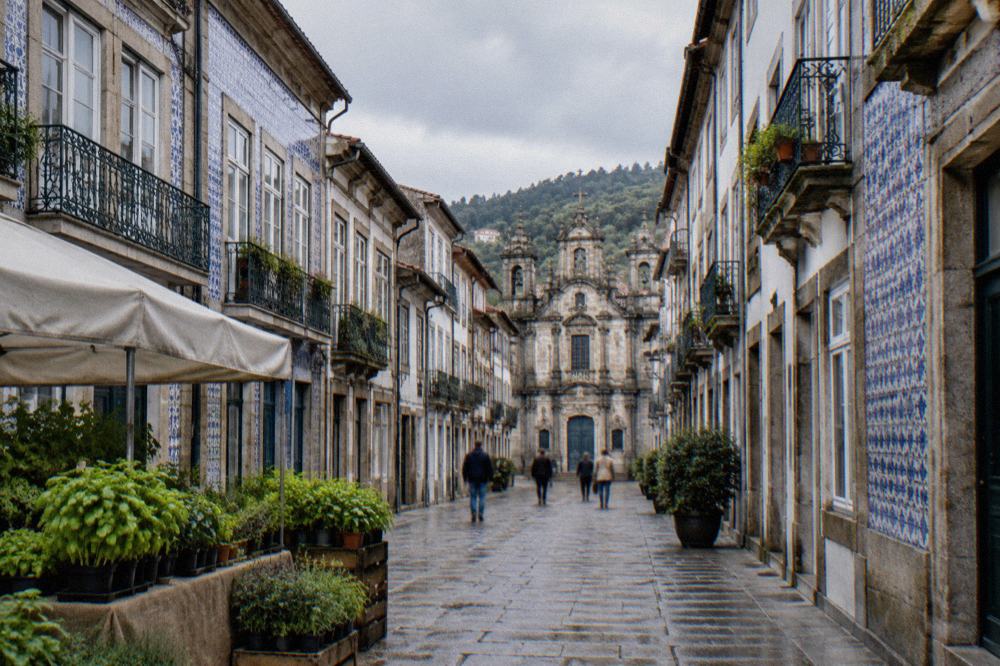
The festivities are concentrated in and around Braga's historic centre, with the main events on Avenida da Liberdade, Praça da República and the streets connecting them, including Rua do Souto, the city's pedestrian spine. Music stages, food stalls and the procession route all sit within a compact walkable area, so a visitor staying anywhere in the centre can reach everything on foot.
The geography of the festival is the geography of the city. Avenida da Liberdade, the garden-lined avenue where the tourist office sits at number 1, is one anchor. Praça da República, the main square known locally as the Arcada, is the other. Between them runs the pedestrian network of the old centre, including Rua do Souto, and around them sit the squares that host stages and stalls.
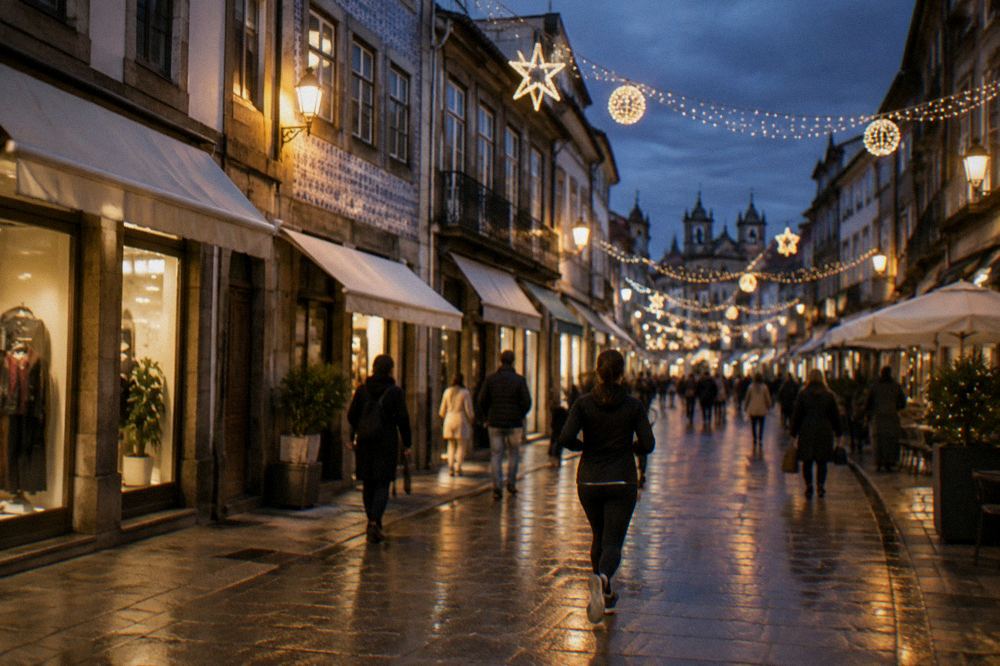
Because the centre is compact, the practical advice is to pick a spot and let the festival come to you. The squares fill and empty in waves as the procession and the stage programmes move, and the side streets hold the quieter sardine grills where the queues are shorter. The São Vítor area and other neighbourhoods around the centre host their own smaller celebrations during the build-up days, which is where the more local, less crowded version of the festival lives.
For a visitor who wants the layout explained rather than discovered by trial, a tuk tuk tour is a sensible festival-week option: the streets are closed to through traffic on the main nights, but the surrounding city, from the Bom Jesus hill road to the gardens, stays open, and a loop of the centre before the evening crowds build gives the geography in half an hour.
How Does São João Compare With Braga'S Other Big Festivals?
São João is Braga's biggest popular festival, but it is not the city's most famous one abroad: that is Semana Santa, the Holy Week processions, which in 2026 ran 29 March to 5 April and are on Portugal's National Inventory of Intangible Cultural Heritage. Semana Santa is solemn and religious; São João is popular and loud. Braga Romana, in late May, is a historical re-enactment, and Noite Branca, on the first weekend of September, is an arts and music night.
The contrast between the two big ones is the whole story of Braga in miniature. Semana Santa, covered on the Semana Santa in Braga page, is candlelit, silent in places, and centred on the cathedral and the processions that the Comissão da Quaresma organises. São João is its opposite: grilled fish, pop music, hammers and crowds in the open air. A visitor who has seen both has seen the two halves of the city's character.
| Festival | When it falls | 2026 edition | Character |
|---|---|---|---|
| Semana Santa | The week before Easter (movable) | 29 March to 5 April | Solemn religious processions, candlelit, cathedral-centred |
| Braga Romana | Late May | XXII edition, theme "Braga Romana antes de Augusto" | Roman re-enactment, markets, costumes |
| Festas de São João | 17 to 24 June, ending on the municipal holiday | 17 to 24 June | Popular street festival: processions, concerts, sardines, hammers |
| Noite Branca | First weekend of September | 19:00 on 4 September to 23:30 on 6 September | White-themed arts night, concerts, museums open late |
| Encontros da Imagem | Autumn | 18 September to 1 November | Photography festival across city venues |
If you are choosing between them for a single visit, June suits visitors who want atmosphere and street life, spring suits visitors who want the religious and architectural Braga. The best time to visit Braga page works through the trade-offs, including weather: IPMA's 1991 to 2020 normals for the Braga / Merelim station show June averaging a 26.1 C mean maximum with only 5.7 rain days of a millimetre or more, festival-friendly numbers, though July and August are drier still.
Is São João A Good Time To Visit Braga?
São João week is the best time to visit Braga if you want the city at its most alive, and the worst week for a quiet, museum-focused trip. Streets fill every night, restaurants are busy, hotels book out around the main weekend, and the 24 June holiday closes municipal museums, but the atmosphere is unmatched and the weather in late June is reliably warm and mostly dry. The trade-off is crowds, noise and the need to book ahead.
The honest case for the festival is that it shows a side of Braga that the rest of the year keeps private. This is not a festival staged for visitors; it is the week when the city celebrates itself, and the visitor is welcome but incidental. The food traditions, the processions and the music are all things the city does anyway, at volume.
The honest case against is equally simple. The centre is loud until very late for a week. Hotel rooms in and around the centre should be booked well ahead for the nights around 23 June, and the where to stay in Braga page helps with the neighbourhood choice, since a room above a stage street is a different experience from one a ten-minute walk out. The municipal holiday closes the museums, and the day after the main night, the city is tired.
For a place to stay during the festival, book a hotel here.
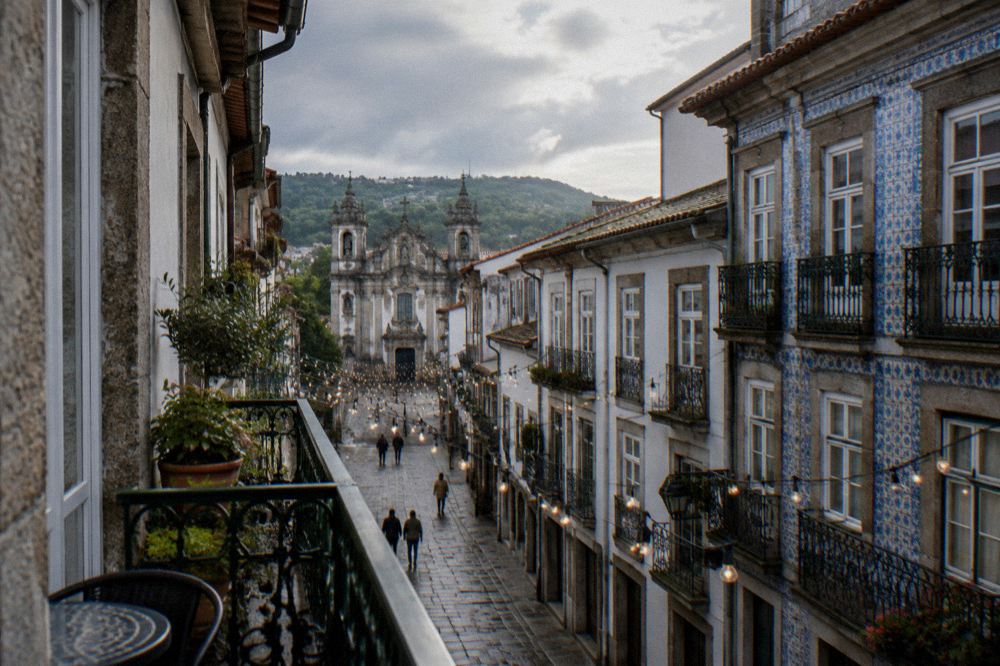
A few planning facts that hold every year:
| Planning item | What to do |
|---|---|
| Accommodation | Book early for the nights around 23 June; central rooms face street noise all week |
| Museums | Expect closures on 24 June, the municipal holiday; plan indoor sightseeing before or after |
| Weather | Late June is warm and mostly dry, per IPMA normals; light clothing, comfortable shoes |
| Budget | Street food and festival events are cheap; add Braga's tourist tax of 1.55 EUR per person per night, up to 4 nights |
| Timing | Arrive a day or two before the main night to see the city build up, and leave the morning of the 25th if you want sleep |
The tourist tax note matters more than its size suggests: Braga levies 1.55 EUR per person per night, up to a maximum of 4 nights, all year, charged by hotels and local accommodation, so a festival-week stay of five nights pays four.
What Should You Know Before Going To São João In Braga?
Before going, know four things: the organiser's page is the only reliable source for the coming edition's dates and programme, the main night of 23 June runs very late, the centre's streets close to traffic on festival nights so you walk or use TUB buses, and the traditions, hammers, basil and sardines, are participatory, so join in rather than observe. No 2027 dates have been announced for any Braga festival.
Getting there is the first practical question. Most visitors arrive through Porto, and the Porto to Braga and Porto Airport to Braga pages cover the train and coach options, with Getbus running a direct coach from the airport to Braga bus station from 9.00 EUR in about 45 minutes, per the operator's page. Anyone arriving for the main night should note that the last part of any journey into the centre will be on foot.
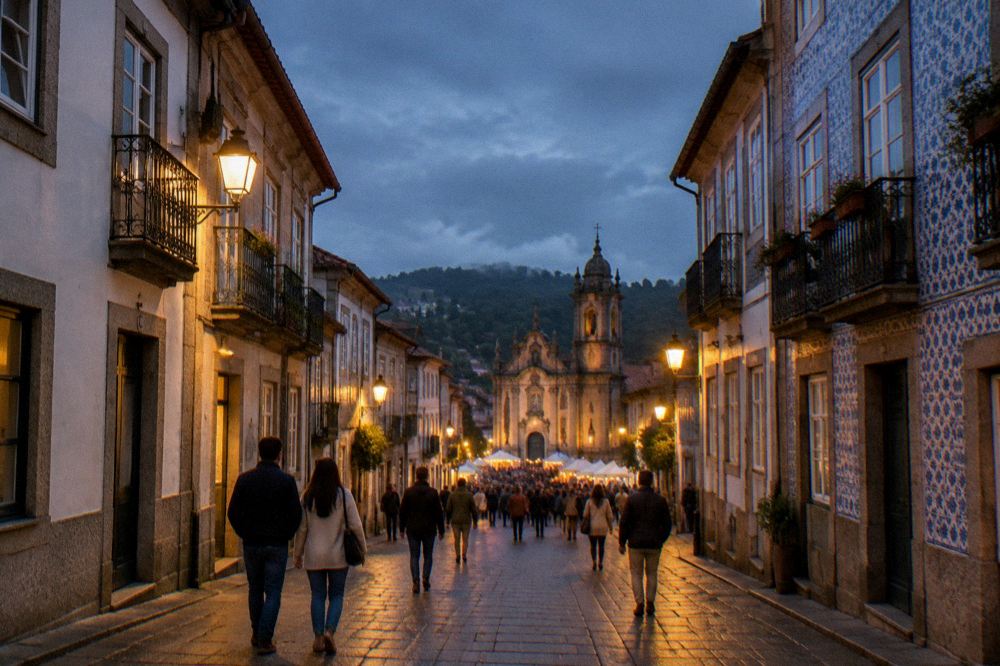
The second is pacing. The festival is a marathon, not a sprint, and locals treat it that way: out late, slow mornings, and the build-up days are lower-key than the main night. A visitor who tries to do the full programme every night will be wrecked by the 22nd. Pick the main night and one or two others, and spend the days on the city itself, from the Bom Jesus do Monte sanctuary to the Tibães monastery, which sits just outside the centre and is covered on the Tibães Monastery page.
The third is the value of context. A festival that mixes a religious procession with a pop concert and a plastic hammer makes more sense when you know the city underneath it, and a private guided walk is the efficient way to get that context in one session.
And the fourth is simple courtesy: the hammers are an invitation, the basil is a gift, and the sardine queue is the most democratic institution in Braga. The festival rewards participation, and the city, as this Braga Travel Guide exists to show, is at its best when it is full of people celebrating it.
If the group formats above do not fit your dates, the flexible walking tour of the historic centre is the one to fall back on: it runs on a personal, adaptable basis, which is exactly what a festival week demands, when opening hours shift and streets close without much notice.
Common Questions About São João In Braga
When is São João in Braga?
The Festas de São João de Braga end on 24 June, Braga's municipal holiday, with the peak on the night of 23 June. The 2026 edition ran 17 to 24 June. Check the organiser's page for the coming edition's dates.
What is the main night of São João in Braga?
The night of 23 June, when the Cortejo da Mordomia and the official ceremony take place in the historic centre, followed by music and street festivities late into the night before the 24 June municipal holiday.
Why do people hit each other with plastic hammers in Braga?
It is a playful São João tradition: a soft plastic hammer, the martelinho, is used to tap strangers on the head as a friendly greeting. It is good-natured and universal on the main night, and the correct response is to get one and tap back.
What food is eaten at São João in Braga?
Grilled sardines are the festival's food, served with bread at street stalls, usually alongside vinho verde. Braga's own dishes, from frigideiras to the pudim Abade de Priscos, are on restaurant menus through the festival week.
Are Braga's museums open during São João?
Most municipal museums close on 24 June, the municipal holiday, and several also list 24 June among their annual closing days. Plan indoor sightseeing before or after the festival, and check each venue's page.
Is São João in Braga family friendly?
Yes. The early part of the main night is full of families with children, and the festival as a whole is a city-wide celebration rather than an adults-only party. The streets stay lively very late, so families tend to head home by late evening.