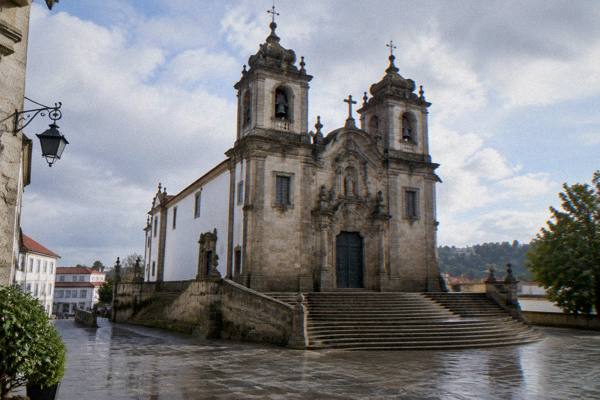
Congregados Basilica In Braga: What To See At Basílica Dos Congregados
The Basílica dos Congregados is the baroque church that greets most visitors arriving in Braga, Portugal, standing between the railway station and the historic centre. This guide covers what the building is, how a visit works, and how to pair it with the cathedral, the museums and the Bom Jesus hill.
Short answer
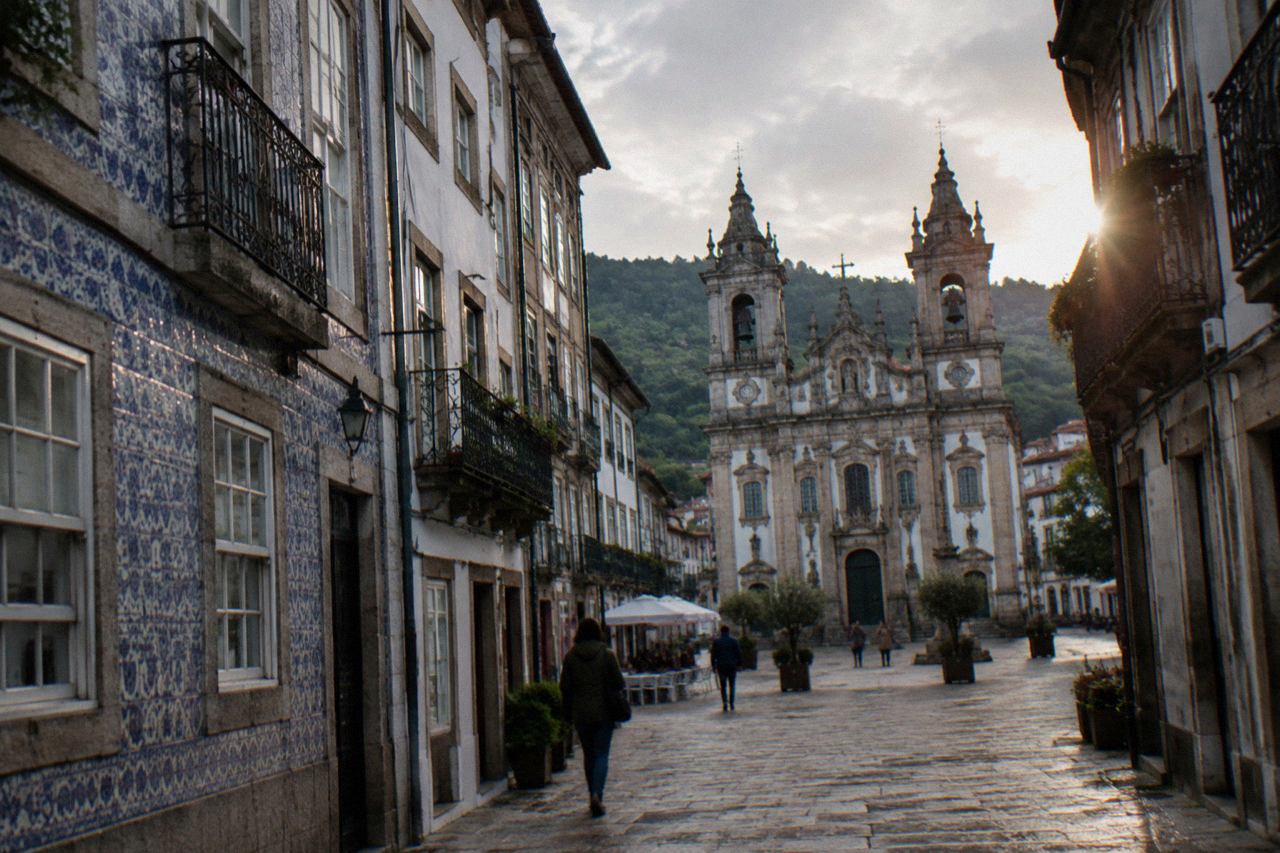
The Congregados Basilica is a baroque church in central Braga, Portugal, a short walk from the railway station and the top of the historic centre. The basilica itself needs only a brief stop, and it works best as the first or last landmark of a walking route that continues to the Sé de Braga, the Santa Bárbara Garden and the Arco da Porta Nova.
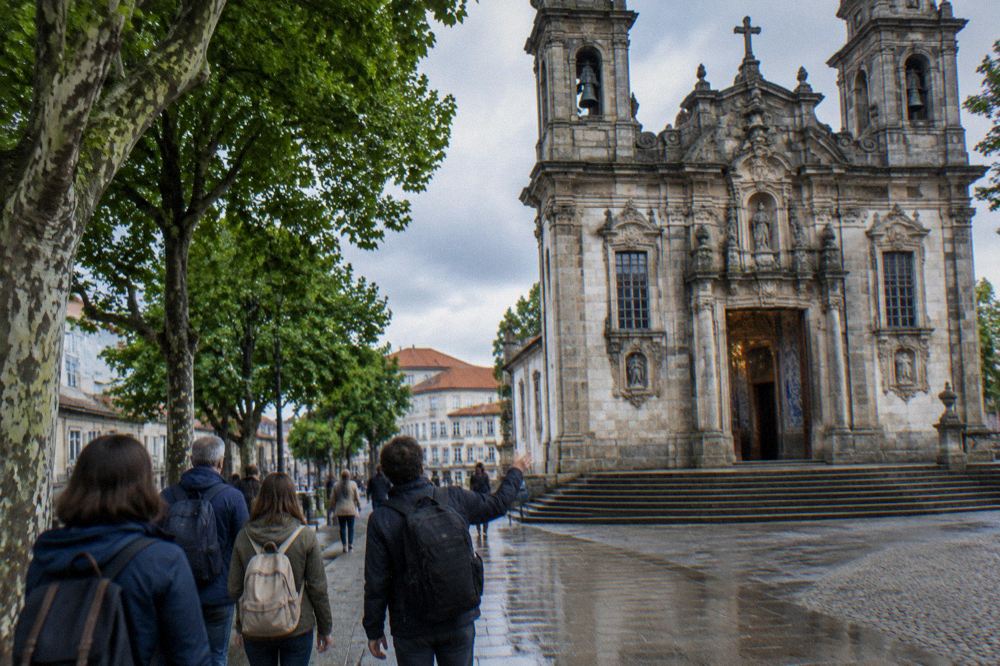
The Basílica dos Congregados is the baroque church that most visitors to Braga, the city in the Minho region of northern Portugal, see before they see anything else. It stands close to the railway station, its twin-towered façade turned towards the avenue that leads into the old town, and it marks the practical boundary between modern Braga and the historic centre around the Braga Travel Guide's favourite streets. The basilica is a working church rather than a ticketed monument, so it slots easily into a walking day: step inside, look at the gilded interior, and carry on towards the Sé de Braga and the Arco da Porta Nova.
This page covers what the building is, where it sits, how a short visit works, and how to combine it with the rest of the city. Because Braga's name also belongs to a Portuguese district that contains Guimarães, Barcelos and part of the Gerês park, a common surname and a football club, everything here refers to the city itself, in northern Portugal.
What Is The Congregados Basilica In Braga?
The Basílica dos Congregados is a baroque church in central Braga, Portugal, known for its symmetrical twin-towered façade and its gilded interior, and it is one of the first major landmarks a visitor meets between the railway station and the historic centre. It is a consecrated church, not a museum, so there is no ticket regime of the kind the cathedral runs, and a visit is normally a matter of stepping in quietly when the building is not in use for worship.
The church belongs to Braga's dense cluster of religious buildings. The city's ecclesiastical weight is the reason so many of its monuments are churches, convents and sanctuaries, and the Congregados Basilica sits at the low end of that gradient: from its doors the ground rises gently towards the cathedral, the keep and, far above them all, the sanctuary of Bom Jesus do Monte on its hill.
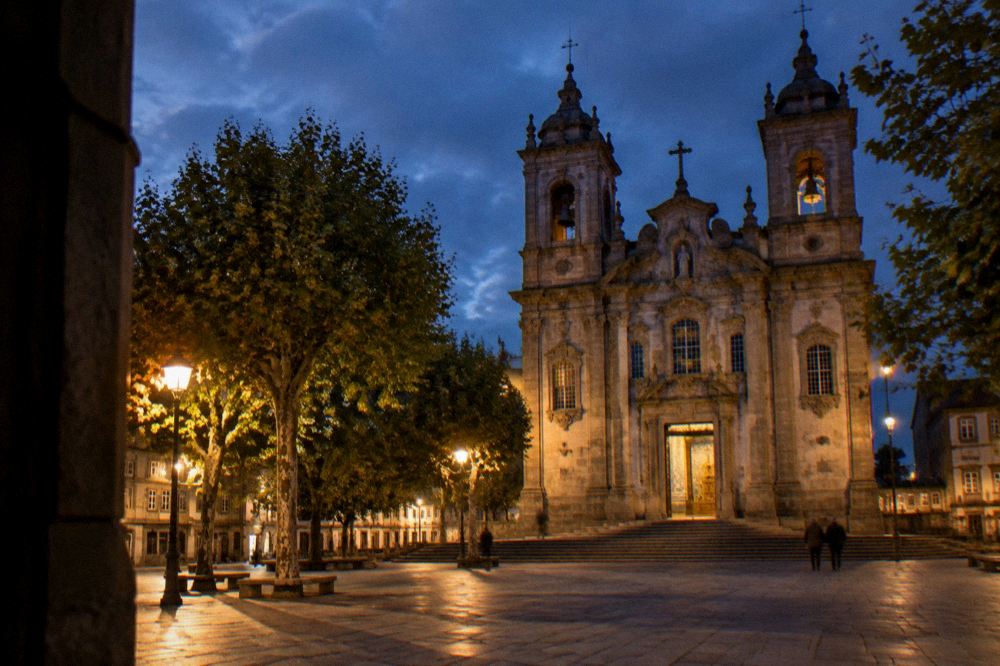
The façade is the part most people remember. Two bell towers flank a central body of carved granite, the local stone that gives Braga's older buildings their grey-gold tone, and the composition reads as a single baroque gesture when seen from the avenue below. Inside, the decoration follows the Portuguese taste of the period: gilded woodwork, azulejo tiling and painted detail concentrated around the altars, with a darker, cooler nave in between. Because the basilica is an active parish church, the interior is lit and furnished for worship rather than for display, which is part of its charm.
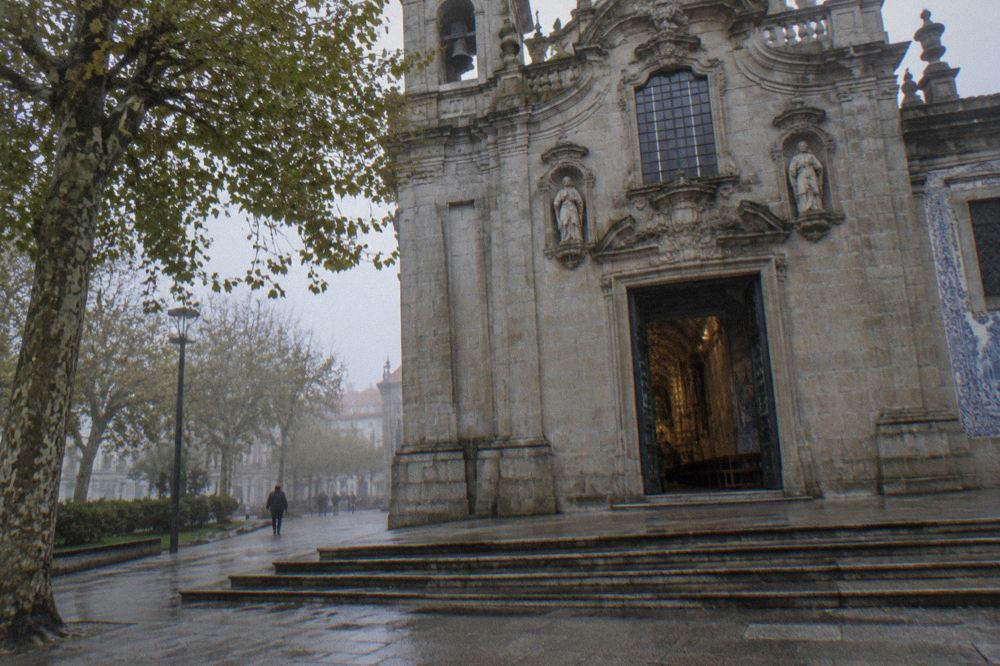
Treat the building as a landmark first and an interior second. The façade photographs well from the avenue in the soft light of early morning or late afternoon, and the interior rewards ten unhurried minutes more than a rushed half hour. If a service is running, the etiquette is the usual one for a working church: wait, or enter and sit quietly at the back.
Where Is The Basílica Dos Congregados And How Do You Reach It?
The Congregados Basilica stands in central Braga, Portugal, a few minutes on foot from Braga's railway station and at the lower edge of the historic centre, so almost every visitor arriving by train or long-distance bus walks straight past it on the way into the old town. From the basilica, the pedestrian climb to the Sé de Braga and the Praça da República takes only a short, gentle walk through the heart of the city.
The geography matters because Braga's sights stack neatly along one axis. The railway station sits at the bottom; the basilica and its square follow almost immediately; then the avenue runs up to the Arco da Porta Nova, the ceremonial gate into the historic centre; beyond the gate, Rua do Souto and the surrounding streets climb to the cathedral, the keep and the Santa Bárbara Garden. A visitor with a free afternoon can walk the whole chain without transport.
For arrivals, the practical point is that no local bus is needed for this part of the city. The basilica is a walking-distance landmark from both the station and the central hotels. Anyone using the city's TUB network for the longer jumps, to Bom Jesus do Monte or the stadium, buys tickets at the operator's published tariffs: the 2026 tariff lists a one-day tourist ticket for the whole network at 3.35 EUR, with two-day and three-day versions at 6.05 EUR and 8.05 EUR, and pre-bought single modules at 0.75 EUR for one zone against 1.55 EUR bought on board.
| Journey within Braga | Best option | What the 2026 TUB tariff lists |
|---|---|---|
| Railway station to historic centre | On foot via the basilica | No ticket needed |
| Historic centre to Bom Jesus do Monte | TUB Line 2 to the Portico | 0.75 EUR pre-bought, 1 zone |
| Whole network, one day | TUB tourist ticket | 3.35 EUR per person |
| Two consecutive days | TUB tourist ticket | 6.05 EUR per person |
| Three consecutive days | TUB tourist ticket | 8.05 EUR per person |
One standing caveat applies to the hill above the city: the Bom Jesus funicular has been out of service since 26 September 2026, with no end date published, and a replacement shuttle runs every day between the Portico and the sanctuary. Anyone planning that part of the day should check the operator's notice before setting out, as the Bom Jesus funicular page explains in detail.
How Long Does A Visit To The Congregados Basilica Take?
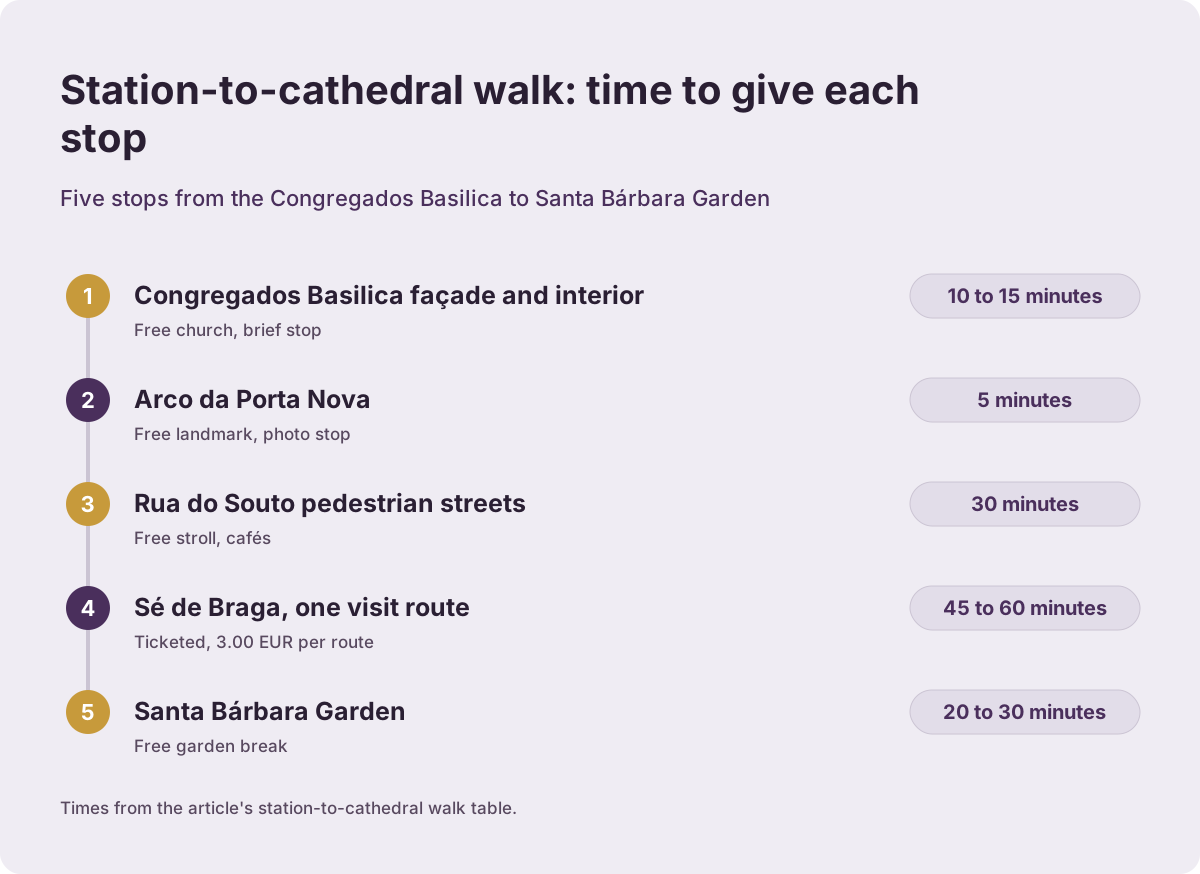
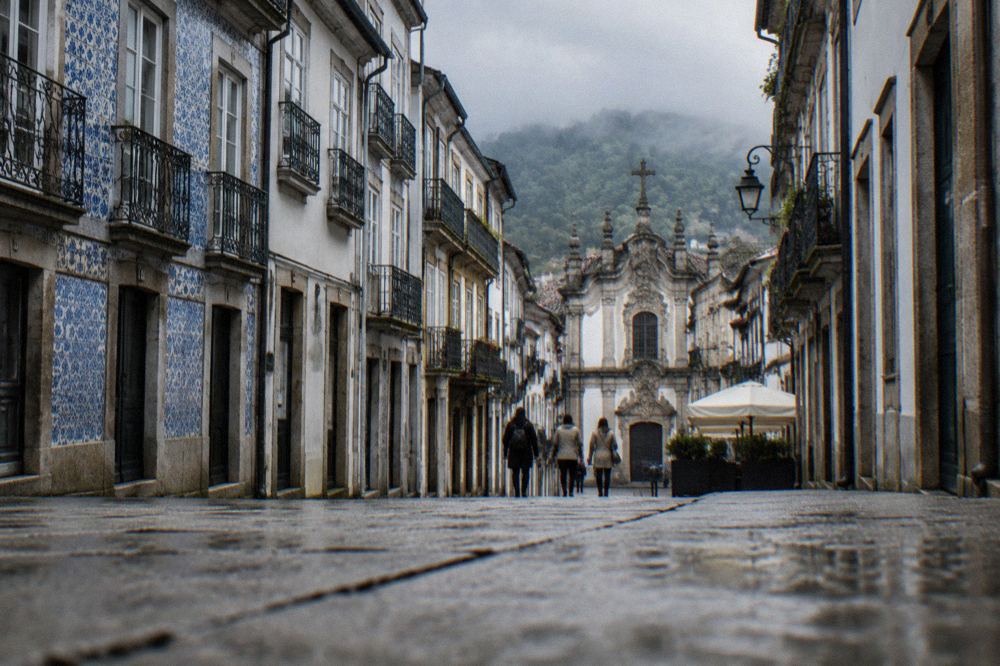
Allow ten to fifteen minutes inside the Congregados Basilica, plus whatever time you spend on the square and photographing the façade, which makes it a short stop rather than a destination in itself. The efficient way to visit is to fold it into the walk from the railway station into the historic centre, so the basilica costs no extra time at all and becomes the natural first chapter of a Braga walking day.
That brevity is not a criticism. Braga's ticketed monuments, the cathedral above all, deserve the longer appointments, and the basilica's role is to set the tone on the way in. A sensible first-morning sequence looks like this: arrive, walk from the station past the basilica, pass under the Arco da Porta Nova, climb through the shopping streets to the Sé de Braga for the ticketed visit, then come back down through the Praça da República for coffee.
| Stop on a station-to-cathedral walk | Type of stop | Rough time to give it |
|---|---|---|
| Congregados Basilica façade and interior | Free church, brief stop | 10 to 15 minutes |
| Arco da Porta Nova | Free landmark, photo stop | 5 minutes |
| Rua do Souto pedestrian streets | Free stroll, cafés | 30 minutes |
| Sé de Braga, one visit route | Ticketed, 3.00 EUR per route | 45 to 60 minutes |
| Santa Bárbara Garden | Free garden break | 20 to 30 minutes |
The cathedral's ticket structure rewards planning. The ticket office sells three separate visit routes, each 3.00 EUR on its own: the Treasury-Museum, the funerary chapels and high choir, and the cathedral itself. Combined tickets cost 7.00 EUR for all three routes and 6.00 EUR for any two, so a visitor who intends to see everything saves by buying the full combination. Visits run Monday to Saturday from 09:30 to 13:00 and 14:30 to 17:00, and on Sunday from 09:30 to 10:45 and 14:30 to 17:00, with last entry half an hour before closing; the building itself opens earlier for worship, and interior tourist visits are suspended during services.
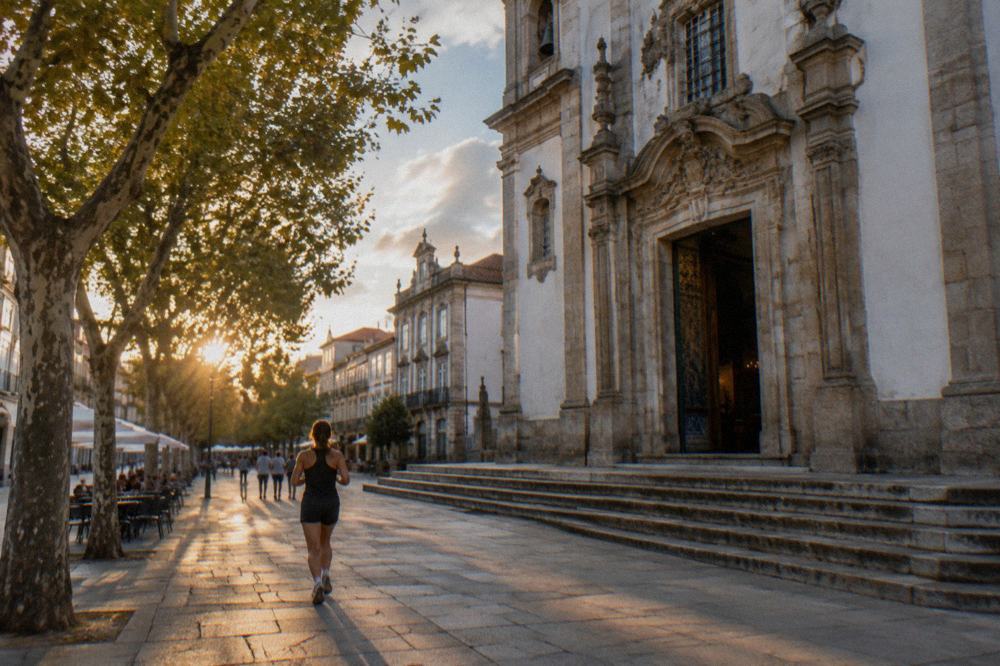
A guided walk compresses all of this into a single narrated route. The Explore the Portuguese Rome, the City of Braga tour covers the historic centre with a guide in about an hour and a half, and it is a good fit for a first day; Check availability on the operator's live listing for current departure times.
Prefer to hear the whole route told as one story? Book a free walking tour here. (Guided in Spanish)
What Can You See Inside And Around The Basilica?
Inside the Congregados Basilica the sights are the gilded altars, the tiled and painted decoration of the walls, and the cool, dim nave typical of Portuguese baroque churches; outside, the twin-towered façade and the square in front of it give the building its public face, and the immediate surroundings add cafés, the station quarter and the start of the pedestrian streets towards the historic centre.
The interior follows a logic visitors pick up quickly in Braga: Portuguese baroque churches concentrate their wealth at the altars. Gilded carved woodwork, the talha dourada that runs through churches from the Minho to the Algarve, frames the main altar and the side chapels, while blue-and-white azulejo panels and painted plaster fill the wall surfaces between. The nave is deliberately plainer, which throws the gilded work into relief when the lights are on.
Around the basilica, the neighbourhood is the real attraction. The church sits in the seam between the newer city and the older core, so the streets near it mix granite townhouses, café terraces and the commercial avenues with the pedestrianised climbs beyond. Within a few minutes' walk sit several of the city's smaller monuments: the Casa dos Crivos, a seventeenth-century building reopened in September 2026 as a municipal gallery after rehabilitation, and the Igreja do Pópulo, another of Braga's granite churches, both of which reward the small detour.
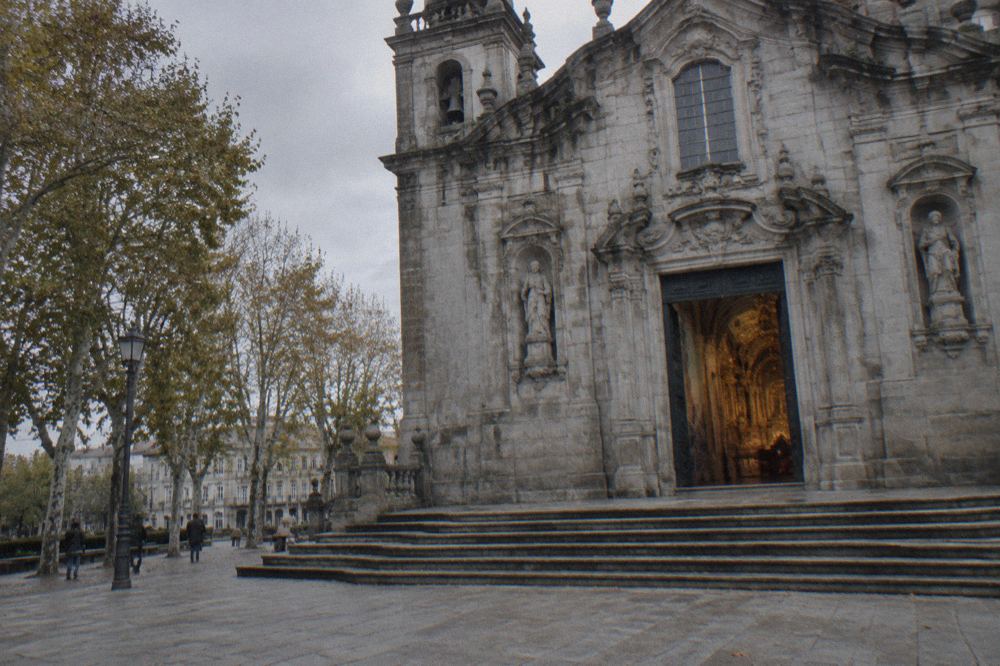
For photography, the façade is best either early or late. Midday sun flattens the carving, and the square in front fills with passing traffic through the working day. The interior, like most working churches, allows photographs without flash as a courtesy, but check for signs at the door and follow whatever the parish asks; when in doubt, ask at the entrance.
Which Other Braga Sights Should You Combine With The Congregados Basilica?
The best pairings for the Congregados Basilica are the Sé de Braga for the ticketed interior, the Santa Bárbara Garden for a free break, the Arco da Porta Nova and Praça da República for the street-level old town, and the Bom Jesus do Monte sanctuary for the half-day hill excursion, all reachable on foot or with a single TUB bus ride from the city centre.
Braga's attraction set divides cleanly into a walkable centre and a hill periphery. In the centre, the cathedral dominates, but the museums hold their own: the Museu dos Biscainhos, a decorative-arts museum in a palace with gardens, charges 7.50 EUR for a normal ticket with the garden included and opens Tuesday to Sunday; the Museu de Arqueologia D. Diogo de Sousa covers the Roman city and charges 5.00 EUR, half price for over-65s, ages 13 to 24 and families, with free entry for under-12s accompanied by an adult; the Museu Pio XII and its medieval tower cost 4.00 EUR for the whole museum, 2.00 EUR per section, and open Tuesday to Saturday.
| Braga sight | Ticket price (verified) | Opening pattern (verified) |
|---|---|---|
| Sé de Braga, one route | 3.00 EUR | Mon-Sat 09:30-13:00, 14:30-17:00; Sun 09:30-10:45, 14:30-17:00 |
| Sé de Braga, all three routes | 7.00 EUR | Same visit hours; Treasury closed Mondays |
| Museu dos Biscainhos | 7.50 EUR | Tue-Sun 10:00-12:30, 14:00-17:30 |
| Museu de Arqueologia D. Diogo de Sousa | 5.00 EUR | Tue-Sun 10:00-17:30 |
| Museu Pio XII and Medieval Tower | 4.00 EUR whole museum | Tue-Sat 09:30-12:30, 14:30-18:00 |
| Theatro Circo guided tour | 3.50 EUR | Scheduled dates only, 45 minutes |
All of these museums close on 1 January, Easter Sunday and 25 December, with the Biscainhos and the D. Diogo de Sousa also closing on 1 May and the archaeology museum on 24 June, Braga's municipal holiday. A Monday visitor should plan around the closures: the cathedral's Treasury-Museum and the museums shut, but the churches, the streets and the gardens stay open, which makes Monday a good day for the basilica-and-streets itinerary.
On the hill side, Bom Jesus do Monte is the unmissable one, a UNESCO World Heritage sanctuary since 2019 whose stairway of 566 steps, by the Confraria's count, climbs 116 metres in a processional sequence of chapels, fountains and terraces. The sanctuary grounds and basilica are free to enter, the Confraria's information page lists no admission charge for them, and TUB Line 2 runs to the Portico at the foot of the stairway. The Sameiro sanctuary and the Tibães monastery complete the hill circuit for a longer day.
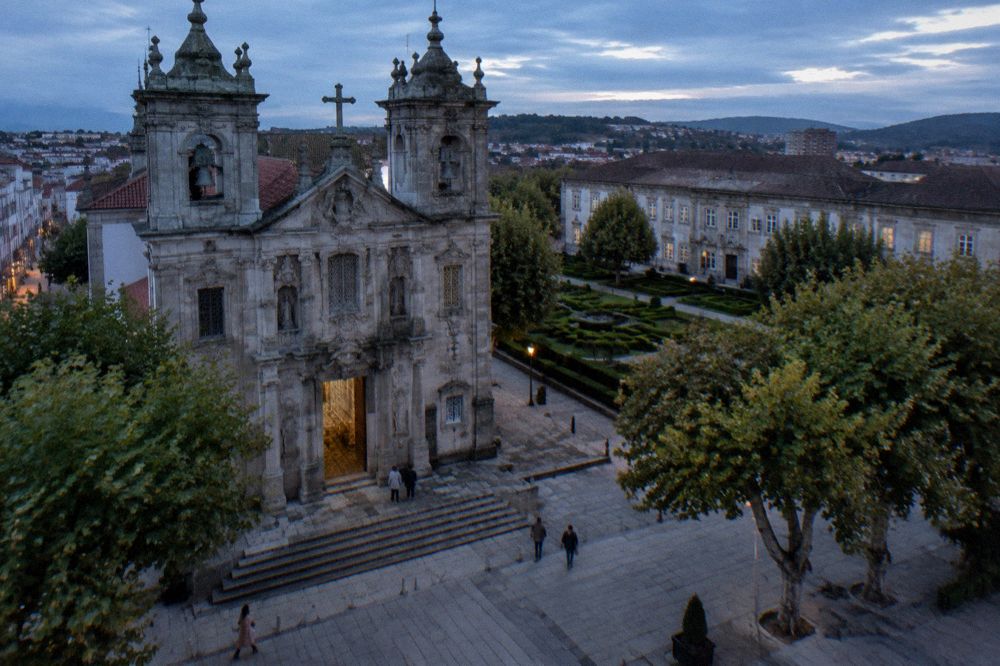
For a deeper cut into the city's religious architecture, the smaller monuments repay the curious: the Capela de São Frutuoso de Montélios, one of the rare pre-Romanesque survivals in the region, and the Capela dos Coimbras, a small Renaissance chapel attached to the former college of the same name. Neither has verified opening hours or fees published, so treat both as stop-and-see-from-outside unless a notice at the door says otherwise.
Is The Congregados Basilica Included On A Guided Tour Of Braga?
Yes, the historic-centre walking tours of Braga regularly pass the Congregados Basilica, because it sits on the standard route between the railway station and the old town, and both the small-group and private guided walks of the city cover the church district before climbing to the cathedral; a tuk tuk tour also passes it on the wider city loop, so a guided visit needs no special arrangement.
Guided options run across three price tiers. A flexible group walk such as the Braga: Personal & Flexible Walking Tour in Historic Center covers the centre from 11.33 USD per person, while the small-group walks that include the Bom Jesus sanctuary start at 66.85 USD per person. At the top end, a private tour with a professional guide, from 259.43 USD per person, lets a visitor set the pace and linger where the group walks hurry.
For visitors with limited mobility or a tight schedule, the Braga: Tuk Tuk City Tour runs from 22.66 USD per person and loops the city's landmarks in a fraction of the walking time, the basilica's square included.
| Guided format | Starting price (listing) | Rating on the listing | Duration |
|---|---|---|---|
| Flexible historic-centre walk | 11.33 USD | 4.7 from 62 reviews | 3 hours |
| Portuguese Rome small-group walk | 35.35 USD | 4.9 from 68 reviews | 1.5 hours |
| Small-group walk with Bom Jesus | 66.85 USD | 5 from 10 reviews | 3 hours |
| Tuk tuk city tour | 22.66 USD | 4.8 from 179 reviews | 30 minutes to 2 hours |
| Private tour, professional guide | 259.43 USD | 5 from 3 reviews | 2 hours |
The honest comparison: the basilica itself needs no guide, since it is a free church on an obvious walking line. A guide earns their fee on the rest of the route, the cathedral's layers, the Roman remains under the streets, the baroque logic of the Bom Jesus stairway, and on the practical judgement calls that turn four good hours into a coherent day.
When Is The Best Time Of Year To Visit Braga For The Basilica And The Old Town?
The best months to visit Braga for a church-and-old-town itinerary are May, June and September, when the IPMA's 1991 to 2020 normals for the Braga / Merelim station show mean daily maxima of 23 to 28.7 degrees and rainfall of 27.9 to 89.8 millimetres a month, against October's 197.8 millimetres, the wettest month of the Braga year; July and August are the driest but also the busiest and warmest at the top end.
The climate table rewards attention, because Braga's rainfall pattern surprises visitors who expect southern-Portuguese dryness. October averages 197.8 mm of rain and December 190.3 mm, while July averages just 27.9 mm. Rain days, with a millimetre or more, run 12 to 13 a month from October through January against four a month in July. For a walking itinerary built around church façades and pedestrian streets, that difference decides whether the day feels like a stroll or a dash between doorways.
| Month | Mean max (C) | Rain (mm) | Rain days of 1 mm or more |
|---|---|---|---|
| May | 23.0 | 89.8 | 8.9 |
| June | 26.1 | 40.6 | 5.7 |
| July | 28.2 | 27.9 | 4.0 |
| August | 28.7 | 34.6 | 3.8 |
| September | 26.9 | 67.6 | 6.2 |
| October | 22.2 | 197.8 | 12.0 |
The calendar adds its own weights. Holy Week, Semana Santa, is the city's great religious spectacle, running in 2026 from 29 March to 5 April with evening processions through the historic centre, and it transforms the streets around the basilica and the cathedral. The Festas de São João followed from 17 to 24 June 2026, peaking on the night of 23 June into the municipal holiday, and Noite Branca filled the first weekend of September, from the evening of Friday 4 September to late on Sunday 6 September. Dates for later editions are not yet announced, so check the municipal pages before planning around any of them.
A practical note on crowd logic: the basilica sits on the arrival axis, so it is quietest in the early morning, before the day-trippers from Porto reach the old town, and most photogenic in the late afternoon, when the low sun warms the granite. Midday belongs to the shaded interiors, the museums and a long lunch, which in Braga is no hardship.
How Does The Congregados Basilica Fit Into A One-Day Braga Itinerary?
A one-day Braga itinerary that starts at the Congregados Basilica runs: the basilica and its square first, then the Arco da Porta Nova and the pedestrian streets, the Sé de Braga with a combined 7.00 EUR ticket mid-morning, the Santa Bárbara Garden and lunch in the old town, a museum or the keep in the afternoon, and the TUB Line 2 bus to Bom Jesus do Monte for the stairway and the sunset view, returning before the last buses.
The sequence works because of the city's slope. Everything ticketed and pedestrian sits in the compact centre, and the hill sanctuaries sit at the end of a short bus ride, so the day climbs from the basilica to the cathedral and then jumps to the mountain. A visitor arriving from Porto by train steps out of the station, meets the basilica within minutes, and is under the arch into the old town before the morning crowds build.
Two cautions keep the day honest. First, the Bom Jesus funicular is out of service with no published return date, so the stairway or the replacement shuttle is the way up; the Confraria's notice, dated 26 September 2026, is the authoritative word, and the shuttle runs daily between the Portico and the sanctuary. Second, the cathedral suspends interior visits during services, so a Sunday visitor should aim for the 09:30 to 10:45 window or the afternoon slot instead.
For the second and third days, the options fan out: the Sameiro sanctuary and Tibães monastery on the hill circuit, the Roman layer at the Museu de Arqueologia D. Diogo de Sousa, and the day trips to Guimarães, the Gerês national park and the coast beyond them. The basilica, in all of these plans, remains what it is on the first morning: the granite handshake at the city gate, the building that tells you, before any ticket is bought, what kind of city Braga is.
Common Questions About The Congregados Basilica
Is the Congregados Basilica in Braga free to enter?
The basilica is a working parish church rather than a ticketed monument, so entry follows the normal practice of Portuguese churches: free for worship and quiet visiting, with donations welcome. No ticket regime of the kind the Sé de Braga operates applies here. Check for a notice at the door in case a service or a parish event closes the nave to sightseers at the time of your visit.
How far is the Congregados Basilica from Braga railway station?
The basilica stands at the lower edge of the historic centre, a few minutes on foot from Braga's railway station, and it sits directly on the walking route from the station to the Arco da Porta Nova and the old town. Almost every visitor arriving by train passes it without trying. No local bus is needed for this part of the city.
Can you visit the Congregados Basilica and the Sé de Braga on the same day?
Yes, easily. The two churches belong to the same walking axis, and the cathedral's ticket office sells three visit routes at 3.00 EUR each or a combined ticket at 7.00 EUR for all three, with visits Monday to Saturday from 09:30 to 13:00 and 14:30 to 17:00 and on Sunday from 09:30 to 10:45 and 14:30 to 17:00. Interior visits are suspended during services, so time the cathedral stop around a mass schedule.
What style is the Congregados Basilica?
The basilica is a baroque church, with a symmetrical twin-towered granite façade facing the avenue below, and an interior in the Portuguese baroque manner: gilded carved altars, tiled and painted wall surfaces and a restrained nave. It is one of several granite churches that give central Braga its character, and it reads best as the ceremonial gateway building between the station quarter and the historic centre.
Is the Congregados Basilica included on guided tours of Braga?
The standard historic-centre walking tours pass the basilica because it sits on the route between the station and the old town, and both small-group and private walks cover the church district before climbing to the cathedral. A tuk tuk city tour also passes it on the wider loop. The church itself needs no guide; the value of a tour is in the narrated rest of the route.
When is the best time of day to photograph the basilica?
Early morning and late afternoon, when low sun brings out the carving of the twin-towered façade; midday light flattens the stonework and the square in front carries the working-day traffic. September and May give the most reliable combination of soft light and manageable weather, while October, the wettest month in the IPMA's Braga / Merelim normals with 197.8 mm of rain on average, is the month to carry a coat for.