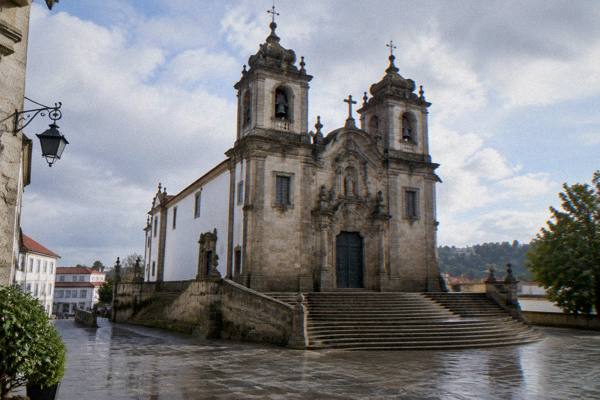
Populo Church
The Igreja do Pópulo sits at the edge of Braga's pedestrian core, a baroque former convent church a few minutes from Rua do Souto and the Sé de Braga. This guide covers what it is, how to get there, and what to pair it with.
Short answer
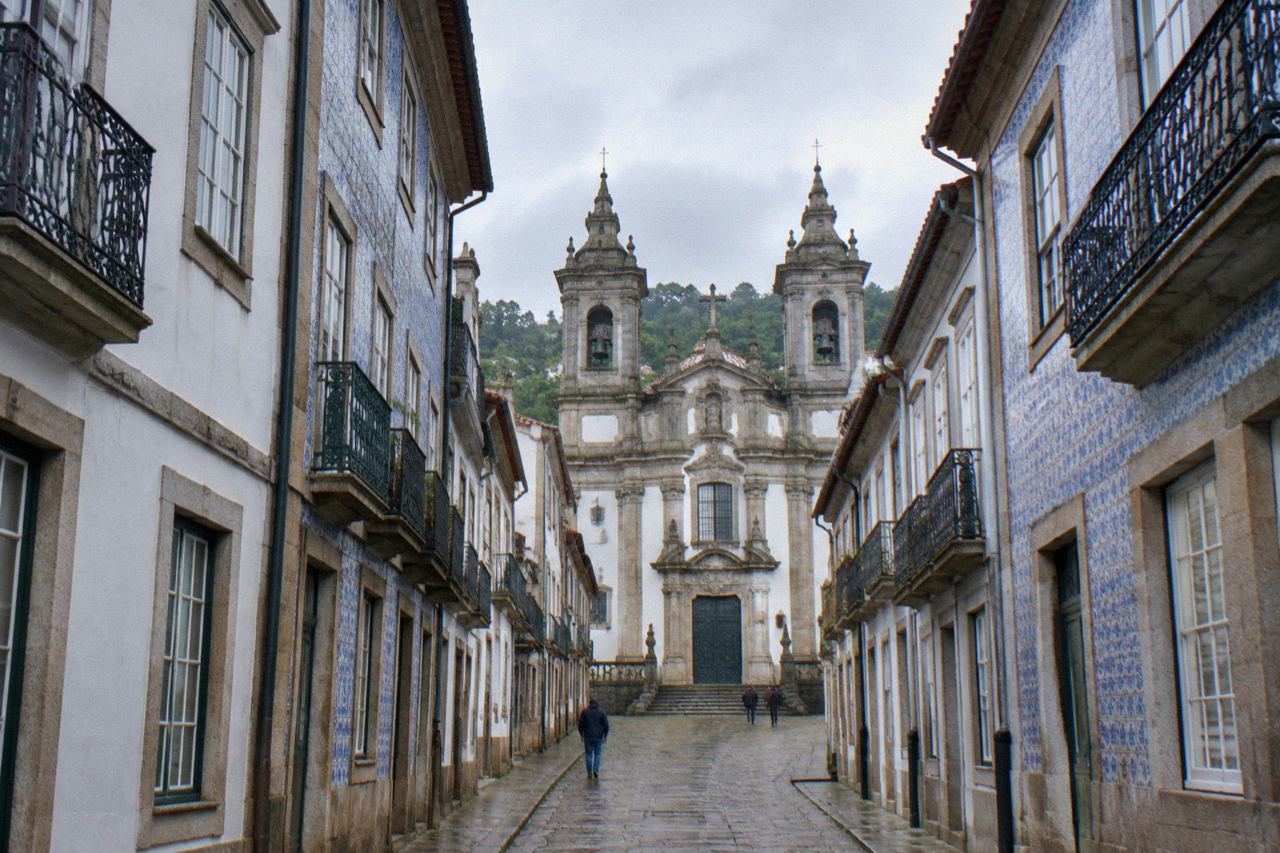
The Igreja do Pópulo is a baroque former convent church in Braga, Portugal, standing just off the Rua do Souto pedestrian axis in the historic centre. It is a short walk from the Sé de Braga and Praça da República, and it is easiest to visit on foot or by TUB bus, whose 2026 tourist day ticket costs 3.35 EUR.
Braga, in the Minho region of northern Portugal, packs its churches tightly, and the Igreja do Pópulo is one of the ones visitors walk past constantly without always naming. It stands at the edge of the pedestrian core, a baroque former convent church whose white facade and bell tower sit within a few minutes of Rua do Souto, the Arco da Porta Nova and the Sé de Braga.
What Is The Igreja Do Pópulo In Braga?
The Igreja do Pópulo is a baroque former convent church in Braga, Portugal, attached historically to a Dominican convent and standing today as one of the historic centre's most visible ecclesiastical buildings outside the cathedral itself. It sits just off the pedestrian spine that runs through Rua do Souto, which means most visitors encounter it while walking between the Arco da Porta Nova and Praça da República rather than making a dedicated trip.
Braga's identity is inseparable from its churches, and the Pópulo belongs to the layer of the city that grew around religious orders rather than around the cathedral chapter. The Dominican convents, the pilgrim sanctuaries on the hills and the parish churches in the centre together form a network that the municipality now markets as a single heritage experience. The Pópulo's position matters as much as its architecture: it stands where the shopping street meets the ecclesiastical quarter, so it marks a natural halfway point on almost any walking route through the centre.
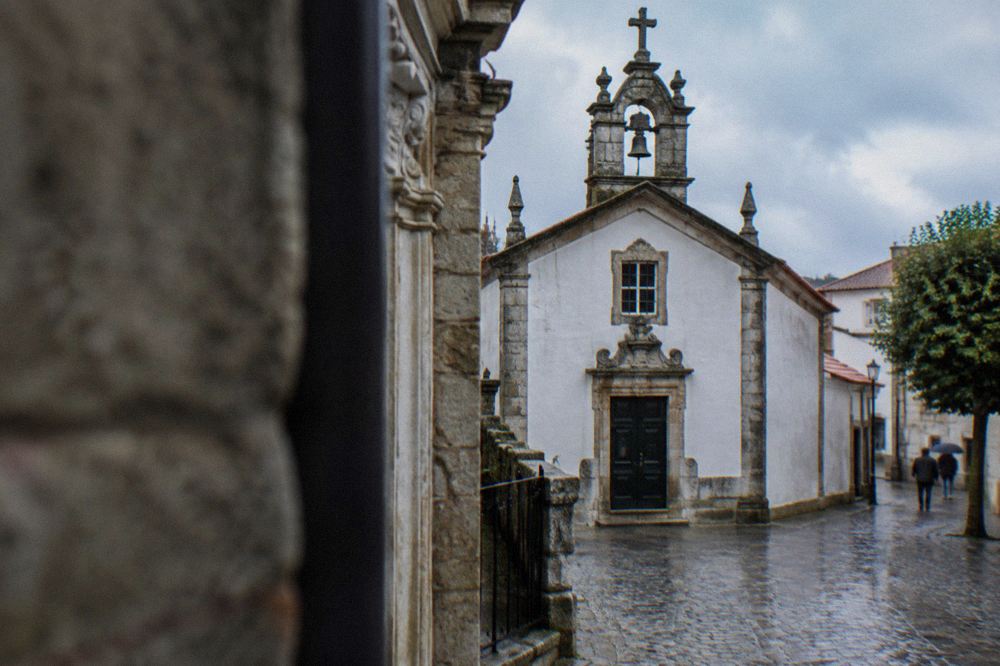
The building's baroque character is what strikes most visitors first. Braga is one of Portugal's great baroque cities, and the Pópulo shares the language of that era: a disciplined facade, a tall bell tower, and an interior organised to draw the eye toward the high altar. It is not the city's largest church, and it does not need to be. Its role in a visit is as part of an ensemble, the way a single panel works inside a larger altarpiece. The Braga Travel Guide pages on the Sé de Braga and on Santa Cruz church cover the other panels of that ensemble.
A practical note on planning: this site publishes verified hours and prices for the major ticketed monuments in Braga, but for smaller working churches, including the Pópulo, opening arrangements depend on parish life rather than a ticket office, and they can change around services and feast days. The honest advice is to treat the church as a stop on a walking route rather than a timed booking: if the doors are open, step inside, and if they are closed, the facade and tower repay a pause on their own. Checking the notice board or asking at the tourist office on Avenida da Liberdade settles it in a minute.
Where Is The Igreja Do Pópulo And How Do You Get There?
The Igreja do Pópulo stands in Braga's historic centre, Portugal, a few minutes on foot from Rua do Souto and the Arco da Porta Nova, which makes walking the only sensible way to reach it. Visitors arriving by train reach the centre in about 15 minutes on foot or by TUB bus, whose 2026 on-board single fare is 1.55 EUR for one zone, or 0.75 EUR pre-bought, with a whole-network tourist day ticket at 3.35 EUR.
The geography is simple. Braga's historic centre is compact and largely pedestrianised, and the Pópulo sits at the seam between the commercial axis and the church quarter. From the Sé de Braga the walk is a matter of a few minutes through streets that are themselves the attraction. From Praça da República, the city's main square, you follow the pedestrian flow toward Rua do Souto and the church falls into your path. Nobody needs a bus for this, but the bus matters for the rest of the day, so the fares are worth knowing.
| TUB ticket type (2026 tariff, in force since 21 February 2026) | 1 zone ("coroa") | 2 zones |
|---|---|---|
| On-board single | 1.55 EUR | 2.00 EUR |
| Pre-bought or digital single | 0.75 EUR | 1.50 EUR |
| Tourist day ticket, whole network | 3.35 EUR (1 day) | 6.05 EUR (2 days), 8.05 EUR (3 days) |
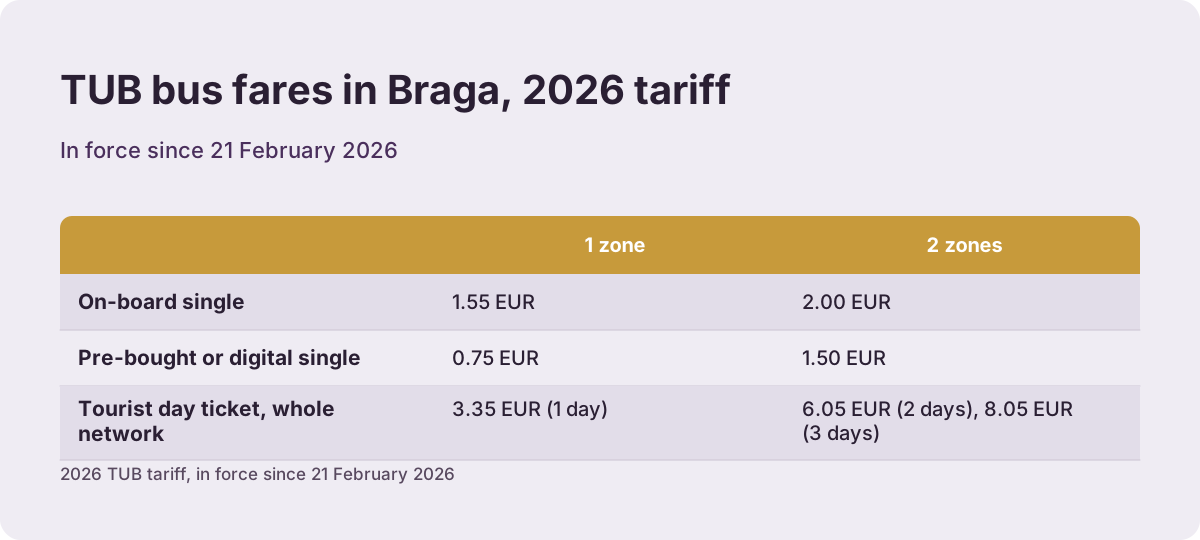
The tourist ticket is the one genuinely useful product for a visitor: it covers the whole TUB network, including Line 2 out to the foot of the Bom Jesus do Monte stairway, and it costs less than three on-board singles. The transfer window is one hour for a one-zone ticket and an hour and a half for two zones, which is plenty for a city of this scale.
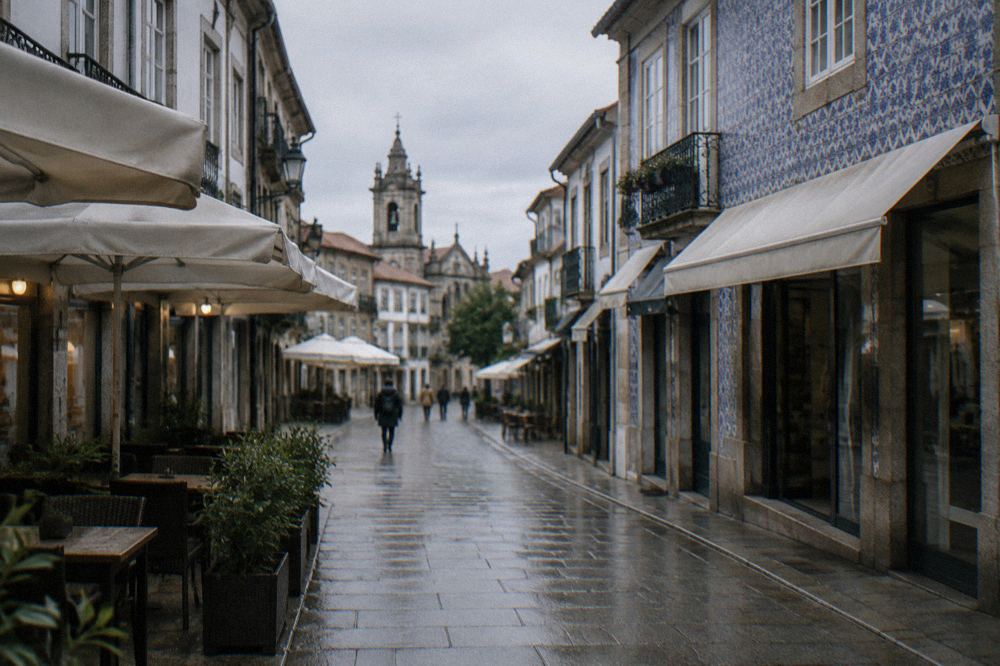
For visitors coming from Porto or the airport, the sequence is the same for every attraction in the centre. From either arrival point the historic centre is a flat, straightforward walk, and the Pópulo arrives on the natural route in. The site's how to get to Braga and getting around Braga pages carry the full detail.
Because the church sits on a walking route, it pairs naturally with a guided walk rather than with transport. The Braga Small-Group Walking Tour & Bom Jesus covers the historic centre and then continues to the sanctuary on the hill, which is exactly the arc most visitors want: baroque city in the morning, monumental stairway in the afternoon.
What Can You See At The Igreja Do Pópulo?
The Igreja do Pópulo rewards a short, unhurried visit: a baroque facade with a bell tower, a single-naved interior organised around the high altar, gilded and carved woodwork of the type Braga's churches are known for, and the atmosphere of a working parish church rather than a museum. There is no ticket desk and no queue; the experience is architectural, and most visitors spend between ten and twenty minutes inside when the doors are open.
The interior follows the pattern of Portuguese baroque church design: a restrained stone shell holding an interior that concentrates ornament where it draws devotion. The gilded carving, the azulejo and the painted ceilings of Braga's churches are the city's signature, and the Pópulo shows that vocabulary at parish scale. It is a useful contrast piece: after the monumental scale of the Sé or the sanctuary at Bom Jesus do Monte, a smaller church shows how the same artistic culture lived in everyday worship.
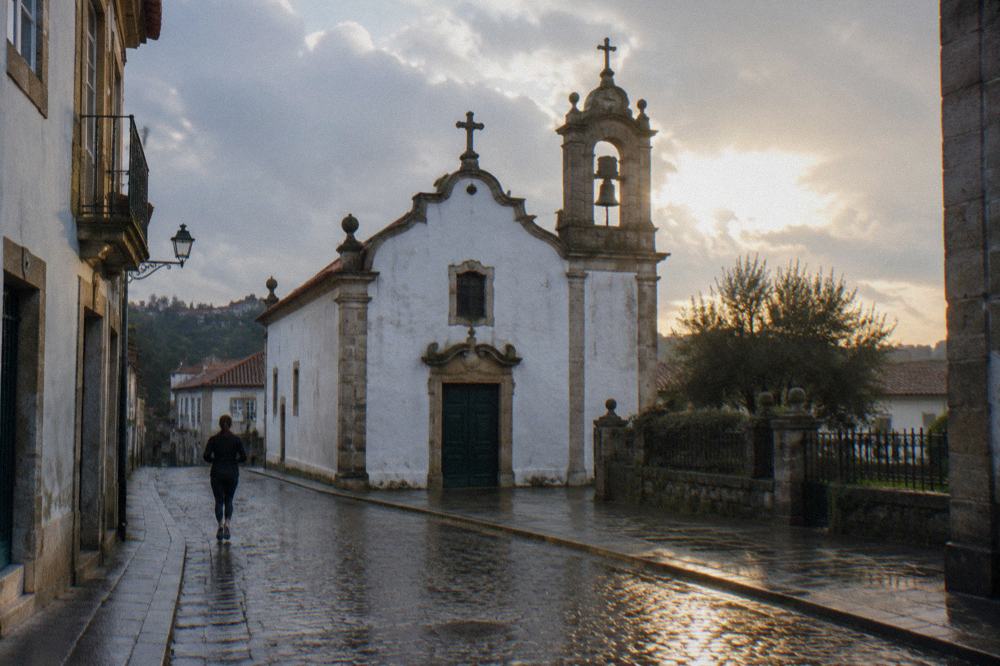
Photographically, the church rewards the early side of the morning, when the pedestrian streets around it are quiet and the light is still low across the facades. The surrounding streets, granite-paved and lined with shops and cafes, are as much the subject as the building. The site's viewpoints and photo spots guide covers where else in the city this kind of street-and-stone composition works best.
A word on expectations. The Pópulo is not a museum, and it does not behave like one. There is no published price list because there is no ticket, and there are no fixed visiting hours of the kind a monument keeps. Services take precedence, and a visitor should simply be prepared for the doors to be shut on any given afternoon. That is the normal condition of working churches in Portugal, not a problem with the building. The tourist office at Avenida da Liberdade 1 can tell you on the day whether anything special is scheduled.
How Does The Igreja Do Pópulo Compare To Braga'S Other Churches?
The Pópulo is one stop in a city of churches, and the contrast is the point: the Sé de Braga charges 3.00 EUR per visit route (7.00 EUR combined for all three), the basilica at Bom Jesus do Monte is free to enter, the Santuário do Sameiro precinct is open 24 hours free, and the Mosteiro de São Martinho de Tibães charges about 4 to 5 EUR. The Pópulo itself, as a working parish church, has no ticketed visit at all.
The comparison table below uses only figures this site has verified on the operators' own pages. Where a figure is not verified, the table says so rather than guessing.
| Church or sanctuary | Entry cost | Verified notes |
|---|---|---|
| Igreja do Pópulo | No ticketed visit | Working church; check locally on the day |
| Sé de Braga | 3.00 EUR per route, 7.00 EUR all three, 6.00 EUR any two | Tickets at the cloister reception; visits suspended during services |
| Bom Jesus do Monte basilica | Free | Summer 08:00 to 19:00, winter 08:00 to 18:00, every day |
| Santuário do Sameiro | Precinct free, open 24 hours | Zimborio dome viewpoint 2 EUR |
| Mosteiro de São Martinho de Tibães | About 4 to 5 EUR | Closed Mondays; church reopened after works in 2026 |
The Sé deserves its own note because it is the one church in the city where the ticket structure genuinely confuses people. The visit is split into three routes: the Treasury-Museum, the funerary chapels and high choir, and the cathedral itself. Each costs 3.00 EUR on its own, any two cost 6.00 EUR, and all three cost 7.00 EUR, so the full ticket is barely more than two singles. Visiting hours are Monday to Saturday 09:30 to 13:00 and 14:30 to 17:00, Sunday 09:30 to 10:45 and 14:30 to 17:00, with last entry 30 minutes before closing, and the building itself opens earlier for worship. The Treasury-Museum is closed Mondays. The site's Braga attraction tickets and passes page explains the honest bottom line: no city-wide pass is on sale in Braga, so you buy each ticket separately.
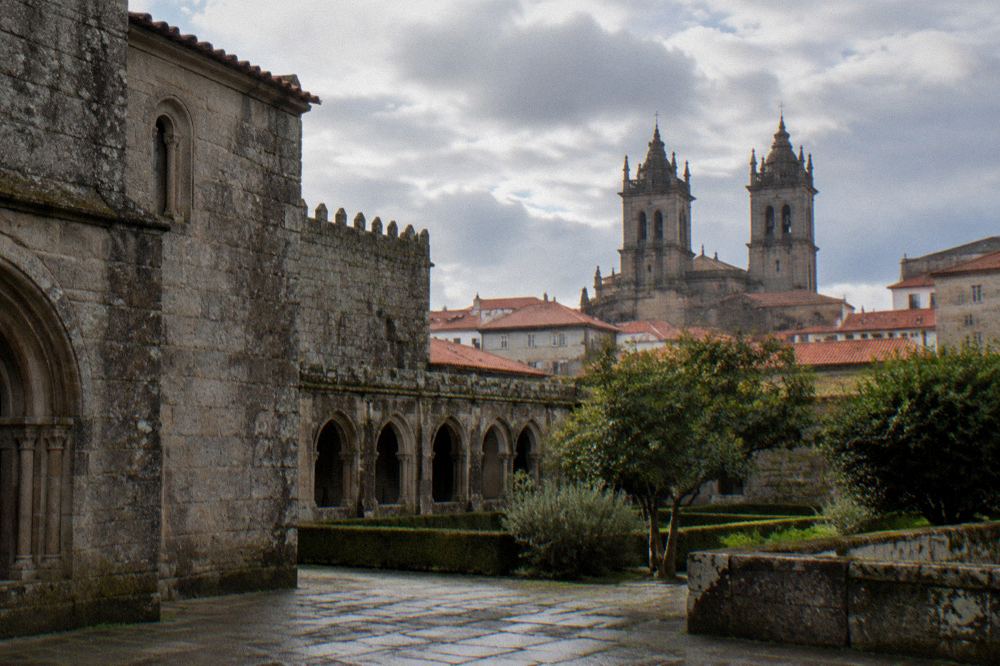
For visitors building a churches-of-Braga day, the order matters less than the pacing. The Pópulo, Santa Cruz and the Sé sit within a few minutes of one another in the centre; Bom Jesus and Sameiro sit on the hills above and need half a day between them. TUB Line 2 runs to the Portico at the foot of the Bom Jesus stairway, which the Confraria do Bom Jesus do Monte counts at 566 steps, 615 metres long with 116 metres of ascent. The funicular beside it has been out of service since 26 September 2026 with no end date published, and a replacement shuttle runs every day from 09:00 to 20:00, roughly every 30 minutes each way, so check the operator's notice before you count on a ride up.
What Is Near The Igreja Do Pópulo?
Everything in Braga's historic centre is near the Pópulo: Rua do Souto's pedestrian shopping axis runs almost past the door, Praça da República and the Arco da Porta Nova are minutes away on foot, the Jardim de Santa Bárbara and the Museu dos Biscainhos sit a short walk north, and the Sé de Braga closes the loop to the south. A visitor can see the church, the square, the garden and the cathedral in a single unhurried morning.
This density is the reason to stay in the centre rather than commute into it. The Rua do Souto page covers the pedestrian axis itself, and the Praça da República page covers the main square with its cafe terraces and fountain. The Arco da Porta Nova marks the old gateway into the city and is one of the most photographed structures in Braga. All three fall within the same ten-minute radius as the Pópulo.
| Nearby sight | Direction from the Pópulo | Verified detail |
|---|---|---|
| Rua do Souto | Immediately south | Pedestrian shopping axis |
| Praça da República | South, a few minutes | Main square, cafes and fountain |
| Arco da Porta Nova | West, a few minutes | Old city gateway |
| Jardim de Santa Bárbara | North, short walk | Formal garden |
| Museu dos Biscainhos | North, short walk | Tuesday to Sunday, 10:00 to 12:30 and 14:00 to 17:30, 7.50 EUR with garden |
| Sé de Braga | South, short walk | Visit hours Monday to Saturday 09:30 to 13:00 and 14:30 to 17:00 |
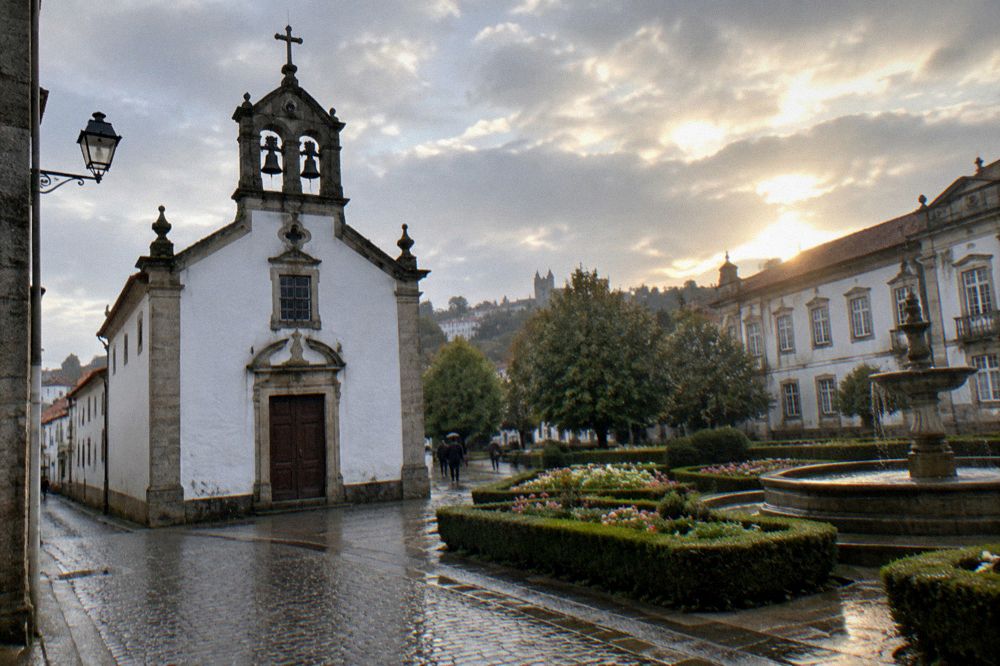
For a rainy-day alternative, the Braga on a rainy day guide routes the same neighbourhood through its museums and cafes, and the things to do in Braga hub collects the full list. The Museu dos Biscainhos, a baroque palace museum reopened after a major restoration, is the strongest indoor pairing with the Pópulo: the same artistic culture, seen through domestic architecture and gardens instead of liturgy. The Biscainhos Museum page carries the verified hours and the 7.50 EUR ticket price.
For visitors with more time, the hills above the city extend the same theme at monumental scale. The Sameiro sanctuary and the Santa Maria Madalena da Falperra church both sit within the municipality, and the Tibães monastery to the north was the mother house of the Portuguese Benedictine congregation. Each is a bus or short drive from the centre, and each shows a different register of the same baroque world the Pópulo belongs to.
When Is The Best Time To Visit The Igreja Do Pópulo?
The best time to visit the Pópulo, like the rest of Braga's historic centre, is late spring through early autumn: IPMA's 1991 to 2020 normals for the Braga / Merelim station show July and August with mean maximums of 28.2 and 28.7 C and only about four rain days a month, while October is the wettest month on average at 197.8 mm and December and January each see 12 to 13 days of rain. Morning light also suits the church's facade best.
The climate table below is the one this site publishes everywhere it bears on planning, because it is the only verified series for the city itself, measured at the Braga / Merelim station rather than somewhere in the district.
| Month | Mean max C | Mean C | Rain mm | Days with 1 mm or more |
|---|---|---|---|---|
| April | 19.6 | 13.7 | 127.9 | 12.0 |
| May | 23.0 | 16.7 | 89.8 | 8.9 |
| June | 26.1 | 19.7 | 40.6 | 5.7 |
| July | 28.2 | 21.2 | 27.9 | 4.0 |
| August | 28.7 | 21.4 | 34.6 | 3.8 |
| September | 26.9 | 19.7 | 67.6 | 6.2 |
| October | 22.2 | 16.1 | 197.8 | 12.0 |
September is the sleeper month: the mean maximum of 26.9 C is actually higher than June's 26.1 C, but the crowds thin and the first weekend of the month brings Noite Branca, the municipality's all-night culture festival, which ran from the evening of Friday 4 September to the night of Sunday 6 September in 2026. The best time to visit Braga and Braga weather pages unpack the full year.
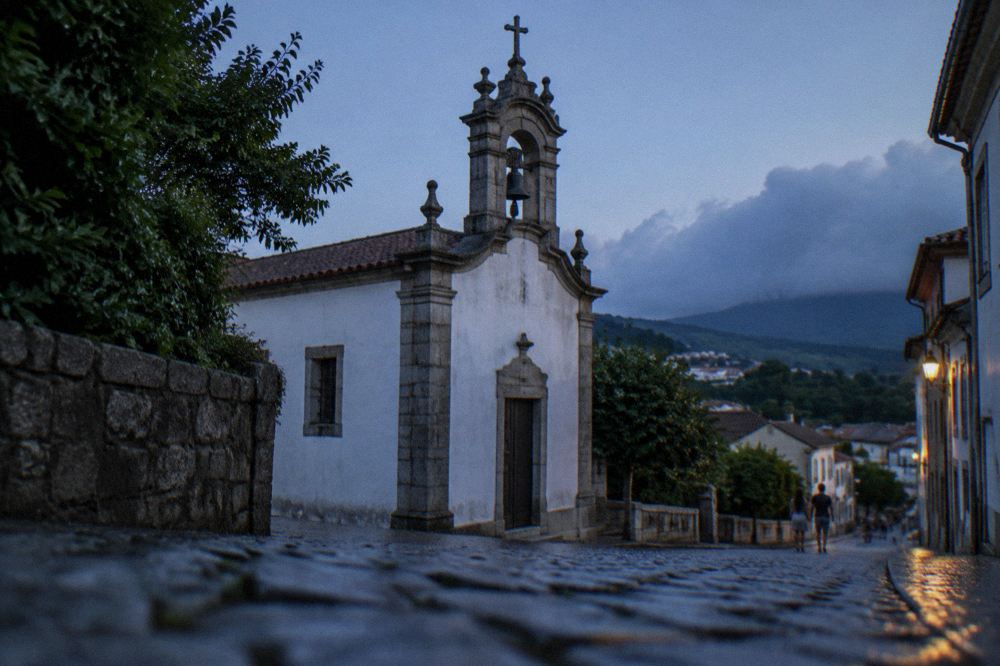
The church calendar matters as much as the weather calendar. Semana Santa, Braga's Holy Week, ran 29 March to 5 April in 2026 and is the city's most intense religious period, with processions through the historic centre in the evenings; the Festas de São João ran 17 to 24 June 2026, peaking on the night of 23 June before the 24 June municipal holiday. Both transform the streets around the Pópulo, in ways a visitor may love or want to avoid. The Semana Santa and São João guides carry the detail, and the Braga events page collects the year.
Can You See The Igreja Do Pópulo On A Guided Tour?
Yes: the Pópulo sits on the standard historic-centre walking routes that Braga's guides follow, so it appears on city walking tours, on private guided walks and on tuk tuk circuits, usually as a facade stop between Rua do Souto and the cathedral rather than as a timed interior visit. A guided walk is the most efficient way to see it in context, since the guide supplies the convent's history that a plaque does not.
The value of a guide in Braga is context. The city's ecclesiastical architecture is dense enough that a visitor can walk past four centuries of religious history in ten minutes without noticing, and a good guide slows that down. The Braga Small-Group Walking Tour & Bom Jesus is the natural fit: small group, three hours, historic centre in the first half and the sanctuary on the hill in the second. Check availability for your dates.
| Tour option | Shape | Best for |
|---|---|---|
| Small-group walking tour with Bom Jesus | 3 hours, centre plus sanctuary | First-time visitors wanting both halves of the city |
| Private walking tour with a professional guide | 2 hours, centre | Visitors who want depth and their own pace |
| Tuk tuk city tour | 30 minutes to 2 hours | Visitors with limited mobility or limited time |
For visitors who prefer to pay what they want, GuruWalk lists several free walking tours of Braga, including an essential free tour of the historic centre led by a local guru; these cover the same streets the Pópulo stands on, tipping is at your discretion, and booking is through GuruWalk's own page. The site's Braga walking tours guide compares the paid and free options honestly.
Curious about the pay-what-you-want walking tours? Book a free walking tour here. (Guided in Spanish)
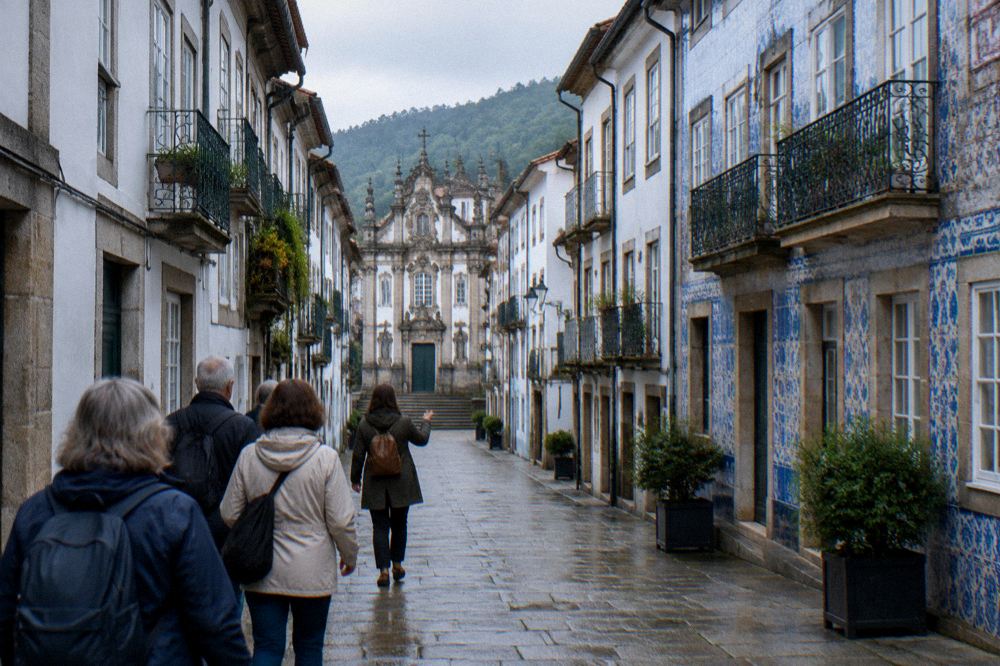
The tuk tuk option deserves a mention for one specific reason: Braga's centre is compact but its hills are not, and a tuk tuk bridges the two. The circuit around the centre passes the Pópulo, the Arco da Porta Nova and the cathedral in a single loop, which suits anyone travelling with older relatives or small children. The Braga with kids guide has more on that angle.
Common Questions About The Igreja Do Pópulo In Braga
Is the Igreja do Pópulo free to visit?
The Pópulo is a working parish church rather than a ticketed monument, so there is no admission charge or published price list. As with any working church, access depends on services and parish schedules, which change; check the notice board or ask at the tourist office on Avenida da Liberdade 1 before planning an interior visit.
How far is the Igreja do Pópulo from the Sé de Braga?
The two churches sit in the same corner of Braga's historic centre, a few minutes' walk apart through streets that are largely pedestrianised. The walk passes through the ecclesiastical quarter between Rua do Souto and the cathedral, and it is flat and straightforward.
Can you visit the Igreja do Pópulo and Bom Jesus do Monte on the same day?
Yes, easily. The Pópulo sits in the centre and Bom Jesus do Monte sits on the hill above the city, reached by TUB Line 2 to the Portico or by car to the paid car park at the top. Most visitors do the centre in the morning and the sanctuary in the afternoon, which is exactly the shape of the small-group walking tour that combines both.
Is the Igreja do Pópulo accessible for visitors with limited mobility?
The streets around the Pópulo are flat and pedestrianised, so reaching the church presents no difficulty. Interior access depends on the church's own arrangements, which this site has not verified; the historic centre's paving is granite and generally even, and a tuk tuk tour is the usual workaround for longer routes.
What else should you see near the Igreja do Pópulo?
Rua do Souto, Praça da República, the Arco da Porta Nova and the Sé de Braga all fall within a few minutes of the church, and the Jardim de Santa Bárbara and the Museu dos Biscainhos sit a short walk to the north. The centre is compact enough that all of these fit into a single morning at an unhurried pace.
The Igreja do Pópulo is not the reason anyone comes to Braga, but it is one of the reasons Braga works: a baroque parish church standing quietly on the route between the city's better-known monuments, open when parish life allows it and worth ten unhurried minutes whenever it is. Pair it with the Sé, walk it off Rua do Souto, and let the rest of the city's churches fill in around it.