Coimbras Chapel In Braga: The Complete Visitor Guide
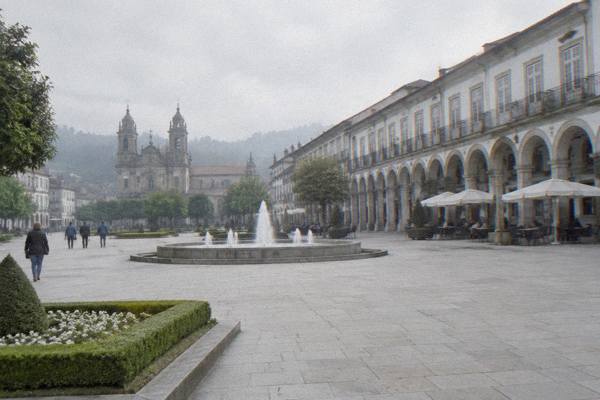
Capela dos Coimbras is a small Manueline chapel tucked into Braga's historic centre, a five-minute sight that rewards anyone already walking between the cathedral, Praça da República and Rua do Souto.
Short answer
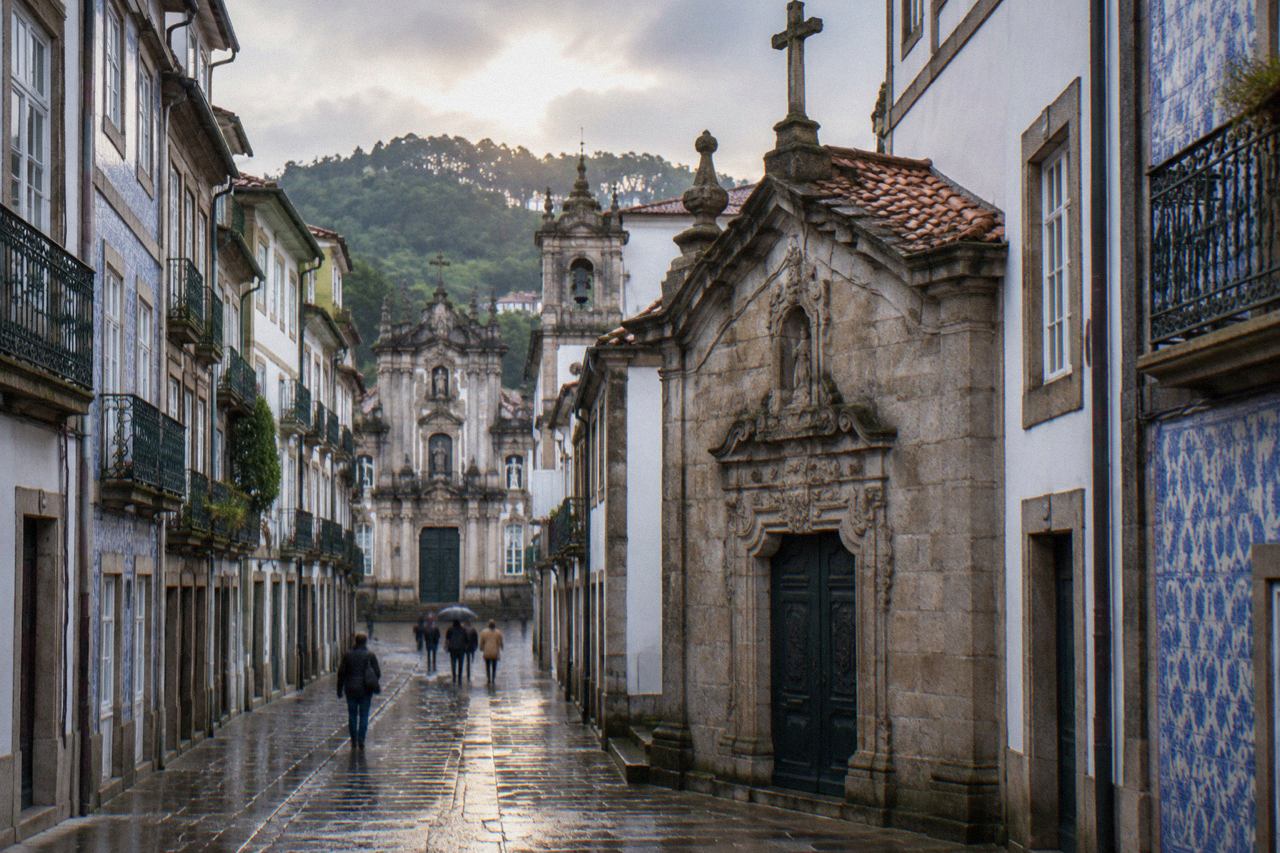
Capela dos Coimbras is a small Manueline-style chapel in the centre of Braga, Portugal, a short walk from the cathedral and Praça da República. There is no verified ticket price or published opening schedule to quote, so treat it as a stop you check on the day, and pair it with the bigger sights around it.
Braga, the cathedral city of Portugal's Minho region, packs most of its monumental sights into a compact historic centre that can be crossed on foot in half an hour, and Capela dos Coimbras sits right in the middle of that walk. The chapel is a small, richly carved Manueline building, the kind of sight that does not announce itself: you turn off a shopping street, look up at a carved portal, and you are standing in front of one of the city's most distinctive pieces of early architecture. This guide explains what the chapel is, where it stands, how to reach it by bus or on foot, and how to fold it into a day that also takes in the Sé de Braga, the Praça da República and the gardens and museums around them.
What Is Capela Dos Coimbras In Braga?
Capela dos Coimbras is a small Manueline chapel in the historic centre of Braga, Portugal, known for its carved stone portal and its intimate single-room interior. It is one of the clearest examples of Manueline religious architecture surviving in the city, and it is best understood as a five-minute stop on the wider circuit of Braga's churches, rather than a destination in its own right.
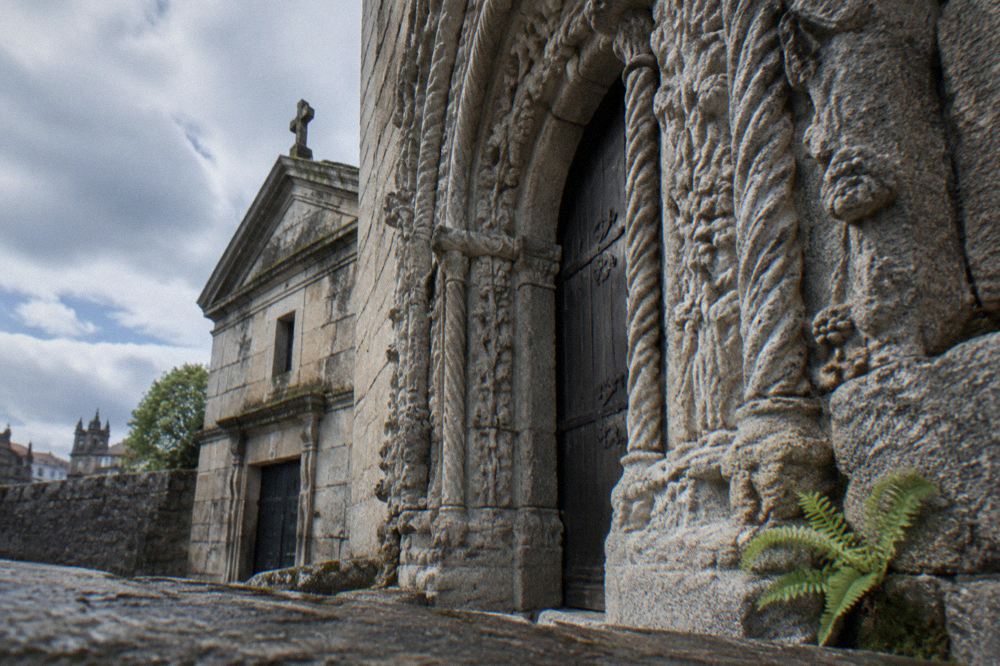
Manueline is the Portuguese late-Gothic style recognisable by its decoration drawn from the sea and from nature: twisted rope mouldings, armillary spheres, botanical carving and portals that frame a doorway like a piece of jewellery. Braga, a city better known for its Baroque, keeps only a handful of buildings in this mode, and the chapel is the one most visitors actually pass on a normal walking route.
The chapel's scale is part of its appeal. Where the Sé de Braga overwhelms with nave, choir and treasury, Capela dos Coimbras works on the opposite principle: one space, one strong portal, a handful of carved details worth a slow look. Visitors who enjoy architectural carving tend to spend longer here than the building's footprint suggests, because the portal rewards close inspection from several angles and in changing light.
Because no verified admission price or published visiting schedule for the chapel is available to quote, the honest planning advice is simple: treat it as a sight you check on the day. The chapel sits in a part of the city where the next attraction is never more than a few minutes away, so a closed door costs you almost nothing, and an open one is a genuine bonus.
Where Is Capela Dos Coimbras And How Do You Fit It Into A Walk Of Braga?
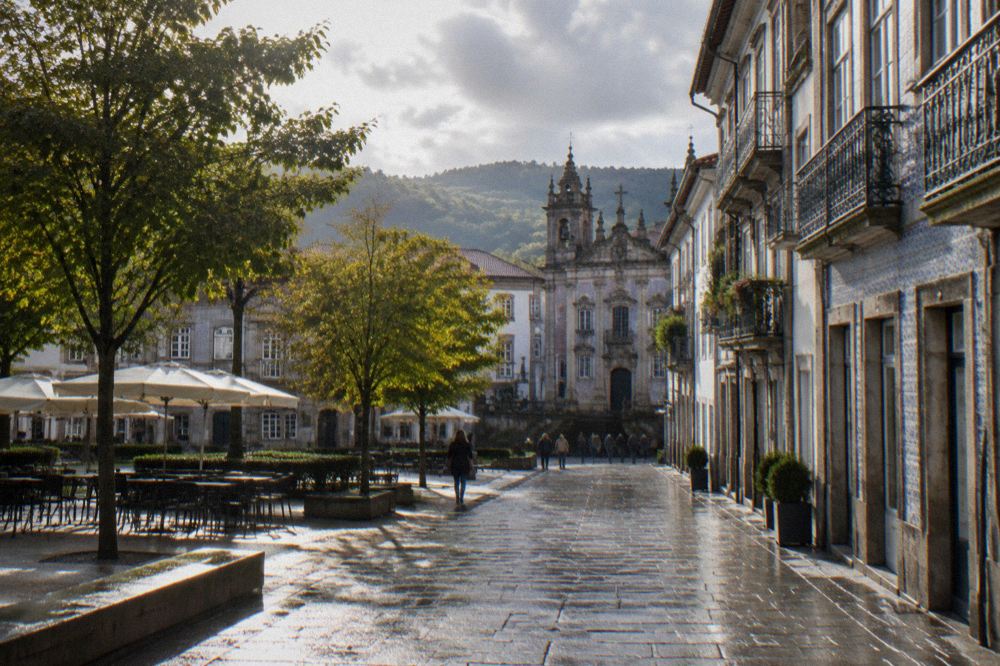
Capela dos Coimbras stands in the streets between Braga's cathedral and Praça da República, inside the ring of the historic centre, so almost every walking route through the old city passes within a couple of minutes of it. The practical approach is to pair it with the Sé de Braga, the Casa dos Crivos and the pedestrian shopping streets, in one continuous loop that needs no transport at all.
The chapel's neighbourhood is the densest sightseeing zone in Braga. The cathedral's ticket office is reached from Rua do Cabido or the side entrance by Rua D. Diogo de Sousa, and from there the lanes run downhill towards the commercial spine of the city. The Casa dos Crivos, a historic building that reopened in September 2026 as a municipal cultural gallery after rehabilitation works, sits in this same quarter, and the Congregados Basilica faces the avenue by the railway-facing edge of the centre. Everything is close.
A sensible loop, all on foot, looks like this:
| Stop | What It Is | Verified Visitor Detail |
|---|---|---|
| Sé de Braga | The cathedral, with three visit routes | Each route 3.00 EUR, all three combined 7.00 EUR, any two 6.00 EUR |
| Capela dos Coimbras | Small Manueline chapel | No verified price or schedule, check on the day |
| Casa dos Crivos | Municipal gallery in a restored historic house | Reopened 19 and 20 September 2026 after works |
| Praça da República | The city's main square and café terrace | Open public space, no ticket |
| Rua do Souto | Pedestrian shopping street | Open public space, no ticket |
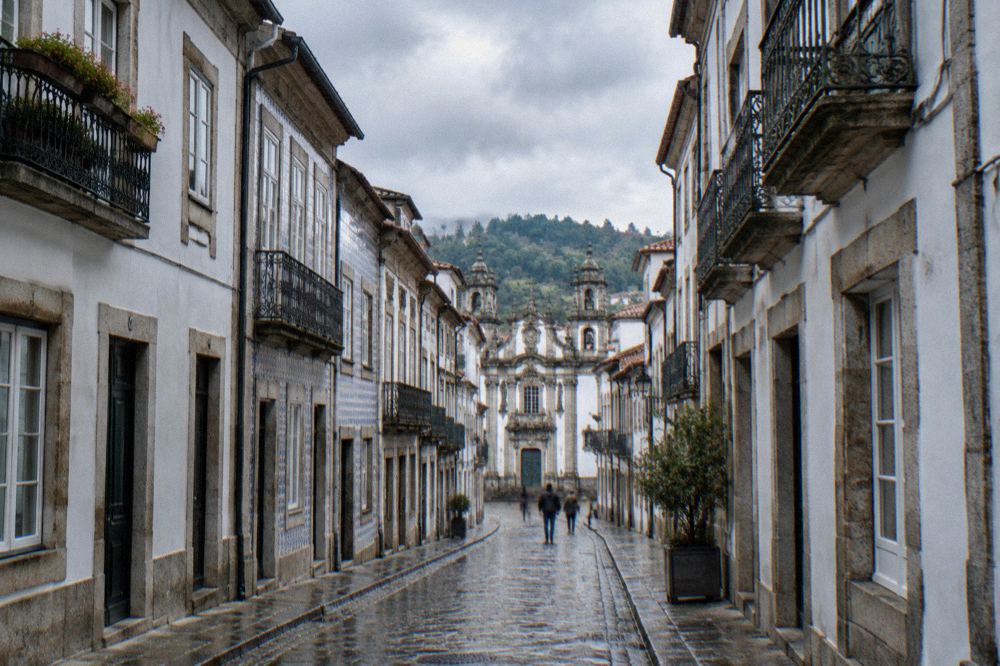
The value of the loop is that the chapel costs no extra effort. Braga's centre is genuinely walkable, the terrain inside the ring is gentle, and the distances between these stops are short enough that the walk itself becomes the pleasure. Anyone who prefers a narrated version of exactly this circuit has options, and the trio below covers the three most practical ones: a tuk tuk tour for covering ground quickly, a classic "Portuguese Rome" walking tour, and a flexible historic-centre walk.
Each of these tours runs inside Braga itself, not from Porto, and each passes through or beside the streets where the chapel stands, so none of them requires rearranging a day built around the old centre.
What Should You Look For When You Reach The Chapel?
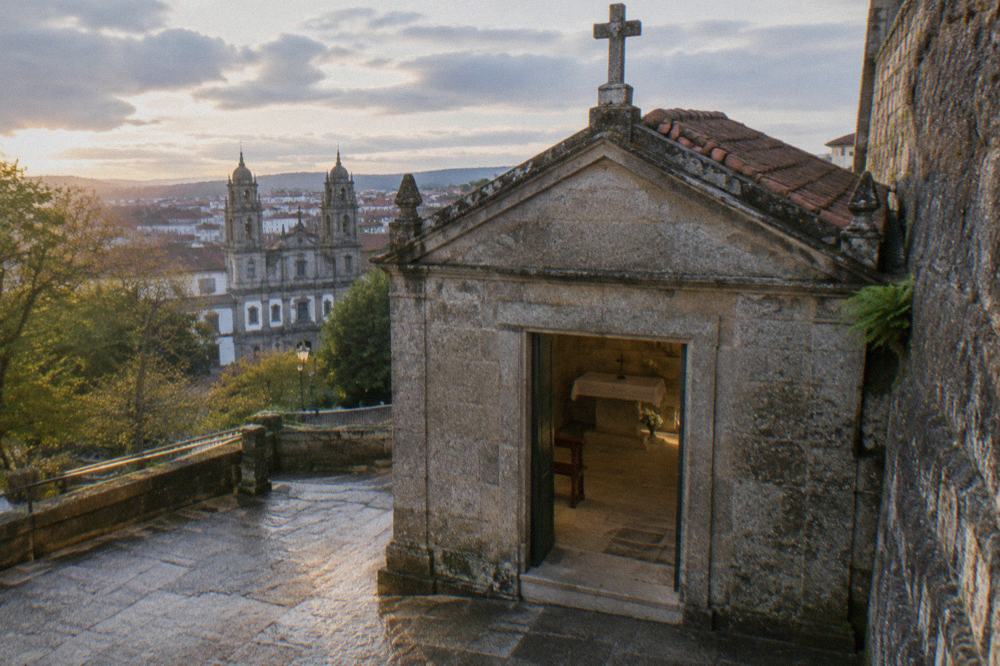
The two things to look for at Capela dos Coimbras are the carved stone portal on the outside and the compact, unified interior space inside, because the building's entire architectural argument is made at those two moments. Manueline portals are read as objects in themselves: stand back for the overall frame, then step close for the rope twists, plant forms and finely cut detail that the style is famous for.
Start with the portal. Manueline carving rewards changing your distance and your angle: from across the street you see the composition, the way the frame gathers the eye towards the door, and from a metre away you see the craft, the deep undercut mouldings and the motifs that give the style its identity. Photographers should note that a narrow street means the light changes character through the day, and the carved stone reads very differently in the low morning or late afternoon sun than it does at midday.
Inside, the scale is the experience. A single-room chapel concentrates attention: there is no long nave to walk, no side chapels to compare, just one decorated space taken in from the doorway. The interior is best enjoyed slowly and quietly, and because the room is small, even a handful of other visitors changes the feel of it, so arriving off-peak, early in a morning or later in the afternoon, gives the calmest visit.
Two practical cautions apply. First, as a working religious building, the chapel can be in use for worship, and services always take precedence over sightseeing; the same rule applies at the cathedral, where tourist visits to the interior are suspended during services. Second, small chapels in city centres sometimes close without much notice for conservation or parish reasons, so if the chapel is a priority, ask at the tourist office on Avenida da Liberdade 1, open Monday to Friday 09:00 to 18:30, before walking over.
How Does Capela Dos Coimbras Compare With Braga'S Other Small Religious Buildings?
Capela dos Coimbras stands out among Braga's smaller religious buildings for its Manueline stonework, while most of the city's other chapels and churches are Baroque or later, so the chapel fills a specific gap in the architectural story: it is the stop that shows you the older, carved-stone layer of the city before the Baroque took over. The comparison matters because Braga's reputation rests on its Baroque, and a visitor who sees only Baroque leaves with half the picture.
The São Frutuoso Chapel at Montélios is the region's great early-medieval survival, a pre-Romanesque building of a completely different and much older world, sitting on the hill outside the centre. The Santa Cruz Church and the Baroque interiors scattered through the centre show the city as it was reshaped in later centuries. Capela dos Coimbras belongs to neither camp, which is exactly why it earns its stop: the carving on its portal belongs to a distinctive national mode that came and went within a couple of generations, and Braga keeps few examples of it.
For visitors structuring a "churches of Braga" day, the honest advice is to rank by what is verified and bookable. The cathedral is the anchor: it has published hours, a ticket office in the cloister and three priced routes. The chapel is a free-flow stop in between. The hill sanctuaries, Bom Jesus do Monte and Sameiro, are half-day objects in themselves, and the Bom Jesus funicular has been out of service since 26 September 2026, with a replacement shuttle running daily between the Portico and the sanctuary while works continue, so a hill visit needs a little planning rather than a spontaneous ride.
| Braga Religious Building | Architectural Character | What Is Verified For Visitors |
|---|---|---|
| Sé de Braga | Cathedral complex, multiple eras | Three routes at 3.00 EUR each, combined 7.00 EUR, visit hours published |
| Capela dos Coimbras | Manueline carved portal | No verified price or schedule, check on the day |
| São Frutuoso Chapel, Montélios | Pre-Romanesque, outside the centre | No verified hours or fees, publish none |
| Santa Cruz Church | Central Baroque church | No verified hours or fees, publish none |
| Congregados Basilica | Basilica on the avenue by the centre | No verified hours or fees, publish none |
The pattern in that table is deliberate: Braga rewards a mix of one fully ticketed monument, the cathedral, with a string of smaller stops whose doors you try as you pass. That is a normal and pleasant way to visit a Portuguese city, and it removes any temptation to over-plan a day that is better left a little loose.
How Much Time Should You Spend At Capela Dos Coimbras?
Ten to fifteen minutes is the right budget for Capela dos Coimbras itself: enough to study the portal from several angles, step inside if it is open, and absorb the interior without rushing. The chapel is not a museum with rooms to clear, it is a single architectural moment, and stretching the visit beyond a quarter of an hour adds little unless you have a specialist interest in Manueline carving.
The better question is how much time to budget for the neighbourhood around it, because that is where the hours actually go. The cathedral alone can absorb an hour or more for a visitor taking all three routes, and the Treasury-Museum is closed on Mondays, which matters for anyone planning an early-week visit. The museums within walking range each take under an hour:
| Museum Near The Historic Centre | Ticket | Hours |
|---|---|---|
| Museu dos Biscainhos | 7.50 EUR, garden included | Tuesday to Sunday 10:00 to 12:30 and 14:00 to 17:30 |
| Museu de Arqueologia D. Diogo de Sousa | 5.00 EUR, half price for over-65s, 13 to 24, families | Tuesday to Sunday 10:00 to 17:30 |
| Museu Pio XII and Medieval Tower | 4 EUR whole museum, 2 EUR per section | Tuesday to Saturday 09:30 to 12:30 and 14:30 to 18:00 |
| Museu Nogueira da Silva | 3 EUR general, card payment only | Closed Sundays, Mondays and public holidays |
| Theatro Circo guided tour | 3.50 EUR adults, 45 minutes | Scheduled dates only, tickets at the box office |
All of these close on 1 January, Easter Sunday and 25 December, and several also close on 1 May and on 24 June, Braga's municipal holiday, so a visit timed against a public holiday should check the closing lists first. A full day in the centre, cathedral in the morning, chapel and lanes at midday, a museum and the Santa Bárbara Garden in the afternoon, is the natural shape, and the chapel slots into the midday stretch without adding any time pressure.
How Do You Get To Capela Dos Coimbras Using Public Transport?
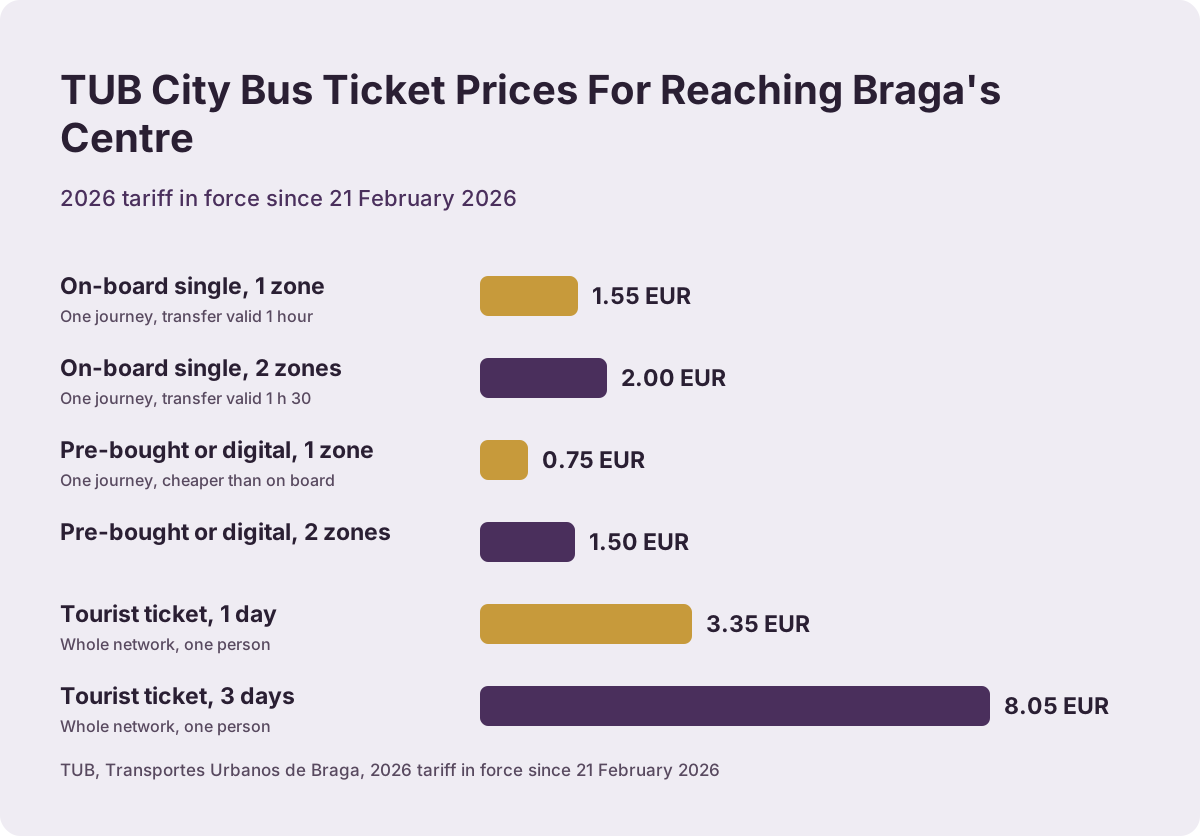
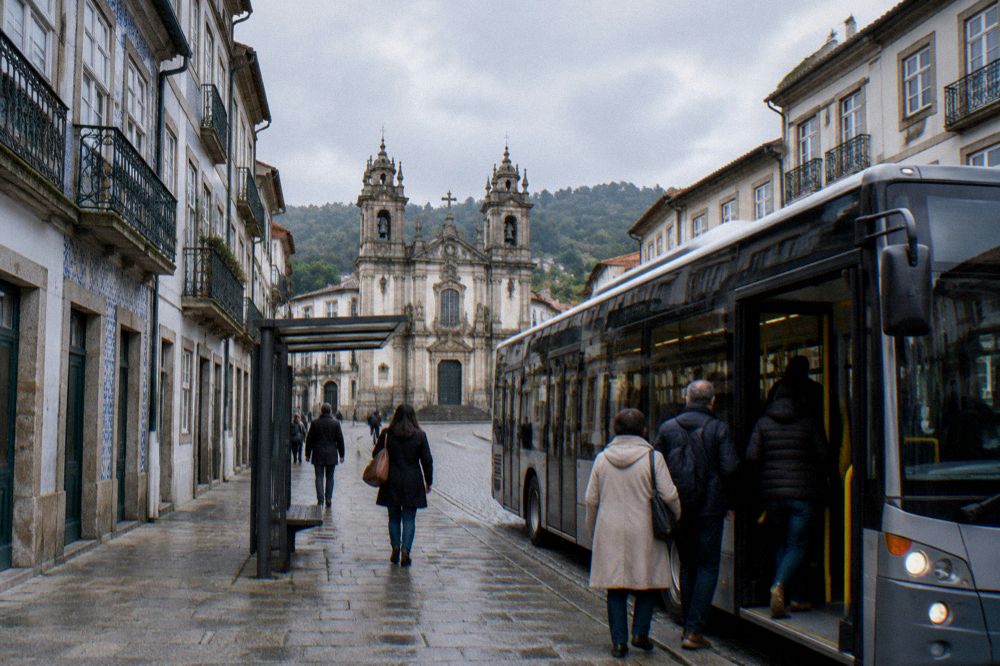
The simplest way to reach Capela dos Coimbras by public transport is to take a TUB city bus towards the historic centre, where a pre-bought or digital one-zone ticket costs 0.75 EUR and an on-board single costs 1.55 EUR, and then walk the last stretch through the pedestrian streets, because the chapel sits in a zone where buses give way to foot traffic anyway.
TUB, Transportes Urbanos de Braga, runs the city network under a 2026 tariff in force since 21 February 2026. The fares worth knowing before boarding are these: an on-board single is 1.55 EUR for one zone and 2.00 EUR for two zones, while a pre-bought or digital ticket drops to 0.75 EUR and 1.50 EUR respectively, and a transfer is valid for one hour from first validation in one zone. For a visitor planning several rides, the tourist ticket covers the whole network at 3.35 EUR for one day, 6.05 EUR for two days and 8.05 EUR for three days.
| TUB Ticket | Price | What It Covers |
|---|---|---|
| On-board single, 1 zone | 1.55 EUR | One journey, transfer valid 1 hour |
| On-board single, 2 zones | 2.00 EUR | One journey, transfer valid 1 h 30 |
| Pre-bought or digital, 1 zone | 0.75 EUR | One journey, cheaper than on board |
| Tourist ticket, 1 day | 3.35 EUR | Whole network, one person |
| Tourist ticket, 3 days | 8.05 EUR | Whole network, one person |
Visitors arriving from farther afield connect through the same centre. Trains from Porto terminate at Braga station on the CP Urbanos line, whose current timetable has been valid since 26 July 2026, and the urban fare is priced by zone, so expect a few euros rather than a printed figure here. From Braga bus station, the AITC regional lines fan out across the Minho: line 101 to Guimarães, line 105 to Ponte de Lima, line 201 to Caldas do Gerês and line 107 to the coast at Esposende and Póvoa de Varzim, though regional fares and journey times are not verified and should be checked with the operator. There is no direct train from Braga to Guimarães; that route is a bus journey.
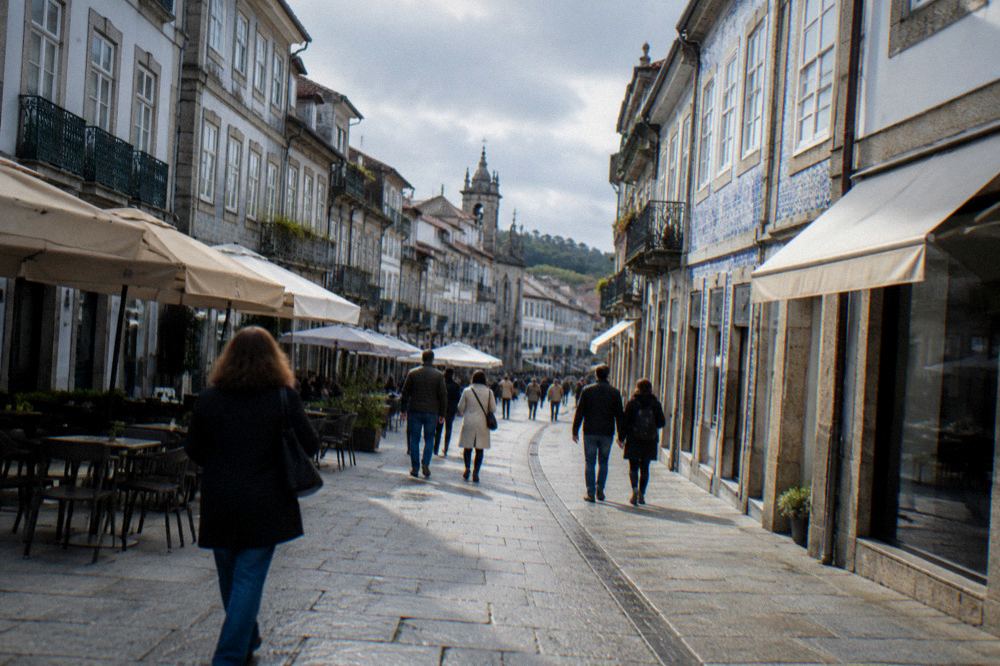
Once inside the historic ring, transport stops being the answer and walking takes over. The chapel's streets are part of the pedestrian fabric that runs through Rua do Souto and Praça da República, and the whole point of the old centre is that it is measured in minutes on foot, not in bus stops.
When Is The Best Time Of Year To Visit Braga For The Chapel And The Centre?
The best months to visit Braga for a centre-based itinerary built around Capela dos Coimbras are May, June and September, when the IPMA 1991 to 2020 normals for the Braga / Merelim station show mean daily maxima of 23.0, 26.1 and 26.9 degrees Celsius and monthly rainfall of 89.8, 40.6 and 67.6 mm, a combination of warmth and relative dryness that the wetter autumn and winter months do not match.
The climate table deserves a close read before generalising, because Braga's rainfall pattern surprises people. October, not a winter month, is the wettest month on average at 197.8 mm, ahead of December at 190.3 mm and January at 179.5 mm, and rain days of one millimetre or more run at twelve to thirteen a month from October through January. July is the driest month at 27.9 mm, with August close behind at 34.6 mm. Summer heat is moderate rather than extreme: days reaching 30 degrees average 9.8 in July and 10.4 in August, against 38.7 across the whole year.
| Month | Mean Max C | Mean Min C | Rain mm | Rain Days 1 mm Or More |
|---|---|---|---|---|
| May | 23.0 | 10.4 | 89.8 | 8.9 |
| June | 26.1 | 13.2 | 40.6 | 5.7 |
| July | 28.2 | 14.3 | 27.9 | 4.0 |
| September | 26.9 | 12.4 | 67.6 | 6.2 |
| October | 22.2 | 10.1 | 197.8 | 12.0 |
For the chapel specifically, weather matters less than for the hill sanctuaries, because the visit is short and mostly sheltered, but for the walking between sights it matters a lot. A wet October day narrows the centre visit to the cathedral, the museums and the chapel-to-café dashes, while a June or September morning lets the whole loop breathe. Visitors with flexibility should also weigh the event calendar: Semana Santa ran 29 March to 5 April in 2026, the Festas de São João ran 17 to 24 June with the peak on the night of 23 June into the 24 June municipal holiday, and Noite Branca filled the first weekend of September. These events transform the centre, crowds and all, and 2027 dates had not been announced, so check the municipal pages before booking around them.
One cost note for any season: Braga levies a municipal tourist tax of 1.55 EUR per person per night, for up to four nights, all year, charged by hotels and local accommodation to guests aged 16 and over. It is small, but it belongs in a night-by-night budget.
Should You Visit Capela Dos Coimbras On A Guided Tour?
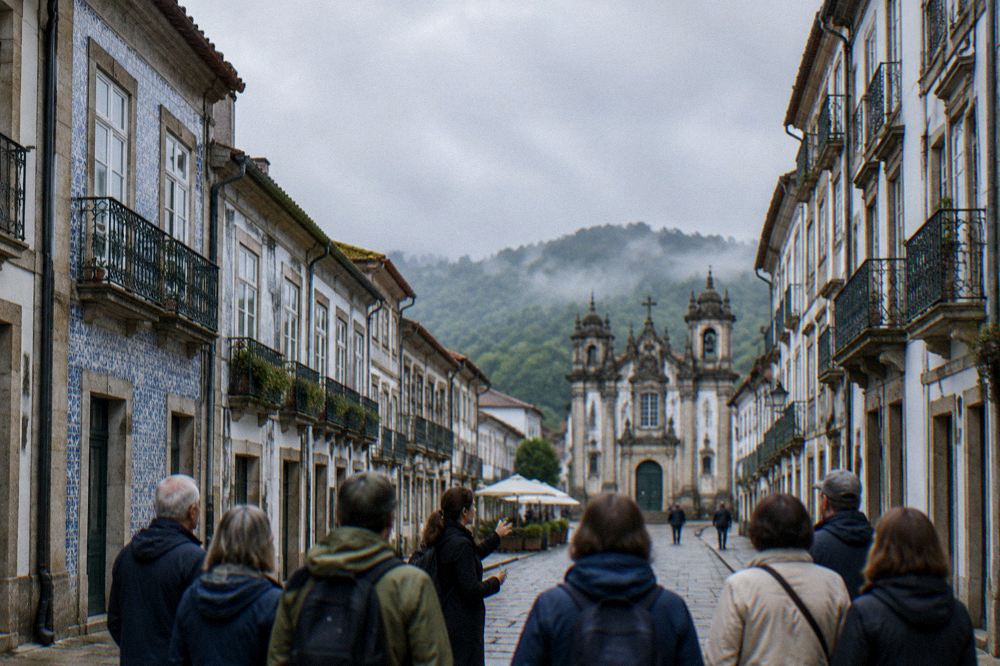
A guided tour is a good way to reach Capela dos Coimbras if you want the chapel explained rather than merely seen, and Braga has three formats that fit: a tuk tuk city tour that covers the centre and the hills from a seat, a classic walking tour of the "Portuguese Rome", and a flexible historic-centre walk that adapts the route to the group. None of them starts in Porto, and all of them work as a first-day orientation before you explore alone.
The tuk tuk option suits visitors with limited mobility, tight time or children in tow. The Braga tuk tuk city tour runs from 30 minutes up to 2 hours, is rated 4.8 from 179 reviews, and starts from 22.66 USD per person; it covers the historic centre's streets, including the quarter where the chapel stands, without the walking that a hot afternoon makes heavy. The listing carries the current price and availability, and Check availability before you build a day around a specific departure.
The walking formats suit visitors who want depth. The "Explore the Portuguese Rome, the City of Braga" tour runs about 1.5 hours, is rated 4.9 from 68 reviews and starts from 35.35 USD per person, threading the centre's lanes with a guide who can put Manueline carving into its historical context, which is precisely what a chapel like this needs to come alive.
Want the centre's lanes explained by a local guide? Book a guided walking tour here.
The flexible option is the "Braga: Personal & Flexible Walking Tour in Historic Center", rated 4.7 from 62 reviews, starting from 11.33 USD per person for about 3 hours, a format that lets the group shape the route, and a visitor who names the chapel as a priority can usually have it written into the walk.
There is also a genuinely free layer: GuruWalk lists several pay-what-you-want walks in Braga, including the Essential Free Tour of Braga (guided in Spanish) with its blue-umbrella guide, rated 4.58 from 586 reviews, and the Essential Free Tour Braga (guided in Spanish) with a green-umbrella guide, rated 4.75 from 446 reviews. These are tip-based walks led by named gurus on the GuruWalk platform, they are not this site's product, and the honest way to describe them is exactly that: free to join, tipped at the end at whatever the walk felt worth.
Whichever format you choose, the chapel earns its place on the route sheet. It is small, it is quick, and it shows a layer of Braga that the big Baroque monuments do not, which is a fair summary of why guides keep it on their maps at all.
Common Questions About Capela Dos Coimbras
Is Capela dos Coimbras free to visit?
No verified admission price for the chapel is published, so treat the question as open and check on the day, either at the door or at the tourist office on Avenida da Liberdade 1. Small chapels in Braga are often free to enter when open, but a printed price cannot be honestly stated here, and a religious service always takes precedence over visiting.
Where is Capela dos Coimbras in Braga?
The chapel stands in the historic centre of Braga, Portugal, in the streets between the Sé de Braga and Praça da República, inside the pedestrian-friendly ring of the old city. Almost every walking route through the centre passes within a few minutes of it, and no transport is needed once you are inside the ring.
What style is Capela dos Coimbras?
The chapel is Braga's notable example of Manueline architecture, the Portuguese late-Gothic style recognisable by twisted rope mouldings, botanical carving and richly framed portals. Most of Braga's better-known churches are Baroque, so the chapel shows the older carved-stone layer of the city.
How long does a visit to Capela dos Coimbras take?
Ten to fifteen minutes covers the chapel itself: the portal from several angles and the single interior space. Budget the surrounding neighbourhood for the rest of the day, with the cathedral's three ticketed routes, the museums and the gardens all within a short walk.
Can you see Capela dos Coimbras on a tour?
Yes. The Braga tuk tuk city tour, the Portuguese Rome walking tour and the flexible historic-centre walk all operate in the quarter where the chapel stands, and GuruWalk lists free, tip-based walks of the centre led by named gurus. None of these starts in Porto; all are Braga tours.
When is the best time of day to visit the chapel?
Early morning or later afternoon gives the calmest visit, because the interior is small and even a few visitors change its feel, and the low light of morning or late day reads the carved portal better than flat midday sun. Check that no service is underway before entering.
For anyone planning the wider day, the site's things to do in Braga round-up places the chapel alongside the cathedral, the hill sanctuaries and the museums, and the Braga Travel Guide homepage carries the full index of neighbourhood, itinerary and day-trip pages, including the Nogueira da Silva Museum and the Raio Palace pages for the streets just beyond the centre.