Gualtar And The University Of Minho
Gualtar is the parish on Braga's eastern edge where the University of Minho built its main campus, a district of student flats, sports fields and quiet residential streets a short bus ride from the historic centre.
Short answer
Gualtar is a residential parish in eastern Braga, Portugal, best known as the home of the University of Minho's main campus. Visitors come for the campus atmosphere, sports facilities and green spaces, and reach the historic centre by TUB bus in minutes using the city's cheap tourist tickets.
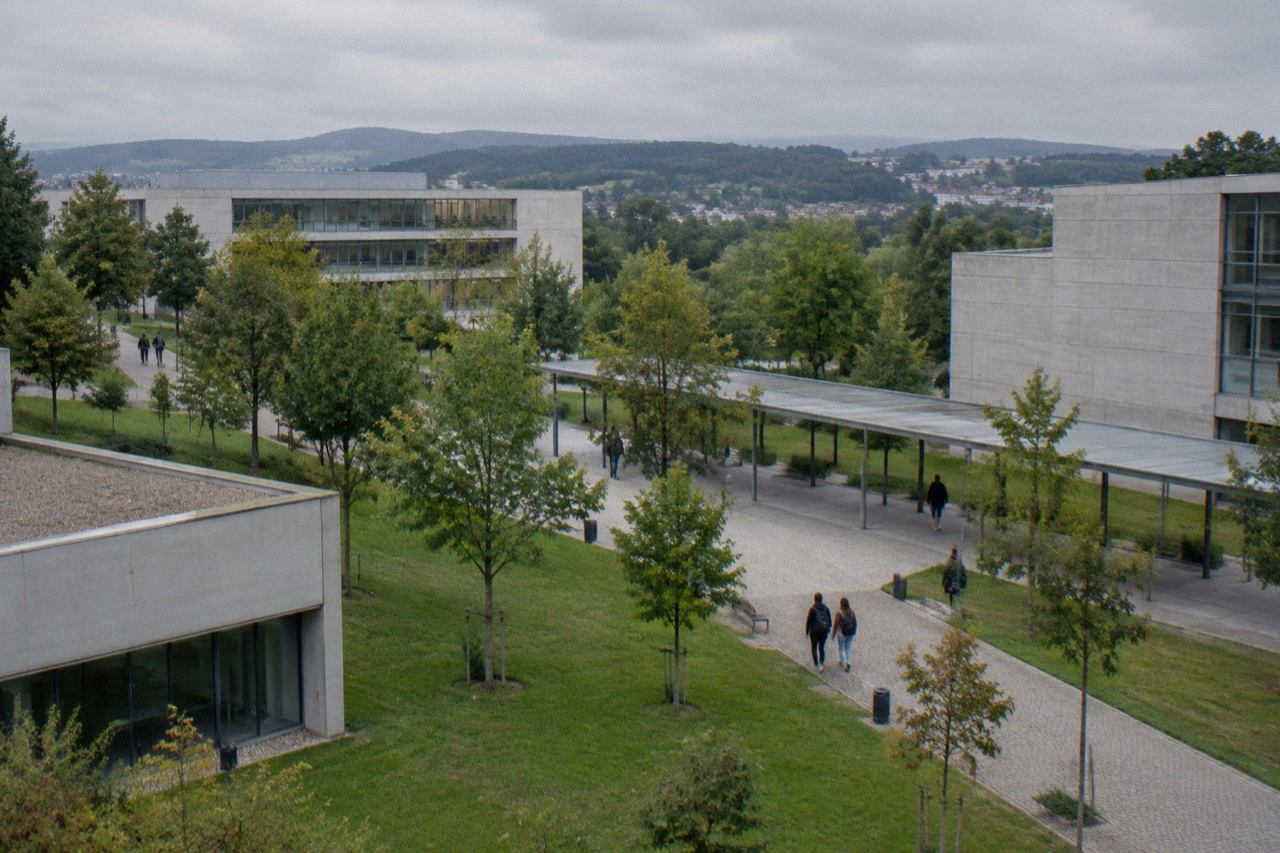
Gualtar is the parish on the eastern side of Braga, the city in Portugal's Minho region, and it is where the University of Minho established its main campus, turning what was once farmland on the road out of town into a district of student residences, faculty buildings, sports pitches and wide modern avenues. It is not the Braga of baroque churches and granite stairways, and that is exactly its appeal: this is the city's student quarter, the place where Braga's daily life runs at its most relaxed, and a practical base for anyone who wants affordable accommodation with quick bus links into the historic centre.
Where Is Gualtar In Braga?
Gualtar sits on the eastern edge of Braga, within the municipality of Braga in the Minho region of northern Portugal, a short bus ride from the historic centre and on the roads that lead out towards Guimarães and the hills beyond. It is a residential parish, not a village detached from the city: it belongs to the same municipality of 193,324 residents counted at the 2021 census, and it functions as one of Braga's student and family neighbourhoods rather than a separate destination.
The parish is easy to place on a mental map. The historic centre, with the Sé de Braga and the Arco da Porta Nova, sits at the city's core; Gualtar lies to the east of it, along and beyond the avenues that carry traffic out of town. Between the two, the neighbourhoods shade into one another, so a walk from the campus area back toward the centre passes through ordinary Braga streets rather than any hard boundary.
For a visitor deciding where to base themselves, the geography matters more than the name. Gualtar is close enough to the centre that commuting is trivial, and far enough out that hotel and apartment prices tend to be kinder than in the streets around the cathedral. It also sits conveniently for day trips eastward: the bus station's regional services to Guimarães and beyond leave from the other side of the centre, but the roads out of Gualtar point the same way.
If this quieter side of the city appeals as a base, book a hotel in Gualtar here.
What Is The University Of Minho And Why Does It Shape This District?
The University of Minho is a Portuguese public university whose main campus sits in Gualtar, and it is the single reason this parish looks and feels the way it does: the campus, its student housing, the flats rented by students and the cafés that feed them all define the district's rhythm through the academic year. The university also has a presence in Guimarães, but the Braga campus at Gualtar is the one a visitor to this city will encounter.
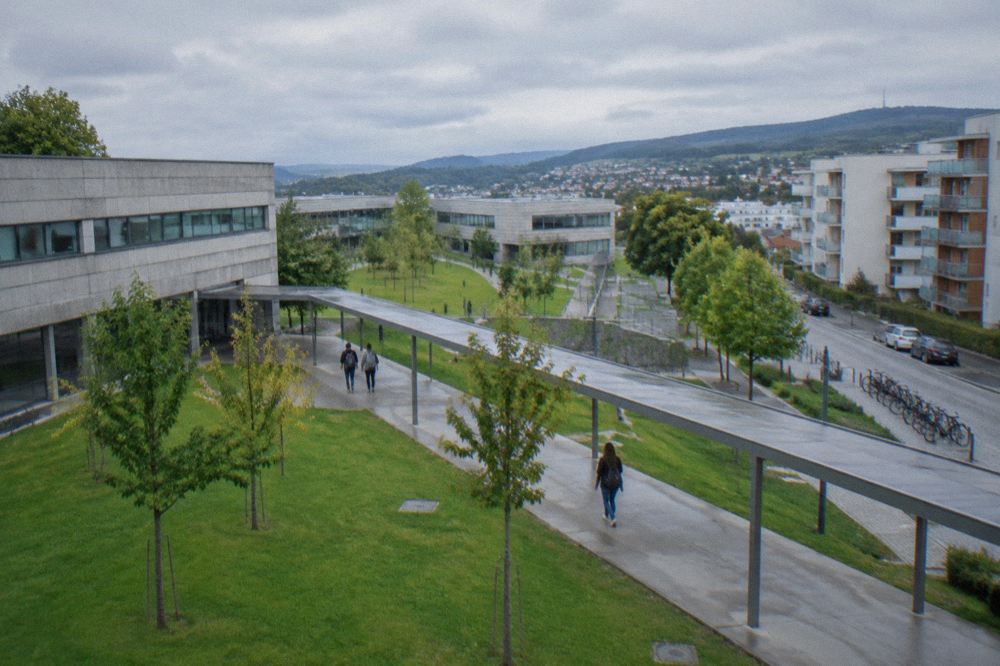
The campus changed Gualtar from agricultural land on Braga's fringe into a planned district with wide roads, modern buildings and a young population. That transformation is the area's real story. Where Maximinos And Cividade carry Roman and medieval Braga, and São Vítor wraps around the northern historic centre, Gualtar is the city's modern face, built for a purpose and still serving it.
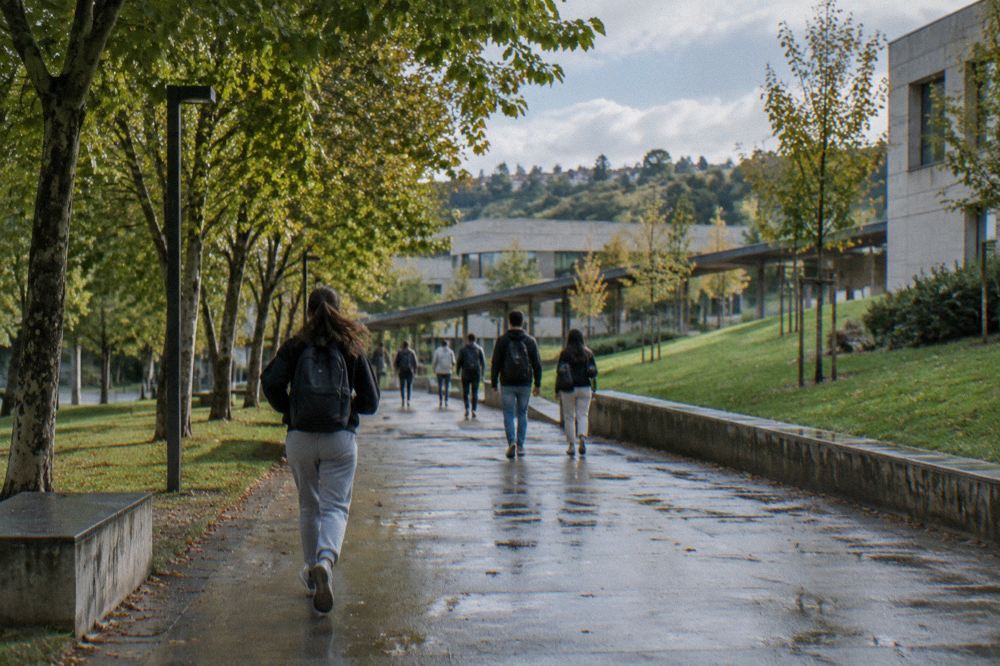
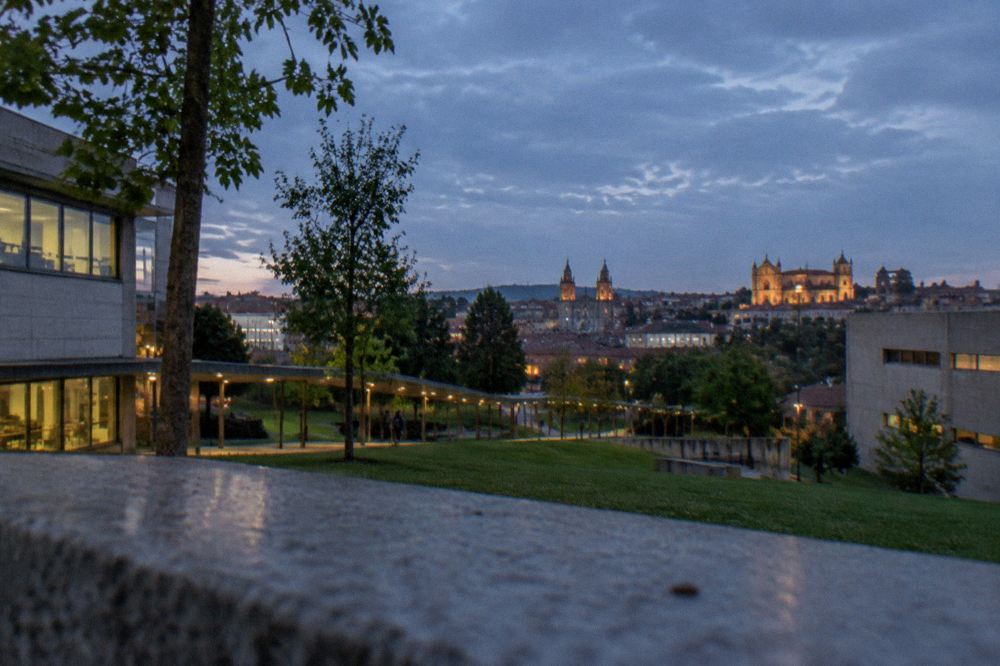
What the campus gives a casual visitor is atmosphere rather than monuments. There are green spaces, sports facilities used by students and local clubs, and the constant low hum of a young city within a city. During term time the cafés and pastelarias around the campus fill with students; in summer and over holiday periods the district goes noticeably quiet, and some student-oriented businesses close or shorten their hours. Plan around the academic calendar if the campus atmosphere is part of the reason you would stay here.
The campus is modern Braga, but most visitors still want the old city and the sanctuary on the hill, and a guided walk is the most efficient way to get both. The Braga Small-Group Walking Tour & Bom Jesus pairs the historic centre with the sanctuary in three hours, which suits anyone staying out in Gualtar and wanting a single focused outing rather than days of self-navigation.
How Do You Get From Gualtar To Braga City Centre?
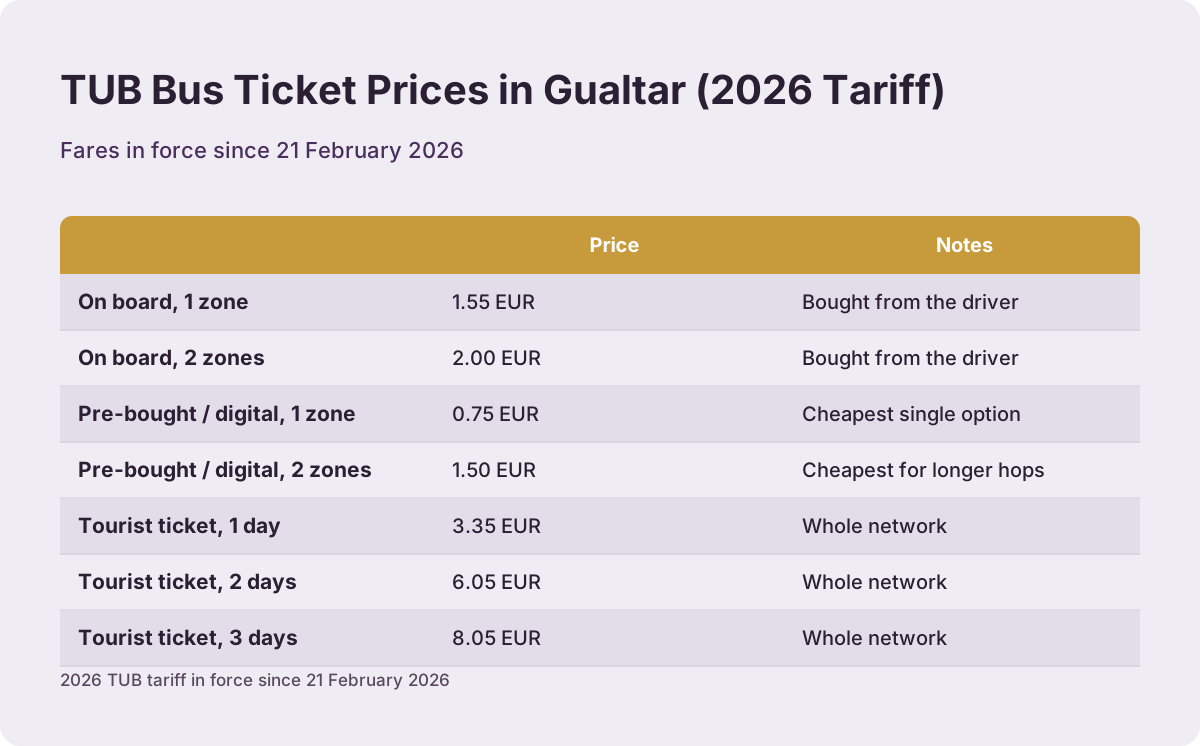
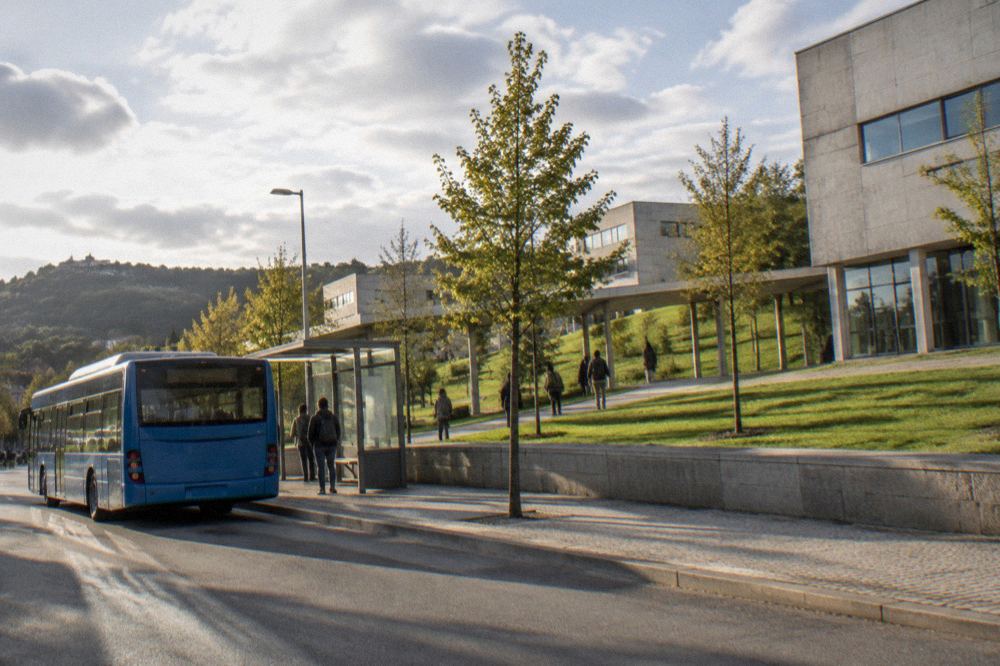
TUB, Braga's municipal bus operator, runs the network that connects Gualtar with the historic centre, and the 2026 tariff in force since 21 February 2026 charges 1.55 EUR for a one-zone ticket bought on board and 2.00 EUR for two zones, while pre-bought or digital tickets cost 0.75 EUR and 1.50 EUR respectively. A tourist ticket covering the whole network costs 3.35 EUR for one day, 6.05 EUR for two days and 8.05 EUR for three days.
The tourist ticket is the number worth remembering. It covers the entire TUB network, including the Line 2 service out to Bom Jesus do Monte, so a visitor staying in Gualtar can ride between the campus district, the historic centre and the sanctuary's lower station on one flat product. The Getting Around Braga guide covers the network in detail, and the How To Get To Bom Jesus Do Monte page handles the sanctuary end of the journey specifically.
| TUB ticket (2026 tariff) | Price | Notes |
|---|---|---|
| On board, 1 zone | 1.55 EUR | Bought from the driver |
| On board, 2 zones | 2.00 EUR | Bought from the driver |
| Pre-bought / digital, 1 zone | 0.75 EUR | Cheapest single option |
| Pre-bought / digital, 2 zones | 1.50 EUR | Cheapest for longer hops |
| Tourist ticket, 1 day | 3.35 EUR | Whole network |
| Tourist ticket, 2 days | 6.05 EUR | Whole network |
| Tourist ticket, 3 days | 8.05 EUR | Whole network |
One standing fact about the eastern side of Braga's transport picture deserves a note here because it catches out visitors heading for the hills. The Bom Jesus funicular has been out of service since 26 September 2026, with no end date published, and a replacement shuttle runs every day between 09:00 and 20:00, roughly every 30 minutes each way, between the Portico and the sanctuary. Anyone planning a Bom Jesus visit from a Gualtar base should check the operator's notice before setting out, and remember that the stairway itself, 566 steps by the Confraria's count, remains the classic way up on foot.
Where Do Students Eat And Drink Around The Campus?
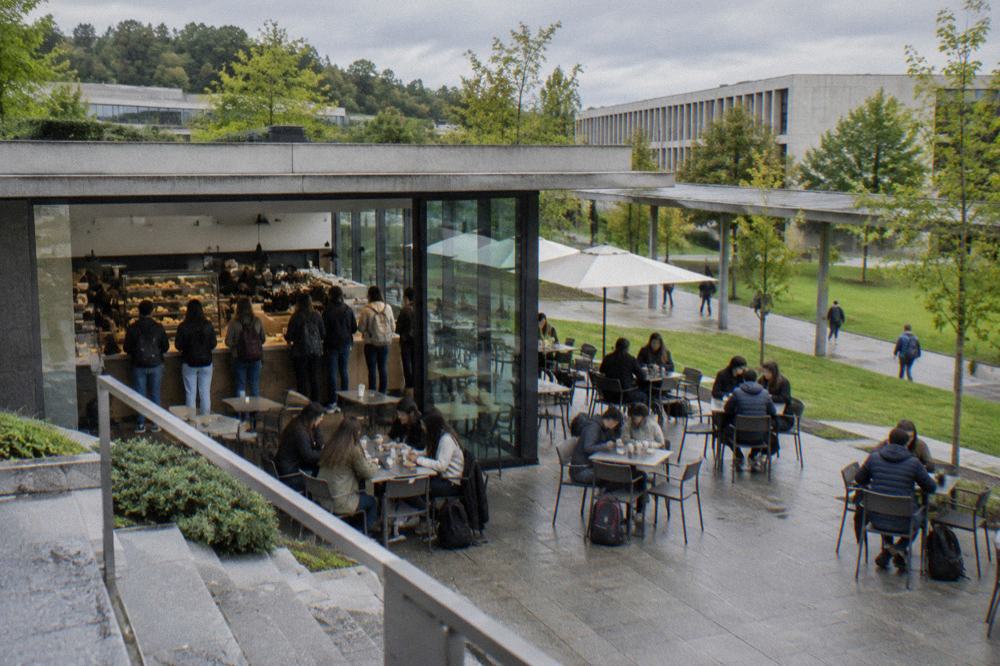
The streets around the Gualtar campus hold Braga's densest concentration of cheap, informal eating: pastelarias for coffee and pastries at breakfast, cantinas and snack bars for lunch, and small restaurants serving Portuguese daily dishes at prices aimed at student budgets rather than tourist wallets. Expect menus do dia, set lunches with soup, a main, a drink and sometimes dessert, at the lower end of what the historic centre charges.
No visitor should treat the campus district as a fine-dining destination, and none of the verified sources in this guide's research attach specific prices to individual Gualtar restaurants, so the honest advice is structural rather than a list of names: eat where the queues of students are. A pastelaria full at 08:30 of people in backpacks is doing something right, and the same logic applies at lunchtime.
For the dishes themselves, the What To Eat In Braga guide covers the city's signature plates, several of which travel well to any neighbourhood restaurant: bacalhau à Braga, the fried cod with potatoes and cabbage, and pudim Abade de Priscos, a caramel egg pudding. Frigideiras and the local pastry tradition are covered in their own pages too. A student-quarter kitchen rarely specializes, but the daily dish is usually honest, filling and priced for people watching their money.
Two practical habits make eating in Gualtar work. First, keep some cash sense even though card payment is near universal in Portugal, because a small snack bar at a busy lunch rush can be card-only or cash-only depending on the owner, and asking first avoids the awkward moment at the till. Second, do not expect dinner before 19:30 or 20:00 in most places, because Portugal eats late and the student quarter follows the national rhythm.
What Can Visitors Actually See Around Gualtar?
Gualtar's sights are low-key and mostly free: the campus itself with its modern architecture and green spaces, sports facilities that host university and community events, the residential streets that show Braga's contemporary side, and the walking and running routes that locals use daily. There is no ticketed monument in the parish, and the district rewards visitors who enjoy ordinary city life rather than heritage sites.
The contrast is the point. A visitor who has spent the morning at the Braga Cathedral or the Biscainhos Museum will find nothing in Gualtar that competes with those, and should not look for it. What the parish offers is the other Braga: wide pavements, planted avenues, students on bicycles, and the sense of a city that extends well beyond its postcard streets.
The practical visitor plan is to treat Gualtar as a base and a curiosity rather than a destination. Spend the sightseeing hours in the historic centre, on Bom Jesus Hill, or out on the day-trip circuit to Guimarães or the Peneda-Gerês National Park, and use Gualtar for mornings, evenings and the walkable calm of a residential neighbourhood. The One Day In Braga itinerary is built around the centre and works perfectly from a Gualtar base.
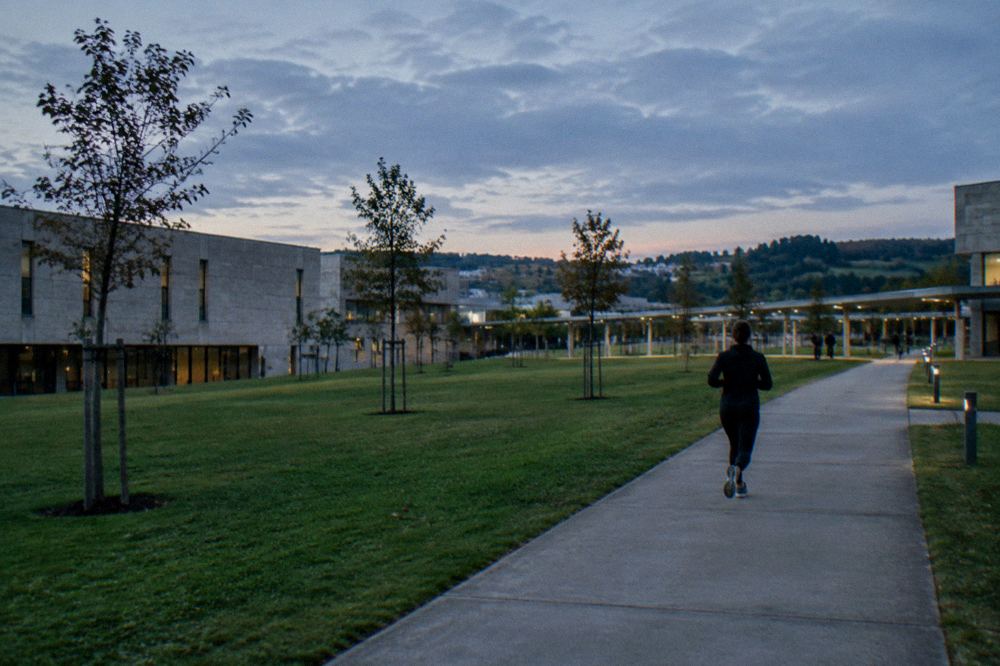
For anyone who enjoys running or a long evening walk, the district's wide avenues and campus paths are among the more pleasant places in the city to do laps without traffic or crowds. Braga's climate helps: IPMA's 1991 to 2020 normals for the Braga / Merelim station show July and August averaging mean maximums of 28.2 C and 28.7 C, while May and June sit at 23.0 C and 26.1 C, so late spring and early summer evenings are the comfortable window for outdoor time. Everything else covered here is indexed on Braga Travel Guide.
Is Gualtar A Good Place To Stay In Braga?
Gualtar suits two kinds of visitor: anyone who wants lower accommodation prices and a quiet night's sleep within a short bus ride of the centre, and anyone with a connection to the university, such as visiting families, conference attendees or prospective students. It suits nobody who wants to step out of the hotel door straight into the historic centre, because that is a bus ride, not a stroll, and the district empties early compared with the streets around Praça da República.
The trade is simple and honest. The historic centre and the areas immediately around it, such as Lamaçães and São Vítor on the northern side, put you closer to the sights but at higher prices and with thinner availability in peak periods. Gualtar puts you among students and families, usually for less money, with the whole TUB network between you and everything you came to see.
| Stay in... | Best for | Trade-off |
|---|---|---|
| Gualtar | Budget, campus visits, quiet nights | Bus ride to the centre |
| Historic centre | Sightseeing on foot, atmosphere | Highest prices, thinner sleep |
| São Vítor | Close to centre and Bom Jesus road | Fewer dining options |
| Lamaçães | Residential calm, north-side access | Less character, fewer cafés |
| Bom Jesus hill | Sanctuary at the door | Isolated from evening life |
One cost every visitor to Braga should factor into any accommodation budget, wherever they sleep: the municipal tourist tax. Braga levies 1.55 EUR per person per night, for up to four nights, all year, charged by hotels and local accommodation. Guests aged under 16 are exempt. It is small, but it is charged on top of the quoted room rate, and knowing it exists prevents a surprise at checkout.
How Does Gualtar Compare With Braga'S Other Areas?
Gualtar is Braga's most modern and most student-driven district, standing opposite the historic centre's baroque core, São Vítor's proximity to the Bom Jesus road, Maximinos' Roman and museum quarter, and Lamaçães' quiet residential streets. Each area answers a different travel question, and Gualtar's answer is value and campus life rather than heritage, nightlife or walk-to-everything convenience.
Understanding Braga's neighbourhood map helps any visitor choose well, and the differences are sharper than in many cities this size because Braga's heritage is so concentrated in one compact core. The table below compares the districts this site covers, using what each is genuinely known for rather than invented statistics.
| Area | Character | Best fit for a visitor |
|---|---|---|
| Historic centre | Baroque churches, cafés, the Sé | First-time visitors |
| Gualtar | University campus, student life | Budget stays, campus visits |
| São Vítor | Northern residential, Bom Jesus access | Longer stays, sanctuary trips |
| Maximinos and Cividade | Roman ruins, museums, quieter streets | Museum lovers, repeat visitors |
| Lamaçães | Calm residential east-central | Families, self-catering |
| Bom Jesus hill | Sanctuary, park, stairway | Pilgrims, hikers, romantics |
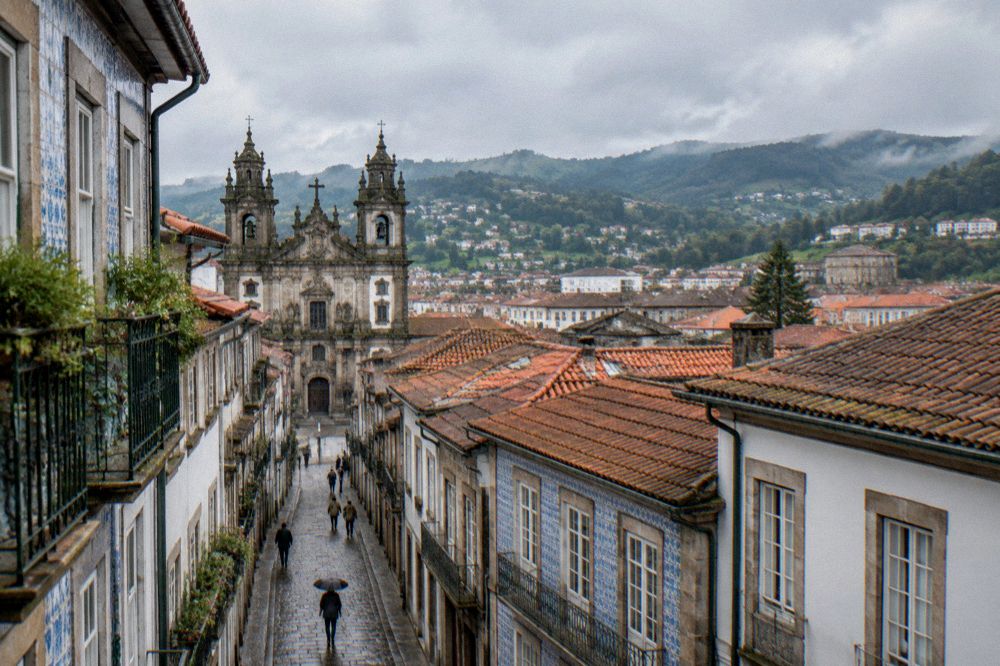
The honest summary is that most first-time visitors should sleep in or near the Historic Centre and visit Gualtar only if the campus or a good accommodation deal draws them, while repeat visitors, families on longer stays and anyone connected to the university often find Gualtar the smarter choice. The district does not need defending on price, transport or peace; it simply is not where the postcard is.
What Is The Weather Like In Gualtar And When Should You Visit?
Gualtar shares Braga's climate, and IPMA's 1991 to 2020 normals for the Braga / Merelim station show a pattern of warm, dry summers and mild, wet winters: July and August average mean maximums of 28.2 C and 28.7 C with only 27.9 mm and 34.6 mm of rain, while October is the wettest month at 197.8 mm and January follows at 179.5 mm. May, June and September balance warmth against manageable rain.
The numbers deserve reading rather than skimming, because Braga's rainfall pattern surprises people who expect a uniformly dry southern-European summer. October, not a winter month, is the wettest on average, and rain days of one millimetre or more run 12 to 13 a month from October through January. Summer is genuinely dry, but the shoulder seasons carry real rain risk, and packing for it matters.
| Month | Mean max C | Mean min C | Rain mm | Rain days 1mm+ |
|---|---|---|---|---|
| Jan | 14.1 | 3.1 | 179.5 | 13.1 |
| Apr | 19.6 | 7.8 | 127.9 | 12.0 |
| Jul | 28.2 | 14.3 | 27.9 | 4.0 |
| Aug | 28.7 | 14.0 | 34.6 | 3.8 |
| Sep | 26.9 | 12.4 | 67.6 | 6.2 |
| Oct | 22.2 | 10.1 | 197.8 | 12.0 |
For campus-area planning specifically, the summer months are when Gualtar is quietest, because much of the student population leaves, while the academic term fills the district again in autumn, which happens to be the wettest stretch of the Braga year. A September visit catches warm days, mean maximum 26.9 C, with the district back at full energy and rain still moderate at 67.6 mm on average. The Best Time To Visit Braga guide develops this across the whole city, and the Braga Weather page covers month-by-month detail.
Can You Visit Gualtar And The Historic Centre In One Trip?
Yes, comfortably: Gualtar and the historic centre sit within the same municipality and the same bus network, so a single trip covers both without any planning gymnastics. A sensible pattern is a morning or full day in the historic centre and on Bom Jesus hill, reached from a Gualtar base by TUB bus with a tourist ticket, with evenings spent in the cheaper cafés of the campus district.
The pairing works in either direction. A visitor staying in the centre can ride out to Gualtar for an afternoon stroll around the campus and a cheap student-quarter dinner, then be back in the old city within minutes. A visitor staying in Gualtar does the reverse daily. The 2 Days In Braga itinerary splits the city and the sanctuaries across two days and adapts well to a Gualtar base, while Things To Do In Braga lists the full range of options for anyone building a longer plan.
Guided options reduce the navigation work further. The tuk tuk city tour covers Braga's streets in thirty minutes to two hours and suits visitors who want the layout explained rather than walked, while the Portuguese Rome walking tour covers the old city in about ninety minutes.
For a fuller outing, the small-group walking tour that pairs the historic centre with Bom Jesus remains the strongest single product for visitors based in Gualtar, since it removes the bus-planning question entirely on the day the sanctuary is visited.
How Much Does A Gualtar-Based Trip Cost?
A Gualtar-based Braga trip runs on three cost lines: TUB tourist tickets at 3.35 EUR for one day, 6.05 EUR for two or 8.05 EUR for three covering the whole network, the municipal tourist tax at 1.55 EUR per person per night for up to four nights, and attraction tickets bought individually because no city-wide attraction pass is on sale in Braga. Eating in the student quarter sits below historic-centre prices, though individual restaurant prices are not verified.
The pass point matters and is worth restating plainly, because travellers used to city cards ask about it constantly. No city card or attraction pass is on sale in Braga. The only multi-use product that genuinely exists is the TUB tourist ticket, which covers buses, not museums. The Braga Attraction Tickets And Passes guide lists what each sight charges.
| Cost line | Figure | Applies to |
|---|---|---|
| TUB tourist ticket, 1 day | 3.35 EUR | All TUB buses |
| TUB tourist ticket, 3 days | 8.05 EUR | All TUB buses |
| Tourist tax | 1.55 EUR per person per night | Up to 4 nights, all year |
| Cathedral combined ticket | 7.00 EUR | All three visit routes |
| Bom Jesus sanctuary grounds | Free entry | Stairway and basilica |
| City attraction pass | None on sale | Buy tickets separately |
The sanctuary line deserves its own sentence because it is the best value in the region: the Confraria do Bom Jesus do Monte's own information page lists no admission charge for the sanctuary, grounds or basilica. The stairway climb is free, 566 steps by the Confraria's count, and only the extras, the funicular when it runs, the high choir and bell tower at 1 EUR, the lake boats and the car park, carry prices.
Common Questions About Gualtar And The University Of Minho
Is Gualtar in Braga or outside it?
Gualtar is inside the municipality of Braga, on the city's eastern side. It is a residential parish of the same municipality counted at 193,324 residents in the 2021 census, not a separate town, and it sits within the TUB city bus network.
Can you walk from Gualtar to Braga's historic centre?
The districts connect through ordinary city streets, but the distance is a bus ride rather than a stroll for most visitors, and TUB buses link the campus area with the centre for 1.55 EUR on board or 0.75 EUR pre-bought for a one-zone trip. The one-day tourist ticket at 3.35 EUR is usually the better buy for a day of back-and-forth.
Does the University of Minho have campuses outside Braga?
Yes, the university also has a presence in Guimarães, the neighbouring city in the Minho region, though the main Braga campus sits at Gualtar. Guimarães is reached from Braga by AITC regional bus line 101; there is no direct train between the two cities.
Is Gualtar a good area for families to stay in Braga?
It can be: the district is quiet, residential and well served by buses, with green spaces around the campus. The trade-off is distance from the historic centre's sights and thinner evening dining than the old city, so families who prioritize sightseeing on foot may prefer the centre or São Vítor.
What is the cheapest way to get around Braga from Gualtar?
The TUB tourist ticket: 3.35 EUR for one day, 6.05 EUR for two days or 8.05 EUR for three days, covering the whole network including Line 2 to Bom Jesus do Monte. Pre-bought single tickets at 0.75 EUR for one zone suit occasional trips.
Are there tourist sights inside Gualtar itself?
No ticketed monuments. The district's appeal is the campus, its green spaces and its student-quarter atmosphere. The sights that bring visitors to Braga, the cathedral, Bom Jesus do Monte and the museums, all sit in or near the historic centre, a short bus ride away.
Gualtar will never be the reason anyone books a flight to northern Portugal, and it does not try to be. What it offers is a genuine slice of the Braga that residents know: a young district built around the University of Minho's campus, priced for students rather than tourists, and connected to everything the city is famous for by a bus network that costs less than a coffee in most European capitals. Stay here for value and calm, spend your days in the old city and on the hills, and the parish does its job quietly and well.