How To Get To Bom Jesus Do Monte
Bom Jesus do Monte sits on a hill east of Braga, Portugal, and four ways reach it: the TUB Line 2 bus to the Pórtico, the 566-step Escadório on foot, the replacement shuttle, or a short drive. Here is how each one works in 2026.
Short answer
Take TUB Line 2 (Ponte de Prado / Bom Jesus) from central Braga to the Pórtico at the foot of the hill, then climb the 566-step Escadório or ride the replacement shuttle to the sanctuary. The funicular itself is out of service since 26 September 2026.
Bom Jesus do Monte stands on a wooded hill a few kilometres east of the historic centre of Braga, the city in Portugal's Minho region, and reaching it is a journey in two parts: first to the foot of the hill, then up it. The sanctuary itself, inscribed by UNESCO in 2019 as the "Sanctuary of Bom Jesus do Monte in Braga", charges no admission for its grounds or basilica, so the only real cost of a visit is the getting there. Four options exist, and one of them, the historic funicular, is currently off the table: TUB's notice of 26 September 2026 states the Elevador do Bom Jesus is out of service for maintenance with no end date published, and a replacement shuttle is running in its place. This page walks through each option with the verified fares, hours and walking distances, from a ten-minute bus ride out of the centre to a full day trip from Porto or Lisbon.
How Do You Get To Bom Jesus Do Monte From Braga City Centre?
The simplest route is TUB bus Line 2, Ponte de Prado / Bom Jesus, which runs from the city centre to the Pórtico, the foot of the sanctuary stairway. A pre-bought one-zone ticket costs 0.75 EUR, or 1.55 EUR on board, and the ride is short enough that most visitors treat it as the default way up the hill. From the Pórtico you either climb the Escadório on foot or take the replacement shuttle.
TUB, Transportes Urbanos de Braga, is the city's municipal bus operator, and Line 2 is the one route in the network that ends at Bom Jesus. The stop is at the Pórtico, the monumental gateway at the bottom of the sanctuary's baroque stairway, which is also where the funicular's lower station sits. That makes the bus genuinely door to door in a way no other public transport is: you step off, and the climb begins in front of you.
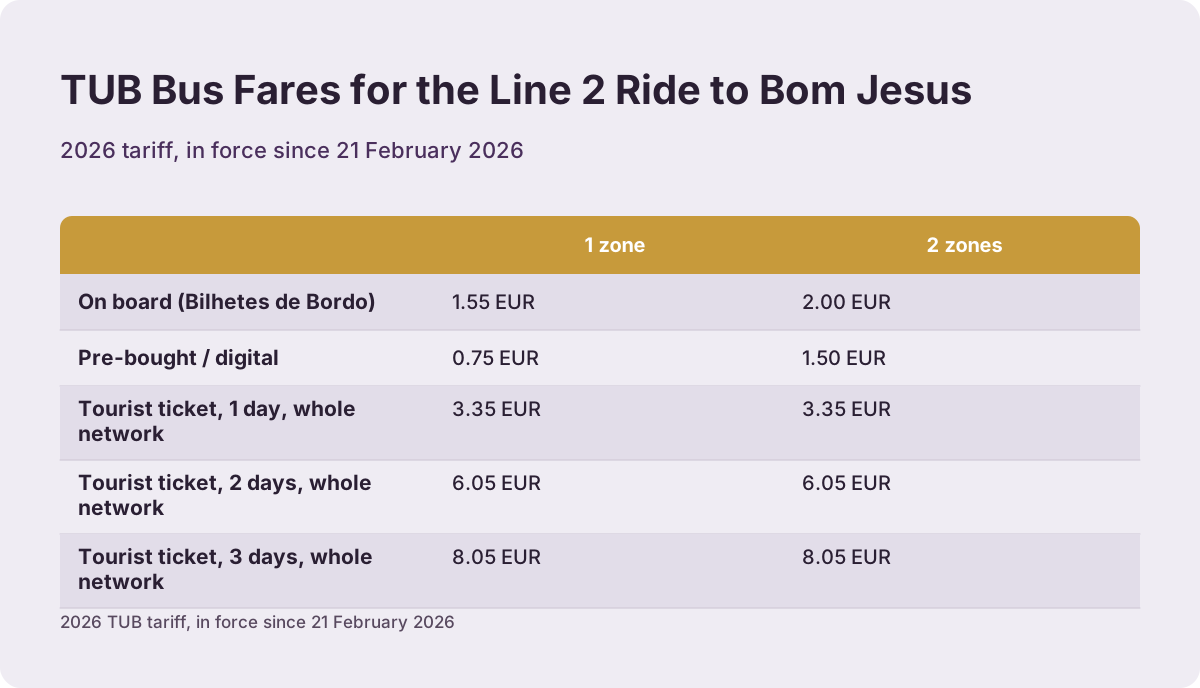
The 2026 TUB tariff, in force since 21 February 2026, keeps the fares low. Pre-bought and digital tickets are the cheapest way to ride, and there is also a tourist ticket covering the whole network for a day, which suits anyone planning to combine Bom Jesus with other sights around town. The full fare table is below.
| TUB ticket type | 1 zone | 2 zones |
|---|---|---|
| On board (Bilhetes de Bordo) | 1.55 EUR | 2.00 EUR |
| Pre-bought / digital | 0.75 EUR | 1.50 EUR |
| Tourist ticket, 1 day, whole network | 3.35 EUR | 3.35 EUR |
| Tourist ticket, 2 days, whole network | 6.05 EUR | 6.05 EUR |
| Tourist ticket, 3 days, whole network | 8.05 EUR | 8.05 EUR |
One detail worth knowing before you board: transfer validity runs from the first validation, one hour for a single-zone ticket and an hour and a half for two zones. If you are staying near the centre, a one-zone ticket is usually enough for the Line 2 ride, but check the zone map on TUB's site for your specific stop. The getting around Braga guide covers the rest of the network, including how the tourist ticket compares with single fares for a two- or three-day stay.
For anyone who would rather not work out bus zones at all, a guided visit folds the transport question into the itinerary. The Explore the Portuguese Rome, the City of Braga walking tour, rated 4.9 from 68 reviews and about an hour and a half long, covers the historic centre with a local guide, and pairing it with an independent bus trip up the hill makes a comfortable full morning.
Does TUB Line 2 Run Often Enough To Rely On?
Line 2 runs about every 30 minutes on working days, with a varied schedule at weekends, and it ends at the Pórtico, so no transfer is needed for the final approach. In summer 2026 TUB reinforced the Bom Jesus link, which the operator announced for the peak season, but the base half-hourly weekday frequency is the figure to plan around. The first thing to check before you travel is the current Line 2 timetable on TUB's own site.
Braga's bus network is compact, and Line 2 is one of its backbone routes, connecting the eastern side of the city to the sanctuary hill. The half-hourly weekday frequency means a missed bus costs you thirty minutes at the stop, which is annoying but rarely fatal to a day's plan. Weekends thin out, so an early start protects the return leg: the hill is worth two or three hours at least, and the last buses back toward the centre fill up on pleasant evenings.
The summer reinforcement is worth a second look if you are visiting in high season. TUB strengthened the Bom Jesus connection until the end of August 2026, a pattern the operator has repeated in recent years, so midsummer visitors usually find extra departures on top of the base timetable. Do not build a minute-by-minute plan around it, though: the reinforced schedule is published by TUB each year and applies only while it runs.
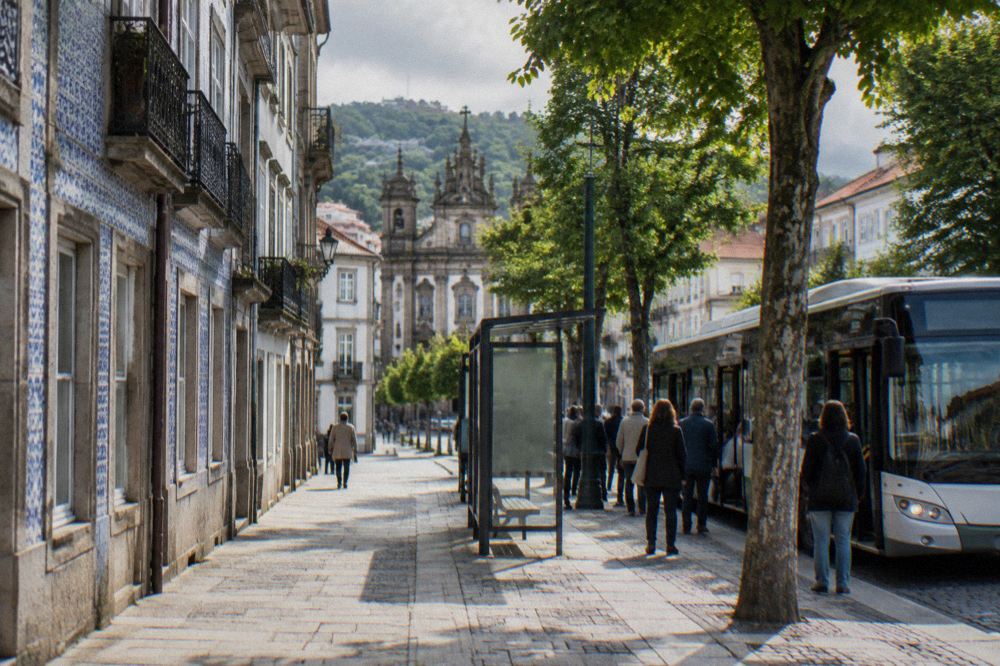
For visitors staying outside the historic centre, in São Vítor or the northern parishes, Line 2 still works, but check whether a change of bus is needed to reach one of its stops. The route's centre-section stops along the Avenida Central area are the easiest pickup points for anyone on foot from the main hotels.
Is The Bom Jesus Funicular Running Right Now?
No. The Elevador do Bom Jesus has been out of service for maintenance since 26 September 2026, per TUB's notice, with no end date published. A replacement shuttle runs every day from 09:00 to 20:00, roughly every 30 minutes in each direction, between the Pórtico, where TUB Line 2 ends, and the sanctuary. Check the operator's notice before you go, because no return date for the funicular has been announced.
The funicular is normally one of Bom Jesus's attractions in its own right. Inaugurated on 25 March 1882 and designed by the Swiss engineer Nikolaus Riggenbach, it climbs 116 metres over an inclined plane of 267 metres, and the Confraria do Bom Jesus do Monte claims it is the oldest funicular in service in the world using the water counterweight system. When it runs, the fare is 2.50 EUR single and 4.00 EUR return, with daily hours from 08:55 to 19:55 in summer and a split winter schedule. None of that applies while it is out of service, and the shuttle is the substitute.
The shuttle is not a like-for-like swap: it is a bus, not a water-balanced historic lift, so the ride is functional rather than atmospheric. But it solves the same problem, moving visitors between the Pórtico and the sanctuary top without the stairway, and its hours, 09:00 to 20:00 daily at roughly half-hour intervals each way, are generous enough for almost any visit plan. The Bom Jesus funicular guide holds the full history and the normal operating details for when the service resumes.
| Funicular fact | Detail |
|---|---|
| Status | Out of service since 26 September 2026, no end date published |
| Replacement shuttle | Daily 09:00 to 20:00, roughly every 30 minutes each way, Pórtico to sanctuary |
| Normal single fare (when running) | 2.50 EUR |
| Normal return fare (when running) | 4.00 EUR |
| Inaugurated | 25 March 1882 |
| Designed by | Nikolaus Riggenbach |
| Climb | 116 m over an inclined plane of 267 m |
If riding the funicular is the reason you are going, the honest advice is to go anyway and enjoy the stairway or the shuttle, then check the operator's notice before a return trip. The sanctuary, the gardens and the views lose nothing to the lift being offline.
Want a guided visit instead of planning the hill yourself? A small-group tour handles the route and timing, and most bookings can be cancelled if the weather or your schedule turns.
Can You Walk Up The Escadório, And How Many Steps Is It?
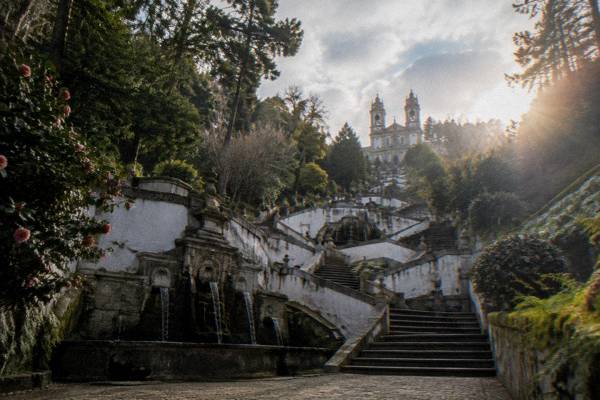
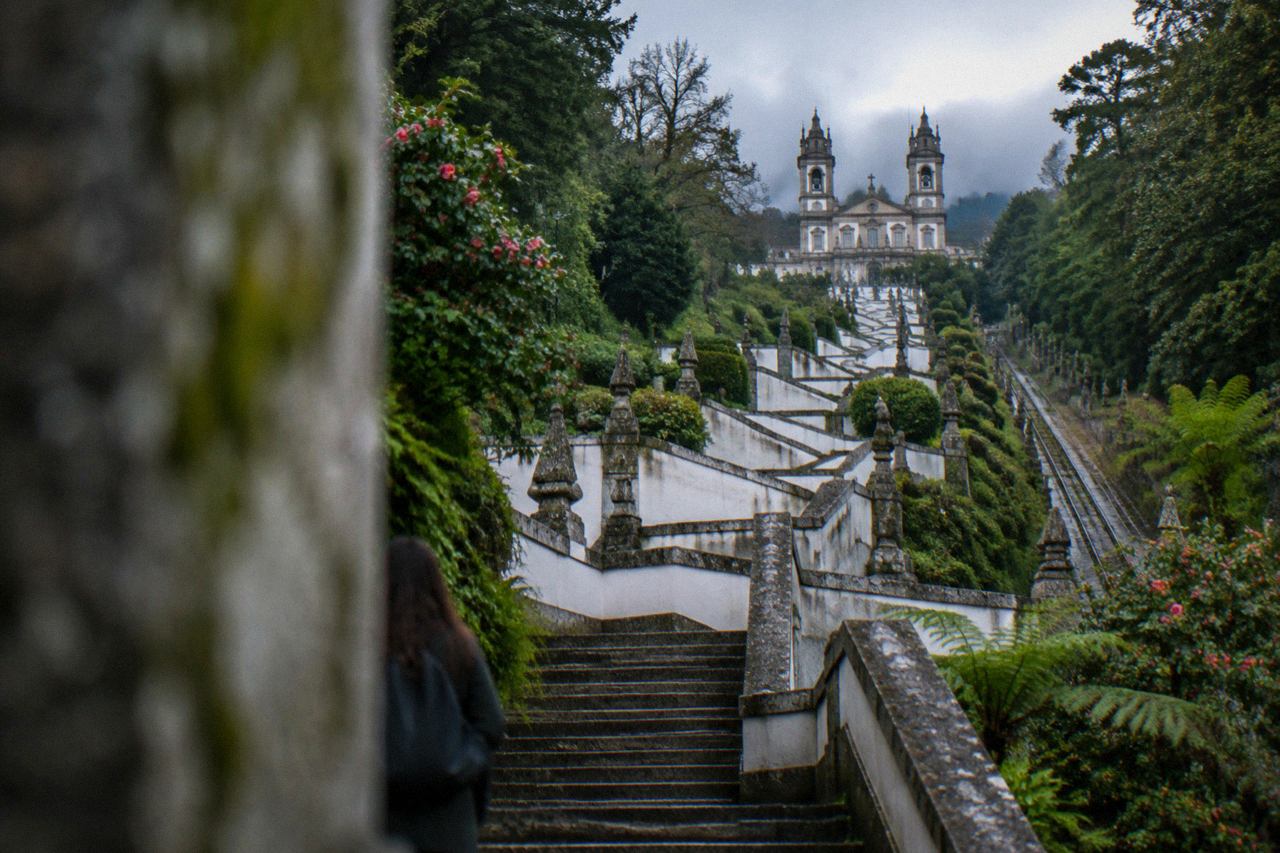
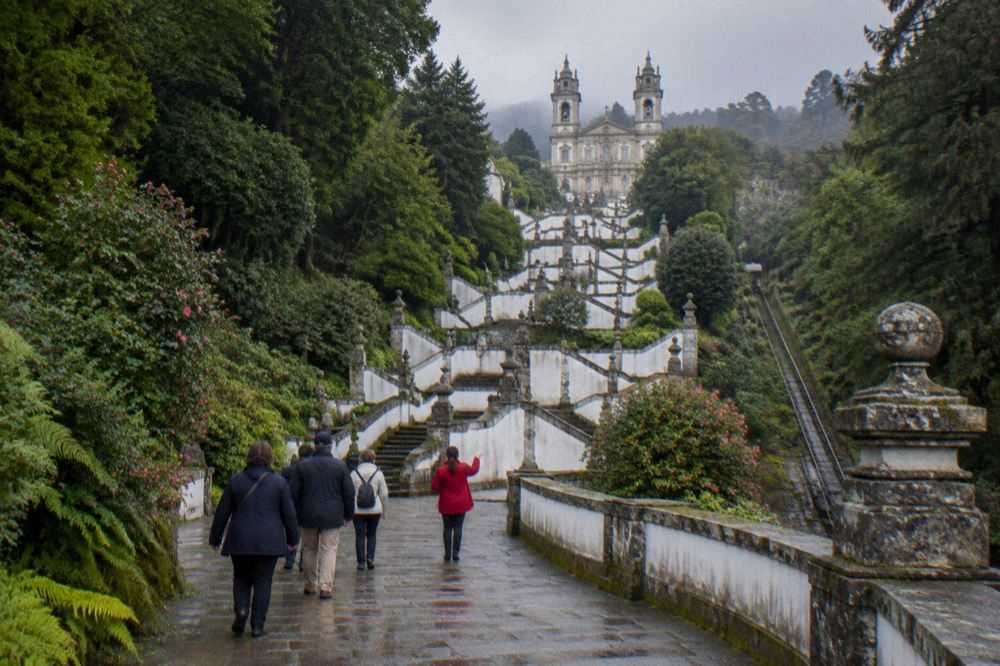
The Escadório do Bom Jesus do Monte is 566 steps by the Confraria's own count, 615 metres long with 116 metres of ascent, laid out in three named sections: the Escadório do Pórtico, the Escadório dos Cinco Sentidos and the Escadório das Virtudes. It is free, open whenever the grounds are, and it is the way the sanctuary was designed to be approached, with chapels, fountains and statuary unfolding on the way up.
The stairway is the heart of Bom Jesus. Pilgrims and tourists have climbed it for centuries, and the UNESCO inscription of 2019, under criterion (iv), rests on the ensemble of the Via Crucis, the fountains and the formal gardens that the stairway threads together. The three sections carry distinct iconography: the Pórtico stairway, the Five Senses with their allegorical fountains, and the Virtues. Walking up is therefore not a detour from the sight, it is the sight.
The climb is a real effort, and the numbers explain why: 116 metres of ascent is comparable to a multi-storey building, taken at a pilgrim's pace with stops at each fountain. Most visitors manage it in stages, and the benches and landings invite exactly that. Coming down is easier on the lungs and harder on the knees, and the shuttle or, when it returns, the funicular can take you down while you climb up on foot, a common compromise. The how many stairs are there in Bom Jesus do Monte answer page has the step count and the section names in full.
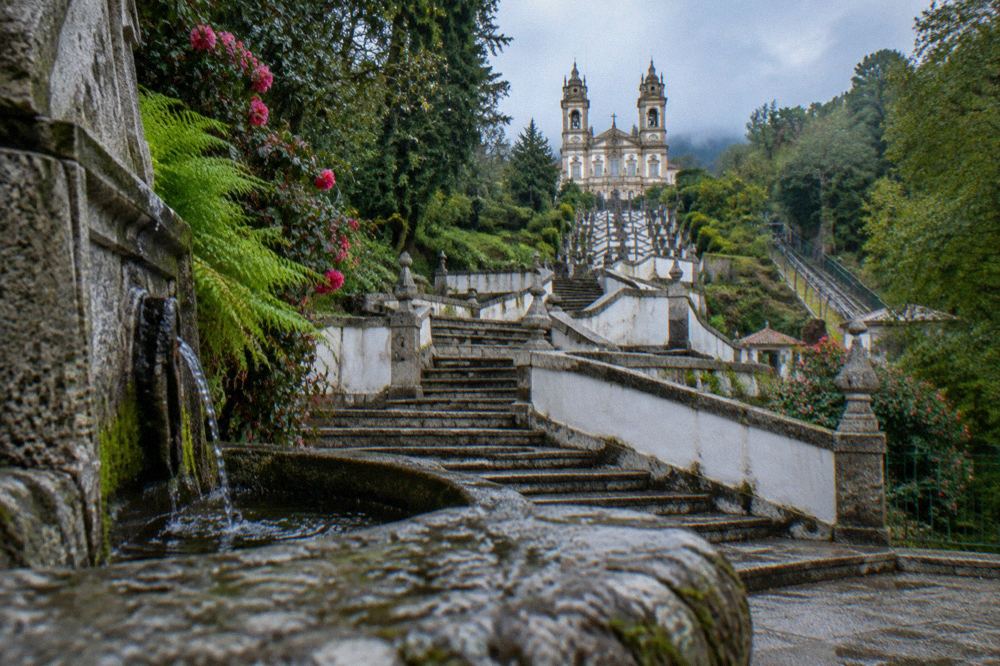
For visitors with limited mobility, the honest picture is that the stairway is not step-free and the shuttle is the accessible route to the top. The Braga accessibility guide covers the sanctuary and the rest of the city in more detail.
How Do You Get To Bom Jesus Do Monte From Porto?
Take the CP urban train from Porto São Bento or Campanhã to Braga, a journey of a little over an hour, then TUB Line 2 from the centre to the Pórtico, then the stairway or the replacement shuttle. The urban fare is priced by zone, so expect a few euros rather than a printed figure, and buy a reusable Siga Ocasional card for 0.50 EUR if you do not already have one.
The train is the backbone of any Porto-to-Braga day. Braga is the terminus of CP's urban Linha de Braga, which runs from Porto São Bento via Campanhã and Nine; the current timetable has been valid since 26 July 2026, with the first departure from São Bento at 06:05 and the last at 00:50. Faster and dearer options exist: the Alfa Pendular from Porto Campanhã takes about 38 to 42 minutes and costs 17.00 EUR in Turística class or 23.30 EUR in Conforto, per the CP fare table valid from 1 January 2026. The urban train is the budget choice; the Alfa Pendular is the comfort choice.
Once at Braga station, the walk to the Line 2 stops in the centre is short, and the whole transfer from platform to Pórtico can be done in well under an hour including waiting time. The Porto to Braga guide lays out the train options in full, and the how to get to Braga guide covers arrival from every direction.
| Porto to Braga rail option | Journey time | Full single fare (from 1 Jan 2026) |
|---|---|---|
| CP urban train, São Bento to Braga | A little over an hour | Priced by zone, a few euros |
| Alfa Pendular, Campanhã to Braga | About 38 to 42 minutes | 17.00 EUR Turistica, 23.30 EUR Conforto |
For a day trip that skips the logistics entirely, the Braga day trip from Porto guide compares the independent route with the organised tours that run the Minho circuit from Porto, several of which include Bom Jesus in the itinerary.
How Do You Get To Bom Jesus Do Monte From Lisbon?
Take the Alfa Pendular direct from Lisbon Santa Apolónia or Oriente to Braga, about 3 hours 20 minutes at fastest, with the full single fare at 38.50 EUR in Turística and 54.60 EUR in Conforto per the CP table valid from 1 January 2026. From Braga station, follow the same final leg as everyone else: Line 2 to the Pórtico, then the stairway or the shuttle.
The Alfa Pendular is the fastest rail link between the capital and the Minho, and Braga is its terminus. Half-fare tickets exist at 19.50 and 27.50 EUR for those who qualify, and CP has run promotional fares as low as 8 EUR on selected October 2026 dates, but that promotion applies only to specific dates and should not be generalised. The Lisbon to Braga guide has the full breakdown, including what the journey looks like for a day trip versus an overnight stay.
Bom Jesus from Lisbon is a long day, and most visitors who make the trip stay at least one night. That changes the arithmetic in your favour: the hotels near Bom Jesus do Monte guide covers accommodation within walking distance of the sanctuary, and the where to stay in Braga guide covers the rest of the city, from the historic centre out to the eastern parishes closest to the hill.
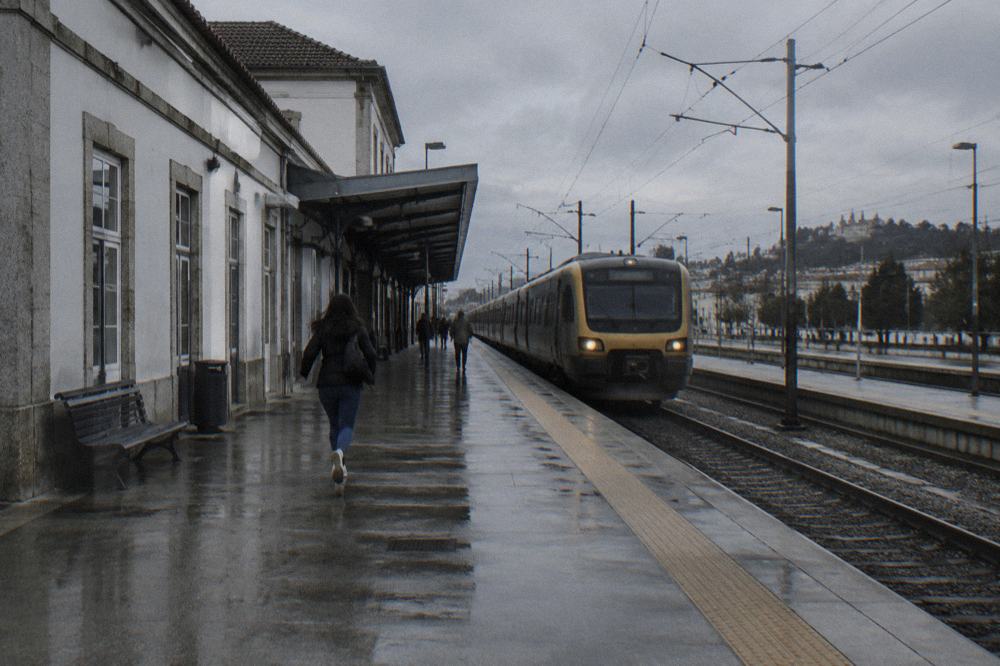
One planning note for rail travellers: urban tickets load onto a reusable Siga Ocasional or Andante Azul card, and the Siga card costs 0.50 EUR at the machines. Arriving at Braga without one means a small extra purchase before the return leg.
Should You Drive, Take A Taxi Or Walk To Bom Jesus?
Driving is straightforward: Bom Jesus has its own car park at the top of the hill, charging 1.00 EUR for cars and motorcycles, 10.00 EUR for caravans and minibuses, and 15.00 EUR for coaches, and the sanctuary's information page lists no admission charge for the grounds or basilica. Walking from the historic centre is also possible on the hill's footpaths, and a taxi or ride app covers the trip when the bus timetable does not suit.
To make the drive to the hill on your own schedule, book a rental car here.
The car park is the great advantage of arriving by car: it sits by the sanctuary itself, so drivers skip both the stairway and the shuttle. At 1.00 EUR for a car, it is one of the cheapest paid car parks attached to a major monument anywhere in northern Portugal, and it removes the only real friction of the visit, the ascent. The trade-off is the road up, which is winding and busy on event days and pleasant summer weekends.
Walking from the centre is a real option for reasonably fit visitors, and many combine it with the Bom Jesus hill area guide's routes through the wooded slopes. The last stretch is the stairway itself, so anyone walking from town should treat the 566 steps as part of the plan rather than a surprise. Taxis and ride apps handle the trip comfortably; the fare is metered and varies with traffic, so check the estimate in the app before booking. The parking in Braga guide covers the city-centre car parks for anyone leaving a car below and taking the bus up.
| Way up the hill | Cost | Notes |
|---|---|---|
| Escadório on foot | Free | 566 steps, 615 m long, 116 m of ascent |
| Replacement shuttle | Check the operator's notice | Daily 09:00 to 20:00, roughly every 30 min each way |
| Funicular (out of service) | 2.50 EUR single, 4.00 EUR return when running | Out of service since 26 September 2026, no end date |
| Car park at the sanctuary | 1.00 EUR cars and motorcycles | 10.00 EUR caravans and minibuses, 15.00 EUR coaches |
| TUB Line 2 to the Pórtico | 0.75 EUR pre-bought, 1 zone | Ends at the foot of the stairway |
For a motorised middle ground between bus and taxi, the Braga tuk tuk city tour, rated 4.8 from 179 reviews and running from 30 minutes to 2 hours, includes the city's main sights with a driver-guide, and several visitors use it as a low-effort orientation before making the hill trip under their own steam.
What Is At The Top When You Arrive?
The sanctuary's grounds and basilica are free to enter, with the basilica open every day from 08:00 to 19:00 in summer and 08:00 to 18:00 in winter, and the only priced items on the hill are the high choir and bell tower at 1 EUR and the rowing boats on the lake at 3 EUR per person per 15 minutes with a minimum of two people per boat. Mass is held at the basilica on weekday evenings and across the Sunday schedule.
The basilica sits at the head of the stairway, and the terrace in front of it is the viewpoint most visitors come for, looking west over Braga and, on clear days, out toward the coast. Inside, the high choir and bell tower form a small museum space, priced at 1 EUR, with hours that mirror the basilica's and a closure during services. The lake below the hotel and restaurant level rents rowing boats through the middle of the day, a favourite with families on the Braga with kids circuit.
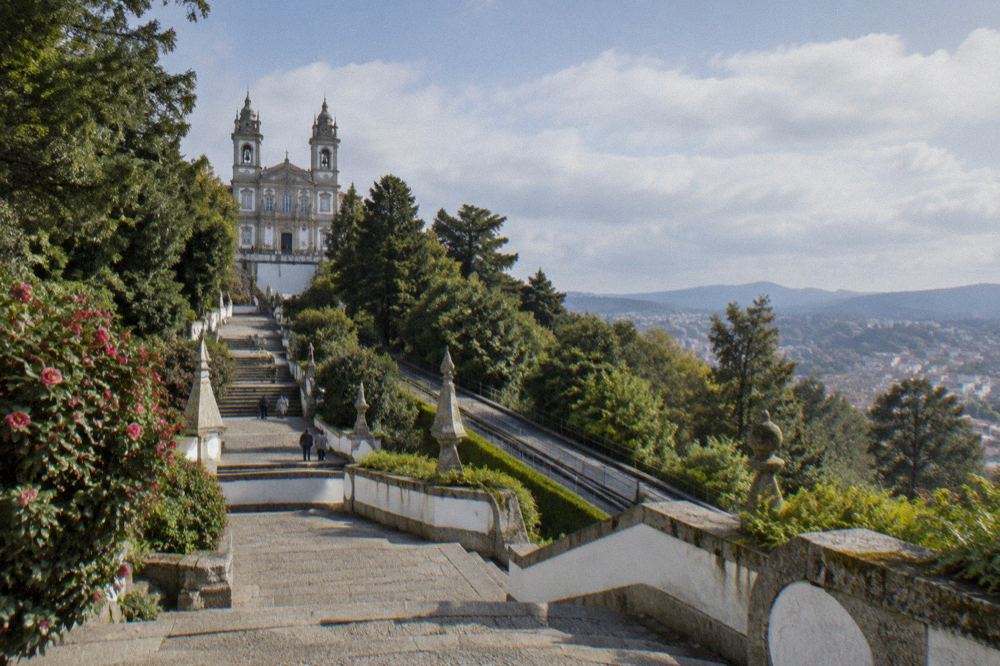
Mass times, per the Confraria's information page, are Monday to Friday at 17:00, Saturday at 08:30, and Sunday at 08:00, 11:00 and 17:00. Tourist visits to the interior pause during services, which matters more on Sundays than on weekdays. The Bom Jesus do Monte attraction guide covers the sanctuary's architecture, gardens and history in full, and the what does Bom Jesus do Monte mean in English answer explains the name.
When Is The Best Time Of Day To Make The Trip?
Go early or late: the basilica opens at 08:00 every day, the shuttle starts at 09:00, and the middle of the day brings both the strongest sun on the exposed stairway and the thinnest shade on the upper terraces. IPMA's 1991 to 2020 normals for the Braga / Merelim station show July and August averaging 28.2 and 28.7 degrees Celsius as mean daily maxima, with roughly ten days a month at 30 degrees or above, so summer midday climbs are a genuine physical effort.
The climate data makes the case plainly. The warm months are also the dry ones, with July averaging just 27.9 mm of rain and August 34.6 mm, so the odds of a rained-off climb are low from June through September, but heat replaces rain as the constraint. An 09:00 arrival at the Pórtico puts the stairway behind you before the terraces lose their cool, and the basilica will already have been open an hour.
Off-season visitors get a different trade. October is the wettest month on the Braga normals at 197.8 mm, and December and January follow close behind, but the rain falls on roughly 12 to 13 days a month, not continuously, and the sanctuary never closes for weather. The best time to visit Braga and Braga weather guides carry the full monthly breakdown for planning around it.
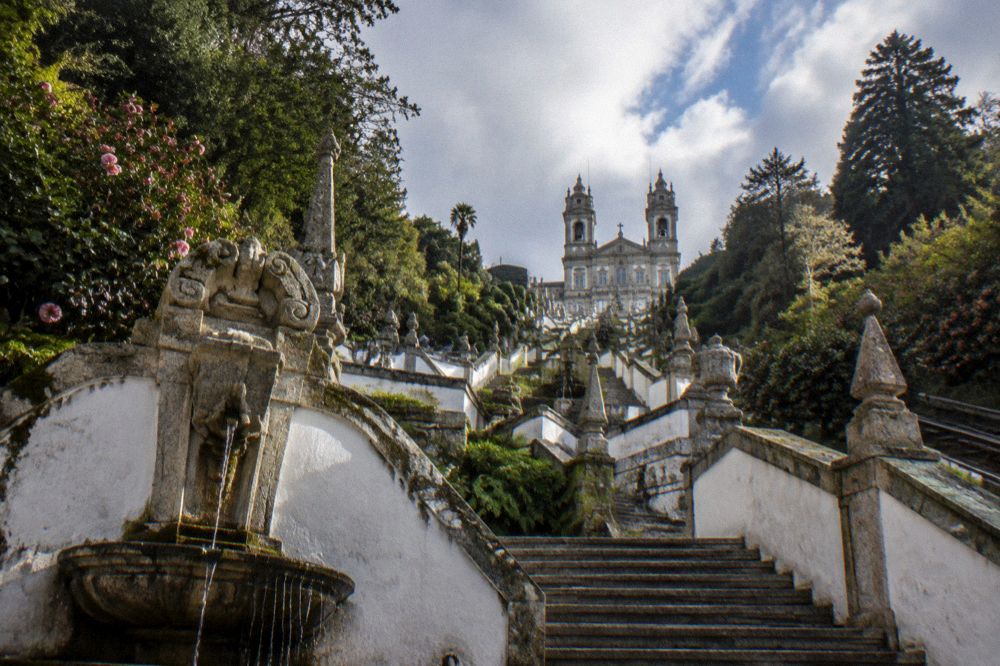
One calendar note belongs here too: during Semana Santa, the Holy Week processions that give Braga its biggest annual crowds, Bom Jesus sees a surge of pilgrim traffic, and the stairway is at its busiest. The Semana Santa in Braga guide explains what changes that week, when the 2026 edition ran from 29 March to 5 April.
Can A Guided Tour Get You Up The Hill Without The Planning?
Yes, several Braga tours include Bom Jesus in their route, among them small-group walking tours that pair the historic centre with the sanctuary and cover the transport between them. The Small-Group Braga Half-Day Tour with Bom Jesus Sanctuary, rated 4.8 from 24 reviews and three hours long, is built around exactly this combination, and the Braga Small-Group Walking Tour & Bom Jesus, rated 5 from 10 reviews, runs the same pairing at a similar pace.
A guided tour answers the two questions this page has been circling, how to get up the hill and what to look at once there, in a single booking. The guides handle the timing around the basilica's service schedule, the fountains' iconography on the stairway, and the shuttle-versus-stairway decision, which is more decision-making than most visitors want to outsource to a timetable app.
The budget end of the spectrum is covered too: the Braga personal and flexible walking tour in the historic centre, rated 4.7 from 62 reviews over three hours, keeps the focus on the city side, and visitors commonly follow it with the independent Line 2 ride to the hill, which is the exact route described at the top of this page.
For visitors who want the hill itself covered without a full walking itinerary, the tuk tuk option deserves a closer look. The Braga Tuk Tuk City Tour, rated 4.8 from 179 reviews and running anywhere from 30 minutes to 2 hours, moves at road speed rather than foot speed, and its driver-guides fold the city's history into the ride. It is the one option on this page where the transport and the tour are the same thing.
Common Questions About Getting To Bom Jesus Do Monte
How do I get to Bom Jesus do Monte from Braga city centre?
Take TUB Line 2, Ponte de Prado / Bom Jesus, from a centre stop to the Pórtico, where the line ends at the foot of the sanctuary stairway. A pre-bought one-zone ticket costs 0.75 EUR, or 1.55 EUR on board. From the Pórtico, climb the Escadório or take the replacement shuttle to the sanctuary.
Is the Bom Jesus funicular running?
No. TUB's notice of 26 September 2026 states the Elevador do Bom Jesus is out of service for maintenance, with no end date published. A replacement shuttle runs every day from 09:00 to 20:00, roughly every 30 minutes each way, between the Pórtico and the sanctuary. Check the operator's notice before you go.
How many steps does Bom Jesus do Monte have?
The stairway has 566 steps by the Confraria's own count, running 615 metres long with 116 metres of ascent, in three named sections: the Escadório do Pórtico, the Escadório dos Cinco Sentidos and the Escadório das Virtudes.
Can you walk from Braga train station to Bom Jesus do Monte?
It is possible but long, and most visitors take the bus instead: TUB Line 2 from the centre reaches the Pórtico in a short ride, and the stairway provides the final ascent. Walking the whole way from the station turns the trip into a serious hike, best saved for visitors with time and energy to spare.
Is there parking at Bom Jesus do Monte?
Yes, the sanctuary has its own car park, charging 1.00 EUR for cars and motorcycles, 10.00 EUR for caravans and minibuses, and 15.00 EUR for coaches, per the Confraria's information page. It sits by the sanctuary, so drivers skip the stairway entirely.
How much does it cost to visit Bom Jesus do Monte?
The sanctuary, grounds and basilica carry no admission charge, per the Confraria's information page. The priced items are the high choir and bell tower at 1 EUR, the rowing boats at 3 EUR per person per 15 minutes with a minimum of two people, and, when it is running, the funicular at 2.50 EUR single and 4.00 EUR return.
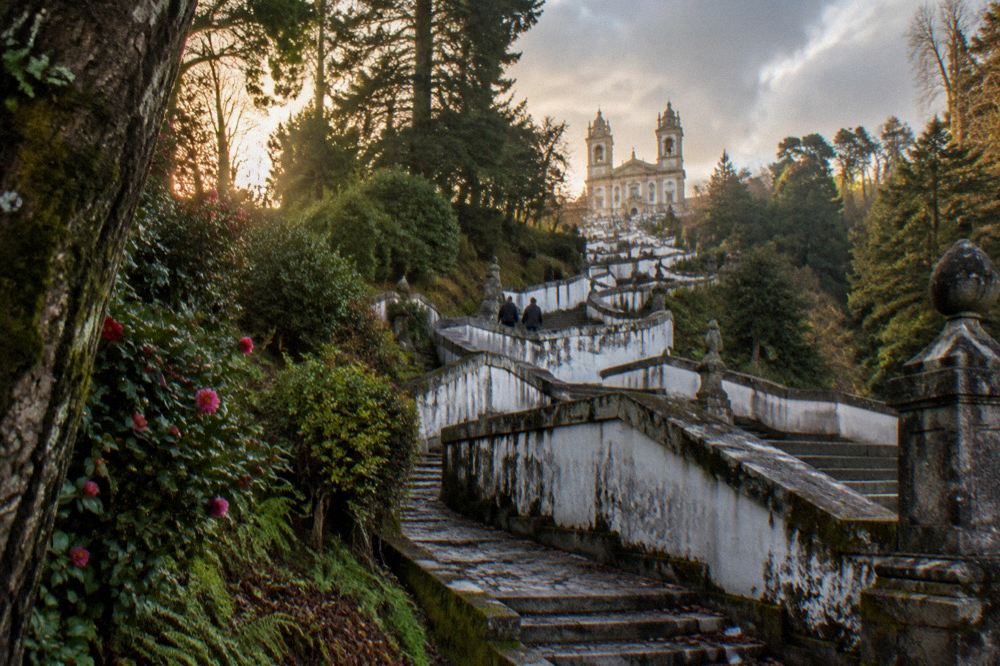
However you choose to arrive, the pattern that works for almost everyone is the same: bus or car to the foot of the hill, a deliberate choice between the 566 steps and the shuttle, and an hour or two at the top for the basilica, the terrace and the view back over Braga. The Braga Travel Guide covers the rest of the city, from the Sé de Braga to the restaurants of the historic centre, for everything you pair with the climb.