Lamaçães Braga: A Local Guide To Braga's Eastern Quarter In Northern Portugal
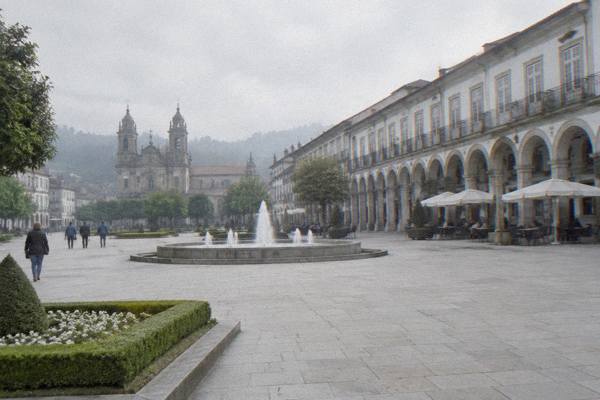
Lamaçães is the quiet eastern quarter of Braga, the city in Portugal's Minho region, sitting between the historic centre and the wooded hills that rise toward Bom Jesus do Monte.
Short answer
Lamaçães is a residential area on the eastern edge of Braga, Portugal, close to the sanctuary hill of Bom Jesus do Monte and served by the city's TUB bus network. It has few standalone sights but works well as a calm base or as the outward leg of a walk toward the eastern hillside.
Braga, the city in northern Portugal's Minho region, is usually described through its historic centre: the Sé de Braga, the Rua do Souto, the Arco da Porta Nova. But the city spreads east and uphill, and Lamaçães is the name of the quarter that occupies that eastern side, between the last streets of the centre and the first slopes of the sanctuary hills. It is a lived-in part of Braga rather than a curated one, and that is exactly why it interests travellers who want to understand how the city fits together, or who want a calmer place to sleep while the sights stay within easy reach. This guide from Braga Travel Guide sets out what Lamaçães is, what you will and will not find there, and how it connects to the rest of Braga.
Where Is Lamaçães In Braga?
Lamaçães is a quarter on the eastern side of Braga, the city in the Minho region of northern Portugal, lying between the historic centre and the wooded hills that rise toward the Bom Jesus do Monte sanctuary. It belongs to the municipality of Braga, which counted 193,324 residents at the 2021 census, and it is not part of any other place: the district of Braga, which contains Guimarães and Barcelos, is a different and much larger thing.
The distinction matters more here than in most cities, because "Braga" names three different geographies. The city is the compact core around the cathedral and the Avenida da Liberdade. The municipality is the whole administrative territory around it, and Lamaçães belongs to that territory, on the city's eastern flank. The district is a vast area of northern Portugal that includes Guimarães, Barcelos, Famalicão and part of the Peneda-Gerês National Park, and none of it is a neighbourhood you can walk to. A search for "Lamaçães Braga" almost always means the quarter, and that is what this page is about.
Geographically, Lamaçães sits where Braga stops being flat and starts climbing. To its west lie the streets of the historic centre, with the Sé de Braga and the Praça da República. To its north and east the ground rises toward the Bom Jesus hill, whose sanctuary is a UNESCO World Heritage site. To its south the city continues toward the São Vítor and Gualtar areas, the latter home to the University of Minho's Braga campus. The quarter is therefore a hinge: residential in character, but positioned on the natural line between the city's monuments and its green eastern heights.
What that means in practice is simple. Lamaçães is not a sightseeing destination in the way the centre is. There are no ticketed monuments at its heart and no famous square. What it offers is context and position: ordinary Portuguese urban life, local cafés and small shops, and a base from which both the historic centre and the sanctuary hill are straightforward to reach. Visitors who stay here trade postcard views out of the window for quieter nights and a genuine sense of how Braga's residents live.
What Is There To See In Lamaçães?
Lamaçães has few standalone sights of its own: it is a residential Braga quarter whose interest lies in its churches, its streets and its position below the sanctuary hills, rather than in ticketed attractions. The headline sights of the city, from the Sé de Braga to the Bom Jesus do Monte sanctuary, all sit within easy reach on the western and eastern sides of the area.
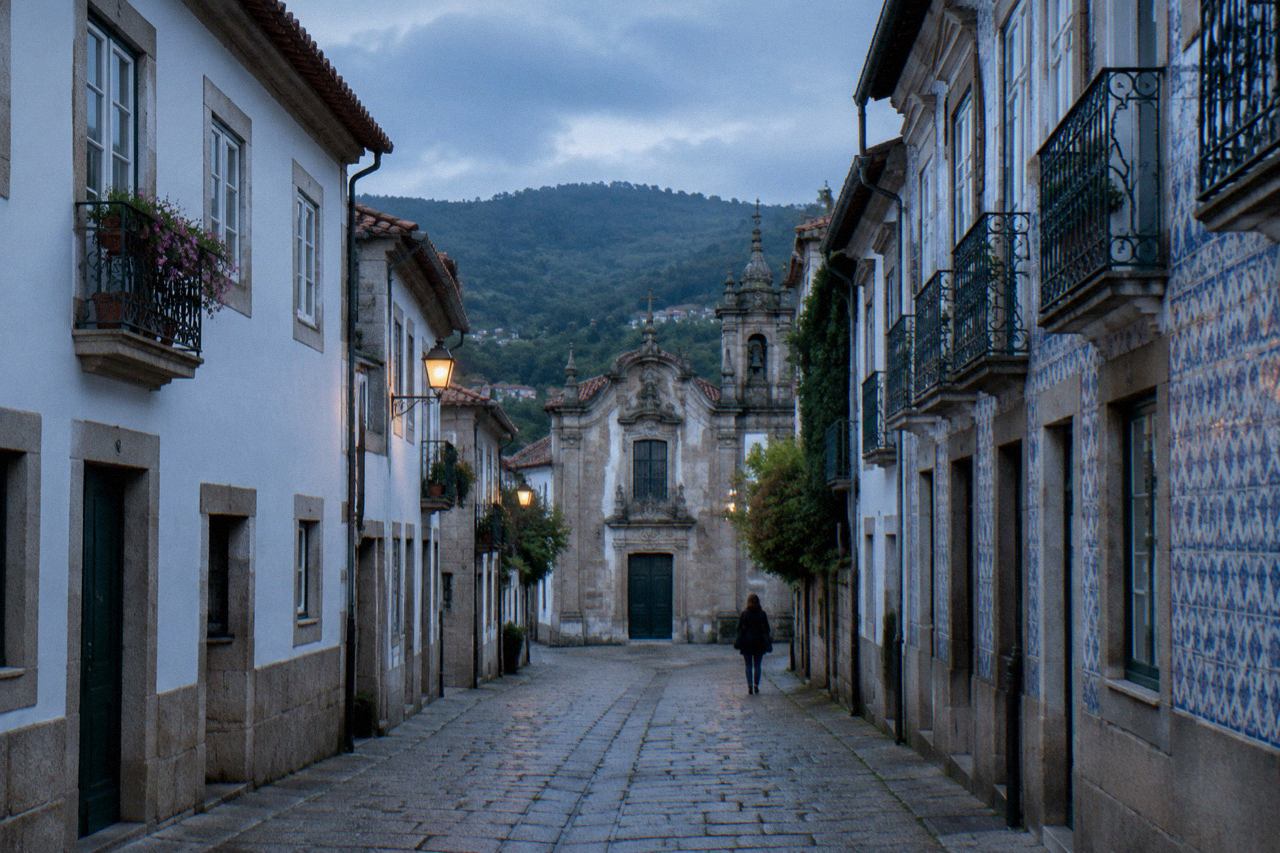
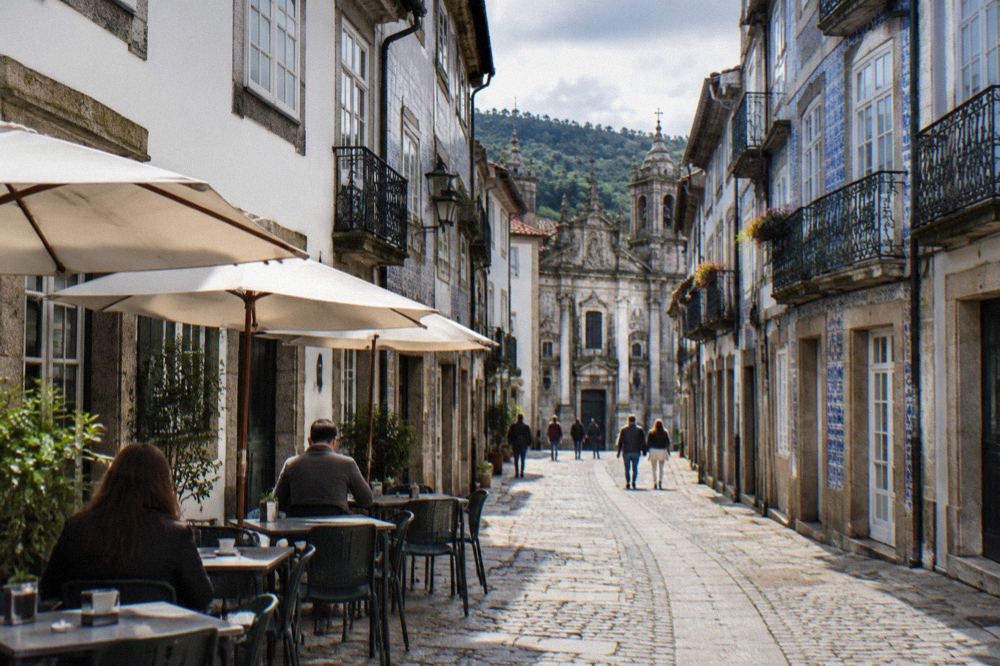
The honest answer about Lamaçães itself is that you come here for atmosphere, not for attractions. The quarter has the fabric of any long-established Portuguese neighbourhood: parish churches that anchor their streets, small grocery shops, pastelarias that fill with locals in the morning, and residential lanes that climb gently toward the green belt. Walking through it is pleasant and unhurried, and it gives a truer picture of Braga than the polished centre alone.
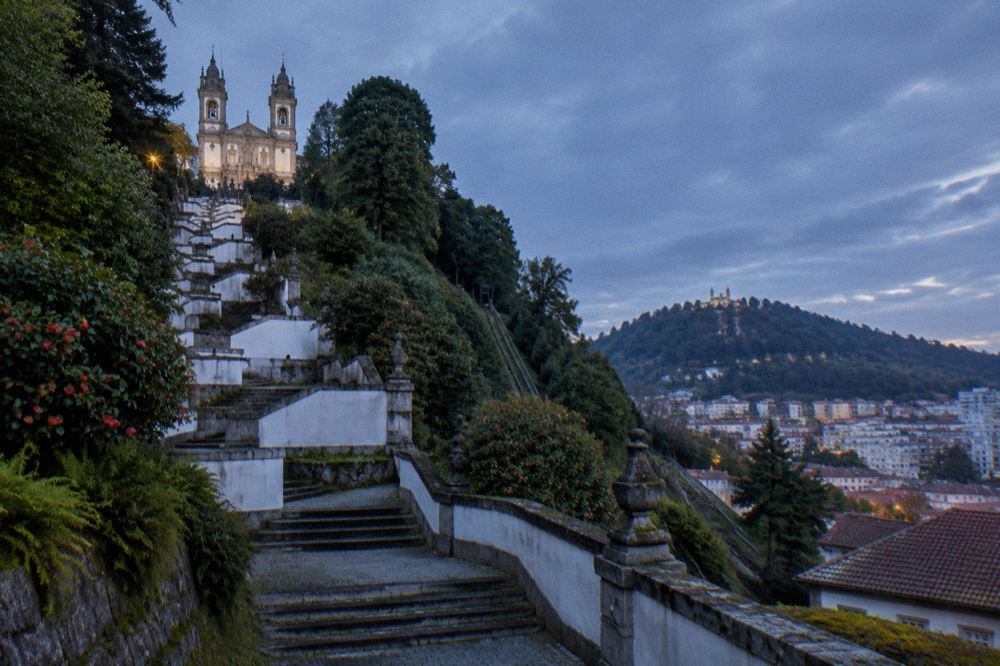
The sights that most visitors come to Braga for are all around it. To the west, the Sé de Braga sells three visit routes at 3.00 EUR each, with any two routes for 6.00 EUR and all three for 7.00 EUR, according to the cathedral's own ticket page. Also westward lie the Jardim de Santa Bárbara, the Arco da Porta Nova and the shopping streets around Rua do Souto. To the east and uphill stands Bom Jesus do Monte, the baroque sanctuary inscribed by UNESCO in 2019, whose stairway the Confraria counts at 566 steps over 615 metres and 116 metres of ascent.
For first-time visitors, the practical reading of all this is that Lamaçães works best as a base or as a passage, not as a destination with a checklist. A sensible pattern is to spend the morning in the historic centre, walk or ride east in the afternoon, and finish on the sanctuary hillside as the light softens. The things to do in Braga overview gathers the full range, and a one-day plan such as one day in Braga shows how the eastern quarter slots into a tight schedule.
If you would rather have someone shape the day for you, a guided walk is a good fit for this part of the city, since the interesting transitions between centre, quarter and hillside are easy to miss on your own.
How Do You Get To Lamaçães From Braga City Centre?
Lamaçães is reached from central Braga on the city's TUB bus network, whose 2026 tariff sets a single on-board fare at 1.55 EUR for one zone and 2.00 EUR for two zones, with pre-bought or digital tickets at 0.75 EUR and 1.50 EUR. The network covers the whole city, and the historic centre, the railway station and the eastern quarter are all inside the same fare system.
TUB, Transportes Urbanos de Braga, runs the city's buses under a tariff in force since 21 February 2026. The fare structure rewards planning: buying before you board, or using the digital ticket, roughly halves the cost of each ride. Transfers are allowed from the first validation, for one hour on a one-zone ticket and one and a half hours on a two-zone ticket, which matters when you change buses to cross the city.
| Ticket type | 1 zone | 2 zones | Transfer validity |
|---|---|---|---|
| On-board single | 1.55 EUR | 2.00 EUR | from first validation |
| Pre-bought or digital single | 0.75 EUR | 1.50 EUR | from first validation |
| Transfer window | 1 hour | 1 hour 30 minutes | included in the single ticket |
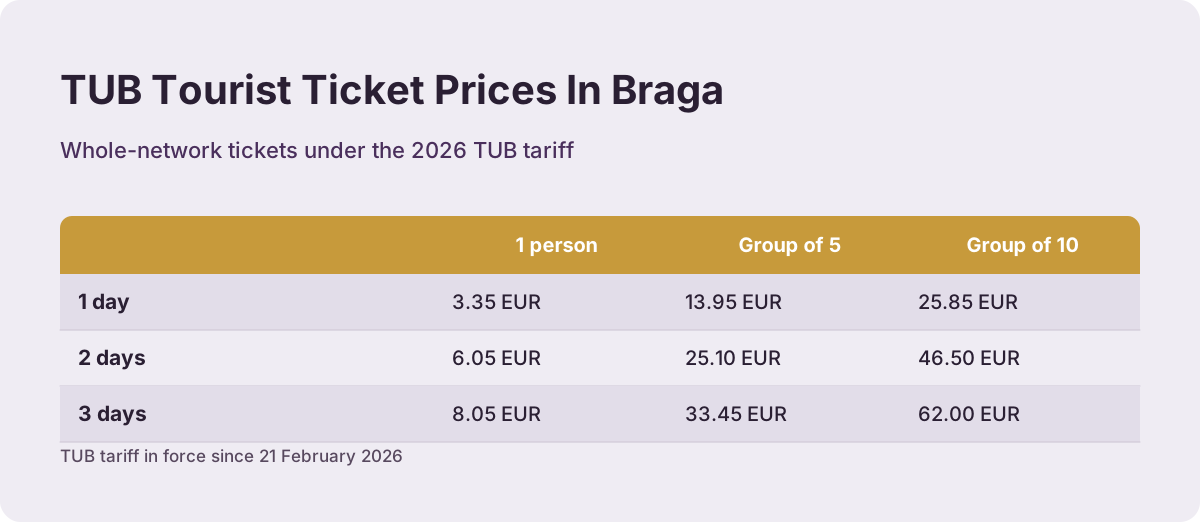
For visitors planning several days of movement, TUB sells tourist tickets valid across the whole network, and these are the only multi-use transport product of their kind in the city. There is no Braga city card or attraction pass on sale: the "Braga Card" announced by the municipality in 2025 has no purchase page, so attraction tickets must be bought separately at each site.
| TUB tourist ticket | 1 person | Group of 5 | Group of 10 |
|---|---|---|---|
| 1 day | 3.35 EUR | 13.95 EUR | 25.85 EUR |
| 2 days | 6.05 EUR | 25.10 EUR | 46.50 EUR |
| 3 days | 8.05 EUR | 33.45 EUR | 62.00 EUR |
The card itself for pre-bought tickets costs 1.00 EUR and the tourist card 1.50 EUR, per the same tariff. Walking is the other realistic option: Braga's centre is compact, and the eastern quarter connects to it by ordinary streets, though the ground rises steadily the further east you go. Anyone arriving by train should know that Braga is the terminus of CP's urban line from Porto, with the current timetable valid from 26 July 2026; the urban fare is priced by zone and you should check the current amount at the station, as this page does not carry a verified figure for it.
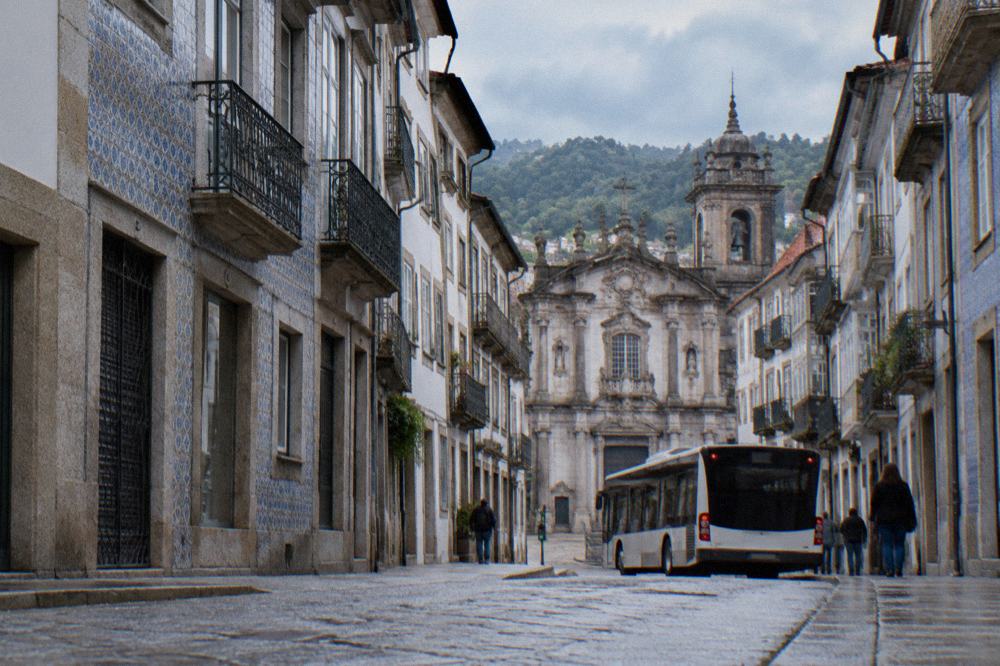
A tuk tuk tour is another way to cover the ground between centre and eastern quarter without depending on bus timetables, and it suits travellers with limited mobility or tight schedules.
Where Does Lamaçães Sit On The Way To Bom Jesus Do Monte?
Lamaçães lies on the eastern side of Braga, below and before the Bom Jesus do Monte sanctuary, which stands on the hill above the city as a UNESCO World Heritage site inscribed in 2019. The sanctuary's stairway is 566 steps by the Confraria's count, and the historic funicular that usually carries visitors up the final slope has been out of service since 26 September 2026, with a replacement shuttle running in its place.
Bom Jesus do Monte is the reason many travellers look east from Braga at all. The sanctuary faces west over the city, built up the hillside over more than 600 years, with a Via Crucis of chapels, fountains, sculptures and formal gardens described by UNESCO when it inscribed the property in 2019 under criterion (iv), over an area of 26 hectares. The stairway that pilgrims climb has three named sections, the Escadório do Pórtico, the Escadório dos Cinco Sentidos and the Escadório das Virtudes, and the Confraria's own count puts it at 566 steps along 615 metres with 116 metres of ascent.
One thing every visitor must currently check before assuming a ride uphill: the Elevador do Bom Jesus, the water-counterweight funicular inaugurated on 25 March 1882, has been out of service since 26 September 2026, with no end date published. A replacement shuttle runs every day from 09:00 to 20:00, roughly every 30 minutes in each direction, between the Portico, where TUB Line 2 ends, and the sanctuary. The operator's notice is the place to confirm the situation on the day you go.
| Bom Jesus hill fact | Detail |
|---|---|
| UNESCO inscription | 2019, cultural property, criterion (iv), 26 ha |
| Stairway | 566 steps, 615 m long, 116 m of ascent (Confraria's count) |
| Funicular status | Out of service since 26 September 2026, no end date published |
| Replacement shuttle | Daily 09:00 to 20:00, about every 30 minutes each way, Portico to sanctuary |
| Basilica hours | Summer 08:00 to 19:00; winter 08:00 to 18:00, every day |
| Sanctuary and grounds | No admission charge listed on the Confraria's information page |
| Car parking | Cars and motorcycles 1.00 EUR; caravans and minibuses 10.00 EUR; coaches 15.00 EUR |
The quarter's position relative to all this is what makes it interesting. Lamaçães sits in the belt of city streets that runs out toward the hill, so a visitor heading east from the centre passes through or near it on the natural line of approach. TUB Line 2, Ponte de Prado to Bom Jesus, ends at the Portico at the foot of the stairway, and from there the choice is the 566 steps on foot or the shuttle up the slope. The Bom Jesus funicular guide carries the full picture, including what to do when the lift is stopped.
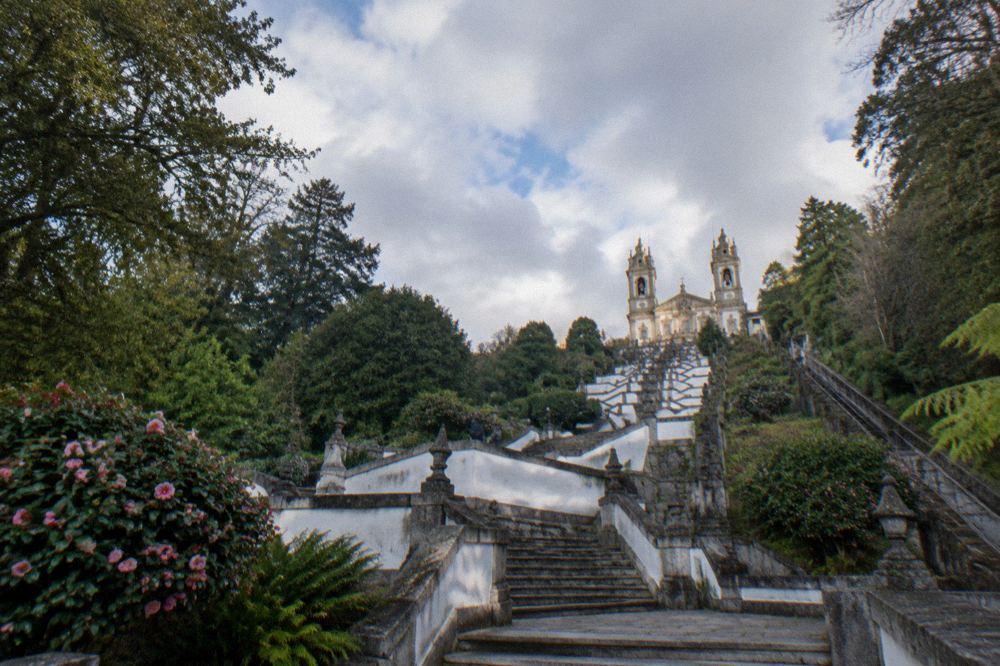
The shuttle, the stairway and the basilica are all free of booking complexity, but the hill is a real walk, so shoes and water matter more in summer, when IPMA's 1991 to 2020 normals for the Braga / Merelim station show a mean maximum of 28.7 C in August. Early morning is the sensible hour for the climb between June and September, and the same advice holds for anyone walking out from the eastern quarter rather than riding. For visitors who want the hillside explained rather than simply climbed, a guided tour that pairs the city and the sanctuary turns the transit through Lamaçães into part of the story rather than a blank stretch between two sights.
Where Can You Eat And Drink In Lamaçães?
Lamaçães eats the way residential Braga eats: small neighbourhood restaurants, pastelarias and cafés rather than destination dining, with the city's famous dishes, from bacalhau à Braga to the pudding pudim Abade de Priscos, found on menus across the city including its eastern quarter. This page does not carry verified details of individual Lamaçães restaurants, so treat any specific address as something to check on the day.
The food culture of Braga is one of the strongest reasons to visit the city, and it is not confined to the centre. Bacalhau à Braga, fried cod with potatoes and cabbage, is the city's signature dish, and pudim Abade de Priscos, a caramel egg pudding, is its signature dessert. Frigideiras doce, sweet pastries of a type Braga has made for generations, appear in pastelarias everywhere, eastern quarters included.
What Lamaçães specifically adds is the everyday layer: the morning bica and torrada, the lunch menu do dia at prices aimed at residents rather than visitors, the unmarked grill that fills with families on Sunday. None of that is documented in the verified sources behind this page, and inventing a restaurant name would be worse than saying plainly that you should explore. The what to eat in Braga guide carries the verified dishes, and the Braga restaurants guide covers where to look for them across the city.
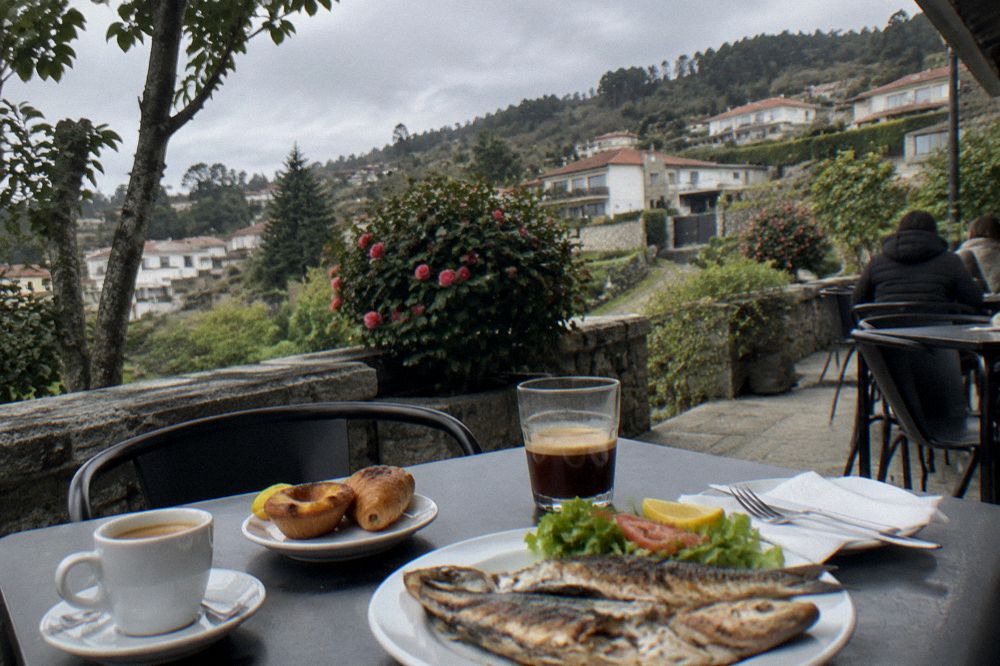
Two practical notes apply to eating anywhere in Braga. First, tipping follows Turismo de Portugal's own guidance: service is included in the bill in restaurants, though it is customary to leave an additional tip of about 5 to 10 percent of the total, and taxi drivers are tipped 5 to 10 percent or by rounding up to the nearest euro. Second, the Minho region's wine is vinho verde, the young, lightly sparkling wine from the area's rainy hills, and it is the default pour with any meal in Braga; the vinho verde guide explains the style in full.
A food tour is the efficient way to convert a stay on the quiet eastern side into a genuine introduction to Minho cooking, since the best examples of the region's table are scattered rather than concentrated.
What Is It Like To Stay In Lamaçães?
Staying in Lamaçães means staying in residential Braga, east of the historic centre, with quieter nights and lower accommodation pressure than the streets around the cathedral, at the cost of a short bus ride or an uphill walk to the main sights. Every guest aged 16 and over pays Braga's municipal tourist tax of 1.55 EUR per person per night, for up to 4 nights, all year.
The tourist tax is the one hard number every Braga visitor should know before booking. The municipality's 2026 fee table sets it at 1.55 EUR per person per night, up from 1.50 EUR in 2025, charged by hotels and local accommodation whatever the booking channel, for a maximum of 4 consecutive nights per person per stay. It applies all year, since a 2025 regulation change removed the old seasonal limit. Guests under 16 are exempt, as are medical stays and guests with 60 percent or more incapacity.
Beyond the tax, the character of a stay in the eastern quarter is about trade-offs. The historic centre puts the cathedral, the gardens and the café A Brasileira within a few minutes' walk, but it is the loudest and busiest part of the city, especially during Semana Santa, which in 2026 ran from 29 March to 5 April, and during the Festas de São João, which ran from 17 to 24 June. Lamaçães and the neighbouring São Vítor area remove most of that noise and put the sanctuary hillside closer, which suits early risers who want the stairway before the crowds.
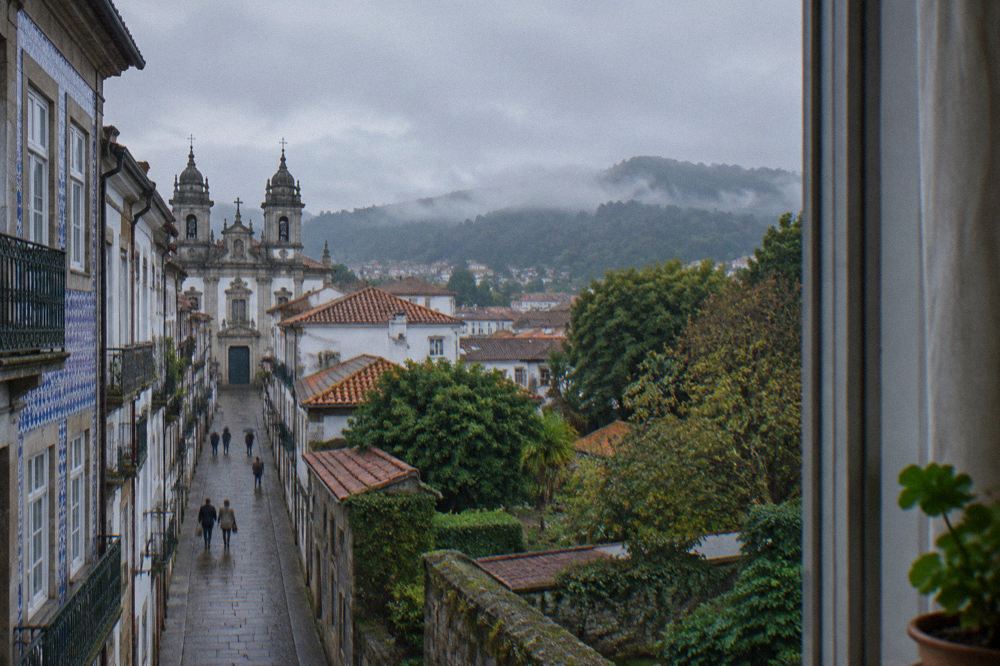
The wider accommodation picture is covered in the where to stay in Braga guide, including the hotels near the sanctuary hill, and the city's newest openings show the direction of travel: the Lince Braga, a four-star hotel opened in summer 2025, holds a Michelin Key in the 2026 guide, and the Esperança Hotel, a 58-room city-centre conversion, was scheduled to open in September 2026. None of that is in Lamaçães itself, but it signals that Braga's hotel market has deepened well beyond the old pensões.
For a stay based in the east, the practical pattern rarely changes: sleep quiet, breakfast locally, ride or walk west for the monuments, and finish the day uphill. A guided walk of the centre slots neatly into a day organised that way, and the related tour below is built for exactly that kind of flexible visit.
What Is The Best Time Of Year To Visit Lamaçães And Braga?
The best time to visit Braga and its eastern quarter is late spring to early autumn: IPMA's 1991 to 2020 normals for the Braga / Merelim station show July and August as the warmest months, with mean maximums of 28.2 C and 28.7 C, and July as the driest month with 27.9 mm of rain, while October is the wettest with 197.8 mm.
The climate record for Braga is specific to the city station at Merelim, altitude 68.4 metres, and it does not describe the Gerês mountains in the district, which are wetter and cooler. For the city itself, the pattern is Atlantic: mild winters, warm but rarely extreme summers, and rain concentrated from October through the winter. Days with 30 C or more average 9.8 in July and 10.4 in August, against none at all from November to April, and frost nights cluster in January, with an average of 8.5 days falling below 0 C.
| Month | Mean max C | Mean min C | Rain mm | Rain days 1 mm+ |
|---|---|---|---|---|
| January | 14.1 | 3.1 | 179.5 | 13.1 |
| April | 19.6 | 7.8 | 127.9 | 12.0 |
| July | 28.2 | 14.3 | 27.9 | 4.0 |
| August | 28.7 | 14.0 | 34.6 | 3.8 |
| October | 22.2 | 10.1 | 197.8 | 12.0 |
| December | 14.9 | 3.7 | 190.3 | 13.3 |
Two seasonal notes matter for planning around Lamaçães. First, the climb to Bom Jesus is a real effort in summer heat, so morning is the sensible hour for the stairway between June and September. Second, the city's calendar shapes crowds everywhere, including the eastern approaches to the sanctuary: Holy Week is the week before Easter and is movable, São João peaks on the night of 23 June into the 24 June municipal holiday, the Braga Romana festival falls in late May, and Noite Branca runs on the first weekend of September. The 2026 editions all took place as scheduled, and 2027 dates have not been announced for any of them.
What Day Trips Work From Lamaçães And Eastern Braga?
Day trips from Braga run on the AITC regional bus network from the city's bus station, with verified lines including line 101 to Guimarães, line 105 to Ponte de Lima, line 201 to Caldas do Gerês and line 107 to Esposende and Póvoa de Varzim, alongside trains westward toward Porto. Regional fares and journey times are not published in the sources behind this page, so check the operator's timetables before travelling.
The eastern quarter sits close to the city's outward roads, which makes it a workable base for the Minho region. Guimarães, the other great historic city of the region, is reached by AITC line 101 from Braga's central bus station, and there is no direct train between the two cities, a fact that catches out many visitors. Ponte de Lima, the riverside town with Portugal's famous medieval fair, is line 105. Into the mountains, line 201 runs toward Caldas do Gerês at the edge of the Peneda-Gerês National Park, where park entry is free and the Mata de Albergaria section charges a small seasonal car access fee with traffic limits in summer.
| AITC line | Route from Braga | Notes |
|---|---|---|
| 101 | Braga to Guimarães via the A11 | No direct train alternative |
| 105 | Braga to Ponte de Lima | Regional bus, timetable on the AITC site |
| 201 | Braga to Caldas do Gerês | Gateway to Peneda-Gerês National Park |
| 107 | Braga to Esposende and Póvoa de Varzim | The beach line via Apúlia |
| 106 | Braga to Póvoa de Varzim | Coastal connection |
| 109 | Braga to Famalicão | Regional link south |
The Guimarães and Peneda-Gerês guides carry the detail for these, and two days in Braga shows how a city day and a regional day combine. Travellers coming the other way, from Porto, will find the Braga day trip from Porto itinerary the cleanest fit. A day spent out in the region returns you to Lamaçães in the evening with the particular pleasure of a quiet quarter after a loud itinerary, and the contrast is a large part of why the eastern side earns its keep on a longer trip.
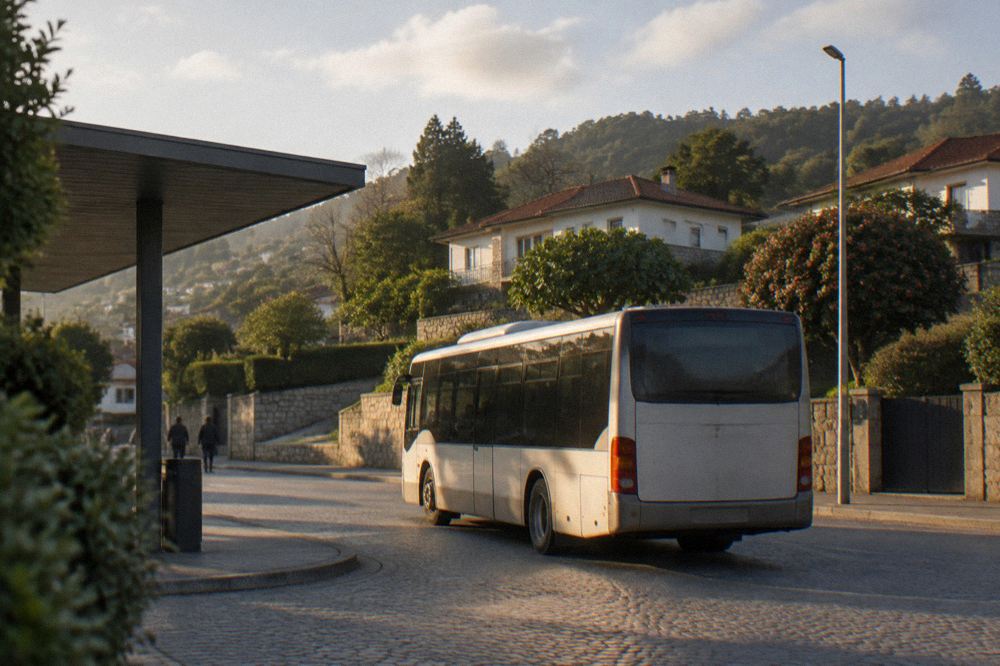
For travellers who prefer to keep the region's story in one guided thread rather than piecing together bus timetables, the same trio of Braga walks and rides below covers the options that pair best with an eastern base.
Common Questions About Lamaçães In Braga
Is Lamaçães part of the city of Braga or the district?
Lamaçães is a quarter of the city of Braga, within the municipality that counted 193,324 residents at the 2021 census. The district of Braga is a much larger administrative area that contains Guimarães, Barcelos, Famalicão and part of the Peneda-Gerês National Park, and it is not the same thing as the city or the quarter.
Can you walk from Lamaçães to Bom Jesus do Monte?
The sanctuary sits on the hill above the eastern side of Braga, and the approach on foot ends at the Portico, where the stairway begins. The stairway is 566 steps by the Confraria's count, rising 116 metres over 615 metres. The funicular has been out of service since 26 September 2026, and a replacement shuttle runs daily from 09:00 to 20:00, roughly every 30 minutes each way, between the Portico and the sanctuary; check the operator's notice on the day.
How much does the bus cost in Lamaçães?
TUB's 2026 tariff sets the on-board single at 1.55 EUR for one zone and 2.00 EUR for two zones, with pre-bought or digital tickets at 0.75 EUR and 1.50 EUR. Tourist tickets covering the whole network cost 3.35 EUR for one day, 6.05 EUR for two days and 8.05 EUR for three days per person.
Is there a tourist tax in Lamaçães?
Yes. Braga's municipal tourist tax applies across the municipality, including Lamaçães, at 1.55 EUR per person per night in 2026, for up to 4 consecutive nights, all year. It is charged by hotels and local accommodation whatever the booking channel, and applies to guests aged 16 and over.
Are there famous sights inside Lamaçães itself?
No ticketed monuments anchor the quarter. Its value is residential Braga life and its position between the historic centre and the sanctuary hills. The major sights, from the Sé de Braga to Bom Jesus do Monte, lie to the west and east of it and are covered by the city's bus network and walking routes.
Is Lamaçães a good place to stay for a first visit to Braga?
It suits travellers who want quiet nights and proximity to the eastern hillside, at the cost of a short bus ride or an uphill walk to the principal monuments. There is no city card or attraction pass on sale in Braga, so tickets are bought separately at each site regardless of where you sleep.
Lamaçães will never be the reason anyone books a flight to northern Portugal, and it does not need to be. Its role is the one it plays for the people who live there: the calm eastern ground between Braga's baroque centre and its sacred hill, best understood on foot, best timed to the dry months, and best used as the quiet half of a trip whose loud half, the cathedral square and the 566 steps, is only a short ride away.