Maximinos And Cividade
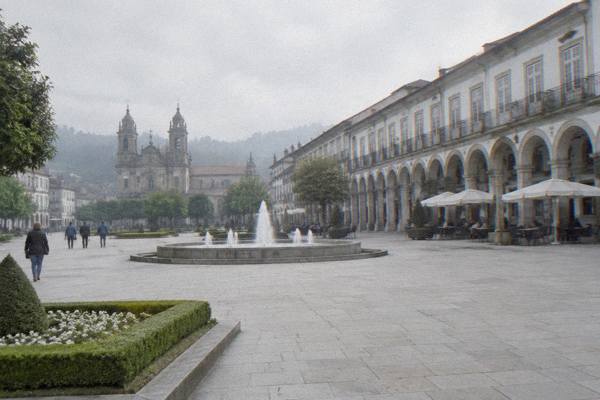
Maximinos and Cividade is the quiet western quarter of Braga, Portugal, where the city's Roman past sits closest to the surface: the baths of Alto da Cividade, the Fonte do Ídolo sanctuary and the archaeological museum that explains them all.
Short answer
Maximinos and Cividade is the area west of Braga's historic centre, on and around the Cividade hill, holding the Roman baths of Alto da Cividade, the Fonte do Ídolo sanctuary and the Museu de Arqueologia D. Diogo de Sousa. It is a residential quarter with a handful of key Roman sites, reachable in minutes from the centre.
Maximinos and Cividade is the residential quarter that spreads west and north of Braga's historic centre, in the city of Braga, northern Portugal, and it is where the Roman city of Bracara Augusta comes closest to the modern street surface. The hillside of Cividade carries the Roman baths of Alto da Cividade, the fountain sanctuary of Fonte do Ídolo sits at its foot, and the Museu de Arqueologia D. Diogo de Sousa holds the finds that explain both. Most visitors walk straight past the quarter between the Sé de Braga and the sanctuary of Bom Jesus do Monte; the ones who stop get the oldest layers of the city almost to themselves.
What Is The Maximinos And Cividade Area Of Braga?
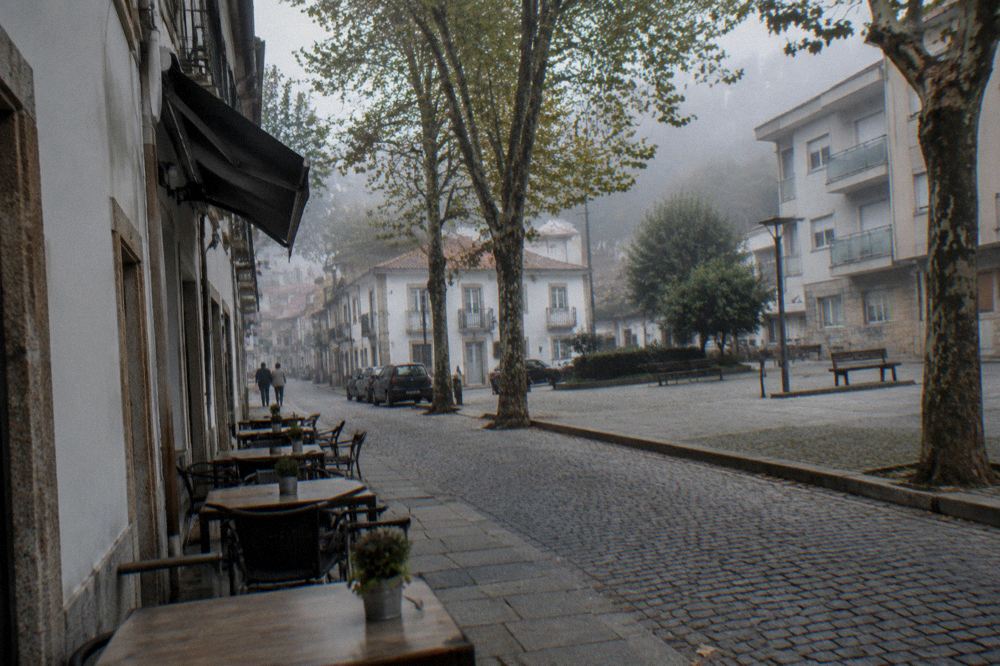
Maximinos and Cividade is the quarter immediately west and northwest of Braga's historic centre, taking its name from the parish of Maximinos and the Cividade hill where the Roman baths of Alto da Cividade were excavated. It is a lived-in residential area of stone houses, small squares and parish churches rather than a monument district, and its three Roman sites sit within easy walking distance of the cathedral.
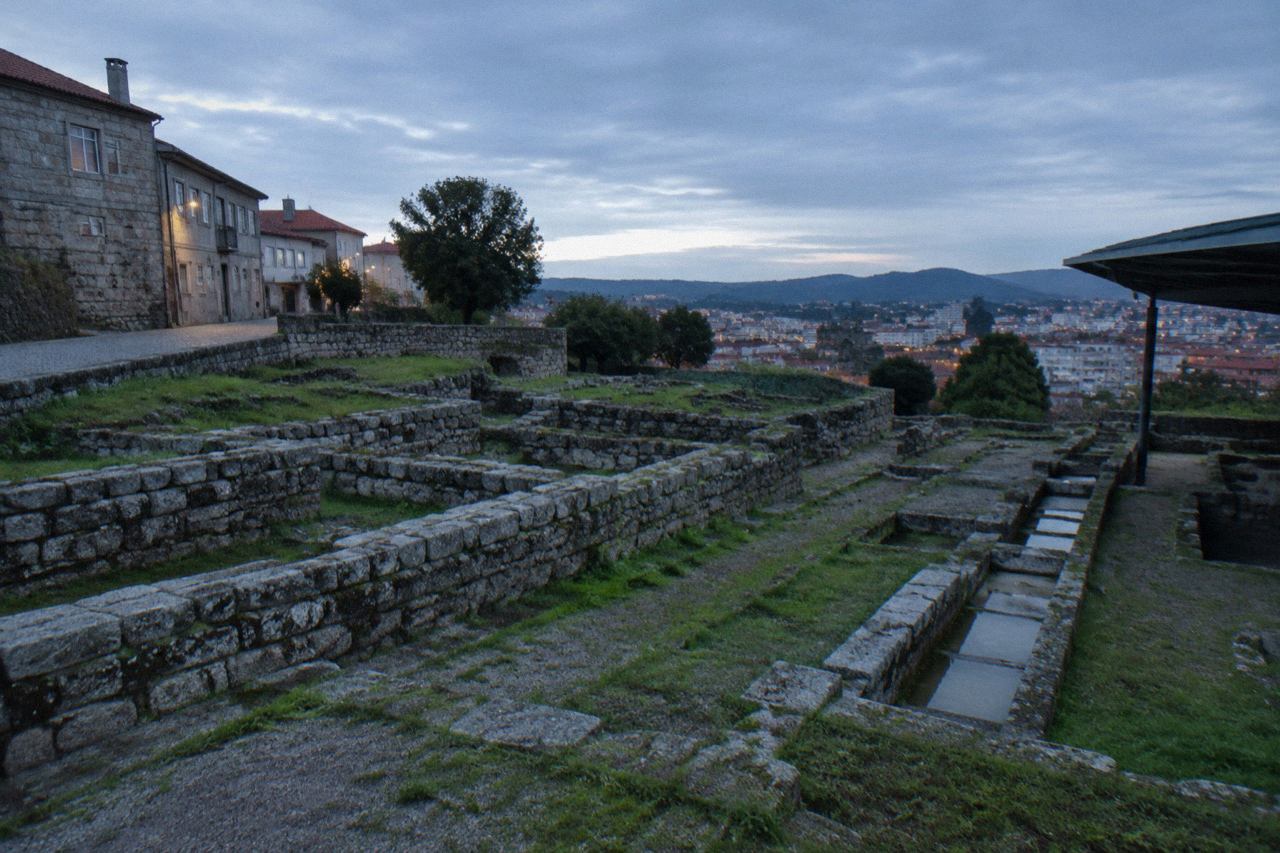
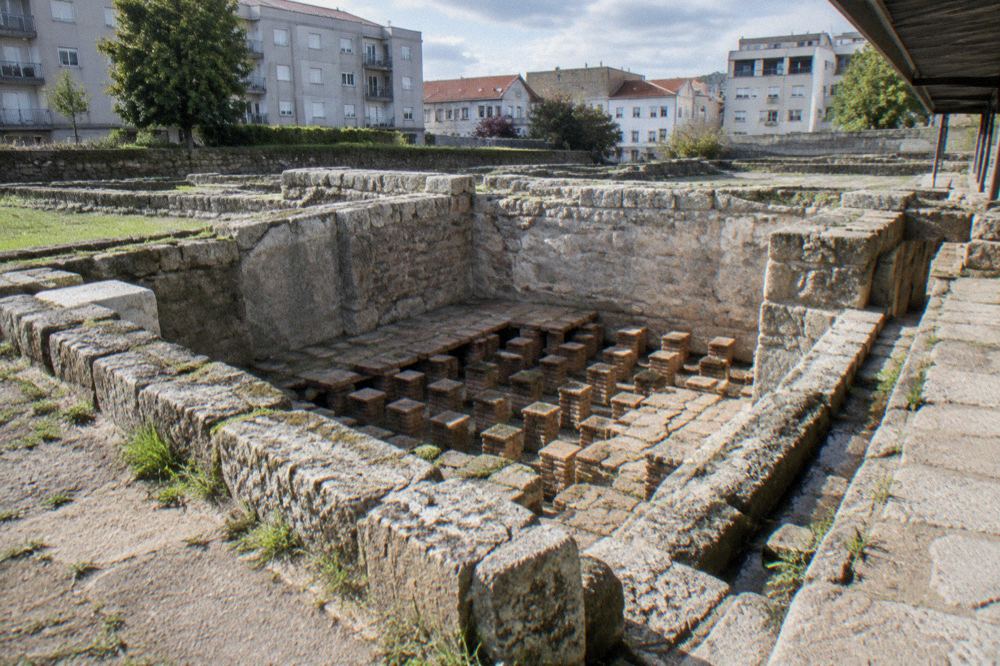
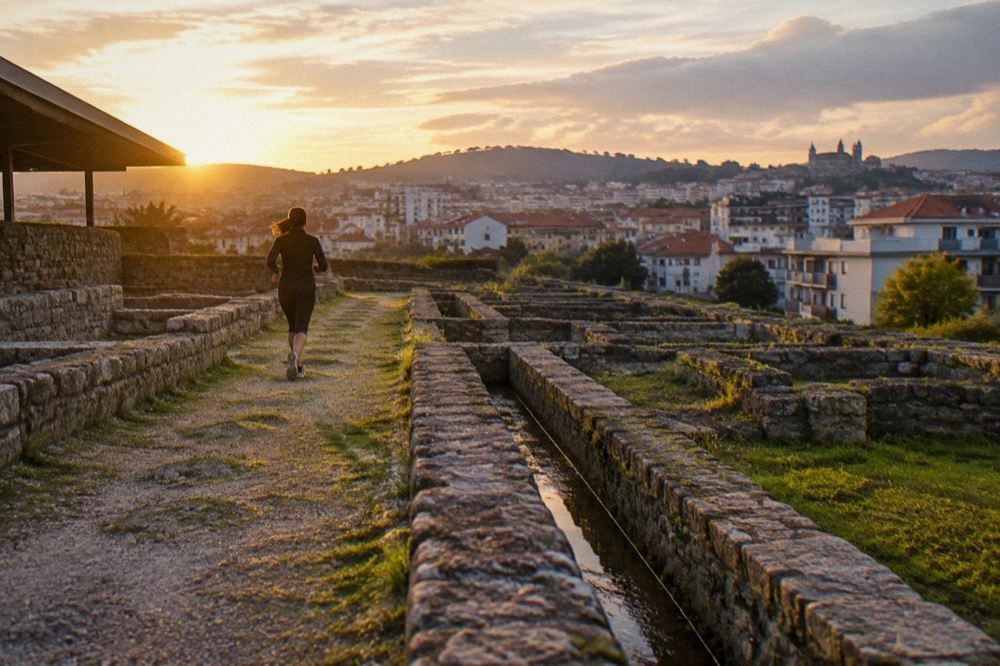
The quarter has no gate and no ticket booth. It begins where Rua do Souto ends its pedestrian run and the streets start climbing again, and it blends at its edges into the historic centre on one side and São Vítor on the other. What marks it out is geology and archaeology: the Cividade plateau, raised above the modern street grid, is where excavation uncovered a large public bathing complex from the Roman era, complete with laconicum, piscina and praefurnium, the hot room, the pool and the furnace that heated it all.
The name Maximinos comes from the parish, Santa Maria de Maximinos, and the name Cividade, shared with streets and the excavation site, refers to the hill itself. The municipality runs the Roman sites as a single free-circuit offer, and the 2026 municipal price table lists the baths and the Fonte do Ídolo together at a joint ticket, which is the cheapest and most sensible way to see both. The quarter rewards a slow hour or two, not a half-day, and it pairs naturally with the museums and churches of the centre in a route like one day in Braga.
What Are The Roman Baths At Alto Da Cividade And When Can You Visit?
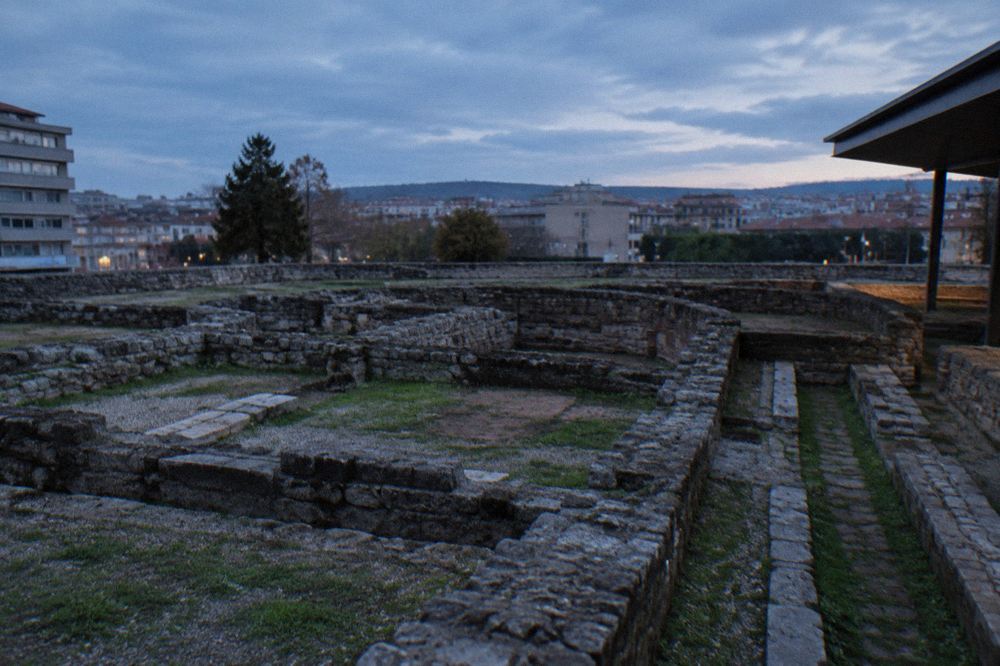
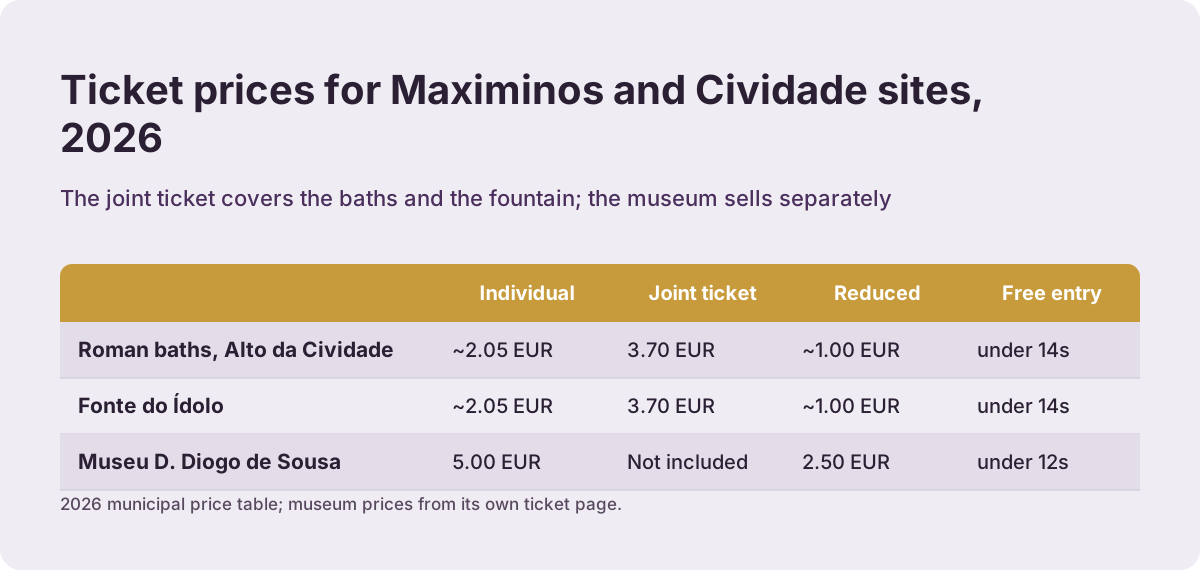
The Termas Romanas do Alto da Cividade are the excavated remains of a large Roman public bathing complex on the Cividade hill, open Monday to Friday 09:30 to 13:00 and 14:00 to 17:30, Saturday 11:00 to 17:30, closed Sundays and public holidays. An individual ticket costs about 2.05 EUR, or 3.70 EUR combined with the Fonte do Ídolo, with free entry for under 14s.
The site is an open-air excavation, covered by a protective structure, with walkways above the remains so you can read the plan of the building: the sequence of hot, warm and cold rooms, the furnace channels under the floor, the circular sweat room. Guided tours run by appointment Tuesday to Friday, and last entry is 30 minutes before closing. The municipal price table for 2026 gives the individual figure of roughly 2.05 EUR for each of the two Roman sites and 3.70 EUR for the joint ticket, with a 50 percent reduction for visitors aged 65 and over, students, teachers, youth card holders and families, and free admission for under 14s and unemployed EU residents.
| Site | Hours | Price 2026 | Notes |
|---|---|---|---|
| Termas Romanas do Alto da Cividade | Mon-Fri 09:30-13:00, 14:00-17:30; Sat 11:00-17:30 | ~2.05 EUR individual | Closed Sundays and holidays; guided tours by appointment Tue-Fri |
| Fonte do Ídolo | Mon-Fri 09:30-13:00, 14:00-17:30; Sat 11:00-17:30 | ~2.05 EUR individual | Same free circuit as the baths |
| Joint ticket, baths + fountain | Same hours | 3.70 EUR | The cheapest way to see both |
| 50 percent reduction | Same hours | ~1.00 EUR per site | 65+, students, teachers, youth card, families |
| Free entry | Same hours | 0 EUR | Under 14s, unemployed EU residents, listed professional categories |
The practical detail that matters most: last entry is 30 minutes before closing, and the site closes for national holidays except Good Friday. Check the municipality's notice before you go, because a small excavation site can close for maintenance without much fanfare. A fuller treatment of the baths themselves, including what each room was for, is on the Roman baths of Alto da Cividade page.
The baths are the headline, but the quarter reads better with a guide who can put Bracara Augusta in context, and the walking tours above all start from the centre and can be steered toward the Roman west. The Explore the Portuguese Rome tour in particular is built around the city's Roman and ecclesiastical layers, and Check availability on the operator's live listing if that framing appeals, or read the full write-up on the tour's own page.
What Can You See At The Museu D. Diogo De Sousa?
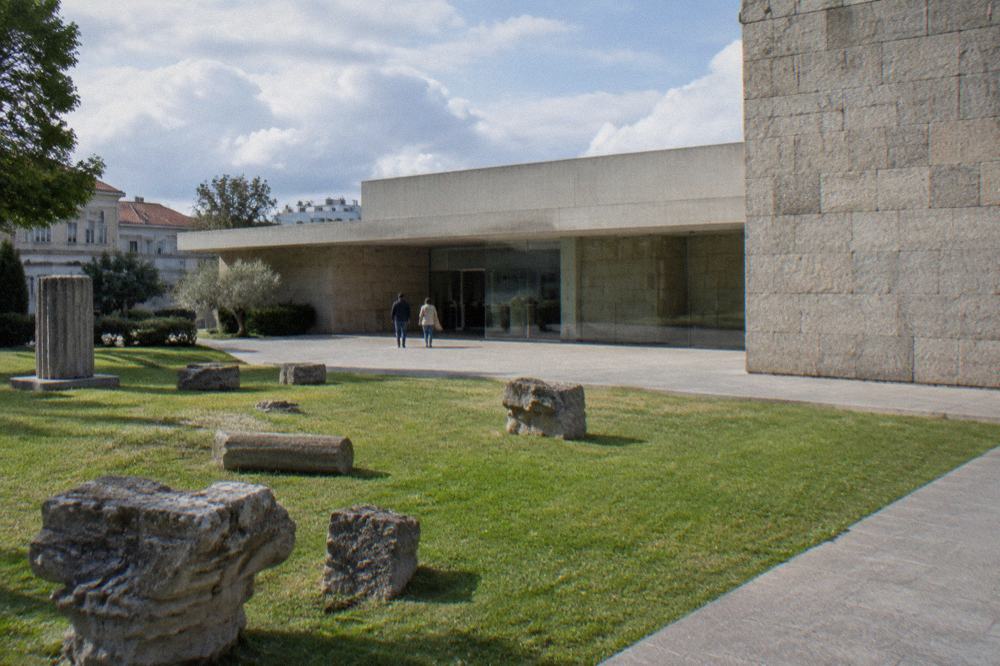
The Museu de Arqueologia D. Diogo de Sousa is Braga's archaeological museum, holding the finds from the Cividade excavations and the wider Roman city, open Tuesday to Sunday 10:00 to 17:30 with a standard ticket of 5.00 EUR. Visitors aged 65 and over, ages 13 to 24 and families pay half, 2.50 EUR, under 12s enter free with an adult, and residents of Portugal get 52 free days a year.
The museum is the interpretive engine of the whole quarter. The baths and the fountain are evocative but largely unlabelled stone; the museum holds the mosaics, the inscriptions, the ceramics and the sculpture that turn footings into a city. Its own ticket page lists the hours and prices above, with closures on Mondays, 1 January, Easter Sunday, 1 May, 24 June and 25 December. The 52-day resident rule is worth knowing even for non-residents, because it explains why the front desk may ask for ID: any resident of Portugal can pick 52 days a year, of their own choosing, to enter free.
| Category | Price | Notes |
|---|---|---|
| Normal ticket | 5.00 EUR | Permanent exhibition and finds from Roman Bracara Augusta |
| Reduced, 65 and over | 2.50 EUR | 50 percent of normal |
| Reduced, ages 13 to 24 | 2.50 EUR | 50 percent of normal |
| Families, one adult plus one minor | 2.50 EUR | Per person, 50 percent of normal |
| Children under 12 | Free | With a paying adult |
| Residents of Portugal | 52 free days a year | Any days, with proof of residence |
Plan the quarter as a triangle: the museum first, for context, then the baths up on the Cividade plateau, then the Fonte do Ídolo at the foot of the hill. All three sit within a short walk of one another, and the joint ticket logic of the two excavation sites means the museum is the only separate purchase. If your day is tight, the museum and the baths are the pair that best explain what Braga was before the archbishops arrived.
Where Is The Fonte Do Ídolo And How Do You Visit It?
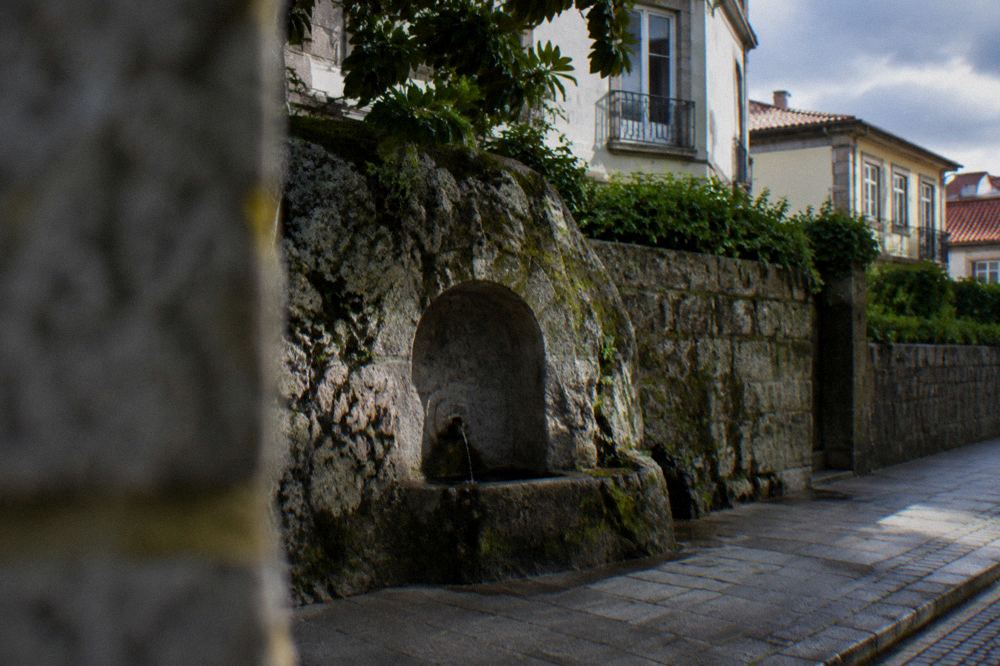
The Fonte do Ídolo is a Roman fountain sanctuary carved into living rock on Rua do Raio, at the foot of the Cividade hill, reachable on foot from the historic centre in a few minutes. It shares the free circuit's hours with the baths, Monday to Friday 09:30 to 13:00 and 14:00 to 17:30, Saturday 11:00 to 17:30, and the 3.70 EUR joint ticket covers both sites.
The fountain is a small, enclosed chamber, protected by a modern canopy, where a carved niche once held a cult image and an inscription records the dedication by a man named Celicus to the Nabia and Tongoenabi, indigenous gods of the region. It is one of the few Roman religious monuments of its kind preserved in the Iberian Peninsula, and the reason it survives at all is that it was cut into the bedrock rather than built up from it. The chamber takes ten minutes to see properly and considerably longer to forget. Other pages covering the same trip are gathered on Braga Travel Guide.
Practically, the fountain is the easiest of the three Roman sites to fold into a centre-based day, because it sits on a street you may well walk anyway. The 2026 municipal price table gives the same individual and joint figures as the baths, the same discount categories and the same free categories, and the same last-entry rule of 30 minutes before closing. Older notes mention occasional maintenance closures at the site, so check the municipality's notice before making a special trip.
What Else Is There To Do Around Maximinos And Cividade?
Beyond the three Roman sites, the quarter offers the reopened Museu da Imagem near Arco da Porta Nova, the parish church of Santa Maria de Maximinos, the residential streets and small cafes of the hillside, and easy walking links to the historic centre, the Jardim de Santa Bárbara and the Palácio do Raio on Rua do Raio. It is a quarter for wandering rather than ticking off, with most of its life in its streets and small squares.
The Museu da Imagem is the newest addition to the area's cultural offer: it reopened in early September 2026 after roughly seven years closed for rehabilitation works, in time for the Noite Branca festival, with its first exhibition running into mid-September before a pause for the Encontros da Imagem photography festival. Regular hours and prices had not been published at reopening, so check the museum's own channels before visiting. The museum of image listing on the site's overview page collects what is known.
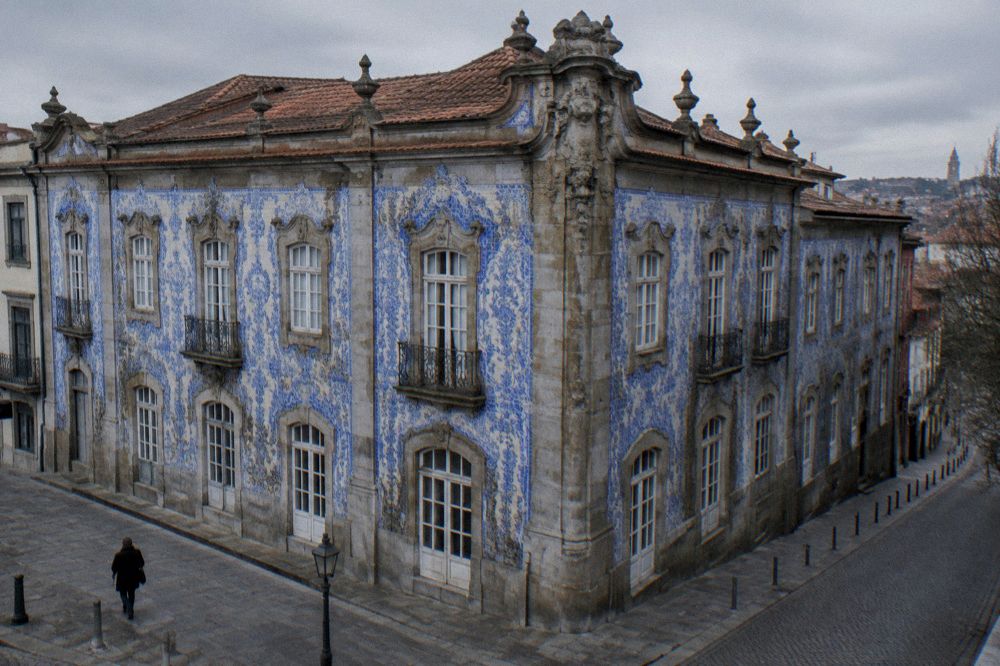
Rua do Raio, which runs along the foot of the quarter toward the centre, is one of Braga's most photographed streets, lined with merchants' houses and crowned by the blue-tiled Palácio do Raio. From the fountain it is a short continuation to the Jardim de Santa Bárbara and the top of Rua do Souto. The quarter's own Cividade streets edge, around the Campo da Vinha, has been marked for requalification since 2025, so expect scaffolding and street works in patches rather than a polished front.
For visitors who prefer to set their own route, the flexible walking tour above runs three hours from the historic centre and can be shaped around the Roman west; see current departure times and details on the tour's page.
How Do You Get To Maximinos And Cividade?
Maximinos and Cividade is a 10-minute walk west of Braga's cathedral and needs no transport if you are staying in or near the historic centre; from further out, TUB city buses run across the quarter, with an on-board single at 1.55 EUR for one zone and 2.00 EUR for two, pre-bought or digital tickets at 0.75 EUR and 1.50 EUR, and a whole-network tourist day ticket at 3.35 EUR.
The 2026 TUB tariff, in force since 21 February 2026, is the reference for every bus figure. A transfer bought on board is valid for one hour in one zone, or one and a half hours across two zones, and the tourist tickets scale to 6.05 EUR for two days and 8.05 EUR for three, which is worth it only if you plan to ride out to Bom Jesus or the stadium as well. The card itself carries a small charge, 1.00 EUR for a pre-bought ticket card and 1.50 EUR for the tourist card.
| TUB product | 1 zone | 2 zones | Notes |
|---|---|---|---|
| On-board single | 1.55 EUR | 2.00 EUR | Valid 1 hour / 1 h 30 from first validation |
| Pre-bought or digital single | 0.75 EUR | 1.50 EUR | Cheaper than buying on board |
| Tourist ticket, 1 day | 3.35 EUR | whole network | Per person |
| Tourist ticket, 2 days | 6.05 EUR | whole network | Per person |
| Tourist ticket, 3 days | 8.05 EUR | whole network | Per person |
| Ticket card | 1.00 EUR | one-off | Tourist card 1.50 EUR |
On foot, the simplest approach is from the Arco da Porta Nova: head down Rua do Raio for the fountain and the palace, then climb into the quarter for the baths and the museum. Coming from the train station, the quarter sits between you and the centre, so you may pass through it before you realise what you have passed. There is no funicular, cable car or shuttle serving this part of the city; the famous one is up at Bom Jesus do Monte, and note that it has been out of service since 26 September 2026, with a replacement shuttle running between the Portico and the sanctuary.
Where Should You Eat And Stay In Maximinos?
Maximinos and Cividade is a residential quarter rather than a dining district, so the honest answer is small neighbourhood cafes, pastelarias and a handful of family-run restaurants along Rua do Raio and the streets off it, with the heavier concentration of dinner options back in the historic centre a few minutes' walk away. Staying here puts you in quiet, local streets within walking distance of everything, usually at lower room rates than the centre.
The quarter's food identity is everyday Minho cooking rather than a tourist strip. Expect roast cod, the region's pork dishes and the green Vinho Verde that the Minho produces, rather than a curated tasting scene; the site's food pages cover what to eat in Braga and the classic dishes in detail, and the centre's restaurant rows are close enough that nobody needs to eat badly here. For the dishes that carry the city's name, bacalhau à Braga and the Abade de Priscos pudding, the centre is where the established kitchens are, and both are a short walk from the fountain.
Lodging in the quarter runs to guesthouses, small hotels and local accommodation in converted stone houses. The trade is straightforward: quieter nights, residential neighbours and a genuine morning street life, in exchange for fewer restaurants at the door. The city's hotel geography, including the area around Bom Jesus and the centre, is covered in the site's where-to-stay guidance, and the 2026 municipal tourist tax applies wherever you sleep in Braga: 1.55 EUR per person per night, up to a maximum of 4 nights, charged all year by hotels and local accommodation alike.
If this quiet quarter suits your stay, book a hotel room here.
The tuk tuk option above deserves a special mention for this quarter: the Cividade hill is a real climb, and a 30-minute to two-hour tuk tuk circuit takes in the Roman west without the uphill walk. See the details and current times on the tuk tuk tour's page.
When Is The Best Time To Visit The Cividade Hillside?
The best months to walk the Cividade hillside are May, June, September and October, when IPMA's 1991 to 2020 normals for the Braga / Merelim station show mean maximums of 23.0 to 28.7 degrees C and 6 or fewer rain days a month; July and August are the warmest but busiest, and from October to January the station records 12 to 13 rain days a month, so pack for showers.
The climate table for the city is the deciding factor for a quarter that is mostly outdoors. September is a strong pick that first-page summaries of Braga tend to miss: its mean maximum of 26.9 degrees C is actually higher than June's 26.1, and its 67.6 mm of rain and 6.2 rain days sit between the dry summer and the wet autumn. October flips hard into the wettest month of the year on average, 197.8 mm, and December and January follow close behind, so the hillside walks and open-air baths are at their least comfortable then.
| Month | Mean max C | Mean min C | Rain mm | Rain days 1 mm+ |
|---|---|---|---|---|
| May | 23.0 | 10.4 | 89.8 | 8.9 |
| June | 26.1 | 13.2 | 40.6 | 5.7 |
| July | 28.2 | 14.3 | 27.9 | 4.0 |
| August | 28.7 | 14.0 | 34.6 | 3.8 |
| September | 26.9 | 12.4 | 67.6 | 6.2 |
| October | 22.2 | 10.1 | 197.8 | 12.0 |
Frost is not a visitor problem here, but the numbers show why layering matters: even in July the mean minimum is 14.3 degrees C, so an evening on the hillside after a warm afternoon can feel cool. The site's best time to visit Braga guidance covers the festival calendar, and one timing note belongs to this page: the municipal museums and the two Roman sites close on 24 June, the São João municipal holiday, precisely when the city's biggest festival fills the centre.
Common Questions About Maximinos And Cividade
What is Maximinos in Braga?
Maximinos is a parish and residential quarter immediately west of Braga's historic centre in northern Portugal, named after the parish of Santa Maria de Maximinos. Together with the Cividade hill it forms the area where most of the city's excavated Roman remains are found, including the Roman baths and the Fonte do Ídolo.
How far is Cividade from Braga's historic centre?
The Cividade hillside begins a few minutes' walk west of the cathedral and the Arco da Porta Nova. The three main sites, the baths, the Fonte do Ídolo and the Museu de Arqueologia D. Diogo de Sousa, all sit within easy walking distance of the centre, and no transport is needed if you are staying nearby.
Do you need tickets for the Roman baths in Braga?
Yes. The 2026 municipal price table lists an individual ticket of about 2.05 EUR for the Termas Romanas do Alto da Cividade, or 3.70 EUR for a joint ticket that also covers the Fonte do Ídolo. Entry is free for children under 14, and several categories including visitors 65 and over and students pay half.
Is the Fonte do Ídolo open on Sundays?
No. The free circuit that covers the Fonte do Ídolo and the Roman baths runs Monday to Friday 09:30 to 13:00 and 14:00 to 17:30, and Saturday 11:00 to 17:30, closing on Sundays and national holidays except Good Friday. Last entry is 30 minutes before closing.
Can you visit Maximinos and Cividade on a day trip from Porto?
Yes, and the quarter fits comfortably into a day trip because all three Roman sites sit close together within walking distance of the centre. The site's Braga day trip from Porto itinerary shows how to fold the Roman west into a single-day visit, and the joint ticket keeps the cost low.
Is Maximinos a good area to stay in Braga?
It suits travellers who want quiet, residential streets within walking distance of the centre, usually at lower room rates than the hotels around the cathedral. The trade-off is fewer restaurants and bars at the door, though the historic centre is only a few minutes away on foot, and the 1.55 EUR per night municipal tourist tax applies across the city.
Maximinos and Cividade will never compete with Bom Jesus for photographs or with Rua do Souto for atmosphere, and that is exactly its value: it is where Braga stops performing for visitors and shows the layers underneath, from a fountain cut into the bedrock to a hillside that has been inhabited since the city the Romans called Bracara Augusta. Give it a slow morning, buy the joint ticket, and the rest of Braga reads differently afterwards.