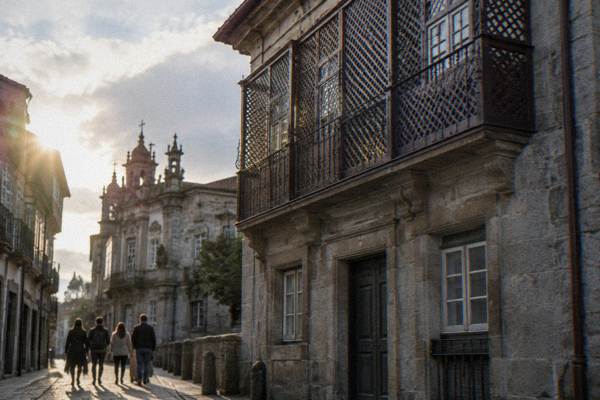
Braga Romana Festival
Braga Romana turns the historic centre of Braga, in northern Portugal, into the Roman city of Bracara Augusta for a long weekend each May. This guide covers what the festival involves, which Roman sites you can visit year round, and how to plan around it.
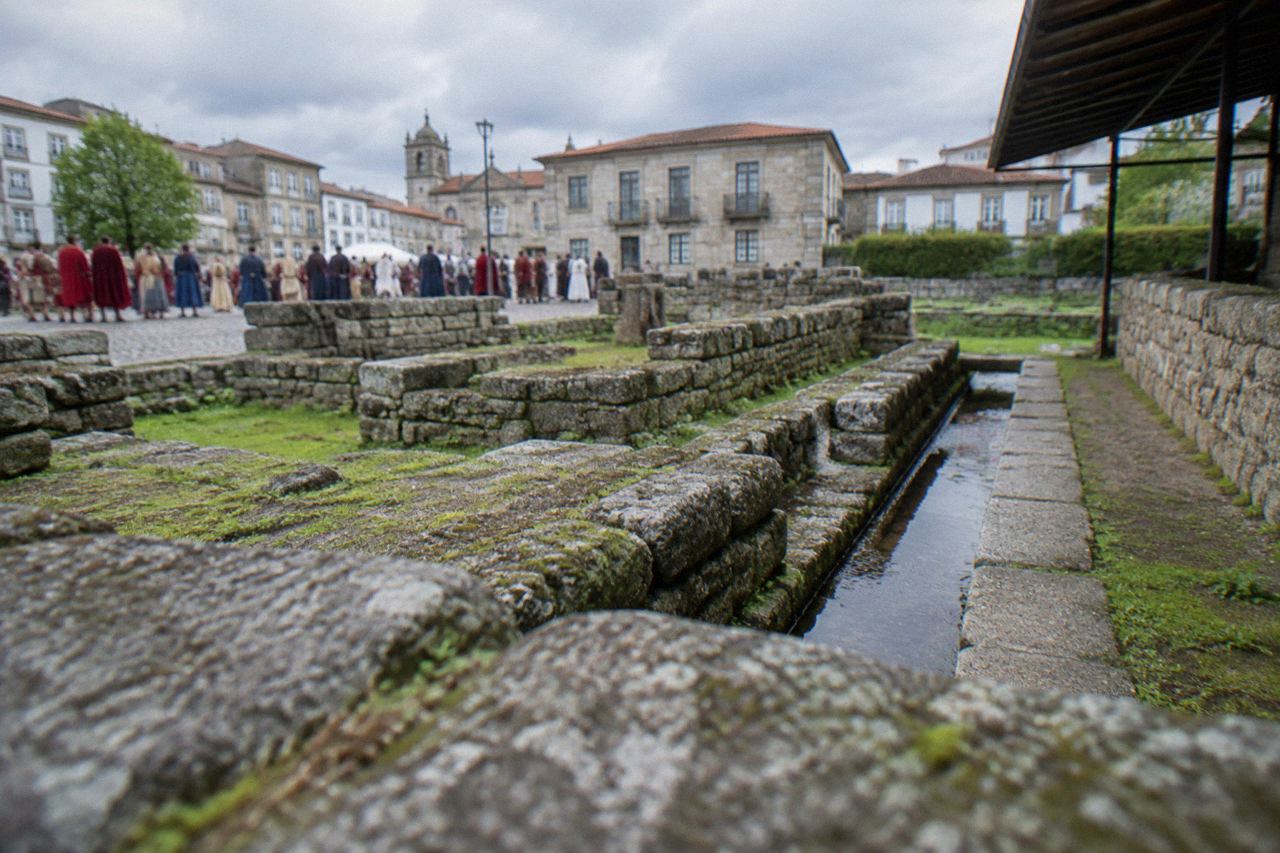
Short answer
Braga Romana is a free municipal festival held in late May in Braga, Portugal, in which the historic centre is staged as the Roman city of Bracara Augusta, with costumed performers, markets, workshops, reenactments and food. The 2026 edition was the XXII, themed Braga Romana antes de Augusto, organised by the municipality.
Braga, in the Minho region of northern Portugal, spends one long weekend each May dressed as the Roman city it once was. Braga Romana is organised by the Câmara Municipal de Braga and takes over the historic centre with costumed legions, craft markets, gladiator displays, theatrical performances and food stalls, all themed around Bracara Augusta, the Roman settlement beneath the modern city. The festival is the most accessible entry point to a Roman past that in Braga is not confined to a single monument: baths, an aqueduct shrine, a museum of Roman archaeology and stretches of the old street plan survive within walking distance of the main square. This guide explains what the festival involves, when it happens, what it costs, and how to combine it with the Roman sites you can visit on any day of the year.
What Is Braga Romana And When Does It Happen?
Braga Romana is an annual festival organised by the Câmara Municipal de Braga in which the historic centre of Braga, Portugal, is staged as the Roman city of Bracara Augusta for a long weekend in late May. The 2026 edition was the XXII, themed "Braga Romana antes de Augusto", and the programme typically runs across several days with reenactments, markets, workshops, theatre and Roman-themed food, concentrated in the streets and squares of the old centre.
The festival is a municipal production, run by the city council rather than a private operator, and it leans on local groups, schools and reenactment associations to populate the streets. Costumed participants camp in the historic centre, legionaries drill in public, and stalls sell crafts, food and drink in a style meant to evoke a Roman market rather than a modern funfair. The theme changes each edition: the 2026 theme, "Braga Romana antes de Augusto", looked at the city before the emperor Augustus, which tells you how much of the programming is genuinely educational rather than purely decorative.
Timing matters for planning. The festival falls in late May, and the municipality publishes the exact dates and programme on its own Braga Romana page each year, so check the organiser's page before fixing travel dates. Because the programme is spread across the historic centre, you do not need a ticketed entry point or a fixed itinerary: visitors drift between squares, and the atmosphere is at its densest in the late afternoon and evening. If you are weighing Braga Romana against the city's other big events, Holy Week is the most solemn and spectacular, and you can read about it in the guide to Semana Santa in Braga, while São João in June is the loudest and most crowded.
What Can You Actually See And Do At Braga Romana?
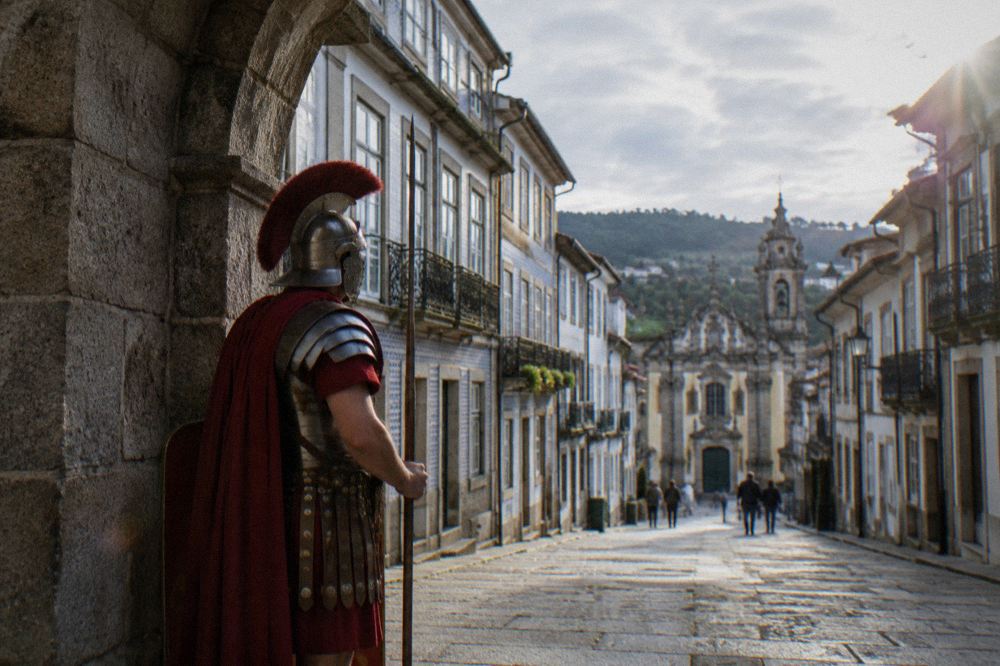
The festival programme centres on costumed reenactments, a craft and food market, legionary drills and gladiator displays, theatre and music performances, and hands-on workshops such as Roman writing, games and cookery, all staged in the streets and squares of Braga's historic centre. Most activities happen outdoors and in the open, so the experience is closer to a street festival than a ticketed show, and the programme is published by the municipality ahead of each edition.
The reliable core, across recent editions, is a market area where vendors in costume sell breads, cheeses, olives, honey and craft goods, alongside demonstrations of period trades such as weaving, pottery and metalwork. Reenactment groups stage military drills and combat displays, and there are usually scheduled theatrical moments, including processions and appearances by costumed magistrates, that give the weekend a loose narrative. Workshops for families are a fixture: children drill with wooden swords, try Roman board games and handle replica objects, which makes the festival unusually child friendly compared with Braga's more devotional events.
Two practical notes shape a visit. First, because everything is outdoors, late May weather matters, and the guide to Braga weather covers what the averages look like for that month. Second, the festival does not replace the city's regular attractions: the Sé de Braga, the museums and the Bom Jesus sanctuary remain open as normal, so the sensible plan is to mix festival programming in the streets with conventional sightseeing in the mornings. A guided walk is an efficient way to anchor the rest of the visit, and the overview of Braga walking tours compares the options.
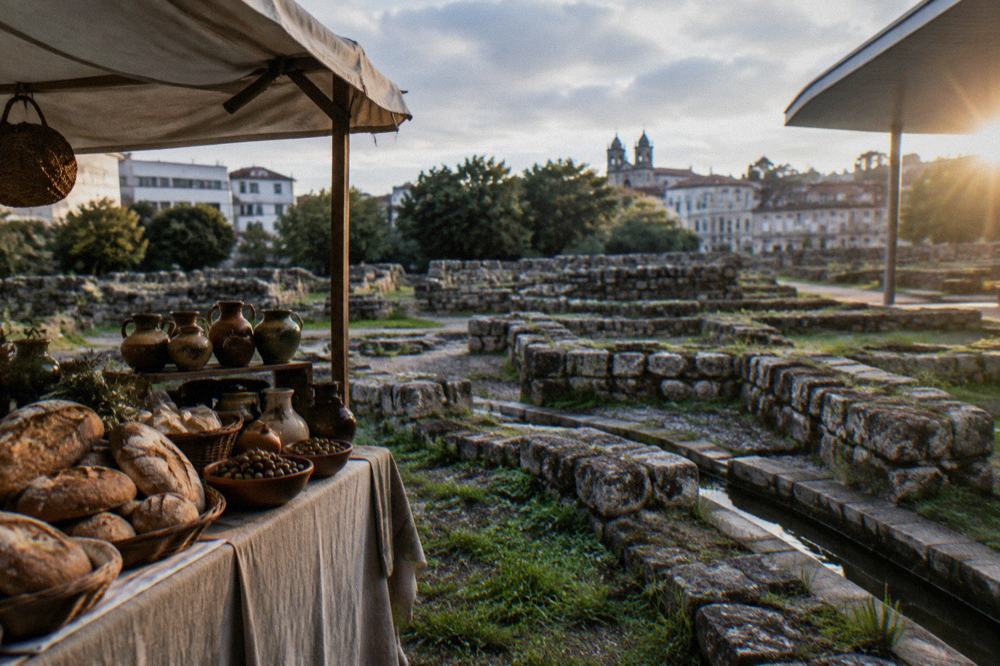
The festival also gives the Roman story a physical presence. Stands and displays are set up close to the actual Roman remains, and the programming frequently references Bracara Augusta directly, using the surviving street plan of the old centre as a stage. For visitors whose Portuguese is limited, the visual nature of most programming, drills, markets and processions, means language is rarely a barrier, though scheduled talks and theatre are usually in Portuguese.
Where Are Braga'S Roman Sites The Rest Of The Year?
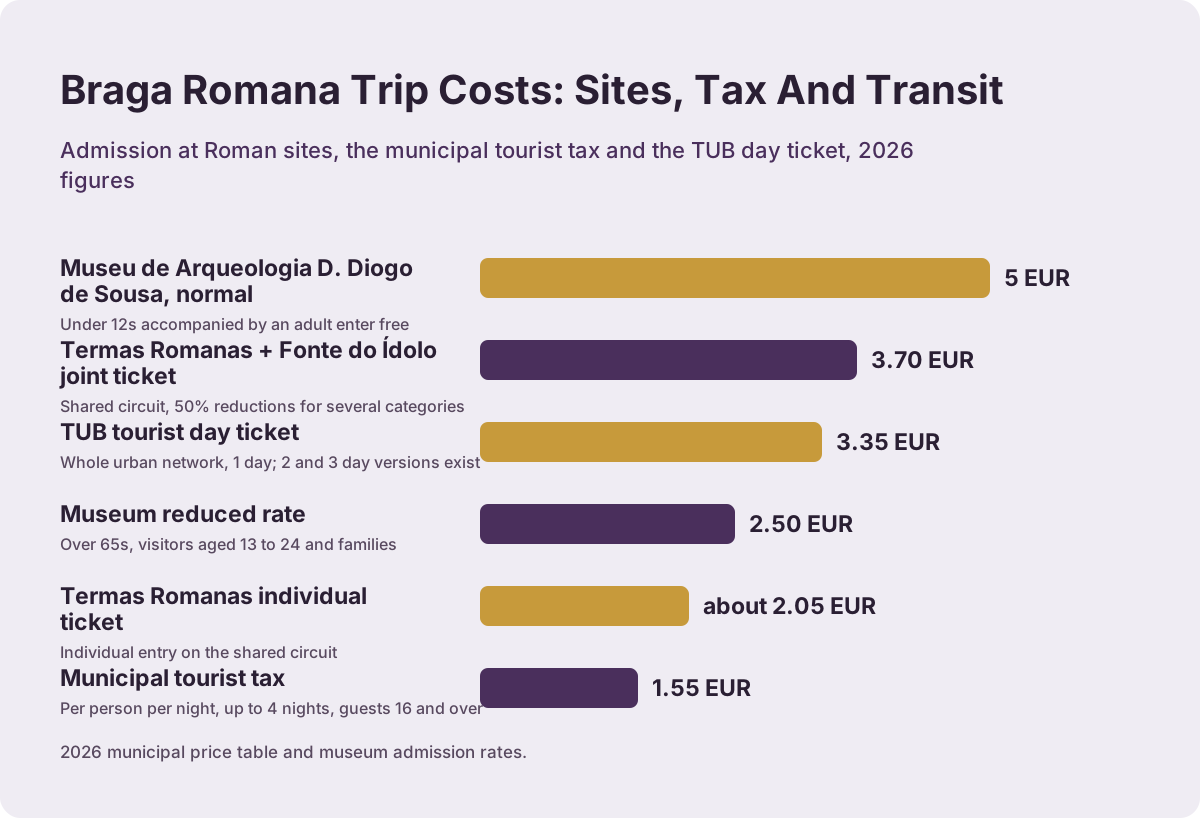
Braga's main Roman sites are the Termas Romanas do Alto da Cividade, a large public bath complex in the Maximinos area, and Fonte do Ídolo, a rock-cut fountain shrine from the Roman era, both open on a shared circuit with an individual ticket at about 2.05 EUR and a joint ticket at 3.70 EUR, plus the Museu de Arqueologia D. Diogo de Sousa, which holds the city's Roman collections and charges 5 EUR.
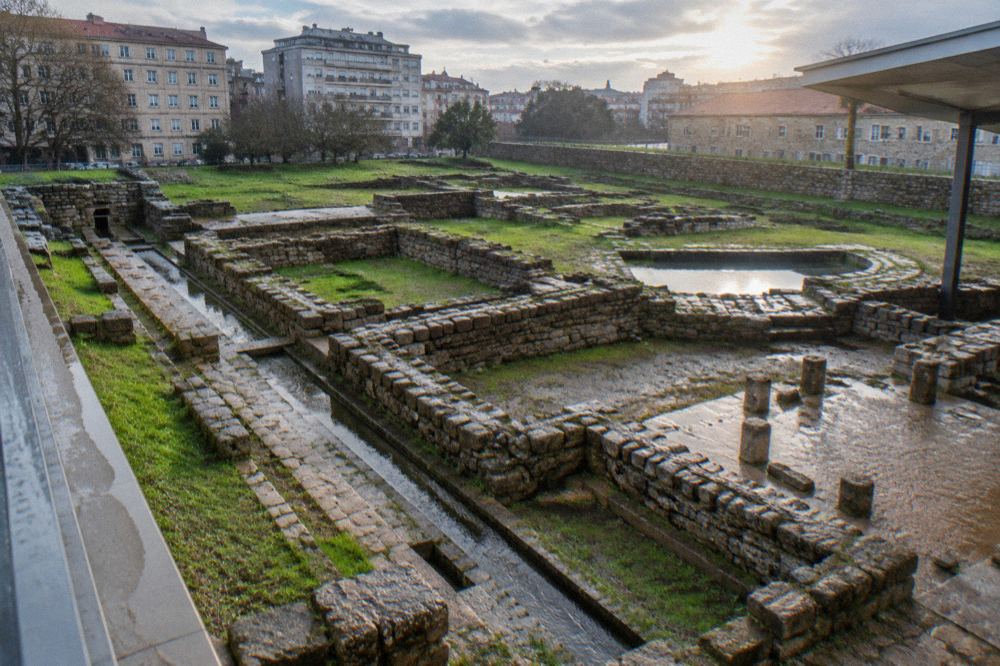
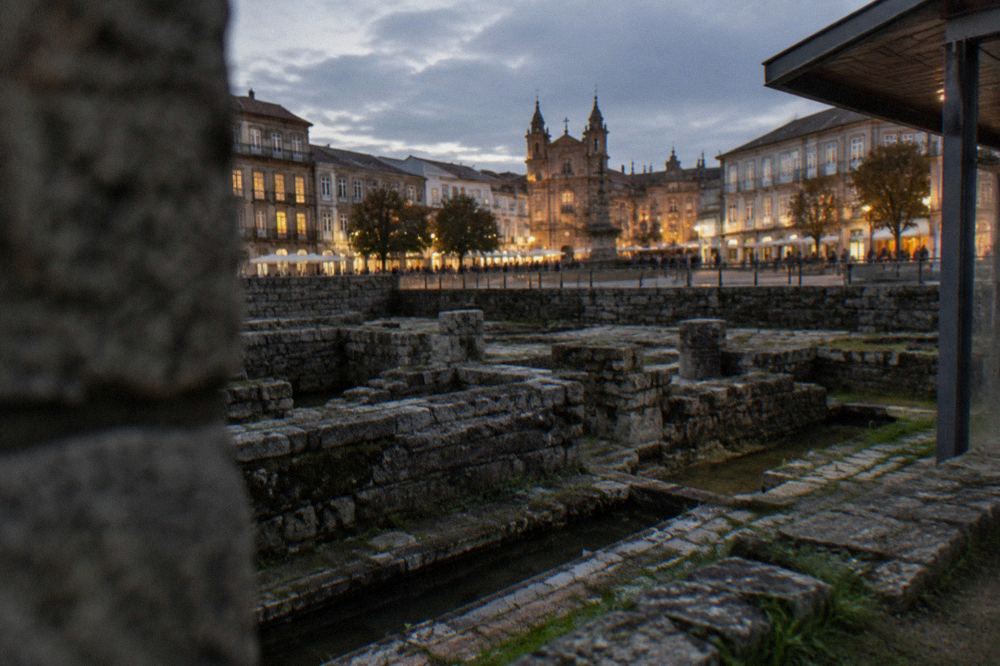
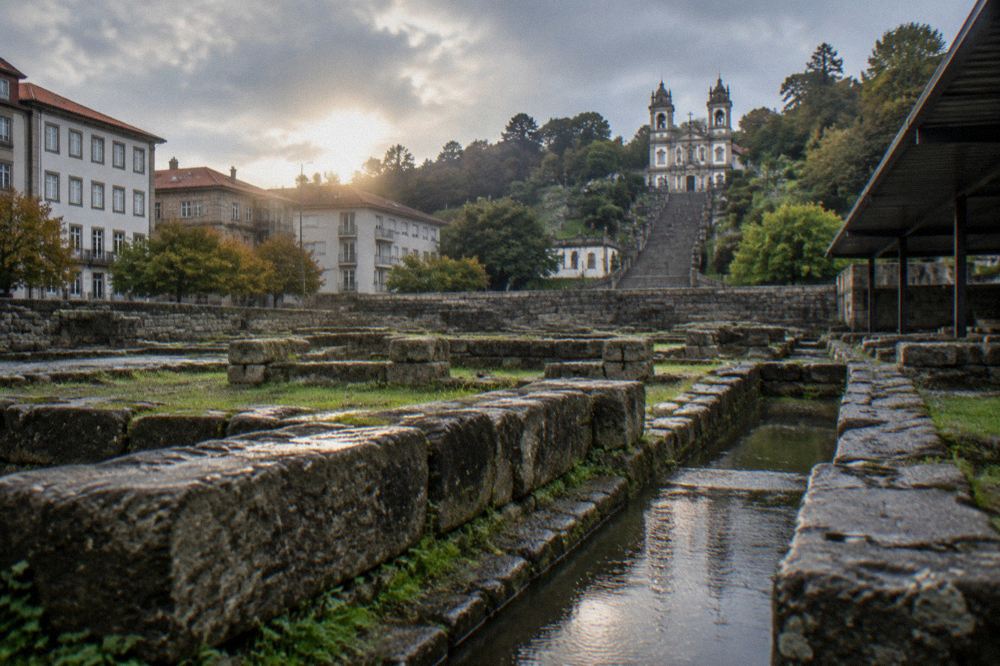
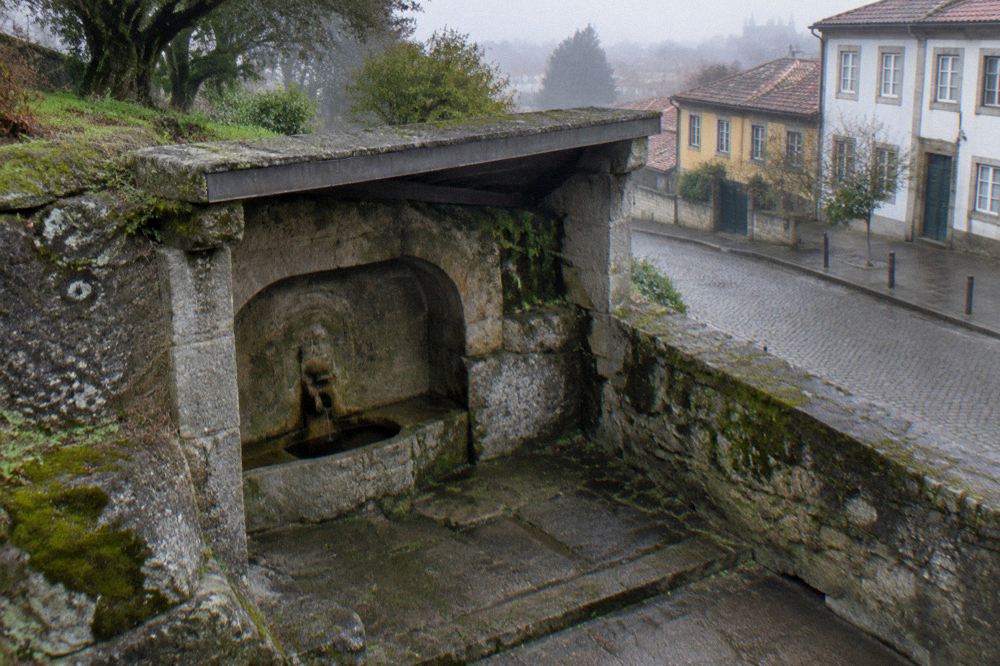
The baths are the most substantial Roman structure you can see in the city. The Alto da Cividade complex, in the Maximinos district a short walk downhill from the centre, preserves the footprint of public baths, and the site is run by the municipality with a small visitor circuit. Fonte do Ídolo, by contrast, is small and strange: a fountain carved into living rock, dedicated to a local water deity, and it survives in the middle of a modern street. The two sites are sold as a joint circuit, which is the sensible way to see both, and the 2026 municipal price table sets the individual ticket at about 2.05 EUR and the joint ticket at 3.70 EUR, with free entry for children under 14 and 50% reductions for over 65s, students and several other categories.
The museum is the third piece. The Museu de Arqueologia D. Diogo de Sousa is the city's archaeological museum, open Tuesday to Sunday from 10:00 to 17:30 and closed on Mondays and the main public holidays, with a normal ticket at 5 EUR, a 2.50 EUR reduced rate for over 65s, visitors aged 13 to 24 and families, and free entry for under 12s accompanied by an adult. Residents of Portugal can enter free on 52 days a year of their choosing with proof of residence, a rule published on the museum's own page. The museum is the place where objects excavated across the city are interpreted, and visiting it before the physical sites gives the festival's Roman theme some depth.
| Site | What it is | Admission (2026) | Hours |
|---|---|---|---|
| Termas Romanas do Alto da Cividade | Public bath complex, Maximinos | About 2.05 EUR, or 3.70 EUR joint with Fonte do Ídolo | Mon-Fri 09:30-13:00 and 14:00-17:30, Sat 11:00-17:30, closed Sundays and holidays |
| Fonte do Ídolo | Rock-cut Roman fountain shrine | Same joint circuit ticket | Same circuit hours as the baths |
| Museu de Arqueologia D. Diogo de Sousa | City archaeological museum, Roman collections | 5 EUR normal, 2.50 EUR reduced, under 12s free | Tue-Sun 10:00-17:30, closed Mondays and holidays |
One caution: the festival celebrates Roman Braga, but the city's Roman layer is fragmentary and much of it sits under modern streets. Manage expectations accordingly. The baths and the fountain are genuine sites, the museum is a strong collection, but Braga is not Mérida or Conímbriga, and the festival's value lies as much in the atmosphere as in the archaeology. For the wider sightseeing picture beyond the Roman layer, see the things to do in Braga round-up, and for how ticketing works across the city's museums and monuments, the guide to Braga attraction tickets and passes explains that no city-wide pass is on sale and each ticket is bought separately.
A festival weekend rewards a guide for the fixed sights, because the streets take care of themselves. The half-day small-group option covers the historic centre and the Bom Jesus sanctuary in about three hours, which leaves the rest of the day free for the market and the evening programme. The listing shows a rating of 4.8 from 24 reviews at a from-price of $68.15 per person, and the operator's live listing carries the current availability.
If you would like a guide to cover the fixed sights too, book a Portuguese Rome walking tour here.
How Much Does Braga Romana Cost To Attend?
The festival itself is organised by the municipality and its street programming is free to watch, so the main costs of a Braga Romana trip are transport, accommodation, food and the separate admission charges at the Roman sites and museums, roughly 5 EUR at the archaeology museum and about 2.05 to 3.70 EUR for the baths and fountain circuit. Add Braga's municipal tourist tax of 1.55 EUR per person per night, capped at four nights, to any hotel stay.
Because the events happen in public streets and squares, there is no festival pass to buy and no gate at which a ticket is checked. You pay for what you consume: food and drink from the stalls, crafts from the market, and any of the city's permanent attractions you choose to visit on top. The tourist tax is charged by hotels and local accommodation, applies all year at 1.55 EUR per person per night for up to four consecutive nights, and applies to guests aged 16 and over, so a couple staying three nights pays a little over 9 EUR in total at the desk.
| Cost item | Typical figure | Notes |
|---|---|---|
| Festival street programme | Free | Municipal event in public streets and squares |
| Termas Romanas + Fonte do Ídolo joint ticket | 3.70 EUR | 2026 municipal price table, 50% reductions for several categories |
| Museu de Arqueologia D. Diogo de Sousa | 5 EUR | 2.50 EUR reduced, under 12s free |
| Municipal tourist tax | 1.55 EUR per person per night | Up to 4 nights, guests 16 and over |
| TUB tourist day ticket | 3.35 EUR | Whole urban network, 1 day, 2 and 3 day versions exist |
Food spending is the variable. The festival stalls sell Roman-themed items alongside conventional Portuguese street food, and prices are set by individual vendors, so check the board at each stall. Away from the festival, Braga eats cheaply by northern European standards, and the guide to what to eat in Braga and the restaurant guide cover the dishes and the neighbourhoods worth booking ahead in, which matters during a festival weekend when central tables fill early.
What Was Roman Bracara Augusta Like?
Bracara Augusta was a Roman city on the site of modern Braga, and its street plan still shapes the historic centre, with the cardo and decumanus aligned on the modern Rua do Souto and Rua de São João, a public bath complex at Alto da Cividade, and a municipal fountain shrine at Fonte do Ídolo. The Museu de Arqueologia D. Diogo de Sousa displays the excavated material culture, from inscriptions to ceramics, that documents daily life in the settlement.
The most striking thing about Roman Braga is how much of it is vertical rather than horizontal: the modern city sits on top of its Roman predecessor, so the legacy is the grid. The main Roman streets still run where they ran, and the festival deliberately uses this, staging processions along routes that follow the ancient alignment. The 2026 theme, "Braga Romana antes de Augusto", pushed further back than the imperial city, into the period before the settlement's Roman reorganisation, and the programming leaned on the museum's collections to interpret it.
The baths tell the most complete structural story. Public baths were the social infrastructure of a Roman city, and the Alto da Cividade complex shows the scale of the investment, with the heated rooms and the drainage still legible in the remains. Fonte do Ídolo is the more intimate site: a small sanctuary where water was worshipped, carved with figures and an inscription, and preserved because it was built into rock rather than on top of it. Visiting both, plus the museum, gives a full day of Roman Braga, and each is on the same municipal ticket circuit.
For the deeper background on the city's whole history, from its Roman layer through the medieval archbishopric to the baroque boom that produced Bom Jesus do Monte, the guide to getting around Braga helps with the practical geography, and the guide to the best time to visit Braga situates the festival within the year.
When Is The Best Time To Visit Braga For The Festival?
Late May, when Braga Romana falls, is one of the most reliable months in Braga: IPMA's 1991 to 2020 normals for the Braga / Merelim station show a mean daily maximum of 23.0 C, a mean temperature of 16.7 C, 89.8 mm of rain over the month and 8.9 days with 1 mm of rain or more, warmer and drier than both the spring months before it and the wet autumn that follows.
The numbers reward the festival's timing. May is the month when the rainfall curve drops sharply, from 127.9 mm in April to 89.8 mm in May, and before the near-drought of July and August at 27.9 and 34.6 mm. Rain days fall to 8.9 in the month, against 12 in April and 12 in October. Daytime highs average 23 C with nights around 10.4 C, so evenings outdoors are comfortable with a light layer. The festival's outdoor programming is built for exactly this window.
| Month | Mean max C | Mean min C | Rain mm | Days with 1 mm+ rain |
|---|---|---|---|---|
| March | 17.8 | 5.9 | 150.1 | 11.8 |
| April | 19.6 | 7.8 | 127.9 | 12.0 |
| May | 23.0 | 10.4 | 89.8 | 8.9 |
| June | 26.1 | 13.2 | 40.6 | 5.7 |
| July | 28.2 | 14.3 | 27.9 | 4.0 |
If the festival dates do not fit your trip, the rest of the event calendar offers alternatives with different characters. Semana Santa, Holy Week, is the week before Easter and is Braga's most solemn and famous event, registered on Portugal's National Inventory of Intangible Cultural Heritage. São João runs for a week in June, peaking on the night of 23 June into the 24 June municipal holiday, when museums close. Noite Branca, the white-themed arts night, falls on the first weekend of September, and the Encontros da Imagem photography festival stretches from mid-September into early November. None of these has announced 2027 dates, so check the organiser's page for the coming edition.
How Do You Get To Braga And Around During The Festival?
Braga is the terminus of CP's urban line from Porto São Bento and Porto Campanhã, a journey of a little over an hour with fares priced by zone for a few euros, and Alfa Pendular fast trains run direct from Lisbon in about 3 hours 20 minutes at 38.50 EUR in second class.
From Porto Airport, the Getbus coach runs direct to Braga in about 45 minutes from 9.00 EUR, and inside the city the TUB network sells a 1-day tourist ticket for 3.35 EUR covering the whole network.
The train is the default from Porto. Urban trains load onto a reusable Siga card costing 0.50 EUR, and the fare itself is a few euros, priced by zone, so do not expect the long-distance price. The current urban timetable has been valid since 26 July 2026, and Braga's station is a short walk from the historic centre, which is where the festival happens. From Lisbon, the Alfa Pendular is the fastest option, at a full single fare of 38.50 EUR in Turística and 54.60 EUR in Conforto valid from 1 January 2026, and CP has run promotions with seats from 8 EUR on selected dates. The Porto to Braga guide and the Porto Airport to Braga guide cover both routes in detail.
| Route | Service | Fare | Journey time |
|---|---|---|---|
| Porto São Bento to Braga | CP urban train | A few euros, priced by zone, 0.50 EUR Siga card | A little over an hour |
| Lisbon to Braga | Alfa Pendular, direct | 38.50 EUR Turística, 54.60 EUR Conforto | About 3 h 20 min at fastest |
| Porto Airport to Braga | Getbus direct coach | From 9.00 EUR | About 45 minutes |
| Braga city network | TUB tourist ticket | 3.35 EUR for 1 day, 6.05 EUR for 2, 8.05 EUR for 3 | Whole urban network |
Inside the city, the festival's footprint is walkable, and most visitors never need a bus between events. Where you do, the TUB network's tourist ticket is the simplest product: 3.35 EUR for one day, 6.05 EUR for two and 8.05 EUR for three, covering the whole network including the Line 2 service toward Bom Jesus do Monte. Single journeys bought on board cost 1.55 EUR for one zone and 2.00 EUR for two, against 0.75 EUR and 1.50 EUR pre-bought or in the app, so a day of more than two rides makes the tourist ticket pay for itself. The guide to getting around Braga has the full picture, including parking, which matters because festival weekends tighten the central car parks.
Where Should You Stay During Braga Romana?
Stay inside or immediately beside the historic centre, since all Braga Romana programming happens there and the streets stay lively into the evening; the practical trade-off is between central hotels within walking distance of the festival footprint and quieter accommodation on the hill toward Bom Jesus do Monte, with central options filling first on festival weekends and the municipal tourist tax of 1.55 EUR per person per night, up to four nights, added at every accommodation.
The festival changes the usual hotel calculus. On a normal May weekend, Braga's central hotels are easy to book late, but when the streets fill with costumed reenactors and market stalls, the rooms above them go first, and the ones with windows onto the main squares are the most sought after. Booking well ahead is the only reliable advice, and the guide to where to stay in Braga maps the neighbourhoods. Families and visitors who want quiet at night should weigh the trade-off honestly: central means inside the festival, which is atmospheric until late.
Two newer options have changed the top end of the market. The Lince Braga, a renovation of the former Hotel da Falperra, opened in summer 2025 and holds a Michelin Key in the 2026 guide, and the Esperança Hotel, a city-centre conversion, was scheduled to open in September 2026. Neither is a budget option, but both signal how quickly Braga's hotel stock has upgraded since its year as Portuguese Capital of Culture in 2025, and both sit within reach of the festival footprint.
What Should You Eat And Drink At Braga Romana?
The festival stalls sell Roman-themed food, breads, olives, cheeses, honey, spiced wines and grilled meats, alongside conventional Portuguese street food, and the surrounding centre offers the full regional kitchen: Bacalhau à Braga, the city's signature salt cod dish, the Pudim Abade de Priscos, a caramel egg pudding, and the Minho's Vinho Verde wines, with restaurant prices in Braga generally modest and the tipping custom at about 5 to 10% when service is already included.
The Roman market is partly a food event. Stalls are stocked to look plausible for the period, and vendors sell the kinds of things a Roman market would have sold: breads baked in wood ovens, cured meats, olives in brine, cheeses, dried fruit and honey. It is theatre as much as catering, and the quality varies by stall, so browse before committing. The spiced wine, mulsum-style, is the item most visitors try once and remember.
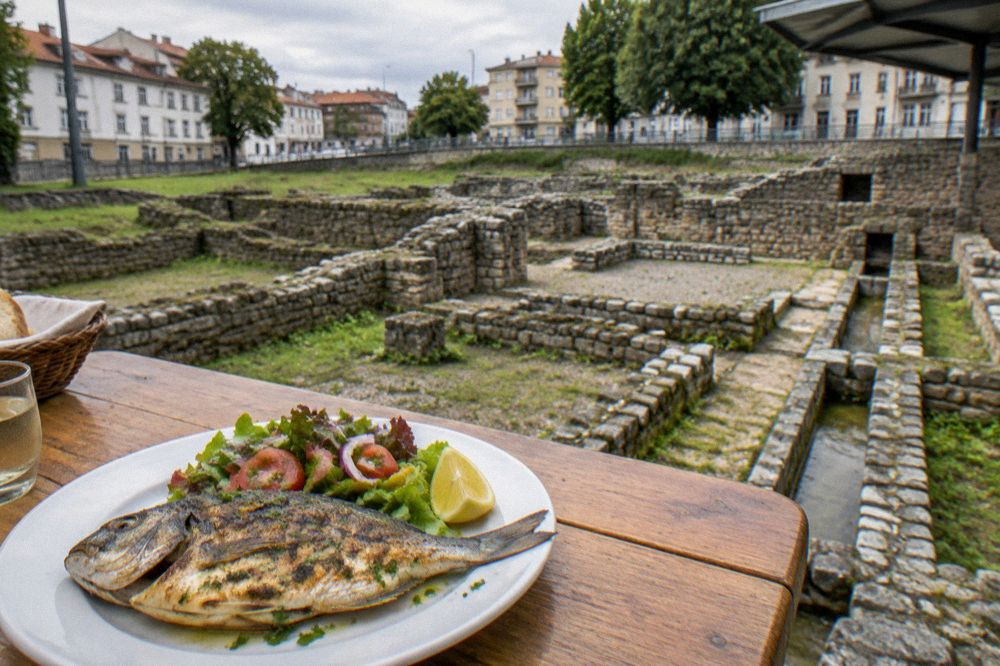
The permanent kitchen is the better meal. Bacalhau à Braga, salt cod with fried potatoes, onions and hard eggs, is the dish the city is known for, and Pudim Abade de Priscos, a caramel egg pudding, is its dessert counterpart. Vinho Verde, the lightly sparkling young wine of the Minho, is the regional pour, and the guide to Vinho Verde explains the styles. On festival evenings, central restaurants fill early, so either book ahead or eat on the early side. Turismo de Portugal's published guidance is that service is included in restaurant bills, with an additional tip of about 5 to 10% customary, and the same for taxis.
How Do You Plan A Festival Weekend Around Braga'S Other Sights?
A workable festival weekend pairs the street programme in the afternoons and evenings with conventional sightseeing in the mornings: the Sé de Braga cathedral and the Museu de Arqueologia D. Diogo de Sousa on day one, the Roman baths and Fonte do Ídolo circuit plus the Santa Bárbara Garden on day two, and Bom Jesus do Monte, reached by TUB Line 2, on the final morning, with the festival's processions and market filling each evening.
The sequencing matters because the festival is at its best late. Mornings belong to the permanent sights, which open on their normal schedules regardless of the festival. The cathedral's three visit routes cost 3.00 EUR each or 7.00 EUR for all three combined, and the Treasury-Museum closes on Mondays, so a weekend visit should put the cathedral on a Saturday. The baths and fountain circuit keeps weekday and Saturday hours and closes on Sundays, which makes Saturday the natural day for the Roman sites too.
| Time slot | Festival weekend plan |
|---|---|
| Saturday morning | Sé de Braga, all three routes at 7.00 EUR combined, then the archaeology museum at 5 EUR |
| Saturday afternoon | Roman baths and Fonte do Ídolo circuit, 3.70 EUR joint, then the festival market |
| Saturday evening | Festival processions, street food and the market at full density |
| Sunday morning | Bom Jesus do Monte by TUB Line 2, sanctuary grounds free, stairway of 566 steps |
| Sunday afternoon | Santa Bárbara Garden and the historic centre, festival closing programme |
Bom Jesus do Monte deserves the Sunday slot. The UNESCO-listed sanctuary is the city's headline monument, its stairway climbs 566 steps by the Confraria's count, and the grounds and basilica are free to enter. Note one live operational fact: the Bom Jesus funicular has been out of service since 26 September 2026 with no end date published, and a replacement shuttle runs daily from 09:00 to 20:00, roughly every 30 minutes each way, between the Portico, where TUB Line 2 ends, and the sanctuary, so check the operator's notice before planning a ride. The guide to getting to Bom Jesus do Monte covers the options.
For visitors who want the Roman story told rather than read off panels, a private guide makes the difference. The Braga Private Walking Tour with a Professional Guide runs about two hours with a licensed guide, rated 5 from 3 reviews at a from-price of $259.43 per person on the listing, and it can be pointed at the Roman layer specifically, the baths, the fountain and the museum, before the festival streets take over the afternoon.
Common Questions About Braga Romana
When is Braga Romana held?
Braga Romana falls in late May each year. The 2026 edition was the XXII, themed "Braga Romana antes de Augusto" and organised by the municipality. Exact dates for the coming edition are published on the organiser's page, so check there before booking travel.
Is Braga Romana free?
The street programming is organised by the municipality and takes place in public streets and squares, so watching the reenactments, processions and market costs nothing. You pay only for food, drink and crafts you buy, and separately for any permanent attractions you visit, such as the archaeology museum at 5 EUR.
What is Bracara Augusta?
Bracara Augusta was the Roman city on the site of modern Braga, Portugal. Its street plan still underlies the historic centre, and its main visible remains are the public baths at Alto da Cividade and the fountain shrine of Fonte do Ídolo, with the excavated collections displayed at the Museu de Arqueologia D. Diogo de Sousa.
Is Braga Romana suitable for children?
Yes. The festival includes hands-on workshops, wooden-sword drills for children, Roman board games and craft demonstrations, and most programming is visual rather than language-dependent. The market and combat displays are the usual favourites.
How many days should you spend in Braga for the festival?
Two days cover the festival comfortably, one for the street programme and the Roman sites, one for the cathedral and Bom Jesus do Monte. A third day allows a slower pace or a side trip to Guimarães, reached by regional bus since no direct train exists.
Do you need to book anything in advance for Braga Romana?
The festival itself needs no booking, but central accommodation should be reserved early for a festival weekend, and restaurants in the historic centre fill up on festival evenings. The Roman sites and museums sell tickets on site, though the baths and Fonte do Ídolo circuit is closed on Sundays.
Braga Romana is the one weekend a year when the city's Roman layer is impossible to miss, and the rest of the calendar, from Semana Santa to Noite Branca, gives the same streets a different character every few months. For the full planning picture across transport, tickets and timing, start with the Braga Travel Guide homepage and build the festival into a trip that also makes time for the cathedral, the baths and the sanctuary on the hill.