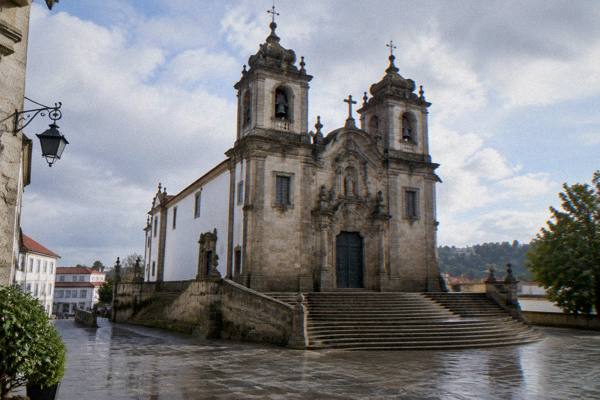
Fonte Do Ídolo: Braga's Roman Fountain Shrine Explained
Fonte do Ídolo is a Roman fountain shrine carved into granite in the centre of Braga, Portugal, one of the few surviving pieces of the city the Romans called Bracara Augusta that you can still stand in front of.
Short answer
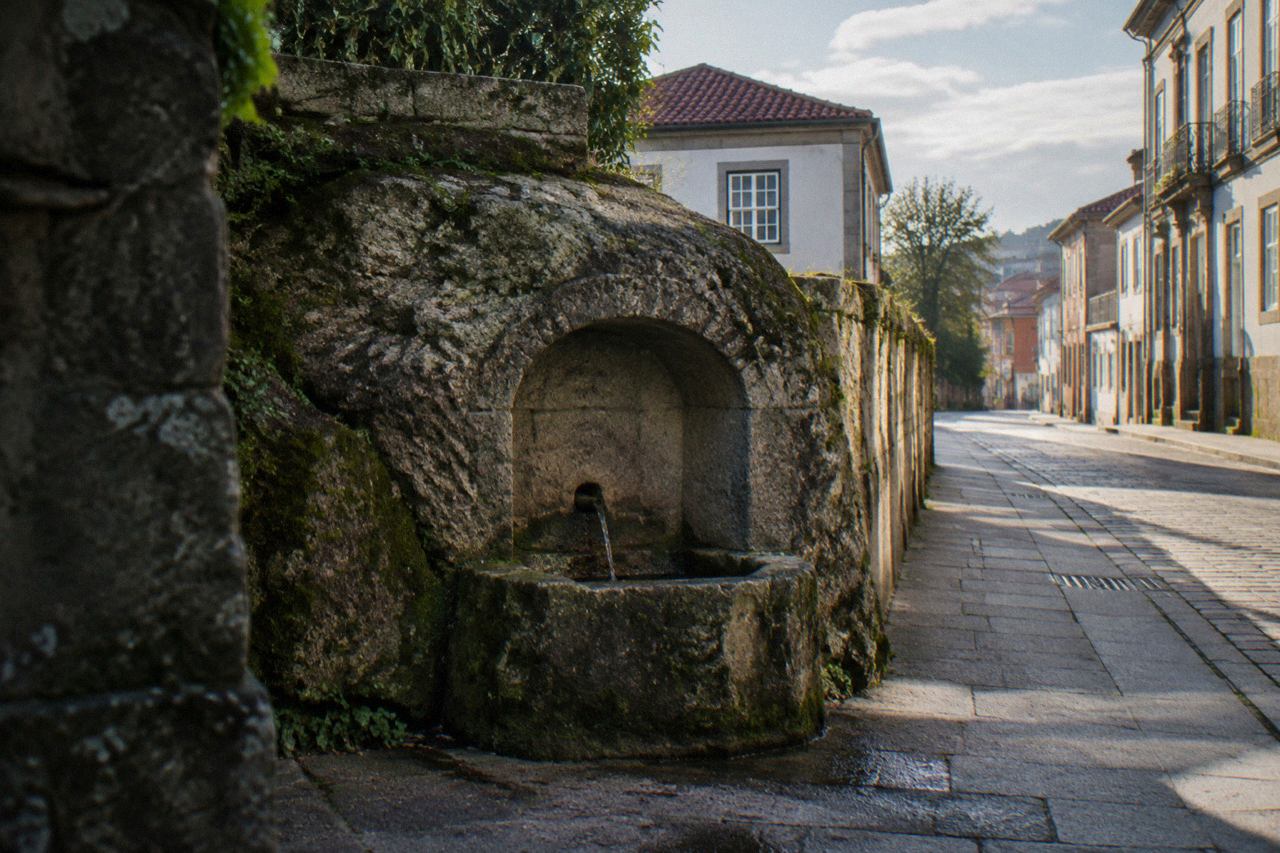
Fonte do Ídolo is a rock-cut Roman fountain and shrine in central Braga, Portugal, carved directly into a granite outcrop. It survives from the Roman city of Bracara Augusta and is usually visited together with the Roman baths and the D. Diogo de Sousa archaeological museum as part of a short Roman-heritage circuit.
Braga, in the Minho region of northern Portugal, keeps its Roman past mostly underground, beneath churches, squares and café terraces. Fonte do Ídolo is the exception: a fountain shrine carved straight into a granite outcrop, standing in the open where a street can pass within a few steps of it. It is small, easy to miss and, for many visitors, the single most direct contact with the Bracara Augusta that lies under the modern city. This guide explains what the site is, where it sits, how a visit works in practice, and how to fold it into a day that also takes in Braga's other Roman remains.
What Is Fonte Do Ídolo?
Fonte do Ídolo is a Roman fountain shrine carved directly into a natural granite outcrop in Braga, Portugal, a piece of religious water architecture from the Roman city of Bracara Augusta. It consists of a rock-cut fountain basin and an associated sculpted and inscribed face, and it belongs to the small group of Roman monuments in Braga that survive above ground rather than as buried archaeology. It is one of the stops on the city's Roman heritage circuit.
The name translates as "fountain of the idol", and it points at what the monument is: a place where water, worship and carved stone met in the Roman period. The granite of the Minho region is hard, and carving a working fountain and a shrine face into it was an act of deliberate effort, not a casual inscription. Water cults were common across the Roman northwest, and natural springs were often treated as sacred places rather than merely useful ones. Fonte do Ídolo fits that pattern: a local water sanctuary, given permanent architectural form in rock.
What makes the monument unusual in a Portuguese context is its survival. Braga's Roman city has been built over continuously for some two thousand years, and most of what remains is fragmentary, moved or buried. A carved fountain face still standing in place, on its own rock, close to its original setting, is rare. The site is compact, which surprises some visitors who arrive expecting a temple. It is best understood as a single intimate monument rather than a ruin to wander through, and it rewards a slow look at the carving rather than a long walk.
Interpretation matters here. The inscriptions and figures cut into the rock have been studied for well over a century, and scholarly readings of the dedication and the figures have shifted over time. The safest frame for a visitor is the physical one: a fountain, a carved face, inscriptions in Latin lettering, and a niche arrangement that marks the rock as a shrine rather than a purely utilitarian water source. The Museu de Arqueologia D. Diogo de Sousa, a short distance away, is where the deeper context lives, and pairing the two makes the fountain mean more.
Where Is Fonte Do Ídolo In Braga?
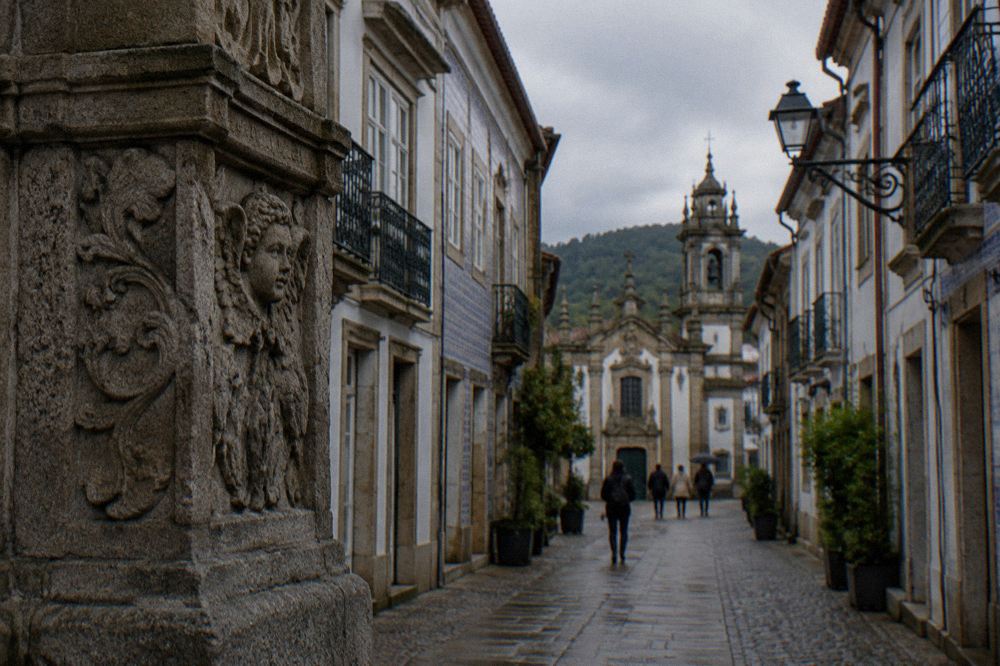
Fonte do Ídolo stands in the western part of Braga's historic centre, on a street of ordinary houses a short walk from the Sé de Braga and the main squares, set into the granite along the street line. Its address places it in the São José de São Lázaro area, minutes on foot from Praça da República and the pedestrian spine of the old town, so it fits easily into a walking route rather than needing a special trip.
The location is part of the story. The fountain sits where the Roman city's western edge ran, close to ground that archaeology has repeatedly shown to be dense with remains. Braga's historic centre is compact, and the walk from the cathedral area to the fountain passes through ordinary residential streets rather than a monumental axis, which is precisely why the carved rock surprises: it appears between front doors and parked cars, still part of the living city.
For route planning, treat Fonte do Ídolo as a five-to-fifteen-minute stop on a loop. A sensible order is to start at the Sé de Braga, walk through the centre past Praça da República, reach the fountain, then continue to the Roman baths site and the D. Diogo de Sousa museum, which holds the city's archaeological collections. The whole circuit is walkable, flat in stretches and hilly in others, and needs nothing more than reasonable shoes.
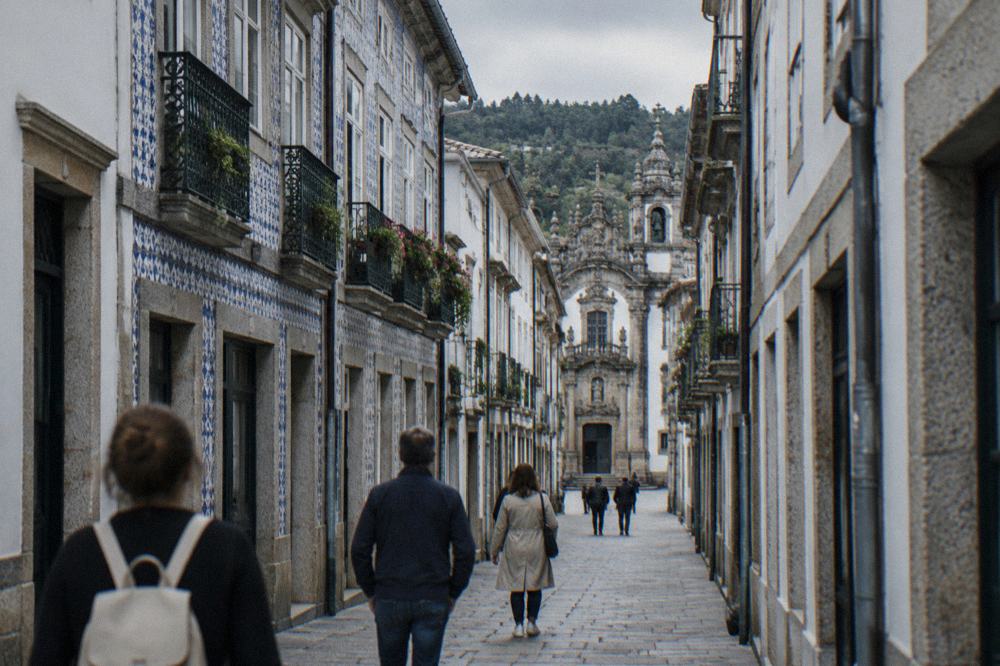
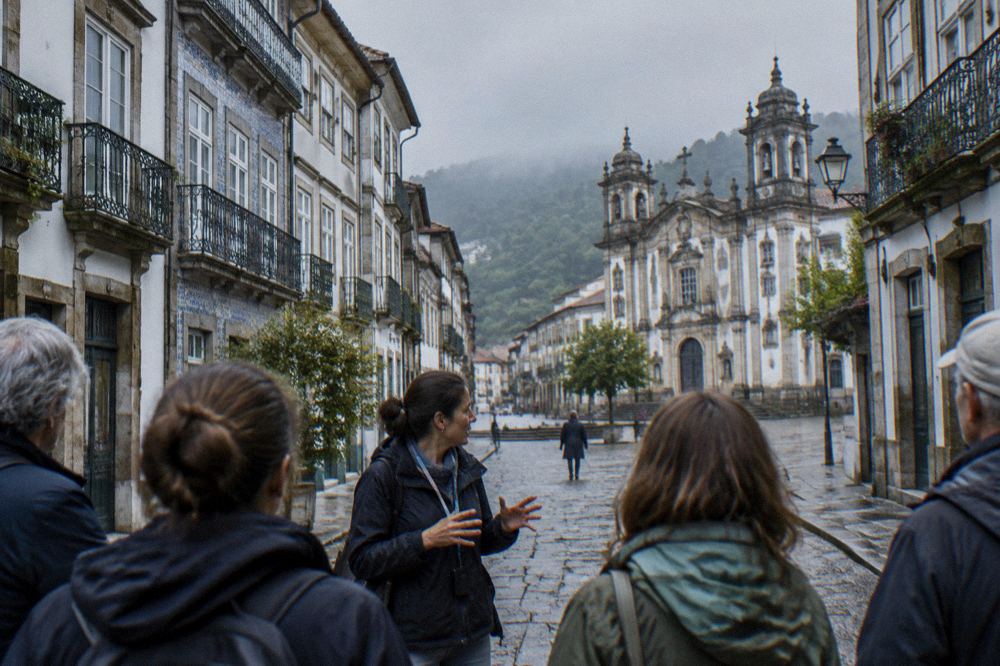
Visitors who prefer not to navigate alone can join a guided walk. The Explore the Portuguese Rome City of Braga tour covers the historic centre in about ninety minutes with a guide, and its "Portuguese Rome" framing is exactly the layering of Roman, medieval and baroque that a site like Fonte do Ídolo represents. Check availability on the operator's live listing if that style of visit appeals.
Rather not navigate the Roman sites alone? Book a free walking tour here. (Guided in Spanish)
How Do You Visit Fonte Do Ídolo, And Can You Go Inside?
Fonte do Ídolo is a small open-air monument viewed from close range rather than a building you enter, and visits are typically arranged as part of Braga's Roman heritage circuit alongside the Roman baths of Alto da Cividade, with guided visits available by appointment on working days. Because opening arrangements for this specific site are limited and changeable, check current access with the municipal heritage service or the tourist office on Avenida da Liberdade before planning your day around it.
The honest planning advice is that this is the least predictable of Braga's Roman sites in practical terms. The fountain has been managed in different ways over the years, sometimes with regular open hours, sometimes through the guided-visit model used for the city's Roman remains, and sometimes with temporary closures for conservation. Rather than promise a fixed schedule, plan for two possibilities: either a short self-guided look at the carved rock from the street side, or a guided visit that takes you up close and explains the carving. Both are rewarding; the second is much richer.
The tourist office is the reliable fallback. It sits at Avenida da Liberdade 1, open Monday to Friday 09:00 to 18:30 and on weekends and holidays 09:30 to 13:00 and 14:30 to 17:30, and its staff can confirm same-week access for the Roman sites and book or point you toward a guided slot. Guided visits for the Roman circuit run by appointment on working days, so if a close-up look at the inscriptions matters to you, arrange it a day or two ahead rather than turning up on spec.
For visitors who want the Roman layer explained in depth, a private guide is the strongest option. The Braga Private Walking Tour with a Professional Guide runs about two hours with the itinerary shaped around your interests, and a guide can build the fountain, the baths and the museum into one narrative.
What Can You Actually See At Fonte Do Ídolo?
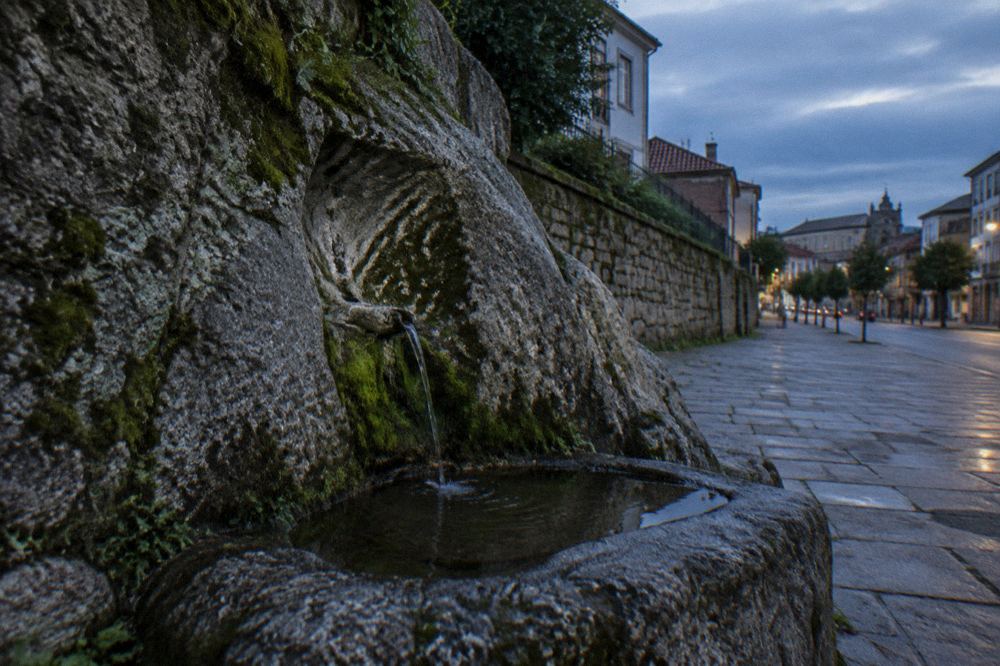
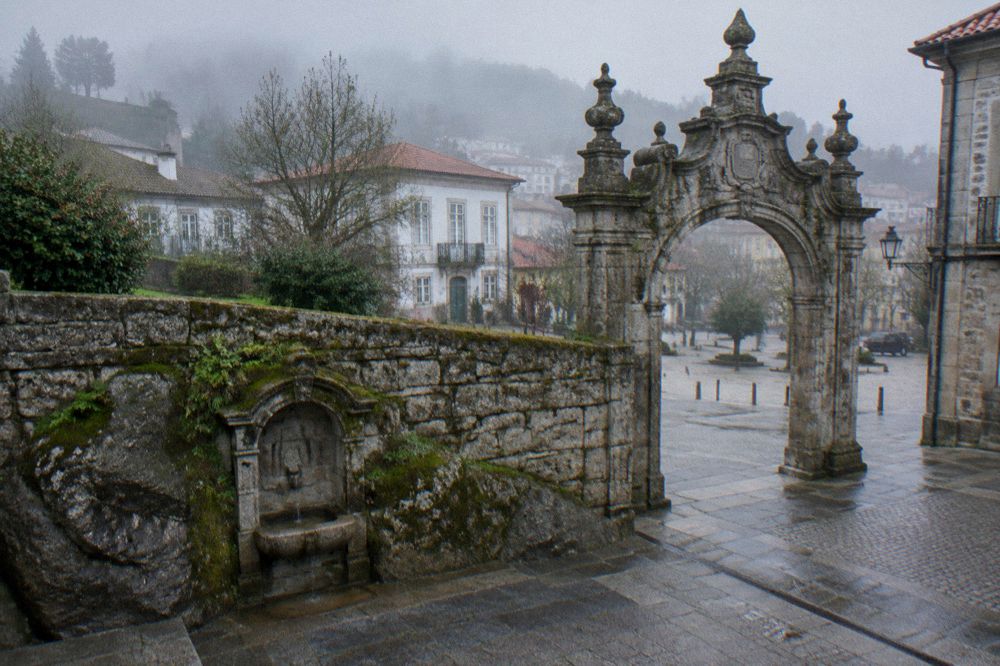
What you see at Fonte do Ídolo is a granite rock face worked by Roman hands: a fountain basin fed by the outcrop, a carved niche and figure associated with the shrine, and Latin inscriptions identifying the dedication, all cut directly into the living stone rather than built up from blocks. The monument is intimate in scale, viewed in minutes rather than hours, and its power lies in standing before carving done in place some two millennia ago.
Start with the rock itself. The Minho granite is coarse and durable, and the carving has survived weathering, street works and two thousand years of urban life on top of it. The fountain element is the functional core: a basin arrangement that gathered water from the outcrop, the kind of feature that made a site useful as well as sacred. Around it, the carved elements mark the rock as a shrine, with a niche and figure arrangement typical of the way local cults were given Roman-looking form in the provinces.
The inscriptions are the site's signature. Latin lettering cut into the rock records the dedication, and the name preserved in the carving has anchored the monument's identity and its popular name. Reading the lettering in person, even when weathered, is the moment most visitors remember: text and stone and water in one object, from a city that existed long before the baroque churches that now define Braga's skyline.
A useful mental exercise is to compare what you see with what the rest of Braga shows you. The Sé de Braga, the Santuário do Sameiro and the Escadório do Pórtico at Bom Jesus do Monte are all later chapters, built in stone that was quarried, cut and assembled. Fonte do Ídolo is subtractive: material removed from a single rock to make a monument. That difference in technique is visible, and it is a good way to explain the site to children or to anyone whose eyes glaze at the word "epigraphy".
Fonte Do Ídolo And Braga'S Roman Circuit: What Pairs With It?
The natural pairing for Fonte do Ídolo is the Roman baths at Alto da Cividade, Braga's other major visible Roman site, followed by the Museu de Arqueologia D. Diogo de Sousa, which holds the collections that interpret the Roman city. Together the three form a compact Roman circuit walkable in a morning, and the museum is the fixed anchor of the three, open Tuesday to Sunday 10:00 to 17:30 with a 5.00 EUR ticket.
The museum deserves the anchor role because it is the one whose practical details are stable and published. The Museu de Arqueologia D. Diogo de Sousa is open Tuesday to Sunday 10:00 to 17:30, closed Mondays and public holidays including 1 January, Easter Sunday, 1 May, 24 June and 25 December. Admission is 5.00 EUR, with half price (2.50 EUR) for visitors 65 and over, ages 13 to 24, and families, and free entry for under-12s accompanied by an adult. Its galleries hold the material culture of Bracara Augusta and its pre-Roman hinterland, so seeing it before or after the fountain turns two carved stones into a city.
The Roman baths site, Termas Romanas do Alto da Cividade, sits a little outside the medieval core and is managed under the same municipal heritage arrangement as the fountain, with guided visits by appointment on working days. The same advice applies: confirm access through the tourist office or municipal service for the days you are in town. The two sites complement each other well, one a public bathing complex, the other a private devotional fountain, and together they sketch the range of Roman urban life.
To plan the circuit, here is how the fixed, verified pieces of Braga's museum and heritage offer stack up:
| Site | Verified Hours | Verified Ticket | Best For |
|---|---|---|---|
| Museu de Arqueologia D. Diogo de Sousa | Tue-Sun 10:00-17:30 | 5.00 EUR | Roman and pre-Roman collections |
| Fonte do Ídolo | By appointment / check locally | Check locally | In-situ Roman fountain shrine |
| Termas Romanas do Alto da Cividade | By appointment / check locally | Check locally | Roman public baths |
| Sé de Braga (visit hours) | Mon-Sat 09:30-13:00, 14:30-17:00; Sun 09:30-10:45, 14:30-17:00 | 3.00 EUR per route; 7.00 EUR all three | Medieval and later cathedral |
| Museu dos Biscainhos | Tue-Sun 10:00-12:30, 14:00-17:30 | 7.50 EUR with garden | Baroque domestic life |
The cathedral row is there deliberately, because the Sé's own ticketing is worth understanding if you are stringing a full day together. The three visit routes, the Treasury-Museum, the chapels and high choir, and the cathedral itself, each cost 3.00 EUR on their own, with 7.00 EUR covering all three and 6.00 EUR for any two. Tickets are bought at the reception point in the cloister, reached from Rua do Cabido or the side entrance by Rua D. Diogo de Sousa, and interior visits are suspended during services.
Is Fonte Do Ídolo Worth Visiting If You Have Limited Time?
Fonte do Ídolo is worth visiting if Roman history is a genuine interest or if you are already walking its corner of the historic centre, because the stop costs minutes and delivers something no other Braga site offers: Roman religious carving still in its rock. If your time in Braga is a single rushed half-day centred on Bom Jesus do Monte and the Sé, the fountain is a reasonable cut, and the D. Diogo de Sousa museum is the better single Roman stop.
The honest tiering looks like this. For a first visit to Braga of one full day, the priorities are the sanctuary of Bom Jesus do Monte with its 566-step stairway, the Sé, and a wander of the historic centre along Rua do Souto and the gardens. The Roman circuit slots in comfortably on a day of that length, and the fountain adds perhaps fifteen minutes plus travel time. On a half-day, choose between the fountain and the museum, not both, and pick the museum if you want breadth.
For a second visit, or for a visitor with archaeological interests, the calculus flips. Braga markets itself on its baroque face, and the Roman layer is the city's distinguishing depth. Standing at a carved fountain where Roman Bracara Augusta's residents drew water and left devotions is a different order of experience from admiring a gilded altarpiece, and it is the reason the "Portuguese Rome" label exists at all. The rest of the planning pages sit on Braga Travel Guide.
Families should know the site is small and unsheltered, so it pairs well with an ice-cream stop on a fine day and poorly with a cold downpour. If the weather turns, Braga has strong indoor options, and the guide to Braga on a rainy day covers them; the D. Diogo de Sousa and Biscainhos museums are the obvious swaps.
How Do Guided Tours Cover Fonte Do Ídolo And The Roman City?
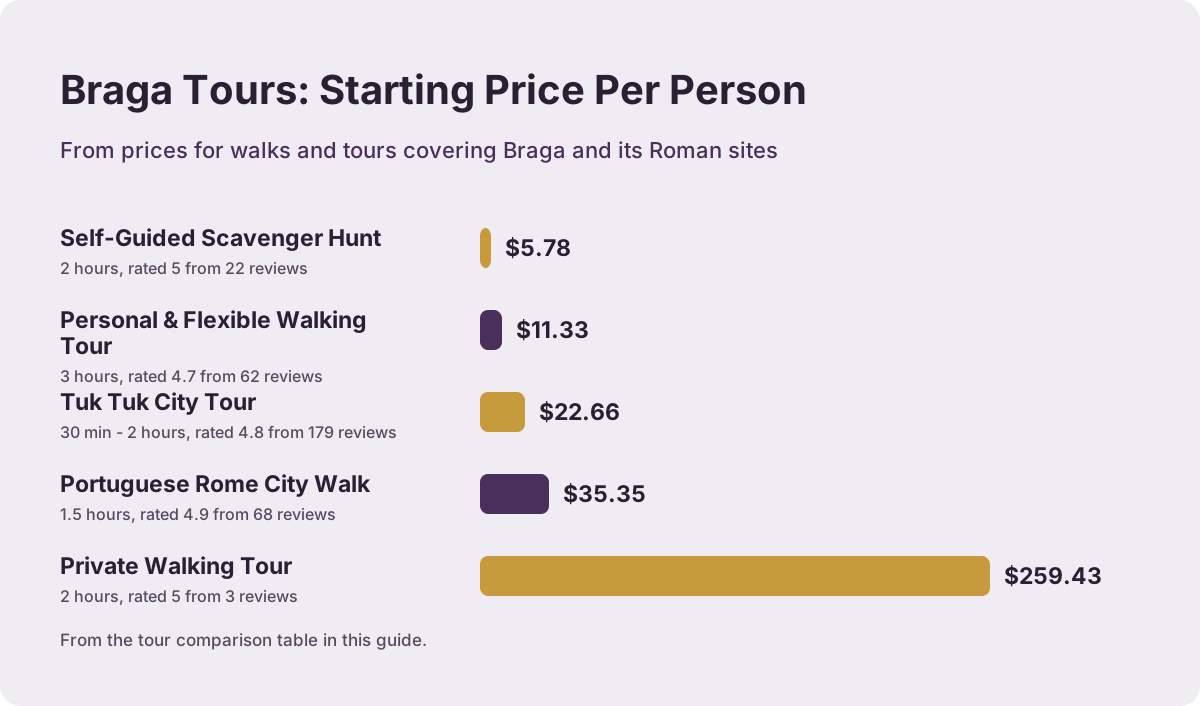
The strongest guided fits for a Fonte do Ídolo-oriented visit are the Explore the Portuguese Rome, the City of Braga walk (about 90 minutes, from $35.35 per person, rated 4.9 from 68 reviews), the private walking tour with a professional guide (2 hours, from $259.43 per person, rated 5 from 3 reviews), and the tuk tuk city tour (30 minutes to 2 hours, from $22.66 per person, rated 4.8 from 179 reviews).
Each suits a different traveller, and all cover the historic centre where the Roman sites sit.
Each suits a different traveller. The Portuguese Rome walk is the direct thematic match: its very name is the Roman-and-baroque layering that the fountain embodies, and a group walk at that price is an efficient way to get the city's story in one loop. The private tour costs more per person and buys itinerary control, which matters if you want the guide to linger at the fountain, the baths and the museum rather than follow a fixed route. The tuk tuk tour trades depth for coverage and mobility, useful for visitors with limited walking stamina who still want the sweep of the centre, though a tuk tuk passes monuments rather than standing before inscriptions with you.
There is also a self-guided option worth naming for families and puzzle-minded travellers. The Braga Self-Guided City Walking Tour & Scavenger Hunt turns the historic centre into a two-hour game, from $5.78 per person and rated 5 from 22 reviews, and it suits visitors who like a structure without a schedule.
For comparison, here is how the main guided formats stack up, using the operator listings' own figures:
| Tour | Format | Length | From (Per Person) | Rating |
|---|---|---|---|---|
| Explore the Portuguese Rome, the City of Braga | Small group walk | 1.5 hours | $35.35 | 4.9 (68 reviews) |
| Braga Private Walking Tour | Private, professional guide | 2 hours | $259.43 | 5 (3 reviews) |
| Braga Tuk Tuk City Tour | Tuk tuk | 30 min - 2 hours | $22.66 | 4.8 (179 reviews) |
| Self-Guided Scavenger Hunt | Self-guided game | 2 hours | $5.78 | 5 (22 reviews) |
| Braga Personal & Flexible Walking Tour | Flexible group walk | 3 hours | $11.33 | 4.7 (62 reviews) |
One more honest note on the free-walk side of the market, because Braga has several. GuruWalk lists free, tip-based walks of the city, including the Essential Free Tour of Braga (guided in Spanish), rated 4.58 from 586 reviews over about two hours, and the Best of Braga Sunset & Night Free Walking Tour (guided in Spanish), rated 4.9 from 276 reviews. These are pay-what-you-want walks with a guru you tip at the end, not this site's products, and they are a legitimate budget way to get an orientation before visiting the Roman sites on your own.
What Else Is Near Fonte Do Ídolo?
Within a short walk of Fonte do Ídolo you can reach the Sé de Braga, the Museu de Arqueologia D. Diogo de Sousa, the Roman baths site, the Jardim de Santa Bárbara, the Arco da Porta Nova and the Palácio do Raio, which makes the fountain's corner of the city one of the densest heritage walks in northern Portugal. Almost everything a first-time visitor wants in Braga sits inside a fifteen-to-twenty-minute walking radius of the site.
Working outward from the fountain, the natural first stops are the Roman ones already covered, the baths and the archaeological museum. From there the medieval and baroque city takes over. The Sé de Braga dominates the high ground of the old town; its three-route ticketing rewards a decision about how deep to go, and its Treasury-Museum keeps different hours from the church itself, closed on Mondays and running a summer and winter split. The Arco da Porta Nova and the Jardim de Santa Bárbara sit close together on the western side of the centre, the arch an 18th-century gate into the old town and the garden a formal, photogenic pause between stops.
A little further out, the Palácio do Raio is Braga's great civilian baroque statement, a tiled and carved town palace worth the extra few minutes on foot. The Theatro Circo, the city's ornate theatre, offers guided tours of 45 minutes at 3.50 EUR for adults in Portuguese and English on scheduled dates, a good indoor stop if the Roman circuit leaves you wanting more ornament. And the Museu dos Biscainhos, in a restored baroque palace with gardens included in the 7.50 EUR ticket, rounds out a museum-heavy day.
Here is a compact view of what sits within walking range, with the verified practical details for each:
| Nearby Stop | Verified Details | Walk From The Fountain |
|---|---|---|
| Sé de Braga | Visit hours Mon-Sat 09:30-13:00, 14:30-17:00; 3.00 EUR per route, 7.00 EUR all three | Under 10 minutes |
| Museu de Arqueologia D. Diogo de Sousa | Tue-Sun 10:00-17:30; 5.00 EUR | Under 10 minutes |
| Termas Romanas do Alto da Cividade | Guided visits by appointment on working days | Short walk uphill |
| Jardim de Santa Bárbara | Open garden, free | Under 15 minutes |
| Museu dos Biscainhos | Tue-Sun 10:00-12:30, 14:00-17:30; 7.50 EUR with garden | Around 15 minutes |
| Theatro Circo guided tour | 45 minutes, 3.50 EUR adults, scheduled dates | Around 15 minutes |
Note that the walking times above are planning approximations for the compact historic centre, not surveyed figures; the centre is small enough that the differences barely matter. What does matter is sequencing. Museums in Braga close on Mondays as a rule, and several close on 1 January, Easter Sunday, 1 May, 24 June and 25 December, so a Monday visit risks finding the D. Diogo de Sousa and Biscainhos shut, while the fountain, as street-side heritage, is at least visible from outside on any day.
When Is The Best Time Of Day To See Fonte Do Ídolo?
The best time to see Fonte do Ídolo is a weekday morning, when the historic centre is quietest, the light is low enough to read the carved relief on the granite, and the museum and guided-visit infrastructure around the Roman circuit is in full operation, with the practical caveat that access arrangements should be confirmed in advance. Midday summer sun flattens the carving visually, and weekends bring more foot traffic to the surrounding streets.
The light point is not a throwaway. Rock-cut relief reads best with raking light, early or late in the day, when shadows pick out the edges of the carved lines. On a bright July afternoon the granite's pale surface can wash out the very detail you came for. IPMA's 1991 to 2020 normals for the Braga / Merelim station show July and August averaging mean maxima of 28.2 and 28.7 degrees Celsius, with rain rare, so summer visits are reliably dry, but morning is the comfortable window.
Rain matters less here than at most sites, since the fountain is an outdoor monument viewed briefly. October is, by the same normals, the wettest month in Braga on average at 197.8 mm, with December and January close behind at 190.3 and 179.5 mm, and rain days of one millimetre or more running 12 to 13 a month from October through January. A wet-season visit is perfectly feasible, just one where you pair a quick look at the rock with the museum next, and the fuller plan is in the best time to visit Braga discussion.
For photographers, the same logic applies with an added constraint: the site sits among buildings, so the sun's angle relative to the street matters as much as the hour. A morning visit with the sun still climbing gives the best chance of contrast on the carved face, and a late-afternoon pass can work when the street's orientation lets low light across the rock. Neither requires special equipment, just patience and a willingness to come back later in the day.
How Does Fonte Do Ídolo Compare With Braga'S Headline Sights?
Fonte do Ídolo is Braga's smallest headline Roman monument, and it trades the scale of Bom Jesus do Monte or the Sé for immediacy: you stand inches from two-thousand-year-old carving rather than viewing a grand ensemble. Bom Jesus is the half-day spectacle, the cathedral is the interior showpiece, and the fountain is the five-minute encounter that stays with anyone who cares about the Roman world. They are not competitors, they are different registers of the same city.
A useful comparison table, using only the verified figures:
| Sight | What It Is | Verified Entry Cost | Time Needed |
|---|---|---|---|
| Fonte do Ídolo | Roman rock-cut fountain shrine | Check locally | 10-15 minutes |
| Bom Jesus do Monte | UNESCO-listed sanctuary with 566-step stairway | Grounds free; funicular 2.50 EUR single, 4.00 EUR return (currently out of service, shuttle replacing it) | 2-3 hours |
| Sé de Braga | Cathedral with Treasury-Museum, chapels and choir | 3.00 EUR per route, 7.00 EUR all three | 1-2 hours |
| Santuário do Sameiro | Marian sanctuary with dome viewpoint | Precinct free; zimbório viewpoint 2 EUR | 1-2 hours |
| Mosteiro de São Martinho de Tibães | Restored monastery | About 4 to 5 EUR | 1-2 hours |
| Museu de Arqueologia D. Diogo de Sousa | Archaeology museum | 5.00 EUR | 1-1.5 hours |
The funicular line deserves its own caution. The Elevador do Bom Jesus, the water-counterweight funicular inaugurated on 25 March 1882, has been out of service since 26 September 2026, with no end date published; a replacement shuttle runs daily 09:00 to 20:00, roughly every 30 minutes each way, between the Pórtico, where TUB Line 2 ends, and the sanctuary. Anyone planning the sanctuary in the same day as the Roman circuit should check the operator's notice rather than assume a ride.
Scale, in other words, is the wrong measure for the fountain. Bom Jesus overwhelms; the Sé enriches; Fonte do Ídolo connects. A visitor who sees all three gets the full arc of Braga, from a provincial Roman city through a medieval see to a baroque devotional landscape, and the fountain is the chapter that makes the other two legible as history rather than as scenery.
Practical Tips For Visiting Fonte Do Ídolo
Plan Fonte do Ídolo as a short, confirm-first stop: check access with the tourist office at Avenida da Liberdade 1 before the day, allow ten to fifteen minutes on site, pair it with the D. Diogo de Sousa museum for context, avoid Mondays for the museum stops, and bring nothing more than comfortable shoes and a camera, since the site involves standing at a rock face rather than exploring a building.
A few practical points worth stating plainly. First, the confirmation step matters more here than at Braga's museums, because the fountain's access model has shifted over the years and a fixed published schedule should not be assumed. The tourist office's weekday hours, 09:00 to 18:30, make it easy to call in or stop by the day before. Second, the site is street-level heritage: there is no café, no shop and no shelter, so build the comfort stops of your day around it rather than at it. The A Brasileira café and the centre's other historic cafés are a short walk away and are the natural reward for finishing the Roman loop.
Third, think about the order of a Roman morning. Museum first gives you the context and the vocabulary before you face the rock; fountain first gives you the puzzle and the museum the answer. Either works, but decide which experience you want. Fourth, if you are visiting with children, frame the fountain as a detective stop: find the carved figure, find the lettering, guess where the water came from. That framing turns ten minutes at a rock into the thing a seven-year-old remembers from Braga.
Fifth, for accessibility, the site sits on ordinary city streets, so the approach is step-free in the way urban Braga generally is, with the usual caveat that the historic centre includes slopes and uneven paving. Visitors with mobility constraints who want the Roman story without the walking should consider the tuk tuk city tour format, which covers the centre's monuments from a seated position, or the museum, which is the most controlled indoor environment of the three Roman stops.
Common Questions About Fonte Do Ídolo
What is Fonte do Ídolo in Braga?
Fonte do Ídolo is a Roman fountain shrine carved directly into a granite outcrop in Braga, Portugal, surviving from the Roman city of Bracara Augusta. It combines a fountain basin with carved figures and Latin inscriptions, and it is one of the few Roman monuments in Braga visible in place above ground.
Where is Fonte do Ídolo located?
It stands in the western part of Braga's historic centre, in the São José de São Lázaro area, a short walk from the Sé de Braga and Praça da República. Its position on an ordinary residential street is part of what makes it striking.
How much does it cost to visit Fonte do Ídolo?
Access arrangements for Fonte do Ídolo are limited and changeable, and no reliable fixed price or schedule should be assumed. Confirm current access and any fee with Braga's tourist office on Avenida da Liberdade 1 or the municipal heritage service before your visit.
How long does a visit to Fonte do Ídolo take?
The site itself needs ten to fifteen minutes for a careful look at the carving and inscriptions. A guided visit of the Roman circuit, including the baths, takes longer, and pairing the fountain with the D. Diogo de Sousa museum makes a half-day of it.
Is Fonte do Ídolo worth visiting?
Yes, if Roman history interests you or if you are already walking that corner of the centre, because it is the most direct contact with Roman Bracara Augusta available in the city. If your time is a rushed half-day focused on Bom Jesus do Monte and the Sé, it is a reasonable cut, and the archaeological museum is the better single Roman stop.
What else should you see with Fonte do Ídolo?
The natural circuit is the Roman baths at Alto da Cividade and the Museu de Arqueologia D. Diogo de Sousa, open Tuesday to Sunday 10:00 to 17:30 at 5.00 EUR. The Sé de Braga, the Jardim de Santa Bárbara and the Palácio do Raio all sit within easy walking distance as well.
Fonte do Ídolo will never compete with Bom Jesus do Monte for spectacle, and it does not need to: it is the quiet, carved proof that Braga's story starts long before its churches, and fifteen unhurried minutes in front of it will change how the rest of the city reads.