Braga Municipal Market
The Mercado Municipal de Braga, branded the Praça, is the city's covered food market in the Minho region of northern Portugal. This guide covers what it is, how to get there, the dishes and vinho verde traditions around it, and how to plan the cost of a market day.
Short answer
The Mercado Municipal de Braga is the covered municipal food market of Braga, Portugal, run under the Praça branding. It sits in the city centre, reachable on the TUB urban bus network, where a pre-bought single costs 0.75 EUR and a one-day tourist ticket 3.35 EUR. Around it sit the dishes of the Minho, from bacalhau à Braga to frigideiras, and the city's pastry and vinho verde traditions.
Braga, in the Minho region of northern Portugal, keeps its food life concentrated in one place: the Mercado Municipal de Braga, the covered municipal market the city now brands as the Praça, Mercado Municipal de Braga. The market hall is where the Minho's small farms, its vegetable growers, its fishmongers and its butchers meet the city, and it sits within easy reach of the historic centre, the Avenida da Liberdade and the gardens that make Braga a walkable place to spend a morning.
What Is The Mercado Municipal De Braga?
The Mercado Municipal de Braga is the covered municipal food market of Braga, a city in the Minho region of northern Portugal, and it operates today under the Praça branding, Mercado Municipal de Braga. It is the city's central market hall, the point where the region's growers, butchers, fishmongers and bakers sell to Braga's residents, and it stands in the city centre within walking distance of the historic core, the Avenida da Liberdade and the municipal gardens.
The market is a working institution rather than a museum piece. Its customers are, first, the people of Braga, who buy their vegetables, their fish and their bread there across the week, and the visitor who comes to look is welcome in the same aisles. The Minho is Portugal's garden, and the market hall is where that garden becomes visible: greens, cabbages for the caldo verde and the rojões pot, peppers, beans, and the seasonal fruit of the region arrive from the small farms of the surrounding municipality and the neighbouring concelhos.
What the market does not have, on this site's evidence, is a published price list, a verified stall roster or an official opening schedule that can be quoted with confidence. The municipality's own pages confirm the market is open and operating under the Praça brand, and that is the honest limit of what a guide should promise. Check the current days and hours on the municipal site before building an itinerary around them, because markets everywhere adjust their schedules, and Braga's is no exception.
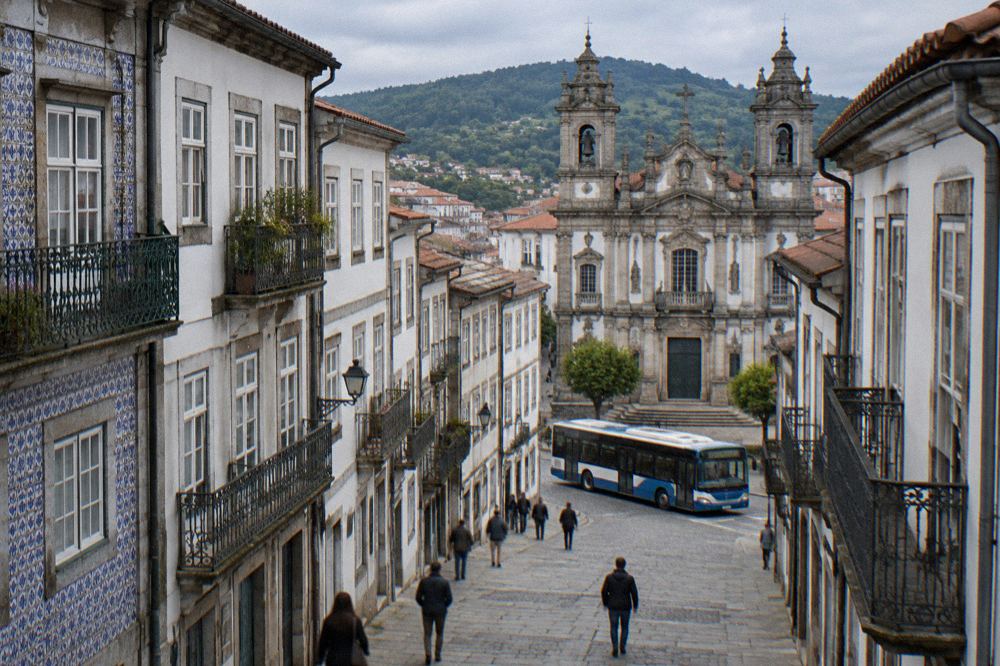
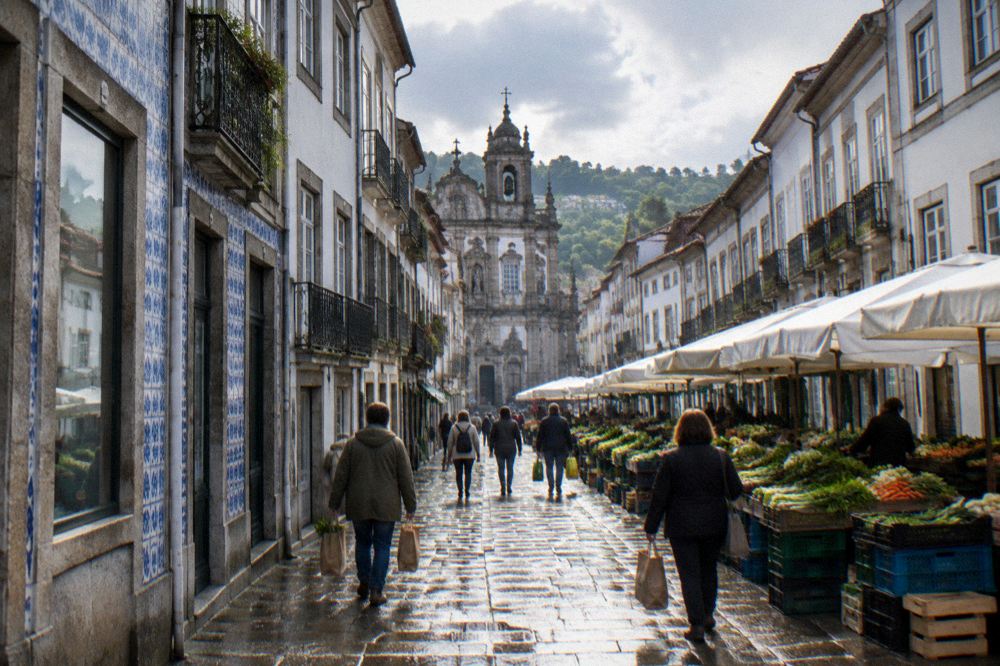
Around the market, the city gives you the rest of the day. The Santa Bárbara Garden sits a short walk into the historic centre, the Sé de Braga stands at its heart, and the whole stretch of the centre between the market and the Arco da Porta Nova is a compact walk through Braga's baroque streets. A market morning, a garden, a cathedral and a pastry stop is the shape of a very good Braga day.
Where Is The Market And How Do You Get There?
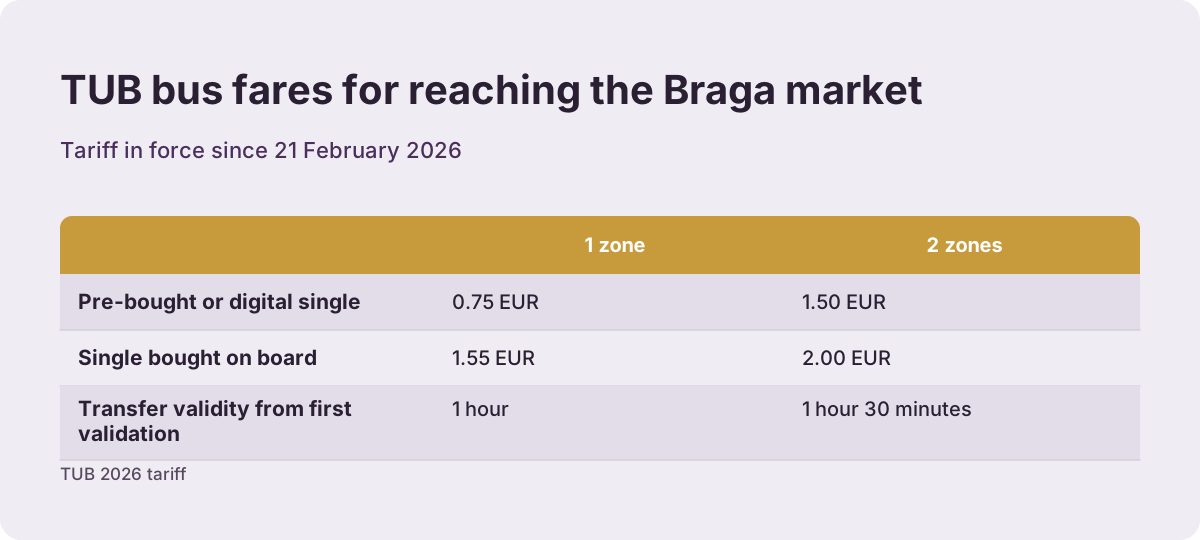
The Mercado Municipal de Braga sits in the city centre of Braga, Portugal, close to the Avenida da Liberdade and the historic core, so most visitors reach it on foot from the centre. For anyone starting further out, the TUB urban bus network serves the city, with a pre-bought or digital single at 0.75 EUR for one zone and 1.50 EUR for two, against 1.55 EUR and 2.00 EUR bought on board.
The TUB tariff, in force since 21 February 2026, is the practical arithmetic of any bus journey in Braga. A pre-bought module or a digital ticket in the TUB app costs 0.75 EUR for a one-zone journey and 1.50 EUR for the two-zone general network; the same tickets bought from the driver cost 1.55 EUR and 2.00 EUR. A one-zone ticket gives an hour of transfers from first validation, a two-zone ticket an hour and a half. The arithmetic rewards buying before boarding, and it makes the bus a genuinely cheap way to cross the city.
| TUB ticket | 1 zone | 2 zones / general network |
|---|---|---|
| Pre-bought or digital single | 0.75 EUR | 1.50 EUR |
| Single bought on board | 1.55 EUR | 2.00 EUR |
| Transfer validity from first validation | 1 hour | 1 hour 30 minutes |
For a visitor planning several journeys, the tourist ticket is better value still. The 2026 tariff lists a whole-network tourist ticket at 3.35 EUR for one day, 6.05 EUR for two days and 8.05 EUR for three days per person, with group pricing at 13.95 / 25.10 / 33.45 EUR for five people and 25.85 / 46.50 / 62.00 EUR for ten. The tourist card itself costs 1.50 EUR. Two days of bus rides around Braga for a little over six euros is hard to beat, and the getting around Braga guide covers the network in detail.
| TUB tourist ticket (whole network) | Price per person |
|---|---|
| 1 day | 3.35 EUR |
| 2 days | 6.05 EUR |
| 3 days | 8.05 EUR |
| Tourist card (one-off) | 1.50 EUR |
Arriving from farther afield, the same logic applies. Braga's train station and the Central de Camionagem, the bus station where the Getbus coach from Porto Airport terminates, both sit within the TUB network's reach, so the last leg of any journey to the market can be a 0.75 EUR pre-bought bus ride or a walk through the centre. The Porto to Braga guide and the Porto Airport to Braga guide cover the intercity legs.
A guided walk changes what the city gives back. The Explore the Portuguese Rome, the City of Braga tour, rated 4.9 from 68 reviews on the operator's listing, runs about an hour and a half through the historic centre, and the Braga Private Walking Tour with a Professional Guide covers the same ground for travellers who want a guide to themselves. Both can be slotted around a market visit, the walking tour in the morning and the market after, or the reverse.
What Will You Find Inside The Praça?
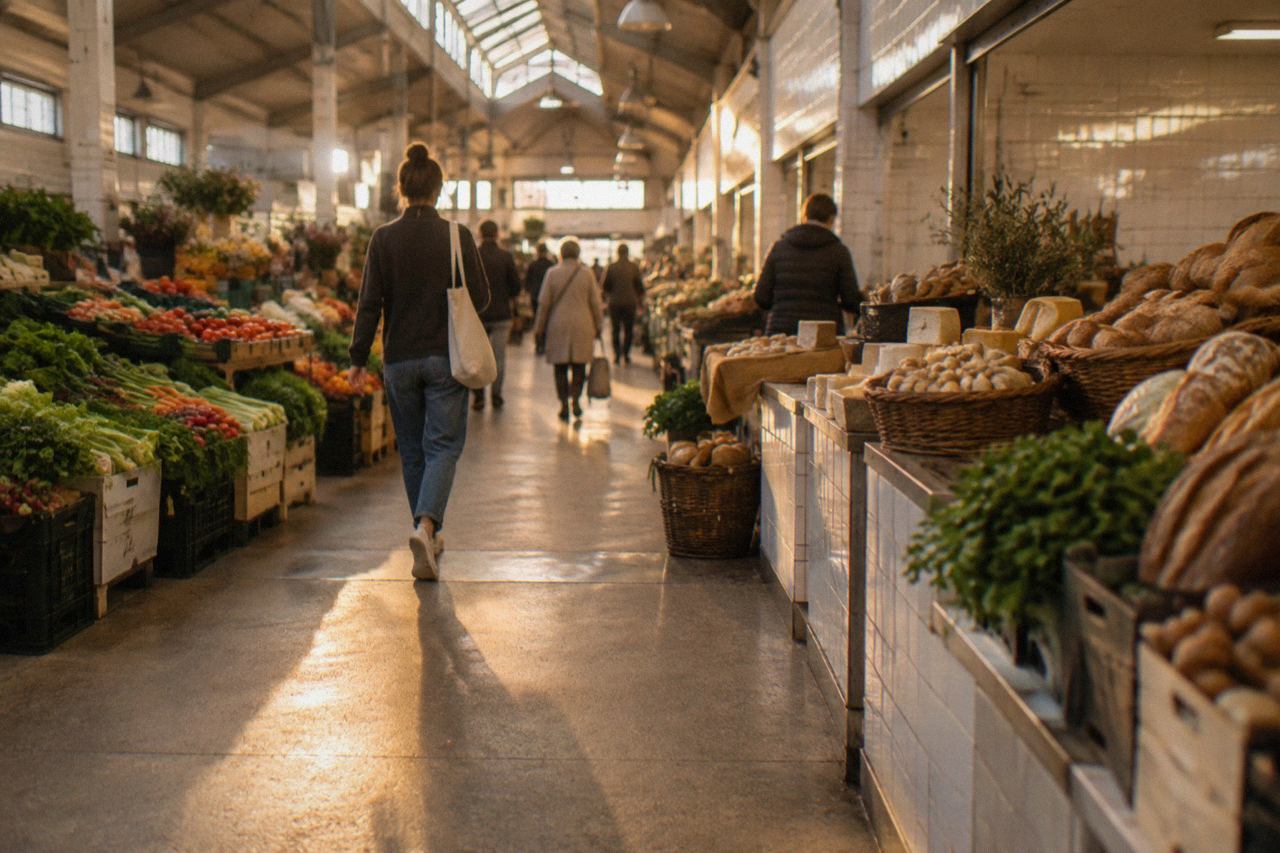
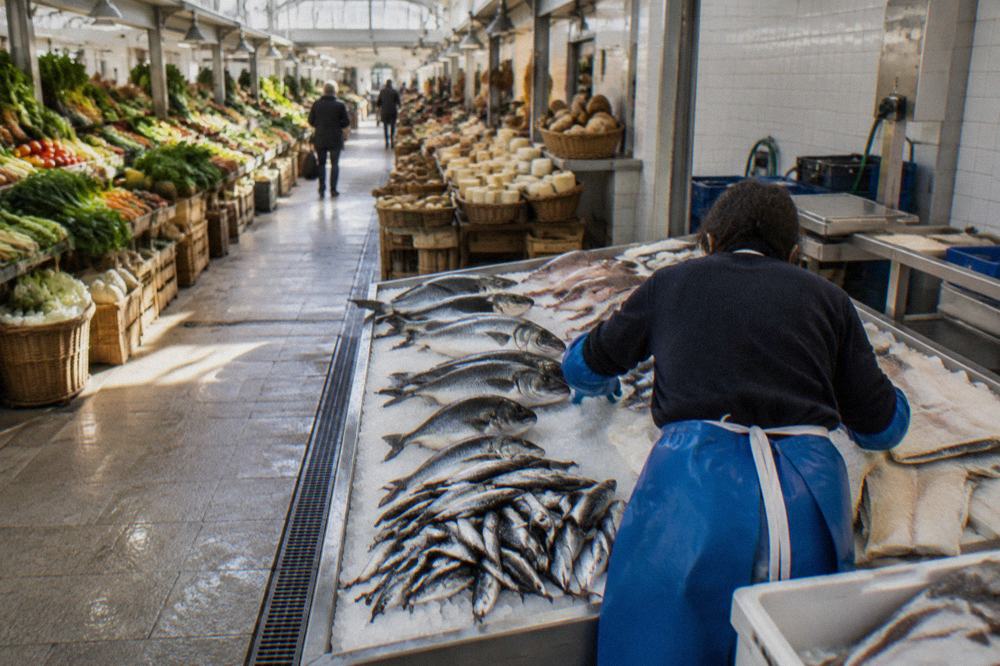
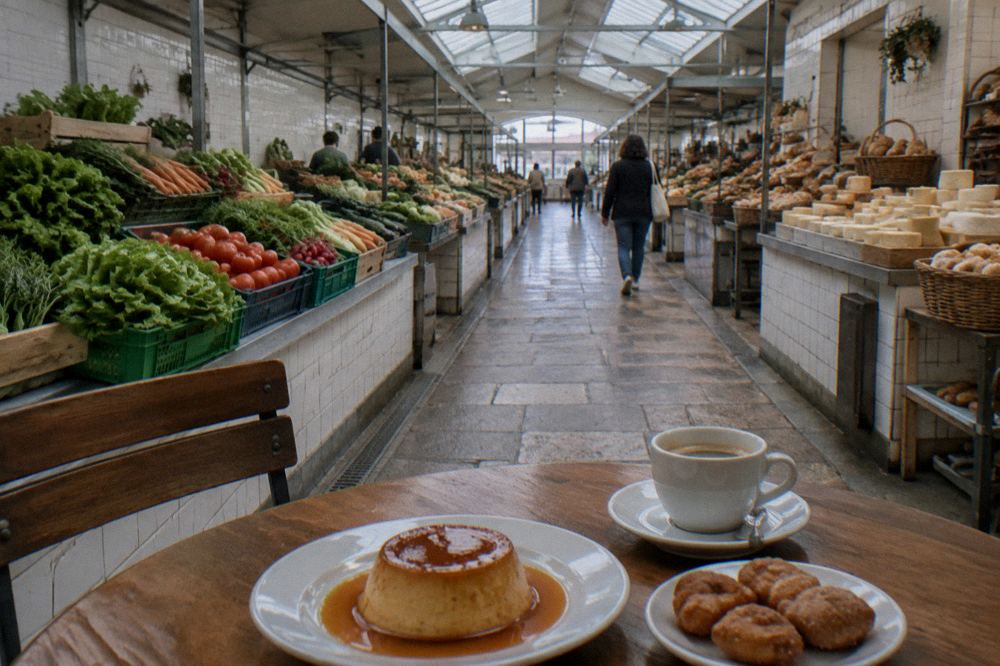
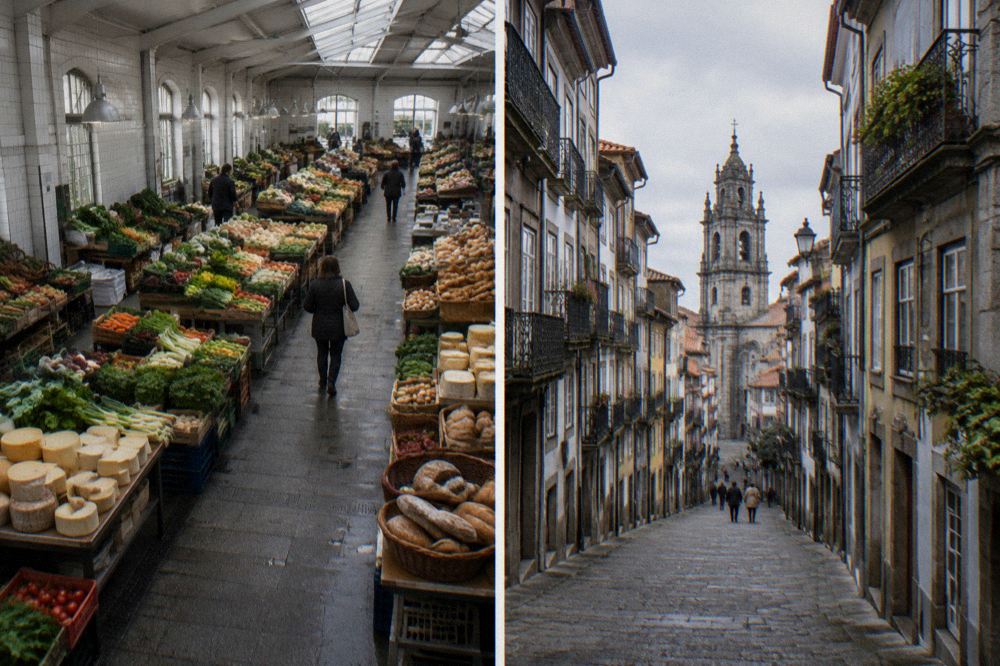
Inside the Praça, Mercado Municipal de Braga you will find the classic sections of a Portuguese municipal food market: produce stalls selling the vegetables and fruit of the Minho, fishmongers with Atlantic fish and salt cod, butcher and charcuterie counters, bakeries, and the small vendors of cheese, olives and preserves that anchor a Portuguese market hall. The market's branding is municipal, its customers are locals first, and its stock follows the seasons of northern Portugal.
The fish counters matter more in Braga than a visitor might expect. Portugal is one of Europe's great fish-eating countries, and the salt cod, bacalhau, that anchors the national repertoire is sold everywhere in the country in cured, salted slabs. The fresh counters carry the Atlantic's daily catch, and in the Minho that catch includes the river fish of the region's waterways alongside the sea fish brought up from the coast. A Braga fishmonger's counter is a lesson in how a city two ranges of hills from the ocean still eats from it.
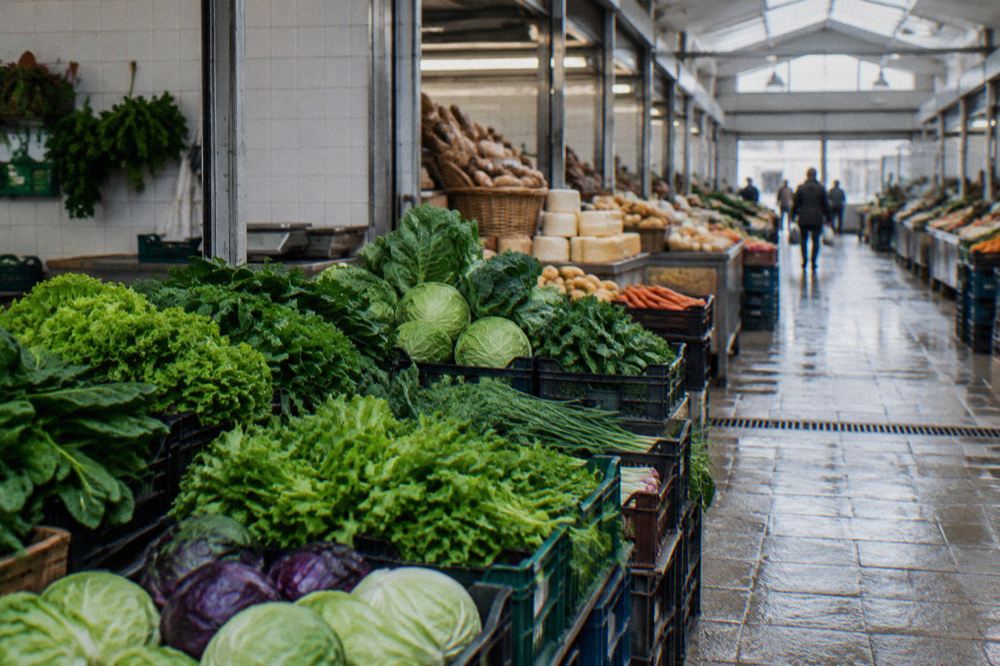
The produce stalls are the market's heart. The Minho is green, wet country, and its agriculture shows it: the collard greens that become caldo verde, the cabbages and potatoes that go into the region's slow meat pots, the beans, the peppers, the onions and garlic that start almost every savoury dish in northern Portugal. Seasonality rules. What is on the stalls in June is not what is on them in December, and the market's honest answer to "what should I buy" is always whatever is stacked highest that week.
| Market section | What it sells | How it fits a Minho kitchen |
|---|---|---|
| Produce stalls | Seasonal vegetables, greens, fruit of the Minho | Caldo verde, rojões, slow vegetable sides |
| Fish counters | Atlantic fish, river fish, cured salt cod | Bacalhau à Braga and other cod dishes |
| Butchers | Pork, sausages, regional charcuterie | Rojões, sarrabulho, presunto |
| Bakeries and dry goods | Bread, olives, cheese, preserves | The table's base, from breakfast to supper |
The honest caveat, again, is that no individual stall, price or vendor has been verified on this site's research, and no market's schedule should be promised sight unseen. The municipality's pages confirm the market is open and operating under the Praça branding; check the current days and hours on the municipal site before you plan a visit around them. What can be promised is the market's role: it is the place where Braga's kitchens are stocked, and a visitor who wants to understand what the Minho eats should start there.
What Should You Eat Around The Braga Market?
Around the Braga market and the city's centre you should eat the dishes of the Minho: bacalhau à Braga, the city's own salt cod dish; rojões and the region's pork cooking; frigideiras, the meat pastries associated with Braga's cafés; and the pudim Abade de Priscos, a caramel egg pudding. None of these needs a museum: they are ordinary food here, sold and eaten every day.
Bacalhau à Braga is the city's signature treatment of salt cod, a dish of fried cod with potatoes, onions and the golden, glossy sauce that Portuguese kitchens build from olive oil and the cod's own richness. It belongs to the national family of bacalhau dishes, of which Portugal claims a famously long repertoire, but the Braga version is the one the city puts its name on. The bacalhau à Braga guide on this site covers the dish in full, and a market visit explains its ingredients better than any menu does: the cod on the fish counter, the onions and potatoes on the produce stalls, the olive oil in the dry-goods aisles.
Rojões and the pork cooking of the Minho are the market's other half. Rojões à moda do Minho is a slow dish of fried pork with potatoes, often coloured and flavoured with the region's vinho verde and served with the blood rice, arroz de sarrabulho, in its fuller festive form. The sausages and cured meats of the region, the chouriço and the presunto of northern Portugal, hang in the butcher sections of any Minho market, and Braga's is no exception.
| Minho dish | What it is | Where to read more |
|---|---|---|
| Bacalhau à Braga | Fried salt cod with potatoes, onions and a rich sauce | Bacalhau à Braga guide |
| Rojões | Slow-cooked pork with potatoes, a Minho staple | Market butcher counters supply it |
| Frigideiras | Small fried meat pastries tied to Braga's café tradition | Frigideiras and Braga pastries guide |
| Pudim Abade de Priscos | Caramel pudding with a savoury pork-fat note, Braga's famous dessert | Pudim Abade de Priscos guide |
| Caldo verde | Collard-green and potato soup with chouriço | Ordinary Minho home cooking |
The pudim Abade de Priscos deserves its own sentence. It is a caramel pudding, but its base carries a savoury secret, pork fat, which gives it a texture and a depth that no ordinary crème caramel reaches. It is named for the abbot of Priscos, and it is the dessert Braga is known for across Portugal. The frigideiras, small pastries of shredded meat, belong to the city's café tradition, and the A Brasileira café, a Braga landmark on the Rua do Souto side of the centre, is the historic name attached to them; say what the place is, and check its current hours on the door.
A guided food walk turns the eating into an education. The Braga: Authentic Small-Group Food & Tasting Tour, from 100.83 USD per person and rated 5 from 3 reviews on the operator's listing, runs about three hours with lunch built in, and it is the natural companion to a market morning: the market shows you the raw materials, the tour shows you what the city does with them. Check availability on the operator's live listing.
What Is Vinho Verde And Why Is It Everywhere In Braga?
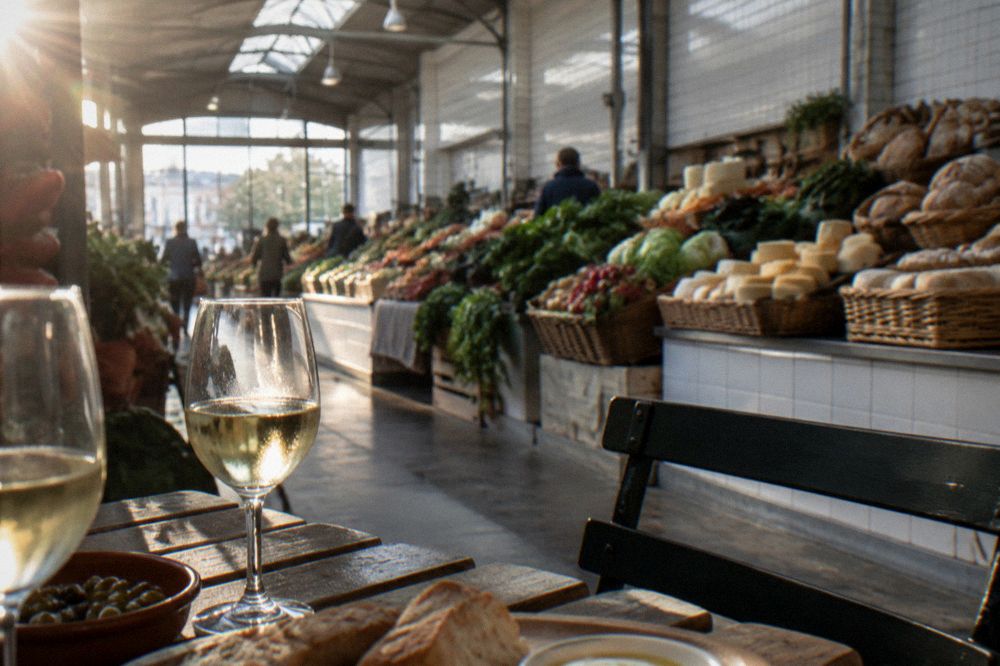
Vinho verde is the wine style of the Minho, the region around Braga, and it is everywhere in the city because Braga sits in the middle of its historic production area. It is not a reference to green colour: verde here means young, and the wines are typically light, fresh, low in alcohol and often slightly sparkling, made from the region's own grape varieties and drunk young with the food of the region.
The Minho is the wettest part of Portugal, and the IPMA's 1991 to 2020 climate normals for the Braga / Merelim station show why the landscape is so green: 1387.3 mm of rain across an average year, with October the wettest month at 197.8 mm and July the driest at 27.9 mm. That climate grows the grapes, and the grapes make the wine that appears by the glass all over Braga, from market-day lunches to restaurant tables. The rest of the planning pages sit on Braga Travel Guide.
The vinho verde guide on this site covers the style in depth, and a market visit explains its place in the culture: this is an everyday wine, not a ceremony. For a visitor who wants to go further, the region's estates open their doors. The Identity Tasting at Quinta de Santa Cristina, from 28.88 USD per person and rated 4.9 from 47 reviews on the operator's listing, is a ninety-minute tasting at a vinho verde estate, and the Wine Tour at Mosteiro de Tibães with an Exclusive Wine Tasting, from 63.53 USD per person, pairs the wine with the monastery visit described on the Tibães Monastery attraction page.
The Braga Small-Group Food Tour: Taste Real Portugal with a Local Guide, rated 5 from 5 reviews on the operator's listing, is another three-hour option that walks the city's food with a local guide, with the current price shown on the listing. Between the market, the dishes and the wine, a food-focused traveller can fill a full day in Braga without leaving the table.
How Much Does A Market Day In Braga Cost?
A market day in Braga costs very little by design: the TUB bus to the centre is 0.75 EUR pre-bought, the whole-network tourist ticket is 3.35 EUR for a full day of rides, and the city's municipal tourist tax is 1.55 EUR per person per night for up to four nights, charged all year by your accommodation. The market's own goods are priced by the stall, so bring cash and check prices at the counter.
The tourist tax is the line item most visitors do not expect. Braga levies a municipal tourist tax of 1.55 EUR per person per night, for a maximum of four nights per stay, applied all year since the 2025 update to the regulation, up from 1.50 EUR in 2025. It is charged by hotels and local accommodation whatever the booking channel, and it applies to guests aged 16 and over. Four nights in Braga therefore add 6.20 EUR per person to any stay.
| Cost of a market day in Braga | Amount | Notes |
|---|---|---|
| TUB single, pre-bought or digital, 1 zone | 0.75 EUR | 1.55 EUR on board |
| TUB tourist ticket, 1 day | 3.35 EUR | Whole network, card 1.50 EUR extra |
| Municipal tourist tax | 1.55 EUR per person per night | Up to 4 nights, all year, guests 16 and over |
| Market goods | Priced per stall | Bring cash; no verified price list exists |
Tipping is the other question travellers ask, and Portugal's national tourism body answers it plainly: service is included in restaurant bills, though it is customary to leave an additional tip of about 5 to 10 per cent of the total, and it is normal to tip taxi drivers 5 to 10 per cent or to round up to the nearest euro. Nothing obliges you, and nothing forbids you. At a market stall, rounding up is the ordinary courtesy.
There is no city pass to fold these costs into. No city-wide attraction or transport pass is on sale in Braga, so buy each ticket separately: the TUB tourist ticket for the buses, each museum or monument ticket at its own door, and the market's goods at the counter. The Braga attraction tickets and passes guide covers the detail, and the honest summary is that Braga's costs are small and separate.
What Else Is Within Walking Distance Of The Market?
Within walking distance of the Braga market you have the whole compact historic centre: the Sé de Braga with its three visit routes at 3.00 EUR each or 7.00 EUR combined, the Museu dos Biscainhos at 7.50 EUR, the Museu de Arqueologia D. Diogo de Sousa at 5.00 EUR, the Museu Pio XII and its medieval tower at 4.00 EUR for the full museum, and the Theatro Circo, whose guided visits cost 3.50 EUR.
The cathedral alone justifies the walk. The Sé de Braga sells three visit routes, the Treasury-Museum, the funerary chapels and high choir, and the cathedral itself, at 3.00 EUR each, 6.00 EUR for any two and 7.00 EUR for all three, with tickets bought at the reception point in the cloister. The Braga Cathedral guide covers the visit in full. From the market to the cathedral is a short walk through the centre's streets, and the whole route is part of the pleasure.
| Sight near the centre | Admission | Closed |
|---|---|---|
| Sé de Braga, one route | 3.00 EUR (all three 7.00 EUR) | Visits suspended during services |
| Museu dos Biscainhos | 7.50 EUR, garden included | Mondays |
| Museu de Arqueologia D. Diogo de Sousa | 5.00 EUR (2.50 EUR reduced) | Mondays |
| Museu Pio XII, full museum | 4.00 EUR | Sundays, Mondays |
| Theatro Circo guided visit | 3.50 EUR, 45 minutes | Scheduled dates only |
| Santuário do Sameiro | Free, precinct open 24 hours | Zimborio dome 2.00 EUR |
The museums cluster within the same walkable radius, and each has its own character: the Biscainhos museum occupies a former aristocratic palace with its gardens included, the D. Diogo de Sousa museum holds the Roman archaeology of the city, and the Pio XII pairs its collections with a medieval tower you can climb. The D. Diogo de Sousa museum page covers the archaeology, and the Biscainhos museum guide the palace. Beyond the centre, the hills rise: Bom Jesus do Monte, the UNESCO-listed sanctuary whose stairway of 566 steps by the Confraria's count climbs 116 metres, sits on the edge of the municipality, and the Bom Jesus do Monte guide covers the visit, including the funicular, which is out of service since 26 September 2026 with a replacement shuttle and no announced return date.
When Is The Best Time Of Year For A Market Day In Braga?
The best time of year for a market day in Braga is late spring or early autumn: May averages 23 C as a mean maximum with 89.8 mm of rain, June 26.1 C with only 40.6 mm, and September 26.9 C with 67.6 mm, against October, the wettest month of the year at 197.8 mm, and July and August, the hottest at 28.2 C and 28.7 C. The market hall itself, being covered, works in any weather.
The IPMA's 1991 to 2020 normals for the Braga / Merelim station give the honest picture. Rain days of one millimetre or more run 12 to 13 a month from October to January, so a winter market visit is a matter of timing between showers, not avoiding the idea. Summer is dry, with July seeing just 4.0 rain days on average, but it is also the season of heat, with 10.4 days at 30 C or more in August. May and September are the compromise months, and September is a quietly good choice: warmer at the top end than June, with 26.9 C against 26.1 C as the mean maximum, and still firmly outside the October rains.
| Month | Mean max C | Rain mm | Rain days (1 mm or more) |
|---|---|---|---|
| March | 17.8 | 150.1 | 11.8 |
| May | 23.0 | 89.8 | 8.9 |
| June | 26.1 | 40.6 | 5.7 |
| July | 28.2 | 27.9 | 4.0 |
| September | 26.9 | 67.6 | 6.2 |
| October | 22.2 | 197.8 | 12.0 |
| December | 14.9 | 190.3 | 13.3 |
The calendar of events matters too, because a market day slots neatly into Braga's festival weeks. Semana Santa, Holy Week, runs in the week before Easter, 29 March to 5 April in 2026; the Festas de São João run 17 to 24 June, peaking on the night of 23 June into the 24 June municipal holiday; Braga Romana falls in late May; and Noite Branca opens the first weekend of September. None of these is a market event, but all of them fill the centre around the market, and the Braga events guide covers the calendar. The best time to visit Braga guide weighs the seasons in full.
Whatever the season, the shape of the day holds: a morning at the market, a walk through the centre, a dish of bacalhau à Braga or a slice of something sweet, and a glass of vinho verde to finish. Braga is a city that rewards the unhurried, and the market is where its unhurried life is most visible.
The Braga Experience: Guided Tour and Tastings, from 55.48 USD per person and rated 4.6 from 12 reviews on the operator's listing, combines a guided walk with tastings, a middle path between the free-roving market visit and the full food tour, with the live price and dates on the operator's listing.
Common Questions About The Braga Market
Is the Mercado Municipal de Braga open?
Yes. The market is open and operating under the Praça, Mercado Municipal de Braga branding, per the municipality's own pages. Check the current days and hours on the municipal site before you go, because this site publishes no verified stall-level schedule.
Where is the Mercado Municipal de Braga?
In the city centre of Braga, Portugal, close to the Avenida da Liberdade and the historic core. From the centre it is a walk; from further out, the TUB bus network reaches it, with a pre-bought single at 0.75 EUR for one zone.
How much does it cost to visit the Braga market?
Entry to a Portuguese municipal market is free; you pay for what you buy, at prices set by each stall. Getting there on the TUB network costs 0.75 EUR pre-bought for a one-zone single or 3.35 EUR for a one-day whole-network tourist ticket.
What food is Braga known for?
Bacalhau à Braga, the city's fried salt cod dish; rojões and the Minho's pork cooking; frigideiras, the small fried meat pastries of the city's café tradition; and the pudim Abade de Priscos, a caramel egg pudding. Vinho verde, the light, often slightly sparkling wine of the Minho, is poured everywhere alongside them.
Can I combine the market with other sights in one day?
Yes, easily. The Sé de Braga, the Museu dos Biscainhos, the Museu de Arqueologia D. Diogo de Sousa and the Santa Bárbara Garden all sit within walking distance of the centre, and the whole things to do in Braga collection is compact enough for a single day built around a market morning.
Is there a market tour in Braga?
There are food and tasting tours that walk the city's food culture with a local guide, including the Braga: Authentic Small-Group Food & Tasting Tour and the Braga Small-Group Food Tour, both about three hours. A market visit pairs naturally with either, the raw materials first and the finished dishes after.
The Mercado Municipal de Braga is the honest end of every food conversation about this city: whatever the season, whatever the festival, the Minho's produce passes through its aisles before it reaches any table, and a visitor who starts there understands the rest of Braga's cooking a little better.