Pudim Abade De Priscos
Pudim Abade de Priscos is the dessert Braga, Portugal is most famous for: a tall, wobbly caramel egg pudding named after the Abbot of Priscos, a legendary gourmet of the Minho, served in restaurants and pastry shops across the region.
Short answer
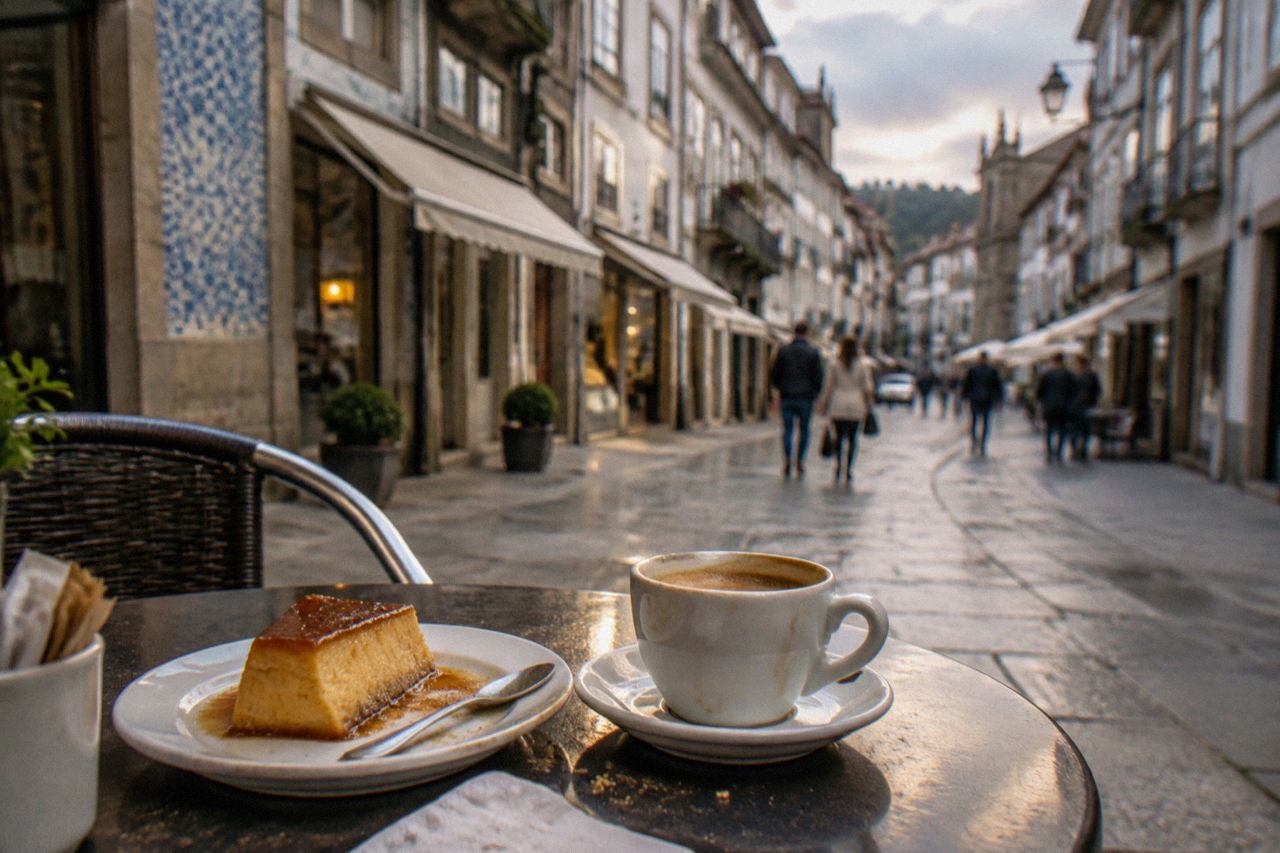
Pudim Abade de Priscos, a caramel egg pudding, in northern Portugal's Minho region. It is named after the Abbot of Priscos, a clergyman remembered as a great gourmet, and it remains the city's signature sweet.
Pudim Abade de Priscos is the dessert most closely tied to Braga, the city in Portugal's Minho region that food travellers increasingly put on a trip for the table alone. It is a tall, softly set egg pudding under a dark caramel cloak, named after the Abbot of Priscos, a clergyman remembered as one of the great eaters of his age, and it appears on menus across the city from lunchtime onward. This guide covers what the pudding is, what goes into it, how it differs from the other egg sweets Portugal is famous for, and how to build a day in Braga around it.
What Is Pudim Abade De Priscos?
Pudim Abade de Priscos, a caramel egg pudding, and it is the dessert most strongly identified with the city of Braga. It is named after the Abbot of Priscos, a parish priest and noted gourmet whose name is attached to several rich dishes of the region's monastic-influenced cooking. The pudding itself is built on egg yolks, sugar and caramel, and it is served cold, unmoulded, with the caramel pooling around the base.
The abbot's name survives in the pudding the way other Portuguese dishes carry the names of clergy: Portugal's convent-sweet tradition, the vast family of desserts built by nuns and monks on egg yolks and sugar, put names of churchmen on the richest things the kitchen produced. The Abbot of Priscos was famous locally for his table, and the pudding that carries his title became the best-known of the dishes linked to him. In Braga, a city whose historic centre is dense with churches and whose food culture leans on the Minho's dairy, eggs and green wine, the pudding long ago stopped being a curiosity and became an institution.
What marks it out on the plate is its height and its wobble. Where a Spanish flan or a French crème caramel sits low and dense, a properly made pudim Abade de Priscos stands tall in the mould, trembling at the touch, with a colour that runs from deep gold to amber depending on how many yolks went in. The caramel is made separately, poured into the mould first, and it ends up on top once the pudding is turned out, running down the sides in a dark ribbon.
What Goes Into A Traditional Pudim Abade De Priscos?
The traditional pudding is made from egg yolks, sugar, water and caramel, with many recipes adding toasted almonds or a splash of port wine to the mix. The yolks dominate: this is a dessert of the Portuguese convent-sweet school, where whole yolks, not whole eggs, give the set and the colour. There is no flour and no cream in the classic version, which is why the texture is a pure, almost custardless trembling curd rather than a firm cake-like slice.
Every family cookbook and restaurant kitchen in the Minho has its own version, but the structure barely changes. Sugar and water are cooked to a dark caramel and poured into the mould. More sugar goes into a syrup with the water, the yolks are beaten into it, sometimes with almonds grated through, and the whole is strained into the caramel-lined mould before a long, gentle cook in a water bath, then a full night in the cold before unmoulding.
The table below sets out what each ingredient does in the finished pudding.
| Ingredient | Role In The Pudding | What It Gives On The Plate |
|---|---|---|
| Egg yolks | The body of the mixture, beaten into the syrup | The set, the deep gold colour, the rich mouthfeel |
| Sugar (syrup) | Dissolved with water and folded into the yolks | Sweetness and the soft, barely holding texture |
| Caramel | Cooked dark and poured into the mould first | The bitter edge and the glossy sauce on top |
| Toasted almonds | Grated or chopped into the mixture in many recipes | A faint marzipan note and specks of texture |
| Port wine | A small splash in some Minho versions | A dark fruit depth behind the caramel |
The almond is the ingredient people argue about. Some kitchens treat it as essential, others leave it out entirely, and visitors will meet both versions in Braga. The port is the same: present in some recipes, absent in others, and never a reason to send a pudding back. What no version forgives is overcooking, because the whole point of the dessert is that trembling, just-set middle that a few minutes too long in the water bath turns to rubber.
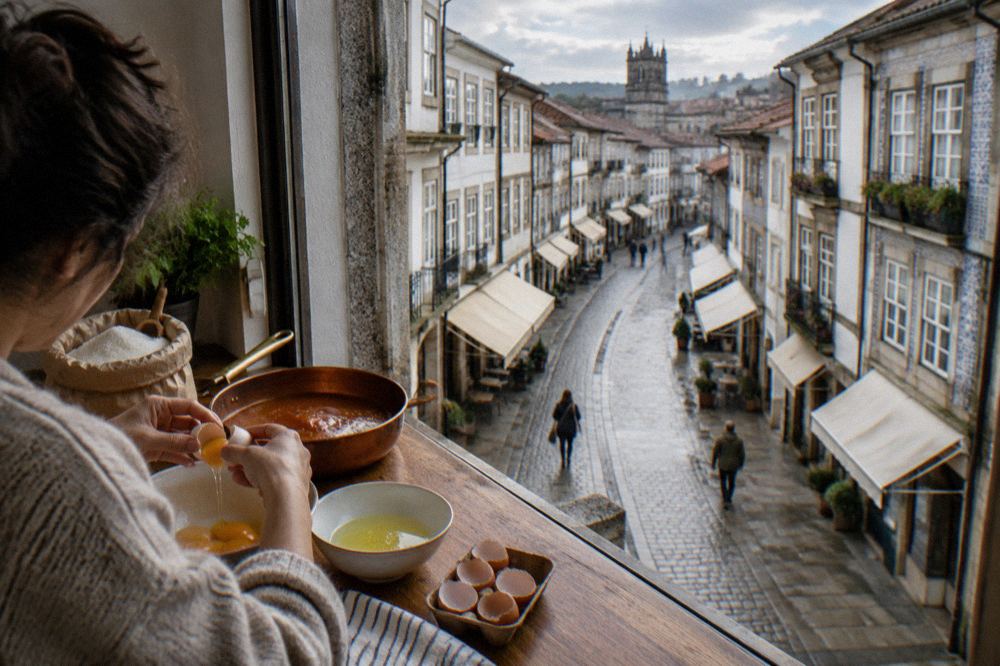
If the dish itself is the reason for the trip, a guided tasting walk is an efficient way to meet it in context. The Braga: Authentic Small-Group Food & Tasting Tour builds a lunch around the city's dishes with a local guide, and Check availability on the operator's live listing before travel dates fill. The city's food culture rewards a guide, because half of what is worth eating in Braga never makes it onto an English-language menu.
To taste the city's dishes with a local guide, book a food tasting tour here.
Where To Eat Pudim Abade De Priscos In Braga?
The pudding is served in traditional restaurants and pastry shops across Braga's historic centre, especially in the area around Rua do Souto, Avenida Central and the streets behind the Sé de Braga, and it appears on most menus that describe themselves as serving Minho regional cooking. No single venue has a monopoly on it: this is a city-wide dish, and the honest advice is to order it wherever lunch was good rather than to cross the city for one named kitchen.
Braga's restaurant culture runs on daily menus, and the pudding is usually the last line of the handwritten list. A practical approach for visitors: order the regional dishes first, bacalhau à Braga, the fried cod with potatoes and cabbage, or rojões, the pork pieces of the Minho, and take the pudding as the close. It pairs naturally with a small glass of vinho verde, the light, often faintly sparkling wine style of the Minho region, whose slight prickle cuts through the yolks.
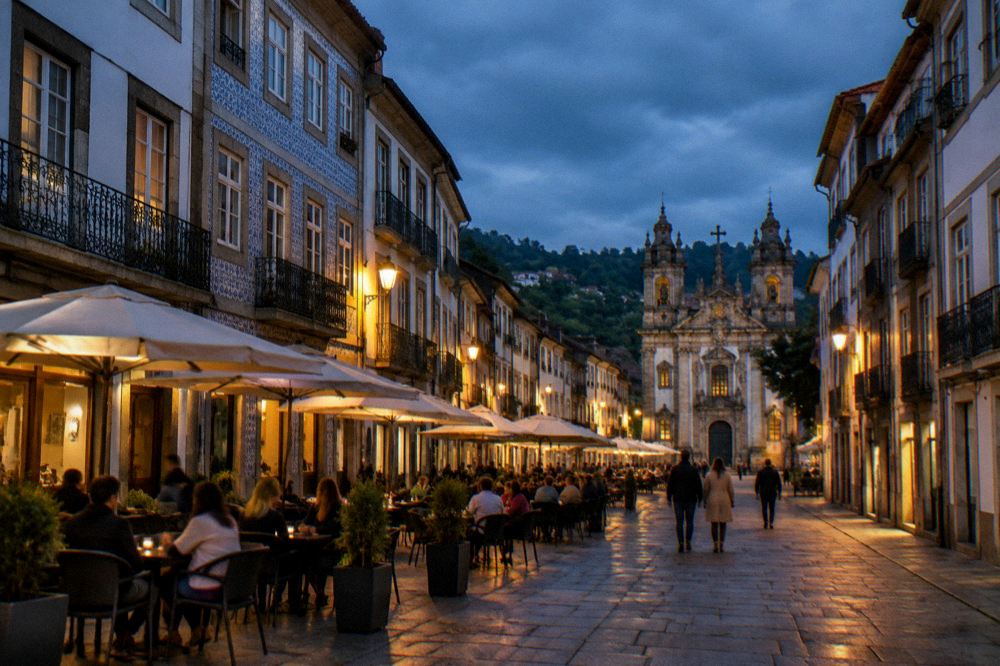
For a self-guided dessert trail, the city's compactness helps. The historic centre can be walked end to end in under half an hour at a stroll, so a pudding stop fits easily between sights: after the Santa Bárbara Garden, after the cathedral, or as the finish to a morning at the Praca, Mercado Municipal de Braga, where the city's produce gives the best possible sense of what the Minho larder looks like. The market is the place to see the eggs, the almonds and the regional wines that end up in the city's desserts.
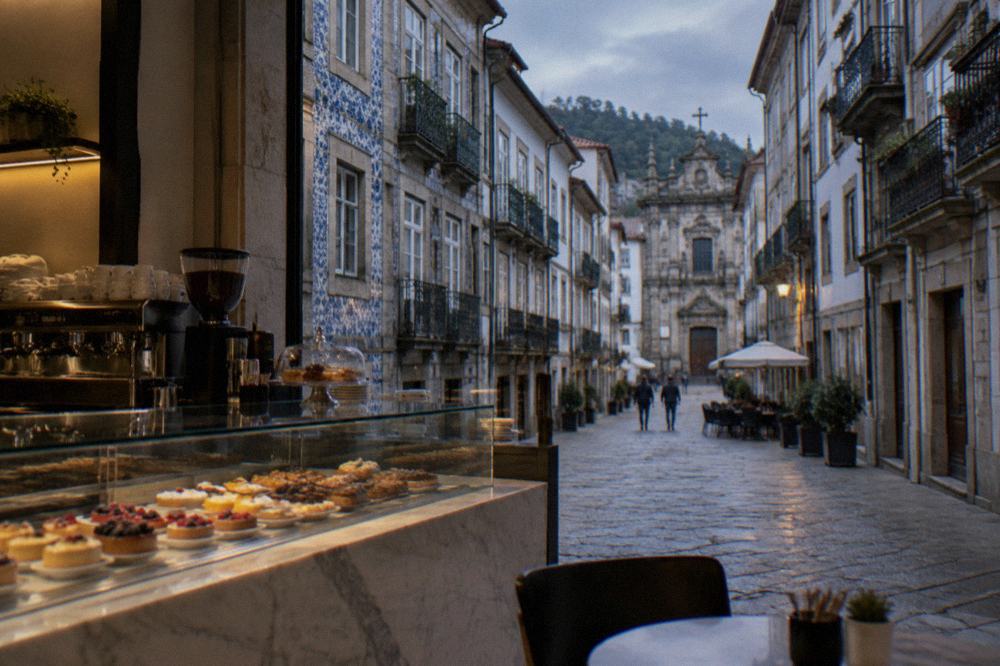
The one thing worth planning around is the day. Braga's kitchens run hardest at Sunday lunch, when Portuguese families fill the restaurants of the centre, and a pudding ordered at the end of that service has often been made that morning. Late evening is thinner: many traditional kitchens close early by southern European standards, so a visitor banking on a 22:00 dessert may find the counter swept. Lunch, or an early dinner around 20:00, is the safe window.
How Does It Compare To Other Portuguese Egg Desserts?
Pudim Abade de Priscos is taller, richer and more yolks-driven than the two desserts it is most often confused with: crème caramel, the low, dense flan common across Portugal and Spain, and pastel de nata, the small Lisbon custard tart. It belongs to the convent-sweet family of northern Portugal, standing closer to the dense yolk puddings of the monasteries than to any pastry. The caramel is the shared element, but the texture and the height are the giveaway.
Portugal's dessert landscape is dominated by the egg-and-sugar tradition of its religious houses, and every region has its flagship. Braga's is this pudding; Lisbon's is the custard tart; the Algarve has its fig and almond sweets; and the Minho as a whole leans on the yolk puddings, the puddings of the old monasteries such as the Mosteiro de São Martinho de Tibães, the great Benedictine house just outside the city where the region's monastic cooking tradition was centred. The monastery is a short trip from the centre and gives the pudding's world its best backdrop: the kitchens that produced this kind of rich, yolk-heavy dessert belonged to institutions like it.
| Dessert | Region Most Associated | Texture | How It Is Served |
|---|---|---|---|
| Pudim Abade de Priscos | Braga and the Minho | Tall, trembling, yolk-rich | Cold, unmoulded, caramel on top |
| Crème caramel / flan | Portugal and Spain broadly | Low, dense, smooth | Cold, unmoulded, caramel sauce |
| Pastel de nata | Lisbon | Soft set in a crisp pastry shell | Warm or room temperature, cinnamon optional |
| Toucinho do céu | Various, northern tradition | Dense, almond-and-yolk cake | Sliced, no caramel |
| Leite creme | Northern Portugal | Set baked milk custard | Cold, burnt sugar crust on top |
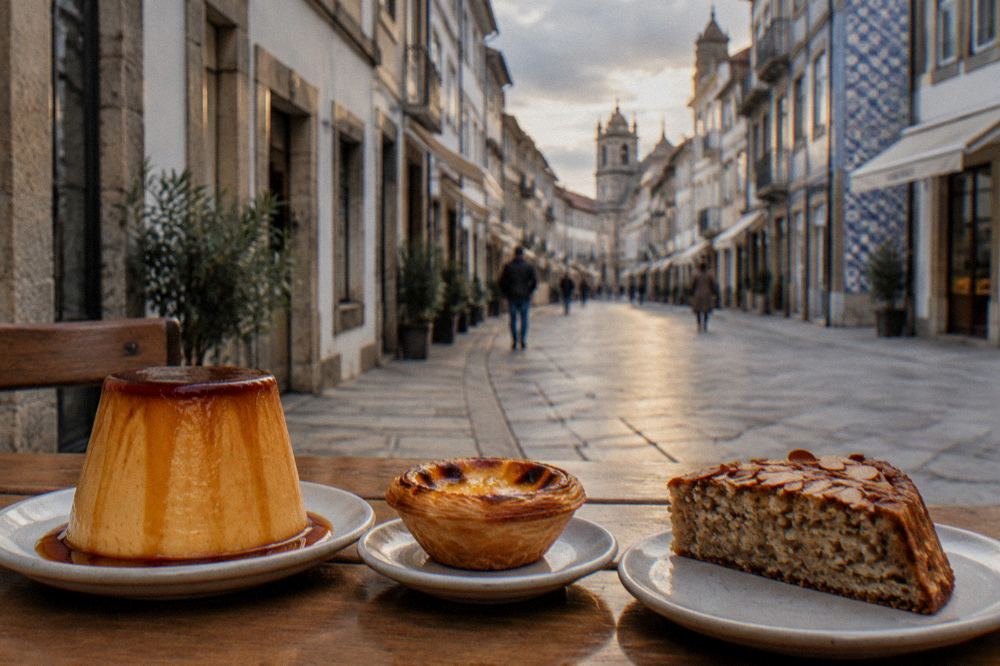
The differences matter when ordering. A visitor who expects a flan and receives a slice of pudim Abade de Priscos gets something with more presence: more yolk, more height, a softer set and, when almonds are in the mix, a flavour closer to marzipan than to caramel custard. The pudding also holds its place on the menu differently, as a restaurant dessert rather than a counter pastry, so it is ordered at the table and not pointed at through a glass case. Everything else covered here is indexed on Braga Travel Guide.
Can You Make Pudim Abade De Priscos At Home?
Yes, and it is one of the more forgiving Portuguese convent sweets for a home cook, because the ingredient list is short and the method is a single water bath rather than pastry work. The two points that decide the result are the caramel, which must go dark before it goes in the mould, and the restraint at the oven door, because the pudding must come out while the centre still trembles. It then needs a full night in the refrigerator before unmoulding.
A home version runs roughly as follows. Cook sugar with a little water to a dark caramel and coat the mould. Make a syrup with more sugar and water, let it cool slightly, then beat in a generous quantity of egg yolks, with grated toasted almond if the family version calls for it. Strain into the mould, cover, and cook in a water bath at a gentle oven until just set, which home cooks should judge by eye rather than by clock, since ovens differ. Cool, chill overnight, and turn out onto a deep plate to catch the caramel.
The failures are all instructive. Pale caramel gives a sweet, flat-tasting sauce instead of the bitter edge. Overbeating the yolks makes foam that muddies the set. And impatient unmoulding, before the pudding is fully cold, is the reason many first attempts arrive in pieces. Every one of those mistakes is fixable on the second attempt, which is part of why the recipe travels so well.
| Step | What To Watch For | The Common Mistake |
|---|---|---|
| Cooking the caramel | Dark amber, taken just short of smoking | Stopping early and getting a pale, flat sauce |
| Beating in the yolks | Smooth and homogeneous, off the heat | Cooking the yolks in hot syrup into scrambled strands |
| The water bath | Water simmering, mould covered | Boiling the bath hard, which toughens the set |
| Testing doneness | Centre trembles when the mould is nudged | Baking until fully firm, which gives rubber |
| Unmoulding | Straight from the refrigerator onto a deep plate | Turning out warm, when the pudding collapses |
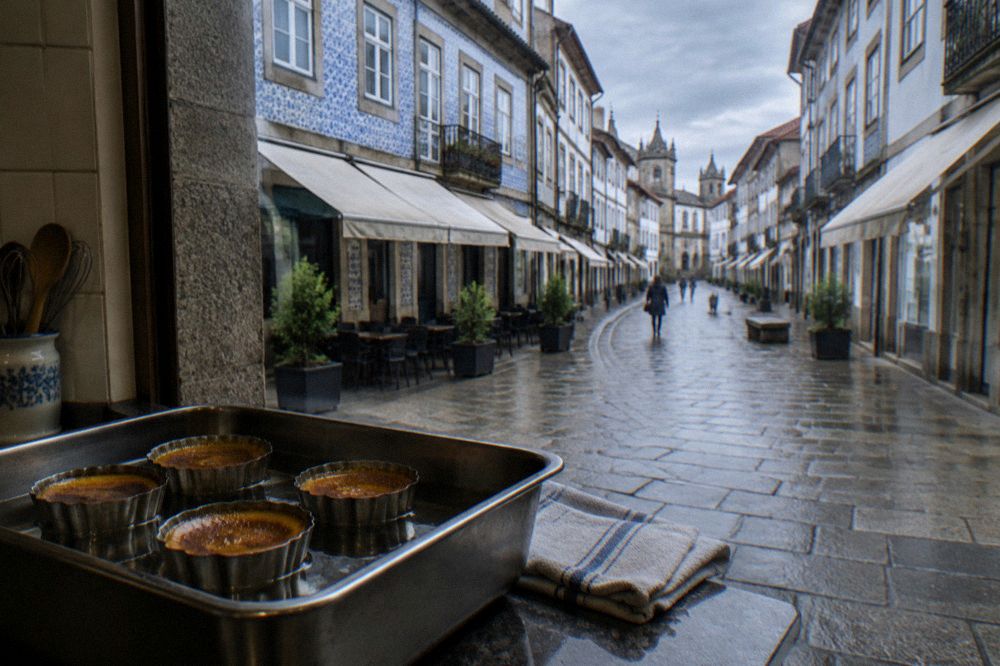
Home cooks who want the full Braga food culture around the pudding can extend in two directions. The city's other signature dishes, bacalhau à Braga and the pastry counter's frigideiras, are covered in the site's wider guide to what to eat in Braga, and the regional wine that accompanies all of it, vinho verde, is a style of the Minho best understood by tasting rather than reading.
What Else Should You Eat In Braga?
Braga's table runs well beyond one pudding: the city's signature savoury dishes are bacalhau à Braga, fried salt cod layered with potatoes and cabbage, and rojões, the slow-cooked pork of the Minho, while the pastry counters carry frigideiras and the region's convent sweets. Sarrabulho, the Minho's pork-and-blood rice, divides opinion and is worth ordering once. Vinho verde, the light, often slightly sparkling wine of the region, sits behind all of it.
The pudding works best as the last course of a full Braga meal rather than as a standalone snack. Bacalhau à Braga is the natural first course of that meal, the city's own way with salt cod, fried and layered rather than stewed. Rojões, chunks of pork braised with garlic and bay, come from the same farmstead tradition. Frigideiras, the small pan-fried pastry parcels of the region, are the counter food, eaten standing or with a coffee.
| Dish | What It Is | Where It Sits In A Braga Meal |
|---|---|---|
| Bacalhau à Braga | Fried salt cod layered with potatoes and cabbage | The main course, the city's signature savoury |
| Rojões | Slow-cooked pork pieces with garlic and bay | The main course, Minho farmstead cooking |
| Sarrabulho | Rice cooked with pork and blood, a Minho speciality | A festive dish, ordered by the curious |
| Frigideiras | Small fried pastry parcels with a meat filling | Counter food, mid-morning or with coffee |
| Pudim Abade de Priscos | Caramel egg-yolk pudding with almond | The dessert, the reason for this guide |
A walking tour that covers the city's sights between meals is the most efficient way to spend a single day here. The Small-Group Braga Half-Day Tour with Bom Jesus Sanctuary pairs the historic centre with the baroque stairway sanctuary on the hill above the city. The sanctuary, a UNESCO World Heritage site since 2019, is the one sight in the municipality that no first visit should skip, and a half-day structure leaves the evening free for a long dinner.
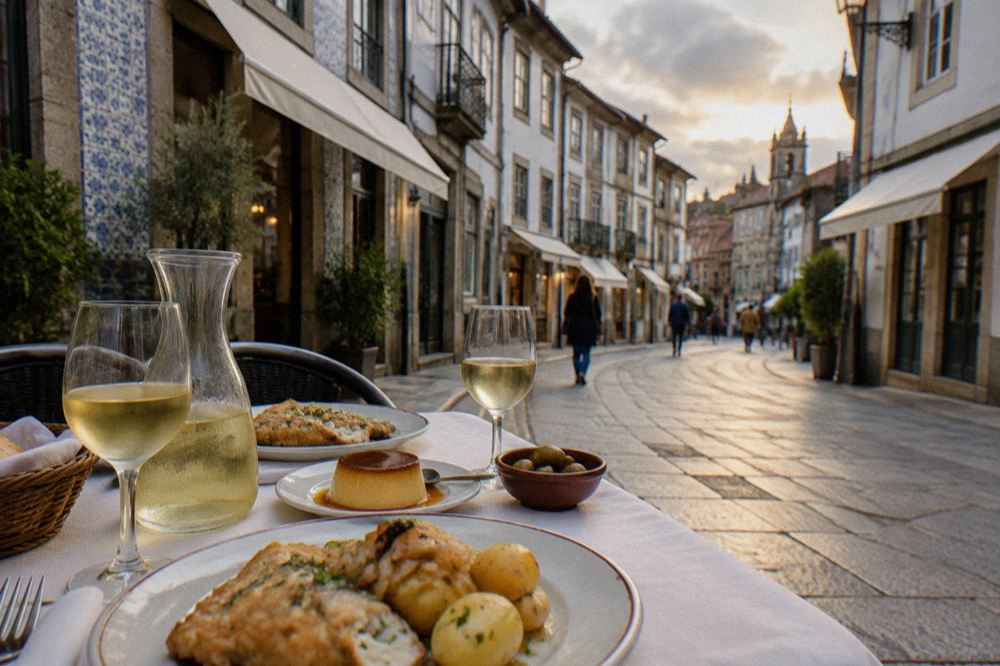
How Do You Plan A Dessert Day In Braga?
A dessert day in Braga works best as a slow walking loop of the historic centre: morning coffee and a pastry near Rua do Souto, the market and gardens before lunch, a traditional regional lunch with the pudding as dessert, and a viewpoint or garden walk to finish. The city is compact and flat at its centre, public transport is cheap, and the TUB tourist ticket covers the whole network for a day at 3.35 EUR, so no part of the plan needs a car.
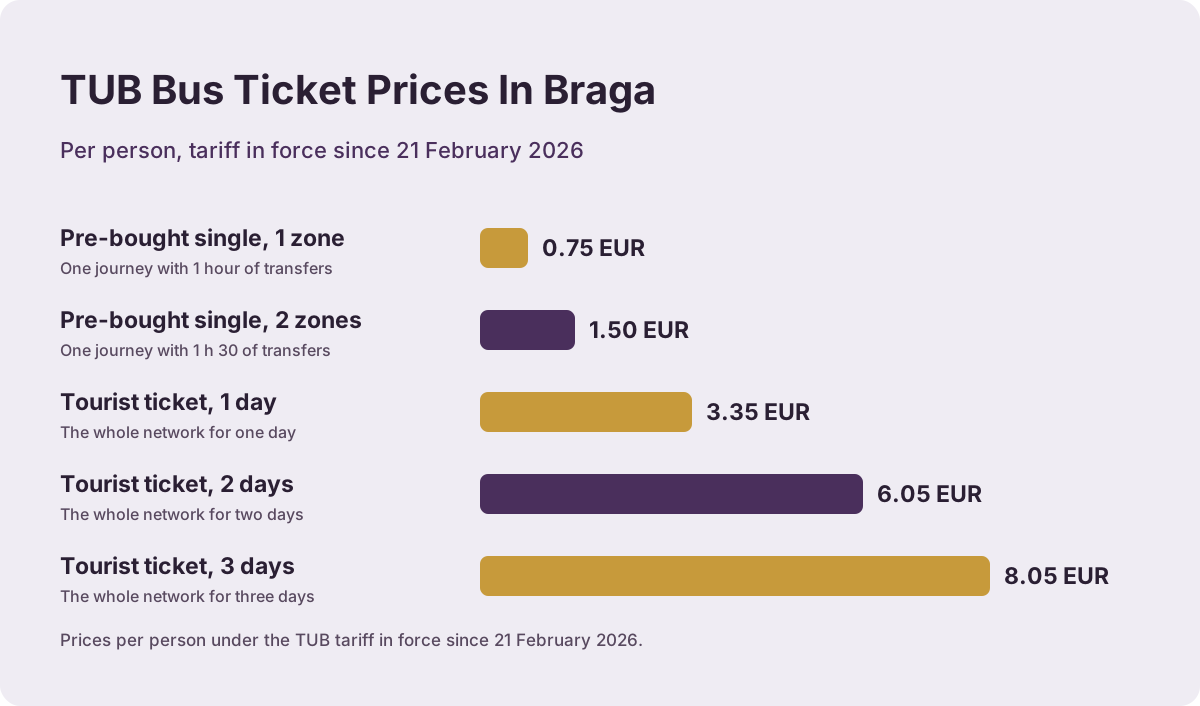
The practical numbers help. Braga's municipal buses, TUB, sell a whole-network tourist ticket at 3.35 EUR for one day, 6.05 EUR for two days and 8.05 EUR for three days per person, under the tariff in force since 21 February 2026, which makes hopping out to the Tibães monastery or up towards Bom Jesus do Monte simple. A single pre-bought journey costs 0.75 EUR for one zone against 1.55 EUR bought on board, so the ticket bought in advance is the one to use.
| TUB Ticket | Price Per Person | What It Covers |
|---|---|---|
| Pre-bought single, 1 zone | 0.75 EUR | One journey with 1 hour of transfers |
| Pre-bought single, 2 zones | 1.50 EUR | One journey with 1 h 30 of transfers |
| Tourist ticket, 1 day | 3.35 EUR | The whole network for one day |
| Tourist ticket, 2 days | 6.05 EUR | The whole network for two days |
| Tourist ticket, 3 days | 8.05 EUR | The whole network for three days |
Weather shapes the day more than visitors expect, because Braga is a rainy city by Portuguese standards. IPMA's 1991 to 2020 climate normals for the Braga / Merelim station show October as the wettest month of the year on average, at 197.8 mm of rain, with December and January close behind, and July the driest at 27.9 mm. A dessert day built around covered ground, restaurants, the market, the museums, is the right plan from October to January, when rain falls on 12 to 13 days a month.
| Month | Mean Max Temp | Rainfall | Rain Days (1 mm Or More) | Dessert-Day Verdict |
|---|---|---|---|---|
| January | 14.1 C | 179.5 mm | 13.1 | Indoor plan, long lunches |
| April | 19.6 C | 127.9 mm | 12.0 | Mixed, showers likely |
| July | 28.2 C | 27.9 mm | 4.0 | Full walking day, pudding is cold anyway |
| October | 22.2 C | 197.8 mm | 12.0 | The wettest month, plan indoors |
| December | 14.9 C | 190.3 mm | 13.3 | Indoor plan, Christmas sweets |
The pairing of pudding and walking is where the city earns its keep. A morning that starts at the Sé de Braga, whose combined ticket for all three visit routes costs 7.00 EUR, flows naturally downhill to the pastry counters of the centre, and an afternoon can end in the gardens or on the viewpoints above the city. Visitors with more than a day can extend the same food-and-walk logic along the Camino de Santiago route from Braga or out to the coast on the Vila do Conde and Póvoa de Varzim day trip.
For travellers who want the city explained rather than only tasted, the Braga Private Walking Tour with a Professional Guide gives the historic centre a guide's full attention. Between the food tour, the half-day sanctuary tour and the private walk, most visitors will find one structure that fits, and the rest of the time in Braga is best left open for the tables.
Common Questions About Pudim Abade De Priscos
What is pudim Abade de Priscos?
It is a tall caramel egg-yolk pudding from the Minho region of northern Portugal, the dessert most closely identified with the city of Braga. It is made from egg yolks, sugar and caramel, often with toasted almonds, and it is served cold and unmoulded with the caramel on top.
Who was the Abbot of Priscos?
A parish priest of Priscos, near Braga, remembered as one of the great gastronomes of the Minho. Several rich dishes of the region's cooking carry his title, and the pudding is the most famous of them.
Does pudim Abade de Priscos contain almonds?
Many recipes do, others do not. Grated toasted almond is a common addition in Minho versions, giving a faint marzipan note, but kitchens in Braga serve both almond and almond-free versions of the pudding.
How is it different from crème caramel?
It is taller, richer and more yolks-driven, with a softer, more trembling set than the low, dense flan. The caramel is common to both, but the pudding's height, its deep gold colour and its almond note, when present, distinguish it on the plate.
Where can I eat pudim Abade de Priscos in Braga?
In traditional regional restaurants and pastry shops across the historic centre, especially at lunch. It appears on most menus that describe themselves as Minho cooking, and the practical advice is to order it wherever lunch was good rather than to hunt one named kitchen.
Can I make it at home?
Yes. The ingredient list is short and the method is a single water bath. The two decisive points are cooking the caramel dark and pulling the pudding from the oven while the centre still trembles, then chilling it fully overnight before unmoulding.
A day in Braga that ends with a slice of pudim Abade de Priscos is a day spent the way the city eats, and the pudding, cold, dark with caramel and trembling on the plate, is the best single mouthful the Minho region has put its name on.