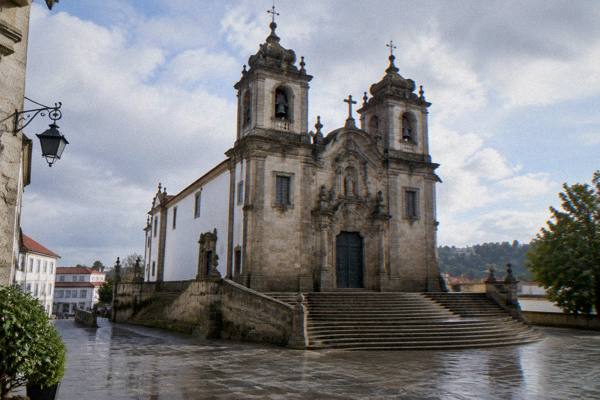
Roman Baths Of Alto Da Cividade
The Roman baths of Alto da Cividade are the most visible piece of Bracara Augusta, the Roman city beneath modern Braga, and the anchor of a small archaeological circuit you can walk in an afternoon.
Short answer
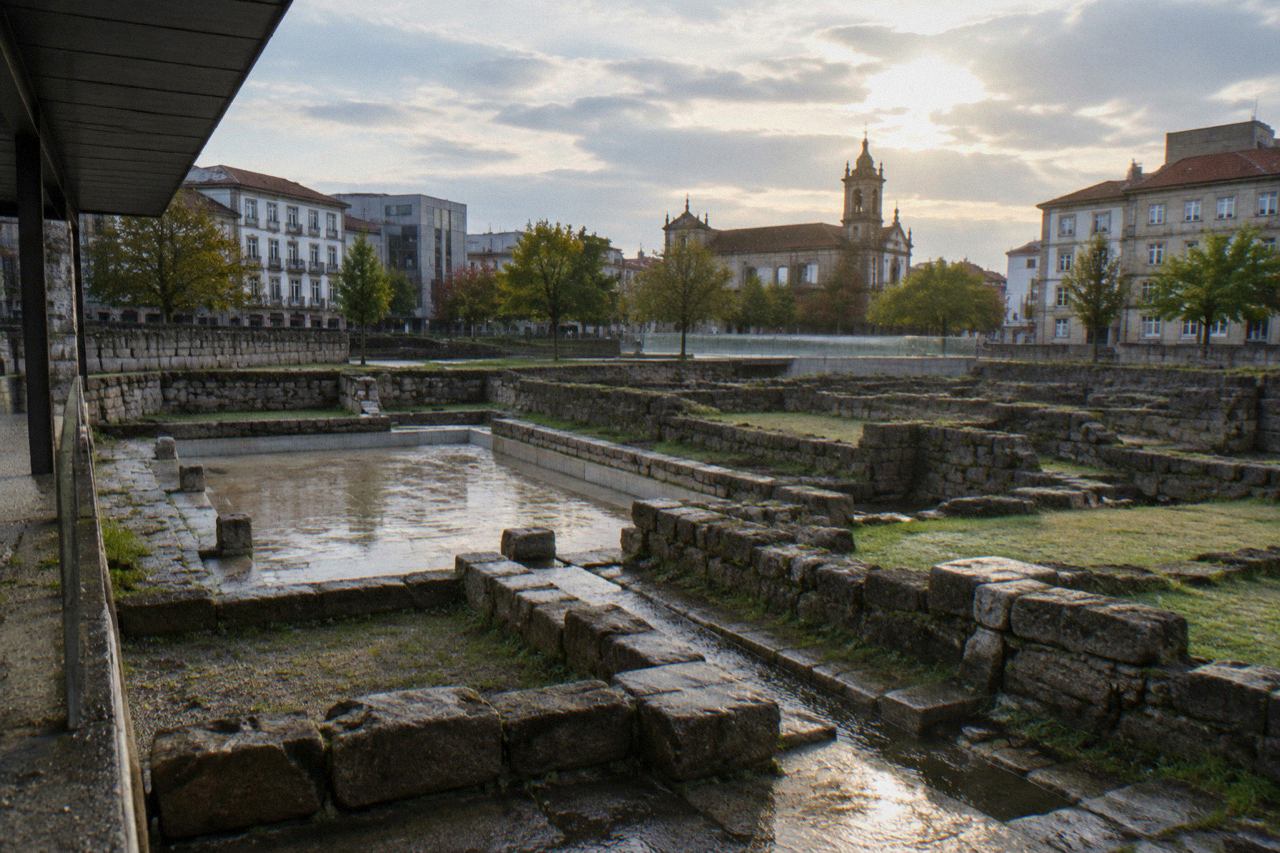
The Roman baths of Alto da Cividade are the excavated remains of a public bathing complex from Roman Bracara Augusta, today the city of Braga in northern Portugal. They sit in the Maximinos e Cividade area, a short walk downhill from the historic centre, and are viewed from street level as an open archaeological site.
The Roman baths of Alto da Cividade are the most visible surviving piece of Bracara Augusta, the Roman city that lies beneath modern Braga, in the Minho region of northern Portugal. Excavated in the Maximinos e Cividade area, a quiet slope just downhill from the historic centre, the baths preserve the walls, hypocaust piers and drainage of a public bathing complex that once served the Roman town. The site is open to view from the surrounding square, which makes it one of the few places in northern Portugal where Roman municipal life sits in plain sight beside ordinary apartment buildings. This guide from Braga Travel Guide covers what the ruins are, how to reach them, what you can expect to see, and how to build a full Roman afternoon around them.
What Are The Roman Baths Of Alto Da Cividade?
The Roman baths of Alto da Cividade are the excavated remains of a public bathing complex from Bracara Augusta, the Roman settlement under modern Braga, Portugal, located in the Maximinos e Cividade area a short walk downhill from the Sé de Braga. The site shows the low stone walls, heated-room foundations and water channels of a typical Roman thermae, displayed in the open and visible from the street at any time of day.
Public baths were among the standard buildings of a Roman provincial town, alongside the forum, the theatre and the aqueduct, and their presence at Cividade is one of the clearest signs that Bracara Augusta functioned as a fully equipped Roman city rather than a military outpost. The complex follows the conventional Roman bath plan: a sequence of rooms moving from cold to hot, with underfloor heating channels that once pushed warm air beneath the floors. What survives today are the lower courses of those rooms, exposed by excavation and consolidated for display.
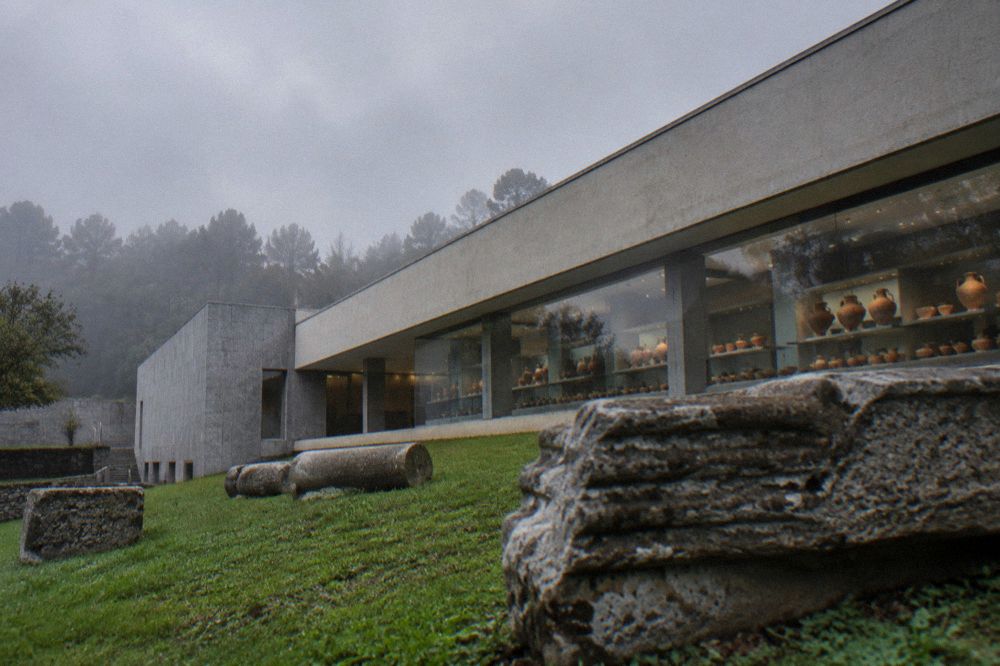
The site belongs to the same archaeological story told at the Museu de Arqueologia D. Diogo de Sousa, which holds the principal collection of Roman material from the city. The museum, covered later in this guide, is the natural first stop: it explains what Bracara Augusta was before you stand among its stones. The baths themselves require no prior knowledge to enjoy, though. The footprint of the rooms reads clearly from the viewing points around the square, and the contrast between the ancient walls and the housing blocks around them is part of the site's character.
Where Is Alto Da Cividade And How Do You Reach It?
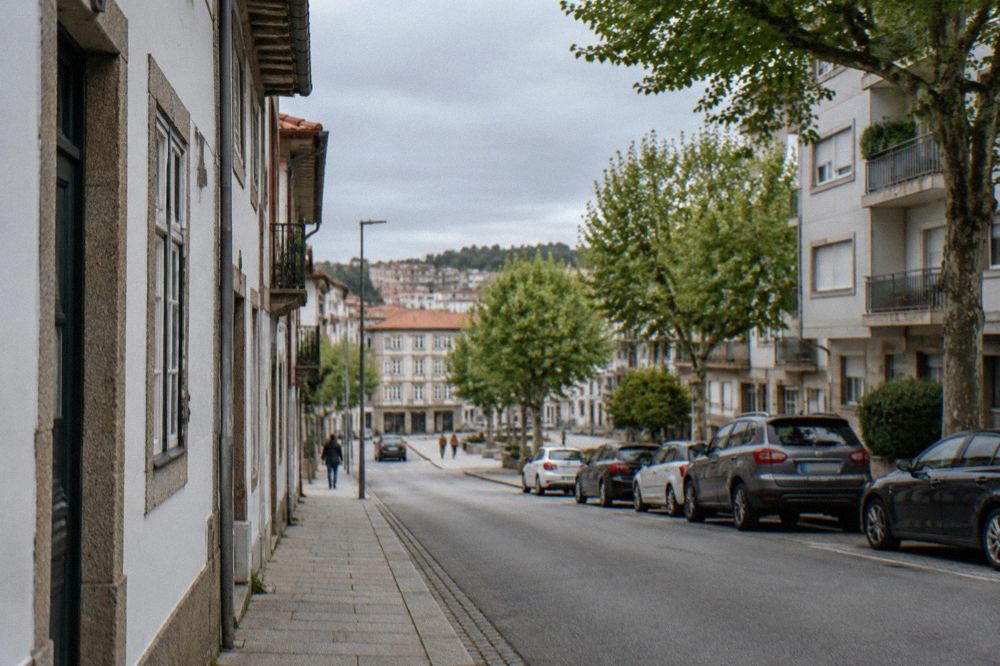
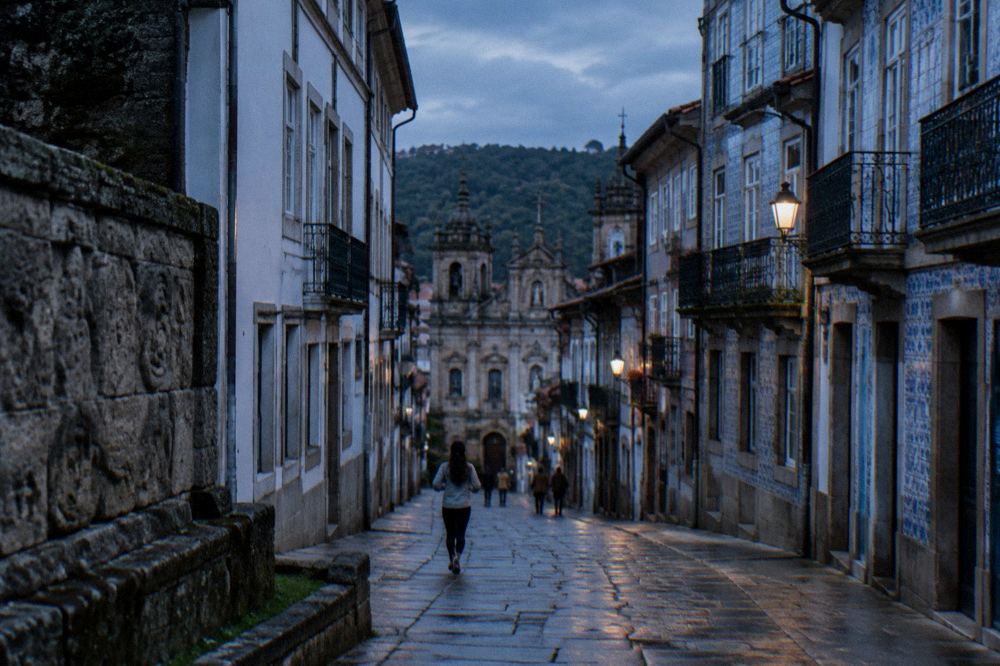
Alto da Cividade sits in the Maximinos e Cividade area of Braga, Portugal, a gentle downhill walk of roughly ten minutes from the cathedral and the historic centre, with the site displayed in an open square that you can view from the pavement without a ticket. City buses, taxis and walking tours all serve the area, and the slope back up to the centre passes the Arco da Porta Nova.
The walk down from the historic centre is simple: leave the old town through the Arco da Porta Nova, the eighteenth-century gate on the western edge of the centre, and continue downhill into Maximinos. The baths sit within this neighbourhood, which is one of Braga's quieter districts, residential in feel and well away from the processional crowds of Rua do Souto. Coming back up is the only real effort, and it is short.
For public transport, TUB, the city bus operator, runs across the whole network, and the 2026 tariff lists an on-board single at 1.55 EUR for one zone and 2.00 EUR for two zones, with pre-bought or digital tickets at 0.75 EUR and 1.50 EUR. A tourist ticket covering the whole network costs 3.35 EUR for one day, 6.05 EUR for two days and 8.05 EUR for three days, per person. Check the operator's route planner for the stop closest to the site, as line details change with works in the area.
If you would rather not navigate the slope on your own, a guided visit folds the Roman sites into a wider circuit of the city.
To fold the Roman sites into a wider circuit of the city, book a free walking tour here. (Guided in English, Spanish and Portuguese)
The small-group half-day option, Braga's half-day tour with Bom Jesus, covers the historic centre and the sanctuary on the hill in three hours, which pairs well with a self-guided Roman afternoon afterwards. Availability and current pricing are on the operator's live listing.
What Can You Actually See At The Baths Today?
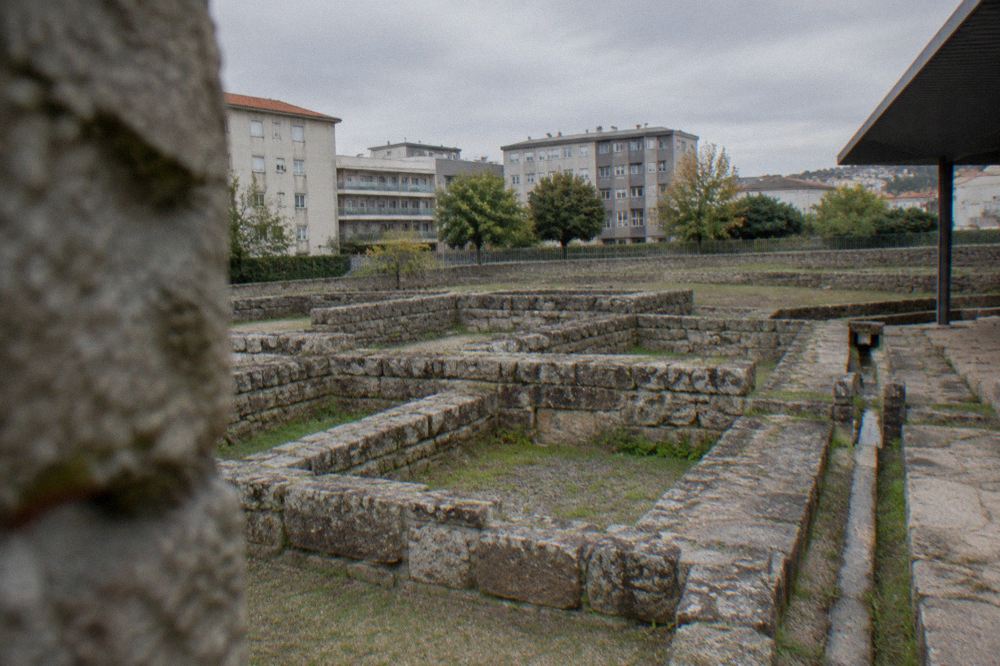
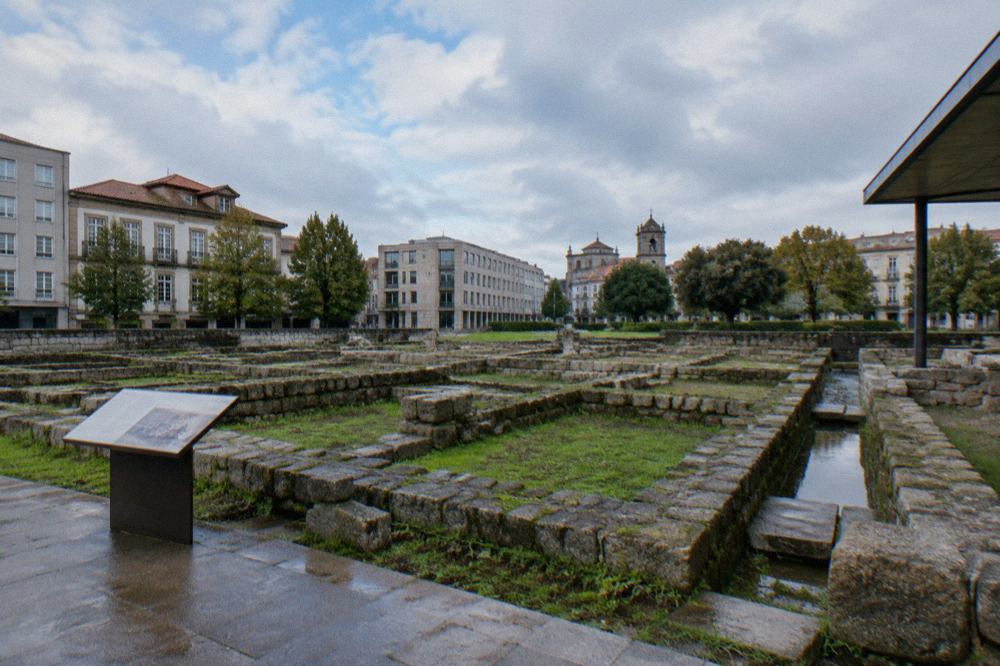
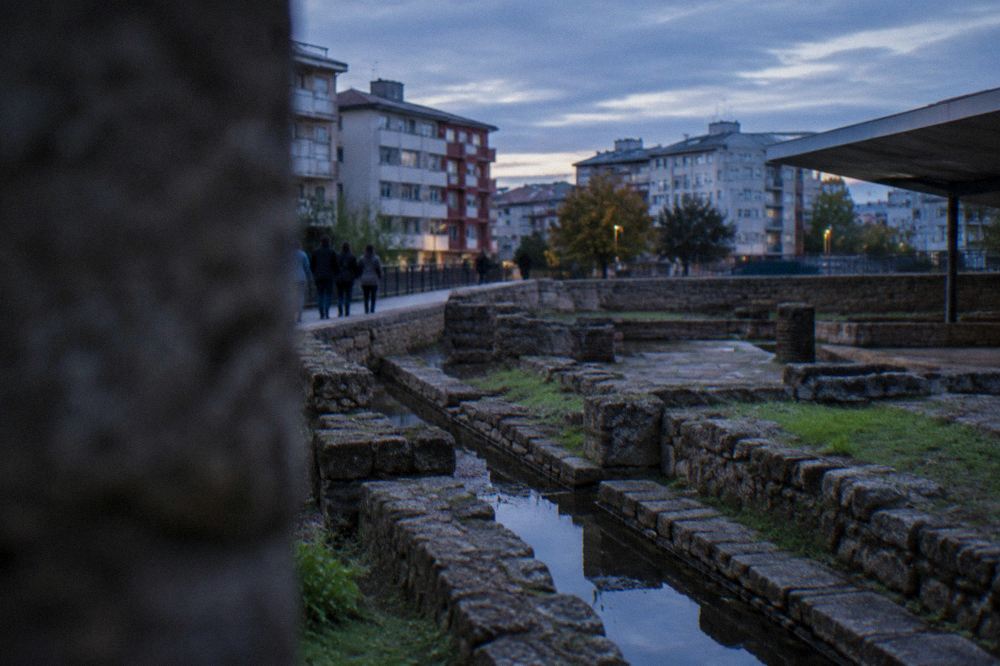
What you see today is the consolidated lower footprint of the bathhouse: stone wall lines marking the sequence of bathing rooms, the pier bases of the underfloor heating system, and fragments of the water supply and drainage, all displayed in an open archaeological area that you walk around rather than through. Explanatory panels place the ruins in the context of Roman Bracara Augusta.
The walls are low, which surprises some visitors expecting a standing monument. Roman baths in Iberia rarely survive above floor level, because later building reused their stone, and Braga has been built over continuously for two thousand years. What the excavation gives you instead is the plan of the building, which is where the interest lies: you can trace the progression of rooms, see where the furnace sat relative to the hot rooms, and follow the channels that carried water in and waste out.
The setting is unusual and worth absorbing. The site is embedded in an ordinary city square, ringed by housing, with pedestrians cutting past on their daily routines. That juxtaposition is the honest picture of Braga's archaeology: Bracara Augusta is not a park of ruins on the edge of town, it is the ground under the town, and the baths are the window through which you see it.
For orientation, the nearby Museu de Arqueologia D. Diogo de Sousa is the companion piece to the site, and the two are best done in that order: museum first for the narrative, baths second for the stones. The museum's own page lists its hours as Tuesday to Sunday 10:00 to 17:30, closed Mondays and public holidays, with a 5.00 EUR normal ticket, half price for visitors 65 and over, ages 13 to 24 and families, and free entry for under-12s accompanied by an adult.
How Do The Baths Connect To Bracara Augusta?
Bracara Augusta was the Roman city on which modern Braga, Portugal is built, a provincial capital of Roman Gallaecia whose street grid, forum and public buildings, including these baths, underlie the modern city. The baths are one of the few places where that buried city breaks the surface, alongside the Fonte do Ídolo rock sanctuary and the material held in the city's archaeological museum.
The name Bracara Augusta carries the emperor Augustus in it, which is standard Roman founding practice for provincial towns, and the city went on to become an administrative centre of the province. Its grid still shapes Braga's centre in places, and Roman stone was reused in buildings throughout the medieval and baroque city. The baths belong to the municipal layer of that story: the infrastructure of daily life, hot rooms and cold plunges, that a Roman town expected to offer its citizens.
Braga's later importance, as an archiepiscopal seat whose cathedral and processions still define the city, was built directly on top of this Roman base. The Sé de Braga, the cathedral that anchors the historic centre, stands within the Roman town's footprint, and the archaeology of the two cities sits layered across the same few hundred metres. Walking from the cathedral downhill to the baths is, in effect, walking from the baroque city back into the Roman one.
The table below sets out the verified Roman and Roman-era sites you can visit today, and what each offers.
| Site | What it is | What you experience |
|---|---|---|
| Roman baths of Alto da Cividade | Public bathhouse of Bracara Augusta | Open-air excavated footprint, viewed from the square |
| Fonte do Ídolo | Roman-era rock-cut sanctuary | Carved reliefs and inscription on a granite outcrop |
| Museu de Arqueologia D. Diogo de Sousa | The city's archaeological museum | The principal collection from Bracara Augusta, 5.00 EUR normal ticket |
| Roman material in the historic centre | Reused stone and spolia across the old town | Spotted in passing on any centre walk |
What Are The Opening Hours And Ticket Prices For The Baths?
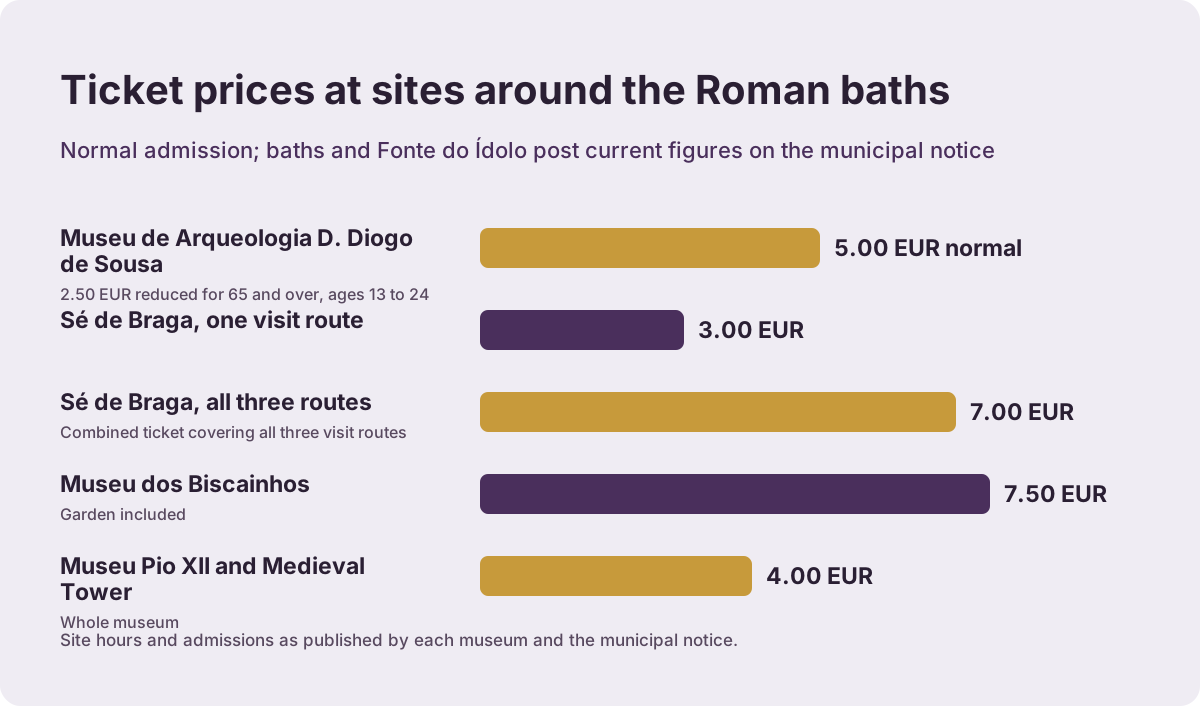
The municipality of Braga manages the Roman circuit that includes the baths and the Fonte do Ídolo, and current hours and admission figures for the baths should be checked on the municipal notice before you go, because this page does not publish an unsourced schedule. The companion museum, the Museu de Arqueologia D. Diogo de Sousa, is open Tuesday to Sunday 10:00 to 17:30 and charges 5.00 EUR, half price for over-65s, ages 13 to 24 and families.
This is deliberate caution rather than vagueness. Opening arrangements for small archaeological sites in Portuguese municipalities change with staffing, seasons and works, and a printed schedule that is out of date helps nobody. The municipal culture pages carry the current arrangements, and the tourist office on Avenida da Liberdade 1, open Monday to Friday 09:00 to 18:30, will confirm them in person.
For the sites around the baths whose arrangements are verified, the table below is safe to plan on.
| Site | Verified hours | Verified admission |
|---|---|---|
| Museu de Arqueologia D. Diogo de Sousa | Tuesday to Sunday 10:00 to 17:30, closed Mondays | 5.00 EUR normal, 2.50 EUR reduced |
| Sé de Braga, tourist visits | Monday to Saturday 09:30 to 13:00 and 14:30 to 17:00, Sunday 09:30 to 10:45 and 14:30 to 17:00 | 3.00 EUR per route, 7.00 EUR all three combined |
| Museu dos Biscainhos | Tuesday to Sunday 10:00 to 12:30 and 14:00 to 17:30 | 7.50 EUR, garden included |
| Museu Pio XII and Medieval Tower | Tuesday to Saturday 09:30 to 12:30 and 14:00 to 18:00 | 4.00 EUR whole museum |
One planning note: the cathedral's building opens earlier than the tourist-visit window for worship, and interior visits are suspended during services, so a morning that pairs the cathedral with the baths should start at the cathedral's visit opening rather than its church opening.
What Else Is Roman In Braga?
Beyond the baths, Braga's Roman layer surfaces at the Fonte do Ídolo, a rock-cut sanctuary in the centre, and in the collections of the Museu de Arqueologia D. Diogo de Sousa, and it can be traced through reused stone across the historic centre. The three together, baths, sanctuary and museum, form a compact Roman circuit that fits comfortably into half a day on foot.
The Fonte do Ídolo is the most atmospheric of the three: a granite outcrop carved with figures and an inscription, associated with a cult of the waters, standing in a small purpose-built space. Like the baths, its current arrangements should be checked on the municipal notice before you go. The museum is the analytical heart of the circuit, with inscriptions, ceramics, coins and architectural fragments that reconstruct the daily texture of Bracara Augusta.
The rest of the Roman city is underfoot. Keep an eye out as you walk the centre, and read about the wider neighbourhood context on the Maximinos and Cividade area guide. The castle keep and the Praça da República both sit within the medieval layer that succeeded the Roman town, and the D. Diogo de Sousa museum and the Fonte do Ídolo complete the Roman set.
A tuk tuk tour is a comfortable way to cover the ground between these sites if the slopes or the weather argue against walking.
The tuk tuk city tour runs from thirty minutes up to two hours and is rated 4.8 from 179 reviews, with the current price on the operator's listing.
Which Tours And Walks Cover Braga'S Roman Side?
Most guided walking tours of Braga concentrate on the baroque and religious city, but the historic-centre walks all pass within minutes of the Roman sites, and a private guide can be asked to weight the route toward Bracara Augusta. For a self-guided afternoon, the free GuruWalk option covers the centre with a local guru, and the scavenger hunt turns the same ground into a game.
The trade-off is worth stating plainly. The standard city tours lead with the Sé de Braga, the Santa Bárbara Garden and the sanctuaries on the hills, because that is what most visitors come for. Roman Braga is a subplot on those itineraries. A private tour inverts that: you set the emphasis, and a professional guide can build the baths, the Fonte do Ídolo and the museum into the spine of the walk.
The private walking tour with a professional guide runs about two hours and is rated 5 from 3 reviews, with pricing on the listing.
For a no-cost introduction, GuruWalk lists several free, tip-based walks of Braga, including the Essential Free Tour of Braga (guided in Spanish), rated 4.58 from 586 reviews, and the Essential Free Tour Braga (guided in Spanish) with a different guru, rated 4.75 from 446 reviews, both about two hours. See the free tour you prefer on GuruWalk and tip your guru at the end. The self-guided scavenger hunt, rated 5 from 22 reviews, is another way to walk the centre with the Roman sites as checkpoints.
How Do You Plan A Visit Around The Baths?
A sensible Roman afternoon in Braga starts at the Museu de Arqueologia D. Diogo de Sousa for context, continues to the baths of Alto da Cividade and the Fonte do Ídolo, and finishes back up in the historic centre at the cathedral, with the whole circuit walkable and the only costs being the museum ticket and the cathedral routes. Allow half a day, wear shoes for the slopes, and check the municipal notice for the baths' current arrangements.
Begin with the museum, because it turns the low walls at Cividade into a building you can read. From there, walk to the baths, spend time on the viewing points, and continue to the Fonte do Ídolo if its notice confirms access that day. Then climb back into the centre for the cathedral, whose three visit routes cost 3.00 EUR each or 7.00 EUR combined, and finish in one of the cafés around the Praça da República.
| Stop | What it adds | Verified cost |
|---|---|---|
| Museu de Arqueologia D. Diogo de Sousa | Context and collections from Bracara Augusta | 5.00 EUR normal |
| Roman baths of Alto da Cividade | The excavated bathhouse itself | Check the municipal notice |
| Fonte do Ídolo | Roman rock sanctuary | Check the municipal notice |
| Sé de Braga | The layered baroque and Roman city | 3.00 EUR per route, 7.00 EUR all three |
If you would rather have the whole city handled for you, the half-day small-group tour is the strongest fit, and it can stand alone or precede your Roman afternoon.
The Small-Group Braga Half-Day Tour with Bom Jesus Sanctuary runs three hours, is rated 4.8 from 24 reviews, and covers the centre and the sanctuary; Check availability for current dates and pricing.
Whichever way you assemble the day, the choice usually comes down to three formats: a small-group guided half-day, a private guide who can weight the route toward the Roman sites, or a tuk tuk for the slopes. The comparison below pulls the three together one last time.
Common Questions About The Roman Baths In Braga
Are the Roman baths of Alto da Cividade worth visiting?
For anyone with an interest in Roman history, yes: they are the most visible remains of Bracara Augusta in the city, they cost little time to see, and paired with the Museu de Arqueologia D. Diogo de Sousa they make a rewarding half-day. Visitors seeking monumental architecture should adjust expectations, since the walls are low and the site is an open urban excavation.
Where are the Roman baths located in Braga?
The baths sit in the Maximinos e Cividade area of Braga, Portugal, a short downhill walk from the historic centre and the Arco da Porta Nova. The site is displayed in an open square and can be viewed from the surrounding pavement.
What was Bracara Augusta?
Bracara Augusta was the Roman city on which modern Braga is built, a provincial capital of Roman Gallaecia named, as Roman foundations were, with the emperor Augustus in its name. Its public buildings, including the baths, underlie the modern city, and its material is held principally at the Museu de Arqueologia D. Diogo de Sousa.
How much do the Roman baths cost to visit?
Current admission arrangements for the baths are managed by the municipality and change with staffing and seasons, so check the municipal notice or the tourist office on Avenida da Liberdade 1 before you go. The companion museum charges a verified 5.00 EUR normal ticket, half price for over-65s, ages 13 to 24 and families.
Can you combine the baths with other Roman sites in Braga?
Yes. The baths, the Fonte do Ídolo rock sanctuary and the Museu de Arqueologia D. Diogo de Sousa form a compact, walkable Roman circuit that fits into half a day, and all of it sits within or beside the historic centre covered by the city's walking tours.
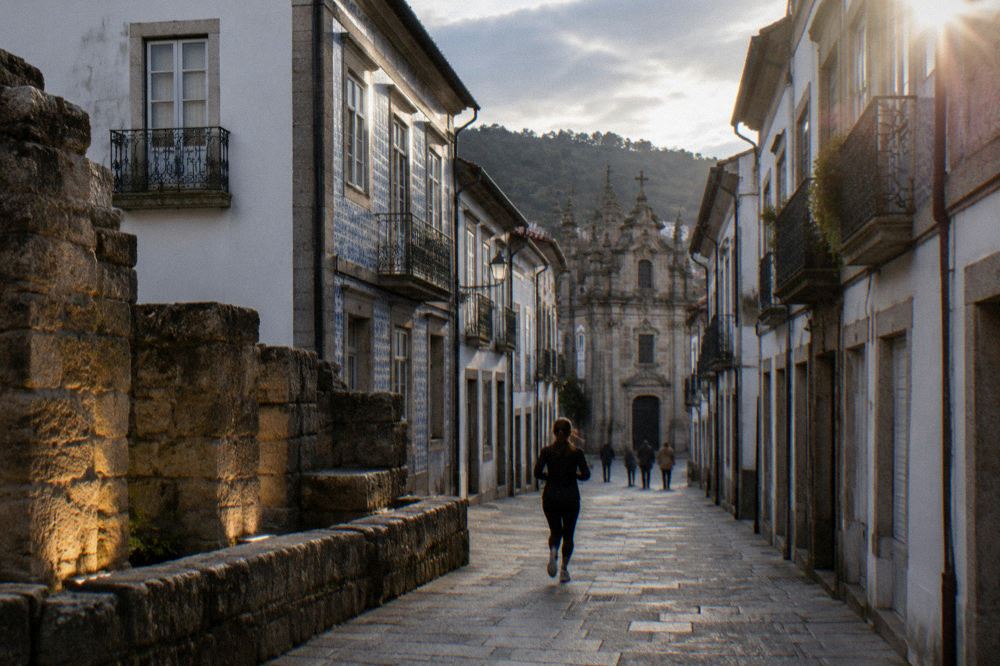
The Roman baths of Alto da Cividade are not Braga's grandest sight, and that is exactly their value: they are the point where the city's deepest layer surfaces into ordinary daylight, a ten-minute walk from the baroque façades most visitors never leave. Walk down, read the walls, climb back up, and the two thousand years between the two cities stop being an abstraction.