Lisbon To Braga: Every Way To Make The Journey, What It Costs And How Long It Takes
Braga, Portugal sits at the end of a fast rail line from Lisbon, and the journey is simpler than most visitors expect. This guide covers the verified train fares, the driving route, the flight question and what to do with your first hours in the city.
Short answer
The fastest way from Lisbon to Braga is a direct Alfa Pendular train taking about 3 hours 20 minutes, with a full 2026 single fare of 38.50 EUR in second class. Driving covers the distance in roughly three to three and a half hours on the A1. There is no airport in Braga itself, so flying means arriving via Porto and continuing by train, coach or hire car.
Braga, the historic city in Portugal's Minho region, is the northern terminus of the country's fastest rail corridor, which makes the trip from Lisbon a genuinely easy day of travel rather than an expedition. The two cities sit at opposite ends of the country, and the choice between train, car, bus and plane comes down less to speed than to what you want to do when you arrive. This guide lays out the verified fares, the honest journey times and the decisions worth making before you book anything.
How Do You Get From Lisbon To Braga?
Four realistic options connect Lisbon with Braga, Portugal: the direct Alfa Pendular train (about 3 hours 20 minutes at fastest), driving on the A1 and A3 (roughly three to three and a half hours), long-distance coach, and flying into Porto followed by a train, coach or hire car for the final leg. There is no airport at Braga itself, so no journey by air ends in the city. For most travellers the train wins on comfort and simplicity.
The train is the option most visitors choose, and for good reason. CP, the national operator, runs direct Alfa Pendular services from Lisbon's Santa Apolónia and Oriente stations to Braga without a change, and the fastest of these covers the run in about three hours and twenty minutes. You board in the capital, you step off in the centre of the north's most church-dense city, and you never think about a car park.
Driving gives you more freedom afterwards, which matters if your itinerary includes Bom Jesus do Monte, Santuário do Sameiro, Tibães or a run into the Peneda-Gerês National Park. The trade is three-plus hours behind the wheel and paid motorway tolls each way. The coach is the budget route, though fares move with demand and no verified price can be printed here. Flying only makes sense in unusual circumstances, because Braga has no airport and the flight lands you in Porto, still an hour from where you want to be.
How Long Is The Train From Lisbon To Braga And What Does It Cost?
A direct Alfa Pendular train from Lisbon to Braga takes about 3 hours 20 minutes at its fastest, and the full single fare valid from 1 January 2026 is 38.50 EUR in Turística (second class) or 54.60 EUR in Conforto (first class). Half-fare tickets cost 19.50 and 27.50 EUR respectively. Slower Intercidades services also run direct, but their fares are not published in a form that can be quoted, so expect them to price below the Alfa Pendular.
Those Alfa Pendular fares come from CP's own price table, and they are the only long-distance fares on this route that a visitor can rely on. The Turística carriage is comfortable, quiet and fast; Conforto buys a wider seat, a quieter saloon and a small meal service on board. Neither class requires anything from you beyond a reserved seat, which is mandatory on Alfa Pendular services.
A few things are worth knowing that the booking page will not tell you. CP runs occasional promotional fares, including an autumn campaign with Alfa Pendular seats to Braga from 8 EUR in Turística on selected October dates, but those are limited-availability offers on specific departures, not a price you should plan around. The 20 EUR Passe Ferroviário Verde, which looks extraordinary value on paper, is for Portuguese citizens and residents only, so it is not available to visiting tourists.
| Service | Class | Full single fare | Notes |
|---|---|---|---|
| Alfa Pendular, Lisbon to Braga | Turística (2nd) | 38.50 EUR | Seat reservation included |
| Alfa Pendular, Lisbon to Braga | Conforto (1st) | 54.60 EUR | Meal service on board |
| Alfa Pendular half fare | Turística | 19.50 EUR | For eligible travellers |
| Alfa Pendular half fare | Conforto | 27.50 EUR | For eligible travellers |
| Intercidades, Lisbon to Braga | 2nd class | Not quotable | Runs direct, slower than AP |
| Promotional AP seats | Turística | From 8 EUR | Selected Oct 2026 dates only |
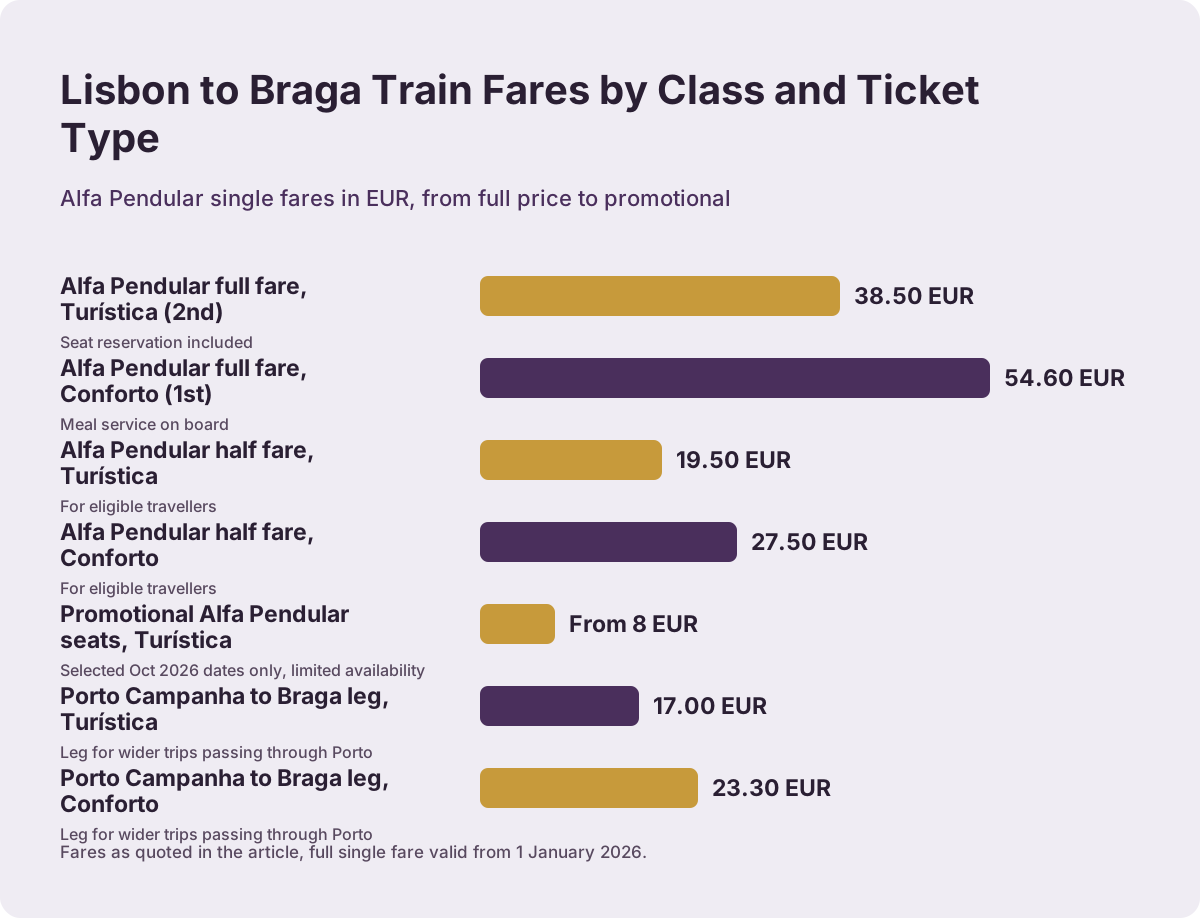
If your journey starts as a wider Portuguese trip, the same rail line passes through Porto, and the Porto Campanha to Braga Alfa Pendular leg costs 17.00 EUR in Turística or 23.30 EUR in Conforto. The full Porto-to-Braga picture, including the cheaper urban trains, is covered in the companion guide to the Porto to Braga route.
Once you are off the train, the fastest way to understand what you are looking at is to walk it with someone who knows the city. The trio below covers the three most useful ways to do that.
Is It Better To Fly Or Take The Train From Lisbon To Braga?
For almost every traveller the train beats flying from Lisbon to Braga, because Braga has no airport and a flight only gets you to Porto, still roughly an hour short of the city. Door to door, a flight plus the transfer takes as long as or longer than the direct train, costs more once the transfer is added, and adds two airport processes to a journey the train completes in one seat. Flying only makes sense if you are already flying for another reason.
The arithmetic is not close. A direct train departs from central Lisbon and arrives at Braga station, a short walk or bus ride from the historic centre, in about three hours and twenty minutes. A flight from Lisbon to Porto spends an hour in the air, but you add check-in, security, baggage reclaim and then the transfer from Porto Airport into Braga, which the airport's own transfer options cover. The airport-to-Braga leg is well served: a direct Getbus coach runs from Porto Airport to Braga bus station from 9.00 EUR in about 45 minutes, and the full set of options is detailed in the Porto Airport to Braga guide.
There is one scenario where flying makes sense: you are already committed to a flight for a connection, or you find a fare that makes the inconvenience worthwhile. Even then, you are flying to Porto, not to Braga, and the last hour of your journey happens on the ground.
Do You Need To Book Lisbon To Braga Train Tickets In Advance?
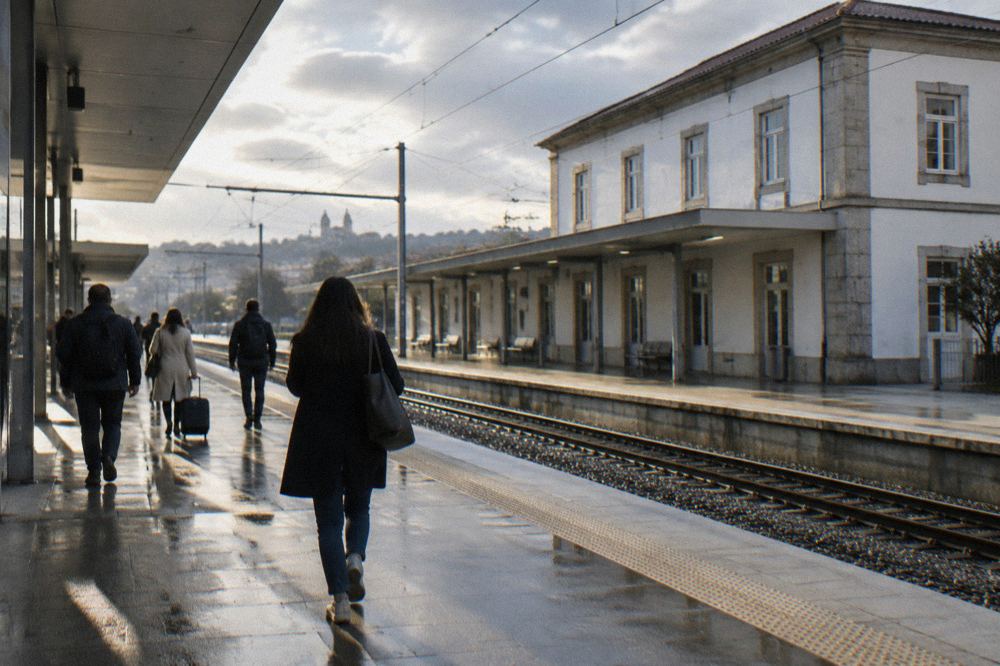
Yes, book ahead: Alfa Pendular services carry mandatory seat reservations, so a sold-out train means no seat, and the cheapest promotional fares only exist in limited numbers released in advance. On the day, you will pay the full fare of 38.50 EUR in Turistica. Booking a few weeks early costs nothing extra, guarantees the departure you want and, if a promotion is running, can cut the price dramatically.
The reservation rule is the practical point. Unlike a regional train, where you can turn up and board, an Alfa Pendular seat is assigned when you buy. Popular Friday and Sunday afternoon departures fill first, and in the summer and around Semana Santa, the whole corridor gets busy. If your plans are fixed, there is no advantage in waiting.
Booking also opens the promotional inventory. The 8 EUR October seats are the visible example, but CP runs these campaigns periodically through the year. They are date-specific and capacity-limited, so treat them as a bonus rather than a plan, but check the operator's site before paying full fare.
| Booking approach | What you pay | What you get |
|---|---|---|
| Weeks in advance, no promotion | 38.50 EUR Turistica | Guaranteed seat on your chosen train |
| Weeks in advance, promotion running | From 8 EUR on selected dates | Same seat, limited availability |
| On the day at the station | 38.50 EUR Turistica | Whatever departures still have seats |
| Half-fare eligibility | 19.50 EUR Turistica | For qualifying travellers, at any time |
One thing not to overthink is where you will sit in the station. Braga's station is small, and the practical arrival information, including what is within walking distance, is covered in the Braga train station guide.
What About Driving From Lisbon To Braga?
Driving from Lisbon to Braga takes roughly three to three and a half hours via the A1 and A3 motorways, covering the length of the country on toll roads, and it is the right choice only if the car earns its keep afterwards. If your itinerary is Braga's historic centre plus Bom Jesus do Monte, the car sits in a paid car park for most of your stay. If you are touring the Minho, Gerês or the Spanish border, it becomes essential.
The route is simple: north on the A1 out of Lisbon, continuing onto the A3 towards Braga, with the motorway tolls charged electronically or at toll plazas depending on the stretch. Fuel, tolls and a day's depreciation make the car more expensive than the train for two people travelling one way, but the maths changes completely if the car is already part of a round trip through northern Portugal.
The honest advice is to split the difference. Take the train up, and hire a car in Braga only if the surrounding region is on your itinerary. The practicalities of that, including where the hire desks are, are covered in the car rental in Braga guide, and the car-free alternatives, including the city's own bus network, are in getting around Braga.
What About Buses From Lisbon To Braga?
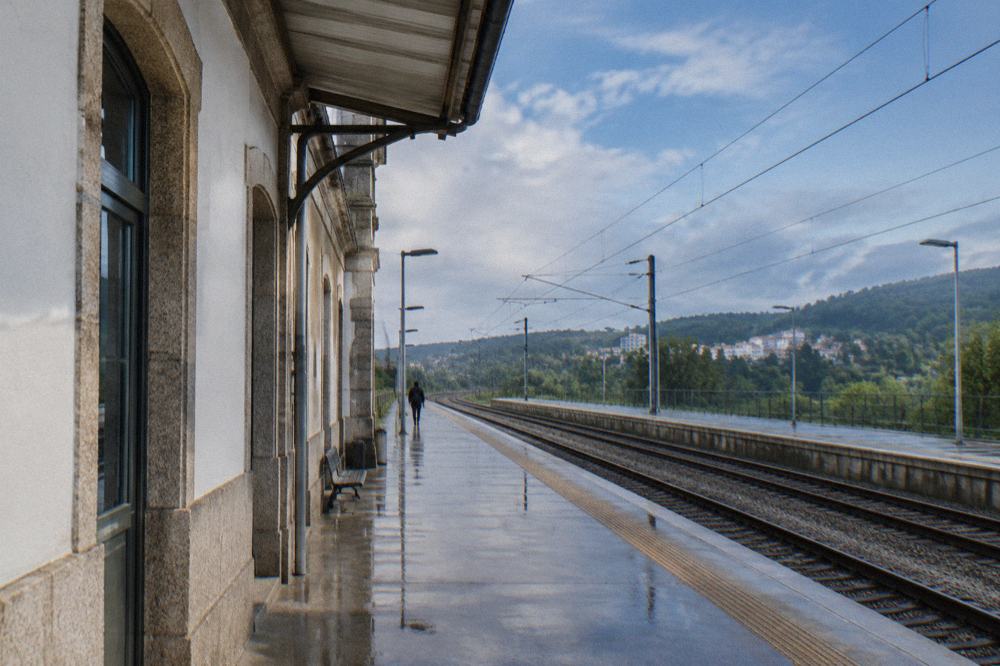
Long-distance coaches connect Lisbon and Braga, and they are the cheapest way to make the journey, but no verified fare can be quoted because the operators price dynamically and the published figures vary by date and demand. Expect a journey of around four to five hours with a coach that arrives at Braga's central bus station, and expect the train to be faster, more comfortable and, outside promotions, only moderately more expensive.
The coach market on this corridor is served by national operators running from Lisbon's Sete Rios terminal to Braga's central bus station, the Centro Coordenador de Transportes on Avenida General Norton de Matos. Tickets are cheapest booked early, and the further out you book, the lower the price tends to sit. That is as specific as honest advice can be: any figure printed here would be a snapshot of one day's demand, not a fare. Other pages covering the same trip are gathered on Braga Travel Guide.
Where the coach genuinely wins is flexibility for travellers already moving around the country, and for anyone whose destination is the bus station's neighbourhood rather than the rail line. The bus station is also the hub for the regional buses into the Minho, including the AITC lines to Guimarães, Ponte de Lima and the Gerês area, which the train network does not reach: there is no direct train from Braga to Guimarães at all.
| Mode | Journey time | Verified fare | Best for |
|---|---|---|---|
| Alfa Pendular train | About 3 h 20 min direct | 38.50 EUR Turistica | Comfort, speed, city-centre to city-centre |
| Intercidades train | Direct, slower than AP | Not quotable | A cheaper rail backup |
| Coach | Around 4 to 5 hours | Dynamic pricing, no verified figure | The lowest budget fares |
| Car via A1/A3 | Roughly three to three and a half hours | Tolls and fuel, no verified total | Touring the Minho afterwards |
| Fly via Porto | Flight plus transfer | Flight fare plus 9.00 EUR Getbus leg | Almost nobody |
Where Does The Train Arrive In Braga?
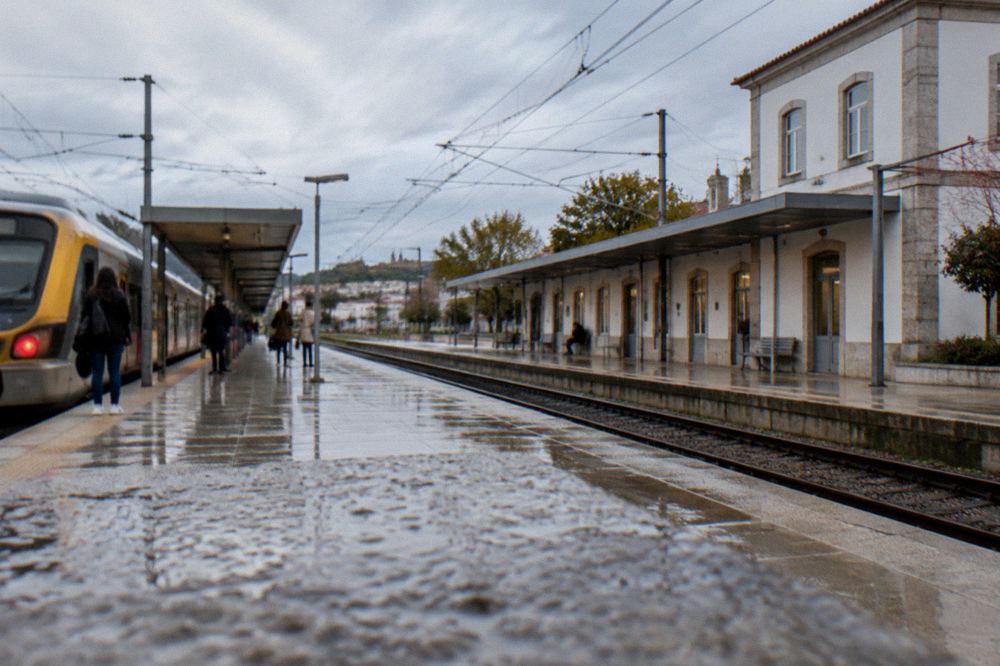
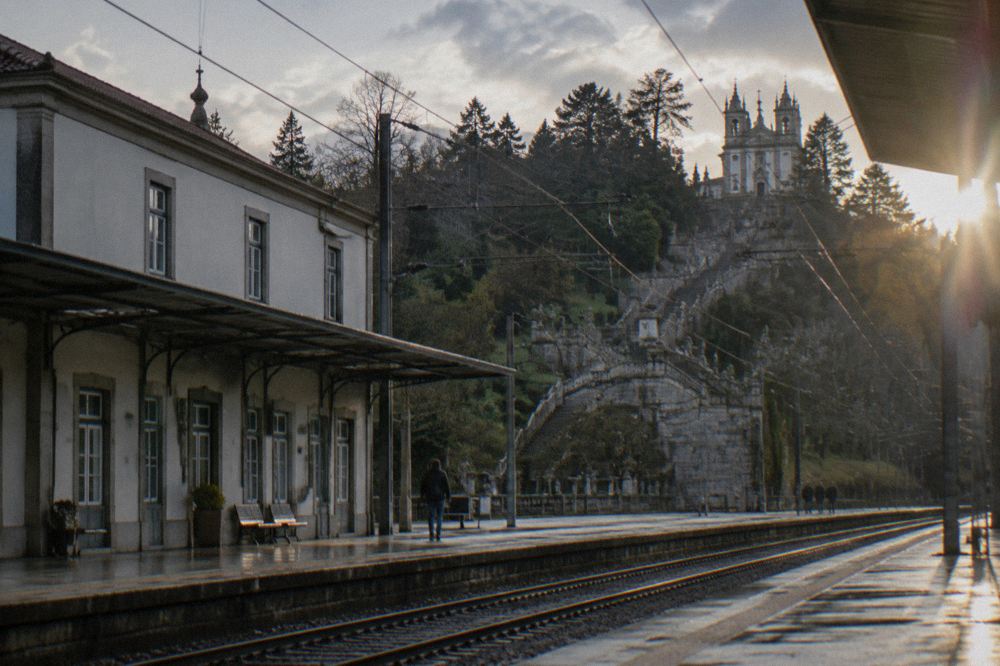
The train arrives at Braga station, a terminus at the northern edge of the city centre, and the walk from the platform to the edge of the historic core takes most people well under twenty minutes, with local TUB buses covering the same distance for a pre-bought fare of 0.75 EUR or an on-board fare of 1.55 EUR for a one-zone journey. The station is small, staffed and easy to exit: one main door, one taxi rank, one bus stop.
Braga is a compact city, and this matters for how you plan the arrival. Unlike Lisbon or Porto, where the station dumps you into a metropolis, Braga station sits a short stroll from everything the first-time visitor comes to see. The Sé de Braga, the cathedral at the heart of the city, is walkable with a bag; the tourist office on Avenida da Liberdade is on the way.
The one journey you should not attempt on foot is Bom Jesus do Monte, the UNESCO-listed sanctuary on the hill outside the centre. TUB Line 2 runs to the foot of the stairway, and the current situation there, including the funicular's service status and the shuttle arrangements, is covered in detail in how to get to Bom Jesus do Monte.
How Many Days Should You Spend In Braga After The Journey?
One full day covers Braga's essential historic centre, the Sé de Braga and Bom Jesus do Monte; two days add Santuário do Sameiro, Tibães and the museums at a human pace; three days let you add a day trip to Guimarães or the Peneda-Gerês National Park without rushing. Coming from Lisbon, the journey is short enough that even a single night converts a travel day into a real visit.
The one-day version of the city is genuinely achievable, and it is the version most Lisbon-based visitors run. The morning goes to the historic centre, the afternoon to Bom Jesus, and the evening to dinner in a tasca serving the Minho's cooking. The two-day version slows everything down and adds the two great hill sanctuaries, Sameiro and Falperra, plus the monastery at Tibães on the city's outskirts.
The three-day version opens the region. Guimarães, the other great historic city of the Minho, is a bus ride away on AITC Line 101, and the comparison between the two cities is a real decision travellers make; the case for each is set out in the site's is it better to visit Braga or Guimarães discussion and the Guimarães guide. For the full picture of what the city itself offers, start with things to do in Braga.
| Stay | What it covers | Suggested anchor sights |
|---|---|---|
| 1 day | Historic centre plus Bom Jesus | Sé de Braga, Arco da Porta Nova, Bom Jesus stairway |
| 2 days | Everything above plus the hill sanctuaries | Sameiro, Tibães, Museu dos Biscainhos |
| 3 days | City plus one regional day trip | Guimarães, Peneda-Gerês or the coastline |
What Should You Do With Your First Day In Braga?
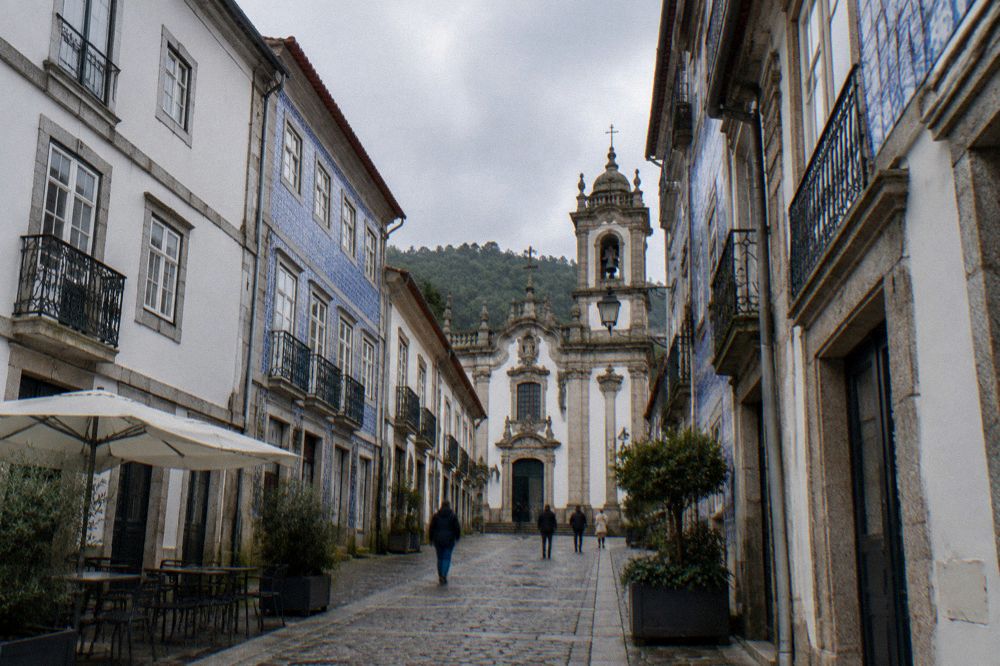
Start in the historic centre at the Sé de Braga, whose combined ticket covering the Treasury-Museum, the chapels and the choir costs 7.00 EUR, then walk the baroque streets towards Arco da Porta Nova, and finish the day at Bom Jesus do Monte, where the sanctuary grounds are free to enter and the 566-step stairway is the city's defining sight. A guided walking tour compresses all of this into a first afternoon.
The cathedral deserves the first hour. Its three visit routes are sold separately at 3.00 EUR each or combined, and the combined ticket is the better buy for anyone with more than a passing interest. From there the historic centre unfolds on foot: the shopping street Rua do Souto, the Santa Bárbara garden behind the episcopal palace, and the arcades of Praça da República, each a few minutes from the last.
Bom Jesus is the afternoon. The Confraria that runs the sanctuary lists 566 steps on its own stairway, and the grounds, the basilica and the views over the Minho cost nothing to enjoy. Check the funicular's service status before you go: it has been out of service for maintenance, with a replacement shuttle running between the Pórtico and the sanctuary, and the operator's notice is the only reliable word on when it returns.
For the first evening, the city's food is the event. The Minho's cooking, from bacalhau à Braga to the Abade de Priscos pudding, is the reason many people stay the night rather than day-trip, and the full run-down is in what to eat in Braga and the companion Braga restaurants guide.
When Is The Best Time To Make This Trip?
The best months to travel from Lisbon to Braga are May, June and September, when the city's mean daily temperatures sit between 16.7 and 19.7 degrees and rainfall drops to between 27.9 and 89.8 millimetres a month, against October's 197.8 millimetres, the wettest month of the year on the local climate record. July and August are the warmest but busiest; winter is quiet, wet and atmospheric.
The climate data for Braga, from the IPMA's 1991 to 2020 normals for the Braga / Merelim station, tells a clearer story than the usual "visit in summer" advice. October, not the winter, is the wettest month on average, with 197.8 millimetres of rain and around twelve rain days. July is the driest at 27.9 millimetres. The sweet spot is the shoulder season, when the mean maximum runs from 23 to 27 degrees and the rain days halve.
There is a cultural calendar to weigh too. Semana Santa, the Holy Week processions that are the city's defining event, falls in the week before Easter and draws the year's biggest crowds; the 2026 edition ran from 29 March to 5 April, and the festival's character is covered in the Semana Santa in Braga guide. São João in late June and Noite Branca in early September are the other anchors. The full seasonal breakdown is in the best time to visit Braga, and the month-by-month numbers are in the Braga weather guide.
| Month | Mean temp C | Mean max C | Rain mm | Character for a visit |
|---|---|---|---|---|
| May | 16.7 | 23.0 | 89.8 | Warm, green, pre-peak |
| June | 19.7 | 26.1 | 40.6 | São João festival month |
| July | 21.2 | 28.2 | 27.9 | Driest, warmest, busiest |
| September | 19.7 | 26.9 | 67.6 | Noite Branca, sea-warm evenings |
| October | 16.1 | 22.2 | 197.8 | Wettest month of the year |
| December | 9.3 | 14.9 | 190.3 | Quiet, atmospheric, wet |
Where Should You Stay After The Long Journey?
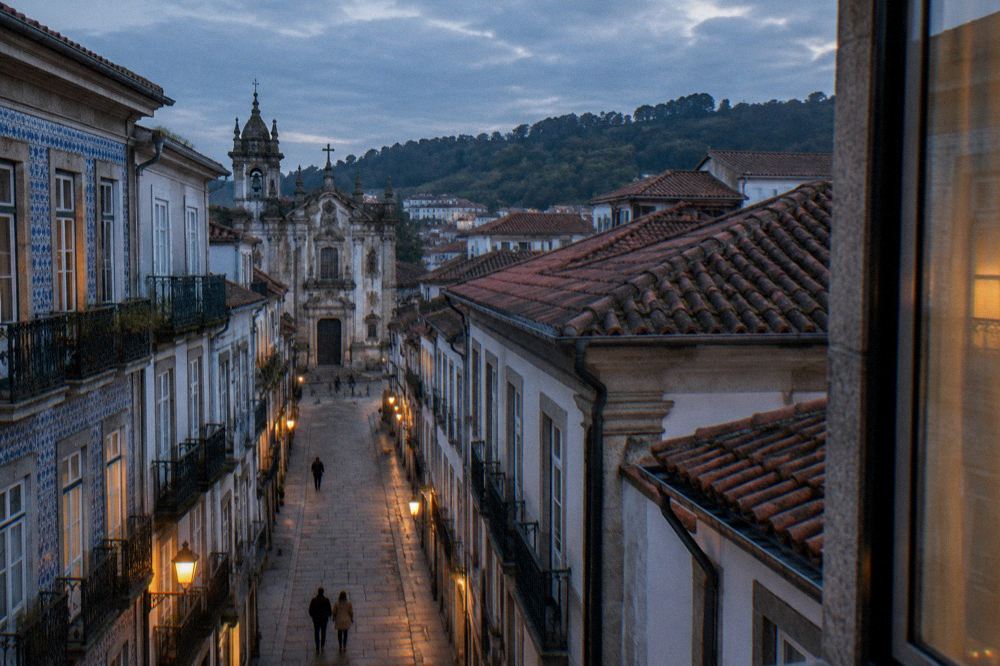
Stay inside or on the edge of Braga's historic centre, where every arrival from the station is a short walk or a one-zone bus ride, because the city's sights cluster within a few hundred metres of the cathedral and a central base removes the need for any transport at all after you arrive. The eastern and northern quarters serve the same purpose at lower prices, with the trade of a ten-minute walk into the centre.
The geography is on the visitor's side. Braga's centre is compact enough that the difference between a hotel beside the Sé and one a kilometre out is measured in minutes, not bus transfers. The one exception is Bom Jesus do Monte, which sits on the hill outside the centre and is served by TUB Line 2; anyone wanting to wake up at the sanctuary should read the hotels near Bom Jesus do Monte guide, and the full neighbourhood-by-neighbourhood breakdown is in where to stay in Braga.
Should You Book A Tour Before You Arrive, Or Decide In Braga?
Book before you arrive if you want a guaranteed small-group or private guide on a specific day, because Braga's guided capacity is smaller than the summer crowds, and decide on the ground if your dates are flexible, because the city's free walking tours run daily and the paid tours have same-day availability outside peak weekends. A pre-booked tour also converts a travel morning into a full sightseeing day.
The case for booking ahead is strongest for the first-time visitor arriving from Lisbon with limited hours. A guided walk of the historic centre, taken on the afternoon of arrival, means the travel day is not a lost day. The private option suits families and anyone who wants the itinerary bent towards food, architecture or the city's Roman layers, and the tuk tuk tour suits anyone who wants the geography covered fast, including visitors with mobility limits.
To make the travel day count, book a free walking tour here. (Guided in Spanish)
The free alternative is real and worth naming honestly. GuruWalk lists several free, tip-based walks of Braga, including the Essential Free Tour of Braga (guided in Spanish) run by a guide with a blue umbrella, rated 4.58 from 586 reviews, and a green-umbrella rival rated 4.75 from 446. These cost nothing upfront, the guru works for tips, and they are a genuine budget option rather than a marketing hook.
Common Questions About Traveling From Lisbon To Braga
How long is the train from Lisbon to Braga?
The fastest direct Alfa Pendular takes about 3 hours 20 minutes. Intercidades services also run direct but take longer. No verified figure exists for the number of daily departures, so check the operator's timetable for your date.
How much does the train from Lisbon to Braga cost?
The full single Alfa Pendular fare valid from 1 January 2026 is 38.50 EUR in Turistica and 54.60 EUR in Conforto, with half fares at 19.50 and 27.50 EUR. Promotional seats from 8 EUR exist on selected October 2026 dates. Intercidades fares are not published in a quotable form.
Is there a direct train from Lisbon to Braga?
Yes. Direct Alfa Pendular services run from Lisbon Santa Apolónia and Oriente to Braga without a change. The same corridor also carries direct Intercidades services.
Is it cheaper to fly from Lisbon to Braga?
Almost never. Braga has no airport, so flying means Lisbon to Porto and then a transfer from Porto Airport to Braga, with the direct Getbus coach alone costing from 9.00 EUR on top of the fare. The train does the whole journey in one booking.
Can you do Braga as a day trip from Lisbon?
It is possible but rushed: the round journey alone takes around seven hours of travel. Most travellers coming from Lisbon stay at least one night, which converts the trip into a relaxed visit and opens up Bom Jesus, Sameiro and an unhurried dinner. The fuller case is made in the site's discussion of how many days you need in Braga, Portugal.
Do you need a car in Braga once you arrive?
No. The historic centre is walkable, TUB buses cover the city including Line 2 to Bom Jesus, and regional buses reach Guimarães and the Minho. A car only earns its keep for touring Peneda-Gerês or the border towns at your own pace.
The journey from Lisbon to Braga is, in the end, one of the easier long trips in Portugal: a reserved seat, a little over three hours, and an arrival within walking distance of one of the country's densest concentrations of baroque architecture, good food and hilltop sanctuaries, all of it waiting at the end of the line.