What Is The Rainiest Month In Portugal?
October is the rainiest month at the Braga weather station, with 197.8 mm of rain on average. Here is how the wet season shapes up in Braga, Portugal, month by month.
Braga, the city in Portugal's Minho region that this site covers, sits in one of the wettest corners of the country, and the question "What is the rainiest month in Portugal?" has a different answer here than it does in the Algarve. IPMA's 1991 to 2020 climate normals for the Braga / Merelim station show October as the wettest month of the year, with 197.8 mm of rain falling over roughly 12 days with measurable rainfall. December and January follow close behind, and the four-month stretch from October to January accounts for well over half of the city's annual precipitation.
What Is The Rainiest Month In Portugal?
There is no single national answer, because Portugal's rainfall splits sharply between north and south, but in Braga, the reference city for the wet north, the rainiest month is October, with an average of 197.8 mm of rain across about 12 rainy days. December is second at 190.3 mm and January third at 179.5 mm, all measured at the Braga / Merelim station over the 1991 to 2020 period. In the drier south of the country the same months dominate, but the totals are far lower.
That north-south split is the key fact. The Minho, where Braga lies, is green precisely because it rains here, and it rains here more than almost anywhere else in the country. IPMA's normals put Braga's annual total at 1387.3 mm spread over 113.5 days with a millimetre or more of rain. A coastal Algarve town receives a fraction of that, which is why the same question can produce very different numbers depending on which weather station a guide happens to quote.
For a traveller, the practical takeaway is simpler than the statistics. If you are visiting Braga, Guimarães or the Peneda-Gerês National Park, plan for rain from October through January, and do not be fooled by September: the first autumn month still averages 67.6 mm, more than May, June, July and August combined. The full month-by-month picture is on our Braga weather guide.
How Much Rain Does Braga Get In A Year?
Braga averages 1387.3 mm of rain per year, spread over 113.5 days with at least 1 mm of rainfall, according to IPMA's 1991 to 2020 climate normals for the Braga / Merelim station. That is roughly one rainy day in every three. The rain is heavily concentrated: October alone delivers 197.8 mm, more than the four summer months of May through August put together.
The table below gives the full monthly breakdown from the same station record. Two columns matter most for planning: the millimetres, which tell you how much water falls, and the day count, which tells you how often you will actually reach for an umbrella.
| Month | Rain (mm) | Days with 1 mm+ rain | Mean temp (C) |
|---|---|---|---|
| January | 179.5 | 13.1 | 8.6 |
| February | 111.1 | 9.6 | 9.5 |
| March | 150.1 | 11.8 | 11.9 |
| April | 127.9 | 12.0 | 13.7 |
| May | 89.8 | 8.9 | 16.7 |
| June | 40.6 | 5.7 | 19.7 |
| July | 27.9 | 4.0 | 21.2 |
| August | 34.6 | 3.8 | 21.4 |
| September | 67.6 | 6.2 | 19.7 |
| October | 197.8 | 12.0 | 16.1 |
| November | 170.1 | 12.9 | 11.5 |
| December | 190.3 | 13.3 | 9.3 |
Read the table carefully before generalising. October is the wettest month on average, but December has the most rainy days, 13.3, and January follows at 13.1. From October to January you can expect twelve to thirteen days of measurable rain each month. October also holds the station's record for the wettest single day in the normals record, 110.9 mm, which is more than half of July's entire monthly average falling in 24 hours.
February, interestingly, is the driest of the winter months at 111.1 mm, a dip in the middle of the wet season rather than the start of the dry one. March climbs back to 150.1 mm. Anyone promising you a dry winter weekend in Braga is promising you something the climate record does not support.
Which Are The Driest Months In Braga?
July is the driest month in Braga, with an average of just 27.9 mm of rain over four rainy days, followed by August at 34.6 mm over 3.8 days and June at 40.6 mm over 5.7 days. July is also the month with the fewest rainy days of the entire year. Summer rainfall in Braga tends to arrive in short, heavy bursts rather than the long frontal rain of winter, so a July shower often clears within the hour.
Summer in Braga is warm as well as dry. Mean daily temperature peaks at 21.4 C in August, with average highs of 28.7 C, and the station records 10.4 days at or above 30 C in August against 9.8 in July. The record high for the station is 42.2 C, set in August. Even so, this is northern Portugal, not the Algarve: evenings in June drop to an average minimum of 13.2 C, so a light layer earns its place in a summer bag. Everything else covered here is indexed on Braga Travel Guide.
The shoulder months are the sweet spot many visitors miss. May averages 89.8 mm of rain but also 2.9 days at or above 30 C, with mean highs of 23 C. September averages 19.7 C, warmer on paper than June at the top end, with a mean maximum of 26.9 C against June's 26.1 C, though it is wetter, at 67.6 mm against June's 40.6 mm. If you want the best balance of warmth, daylight and manageable rain in Braga, late May through June and September are the months to circle.
| Month | Mean max (C) | Mean min (C) | Days at 30 C+ |
|---|---|---|---|
| May | 23.0 | 10.4 | 2.9 |
| June | 26.1 | 13.2 | 6.7 |
| July | 28.2 | 14.3 | 9.8 |
| August | 28.7 | 14.0 | 10.4 |
| September | 26.9 | 12.4 | 7.4 |
When Is The Best Time To Visit Braga To Avoid Rain?
The driest reliable window in Braga runs from mid-June to the end of August, when monthly rainfall averages between 27.9 mm and 40.6 mm and rainy days drop to between four and six per month. Late May and September are good compromises, each offering pleasant mean temperatures above 16 C with moderate rain. October through January is the period to avoid if staying dry is the priority, with monthly rainfall between 170.1 mm and 197.8 mm.
There is a trade-off, though, and it is worth stating plainly. The dry months are also the busiest and the warmest. The wet months are when Braga shows some of its most distinctive character: Semana Santa, Holy Week, falls in late March or early April, with processions that the municipality dates to 29 March through 5 April in 2026, and the city's Easter celebrations are registered in the National Inventory of Intangible Cultural Heritage. Rain and procession candles are not incompatible, and the crowds of pilgrims do not check the forecast.
Winter rain also has an upside that the numbers alone do not show. The Minho's green landscape, the gardens of the Santa Bárbara Garden and the forested hills around Bom Jesus do Monte are at their most vivid after the autumn rains begin. A wet October in Braga is still mild, with mean highs of 22.2 C, warmer than a dry March.
Practical planning follows from the data. Pack a waterproof layer from October to April regardless of the forecast, because 12 rainy days a month means rain is the base rate, not the exception. Book indoor alternatives in advance for those months, and keep flexible plans for the dry windows, which in a 12-rainy-day month still leave more than half the days dry. For a longer treatment of the trade-offs, see our answer to how many days you need in Braga.
What Can You Do In Braga On A Rainy Day?
Braga has enough indoor sights to fill two or three wet days: the Sé de Braga cathedral with its three visit routes, the Museu dos Biscainhos, the Museu de Arqueologia D. Diogo de Sousa and the Museu Pio XII, plus the Theatro Circo's scheduled guided tours. A combined cathedral ticket covering all three routes costs 7.00 EUR, the Biscainhos museum charges 7.50 EUR with its garden included, and the D. Diogo de Sousa museum charges 5.00 EUR.
The museums cluster within a short walk of each other in and around the historic centre, so a rainy day does not have to mean long exposed walks between stops. The cathedral's ticket office is in the cloister, reached from Rua do Cabido, and visits are suspended during services, so check mass times before setting out. The Treasury-Museum closes on Mondays; the same weekly closure applies at Biscainhos and D. Diogo de Sousa, which makes Monday the one weekday to avoid for a museum day.
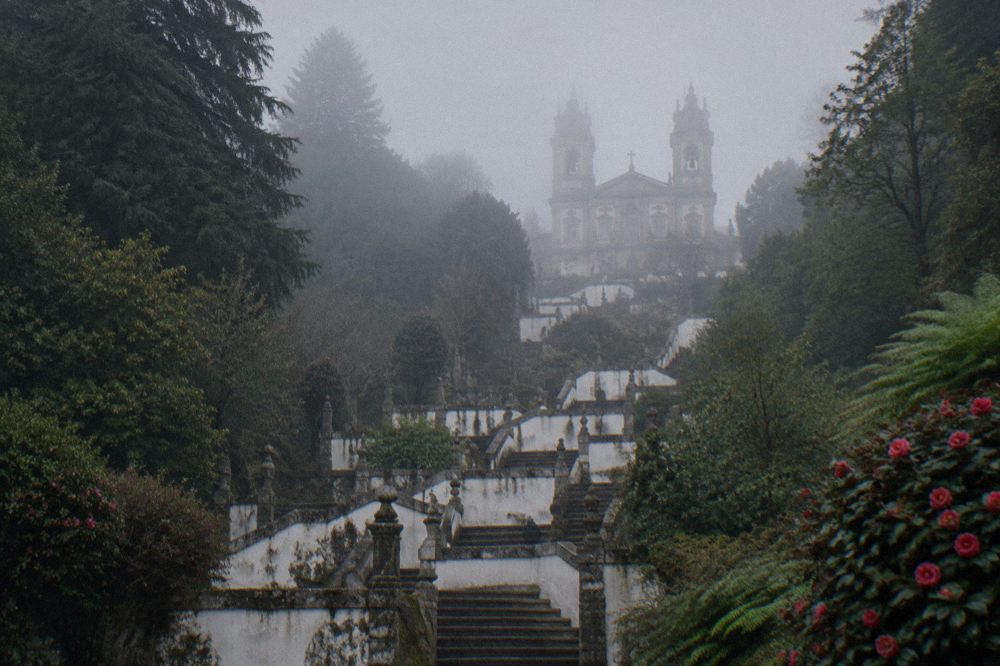
One sight needs a rain-specific warning. The Bom Jesus do Monte stairway is 566 steps by the Confraria's count, and the sanctuary's funicular has been out of service since 26 September 2026, with a replacement shuttle running daily between the Portico and the sanctuary while the operator's notice stands. Wet granite steps are the one genuinely unpleasant version of this climb, so save Bom Jesus for a dry window even on a rainy-week trip. The sanctuary grounds themselves are free to enter, and the basilica keeps daily hours from 08:00.
For getting between sights in the rain, the TUB city network sells a tourist ticket at 3.35 EUR for one day covering the whole network, with two- and three-day versions at 6.05 EUR and 8.05 EUR, per the 2026 tariff in force since 21 February 2026. A day ticket is cheaper than four single on-board fares at 1.55 EUR each, and it removes the need to queue at machines in a downpour.
A guided walk also works in light rain, and Braga's compact centre keeps most of the route under arcades and eaves. The Explore the Portuguese Rome tour of the city, a 1.5-hour guided walk rated 4.9 from 68 reviews on the operator's live listing, is short enough to fit between showers, and its route can be checked for availability on the day: Check availability. You can also read more about the walk on its tour page.
If a guided walk appeals but the forecast looks unsettled, the tuk tuk city tour and the flexible historic-centre walking tour below are the two other Braga options worth comparing, each with its own pace and shelter profile.
Common Questions About Rain In Portugal
What are the rainiest months in Portugal?
The rainiest months in Braga, in the wet north of the country, are October, December and January, averaging 197.8 mm, 190.3 mm and 179.5 mm of rain respectively at the Braga / Merelim station. Across Portugal as a whole the same late-autumn and winter period is the wettest everywhere, but southern totals are far lower than northern ones.
Does it rain more in Porto or Braga?
This site publishes verified figures only for Braga, where the annual average is 1387.3 mm over 113.5 rainy days. Both cities sit in the wet Atlantic north of Portugal, so rainfall levels are broadly similar in character, with October through January the wettest period in each.
What is the driest month in Portugal?
In Braga the driest month is July, with 27.9 mm of rain over an average of four rainy days, followed by August at 34.6 mm. July is also the month with the fewest rainy days of the year at the Braga / Merelim station.
Is Braga worth visiting in winter?
Yes, with the right expectations. Winter in Braga is mild, with mean temperatures of 8.6 C in January and 9.3 C in December, but wet, with 12 to 13 rainy days a month. The city's museums, cafés and churches fill the wet days, and Semana Santa in late March or early April is one of Portugal's most distinctive celebrations.
How many days does it rain in Braga each year?
IPMA's 1991 to 2020 normals for the Braga / Merelim station record 113.5 days per year with at least 1 mm of rain, roughly one day in three. The rain is concentrated between October and January, when 12 to 13 days a month see measurable rainfall.
Whatever month you choose, the honest summary is this: Braga rewards a raincoat. October is the rainiest month, July the driest, and the city is worth visiting in both, provided you know which one you are packing for. For more on pairing the city with its neighbours, see our comparison of Braga and Guimarães.