Aveiro From Braga: A Day Trip To Portugal's Canal City
Aveiro sits south of Porto on a coastal lagoon, a city of canals, Art Nouveau facades and striped beach houses that makes an ambitious but rewarding day trip from Braga.
Short answer
Aveiro is reachable from Braga by train or car, usually with a change at Porto. It is a full-day trip: allow the whole day for the canals, the moliceiro boats, the fish-market quarter and, with a car or a local bus, the striped houses of Costa Nova on the lagoon's seaward side.
Aveiro is a coastal city on a lagoon roughly two-thirds of the way down Portugal's Atlantic seaboard, and it makes a long but genuinely different day trip from Braga, the Minho city in northern Portugal that this site covers. Where Braga's character is baroque churches and granite, Aveiro's is salt water: canals dug through the city centre, flat-bottomed moliceiro boats painted in bright colours, Art Nouveau facades built on salt-trade wealth, and a lagoon that opens onto a string of thin sand spit beaches. The two cities could hardly feel less alike, which is exactly the argument for making the journey.
This page, part of the day-trip coverage at Braga Travel Guide, lays out what the trip involves: how the transport works, what to do once you arrive, how Aveiro compares with Braga and the other coastal candidates, and whether an organised tour is the better use of your time.
Why Visit Aveiro On A Day Trip From Braga?
Aveiro offers something no other easy day trip from Braga provides: a working lagoon landscape of canals, salt pans, seaweed-gathering boats and sand-spit beaches, wrapped in a compact city centre of Art Nouveau architecture. It is the contrast that earns the journey. Braga is granite, hilltop sanctuaries and baroque; Aveiro is flat, maritime and pastel, closer in feel to a small Dutch canal town than to anywhere in the Minho.
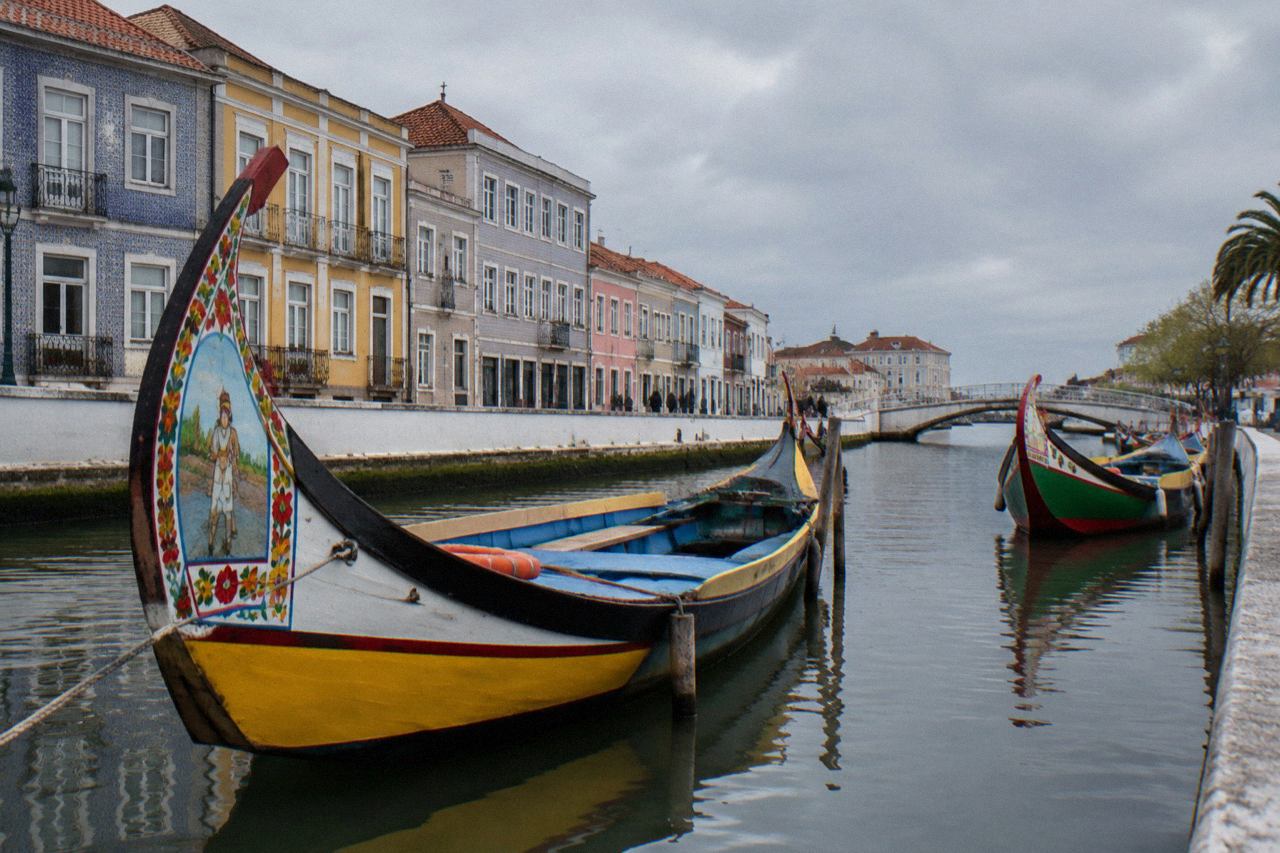
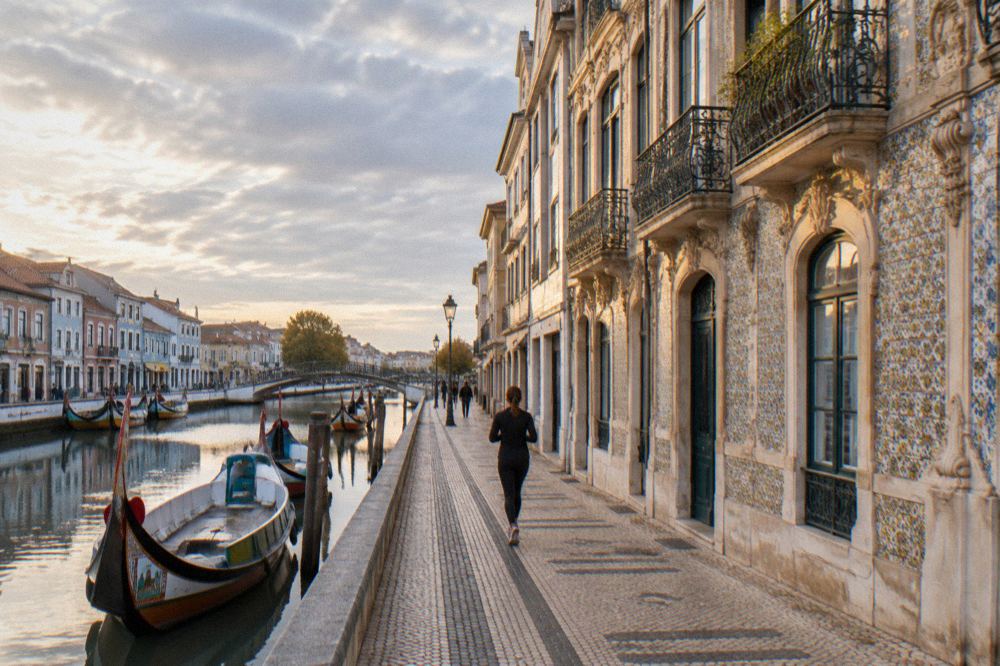
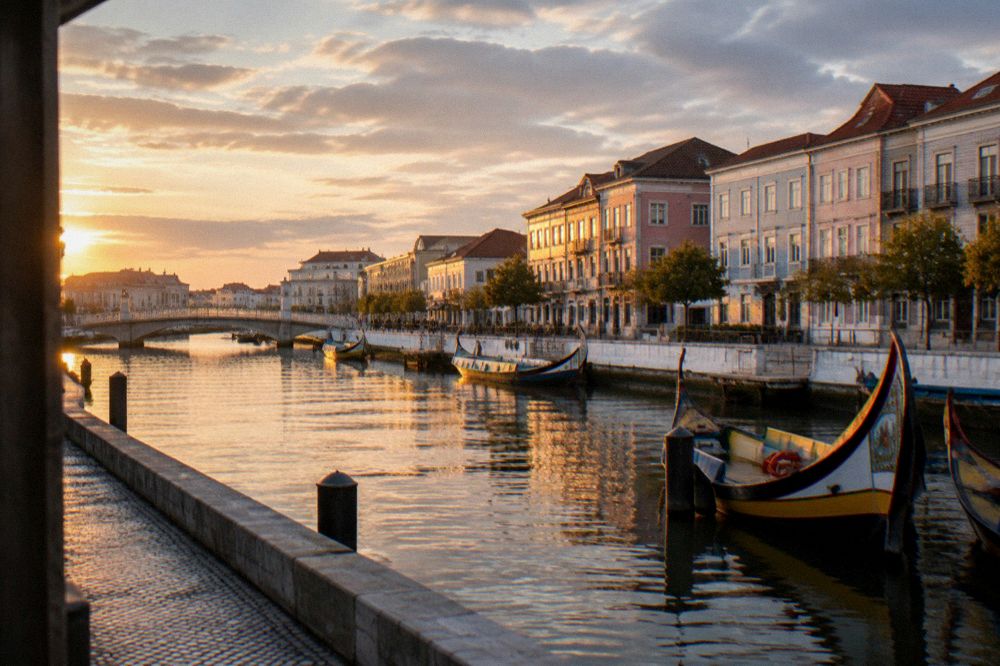
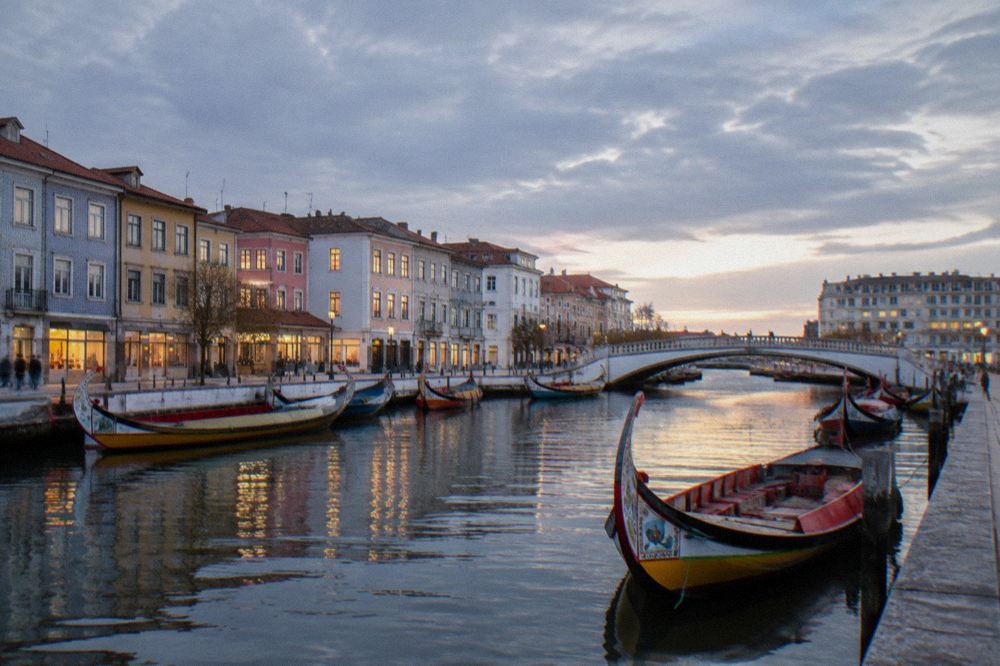
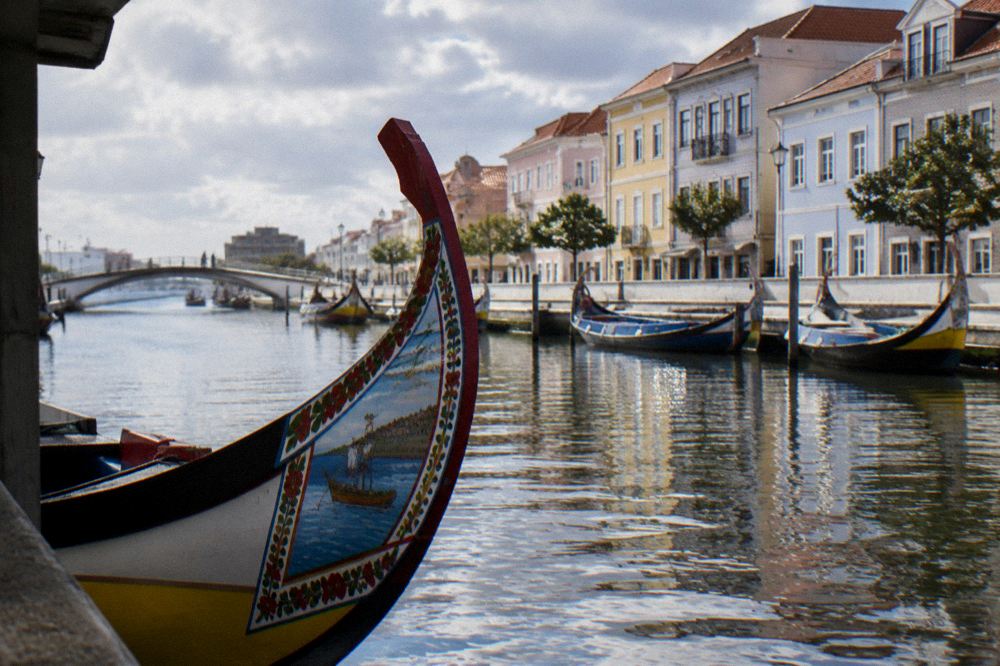
The city grew rich on salt, and later on seaweed harvested from the lagoon to fertilise fields inland. The moliceiro boats that now carry tourists along the central canals were built for that seaweed trade, and their painted prows, decorated with scenes and sayings, are the single image most visitors take home. Around the canals stands one of the densest collections of Art Nouveau architecture in Portugal, paid for by the merchant families of the salt era.
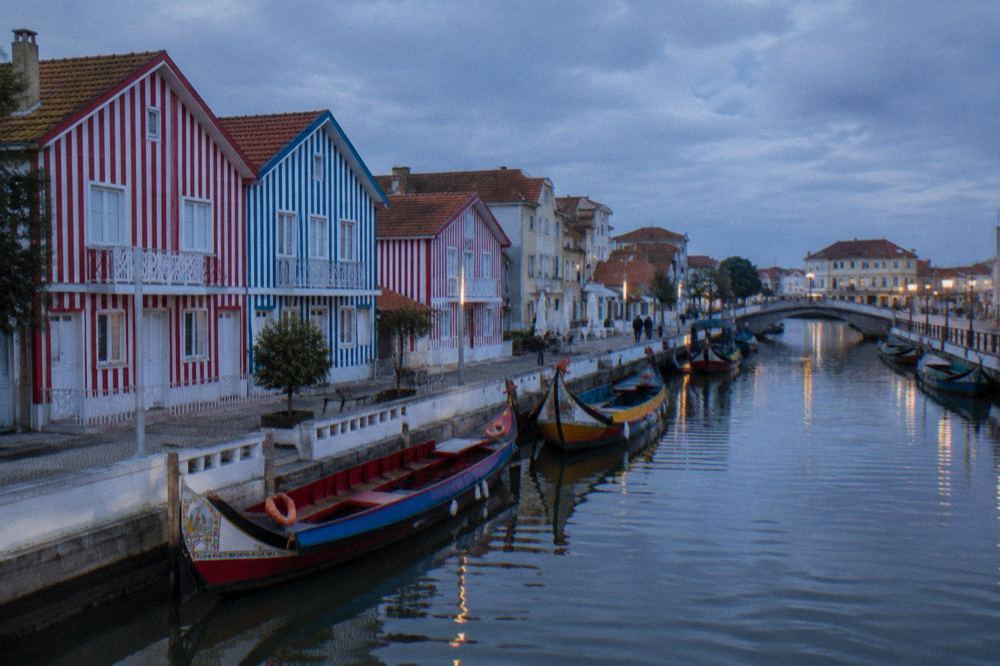
The lagoon itself, the Ria de Aveiro, separates the city from a long, narrow spit of sand dotted with beach towns, of which Costa Nova is the most photographed, thanks to its houses painted in vertical stripes of red, blue, yellow and green. Fishermen's storehouses turned holiday homes, they are the postcard of the region.
For a fuller head-to-head, including how Aveiro stacks up against Viana do Castelo, see the companion guide Braga vs Aveiro and Viana.
How Do You Get From Braga To Aveiro?
There is no simple single-line route from Braga to Aveiro. By rail the journey runs south along the Braga to Porto urban line and then continues from Porto towards Aveiro, so it is a two-leg day built around a change of train at Porto, and by car the drive follows the A3 and then coastal motorways south past Porto. Either way, plan it as a full day out, leaving early and returning in the evening.
Not keen on a two-leg train day. Book an intercity bus ticket here.
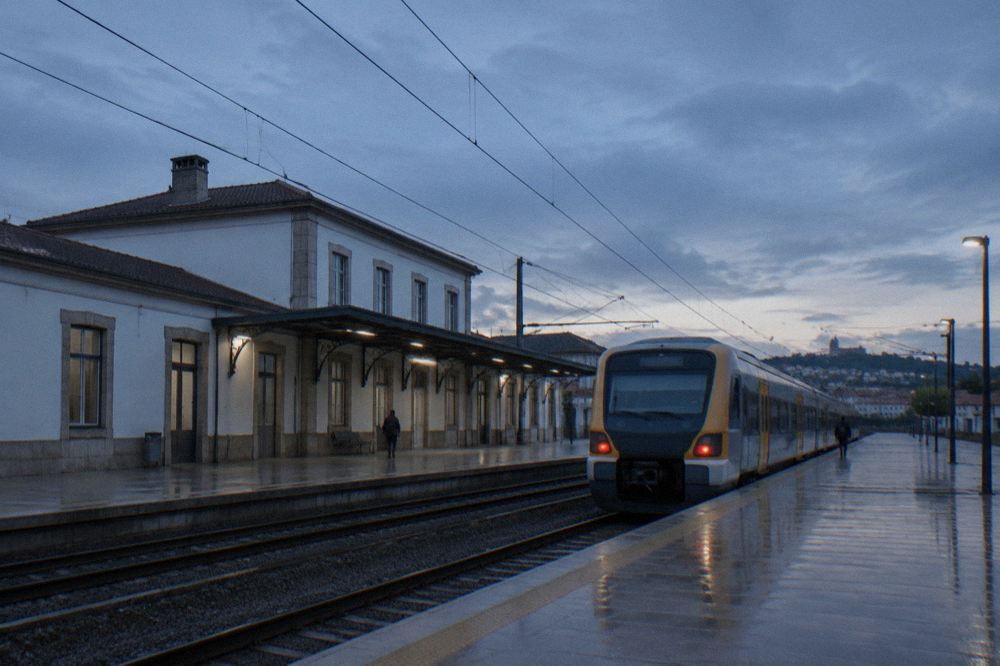
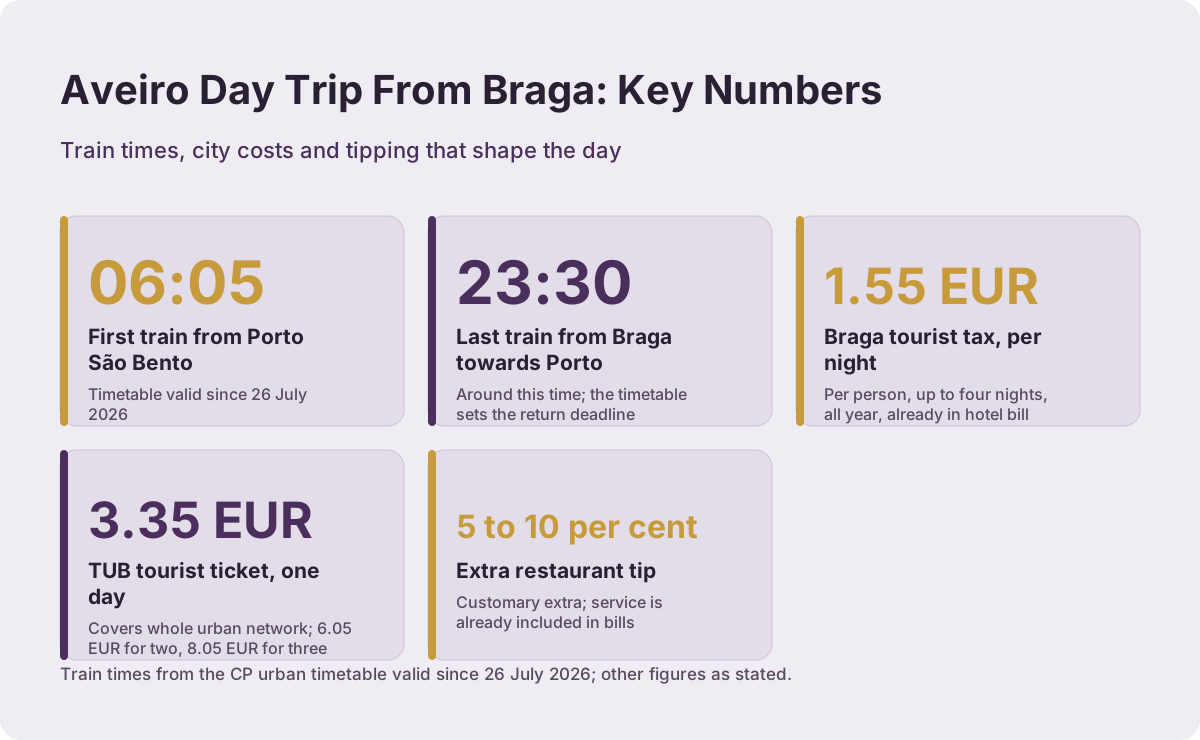
The rail option is the one most visitors choose. Braga's station is the terminus of CP's Braga line from Porto, and the current urban timetable has been valid since 26 July 2026. The first urban train from Porto São Bento leaves around 06:05, and the last departure from Braga back towards Porto is around 23:30, so the ends of the day are covered. The onward leg from Porto to Aveiro is a separate ticket on the main north-south coastal line, and the whole route is priced by zone and by train type, so check CP's journey planner for the exact combination and fare before you travel rather than relying on a round number quoted in a blog.
Driving gives you more freedom and, importantly, makes Costa Nova easy. The beach strip sits across the lagoon from the city centre, and while there are local buses, a car turns the trip from a city visit into a city-plus-coast day. If you are basing yourself in Braga without a car, the train is the honest answer.
One thing worth doing before you leave Braga: if your trip overlaps with a stay in the city itself, the TUB tourist ticket covers the whole urban network at 3.35 EUR for one day, 6.05 EUR for two and 8.05 EUR for three, which is the cheapest way to reach Braga station from outlying accommodation.
| Leg | What it involves | Notes for the day |
|---|---|---|
| Braga to Porto | CP urban train, Braga line | Timetable valid since 26 July 2026; first Porto departure around 06:05 |
| Porto change | Campanhã is the main interchange for southbound trains | Allow a comfortable connection, not a sprint |
| Porto to Aveiro | CP coastal line south towards Coimbra | Separate ticket; fare depends on train type |
| By car | Motorway south past Porto, then the Aveiro exits | Only realistic way to add Costa Nova easily |
What Are The Best Things To Do In Aveiro?
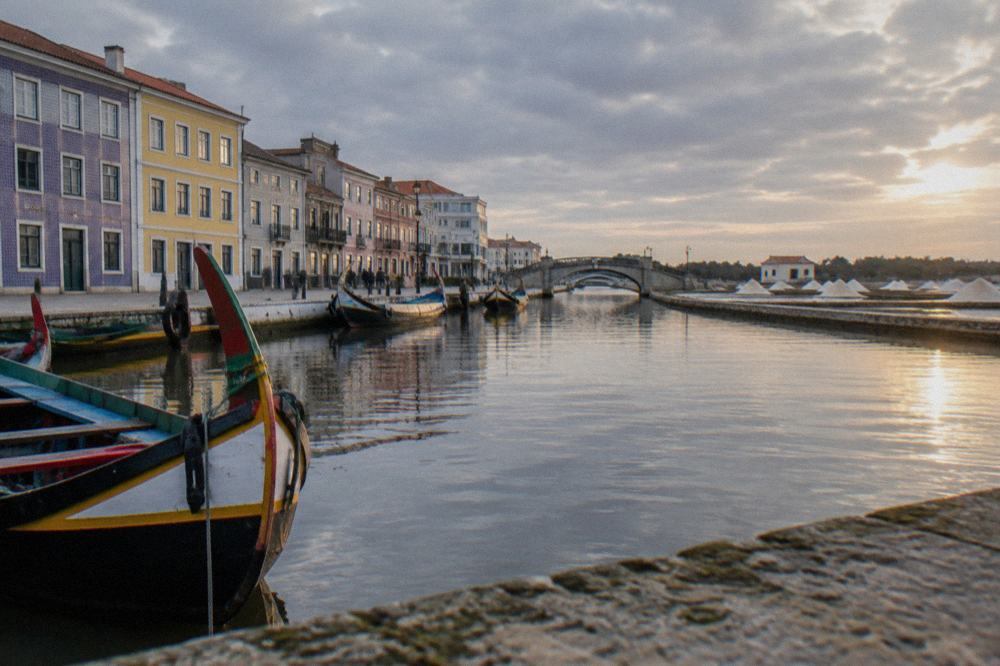
The core of an Aveiro visit is the canal quarter: a moliceiro boat ride along the central canals, a walk through the Art Nouveau streets around the fish market, the Aveiro Museum in the former Jesus Convent, and time at the salt pans on the lagoon edge. With a car or a local bus, add the striped houses of Costa Nova and the beach spit beyond them.
The moliceiro ride is the headline. Boats leave from the central canal loop, and the trip passes under low bridges and past the painted facades that line the water. The boats themselves are the attraction as much as the route: each prow carries painted decoration in the style of the old seaweed fleet.
The Art Nouveau quarter sits a few streets back from the main canal. Aveiro's merchant wealth built it during the salt-trade boom, and the concentration of facades, tiles, wrought iron and stained glass is unusually dense for a city of its size. The fish market, the Mercado do Peixe, anchors the district and still operates as a working market.
South of the centre, the salt pans that paid for all of it survive as working and restored saltpans, where sea water evaporates in shallow beds and is raked into white pyramids. The lagoon's birdlife gathers around them, and the flat horizon of the Ria is a landscape the Minho simply does not offer.
If your day runs long and you want a second city instead of the coast, Coimbra is on the same rail corridor and has its own day-trip page: Coimbra From Braga.
Is Costa Nova Worth The Extra Effort From Aveiro?
Yes, if you have the transport for it. Costa Nova's striped houses, painted in bold vertical bands of colour, are the most distinctive seaside architecture in Portugal, and the beach behind them is a long, low spit of sand between the lagoon and the open Atlantic. Without a car it needs a local bus or a taxi, so decide in advance whether the day has room for it.
The houses began as fishermen's storehouses, palheiros, raised on stilts above the sand and painted in stripes so individual buildings could be told apart. Many are now holiday lets, and the strip has become the region's signature photograph. The beach itself faces the open ocean, and the lagoon side, a short walk away across the spit, is flat and shallow, which makes the area popular with families.
The honest planning point is distance and time. Costa Nova sits on the far side of the lagoon from the city centre, and the connection is a local matter: check the local bus times on the day rather than assuming a frequency, or build the trip around a hire car, which turns the whole day into a loop of city, saltpans and coast.
What Should You Eat In Aveiro?
The dish to look for is fresh lagoon and Atlantic fish, and the sweet to take home is ovos moles de Aveiro, a soft egg-yolk and sugar filling wrapped in thin communion-style wafer, shaped like shells, fish or barrels. Both are products of the lagoon economy: the fish from the Ria and the ocean, the sweets from the convent tradition of the region.
Ovos moles are the city's protected sweet, made to a traditional recipe of egg yolks and syrup, and sold in wooden barrels or paper cones from shops around the canal quarter. They are cloying in the best possible way, and a small cone is enough.
Beyond them, Aveiro's restaurant scene leans on the sea: grilled fish, lagoon eel in the older tradition, and the salt-crust preparations common along this coast. Cod, naturally, appears everywhere in Portugal, and Braga has its own famous treatment of it, covered in the guide to bacalhau à Braga, but Aveiro's kitchens cook with what the lagoon and the Atlantic give them.
| Aveiro food | What it is | Where to find it |
|---|---|---|
| Ovos moles | Egg-yolk and sugar sweet in wafer casings | Sweet shops around the central canals |
| Grilled lagoon and ocean fish | Daily catch, simply grilled | Restaurants near the Mercado do Peixe |
| Salt from the Ria | Sea salt raked from local pans | Delicatessens and the saltpan shops |
| Caldeirada de enguias | Traditional lagoon eel stew | Older, traditional restaurants |
How Does Aveiro Compare With Braga'S Other Day Trips?
Aveiro is the longest of the easy day trips from Braga and the only one that delivers a maritime landscape, so it competes less with the Minho destinations than it complements them. If your time is short, the closer trips, Guimarães, Barcelos, Ponte de Lima and the coast at Viana do Castelo, cost less travel time for a comparable payoff. Aveiro earns its place when you have a spare full day and want the sea.
The Minho trips are shorter hops and share Braga's granite-and-baroque world. Guimarães is the historic cradle city inland; Barcelos holds its famous weekly market; Ponte de Lima is a riverside town of Roman bridges and manor houses; Viana do Castelo is the Minho's coastal city, with a broad estuary beach and a mountaintop basilica. Each has its own page: Guimarães, Barcelos, Ponte de Lima and Viana do Castelo.
Aveiro's advantage is that it is nothing like any of them. Flat, watery, pastel and Art Nouveau, it resets the eye after a week of hillside sanctuaries. Its cost is the journey: the day starts earlier and ends later than a trip within the Minho.
| Day trip from Braga | Character | Travel effort | Best for |
|---|---|---|---|
| Aveiro | Canals, lagoon, Art Nouveau, striped coast | Longest: rail via Porto, or a long drive | A complete change of scenery |
| Guimarães | Medieval old town, palace and castle | Short regional hop | History in half a day |
| Barcelos | Market town on the Cavado river | Short | The weekly market and ceramics |
| Ponte de Lima | Roman bridge, riverside manor houses | Short | A slow lunch town |
| Viana do Castelo | Estuary city, basilica on the hill | Short | The Minho coast without the distance |
| Porto | Grand northern city, port wine cellars | Under an hour by train | City scale and the Douro's mouth |
Porto, of course, sits directly on the route, and a common strategy is to pair the two on separate days rather than try to see both at once. The Porto day-trip guide covers that side of the corridor.
Should You Take A Tour Or Travel To Aveiro Independently?
Travel independently if you want the canals and the city quarter at your own pace, because Aveiro is compact and flat and the walk from the station is manageable. Take a tour if the two-leg rail day, or the drive, is the part you would rather not own, and if you would rather a driver-guide handle the timetable while you look out of the window. Both approaches work; the deciding factor is your appetite for planning.
The From Porto: Braga & Guimarães Tour with Bom Jesus & Castle day trip, rated 4.6 from 4,730 reviews and from $49.96 per person, is a nine-hour small-group day that covers Bom Jesus do Monte and Guimarães with lunch and entries handled, and it suits travellers who are staying in Porto and want to see Braga as part of a Minho circuit. If you are already sleeping in Braga, its value is as a model of what a guided day in this region looks like rather than as your Aveiro transport.
For a lighter, cheaper taste of guided sightseeing without leaving Braga at all, the Braga tuk tuk city tour, from $22.66 per person and rated 4.8 from 179 reviews, covers the historic centre in thirty minutes to two hours, and it pairs well with a morning or evening when you are not on the rails.
And if the flat coastal day leaves you craving the opposite, the 3 Wonderful Waterfalls in a Day tour in the Gerês area, from $113.19 per person and rated 4.9 from 89 reviews, spends eight to nine hours on water of an entirely different kind. The Peneda-Gerês National Park has its own day-trip page at Peneda-Gerês From Braga.
What Should You Know Before Leaving Braga For The Day?
Three practical points matter. Braga's municipal tourist tax, 1.55 EUR per person per night for up to four nights, applies all year and is already in your hotel bill. Check the weather at both ends, because the Minho is one of Portugal's wetter regions in the cooler months. And leave early: the return leg of a two-train day has a last train, and the timetable, not your energy, sets the deadline.
The climate point deserves a table, because Braga is one of the wetter cities in Portugal and the difference between a June day and a December day is not subtle. IPMA's 1991 to 2020 normals for the Braga / Merelim station show the pattern:
| Month (Braga) | Mean max C | Mean min C | Rain mm | Days with 1 mm or more |
|---|---|---|---|---|
| January | 14.1 | 3.1 | 179.5 | 13.1 |
| April | 19.6 | 7.8 | 127.9 | 12.0 |
| July | 28.2 | 14.3 | 27.9 | 4.0 |
| October | 22.2 | 10.1 | 197.8 | 12.0 |
| December | 14.9 | 3.7 | 190.3 | 13.3 |
October is the wettest month on average at the Braga station and July the driest, and twelve to thirteen rain days a month run from October through January. Aveiro's coastal climate is a different regime, so check a forecast for both cities on the morning you travel rather than packing for one of them.
Money matters are simple: Portugal uses the euro, and Turismo de Portugal's own guidance is that service is included in restaurant bills, with an additional tip of about 5 to 10 per cent customary, and taxi tips of 5 to 10 per cent or rounding up to the nearest euro. Nothing about the Aveiro trip changes that.
Finally, if your day trip appetite is bigger than one page, the full set of options from the city is gathered under things to do in and around Braga, and the site's guide to the best time to visit Braga helps with choosing the season for all of them.
Common Questions About Visiting Aveiro From Braga
Can you do Aveiro as a day trip from Braga?
Yes, but it is a full day. The rail route runs via Porto with a change of train, so leave on one of the early trains and plan the return for the evening. Driving is the alternative and makes Costa Nova easy to add.
Is Aveiro worth visiting compared with the Minho day trips?
It depends on what you want. Aveiro offers canals, Art Nouveau architecture and a lagoon landscape that none of the Minho towns have, but it costs more travel time. If you have a spare full day and want the sea, it is worth it.
What is Aveiro famous for?
Moliceiro boats on its canals, a dense quarter of Art Nouveau facades, sea salt from the lagoon's pans, the ovos moles sweet, and the striped fishermen's houses of Costa Nova across the lagoon.
Do you need a car in Aveiro itself?
No. The canal quarter, the Art Nouveau streets and the museum are all within walking distance of the centre, and the city is flat. A car only becomes useful for reaching Costa Nova and the wider lagoon.
What should you buy in Aveiro?
Ovos moles, sold in barrels or cones around the canals, and sea salt raked from the local pans. Both are products of the lagoon economy that built the city.
Is there anything else on the route worth stopping at?
Porto sits directly on the rail corridor and is the natural pairing, done on a separate day. Coimbra is further down the same coastal line and has its own day-trip guide on this site.
Aveiro rewards the visitor who accepts the long day: it is the one destination on Braga's day-trip map where the landscape is water, the architecture is pastel rather than granite, and the postcard is painted stripes instead of baroque stone. Pick a clear day, catch an early train, and give the lagoon the whole daylight it asks for.