Porto Day Trip From Braga
Braga, the city in Portugal's Minho region, sits on the same railway line as Porto, and the two cities are close enough that a day trip between them needs almost no planning. This guide covers the train, the fares, one sensible day in Porto, and how to get back to Braga the same night.
Short answer
The CP urban train from Braga to Porto takes a little over an hour and costs a few euros, priced by zone, loaded on a reusable Siga card that costs 0.50 EUR. The Alfa Pendular covers the same distance in about 38 to 42 minutes for 17.00 EUR in second class. Both arrive at Porto Campanhã, with connections into the historic centre a short metro ride away.
Braga, the city in Portugal's Minho region, is one of the few provincial capitals in the country that can drop you into a major city and back inside a single day without a car. Porto lies to the south on the same rail corridor, the CP urban line that terminates at Braga's own station, and the journey is short enough that locals commute it. That makes Porto the default big-day-out from a Braga base: port wine lodges, a riverside historic centre, a famous iron bridge and a food scene that runs from tripe stew to toasted sandwich shops, all reachable before lunch and leavable after dinner.
This page covers the practical side of that trip: which train to catch from Braga, what it costs, how to move around Porto once you arrive, a realistic one-day route through the city, where to eat, and when to go. The reverse direction, arriving in Braga from Porto, is covered on the site's own Porto to Braga transfer guide, and the airport version on getting from Porto Airport to Braga. If you are still weighing whether the Minho or the big city should get your nights, the site's answer on staying in Porto or Braga works through that trade-off directly.
How Do You Get From Braga To Porto?
The CP urban train is the practical answer: it runs from Braga station through Nine and Porto Campanhã to Porto São Bento, takes a little over an hour, and costs a few euros priced by zone. The Alfa Pendular is the fast alternative, covering the distance in about 38 to 42 minutes between Porto Campanhã and Braga for a full single fare of 17.00 EUR in Turística class or 23.30 EUR in Conforto.
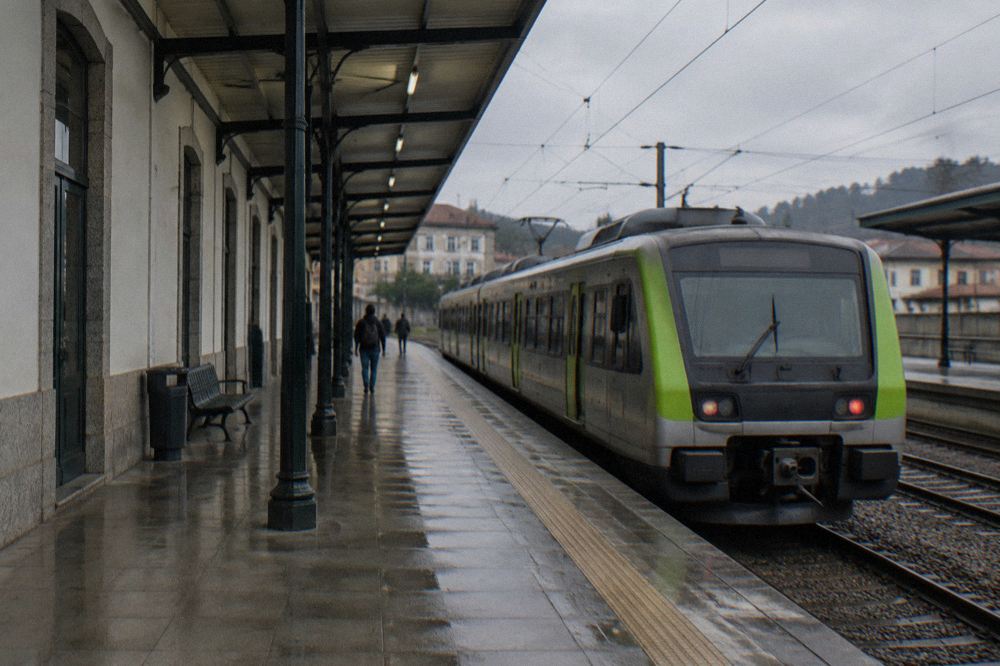
The urban line is the one most day-trippers use. Braga is its terminus, and the current CP timetable for the line has been valid since 26 July 2026, so any timetable you check at the station or on CP's own site reflects the schedule described here. Trains call at Nine, where the line to Barcelos and the coast branches off, then at Porto Campanhã on the eastern edge of the city centre, and finally at São Bento, the stained-glass station sitting right inside the historic core. For a day trip, São Bento is the destination that matters: you step off the train and you are already a few minutes' walk from the cathedral quarter.
The Alfa Pendular is worth knowing about even if you never take it. It is CP's premium service, reservation required, and it exists on this corridor because Braga sits on the long-distance route down from Lisbon. If an urban train is delayed or a timetable gap leaves you stranded, a seat on the Alfa Pendular between Campanhã and Braga is the fallback, at a price. The promotion CP has run on selected October 2026 dates, with Alfa Pendular seats to Braga from 8 EUR, shows how cheap the fast train can get when it is promoted, but those fares are date-specific and should never be assumed for a spontaneous trip.
| Option | Journey time | Fare | Notes |
|---|---|---|---|
| CP urban train (Linha de Braga) | A little over an hour | A few euros, priced by zone | Loads on a reusable Siga Ocasional or Andante Azul card; the Siga card costs 0.50 EUR |
| Alfa Pendular | About 38 to 42 minutes, Porto Campanhã to Braga | 17.00 EUR Turística, 23.30 EUR Conforto, full single | Reservation required; premium long-distance service |
| Car | Depends on traffic and your start point | Motorway tolls plus fuel and city parking | Parking in central Porto is scarce and paid; the train is usually faster door to door |
One detail worth sorting before you leave Braga: the ticket card. Urban tickets load onto a reusable Siga Ocasional card, which costs 0.50 EUR the first time, or onto an Andante Azul card if you already hold one from the Porto metro system. Buy the card at the machines in Braga station, top it for the round trip, and keep it for the return. The card is not the ticket; it is what the ticket rides on, and it is reusable on every later trip.
How Much Does The Braga To Porto Train Cost?
The urban fare is priced by zone and comes to a few euros each way, which is why the train beats every other option on cost. The Alfa Pendular costs 17.00 EUR in second class and 23.30 EUR in first class for the Campanhã to Braga leg at the full single rate. A reusable Siga card adds 0.50 EUR once, and nothing on top after that.
CP prices its urban network by zone, and the Braga line crosses enough of them that the fare is a genuine intercity price rather than a city-bus price, but it stays in the range of a few euros. The exact figure is printed on the ticket machines and at the station counter, so check it there when you load your card. What matters for planning is the shape of the cost: a round trip by urban train costs less than a single course of dinner in Porto, and a family of four travels for what one Alfa Pendular seat would cost.
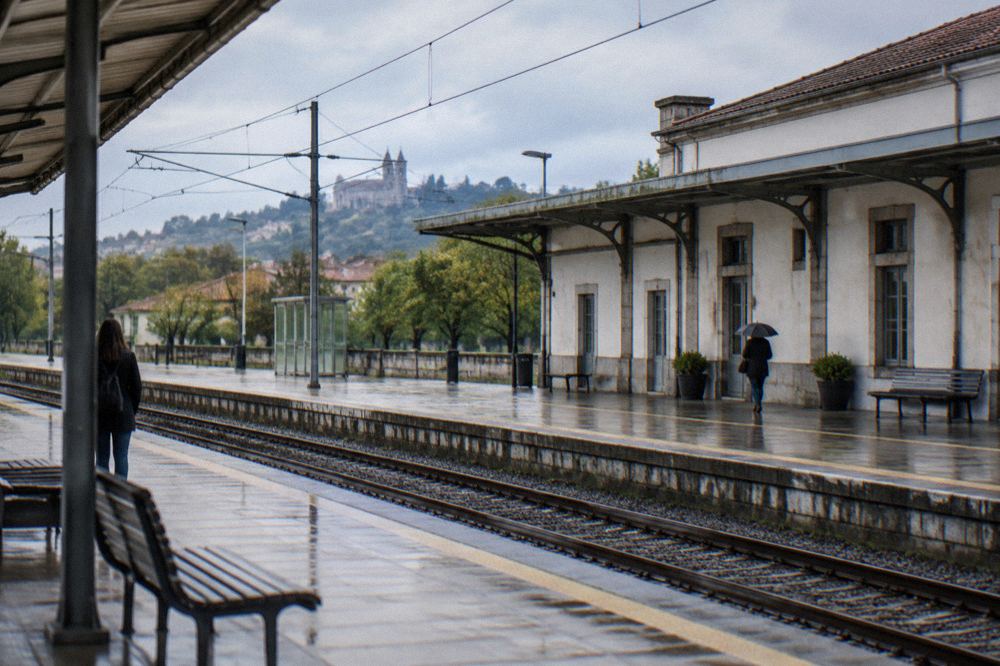
The Alfa Pendular fare structure is published and fixed for 2026: the minimum-distance fare between Porto Campanhã and Braga, which is what a day-tripper pays, is 17.00 EUR in Turística and 23.30 EUR in Conforto at the full single rate. Half fares exist for those entitled to them. For comparison, the same train running the full length from Lisbon to Braga costs 38.50 EUR in Turística at the 2026 full single rate, which shows how much of the fare is distance and how little is the class of train.
If your day in Porto is part of a wider Minho itinerary, the train card you buy in Braga is worth holding onto. The Siga card accepts urban tickets across the CP network in the north, and the Andante Azul card, the Porto-side equivalent, works on the Porto metro, so a day-tripper can carry two small cards and cover both cities' public transport with them. The site's guide to getting around Braga covers the Braga side of that pairing.
What Should You See In Porto In One Day?
São Bento station, the cathedral, the Ribeira riverside quays, the Dom Luís I bridge and a port wine lodge across the river in Vila Nova de Gaia form a single walkable loop that fills a day trip without any transport beyond your feet. Start at São Bento, where you arrive, and finish across the river with a port tasting before retracing the loop to the station.
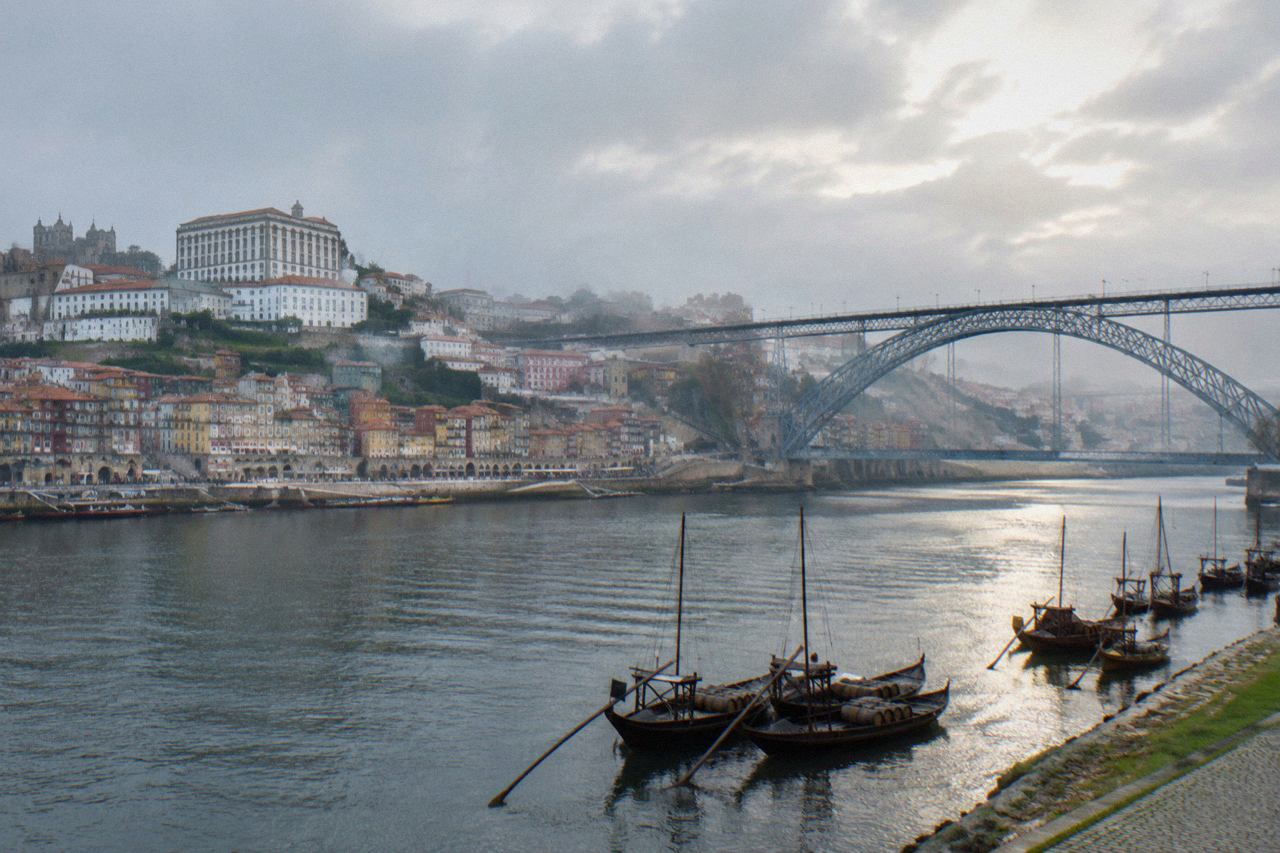
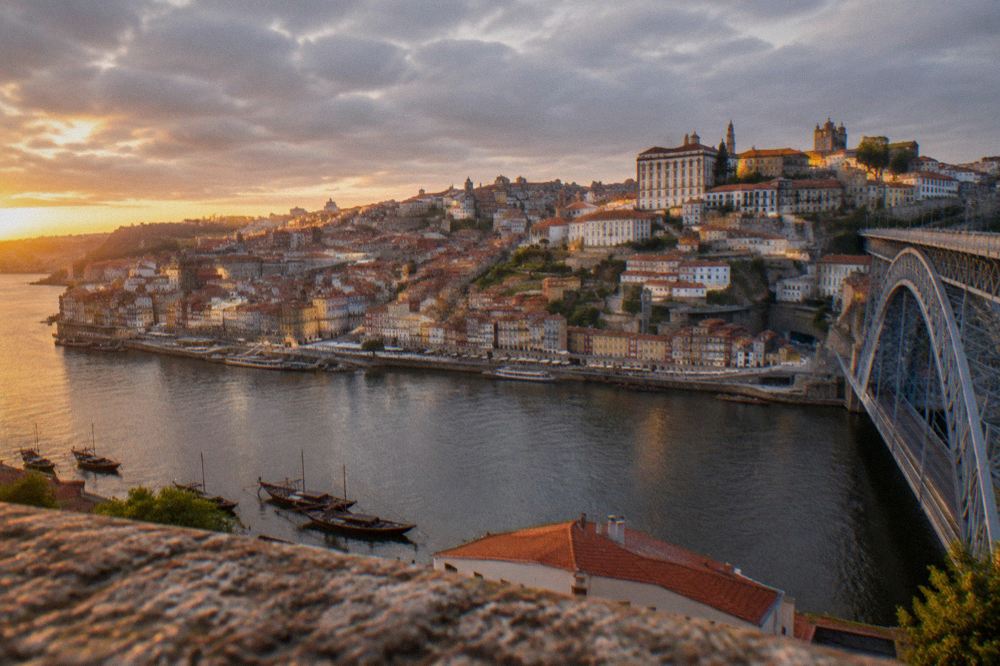
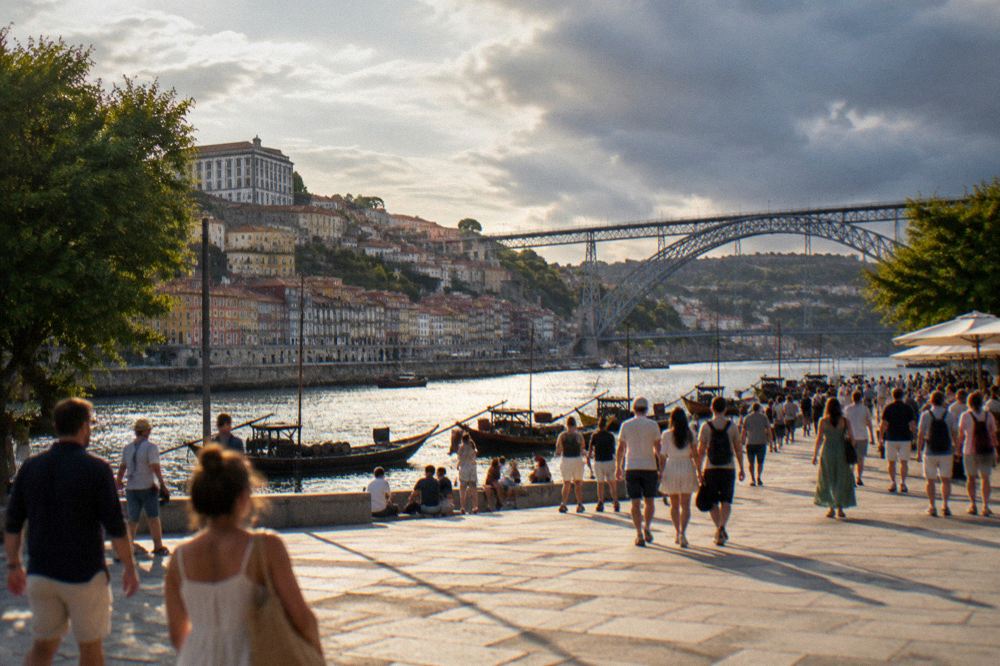
The walk works because Porto's historic centre is stacked on a hillside above the Douro, and everything a first-time visitor wants sits on the slope between the station and the water. São Bento's tiled entrance hall is worth two minutes on its own. From there the cathedral sits a short climb uphill, a fortified Romanesque building with a terrace looking over the rooftops to the river. Downhill from it, the lanes narrow into the Ribeira, the old merchant quarter at the water's edge, whose arcaded quay is the postcard view of the city.
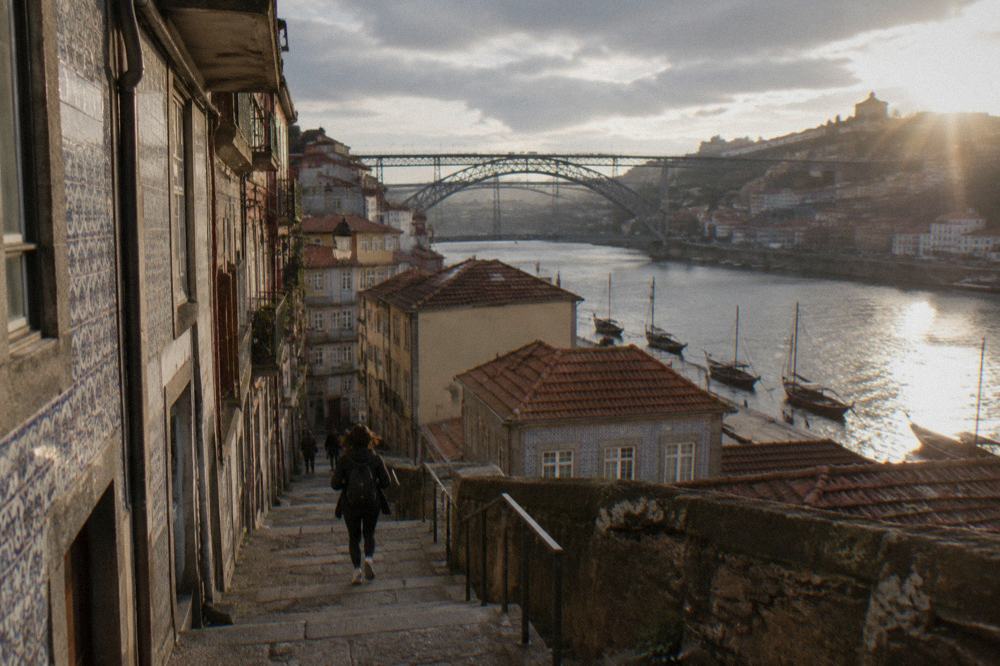
The Dom Luís I bridge carries the loop across the Douro. Its lower deck is the pedestrian route into Vila Nova de Gaia, where the port wine lodges line the south bank under their painted signs. A tasting at one of the lodges is the standard afternoon stop on this loop, and the views back across the river from the Gaia side quays are the best in the city at golden hour. The upper deck of the bridge is also walkable and is the classic photograph spot, though it is exposed, so hold onto hats and children.
| Time | Place | Why it works |
|---|---|---|
| 09:30 | São Bento station | Arrive, see the tiled hall, start the loop on foot |
| 10:00 | Porto cathedral | Opens the day with the terrace view over the river |
| 11:00 | Ribeira quays | The heart of the historic centre, best seen before the midday crowds build |
| 13:00 | Lunch in the Baixa or Ribeira | The low town between station and river holds the traditional restaurants |
| 15:00 | Dom Luís I bridge and Gaia | Cross the river for the port lodges and the return view |
| 17:30 | Port tasting in a lodge | The classic finish, with time to walk back at leisure |
| 19:00 | São Bento station | Head for the evening trains back to Braga |
This loop leaves out a lot of Porto, and that is deliberate. A day trip that tries to add the Foz district, the ocean front or the Casa da Música area ends as a bus tour of a city you never actually stand still in. If a second day is possible, the site's wider round-up of good day trips from Porto explains how the region divides up, and the Douro Valley day trip is the natural second outing for wine-minded travellers, as the site's own answer on whether a Douro day trip is worth it sets out.
Where Should You Eat In Porto On A Day Trip?
Plan one proper restaurant meal and graze the rest: Porto's food identity is tripe stew, the francesinha toasted sandwich, and the cod dishes of the north, and a day-tripper gets the best of it by booking lunch in the Baixa and eating a francesinha only if a long train ride home allows a heavy evening. The city's cafes do the rest, from coffee to the custard tarts every Portuguese city bakes.
Porto's signature dish is tripas à moda do Porto, a white bean and tripe stew that gave the city its nickname for its people, and the traditional restaurants in the Baixa, the low town between the station and the river, serve it. The francesinha is the other emblem: a layered meat sandwich drowned in a beer-and-tomato sauce, heavy enough that locals treat it as a full meal. A day-tripper with an evening train to catch should treat it as lunch rather than dinner, or split one.
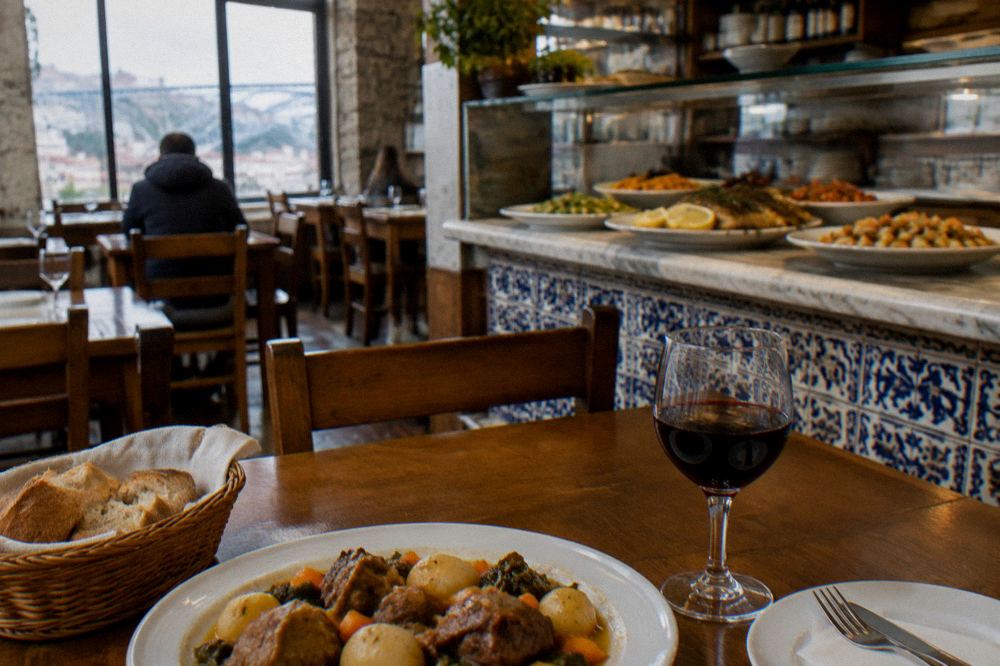
The quays in the Ribeira hold tourist-priced restaurants with unbeatable settings, and the trade-off is straightforward: the view costs, the food two streets back is where the city eats. For a day trip, the practical split is a sit-down lunch in the Baixa, an afternoon coffee stop somewhere in the historic centre, and a pre-train snack near São Bento rather than a second full meal. Tipping follows the national custom, which Turismo de Portugal states plainly: service is included in the bill, and an additional tip of about 5 to 10 per cent is customary, with taxi drivers tipped the same or to the nearest euro.
Back in Braga, the food scene is smaller and cheaper, and the site's guide to what to eat in Braga covers the Minho side of the table, from bacalhau à Braga to the region's vinho verde. If you return with an appetite the next morning, the walks the historic centre with a local guide and stops at the producers rather than the restaurants.
How Do You Get Around Porto Once You Arrive?
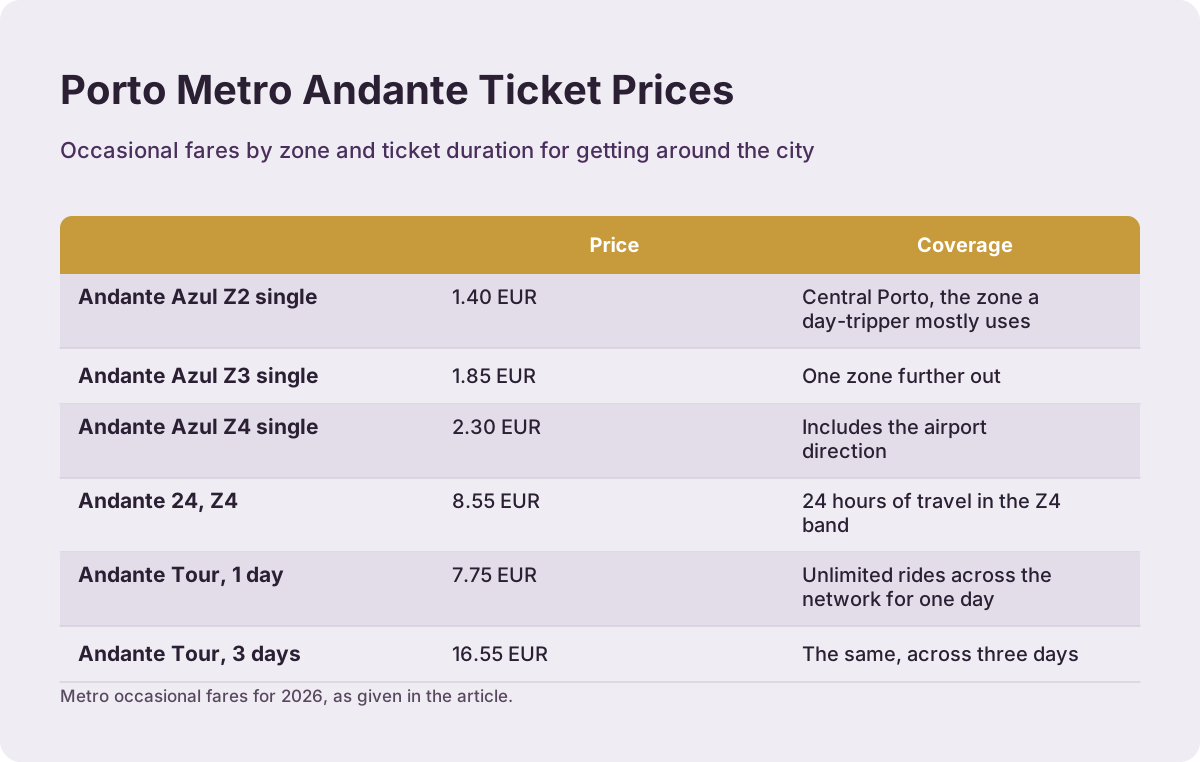
Walk. The one-day loop from São Bento to the river and across the bridge needs no transport at all, and anything beyond it, the ocean front, the Casa da Música area or the airport direction, runs on the Porto metro, where a Z2 single costs 1.40 EUR on an Andante Azul card and a one-day Andante Tour ticket costs 7.75 EUR.
Porto is a hill city, so "walk" comes with a caveat about gradients: the drop from the cathedral to the Ribeira is steep, and the climb back is steeper. The funicular and the metro exist partly to spare visitors that climb. The metro's occasional fares for 2026 are zoned, with a Z2 single at 1.40 EUR covering the central area, Z3 at 1.85 EUR and Z4 at 2.30 EUR for the airport direction, and the Andante Tour ticket, aimed at visitors, costs 7.75 EUR for one day or 16.55 EUR for three days of unlimited rides. The rest of the planning pages sit on Braga Travel Guide.
| Ticket | Price | Coverage |
|---|---|---|
| Andante Azul Z2 single | 1.40 EUR | Central Porto, the zone a day-tripper mostly uses |
| Andante Azul Z3 single | 1.85 EUR | One zone further out |
| Andante Azul Z4 single | 2.30 EUR | Includes the airport direction |
| Andante 24, Z4 | 8.55 EUR | 24 hours of travel in the Z4 band |
| Andante Tour, 1 day | 7.75 EUR | Unlimited rides across the network for one day |
| Andante Tour, 3 days | 16.55 EUR | The same, across three days |
For a single day trip, the honest calculation is that most visitors buy nothing but a return train ticket. The loop described above is entirely on foot, and the only reason to buy a metro ticket is a specific add-on, most commonly the airport, if you are flying out the same day, in which case the site's guide to Porto Airport to Braga covers the Getbus coach that connects the two directly. The airport ride on the metro is a Z4 journey.
Should You Take A Guided Tour Instead Of Doing It Yourself?
Do it yourself for Porto, and take a tour for the Minho. Porto is a single-city, single-walk destination that rewards independence, while the Minho's sights, Bom Jesus do Monte, Guimarães and the coast, are scattered across hills and towns that a car and a guide handle far better than a series of buses, which is why the strongest guided products on this route run from Porto outward rather than the reverse.
The logic is about geography. A day trip to Porto is a train ride and a walk. A day trip that tries to combine Braga, Bom Jesus do Monte and Guimarães under your own steam involves an urban bus up a hill, a regional bus between two cities with no direct rail link, and a strict timetable holding all of it together. A guided tour collapses that planning into one vehicle. The site's featured product for this route, the From Porto: Braga & Guimarães Tour with Bom Jesus & Castle, is a nine-hour small-group day from Porto that covers both cities, the sanctuary and the castle, and it is the natural choice for travellers basing themselves in the big city rather than in Braga. Check availability if that reverse direction matches your plans.
The same reasoning applies to Braga-based travellers with spare half-days in the city itself. The covers the historic centre in a tuk tuk for anyone who wants the layout explained without the walking, and the turns the same streets into a puzzle trail for families, a category of product that suits Braga's compact centre unusually well. The site's answer on whether Braga is worth a day trip from Porto works through the same question from the other end of the line.
Is One Day In Porto Enough From Braga?
One day is enough for the classic loop, the station, the cathedral, the Ribeira, the bridge and a port tasting, because those sights sit inside a single walkable district, but it is not enough for Porto as a whole: the ocean front, the Casa da Música quarter and the city's museums each need a morning, so a one-day visit should commit to the riverside core and accept what it leaves out.
The day trip works precisely because Porto's postcard sights cluster. What it does not do is give the city room to breathe. The Foz district, where the Douro meets the Atlantic, the leafy Boavista axis around the Casa da Música, and the gallery circuit are all genuine Porto, and none of them fits inside a day that also crosses the river for port. Travellers who want the second layer should either overnight or plan a return, and the site's answer on how many days you need in Braga style questions, including the wider one day in Braga itinerary, exist for readers mapping a whole week in the north.
There is also a case for the opposite structure: sleep in Braga, which is cheaper, quieter and closer to the Minho's hills, and spend the day in Porto, returning at night. Braga's municipal tourist tax is 1.55 EUR per person per night for up to four nights, charged all year. The site's answer on whether it is better to stay in Porto or Braga makes that comparison directly.
When Is The Best Time Of Year For This Day Trip?
Late spring through early autumn is the comfortable window, with July and August the warmest and most crowded, and the shoulder months of May, June and September the best balance, because the coastal city is cooler than inland Braga in summer and wetter than it in October, which is the wettest month of the year at the Braga station with 197.8 mm of rain on average.
The climate data for Braga, from the IPMA 1991 to 2020 normals for the Braga / Merelim station, shows the shape of the year in the Minho: July is the driest month with 27.9 mm of rain on average and a mean maximum of 28.2 C, while October, December and January each carry well over 170 mm. Porto, on the coast, runs slightly milder in winter and cooler in summer than the inland station, so a hot Braga August is a more bearable Porto August, and a wet Braga January is a wet Porto January too.
The event calendar matters less for Porto than for Braga, but the return journey does intersect one: São João, Porto's midsummer festival, fills the city on the night of 23 to 24 June, which is also Braga's municipal holiday and the peak of Braga's own Festas de São João, which ran 17 to 24 June in 2026. A day trip on that particular date is either the best or the worst idea of the year depending on your tolerance for crowds and plastic hammers. The site's guide to São João in Braga and the events pages cover the festival calendar in detail.
| Season | Weather at the Braga station | Day-trip verdict |
|---|---|---|
| Spring (March to May) | Mean maximum rises from 17.8 C in March to 23.0 C in May; rain eases from 150.1 mm to 89.8 mm | Good: green hills, thinner crowds, occasional wet days |
| Summer (June to August) | Mean maximum 26.1 C to 28.7 C; July the driest month at 27.9 mm of rain | Excellent weather, peak crowds, book lunch ahead |
| Autumn (September to October) | 26.9 C mean maximum in September, then 197.8 mm of rain in October | September is superb; October is the wettest month, pack for it |
| Winter (November to February) | Mean maximum 14.1 C to 17.0 C; 8.5 nights below freezing in January | Quiet and atmospheric, with 12 to 13 rain days a month |
Which Other Day Trips Compete With Porto From A Braga Base?
Guimarães is the closest rival and the easiest, reached by AITC regional bus line 101 from Braga's bus station since no direct train exists, while the Peneda-Gerês National Park, on AITC line 201 to Caldas do Gerês, is the outdoor alternative, and the coastal towns of the Minho, Póvoa de Varzim, Esposende and Viana do Castelo, fill the summer weekends. Porto is the only one of them reachable by direct train.
The spread matters when a week in Braga is being planned. Guimarães is the historic rival city, the cradle of Portuguese nationhood in the national story, and the site's own Guimarães day-trip guide covers it. The Peneda-Gerês National Park is the mountains, waterfalls and hiking country to the east, covered on the site's Peneda-Gerês page and in the answer on whether it makes a good day trip from Porto. The coast runs from Barcelos with its Thursday market, through Ponte de Lima inland, to Viana do Castelo in the far north.
| Destination | How to reach it from Braga | What it is known for |
|---|---|---|
| Porto | CP urban train, a little over an hour, a few euros | Port wine, the Ribeira riverside, the Dom Luís I bridge |
| Guimarães | AITC regional bus line 101 from Braga bus station; no direct train | The medieval centre and the castle in the national founding story |
| Caldas do Gerês | AITC regional bus line 201 | The spa village gateway to the Peneda-Gerês National Park |
| Ponte de Lima | AITC regional bus line 105 | Portugal's oldest chartered town, on the Lima river |
| Póvoa de Varzim and Esposende | AITC regional bus lines 106 and 107 | The sandy beaches of the Minho coast |
| Barcelos | Train with a change at Nine | The Thursday market and the rooster legend |
Both are Porto-start products, so they belong in a Braga-based itinerary only as the final day, positioned before a flight or a last night in the big city.
Common Questions About A Porto Day Trip From Braga
How long is the train from Braga to Porto?
The CP urban train takes a little over an hour between Braga and Porto São Bento, calling at Nine and Porto Campanhã on the way. The Alfa Pendular covers the Campanhã to Braga leg in about 38 to 42 minutes but costs considerably more.
How much does the Braga to Porto train cost?
The urban fare is priced by zone and comes to a few euros each way. The exact amount is shown at the Braga station machines and counter. Tickets load on a reusable Siga Ocasional card, which costs 0.50 EUR, or on an Andante Azul card.
Is Porto walkable from the station?
Yes. São Bento station sits inside the historic centre, and the classic loop, cathedral, Ribeira quays, Dom Luís I bridge and a port lodge across the river in Gaia, is entirely on foot. The hills are steep, so allow more time for the climbs than the distances suggest.
Can you do Braga and Porto in one day?
Not properly. Each city deserves its own day, and squeezing both means seeing neither. The realistic structure is one city per day, with the roughly hour-long urban train connecting them, or a guided tour that covers Braga and Guimarães together from Porto, since Guimarães has no direct train from Braga.
Do you need to book the train in advance?
No. Urban tickets are bought at the station, on the machines or at the counter, and loaded onto your card on the day. Advance booking matters only for the Alfa Pendular, which requires a seat reservation, and its promotional fares on selected dates sell out first.
Is a day trip to Porto worth it from Braga?
Yes, if you want port wine, the riverside and a big-city food scene, since the train makes the day easy and cheap. No, if your reason to visit the north is the Minho itself: the hills, the sanctuaries and the smaller towns are what Braga is uniquely placed for, and Porto will still be there on your next trip.
The train back from São Bento in the early evening drops you in Braga with the whole night still ahead, which is the quiet advantage of this particular day trip: you get the second city's river, bridge and port lodges, and you sleep in the first city's calm. Plan the loop, book lunch, and let the Siga card do the rest.