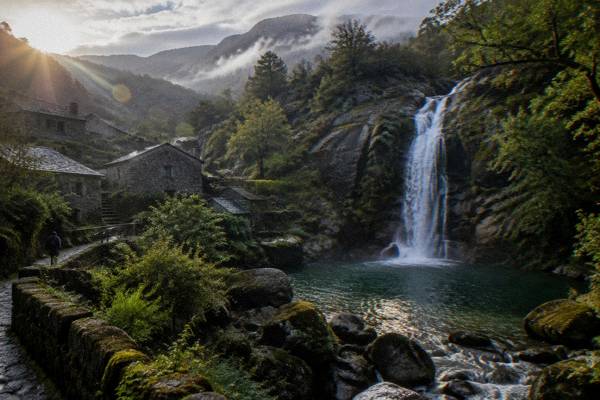
Arcos De Valdevez And Ponte Da Barca From Braga
Two river towns in the far north of the Minho, reachable from Braga by regional bus, with Peneda-Gerês National Park on their doorstep.
Short answer
Arcos de Valdevez and Ponte da Barca sit on the Vez and Lima rivers in northern Portugal, roughly an hour and a half from Braga by AITC Line 100 bus via Vila Verde. Both are small, walkable market towns known for medieval bridges, river beaches and access to Peneda-Gerês National Park.
Braga, the city in the Minho region of northern Portugal, makes a comfortable base for the whole northern half of the country, and two of the quietest rewards within its reach are Arcos de Valdevez and Ponte da Barca. Both towns sit in the Alto Minho, on the rivers Vez and Lima respectively, just outside the western boundary of Peneda-Gerês National Park. They are not on the standard tourist circuit the way Guimarães and Porto are, which is exactly the argument for going: stone bridges, river beaches, granite alleyways and a national park at the end of a short drive. This page covers how to reach both from Braga, what to do in each, and how to fold them into a day that ends back in the city in time for dinner.
Where Are Arcos De Valdevez And Ponte Da Barca?
Arcos de Valdevez lies on the Vez river in the Alto Minho, the far north-western corner of Portugal, and Ponte da Barca lies a short distance to its south on the Lima river. Both are small municipality seats in the Viana do Castelo district, not in the Braga district, and both sit immediately west of Peneda-Gerês National Park, whose mountains rise directly behind them.
The two towns are neighbours in every sense. Ponte da Barca takes its name from the boat crossing that once served the Lima before a bridge replaced it; Arcos de Valdevez grew at the ford of the Vez. Between them runs the valley of the Lima, one of the greenest corridors in Portugal, with the Serra da Peneda and the Serra do Gerês stacked up to the east. The Alto Minho is a region of small fields, granite granaries called espigueiros and villages that empty out on winter weekdays, and both towns carry that character in concentrated form.
For a visitor based in Braga, the geography matters in one practical way: these are the last towns before the park. Once you pass Arcos de Valdevez heading north-east, you are inside the Peneda-Gerês protected landscape, and the roads narrow to single lanes threading between villages like Soajo and Lindoso, both famous for their clusters of stone granaries. A day trip from Braga can therefore be a towns-and-river day, a mountains day, or a mixture, and the choice is mostly about how much driving you want to do.
How Do You Get To Arcos De Valdevez From Braga Without A Car?
The regional bus operator AITC runs Line 100 from Braga bus station via Vila Verde to Arcos de Valdevez, which is the only verified public-transport link on this route. There is no train: Braga's rail line runs south towards Porto, and no branch serves the Lima valley. Fares and journey times for Line 100 are not published in a form this site can verify, so check the current timetable at the bus station or on the AITC site before committing.
The practical detail is the bus station, not the line number. Braga's regional buses leave from the Centro Coordenador de Transportes, the same building that serves the Getbus airport coaches, a short walk or a TUB ride from the historic centre. Line 100 also serves Vila Verde on the way, a small town worth knowing about only because it breaks the journey if you are timing a return. Line 100 is the route the AITC timetable pages list for Arcos de Valdevez; Ponte da Barca is beyond it, and connections from Arcos onwards are thin enough that a car, a taxi or an organised tour is the realistic way to string both towns into one day.
If you would rather not plan around a regional bus timetable at all, the private Minho tours solve the problem by putting a driver in front of it. The Minho Tour Private (Braga And Guimarães) Full Day is this site's featured product for Minho touring, and while its standard route covers Braga and Guimarães rather than the Lima valley, a private format is the one where an Alto Minho detour is at least a conversation with the operator. Check availability
| AITC line from Braga | Destination | Serves |
|---|---|---|
| Line 100 | Arcos de Valdevez | Vila Verde, the Lima valley approach |
| Line 105 | Ponte de Lima | Ponte de Lima town |
| Line 201 | Caldas do Gerês | Gerês village area |
| Line 200 | Covide | Campo do Gerês, northern park access |
Note what that table deliberately does not contain: fares and journey times for these lines are not verified, so none are printed. Ponte de Lima, covered in its own Ponte de Lima day trip guide, is the easier of the Lima valley towns from Braga precisely because Line 105 is its dedicated route.
What Should You Actually See In Arcos De Valdevez?
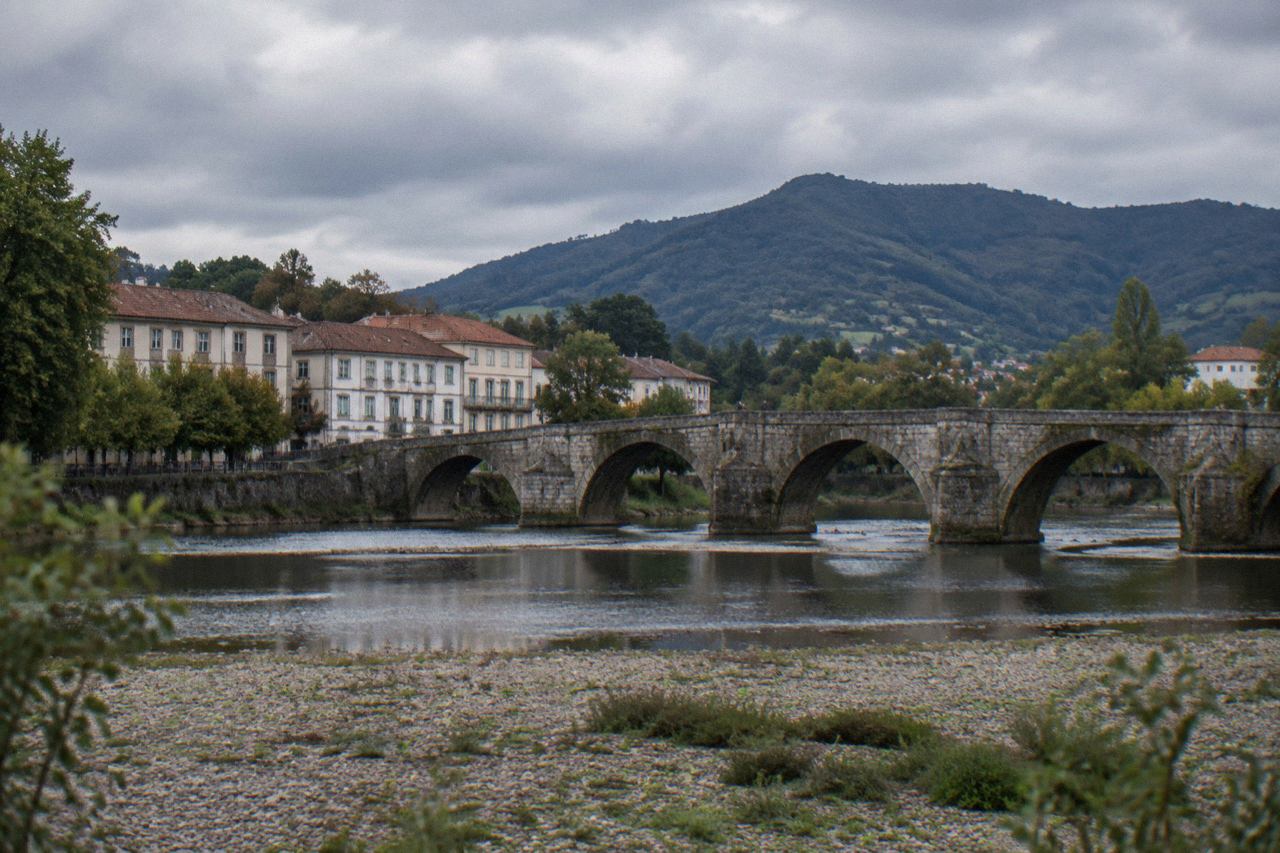
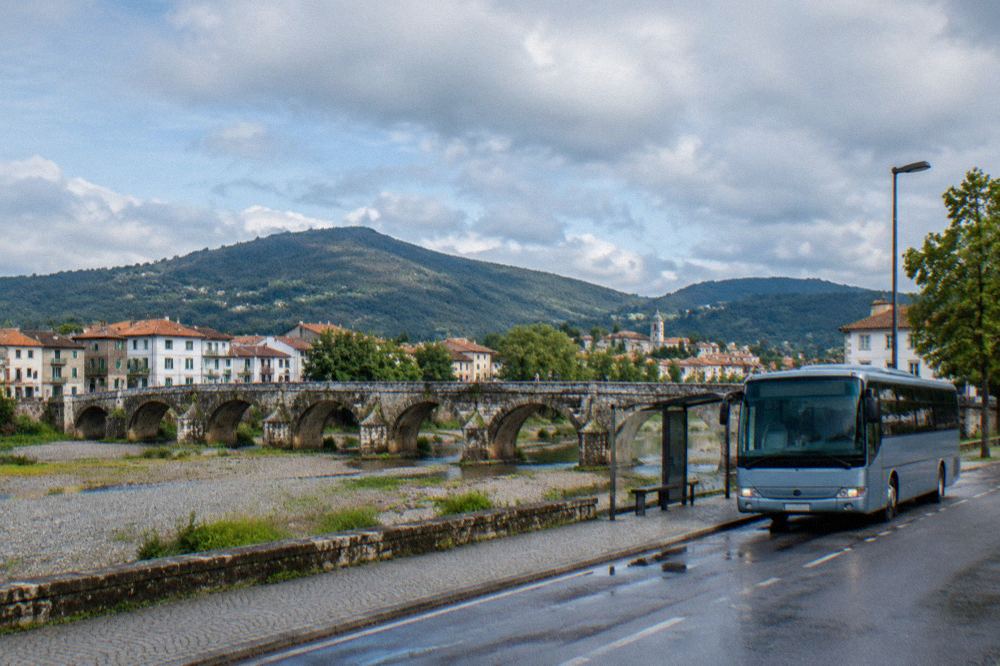
The town's core sights are all within a ten-minute walk of the Vez river: the medieval Ponte de Vila bridge with its broken arch, the riverside promenade and swimming area on the Vez, the historic centre's granite streets around the Igreja Matriz, and the viewpoint parks on the valley slopes. Arcos de Valdevez is a town you see on foot in half a day, not a museum town with ticket queues.
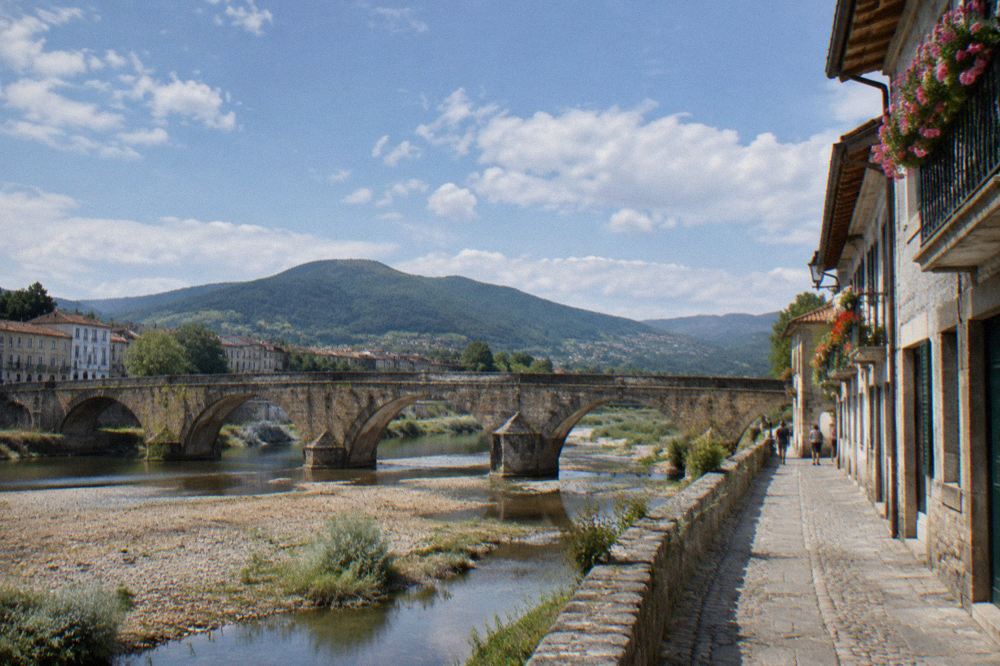
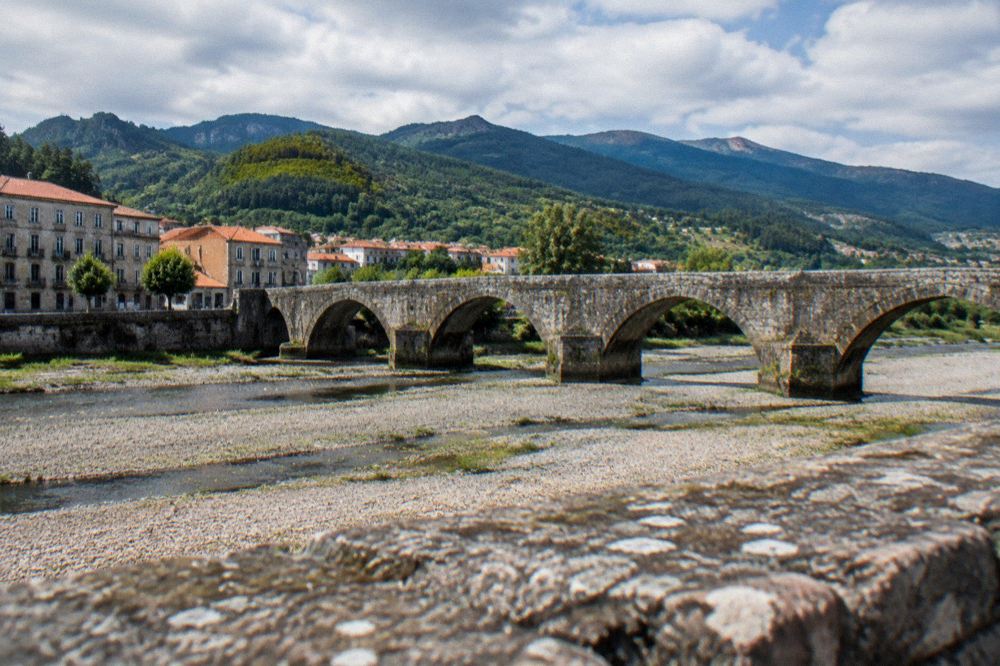
Start at the bridge. The Ponte de Vila, the old crossing of the Vez, carries a pedestrian lane over water the colour of dark glass in summer, and its surviving arches are the single most photographed thing in the town. Below it, the river has been shaped into a formal river beach, one of several along the Vez, and on a July afternoon the lawns fill with families in a way that no guidebook photo quite conveys. Upstream, a modern footbridge carries the ecovia, the riverside path that runs towards the village of Giela, where a fortified medieval tower house stands open to the sky.
The historic centre is small and honest about it. Streets of granite and painted plaster climb from the river to the main square, where the Igreja Matriz de Arcos de Valdevez fronts a garden of orange trees. There is no cathedral-scale monument here and no ticketed museum circuit; the town's weight is in its setting. The valley walls close in from both sides, and the road east out of town points straight at the mountains of Peneda-Gerês. For visitors who want a viewpoint without a hike, the parks on the northern slope look back over the whole basin.
What Makes Ponte Da Barca Worth The Trip?
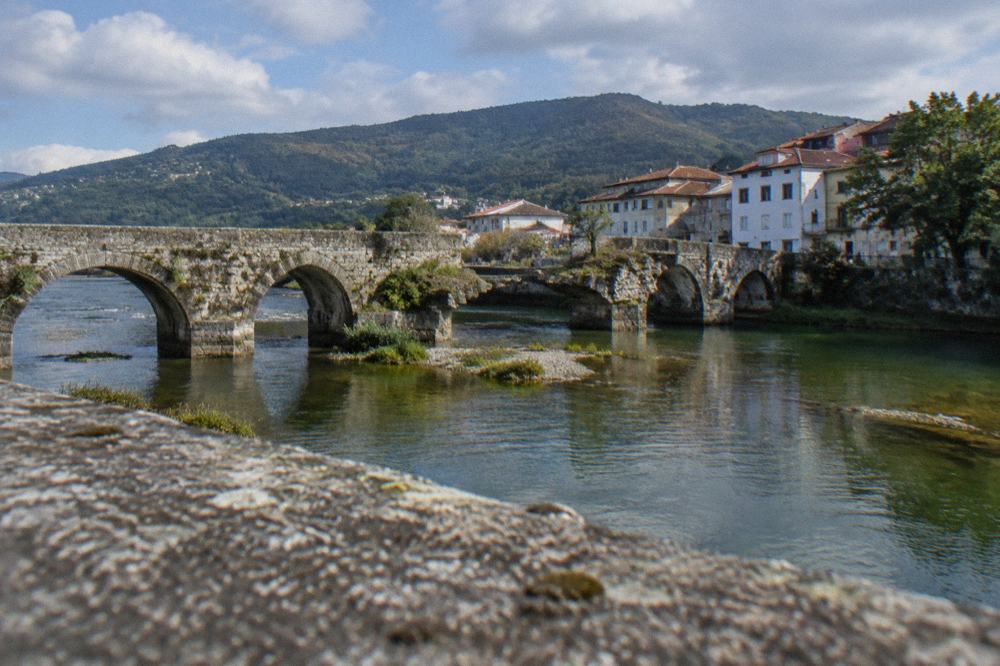
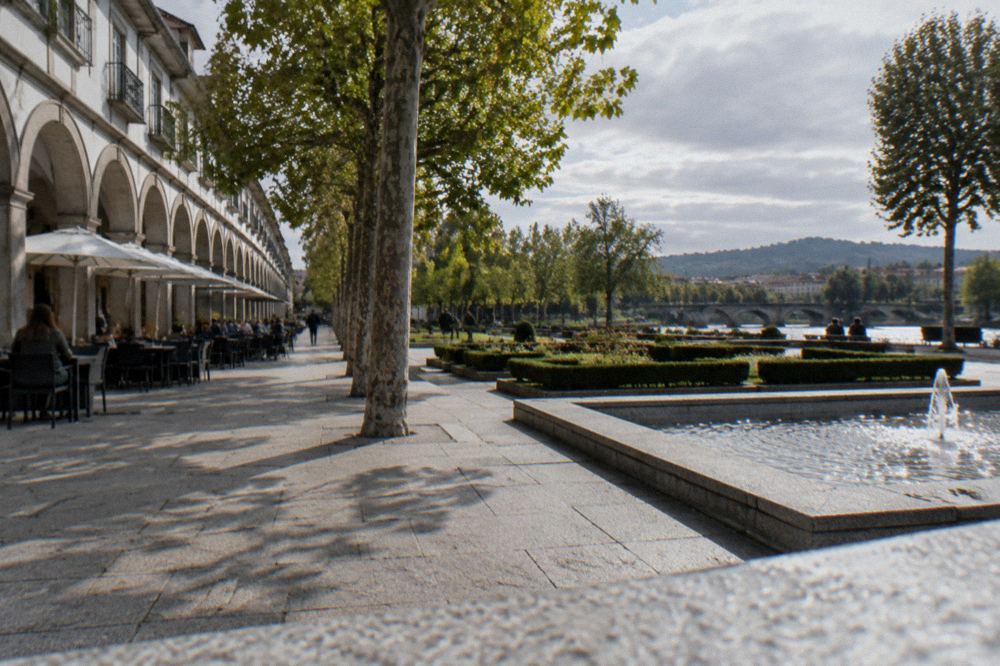
Ponte da Barca's centre is built around one of the loveliest small squares in the Minho, with arcaded houses, plane trees and the Lima river running past the medieval bridge that gave the town its name. Its sights, the Igreja Matriz, the riverside gardens and the pillory, sit inside a fifteen-minute walk, and it is the natural base for visiting Soajo and Lindoso, the granary villages inside Peneda-Gerês.
The name records a lost crossing: before the bridge, a barca, a boat, carried travellers over the Lima here, on the road between Braga and the high Minho. The bridge that replaced it still carries the town's identity, and the gardens along the north bank are where the town spends its evenings. Ponte da Barca is marginally more tourist-aware than Arcos, with a small municipal museum and a summer river beach of its own, but it remains a working market town first. More of these guides are collected on Braga Travel Guide.
The reason many visitors choose it over Arcos is position. From Ponte da Barca, the road north climbs to Lindoso, where dozens of espigueiros, the granite granaries on stilts, stand in rows below a medieval castle, and the Peneda range fills the horizon. Soajo, with its own granary cluster and a ladder of stone-slab streets, lies a similar distance away in the Peneda direction. Both villages are inside the national park's buffer zone, and both are the kind of place where the parking is gravel and the only queue is behind a shepherd.
| Sight | Town | What it is |
|---|---|---|
| Ponte de Vila | Arcos de Valdevez | Medieval bridge over the Vez, one arch broken |
| Vez river beach | Arcos de Valdevez | Formal swimming and lawn area on the river |
| Torre de Giela | Giela, near Arcos | Medieval fortified tower house |
| Igreja Matriz square | Arcos de Valdevez | Historic centre, gardens, orange trees |
| Medieval bridge | Ponte da Barca | Stone bridge over the Lima, the town's origin |
| Arcaded main square | Ponte da Barca | Plane trees, cafes, riverside gardens |
| Lindoso granaries | Near Ponte da Barca | Rows of stone espigueiros below a castle |
| Soajo granaries | Near Ponte da Barca | Granary cluster in a stone-slab village |
Can You Combine The Trip With Peneda-Gerês National Park?
Yes, and for many visitors the park is the reason the trip exists: Arcos de Valdevez and Ponte da Barca are the two main western gateways to Peneda-Gerês National Park, with the granary villages of Soajo and Lindoso reachable from Ponte da Barca and the Gerês valley reachable by looping back through the park towards Braga. What you cannot do is see the park and both towns properly in one day by bus; the connections do not support it.
The geography rewards a choice. A towns day means Arcos in the morning, Ponte da Barca for lunch, and the Lima valley road back. A park day means driving past the towns and into the mountains, where the itineraries in the site's Peneda-Gerês National Park guide take over: river beaches at Tahiti and Poço Azul, the plateau road, and the summer access limits in the Mata de Albergaria section, where car entry is limited and charged in the high season. Anyone planning a swim should read that guide's access notes first, because the rules change the shape of a July itinerary.
For active travellers, the park is also where the region's organised adventure products run. is one of the highest-rated experiences on this site, a half-day canyoning trip in the Gerês area that fits neatly onto the end of an Alto Minho driving loop.
| Day shape | Best for | Realistic by bus from Braga? |
|---|---|---|
| Arcos only | River, bridge, old town, half-day pace | Yes, AITC Line 100 both ways |
| Ponte de Lima instead | Lima valley without park driving | Yes, AITC Line 105 both ways |
| Ponte da Barca and granary villages | Espigueiros, castles, park buffer zone | No, car or tour needed |
| Full Peneda-Gerês loop | River beaches, plateau, adventure sports | No, car or tour needed |
Where Should You Eat On An Arcos De Valdevez Day?
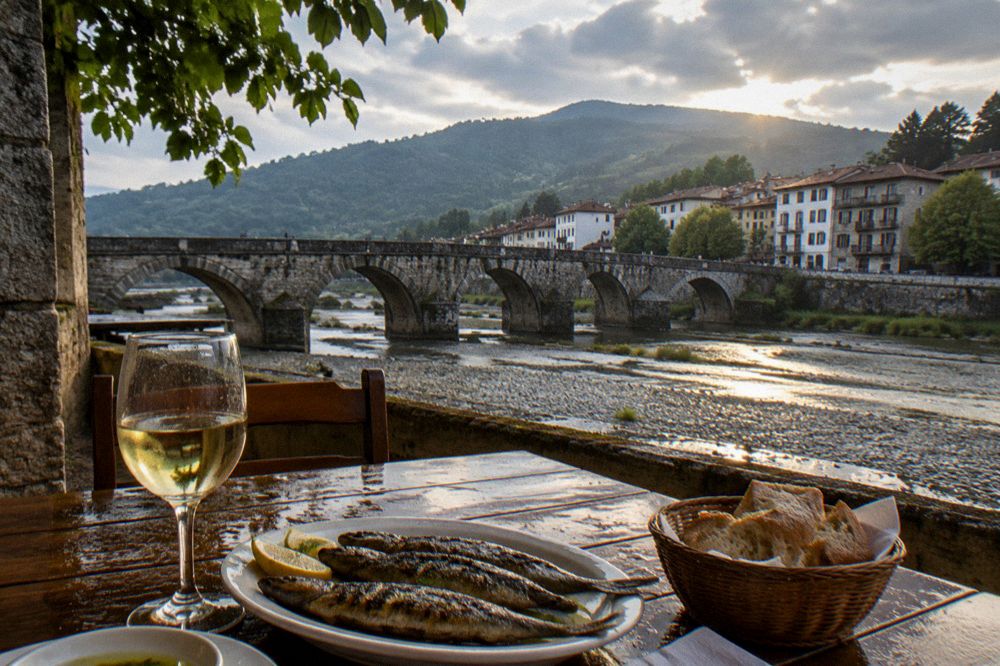
The Alto Minho's table is built on river fish, kid and lamb stews, caldo verde, and the corn bread the region bakes in wood ovens, and both towns serve it in small, family-run restaurants rather than destination dining rooms. In Ponte da Barca the eating clusters around the arcaded square; in Arcos it spreads along the Vez. Expect simple food, generous plates and a bill noticeably smaller than in Porto.
Two regional specifics are worth ordering by name. The Alto Minho raises its lambs and its kids on the mountain pastures, and the roasted versions appear on menus across both towns, usually with a day's notice at the smaller places. The rivers themselves supply the trout that turns up grilled with olive oil and garlic. Vinho verde, the young wine of the whole Minho, is the default pour everywhere, and the site's vinho verde guide covers what to expect in the glass; the Lima valley's own sub-region produces some of the lightest, most acidic styles.
For dessert, the region's answer to Braga's famous pudim abade de Priscos is a simpler repertoire: roasted chestnuts in winter, papos de anjo, and the sponge-and-egg sweets that every Minho pastry case keeps under glass. None of it needs a reservation. What does need planning is Sunday lunch, when the granary villages' restaurants fill with extended families from Porto and Viana, and the kitchen can run out of the roast by half past two.
Should You Visit These Towns On A Tour Or On Your Own?
On your own if you have a car and a full day, because the towns are easy, parking is simple and the pleasure is in wandering at your own pace; on a tour if you do not drive, because the regional bus cannot string Arcos, Ponte da Barca and the granary villages into one workable day. A private tour is the only format that comfortably covers the Alto Minho specifically, since the standard small-group Minho products run the Braga and Guimarães circuit instead.
Want the freedom to wander both towns at your own pace? Book a rental car here.
That is the honest trade-off. The site's tour roster contains thirteen products that start in Porto and are labelled "From Porto", and the full-day Minho small-group and private tours among them cover Braga and Guimarães, not the Lima valley. None of them should be described as starting in Braga.
For travellers who want structure without a car, the realistic plan is a hybrid: a morning bus to Arcos on Line 100, the afternoon on foot in the town, and the return by the same line, saving Ponte da Barca and the villages for a day with wheels. The what to do near Ponte de Lima page extends the same logic one valley over, and the is Ponte de Lima worth visiting answer covers the alternative if you only have one Alto Minho day.
| Product | Format | Area | Duration |
|---|---|---|---|
| Minho Tour Private (Braga And Guimarães) Full Day | Private, full day | Porto, Braga, Guimarães | Full day |
| Water Canyoning | Small group | Gerês | 3 hours |
| Braga Tuk Tuk City Tour | Vehicle tour | Braga | 30 minutes to 2 hours |
A tuk tuk circuit back in Braga is a fitting end to a day that began with a bus: it covers the city's own sights, from the Sé de Braga quarter's squares to the garden terraces, without adding another walk to legs that have already done a river path or two.
What Is The Best Time Of Year For This Day Trip?
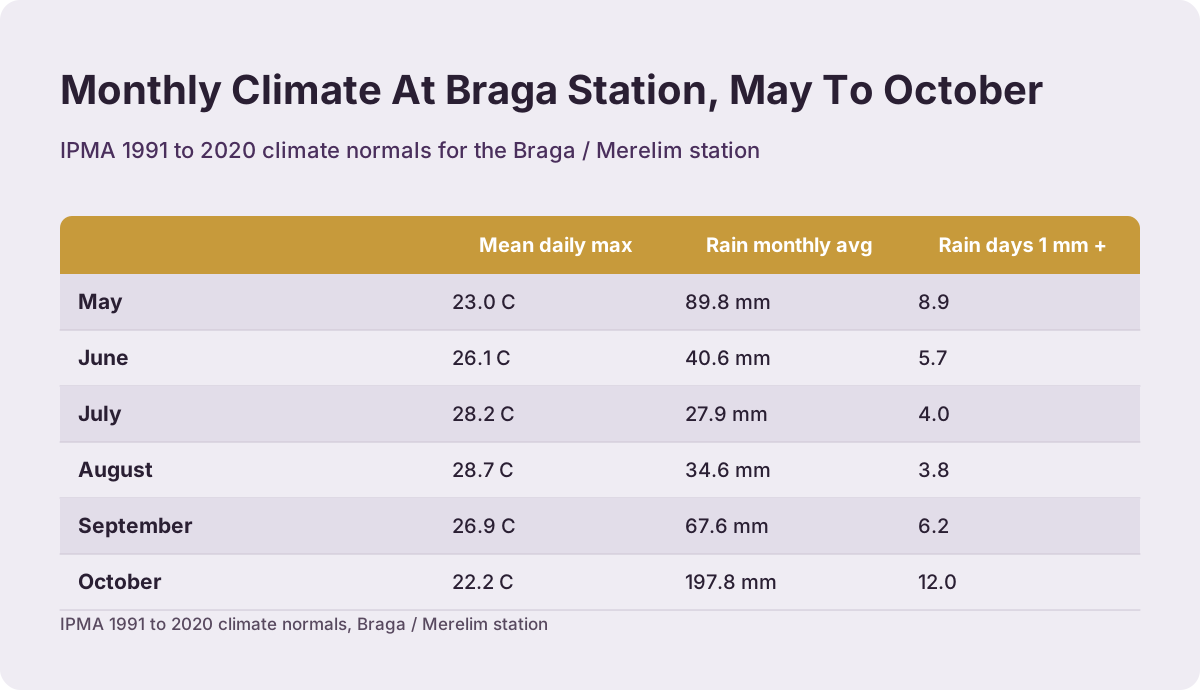
Late spring through early autumn is the usable window, with July the driest month on record at Braga's weather station and October the wettest, so aim for May to September if the plan includes a river beach or a park swim, and treat October to January as sightseeing-only weather, when twelve to thirteen days a month see a millimetre of rain or more.
Those numbers come from IPMA's 1991 to 2020 climate normals for the Braga / Merelim station, which measures the climate you leave behind rather than the climate you arrive at; the Alto Minho mountains are wetter still, and Peneda-Gerês exists because of that rain. The practical reading is simple. June to August gives the region its blue-sky reputation, with mean daily maxima of 26.1 to 28.7 C at the Braga station and the river beaches at their busiest. May and September are the connoisseur months: warm enough to swim on many days, green enough that the valley photographs well, and quiet enough that the granary villages feel like private discoveries.
| Month | Mean daily max at Braga station | Rain, monthly average | Rain days of 1 mm or more |
|---|---|---|---|
| May | 23.0 C | 89.8 mm | 8.9 |
| June | 26.1 C | 40.6 mm | 5.7 |
| July | 28.2 C | 27.9 mm | 4.0 |
| August | 28.7 C | 34.6 mm | 3.8 |
| September | 26.9 C | 67.6 mm | 6.2 |
| October | 22.2 C | 197.8 mm | 12.0 |
Winter has one genuine draw: the mountains keep their drama, and the towns keep their restaurants. But the days are short, the rain is frequent, and the park's higher roads and river paths lose their point. If your trip falls between November and March, the site's Braga on a rainy day page will serve you better than a Lima valley itinerary.
How Does This Trip Compare With Braga'S Other Day Trips?
Arcos de Valdevez and Ponte da Barca are the site's most outdoors-oriented day trip: they trade the monuments of Guimarães and the markets of Barcelos for rivers, mountains and national-park access, and they suit travellers on a second or third visit to the Minho better than first-timers, who should still start with Braga's own sights and Guimarães.
The ranking is personal, but the logic is not. A first Minho itinerary belongs to Braga itself, the Bom Jesus stairway and the city's churches, then Guimarães, reached by the routes in the Guimarães day trip guide. Ponte de Lima and Viana do Castelo come next for most travellers. The Arcos and Ponte da Barca pair is the connoisseur's day, the one you book when you have seen the cathedrals and want the region's landscape instead of its facades. The northern Portugal itinerary page places it in that wider sequence.
Common Questions About Arcos De Valdevez And Ponte Da Barca
Is there a train from Braga to Arcos de Valdevez?
No. Braga's railway runs south towards Porto, and no line serves the Lima valley or the Alto Minho. The verified public-transport link is AITC regional bus Line 100 from Braga bus station via Vila Verde; check the current timetable and fare with the operator before travelling.
Can you do Arcos de Valdevez and Ponte da Barca in one day?
Yes, with a car. The two towns are close neighbours on the Vez and Lima rivers, and a morning in Arcos followed by lunch and the afternoon in Ponte da Barca is a comfortable day. By public transport the pairing does not work well; the bus serves Arcos, and connections onward are thin.
Is Ponte da Barca inside Peneda-Gerês National Park?
The town itself sits just outside the park's western boundary, but it is one of the main gateways to it. The granary villages of Lindoso and Soajo, with their stone espigueiros, lie a short drive north and are the classic first stop inside the park's buffer landscape.
What is Arcos de Valdevez known for?
Its medieval bridge over the Vez river, its river beaches, its historic granite centre, and its position at the foot of the Peneda mountains. It is also a base for outdoor activities in the surrounding hills and river valleys.
Do you need a car for this day trip?
For the full two-town itinerary, yes, or a private tour. Without a car, the realistic plan is a bus day to Arcos de Valdevez on Line 100 and a walking visit there, saving Ponte da Barca and the villages for another trip.
Are there river beaches for swimming?
Yes, both towns have formal river beach areas, on the Vez at Arcos de Valdevez and on the Lima at Ponte da Barca, and the season runs through the warm months. For the mountain river beaches inside Peneda-Gerês, note that summer car access to the Mata de Albergaria section is limited and charged.
Whatever shape the day takes, end it the way the region intends: back in Braga with time to spare, or lingering in Ponte da Barca's arcaded square until the Lima goes gold and the mountains swallow the last of the light.