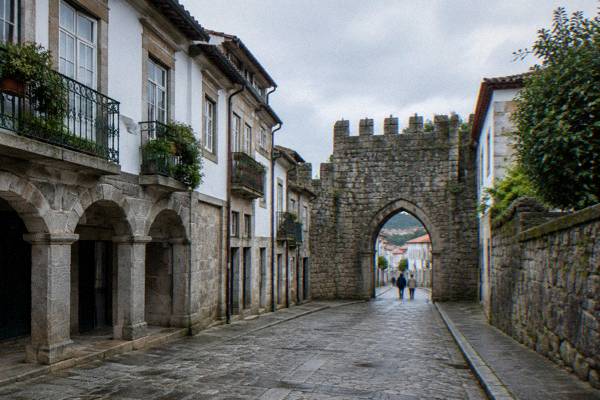
Northern Portugal Itinerary From Braga
Braga, the city in Portugal's Minho region, sits at the natural centre of the north: the sanctuaries are on its hills, Guimarães is a short bus ride away, and the national park and the coast ring the same valley.
Short answer
Base yourself in Braga for five to seven days: two days for the city and its sanctuaries, one for Guimarães, one for Peneda-Gerês, and one or two for the coastal loop through Viana do Castelo, Ponte de Lima and Barcelos.
Braga, the city in Portugal's Minho region, is the most practical base for a northern Portugal itinerary that almost nobody uses. Most visitors day-trip in from Porto, see two streets and leave, which means they sleep in the wrong place: the sanctuaries of Bom Jesus do Monte and Sameiro stand on Braga's own hills, Guimarães is a short regional bus ride away, Peneda-Gerês National Park is reached by bus from Braga's own station, and the coastal towns of the Minho fan out westward from the same valley. This itinerary starts and ends in Braga and works outward, and every transport fact, ticket price and timing below comes from the operators' own published material.
How Many Days Do You Need For A Northern Portugal Itinerary From Braga?
Five days is the honest minimum for Braga plus the three big excursions, and seven days lets you run the full loop without rushing. Two days cover Braga itself and its hill sanctuaries, one day goes to Guimarães, one to Peneda-Gerês National Park, and a fifth covers the coastal string of Viana do Castelo or Ponte de Lima. With seven, you add Barcelos, a second coast day, or a slower pace through the city.
The reason the day count works this way is transport. There is no direct train from Braga to Guimarães, so each excursion is a bus or a guided day trip rather than a quick hop, and each destination genuinely fills a day. Cutting the trip to three days means choosing between the park and the coast, and both are half the reason to come north at all.
If buses between the stops feel limiting, book a rental car here.
| Days | What fits | Best for |
|---|---|---|
| 3 | Braga, Bom Jesus, Guimarães | First-time visitors on a tight clock |
| 5 | Braga, Guimarães, Gerês, one coast town | The classic northern loop |
| 7 | Everything above plus Ponte de Lima, Barcelos and a rest day | Travellers who want the Minho properly |
If you are building the trip from Porto rather than sleeping in Braga, read the Porto to Braga connection first, then decide whether the one day in Braga version is enough for you. For most people it is not, which is the argument for this itinerary.
What Is The Best Route For A Northern Portugal Itinerary Starting In Braga?
The best route runs Braga first, then Guimarães east, then Peneda-Gerês north, then the coast west, returning to Braga or continuing to Porto. Doing the city first matters because the sanctuaries need morning light and the regional buses to Guimarães and Gerês both leave from Braga's bus station, so every later day starts from the same point. The loop can be run in either direction, but city first avoids backtracking.
Day one and day two stay inside Braga: the historic centre, the Sé de Braga, and the hill sanctuaries. Day three crosses to Guimarães on AITC line 101 from Braga's bus station. Day four heads north on AITC line 201 toward Caldas do Gerês and the national park. Day five and, if you have them, days six and seven push west to the coast: Viana do Castelo, Ponte de Lima on AITC line 105, and Barcelos on its market day.
| Day | Base | Headline stops | Getting there |
|---|---|---|---|
| 1 | Braga | Historic centre, Sé de Braga, Santa Bárbara Garden | On foot |
| 2 | Braga | Bom Jesus do Monte, Sameiro, Tibães | TUB Line 2 and regional bus |
| 3 | Braga | Guimarães castle and historic centre | AITC line 101, Braga bus station |
| 4 | Braga | Peneda-Gerês: Caldas do Gerês, waterfalls | AITC line 201, Braga bus station |
| 5 | Braga or Viana | Viana do Castelo and the coast | Regional bus from Braga |
| 6 | Braga | Ponte de Lima, Barcelos | AITC line 105, train via Nine |
| 7 | Porto or home | Buffer, market day, or departure | Train or coach |
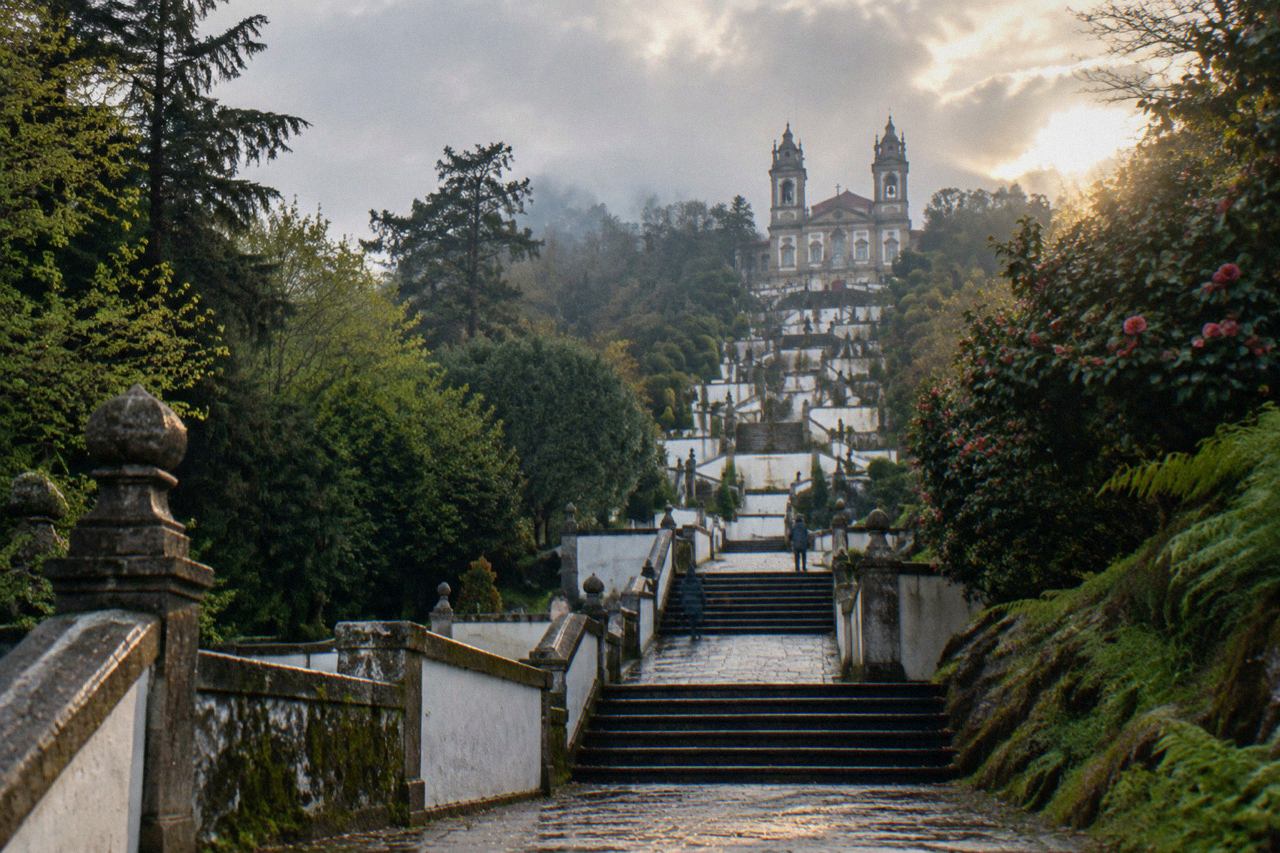
Two practical notes shape the week. Bom Jesus do Monte is a serious half-day, not a photo stop, because the stairway is 566 steps by the Confraria's own count and the funicular has been out of service since 26 September 2026, with a replacement shuttle running every day between 09:00 and 20:00 from the Portico where TUB Line 2 ends. And the Braga and Guimarães in one day pairing is possible, but it shortchanges both towns; splitting them across two days is the better plan.
A guided first morning in Braga is a genuinely useful itinerary tool, not a luxury: it fixes your orientation in the historic centre before you strike out for the hills and the regional buses. The trio above covers three different ways to do it, from a tuk tuk sweep to a flexible on-foot introduction.
What Should You See In Braga Itself On Days One And Two?
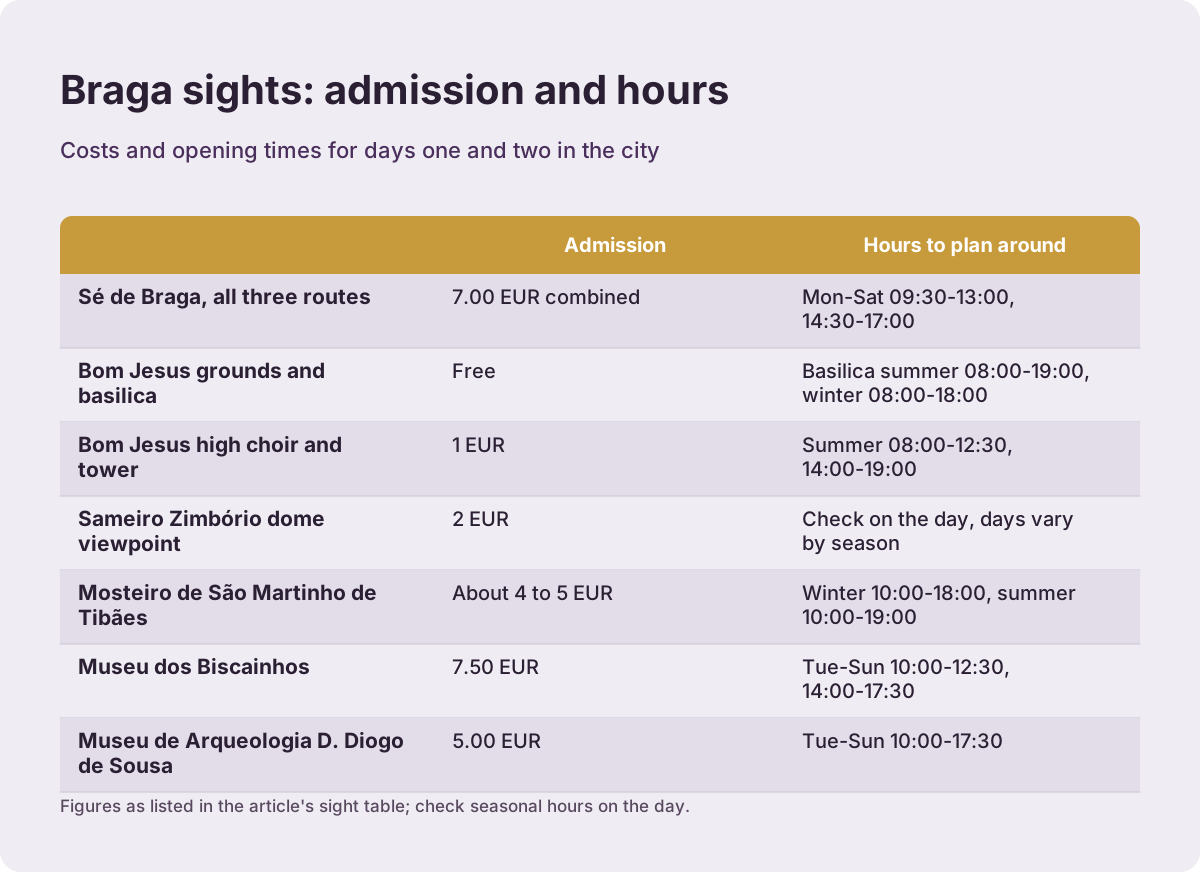
Day one belongs to the historic centre: the Sé de Braga, the Rua do Souto pedestrian spine, Arco da Porta Nova and the Santa Bárbara Garden. Day two goes uphill to Bom Jesus do Monte, with Sameiro and the Tibães monastery as the afternoon options. The cathedral's three visit routes cost 3.00 EUR each, or 7.00 EUR combined for all three, and Bom Jesus's grounds and basilica are free to enter.
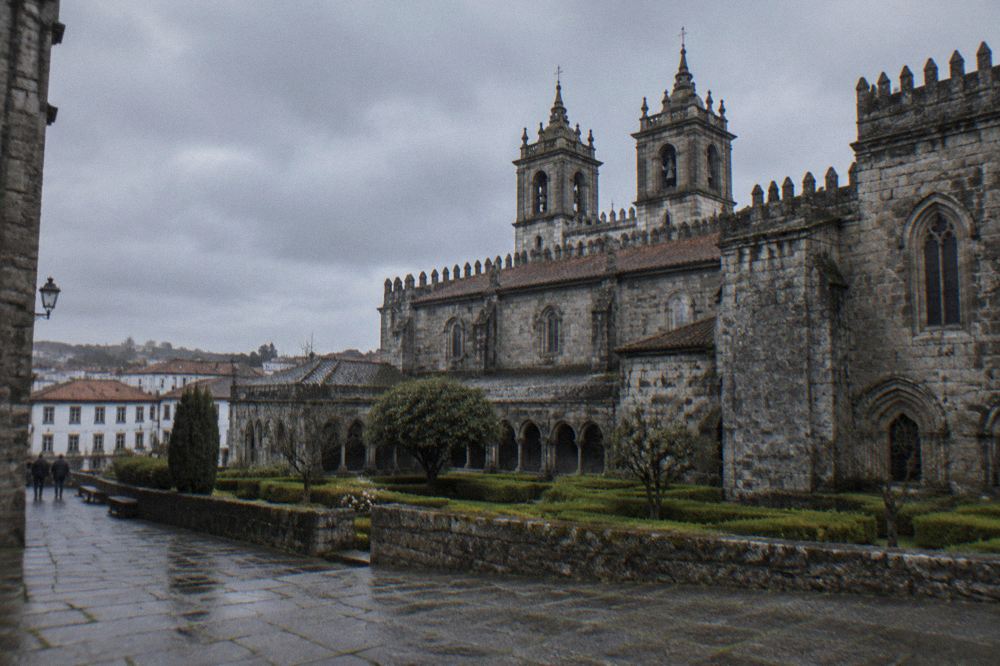
Start day one at the cathedral. The Sé de Braga sells three separate visit routes, the Treasury-Museum, the funerary chapels and high choir, and the cathedral itself, at 3.00 EUR each, with any two at 6.00 EUR and all three at 7.00 EUR; tickets are bought at the reception point in the cloister, reached from Rua do Cabido or the side entrance on Rua D. Diogo de Sousa. Visit Braga lists tourist visits Monday to Saturday 09:30 to 13:00 and 14:30 to 17:00, with the building itself opening earlier for worship. From there the whole centre unwinds on foot: the historic centre is compact enough that no transport is needed until you head for the hills.
Day two is the sanctuary day. TUB Line 2 runs to the Portico at the foot of the Bom Jesus stairway, and the Confraria's information page lists no admission charge for the sanctuary, the grounds or the basilica; the priced extras are the high choir and bell tower at 1 EUR, rowing boats on the lake at 3 EUR per person per 15 minutes, and parking at 1 EUR for cars. Check the operator's notice before you go, because the funicular's stoppage has no published end date and the replacement shuttle is the current way up for anyone not climbing. The Bom Jesus do Monte guide carries the full detail, and the Braga Cathedral page does the same for the Sé.
| Sight | Admission | Hours to plan around |
|---|---|---|
| Sé de Braga, all three routes | 7.00 EUR combined | Mon-Sat 09:30-13:00, 14:30-17:00 |
| Bom Jesus grounds and basilica | Free | Basilica summer 08:00-19:00, winter 08:00-18:00 |
| Bom Jesus high choir and tower | 1 EUR | Summer 08:00-12:30, 14:00-19:00 |
| Santuário do Sameiro precinct | Free | Open 24 hours |
| Sameiro Zimbório dome viewpoint | 2 EUR | Check on the day, days vary by season |
| Mosteiro de São Martinho de Tibães | About 4 to 5 EUR | Winter 10:00-18:00, summer 10:00-19:00 |
| Museu dos Biscainhos | 7.50 EUR | Tue-Sun 10:00-12:30, 14:00-17:30 |
| Museu de Arqueologia D. Diogo de Sousa | 5.00 EUR | Tue-Sun 10:00-17:30 |
The museums are the rainy-day fallback, and Braga has enough of them that a wet afternoon is never lost; the Braga on a rainy day itinerary maps them out. If you are travelling with children, the Braga with kids version of day two swaps Tibães for the lake boats and the gardens.
If two full self-guided days in the city feels like too much planning, a tuk tuk tour compresses the centre into a single morning or afternoon, from 22.66 USD per person, rated 4.8 from 179 reviews, with durations from 30 minutes to two hours. That leaves the rest of day one free for the cathedral and a long lunch, and day two entirely for the hills.
How Do You Get From Braga To Guimarães, Gerês And The Coast?
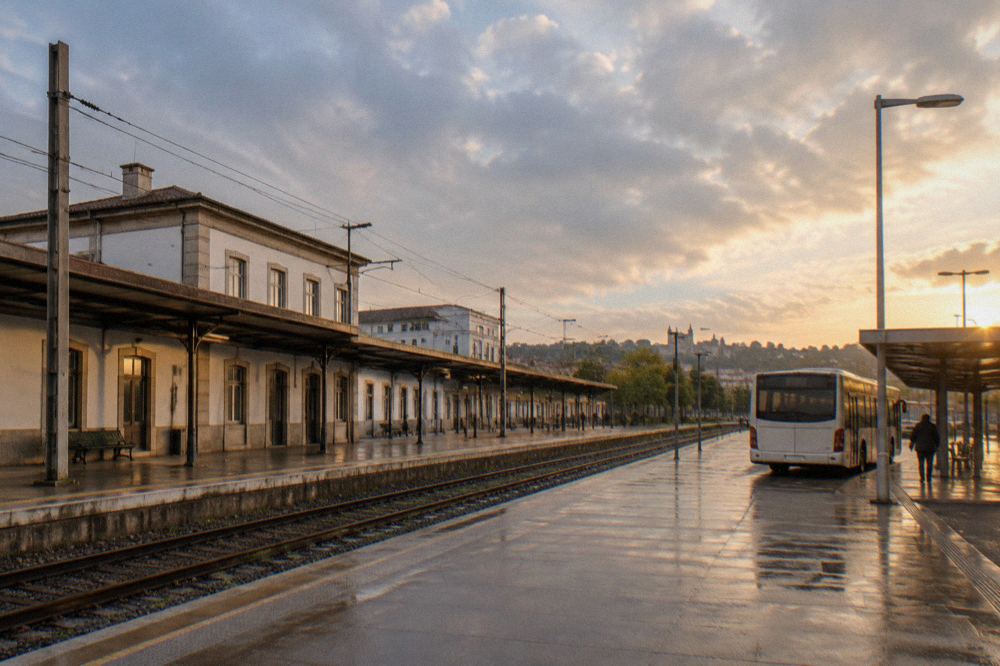
Braga's bus station is the hub for every excursion in this itinerary: AITC line 101 runs to Guimarães, line 201 to Caldas do Gerês in the national park, line 105 to Ponte de Lima, and lines 106 and 107 to Póvoa de Varzim and the coast. There is no direct train from Braga to Guimarães, and Barcelos by rail requires a change at Nine. Inside Braga, a TUB tourist ticket covers the whole urban network for 3.35 EUR a day.
The intercity lines are operated by the Autoridade Intermunicipal de Transportes do Cávado, with timetable PDFs published per line and several re-issued in 2026. What the published material does not give, and what this page will not guess, are the fares and journey times for those regional routes: check the timetable for your travel date before committing to a tight connection. For the park, AITC reinforced its regional offer in 2026 with additional services on the Gerês lines.
| Journey | Service | Notes |
|---|---|---|
| Braga to Guimarães | AITC line 101, via the A11 | No direct train exists on this corridor |
| Braga to Caldas do Gerês | AITC line 201 | The park access line; check seasonal timetable |
| Braga to Ponte de Lima | AITC line 105 | Coast and Lima valley |
| Braga to Póvoa de Varzim | AITC lines 106 and 107 | The beach lines via Esposende |
| Braga to Barcelos | Train with a change at Nine | No direct rail link |
| Braga centre to Bom Jesus | TUB Line 2 to the Portico | Shuttle onward while the funicular is stopped |
| Braga to Porto | CP urban train from Braga station | Priced by zone; allow a little over an hour |
| Braga to Lisbon | Alfa Pendular direct | 38.50 EUR full single in Turística class |
Inside the city, the 2026 TUB tariff, in force since 21 February 2026, prices a single on-board ticket at 1.55 EUR for one zone and 2.00 EUR for two, dropping to 0.75 EUR and 1.50 EUR pre-bought or digital. The tourist ticket is the one worth buying for a sightseeing day: 3.35 EUR for one day, 6.05 EUR for two, 8.05 EUR for three, covering the whole network including Line 2 toward Bom Jesus. The getting around Braga guide has the full fare table.
What Does A Day In Guimarães Look Like From Braga?
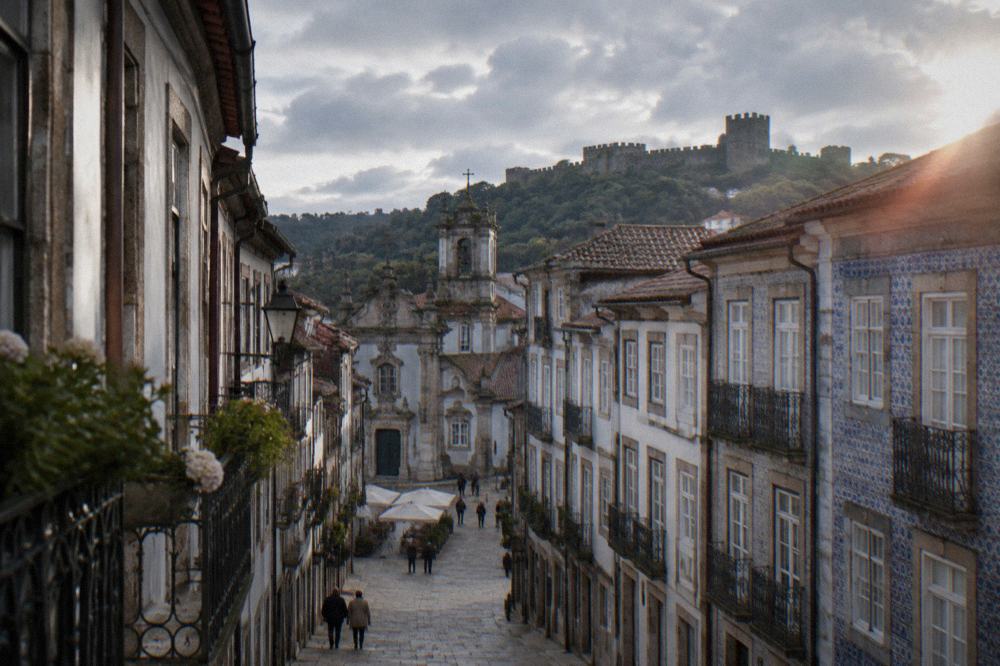
A day in Guimarães means a morning bus on AITC line 101 from Braga's bus station, the castle and the ducal palace before lunch, and the UNESCO-listed historic centre through the afternoon, returning to Braga in the evening. Guimarães is the one destination in this itinerary that pairs badly with anything else, because its two monument clusters sit at opposite ends of the town and both deserve unhurried time.
The line 101 service runs via the A11 motorway, which keeps the transfer short, but the timetable should be read for your own date because this page does not publish a fare or a duration for the route. Once there, the town divides cleanly: the castle and palace on the hill, and the square-grid centre below. The full Guimarães day-trip guide covers the walking order, the tickets and where the two clusters sit relative to each other.
One strong pairing, if you would rather not manage buses at all, is a guided Braga and Guimarães in one day tour from Porto, which handles both towns, lunch and tickets in a single vehicle. The trade-off is pace: you see both, properly in neither. If your itinerary has seven days, keep Guimarães as its own day and sleep in Braga. Other pages covering the same trip are gathered on Braga Travel Guide.
Is Peneda-Gerês National Park Worth A Day Of Your Northern Portugal Itinerary?
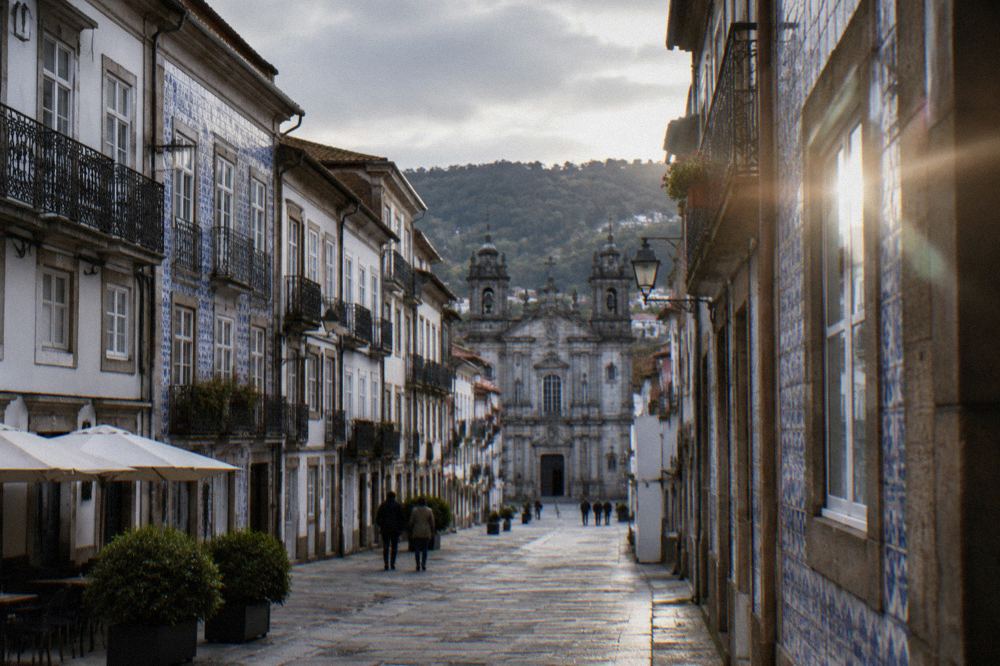
Yes, if your itinerary has five days or more, because Peneda-Gerês is the only national park in Portugal and a single well-chosen day from Braga reaches its southern gateway at Caldas do Gerês. AITC line 201 runs there from Braga's bus station, park entry itself is free, and the village, the reservoir and the waterfall walks can fill one long day. What one day cannot do is the northern sector, which needs an overnight or a guided tour.
The practical day looks like this: an early line 201 bus to Caldas do Gerês, the village and the lakeshore on foot, and one of the marked waterfall routes in the afternoon. In summer, car access to the Mata de Albergaria section is limited and charged, which matters less to bus arrivals, but the same limits mean the popular spots are busiest in July and August. The Peneda-Gerês National Park guide carries the access detail and the seasonal restrictions.
If hiking is the point of your trip rather than a single outing, the honest move is to give the park two days and drop one coast town, not to stretch one day across both sectors.
What About The Coastal Loop: Viana Do Castelo, Ponte De Lima And Barcelos?
The Minho coast loop strings Viana do Castelo, Ponte de Lima and Barcelos into one or two days from Braga, using AITC line 105 to Ponte de Lima, regional buses to Viana, and the train to Barcelos with a change at Nine. Each town is small enough for a half-day, and the strongest single choice is Viana do Castelo for its riverside setting and the hilltop Santa Luzia sanctuary overlooking the Atlantic.
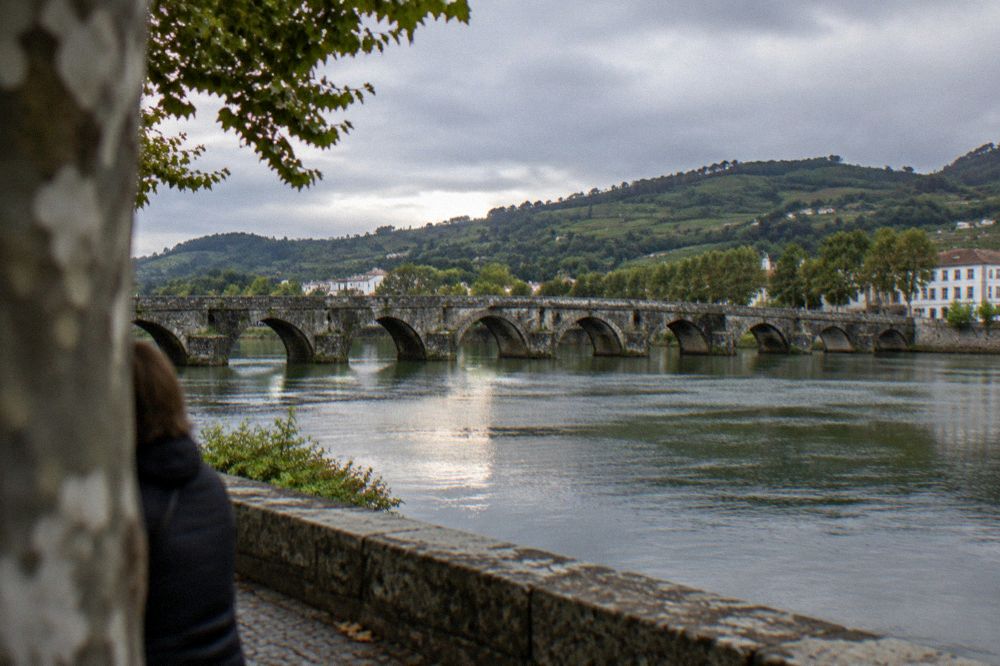
Ponte de Lima is the oldest chartered town in the pattern of this itinerary's inland stops, sitting on the Lima river with a medieval bridge and a long riverside walk; line 105 serves it directly from Braga. Barcelos is best timed to its Thursday market, a recurring event confirmed in the municipal calendar, though the rail journey there requires the change at Nine, so check the connection before promising yourself an early start. The Viana do Castelo, Ponte de Lima and Barcelos guides each carry the town-level detail.
| Coast stop | Travel from Braga | What the stop is for |
|---|---|---|
| Viana do Castelo | Regional bus | Santa Luzia sanctuary, riverside old town |
| Ponte de Lima | AITC line 105 | Medieval bridge, riverside walks |
| Barcelos | Train via Nine | Thursday market, rooster legend |
| Póvoa de Varzim | AITC lines 106 and 107 | The nearest beach day |
| Esposende | AITC line 107 | Coastal esplanade and river mouth |
The coast is also the itinerary's best bad-weather insurance in reverse: the maritime towns are at their best in the shoulder months when the sea light is sharp, and the beach stops are the ones to cut first if rain closes in, swapping them for Braga's museums.
When Is The Best Time Of Year To Run This Northern Portugal Itinerary?
May, June and September are the best months for this itinerary: IPMA's 1991 to 2020 normals for the Braga / Merelim station show July and August as the driest and warmest months, but May and September still average mean maxima of 23 C and 26.9 C with far fewer crowds, while October is the wettest month at 197.8 mm of rain. Winter is possible but the hill sanctuaries and the park lose appeal in December and January, which average 190.3 mm and 179.5 mm.
The numbers deserve reading rather than skimming. October, not November or the winter months, is the wettest month on average at this station, and December and January follow close behind; rain days of one millimetre or more run 12 to 13 a month from October through January. July is the driest at 27.9 mm, with August at 34.6 mm, and those two months carry the heat: days at or above 30 C average 9.8 and 10.4 respectively. September is the sleeper pick, warmer at the top end than June and only moderately wetter.
| Month | Mean max C | Mean min C | Rain mm | Days 1mm+ rain |
|---|---|---|---|---|
| May | 23.0 | 10.4 | 89.8 | 8.9 |
| June | 26.1 | 13.2 | 40.6 | 5.7 |
| July | 28.2 | 14.3 | 27.9 | 4.0 |
| August | 28.7 | 14.0 | 34.6 | 3.8 |
| September | 26.9 | 12.4 | 67.6 | 6.2 |
| October | 22.2 | 10.1 | 197.8 | 12.0 |
Event timing can outweigh weather. Holy Week in Braga, the processions of Semana Santa, fell on 29 March to 5 April in 2026 and is registered in the National Inventory of Intangible Cultural Heritage; the São João festivities ran 17 to 24 June 2026, peaking on the night of 23 June into the 24 June municipal holiday; Braga Romana fell in late May; and Noite Branca opened the first weekend of September. The 2027 dates were not announced, so check the municipal pages before booking around any of them.
What Will A Northern Portugal Itinerary From Braga Cost?
Plan on roughly 60 to 110 EUR per person per day mid-range, before accommodation: Braga's paid sights are cheap, with the cathedral at 7.00 EUR combined and the museums at 2 to 7.50 EUR, the TUB tourist ticket at 3.35 EUR a day, and the municipal tourist tax adding 1.55 EUR per person per night for up to four nights. The big variables are the regional bus fares, not published here, and meals, which cost less in Braga than in Porto.
| Item | Cost | Notes |
|---|---|---|
| Sé de Braga, all three routes | 7.00 EUR | Any two routes 6.00 EUR |
| Bom Jesus grounds and basilica | Free | Choir and tower 1 EUR, boats 3 EUR per person per 15 minutes |
| TUB tourist ticket | 3.35 EUR per day | Two days 6.05 EUR, three days 8.05 EUR |
| Municipal museums | 2.00 to 7.50 EUR | Pio XII 4 EUR, D. Diogo de Sousa 5 EUR, Biscainhos 7.50 EUR |
| Tibães monastery | About 4 to 5 EUR | Reduced rate for students and over 65s |
| Tourist tax | 1.55 EUR per person per night | Up to 4 nights, all year |
| Theatro Circo guided tour | 3.50 EUR | Scheduled dates only, 45 minutes |
| Stadium tour at Estádio Municipal | 4 to 6 EUR | Self-guided 4 EUR, classic guided 6 EUR |
Tipping follows the national custom rather than any local rule: Turismo de Portugal's own guidance says service is included in restaurant bills, with an additional tip of about 5 to 10 per cent customary, and the same for taxi drivers or rounding up to the nearest euro. There is no city pass to buy, so budget attraction by attraction; the TUB tourist ticket is the only multi-use product genuinely on sale.
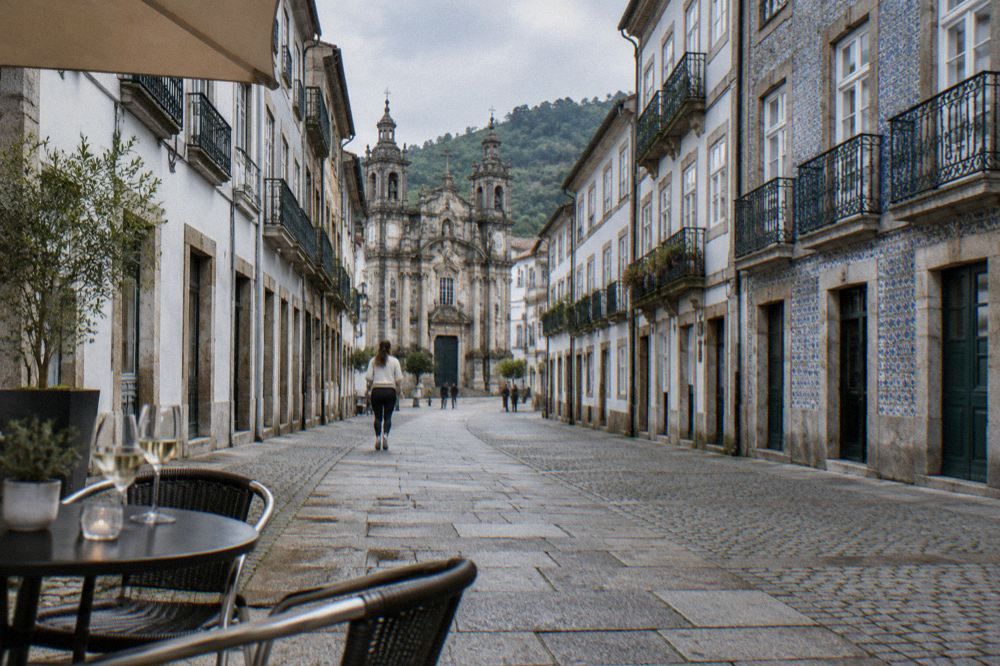
Guided tours slot into this budget in tiers. A flexible walking tour of the historic centre runs from 11.33 USD per person, rated 4.7 from 62 reviews over three hours, and the Portuguese Rome walking tour from 35.35 USD, rated 4.9 from 68 reviews over an hour and a half; at the top end, private full-day versions of the Minho circuit cost several times that. If one guided day matters most to you, spend it on the park, where self-guiding is hardest, and walk Braga and Guimarães on your own.
Between the two, the flexible walking tour earns its place in the trio for a specific reason: it runs three hours at 11.33 USD per person and adapts its route to what you have already seen, which suits day one of an itinerary better than a fixed script. The tuk tuk sweep and the Portuguese Rome walk cover the same ground faster, so the choice is really about how much of your first day you want to spend on orientation.
Common Questions About A Northern Portugal Itinerary From Braga
Can you do this Northern Portugal itinerary without a car?
Yes, with caveats. Braga, Guimarães, Ponte de Lima and the Póvoa de Varzim beaches all have direct buses from Braga, and the city itself is walkable with a TUB tourist ticket for the sanctuary hills. The constraint is the national park: line 201 reaches Caldas do Gerês, but the park's northern sector and the remote trailheads are far easier with a guided tour or a rental car.
Is it better to stay in Braga or Porto for a Northern Portugal itinerary?
Braga, if the itinerary is the Minho: every regional bus in this plan leaves from Braga's own station, and the sanctuaries are on the city's doorstep. Porto is the better base if your trip is mostly the Douro or the coast south of the Minho, using Braga as a day trip; the Braga day trip from Porto page covers that version.
How do I get from Porto Airport to Braga to start the itinerary?
Getbus runs a direct, non-stop coach between Porto Airport and Braga bus station from 9.00 EUR, taking about 45 minutes, with the operator's page listing 16 departures a day each way. The CP urban train from Porto is an alternative once you are in the city centre, priced by zone, allowing a little over an hour from São Bento.
Can you combine Braga and Guimarães in one day?
You can, and many visitors do, but both towns lose their afternoon. If one day is all you have, a guided combination tour that handles transport, lunch and tickets is the least stressful version, and the dedicated pairing itinerary on this site walks through the trade-off.
Do I need to book anything in advance for this itinerary?
Only two things genuinely benefit from advance booking: guided tours, whose small groups fill first, and the Alfa Pendular if your itinerary ends with a long-distance rail leg, since that service requires a reservation. Sightseeing tickets in Braga, including the cathedral's three routes, are bought on the day at the cloister reception, and the TUB tourist ticket is bought on the network.
What should I cut if I only have three days?
Cut the coast and the park, keep Braga and Guimarães, and treat the trip as a first taste. The 2 days in Braga plan plus a Guimarães day is a genuinely complete short trip, and the park and the coast will still be there next time.
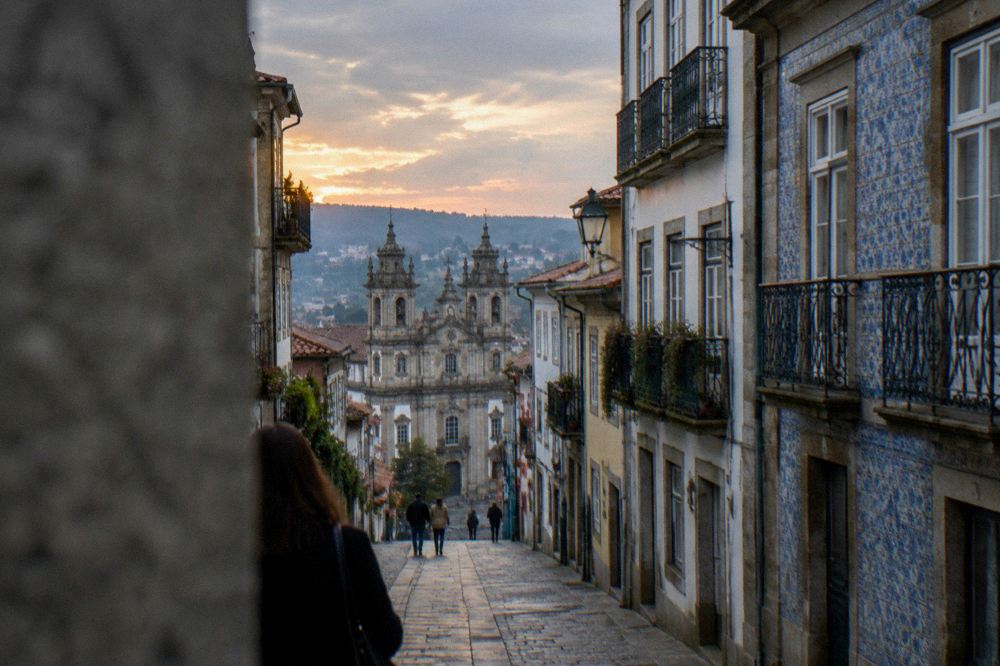
One last planning note that closes the loop: this itinerary works because Braga is a real city with a real transport hub, not a museum piece, so treat the things to do in Braga list as your base layer and build the excursions outward from it. Whether you run the five-day version or stretch to seven, the structure holds: city first, hills second, then Guimarães, the park and the coast, each a day at a time from the same front door.