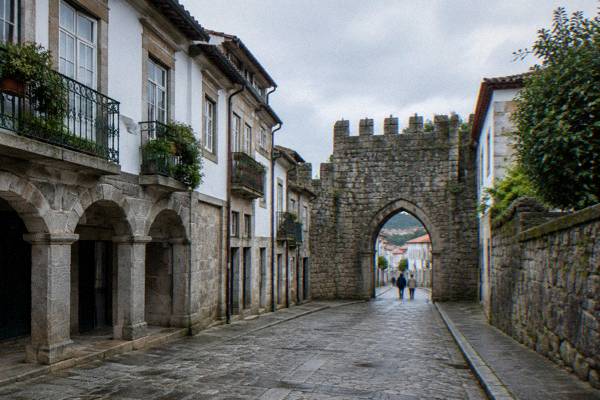
Is Barcelos, Portugal Worth Visiting?
A clear answer on whether Barcelos, the rooster town in Portugal's Braga district, is worth a day of your Minho trip, with what to see, how to get there from Braga, and how it compares with Guimarães.
Barcelos is a market town on the north bank of the Rio Cávado, inside the district of Braga in northern Portugal, and it answers a very specific travel question: whether the Minho region holds more than the two big names, Braga and Guimarães. It does. Barcelos is the home of the galo de Barcelos, the rooster that became the unofficial symbol of all Portugal, and it hosts one of the country's largest traditional weekly markets. For anyone already staying in Braga city or touring the Minho, it earns a half day with ease, and the question below gets a fuller answer than a yes or a no.
Is Barcelos, Portugal Worth Visiting?
Yes, if you are already in the Minho: Barcelos is worth a half-day visit built around its Thursday market, its rooster legend and its medieval riverside centre, and it is one of the easiest add-ons to a Braga or Porto itinerary. It is not worth a long detour from Lisbon or the Algarve on its own, because its sights are compact and its draw is atmosphere rather than monuments.
The honest framing matters. Barcelos does not have a Bom Jesus do Monte, a ducal palace or a UNESCO inscription. What it has is scale of a different kind: a market that fills the town's squares and riverside fields every Thursday, a legend printed on every Portuguese souvenir shelf, and a small medieval core that you can walk across in a morning. The municipality's own tourism identity leans on the rooster, and the rooster's story, a pilgrim saved by a cockerel's crow at a banquet, is told on ceramics sold across the country. The Thursday market is the confirmed anchor: it is a recurring event, running week after week, and it is the single best reason to time a visit.
Compare it with the alternatives before you commit. Guimarães carries the weight of national history, Braga the weight of religion, and Ponte de Lima the postcard river crossing. Barcelos is the one you visit for the market, the crafts and the ordinary working life of a Minho town, which is exactly why it rewards a Thursday and disappoints on a wet Tuesday in February when nothing is on. If your dates are fixed away from Thursday, weigh it against the other Minho stops on what to do near Porto.
What Is Barcelos Known For?
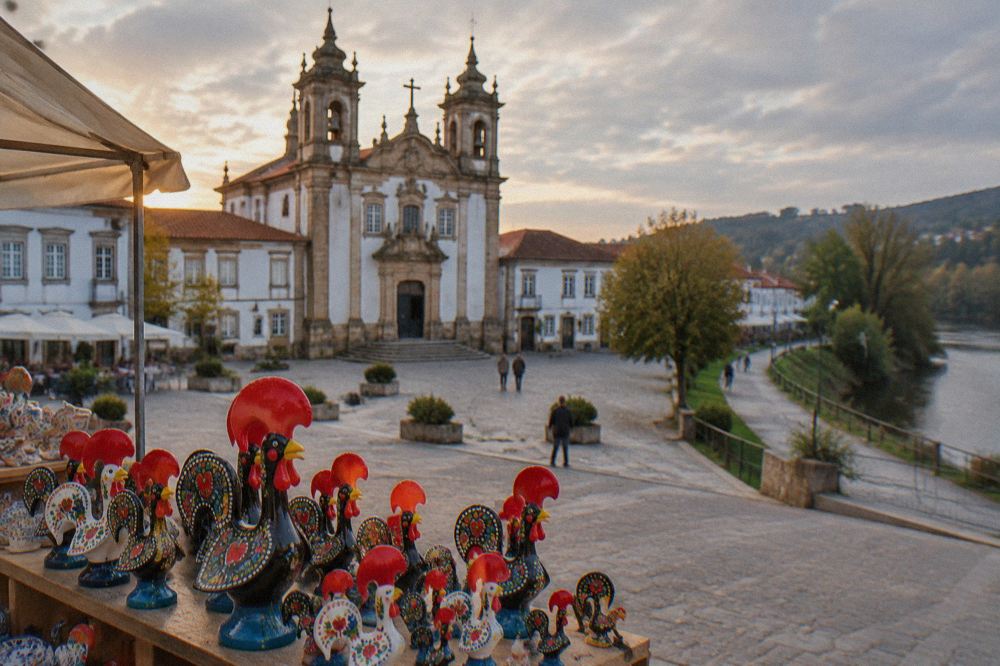
Barcelos is known for three things: the galo de Barcelos, the ceramic rooster that became a national symbol of Portugal, the Thursday market, one of the largest traditional weekly markets in the country, and a medieval core on the Rio Cávado that includes the old stone bridge and the Paço dos Condes. Rooster imagery appears across the town, from the giant rooster statue to painted tiles in the streets.
The legend behind the rooster deserves its own sentence or two. In the common telling, a pilgrim passing through Barcelos on the way to Santiago de Compostela was accused of theft and condemned to hang; he pointed to a roasted cockerel on the judge's table and said it would crow to prove his innocence, and it did. The town adopted the bird, and Portugal eventually adopted it too. The giant rooster statue near the market field is the modern landmark, and the story ties Barcelos into the Camino de Santiago route from Braga, which passes through the Minho on its way north.
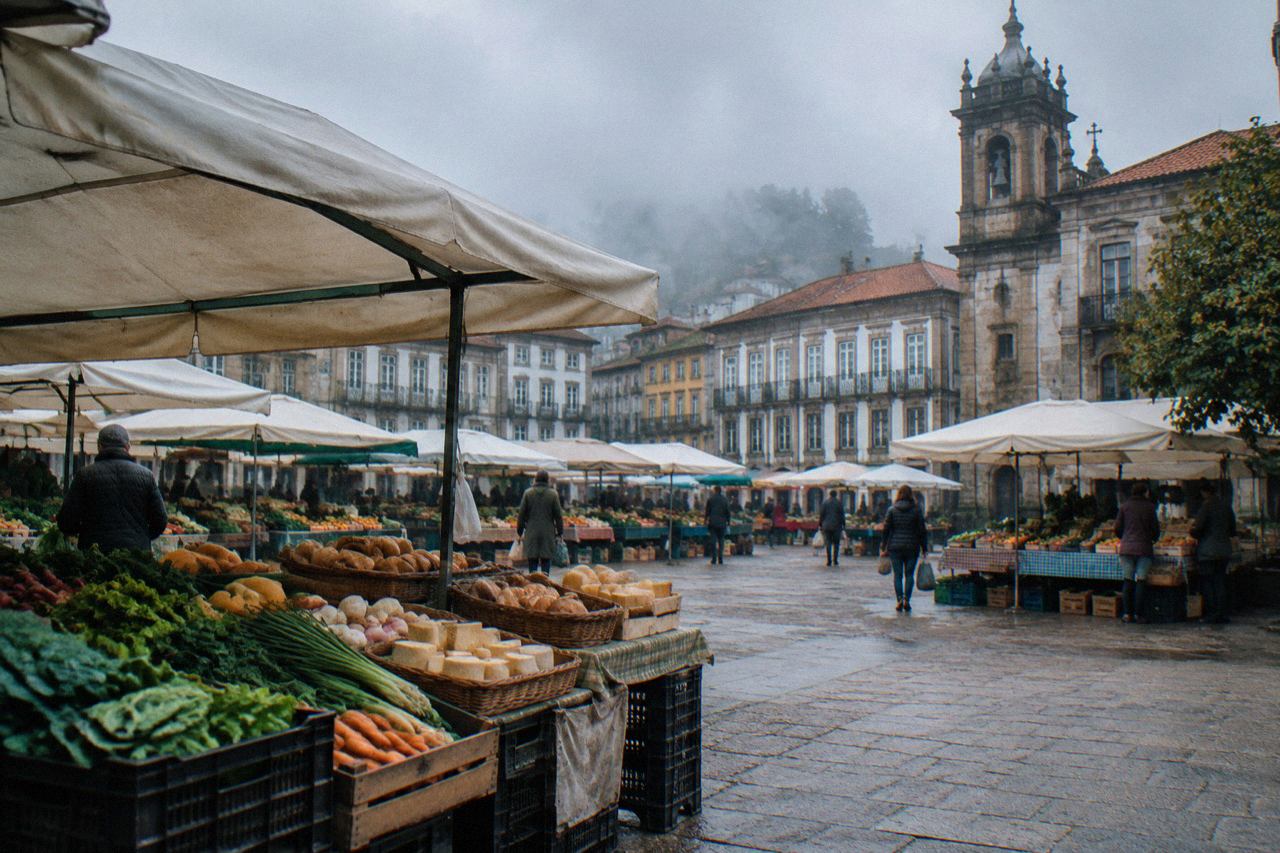
The Thursday market is the living half of the identity. Stalls spread across the Campo da República and the surrounding streets, selling everything from live poultry and farm produce to kitchenware, clothing and regional crafts, and the market draws sellers and buyers from across the region. It is a working market first and a sight second, which is the point: arrive early, watch it trade, and it is one of the more genuine rural spectacles in northern Portugal. The food angle is covered in detail on what Barcelos food is known for.
How Do You Get From Braga To Barcelos?
There is no direct train from Braga to Barcelos: the rail route requires a change of trains at Nine, the junction station on the Minho line, and the whole trip is a short regional hop on each leg. Barcelos also sits on the main road corridor between Braga and the Atlantic coast, so it is a straightforward drive or taxi ride for anyone with a car.
Ready to plan the short rail hop with the change at Nine? Book a train ticket here.
The change at Nine is the detail that catches people out. Nine is the interchange where the Braga branch meets the Minho main line, and Barcelos is a stop on that main line heading downstream towards Viana do Castelo. Both legs are regional trains, so the fare is modest and the service is the everyday kind rather than the reserved long-distance kind. Check the connection at Nine when you plan the day, because a short wait there is normal. The full picture of arriving in the region by rail, including the Alfa Pendular and urban services into Braga, is on the Braga train station guide.
If you are touring without a timetable, the road is the easier option. Barcelos lies between Braga and the coast, which makes it a natural pairing with an Esposende or Póvoa de Varzim beach run, and the AITC regional network serves the corridor with lines that continue towards the seaside towns. The verified line numbers from Braga bus station include line 107 to Esposende and Póvoa de Varzim and line 106 to Póvoa de Varzim, both passing through the Barcelos direction; fares and journey times for regional buses are not published in a form this site can quote, so check the operator's timetable before you go. Day-trip logistics for the town itself are collected on the Barcelos day trip page.
Is The Barcelos Thursday Market Worth The Trip?
Yes, the Thursday market is the reason to visit Barcelos at all, and it is worth structuring your Minho dates around it. It is one of the largest traditional weekly markets in Portugal, filling the Campo da República and the surrounding streets with produce, livestock, crafts and clothing stalls, and it turns a quiet town into a regional event for one morning a week.
Timing decides everything. The market is at full swing early, and by early afternoon the stalls begin to pack down, so a morning arrival is the only sensible plan. Combine it with a walk over the old bridge, a look inside the igreja matrix and a long lunch, and Barcelos delivers a full and satisfying day at a fraction of the effort a city visit takes. The market is also the best place to see the town's craft tradition in one spot, from ceramics to woven goods, and the rooster appears in every stall's stock in one form or another.
The honest caveat is weather and season. An open-air market in the Minho in October or November means rain probability: IPMA's 1991 to 2020 normals for the Braga / Merelim station show October averaging 197.8 mm of rain and December 190.3 mm, with 12 to 13 rain days a month from October through January. A market morning in that window can be sodden. The trade-off is that the summer months, when the weather is driest, are also when the town is hottest and most crowded. If the forecast is bad, the indoor sights and café life of Braga city itself are the better bet, and the rainy day guide for Braga covers them.
Barcelos Or Guimarães: Which Minho Day Trip Should You Take?
Take Guimarães if you want history and monuments, and take Barcelos if you want markets and everyday Minho life. Guimarães is the cradle-of-Portugal town with a ducal palace and a castle, reached from Braga by AITC bus line 101 with no direct train alternative, while Barcelos is the rooster and market town reached by rail with a change at Nine. They serve different moods.
| Barcelos | Guimarães | |
|---|---|---|
| Best day of the week | Thursday, market day | Any day |
| Signature symbol | The galo de Barcelos rooster | The castle and palace of Portugal's founding |
| Getting there from Braga | Train with a change at Nine | AITC bus line 101, no direct train |
| What it is known for | Weekly market, ceramics, crafts | Medieval core, ducal palace, national history |
| Best for | Atmosphere, shopping, a slow morning | Sights, architecture, a full sightseeing day |
The comparison is not really a contest, because most travellers staying in Braga for two or three days can do both. Guimarães is the heavyweight sightseeing day; Barcelos is the lighter, cheaper, more local day. If you only have one day free and it is not a Thursday, Guimarães wins on the strength of its monuments alone, a case argued in full on Guimarães versus Braga. If it is a Thursday and you have already seen Braga's own historic centre, the market is the more memorable experience.
How Does Barcelos Fit Into A Braga-Based Itinerary?
Barcelos works best as a Thursday-morning half day attached to a Braga stay of two days or more: take the first train, spend the market morning, lunch in town, and return to Braga for the afternoon, leaving Bom Jesus do Monte or the cathedral for the following day. It also pairs naturally with the coastal towns on the road west, turning one day into a market-and-beach loop.
The pairing logic is simple. Braga's own headline sights, the Sé de Braga with its three-visit-route ticket and the sanctuary of Bom Jesus do Monte on its hill, each need half a day, and the itinerary guides on this site lay out exactly that rhythm for one day in Braga and two days in Braga. Barcelos does not compete with those; it slots into the day you would otherwise spend on a second-tier stop. Travellers working out how long to give the region can read the fuller argument on how many days you need in Braga.
Back in Braga after the market, the evening belongs to the historic centre. The Braga tuk tuk city tour is a good fit here: it runs from thirty minutes up to two hours, it covers the centre's squares and churches without another long walk, and it costs from $22.66 per person with a 4.8 rating from 179 reviews on the operator's live listing. After a morning on your feet at the market, letting a tuk tuk do the distance has a certain appeal, and Check availability takes you to the listing.
Common Questions About A Barcelos Day Trip
Is Barcelos, Portugal worth visiting?
Yes, as a half-day or full-day stop within a Minho trip that already includes Braga or Guimarães. Its Thursday market, rooster legend and medieval riverside core give it a distinct character, though it is not a destination to cross the country for on its own.
What day is the Barcelos market?
The large traditional market runs on Thursdays, filling the Campo da República and the surrounding streets. It is a weekly recurring event, strongest in the morning, with stalls packing down through the early afternoon.
Is there a direct train from Braga to Barcelos?
No. The rail route requires a change of trains at Nine, the junction station where the Braga branch meets the Minho main line. Both legs are short regional hops.
What is the rooster of Barcelos?
The galo de Barcelos is the ceramic rooster that became an unofficial symbol of Portugal. The legend tells of a pilgrim, falsely accused of theft and condemned to hang, who said a roasted cockerel would crow to prove his innocence, and it did.
Can you combine Barcelos with the beach?
Yes. Barcelos sits between Braga and the Atlantic coast, and the regional bus corridor continues towards Esposende and Póvoa de Varzim, so a market morning followed by an afternoon on the coast is a workable single-day loop with a car.
The short version: Barcelos is worth visiting precisely because it asks so little and gives back a real Minho morning, and a Thursday is the day that makes it true. More on the wider region, including the other market and riverside towns of the north, sits on Braga Travel Guide and the day trips from Braga pages.