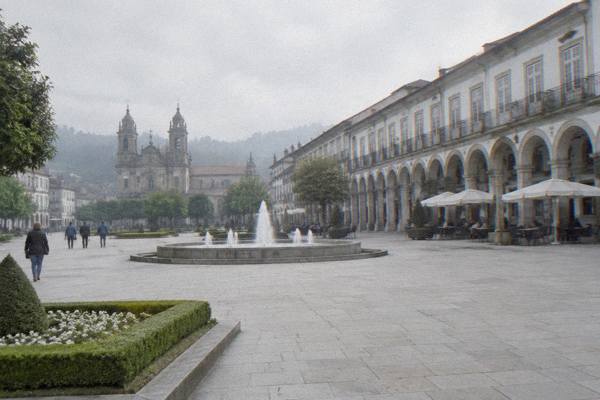
Is Braga Worth Visiting?
A direct answer to whether Braga, in northern Portugal's Minho region, is worth your time, with verified ticket prices, the current Bom Jesus funicular status, and how many days to give the city.
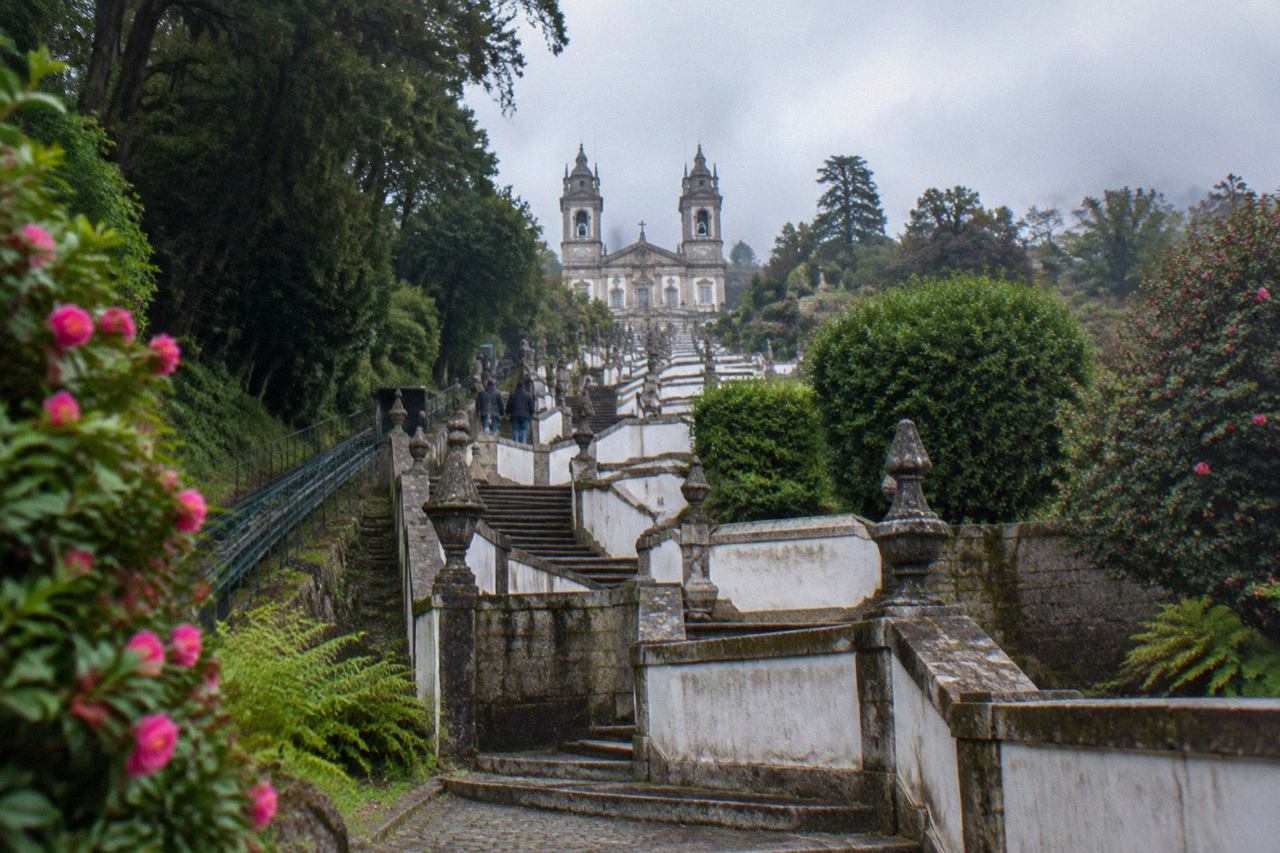
Braga, the city in Portugal's Minho region, is worth visiting for most travellers, and the reasons are concrete rather than sentimental. The Sanctuary of Bom Jesus do Monte has been on the UNESCO World Heritage List since 2019, the Sé de Braga sells three separate visit routes inside one building, and the municipality's own figures put 193,324 residents in a compact historic city you can cross on foot. It is not a beach destination and it is not a nightlife capital. What it offers is dense religious architecture, a serious food tradition and some of the lowest attraction prices in western Europe.
The honest caveat first. The Bom Jesus funicular, the water-counterweight lift that has carried visitors up the hill since 1882, has been out of service since 26 September 2026 with no return date published. A replacement shuttle runs every day from 09:00 to 20:00, roughly every 30 minutes each way, between the Portico and the sanctuary, so the hill itself remains fully accessible. Anyone promising you a funicular ride today is working from an old page.
Is Braga Worth Visiting?
Yes, for most travellers Braga is worth one to two days, and for anyone interested in baroque architecture, religious history or Portuguese food it is worth more. The city holds a UNESCO World Heritage sanctuary, a cathedral you can visit on three separate routes, and Holy Week processions registered in the National Inventory of Intangible Cultural Heritage, all within walking distance of each other and at ticket prices lower than almost anywhere in western Europe.
The case against Braga is usually that it lacks a single iconic viewpoint moment like Porto's riverside or Guimarães' castle. That is fair, and it is why the is Braga worth a day trip from Porto question has a genuinely mixed answer. But the city rewards slow looking rather than postcard hunting. The Escadório do Pórtico and the two stairways above it, 566 steps by the Confraria do Bom Jesus do Monte's own count, are a theological landscape you climb through, not a view you photograph once.
There is also a practical argument. Braga's museum and monument tickets run from 2.00 EUR at the Museu Pio XII's individual sections to 7.50 EUR at the Museu dos Biscainhos, and the municipal tourist tax is 1.55 EUR per person per night for a maximum of four nights. A two-day visit with four paid attractions costs less than a single major museum in London or Amsterdam. The is Braga Portugal expensive question answers itself once you see the price table further down.
What Makes Braga Worth The Trip?
Three things carry Braga: the UNESCO-listed Sanctuary of Bom Jesus do Monte with its 566-step pilgrim stairway, the Sé de Braga with its Treasury-Museum, funerary chapels and cathedral interior sold as three separate visit routes, and a living festival calendar that includes one of Portugal's most significant Holy Week celebrations, held 29 March to 5 April in 2026. Everything sits inside or just outside a compact, walkable historic centre.
Start with Bom Jesus do Monte, because it is the reason UNESCO came. The ensemble was inscribed in 2019 as a cultural property, built facing west over more than six centuries, with a Via Crucis of chapels, fountains, sculptures and formal gardens. The basilica itself charges no admission; the Confraria's information page prices only the funicular, the high choir and bell tower at 1.00 EUR, the lake boats at 3.00 EUR per person per 15 minutes, and parking. With the funicular currently out of service, the choice is the 566-step climb, the replacement shuttle, or TUB Line 2, which ends at the Portico.
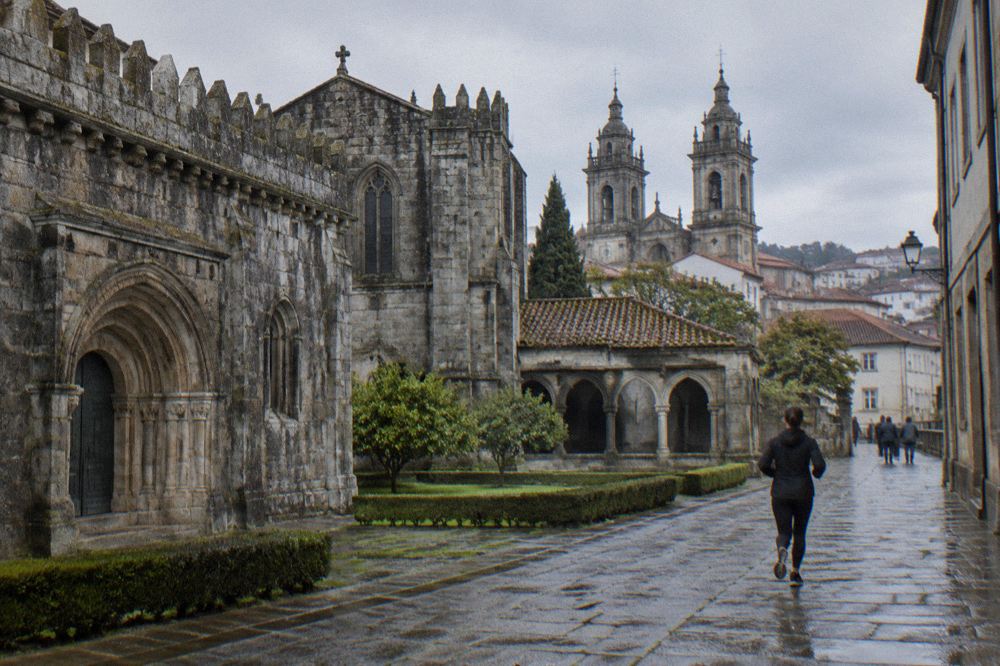
Back in the centre, the Sé de Braga sells its three visit routes at 3.00 EUR each, any two combined for 6.00 EUR, or all three for 7.00 EUR, according to the cathedral's own ticket-office listing. Visit Braga, the municipal tourism site, lists tourist visiting hours Monday to Saturday 09:30 to 13:00 and 14:30 to 17:00, with a shorter Sunday morning window. The building itself opens earlier for worship.
The third pillar is the calendar. Semana Santa ran 29 March to 5 April in 2026, organised by the Comissão da Quaresma with the cathedral chapter and the brotherhoods, and its processions, including the Burrinha on 1 April and the Enterro do Senhor on 3 April, both at 21:30 in 2026, fill the historic centre after dark. São João follows on 17 to 24 June, and Braga Romana, the municipality's Roman-festival weekend, fell in late May in 2026. None of these needs a ticket. You just need to be there.
A guided walk such as Explore the Portuguese Rome City of Braga, roughly two hours with a local guide, is a reasonable first-morning spend if the baroque iconography would otherwise pass you by. The what is Braga Portugal famous for question goes deeper on the food side, which deserves its own paragraph: the city is the home of pudim Abade de Priscos and frigideiras, and the surrounding Minho region produces vinho verde.
How Many Days Do You Need In Braga?
Two full days is the right answer for most visitors, and one well-planned day covers the essential core. Day one belongs to the historic centre: the Sé de Braga, the Santa Bárbara Garden, the Arco da Porta Nova and the shopping streets around Rua do Souto. Day two goes to the hill sanctuaries, Bom Jesus do Monte and Santuário do Sameiro, with the Mosteiro de São Martinho de Tibães as a quieter afternoon alternative.
Want the historic centre explained on foot? Book a free walking tour here. (Guided in Spanish)
The how many days do you need in Braga Portugal breakdown is worth reading in full, but the short logic is this. The historic centre is genuinely small; the sights that are not in it sit on hills reached by TUB bus, and each hill half-day loses its value if rushed. Sameiro's basilica is open summer 09:00 to 19:00 Monday to Saturday and its dome viewpoint, the Zimbório, costs 2.00 EUR, though its opening days vary by season and should be checked on the day.
If two days is more than your itinerary allows, cut Sameiro and Tibães rather than Bom Jesus. If you have three or more, the day-trip ring opens up: Guimarães by AITC Line 101 bus, the Peneda-Gerês National Park by Line 201 toward Caldas do Gerês, and Barcelos, Ponte de Lima and Viana do Castelo all reachable by regional bus from the Central de Camionagem. The what are the most beautiful towns near Porto roundup places Braga in that wider Minho context.
What Does Braga Cost To Visit?
A two-day Braga visit with four paid attractions and a two-day TUB tourist ticket costs roughly 25 to 30 EUR per person in attraction and transport spending, before food and accommodation, plus the municipal tourist tax of 1.55 EUR per person per night for up to four nights. No city card or attraction pass is on sale, so each ticket is bought separately at each door.
That last point matters more than it sounds. What is on sale is the TUB tourist ticket, valid on the whole urban network: 3.35 EUR for one day, 6.05 EUR for two days, 8.05 EUR for three, per the 2026 tariff in force since 21 February 2026.
| Attraction | Adult ticket | Notes |
|---|---|---|
| Sé de Braga, one route | 3.00 EUR | Three routes exist; any two 6.00 EUR, all three 7.00 EUR |
| Bom Jesus do Monte, basilica and grounds | Free | Funicular 2.50 EUR single when running; currently out of service |
| Bom Jesus high choir and bell tower | 1.00 EUR | Closed during services |
| Museu dos Biscainhos | 7.50 EUR | Tuesday to Sunday, closed Mondays |
| Museu de Arqueologia D. Diogo de Sousa | 5.00 EUR | 2.50 EUR for over-65s, ages 13 to 24 and families |
| Mosteiro de São Martinho de Tibães | 4.00 EUR | The municipality's page lists 4.00 EUR general |
| Museu Pio XII, whole museum | 4.00 EUR | Individual sections 2.00 EUR each |
| Theatro Circo guided tour | 3.50 EUR | 45 minutes, scheduled dates only |
| TUB tourist ticket | 3.35 EUR per day | Whole network, 1, 2 or 3 days |
Food is where budgets flex. The Turismo de Portugal guidance on tipping is that service is included in restaurant bills, with an additional tip of about 5 to 10 per cent customary, so the sticker price on the menu is close to the real one. Tipping taxi drivers 5 to 10 per cent or rounding up to the nearest euro is the stated norm. Getting there is cheap too: Getbus runs a direct, non-stop coach from Porto Airport to Braga bus station in about 45 minutes, from 9.00 EUR one-way, with the operator's page listing 16 daily departures each way.
Is Braga Better Than Guimarães?
Neither city is simply better; they do different things. Guimarães trades on its castle, its palace and its role in Portugal's formation, while Braga trades on religious architecture, the UNESCO-listed Bom Jesus sanctuary and a food scene with deeper roots. If you can only choose one, Braga suits travellers who want density and atmosphere, Guimarães suits travellers who want the single dramatic monument.
The is it better to visit Braga or Guimarães comparison runs through the detail, and the is Guimarães Portugal worth visiting answer on its own terms is also yes. But the practical point for this question is that the choice is not forced. There is no direct train between the two cities, but AITC Line 101 bus runs from Braga's Central de Camionagem to Guimarães, and the two centres are close enough that many visitors do both, either from one base or split across two. The combined Braga and Guimarães day is exactly what several of the tours on this site sell.
When Is The Best Time To Visit Braga?
Late May to early July is the best window for most visitors: IPMA's 1991 to 2020 normals for the Braga station show June averaging 26.1 C daily maxima with only 40.6 mm of rain, and July 28.2 C with just 27.9 mm, the driest month of the year. Avoid October if you dislike rain, it is the wettest month at 197.8 mm, and pack for cool evenings even in summer, with June nights averaging 13.2 C.
The numbers come from the official climate normals, and they overturn one common assumption. People assume southern-European summer heat, but Braga's record high of 42.2 C is an August outlier, and the averages show a mild city: only 38.7 days a year reach 30 C or more, and frosts occur on 24.3 nights a year, concentrated in December and January. Winter visits are perfectly workable, with January averaging 14.1 C daytime maxima, but 13.1 days of rain at 1 mm or more make waterproofs non-negotiable.
The festival calendar should influence the timing as much as the weather. Holy Week, the week before Easter, transforms the city, and its 2026 edition ran 29 March to 5 April with the major processions after dark. São João peaks on the night of 23 June into the 24 June municipal holiday. Braga Romana falls in late May and Noite Branca on the first weekend of September. Book accommodation early for Holy Week specifically; it is the one period when the city fills.
Common Questions About Visiting Braga
Is Braga, Portugal worth visiting?
Yes. The city offers a UNESCO World Heritage sanctuary at Bom Jesus do Monte, a cathedral with three separate visit routes, and one of Portugal's most significant Holy Week celebrations, all in a walkable centre with attraction tickets mostly between 1.00 and 7.50 EUR.
Is Braga worth a day trip from Porto?
Yes, a day trip works: the Alfa Pendular train covers Porto to Braga in roughly 40 minutes and Getbus runs direct coaches from Porto Airport in about 45 minutes. One day covers the cathedral, the historic centre and Bom Jesus do Monte, though the hill sanctuaries deserve a second day if you can spare it.
Is the Bom Jesus funicular running?
No. The funicular has been out of service since 26 September 2026, with no return date published. A replacement shuttle runs every day from 09:00 to 20:00, roughly every 30 minutes each way, between the Portico and the sanctuary, and the 566-step stairway remains open on foot.
Is Braga expensive to visit?
No. Attraction tickets run from free at the Bom Jesus grounds to 7.50 EUR at the Museu dos Biscainhos, the TUB tourist ticket costs 3.35 EUR for a full day of urban buses, and the municipal tourist tax is 1.55 EUR per person per night for up to four nights.
Do you need a car in Braga?
No. The historic centre is walkable, TUB Line 2 reaches the Bom Jesus Portico, and the regional day trips to Guimarães and the Peneda-Gerês area run by bus from the Central de Camionagem. A car helps only for exploring the Minho countryside at your own pace.
Is Braga safe for tourists?
Braga is a mid-sized, low-crime city by the standards of European regional capitals, and the normal precautions around bags in crowds apply, especially during Semana Santa and São João. No travel advisory singles the city out.
The verdict, then, is a qualified yes with the qualification stated plainly: Braga rewards visitors who come for architecture, food and religious history, and it will underwhelm anyone chasing dramatic scenery inside the city limits. Give it two days, climb the 566 steps on a dry morning, eat the puddings the city invented, and spend the second afternoon deciding whether Sameiro or Tibães is your kind of quiet. That is a trip worth taking, and the Braga Travel Guide has the detailed pages for each piece of it.