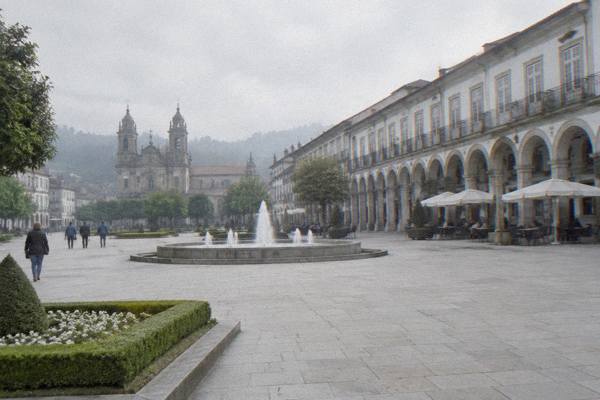
Braga Accessibility And Hills: Is Braga Walkable?
Braga, the city in Portugal's Minho region, is walkable where it counts: the historic centre is compact and largely reserved for pedestrians, while the serious hills sit on the sanctuaries outside it. This guide covers what is flat, what is steep, and how to see the hilltop sights without the climb.
Short answer
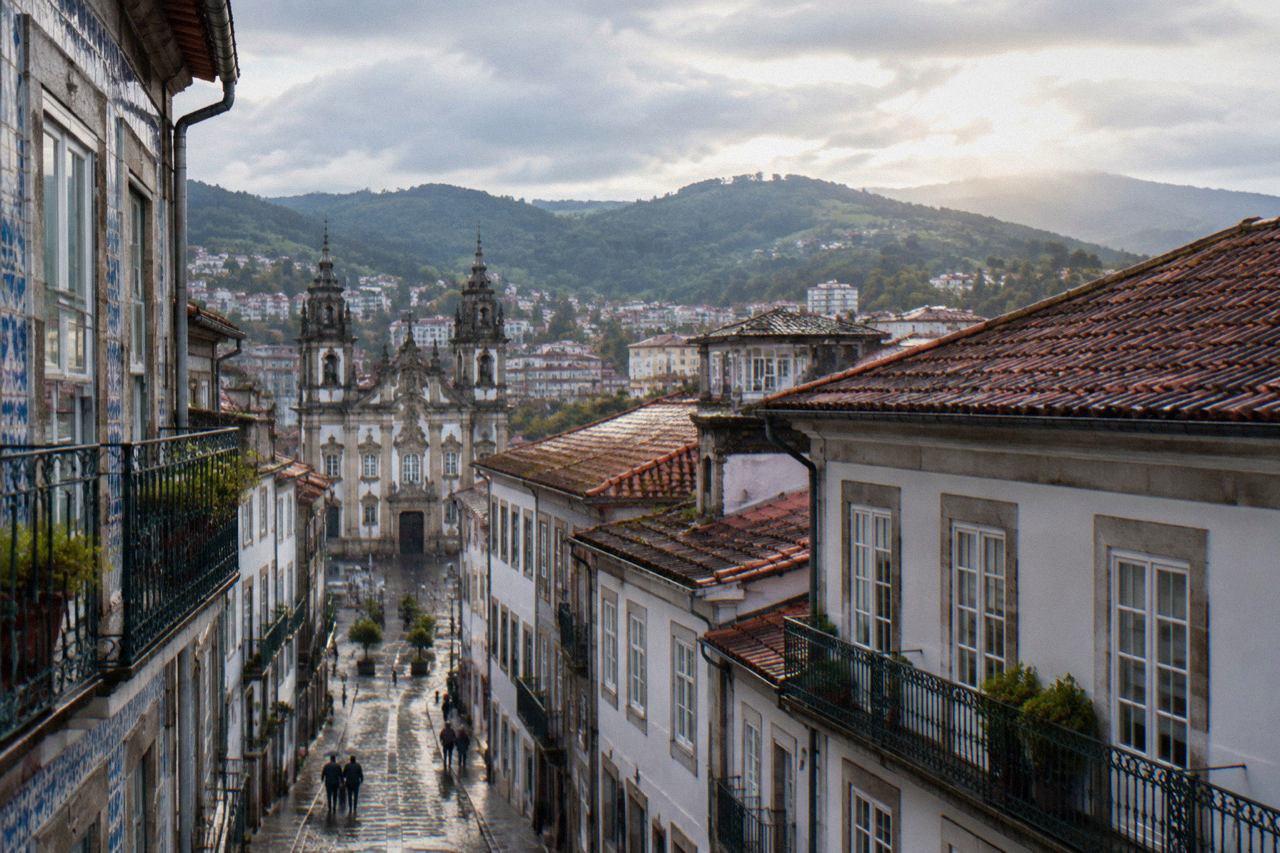
Yes, Braga is walkable. The historic centre is compact and mostly pedestrianised, so the cathedral, Praça da República and the baroque churches are all within easy level walking of each other. The steep ground is concentrated on the sanctuary hills just outside the centre, above all Bom Jesus do Monte, and those can be reached by bus, shuttle or car rather than on foot.
Braga, the city in northern Portugal's Minho region, is one of the easier historic cities in the country to explore on foot, provided you know where its hills actually are. The answer to the question most visitors arrive with is straightforward: the centre is compact, largely pedestrianised and mostly level, while the steep climbs are concentrated on the sanctuary hills that rise just outside it. This guide separates the two, and then covers the parts that need planning, from the 566-step stairway at Bom Jesus do Monte to the cobblestones, buses and museum stairs of the city itself.
Is Braga Walkable?
Yes, Braga is walkable, and more so than most Portuguese cathedral cities. The historic centre is compact enough that the Sé de Braga, Praça da República, the Santa Bárbara Garden and the Arco da Porta Nova all sit within a few minutes of one another, and the main spine around Rua do Souto is reserved for pedestrians. The hills that give the city its dramatic backdrop sit outside that core, on the sanctuary heights to the east, and they are the only part that demands real climbing.
That distinction between the flat core and the hilltop ring is the single most useful thing to understand before arriving. Everything a first-time visitor lists as essential, the cathedral, the baroque churches, the café terraces, the shopping streets and the municipal garden, sits on ground you can cross at a gentle pace without ever feeling the gradient. The Confraria do Bom Jesus do Monte's own pages describe the sanctuary as facing west over the city from its hill, and that hill, together with the neighbouring Santuário do Sameiro and Falperra heights, is where the climbing happens.
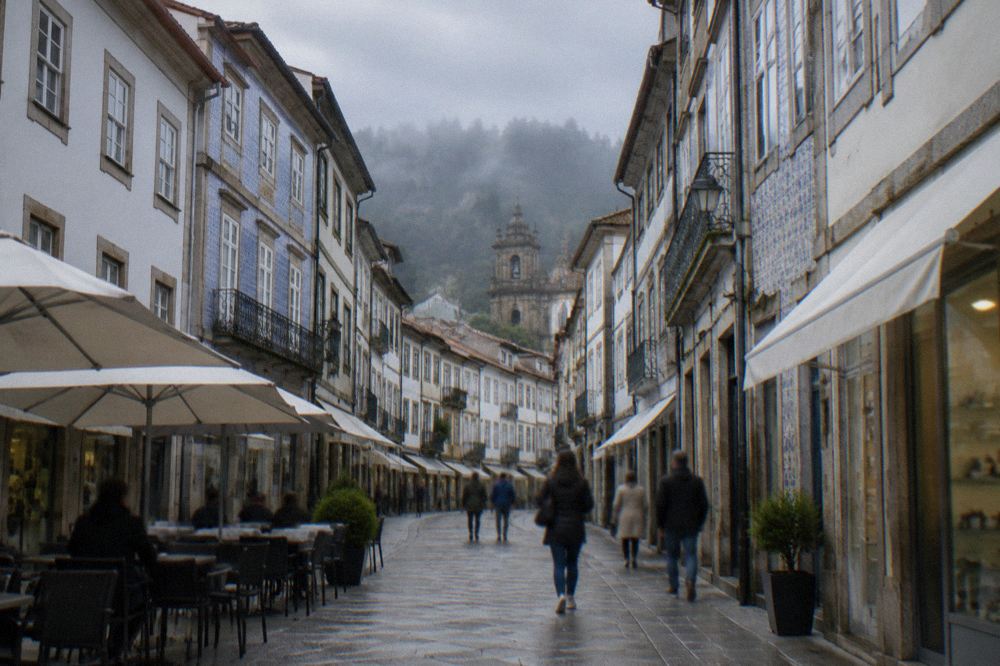
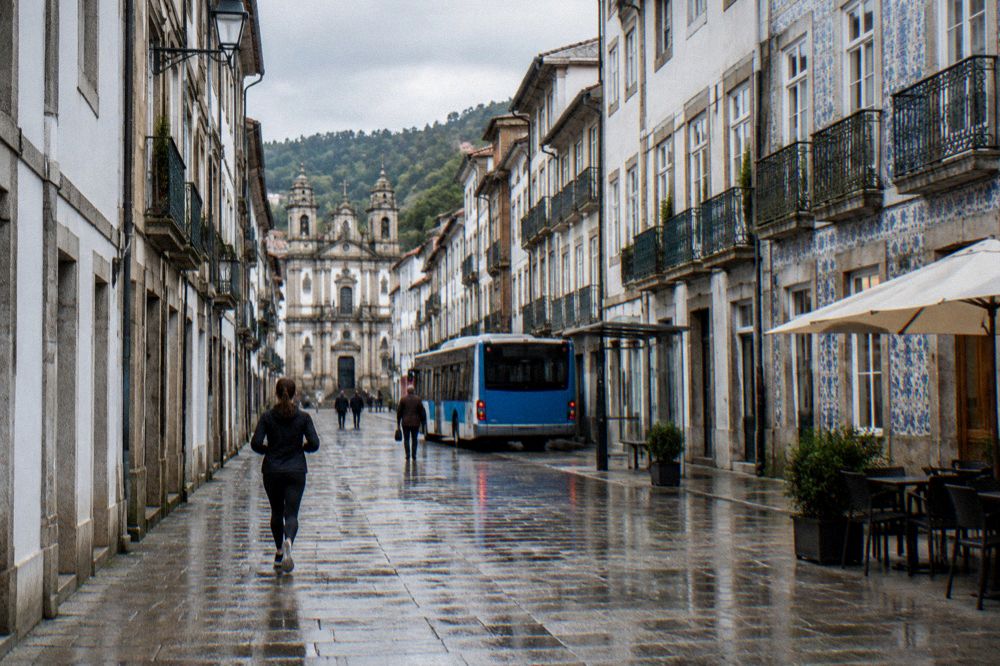
The pedestrian character of the centre is not an accident of geography but a deliberate municipal choice. The streets around Rua do Souto and Praça da República are given over to foot traffic, which means no parked cars to dodge and no traffic noise, but also that the surfaces are the traditional Portuguese combination of polished granite and limestone cobbles. In the rain these become genuinely slippery, and that matters more for accessibility than the slopes do. IPMA's 1991 to 2020 normals for the Braga / Merelim station show why: October averages 197.8 mm of rain across roughly twelve wet days, and January and December are almost as wet, so grip underfoot is a real planning factor from autumn through winter.
For visitors who want the centre explained rather than discovered, the Braga walking tours overview compares the guided options, and the things to do in Braga list marks which sights involve slopes. If a slower pace or a mobility limitation shapes your day, the honest summary is this: plan the centre on foot with confidence, and treat the sanctuary hills as a separate decision with transport options, which the rest of this guide covers in detail.
Where Are Braga'S Hills And Which Areas Are Steep?
The serious slopes in Braga are concentrated on the sanctuary heights east of the centre: the Bom Jesus do Monte hill, the Santuário do Sameiro and the Falperra ridge, plus the Monte do Picoto park on the city's own high ground. The historic centre itself, from the railway station up through Avenida da Liberdade, Rua do Souto and Praça da República to the cathedral, is essentially level, and the western and northern residential quarters add only gentle undulations.
The geography rewards a little knowledge. Braga sits in a shallow valley, and the city's municipal boundaries include the wooded hills that rise to its east, where the Confraria do Bom Jesus do Monte's sanctuary, the Santuário do Sameiro and the Falperra church all stand. These are the postcard views, and none of them are within comfortable walking distance for anyone avoiding climbs. The Monte do Picoto park, an urban woodland of about 23 hectares with a 360-degree viewpoint at its roughly 298-metre summit, is closer to town but still involves a sustained ascent on its paths.
Inside the centre, the honest picture is that the flat walking is not perfectly flat. The ground rises very gently from the railway station area toward the cathedral quarter, so a visitor walking from the station to the Sé de Braga notices a slight uphill drift rather than a climb. Side streets off the main axes can pitch more sharply, and the older lanes around the Maximinos and Cividade quarter sit on the slope of the old Roman hill, so they are steeper than the main spine. None of this is alpine, but a visitor with a wheelchair or a heart condition should stick to the Avenida da Liberdade, Rua do Souto and Praça da República axis, which is where the pavement is widest and smoothest too.
For comparison with the region's other headline city, which shares Braga's granite-and-cobble character, the is Guimarães a walkable city answer covers the same questions an hour to the east. Within Braga itself, the getting around Braga guide details every transport option, including the parts of the city where a bus saves the most effort.
If you would rather have someone else manage the route, the hills and the timing, a guided walk does that work for you.
Can You Visit Bom Jesus Do Monte Without Climbing The Stairs?
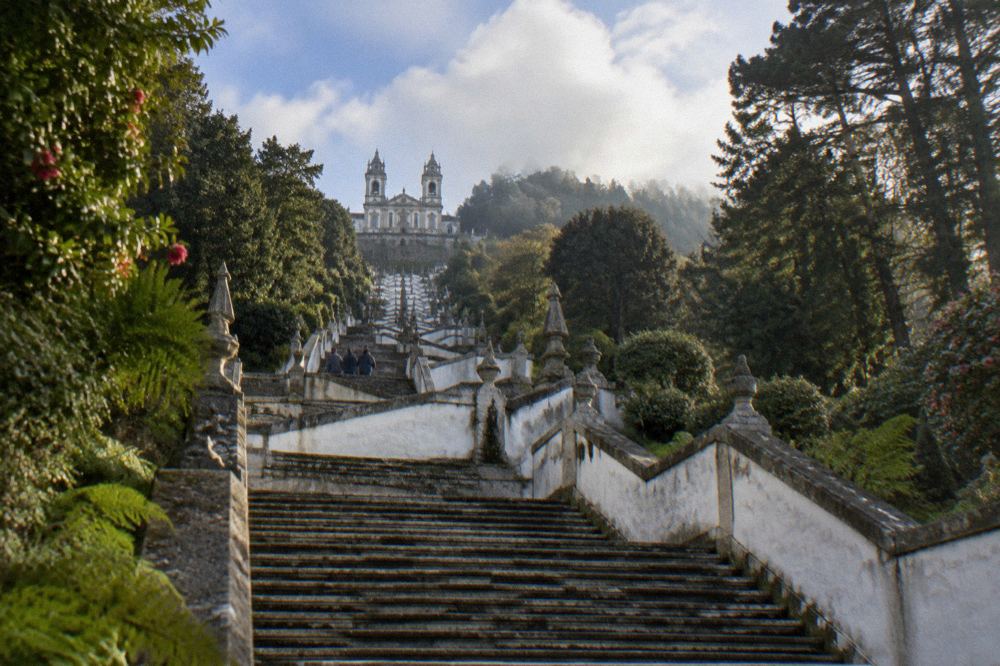
Yes, fully. The Bom Jesus sanctuary is reachable by car, by TUB Line 2 bus to the Portico at the foot of the stairway, or by the replacement shuttle that is running while the funicular is out of service. The stairway itself is 566 steps by the Confraria's own count, rising 116 metres over 615 metres of zigzag, and it is entirely optional: the sanctuary, basilica and gardens are all reachable without setting foot on it.
The current situation deserves precision, because many older guides are now wrong. The Elevador do Bom Jesus, the 1882 water-counterweight funicular that normally carries visitors up the 116-metre incline, has been out of service since 26 September 2026, with no end date published. In its place, a shuttle runs every day from 09:00 to 20:00, roughly every 30 minutes in each direction, between the Portico, where the TUB bus line ends, and the sanctuary itself. The Confraria's information page carries the current status, and it is the page to check before you go, because a notice is the only honest source for when the funicular returns.
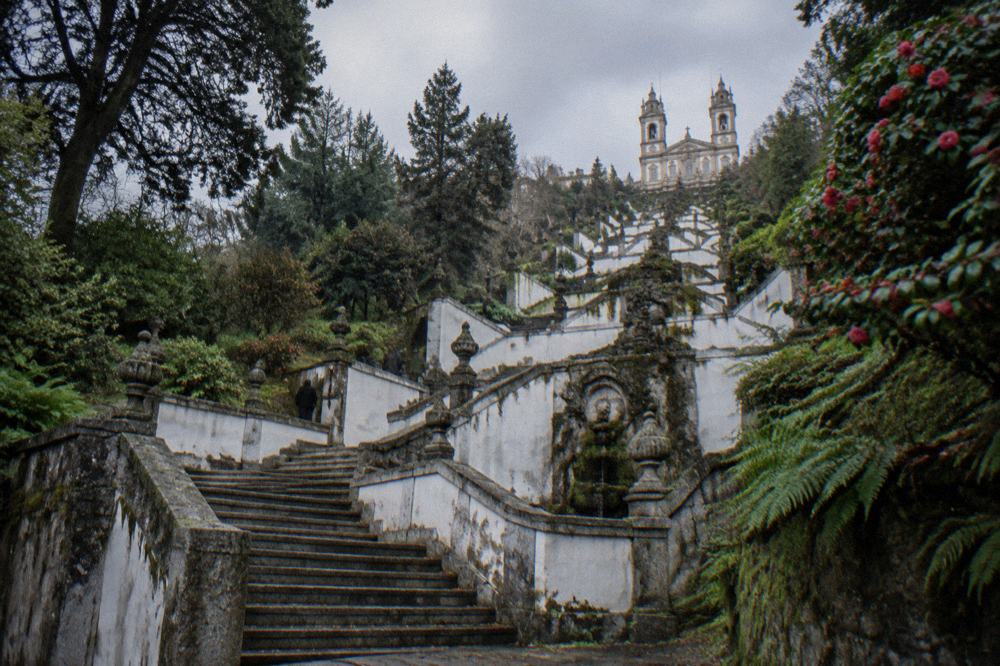
For a visitor who cannot or does not want to climb, the practical options look like this:
| Option | What It Involves | Cost | Notes For Limited Mobility |
|---|---|---|---|
| Car or taxi to the sanctuary | Road access to the top, parking on the hill | Parking 1.00 EUR for cars and motorcycles | Avoids the stairway entirely, the Confraria's information page lists the fees |
| TUB Line 2 bus | From the centre to the Portico, the foot of the stairway | On-board 1.55 EUR one zone, pre-bought 0.75 EUR | Ends at the bottom, so pair it with the shuttle |
| Replacement shuttle | Portico to sanctuary, both directions | Check the operator's notice before you go | Runs daily 09:00 to 20:00, roughly every 30 minutes, while the funicular is out of service |
| The stairway on foot | 566 steps, 116 m of ascent, 615 m long | Free | The sanctuary grounds charge no admission, the Confraria's page lists no entry fee |
Once at the top, the sanctuary is far more manageable than the climb suggests. The Confraria's information page lists no admission charge for the basilica, the grounds or the stairway, only the funicular, the high choir and bell tower at 1 EUR, the lake boats at 3 EUR per person per 15 minutes, and the car park. The basilica is open every day, 08:00 to 19:00 in summer and 08:00 to 18:00 in winter. The terraces above the stairway are level once you are on them, so a visitor who arrives by shuttle or car can enjoy the full west-facing panorama, the gardens and the basilica without a single demanding step.
The full route detail, including bus frequency and the funicular's history, is in the how to get to Bom Jesus do Monte guide. The small-group half-day tour with the Bom Jesus sanctuary is the option that removes the planning entirely: it covers the historic centre and then drives up to the sanctuary, so the stairway becomes a viewpoint to photograph rather than an obstacle to climb. Check availability
How Accessible Are Braga'S Churches And Museums?
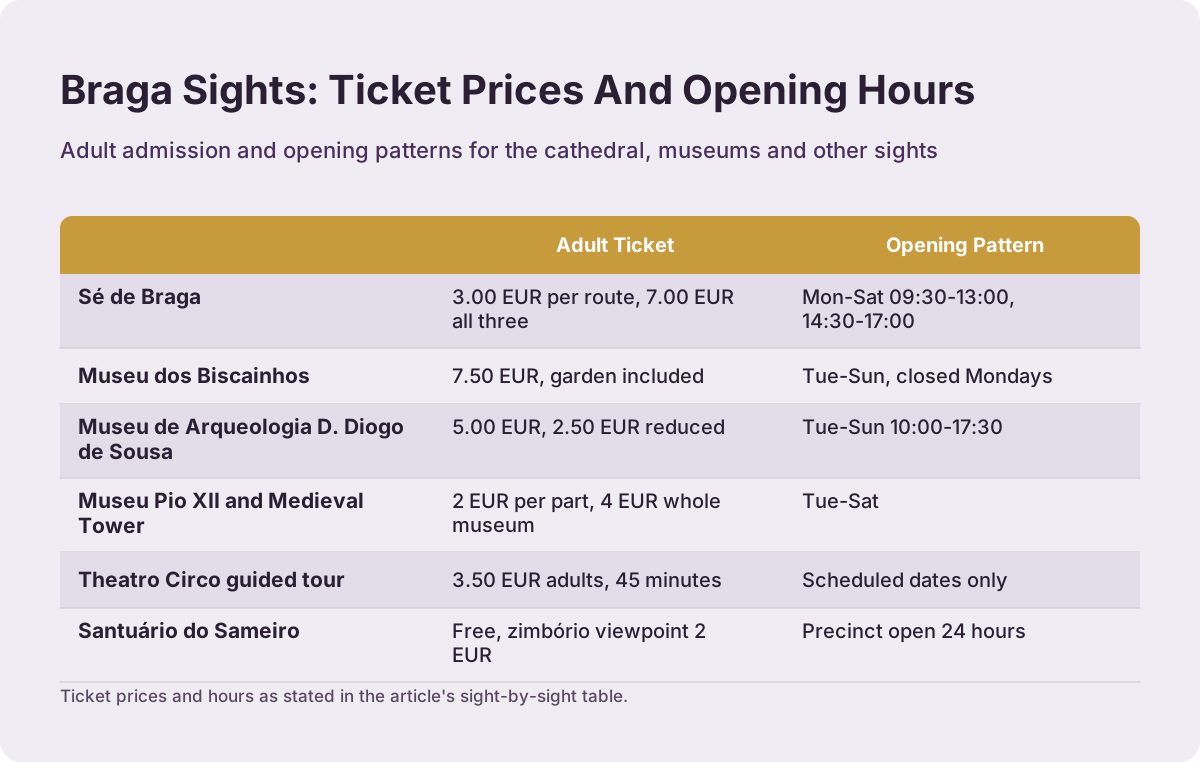
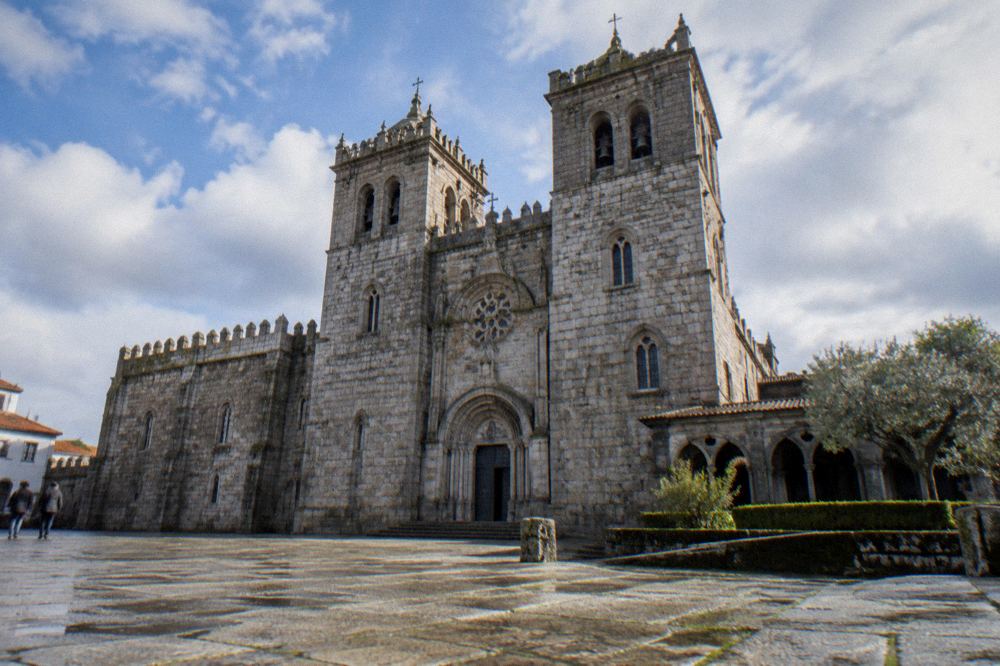
Braga's main museums are small and mostly single-level or lift-served, but nearly all close on Mondays and several involve stairs at the entrance, so the practical factors are opening days, ticket prices and steps rather than size. The Sé de Braga charges 3.00 EUR per visit route or 7.00 EUR for all three combined, the Museu dos Biscainhos costs 7.50 EUR with the garden included, and the D. Diogo de Sousa museum is 5.00 EUR, free for residents on 52 days a year.
The cathedral deserves its own note. The Sé de Braga sells three separate visit routes, each at 3.00 EUR, covering the Treasury-Museum, the funerary chapels and high choir, and the cathedral itself, with a combined ticket at 7.00 EUR for all three or 6.00 EUR for any two. Tickets are bought at the reception point in the cloister, reached from Rua do Cabido or the side entrance by Rua D. Diogo de Sousa, and tourist visits are suspended during services, so check the service schedule if you are planning a Sunday visit. The Visit Braga site lists tourist visit hours as Monday to Saturday 09:30 to 13:00 and 14:30 to 17:00, Sunday mornings only until 10:45. The full index of guides sits on Braga Travel Guide.
The museums cluster around the centre and vary in character. The Museu dos Biscainhos, a baroque palace with gardens, reopened after a major restoration and charges 7.50 EUR for a normal ticket with the garden included, open Tuesday to Sunday. The Museu de Arqueologia D. Diogo de Sousa is open Tuesday to Sunday 10:00 to 17:30 at 5.00 EUR, with a 50% reduction for over-65s, ages 13 to 24 and families, and free entry for under-12s with an adult. The Museu Pio XII and its medieval tower charge 2 EUR per exhibition or 4 EUR for the whole museum, Tuesday to Saturday.
| Sight | Adult Ticket | Opening Pattern | Accessibility Notes |
|---|---|---|---|
| Sé de Braga | 3.00 EUR per route, 7.00 EUR all three, 6.00 EUR any two | Mon-Sat 09:30-13:00, 14:30-17:00, Sun mornings limited | Visits suspended during services, tickets from the cloister reception |
| Museu dos Biscainhos | 7.50 EUR, garden included | Tue-Sun, closed Mondays | Baroque palace with gardens, reopened after restoration |
| Museu de Arqueologia D. Diogo de Sousa | 5.00 EUR, 2.50 EUR reduced | Tue-Sun 10:00-17:30 | Free for under-12s with an adult, residents get 52 free days a year |
| Museu Pio XII and Medieval Tower | 2 EUR per part, 4 EUR whole museum | Tue-Sat | The medieval tower involves a stair climb |
| Theatro Circo guided tour | 3.50 EUR adults, 45 minutes | Scheduled dates only, box office on the day | Max 30 people per tour, Portuguese and English |
| Santuário do Sameiro | Free, zimbório viewpoint 2 EUR | Precinct open 24 hours | Free arrival by road, dome entrance at the back of the basilica |
Two practical warnings follow from that table. First, Monday is the worst day to museum-hop in Braga: nearly every museum in the city closes that day, so plan the indoor sights for Tuesday through Sunday. Second, the Theatro Circo's guided visits run only on scheduled dates tied to the theatre's programme, with tickets sold at the box office 30 minutes before each tour, first come first served, so they cannot be planned around a tight itinerary. The Sameiro sanctuary, by contrast, is the most forgiving of the hilltop sights: the whole precinct is open around the clock and free, and arriving by road avoids every stair.
For visitors who find long stretches on foot the real constraint rather than steps, the tuk-tuk option covers the centre's key streets from a seat.
What Do Braga'S Local Buses Cost And Which Lines Help?
TUB, the city bus network, charges 1.55 EUR for a one-zone ticket bought on board and 0.75 EUR pre-bought or in the app, with two-zone tickets at 2.00 EUR and 1.50 EUR, and a whole-network tourist ticket at 3.35 EUR for one day. The line that matters most to visitors is Line 2, which runs from the centre to the Portico at the foot of the Bom Jesus stairway, and transfers are valid one hour on a one-zone ticket.
The tariff, in force since 21 February 2026, is simple once it is laid out. The tourist ticket is the standout product for visitors: it covers the entire network, including the Line 2 ride toward Bom Jesus, and the two- and three-day versions suit anyone using buses as their main mobility aid.
| TUB Ticket | 1 Zone | 2 Zones | Notes |
|---|---|---|---|
| On board, bought from the driver | 1.55 EUR | 2.00 EUR | Transfer valid 1 hour (1 zone), 1 h 30 (2 zones) |
| Pre-bought or digital | 0.75 EUR | 1.50 EUR | Same transfer validity |
| Tourist ticket, whole network | 3.35 EUR per day | 6.05 EUR for 2 days, 8.05 EUR for 3 days | Per person, card cost 1.50 EUR |
| Monthly pass | 12.00 EUR | 24.00 EUR | Passes were cut 14% in March 2026 |
Two cautions apply. Do not assume a contactless bank card works on board, because the tariff documents do not confirm it, and the pre-bought or app ticket is the safe assumption. And fare-dodging fines start at 30 EUR, so validate or buy before you ride. The getting around Braga guide covers the rest of the network, including where the bus is genuinely faster than walking.
For arrivals, the long-distance picture is covered elsewhere on this site: the Porto Airport to Braga guide covers the direct Getbus coach, which the operator lists from 9.00 EUR one-way with a roughly 45-minute journey, and the Porto to Braga guide covers the train. Both deposit you in the flat centre, so the accessibility question starts, conveniently, at ground level.
Where Should You Stay In Braga To Minimise Walking?
The best base for minimising walking is the historic centre itself, between Avenida da Liberdade and the cathedral quarter, because it puts the pedestrian spine, the restaurants and the main churches on your doorstep on level ground. Staying out toward the station adds only a gentle gradient, while anything on the eastern slopes or the sanctuary roads trades flat access for views and a climb.
The trade-off is real but manageable. Central hotels put the flat city outside the door, which matters most on evenings, when tired legs and wet cobbles combine. The eastern edge of the municipality climbs toward the sanctuary hills, and the roads up to Bom Jesus and Sameiro are exactly what they look like on the postcards, so a hotel up there suits a driver, not a walker. The where to stay in Braga guide maps the neighbourhoods in detail.
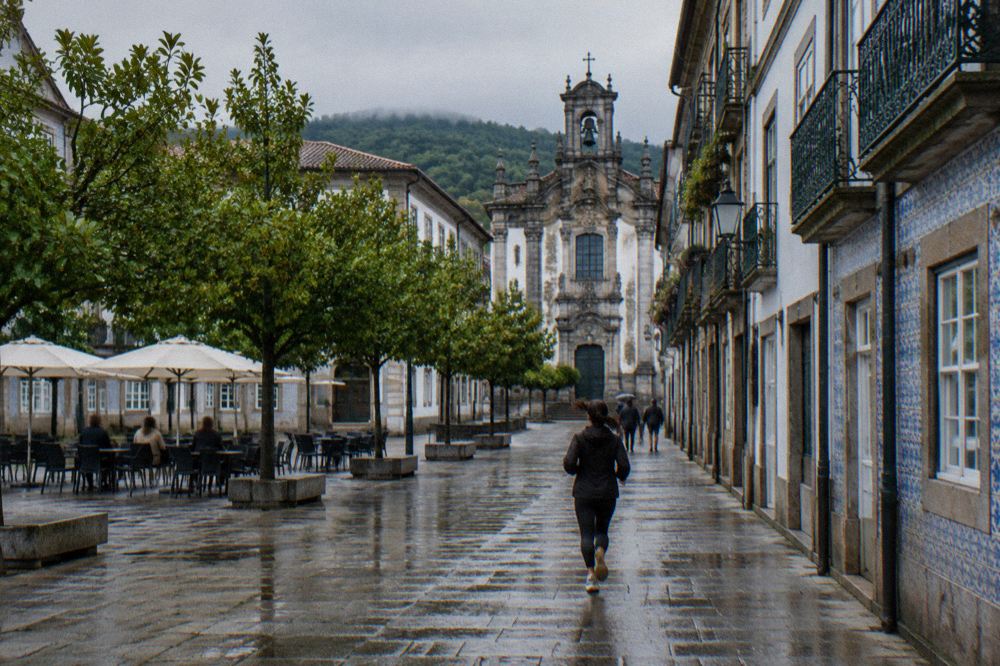
One cost to factor in regardless of neighbourhood: Braga levies a municipal tourist tax of 1.55 EUR per person per night, for up to four nights, all year, charged by hotels and local accommodation. Guests under 16 are exempt. It is small, but it belongs in any budget, and it is charged whatever the booking channel.
A guide who sets the pace to the group is the other way to make the hills someone else's problem.
What Should You Pack For Braga'S Cobbles And Rain?
Pack footwear with real grip, because Braga's pedestrian streets are polished granite and limestone cobbles that turn slippery in rain, and the rain is concentrated from October to January, when the city averages 12 to 13 wet days a month and October alone records 197.8 mm. Summer is the opposite, with July the driest month at 27.9 mm, so the accessibility risk shifts from wet stone to heat on the unshaded stairways.
The month-by-month pattern from IPMA's 1991 to 2020 normals for the Braga / Merelim station is worth reading properly, because it inverts what most visitors assume about Portugal. The wettest month is October, not a winter month, and July and August are the only genuinely dry ones.
| Month | Mean Max C | Rain mm | Days With 1 mm Or More |
|---|---|---|---|
| Jan | 14.1 | 179.5 | 13.1 |
| Feb | 15.5 | 111.1 | 9.6 |
| Mar | 17.8 | 150.1 | 11.8 |
| Apr | 19.6 | 127.9 | 12.0 |
| May | 23.0 | 89.8 | 8.9 |
| Jun | 26.1 | 40.6 | 5.7 |
| Jul | 28.2 | 27.9 | 4.0 |
| Aug | 28.7 | 34.6 | 3.8 |
| Sep | 26.9 | 67.6 | 6.2 |
| Oct | 22.2 | 197.8 | 12.0 |
| Nov | 17.0 | 170.1 | 12.9 |
| Dec | 14.9 | 190.3 | 13.3 |
For accessibility planning, the table reads as advice. From October to January, expect rain on roughly every second or third day and plan indoor alternatives, which Braga supplies well: the museums above, the Theatro Circo's programme, and the café culture around Avenida da Liberdade. Frost mornings happen, with January averaging 8.5 nights below zero, so early starts on shaded stone can be icy. The Braga weather guide expands all of this, and the best time to visit Braga guide weighs crowds, rain and event calendars together.
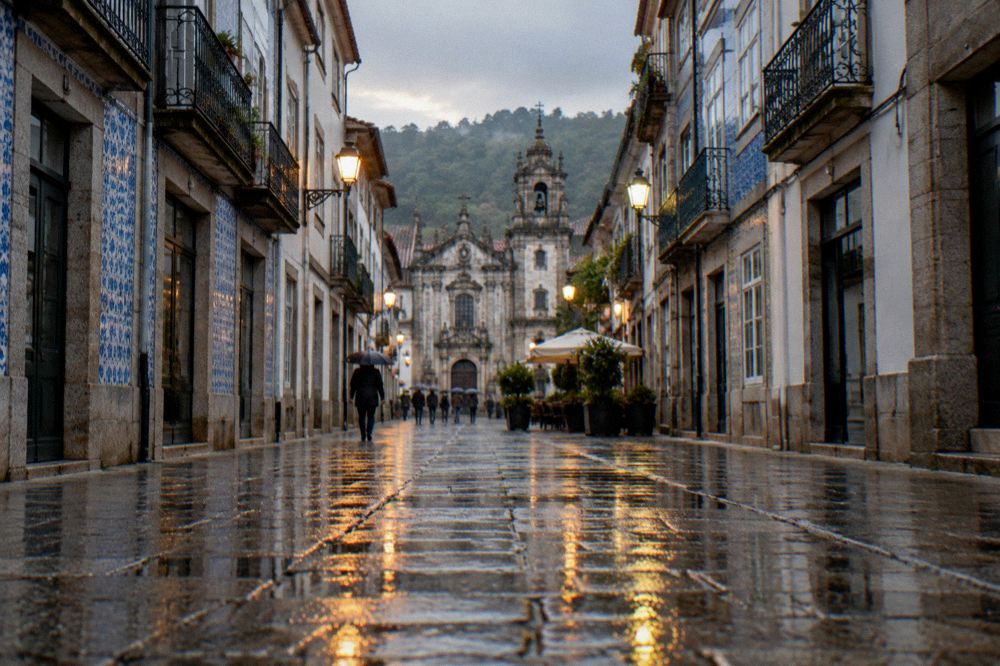
Beyond shoes and rain layers, three small things earn their place in the bag. A torch or phone light helps on unlit cobbles lanes in the historic quarter after dark. A reusable water bottle matters from June to September, when the mean maximum runs above 26 C and the Bom Jesus terraces offer little shade. And a printed or offline copy of the TUB tourist ticket and the shuttle notice for Bom Jesus, because the two facts most likely to change, the funicular's status and the bus tariff, are the two a visitor is least able to check mid-street.
For a trip built around the flat centre rather than the hills, the free things to do in Braga list marks which sights cost nothing, and most of them sit on the level spine. The guided options below all work for travellers who want the route, the pace and the hill transport handled.
Among those three, the half-day small-group tour is the one built for this page's reader: it pairs the flat historic centre with a drive up to the Bom Jesus sanctuary, so the only 566 steps in your day are the ones you photograph from the terrace.
Common Questions About Braga Accessibility
Is Braga walkable for older visitors?
Yes. The historic centre is compact, level and largely pedestrianised, so the cathedral, Praça da República and the main churches are all reachable on flat ground. The one serious climb, the 566-step Bom Jesus stairway, is optional, because the sanctuary is reachable by car, by TUB Line 2 to the Portico, and by the replacement shuttle running while the funicular is out of service.
Can you visit Bom Jesus do Monte without climbing the stairs?
Yes. The sanctuary is reachable by road, with parking at 1.00 EUR for cars, or by bus to the Portico followed by the shuttle that runs daily 09:00 to 20:00, roughly every 30 minutes each way, while the funicular is out of service. The Confraria's information page carries the current status and is the source to check before you go.
Is the Bom Jesus funicular running?
No. The funicular has been out of service since 26 September 2026, with no end date published, and a replacement shuttle connects the Portico and the sanctuary in its place. Check the operator's notice before your visit, because the notice is the only honest source for when it returns.
Are Braga's museums accessible on Mondays?
Mostly not. The Museu dos Biscainhos, the Museu de Arqueologia D. Diogo de Sousa and the Mosteiro de São Martinho de Tibães all close on Mondays, as does the cathedral's Treasury-Museum. Plan museum days for Tuesday through Sunday.
How much does the bus cost in Braga?
A one-zone TUB ticket costs 1.55 EUR on board or 0.75 EUR pre-bought or in the app, with two-zone tickets at 2.00 EUR and 1.50 EUR. A whole-network tourist ticket costs 3.35 EUR for one day, 6.05 EUR for two days and 8.05 EUR for three days, per person.
When is Braga too wet for easy walking?
October through January. IPMA's 1991 to 2020 normals for the Braga / Merelim station show October as the wettest month at 197.8 mm, with 12 to 13 rain days a month from October to January, and the polished cobbles in the centre are slippery when wet. July, at 27.9 mm, is the driest month.
Braga rewards visitors who plan around its one real hill rather than avoid the city over it. Walk the flat centre with confidence, ride or drive to the sanctuaries, and the 566 steps at Bom Jesus do Monte become a spectacle to admire from the top rather than a price to pay for the view.