Is Guimarães A Walkable City?
Guimarães is compact and largely walkable, with a pedestrianised historic centre, but the hilltop castle zone and outlying sights test the legs. A plain answer from a Braga-based travel guide.
Guimarães, the medieval town in the Minho region about fifty minutes by road from Braga, is small enough that almost everything a visitor wants to see sits within a fifteen-minute walk of the central Praça de Santiago. That is the short answer, and it holds for the historic core, the Oliveira quarter and the touristic strip along Rua de Santa Maria. The honest version adds two caveats: the walk up to the castle and the Paço dos Duques is a real climb, and the Penha hill on the town's eastern edge is a separate outing that most people reach by cable car rather than on foot. This page, written from Braga by Braga Travel Guide, sets out what those caveats mean in practice, how Guimarães compares with its flatter neighbour Braga, and how the two towns pair on a single trip.
Is Guimarães A Walkable City?
Yes. Guimarães is a genuinely walkable city, because its historic centre is compact, largely pedestrianised and flat enough for most visitors, with the main squares, the Oliveira quarter and the Rua de Santa Maria all within a short walk of one another. The two exceptions are the uphill lane to the castle and Paço dos Duques, and the Penha hill, which most visitors reach by cable car rather than on foot.
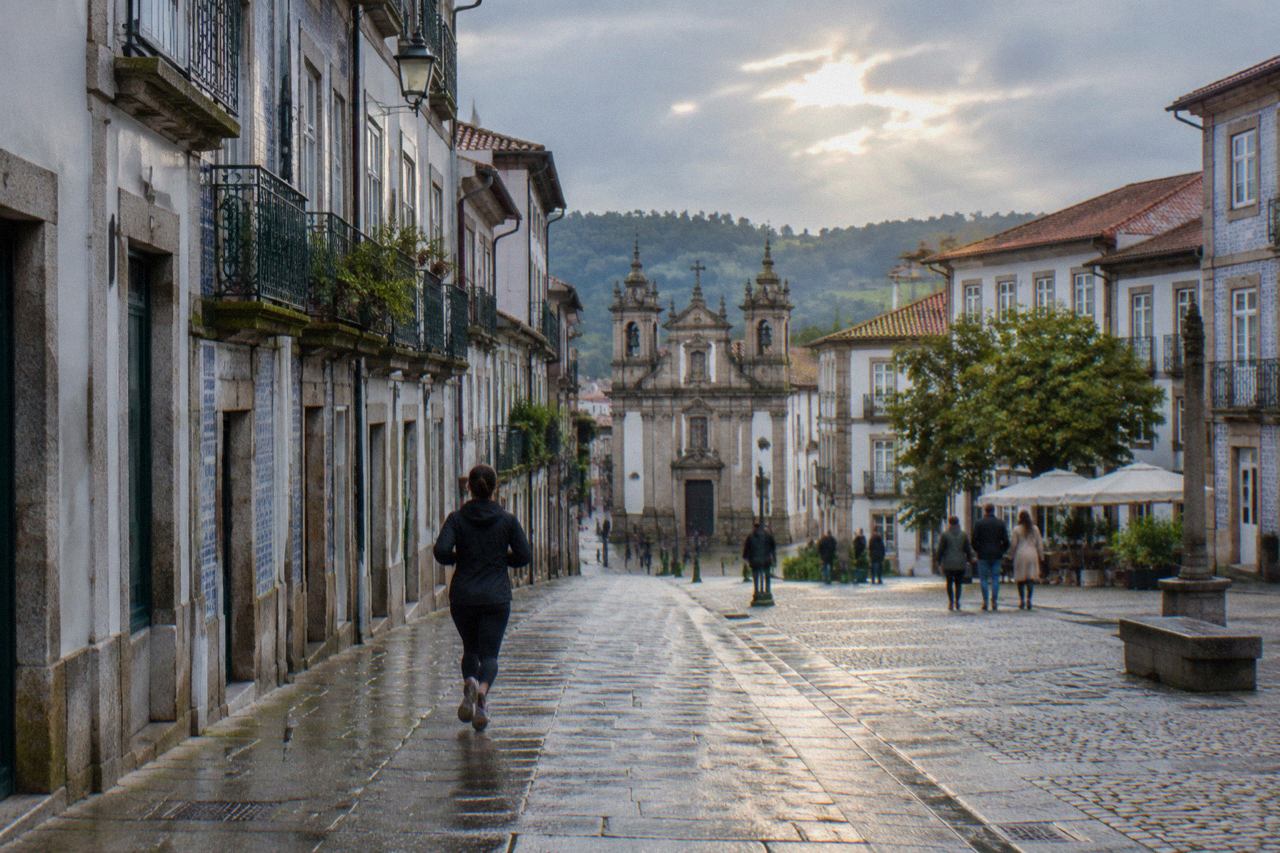
The old town is the part that earns Guimarães its reputation. The streets around Praça de Santiago, Praça da Oliveira and the Toural garden are closed to through traffic, paved in polished granite setts and signposted, so a first-time visitor can navigate without a map within an hour of arriving. The scale helps: the whole protected historic zone measures roughly a kilometre from the Toural side to the foot of the castle lane, which is a ten-to-twelve-minute stroll at an ordinary pace. Cafés, pastelarias and the tourist office cluster in that same zone, so the day's practical needs never pull you away from it.
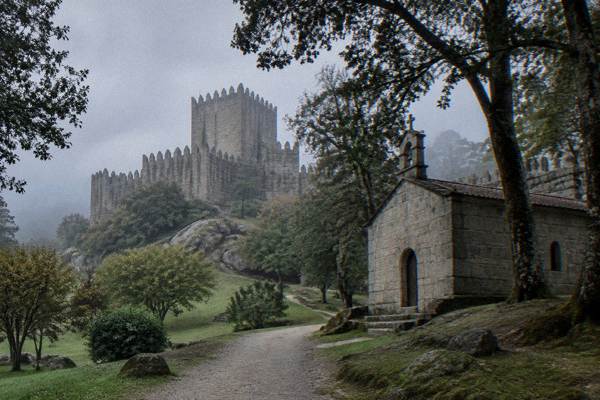
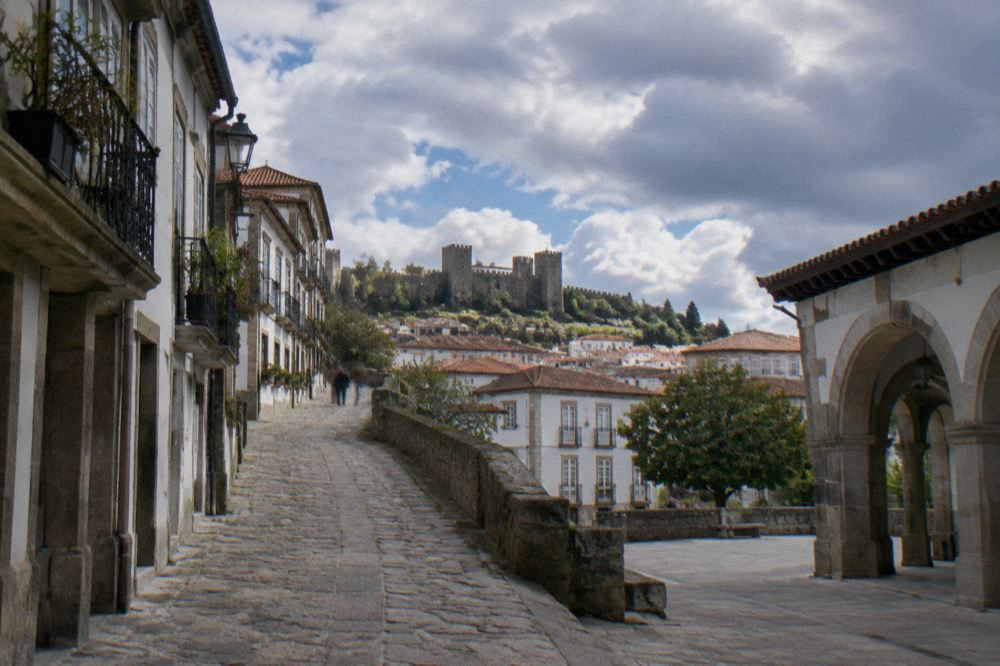
What the flat centre does not include is the monument most people come for. The castle and the adjacent Paço dos Duques sit on a low ridge above the town, reached by a cobbled lane that rises steadily for several hundred metres from the São Santiago end. It is a manageable climb for anyone in ordinary health, but it is a climb, and in July and August it happens on hot stone with little shade. Visitors with mobility limits, small children or tired legs should treat the castle zone as a separate short excursion rather than a casual add-on to a flat wander.
How Does Guimarães Compare With Braga For Walking?
Braga is the flatter and larger of the two, with a long, mostly level axis from the Sé de Braga through Avenida da Liberdade to the Bom Jesus funicular base, while Guimarães is the more compact, with a pedestrianised core that is quicker to cross on foot. Neither city requires a car for its centre. The honest difference is that Braga's headline sight, Bom Jesus do Monte, sits on a hill outside the centre, while Guimarães' castle sits within walking distance of its core.
Both towns reward the same approach: arrive, park or step off the bus, and not touch a vehicle again until you leave. Braga's historic centre runs along a gentle slope from the cathedral quarter down to Avenida da Liberdade, and the whole stretch is comfortable on foot. Its big excursion, the Bom Jesus do Monte sanctuary, is a different matter: TUB Line 2 runs to the base of the stairway, and the sanctuary itself involves a serious ascent, 566 steps by the Confraria's count, which is a walk of a kind but not a stroll.
Guimarães turns that arrangement inside out. The castle is close enough to walk to, but the centre itself is smaller and more self-contained, so a visitor spends less time walking between things and more time inside them. A reasonable rule of thumb for anyone planning a Minho trip: if your day is about churches, cafés and squares, either town works on foot; if your knees have opinions, Braga's flat axis plus a bus to Bom Jesus is the gentler layout, while Guimarães asks for one short climb.
For travellers weighing the two against each other, the deeper comparison lives in is it better to visit Braga or Guimarães, and the practical question of pairing them in a single day is covered in Braga and Guimarães in one day.
Do You Need A Car Or Public Transport Inside Guimarães?
No, not for the historic centre, the castle zone or the Penha cable car base, all of which sit within walking range of the central squares. A car becomes useful only for the outlying sights in the surrounding municipality, such as the Citânia de Briteiros hillfort, and even then the regional bus network reaches some of them. Visitors arriving from Braga should note there is no direct train between the two cities, so the bus is the practical link.
That last point catches out a surprising number of travellers. There is no direct train from Braga to Guimarães; the rail lines meet only at Nine, and the practical public-transport link is the regional bus, AITC line 101, which runs between the two central bus stations via the A11. The full picture, including why the train is not an option, is in is there a train from Braga to Guimarães.
Inside Guimarães itself, the walking question and the parking question are the same question. The historic centre is a limited-traffic zone, so drivers park at one of the peripheral car parks and walk in, which in practice means everyone experiences the town on foot whether they planned to or not. For visitors based in Braga and making the trip across, the same logic applies on arrival: the bus station sits at the edge of the centre, and from there the whole visit unfolds on foot.
The one outlying sight that earns a place on many itineraries is the Citânia de Briteiros hillfort, a large Iron Age settlement in the hills between the two cities. It is not walkable from either town, but it pairs naturally with a Guimarães day by car or by a guided excursion; admission is about 5 EUR, reduced 2.50 EUR, and the ticket includes the Museu da Cultura Castreja. The site keeps seasonal hours, daily from late March to late October and Tuesday to Sunday in winter, so check the opening window before committing.
| Walking zone in Guimarães | Character | Effort level | Notes for visitors |
|---|---|---|---|
| Praça de Santiago and Oliveira quarter | Pedestrianised historic core | Easy, flat | Main cafés, tourist office, signage |
| Rua de Santa Maria to Toural | Historic street axis | Easy, gentle slope | Runs the length of the old town |
| Castle lane to Paço dos Duques | Cobbled uphill lane | Moderate climb | Little shade in summer, wear good shoes |
| Penha hill | Granite hilltop park | Steep, usually skipped on foot | Reached by cable car from the town edge |
| Citânia de Briteiros | Hillfort outside the town | Not walkable | About 5 EUR entry, seasonal hours |
What Should Less-Mobile Visitors Know About Guimarães?
Guimarães is workable for visitors with limited mobility in its central squares and the Toural area, which are flat and partly pedestrianised, but the castle lane and the Penha hill are effectively off-limits without a vehicle, and the granite setts that cover the old town are hard work for wheels, sticks and unstable ankles alike. The pedestrian core at least means fewer cars to contend with. Anyone comparing Minho towns on accessibility should also weigh Braga's flatter central axis.
The setts deserve a plain warning. Guimarães' streets are paved in small, polished granite cubes that turn slick in rain and vibrate under wheelchair wheels. The pedestrianisation that makes the centre pleasant to walk also means the surfaces cannot be softened. Visitors who manage cobbles slowly but surely will be fine in the core; visitors who cannot manage them at all will find the town's appeal concentrated in a handful of spots, and the cable car base at the town's edge offers a ride to a viewpoint without the castle climb.
The comparison with Braga matters here too. Braga's central axis from the Sé down Avenida da Liberdade is a gentler surface and a gentler gradient, and TUB's urban buses, with a 1.55 EUR on-board single or 0.75 EUR pre-bought, absorb the one genuinely hilly excursion to Bom Jesus. The full accessibility picture for the site's home city is set out in Braga accessibility.
For travellers who would rather ride the hilly parts than walk them, the same logic that works in Braga works in Guimarães: a small vehicle with a driver turns the two hard climbs into none. In Braga, the Braga tuk tuk city tour covers the historic centre and its slopes in thirty minutes to two hours, with Check availability as the booking step. A guided walking option, the flexible walking tour of Braga's historic centre, suits the flatter days.
Common Questions About Walking In Guimarães
Is Guimarães a walkable city?
Yes. The historic centre is compact, largely pedestrianised and flat enough for most visitors, with the main squares and the Rua de Santa Maria axis all within a short walk of one another. The two exceptions are the uphill lane to the castle and Paço dos Duques, and the Penha hill, which most visitors reach by cable car.
Can you walk from Guimarães town centre to the castle?
Yes, and most visitors do. The castle and the Paço dos Duques sit on a low ridge above the old town, reached by a cobbled lane that climbs steadily for several hundred metres. It is manageable at an ordinary pace but is a genuine ascent, with little shade in summer.
Is Guimarães old town pedestrianised?
Largely, yes. The streets around Praça de Santiago, Praça da Oliveira and the Toural garden are closed to through traffic and paved in granite setts, which is why the town is experienced on foot even by visitors who arrive by car.
Is Guimarães or Braga better for walking?
Braga is flatter and larger, with a level axis from the Sé de Braga through Avenida da Liberdade, while Guimarães is more compact and quicker to cross on foot. Both historic centres work without a car; Braga's headline excursion to Bom Jesus do Monte involves a bus ride and 566 steps, while Guimarães' castle is a walkable climb from its core.
Do you need a car in Guimarães?
Not for the town itself. A car only earns its keep for outlying sights in the surrounding municipality, such as the Citânia de Briteiros hillfort, which is not walkable from either Guimarães or Braga.
Is the walk to Guimarães castle suitable for wheelchairs or strollers?
The central squares are flat and partly pedestrianised but paved in polished granite setts, which are difficult for wheels. The castle lane is a steady cobbled climb and is not a realistic prospect for a wheelchair without assistance; the Penha cable car offers a viewpoint without the climb.
Guimarães rewards exactly the kind of visit its layout invites: arrive without a car, walk the flat core slowly, treat the castle lane as the day's one earned view, and save the hills beyond the town for a vehicle or a cable car. For a fuller verdict on the town as a destination, see is Guimarães Portugal worth visiting.