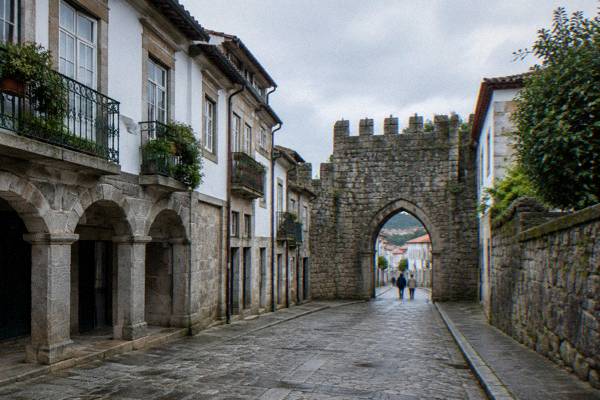
Is It Better To Stay In Porto Or Braga?
Braga or Porto as a base in northern Portugal: what each city gives you, the real costs, the train link between them, and which one suits your trip.
Braga, the city in Portugal's Minho region, and Porto, the country's second city on the Douro, are close enough that many travellers treat them as one combined destination: the Alfa Pendular train covers the distance in roughly 38 to 42 minutes, and the cheaper urban train takes a little over an hour. That nearness is exactly why the question of where to sleep causes so much second-guessing. The honest answer is that neither city wins outright, because they do different jobs: Braga is a compact, church-dense, baroque base with three sanctuary hills on its edge, while Porto is a large riverside city built around port wine, a bigger food scene and far more flight and hotel capacity. What follows breaks the decision into the things that actually change a trip: cost, pace, day-trip geometry and what each city feels like after dark.
Is It Better To Stay In Porto Or Braga?
Stay in Braga if your trip is about the Minho: the Bom Jesus do Monte sanctuary, the Sé de Braga, Tibães, Sameiro and easy bus runs to Guimarães, Ponte de Lima and the Gerês park. Stay in Porto if you want the big-city layer: international flights, the Douro riverside, a wider restaurant and hotel choice and day trips by tour bus. The two cities sit under an hour apart by fast train, so the other stays within easy reach either way.
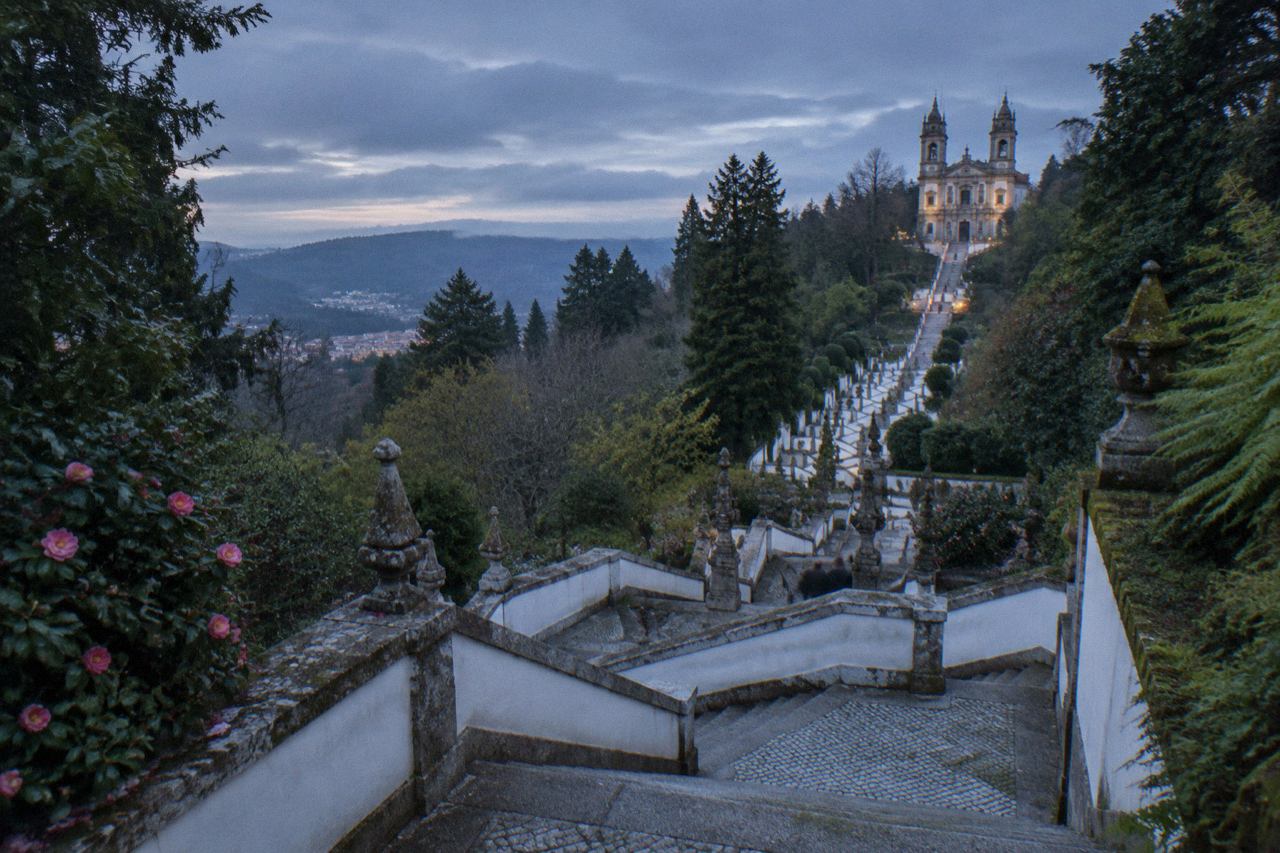
The mistake to avoid is treating this as a quality contest with a winner. Braga and Porto are not competing versions of the same place. Braga's whole identity is religious and baroque: the Bom Jesus do Monte stairway with its 566 steps by the Confraria's count, the Sé de Braga's three-route ticket, and a historic centre you can walk across in an afternoon. Porto is a port city with a river gorge, wine lodges and a scale that needs two or three days on its own. If you sleep in the wrong one for your interests, you spend your trip commuting; if you sleep in the right one, you barely notice the distance.
There is also a practical asymmetry worth naming early. Almost every organised day tour of Braga and Guimarães starts in Porto, not the other way round, because that is where the visitors and the coaches are. Sleeping in Porto and touring Braga is a well-trodden path with a lot of product behind it. Sleeping in Braga means a quieter, cheaper base and a more independent style of travel, with the train or your own legs doing the work.
Which Is Better, Porto Or Braga?
For most first-time visitors to northern Portugal, Porto is the better single base, because it has the flights, the hotels and the tour infrastructure, and Braga is an easy day trip from it. Braga is the better base for a second or third visit to the region, for anyone focused on the Minho's sanctuaries and small towns, and for travellers who want lower nightly costs and a centre that empties and quiets after dinner rather than filling up.
Neither city is "better" in the abstract. The comparison that matters is between two different trip shapes. The Porto-based trip looks like this: mornings in the big city, a booked day tour or a train ride to Braga and Guimarães in the middle of the week, evenings back among Porto's restaurants. The Braga-based trip looks different: your evenings are in a smaller city with fewer tourists on the street, and your day trips run outward to Guimarães, the Gerês national park and the Lima valley rather than inward to a city hub.
If you are deciding with a companion who disagrees, the split-stay compromise works well here precisely because the train is fast. Two or three nights in each city, with the Alfa Pendular connection between them, costs little time and removes the argument entirely.
What Does Staying In Braga Give You That Porto Does Not?
Staying in Braga puts you inside a walkable baroque city where the main sights, the Sé de Braga, the Santa Bárbara garden and the Arco da Porta Nova, are minutes apart on foot, and puts the sanctuary hills of Bom Jesus do Monte, Sameiro and Falperra on a local bus line rather than a day trip. Hotel nights are cheaper, the municipal tourist tax is lower, and after dark the historic centre stays a lived-in Portuguese city rather than a visitor district.
The density is the real argument. From a hotel in Braga's centre you can do the cathedral, the Museu dos Biscainhos, the Roman baths at Alto da Cividade and a long restaurant dinner without once checking a bus timetable. The Bom Jesus funicular has been out of service since 26 September 2026 with no end date published, and a replacement shuttle runs daily between the Pórtico and the sanctuary, but the sanctuary itself is free to enter and the stairway is always there; a hill afternoon costs you effort, not money.
If that kind of car-free Braga day sounds appealing, book a hotel here.
Costs are genuinely lower on the Braga side. The municipality's 2026 fee table levies a tourist tax of 1.55 EUR per person per night, capped at four nights, charged all year. Local transport is cheap too: the TUB network's tourist ticket covers the whole city network for 3.35 EUR for one day, 6.05 EUR for two, 8.05 EUR for three.
What Does Porto Offer That Braga Cannot?
Porto offers the things only a big city can: the flight arrivals themselves, a far wider range of hotels and restaurants at every price, the Douro riverside and port wine lodges, and the departure point for nearly every organised day tour in the region, including the Braga and Guimarães tours that leave from its centre each morning. If your trip is short, or you want evenings with the most choice, Porto is the stronger base.
The airport point is not trivial. Porto Airport is the region's main gateway, and the Getbus coach runs direct from the airport terminal to Braga bus station from 9.00 EUR one way in about 45 minutes, so even a Braga-based trip usually starts by landing in Porto. What Porto adds is everything after landing: you can be at a hotel in the city within half an hour of leaving the airport, and you never need to think about connections again until you leave. The rest of the planning pages sit on Braga Travel Guide.
The evening economy is the other difference. Porto's restaurant and bar scene runs late and wide, from the riverside cellars of Vila Nova de Gaia across the river to small rooms in the old centre. Braga has good food, and the local dishes like bacalhau à Braga and the Pudim Abade de Priscos dessert are reasons to eat well there, but the city is quieter after dinner and a lot of it genuinely closes. Some travellers read that as a fault; others read it as the point.
How Many Days Should Each City Get?
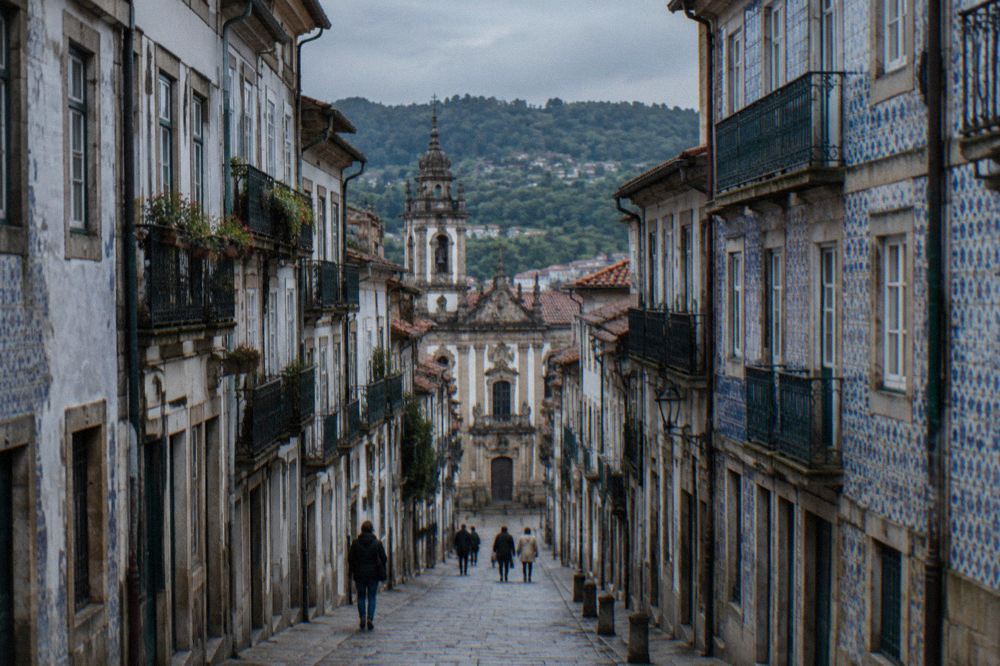
Braga rewards one full day for the historic centre and a second for the sanctuary hills; most visitors who sleep there use two or three nights. Porto needs at least two full days for the riverside, the cellars and the old centre, and most visitors give it three or four. A balanced Minho-first trip might look like four nights in Braga with a Porto evening on arrival, while a Porto-first trip typically gives Braga a single day-trip day, sometimes paired with Guimarães.
The one-day version of Braga is genuinely feasible: the centre is compact, and the Braga day trip from Porto itinerary covers the cathedral, the garden squares and Bom Jesus do Monte without rushing. The catch is that a day trip compresses Braga into its postcard, and the city's slower pleasures, an unhurried morning at the Tibães monastery, a long market lunch, the views from Monte do Picoto, are exactly what gets cut.
If you are leaning toward a split stay, the train makes it painless. The Alfa Pendular runs Porto Campanhã to Braga in roughly 38 to 42 minutes with a reservation, and the urban train covers the same line in a little over an hour for a few euros. Two bases, four or five nights total, no internal flights and no long transfers: for many travellers that is the answer to this whole question.
| Decision factor | Braga as a base | Porto as a base |
|---|---|---|
| Scale and feel | Compact baroque city, walkable centre, quiet evenings | Large riverside city, big evening economy |
| Signature sights | Bom Jesus do Monte, Sé de Braga, Tibães, Sameiro | Douro riverside, port lodges, the old centre |
| Municipal tourist tax | 1.55 EUR per person per night, up to 4 nights, all year | 3 EUR per person per night, up to 7 nights, all year |
| Local transport | TUB tourist ticket 3.35 EUR for 1 day, 6.05 EUR for 2 | Metro network covering city and airport |
| Day trips outward | Guimarães, Ponte de Lima, Gerês, Barcelos, the coast | Braga, Guimarães, the Douro valley, the coast |
| Tour availability | Fewer organised tours, more independent travel | Nearly every regional day tour starts here |
| Best for | Minho-focused trips, second visits, lower budgets | First visits, short trips, food and wine focus |
Where Should You Sleep If You Want Both Cities?
Sleep in Porto if the trip is short, and sleep in Braga if the Minho is the point and Porto is a bonus, because the train between them is fast enough that neither choice locks you out of the other. For a week or more, split the stay: three or four nights in each city, moving once by a train journey of well under an hour. The worst option is not picking at all and commuting daily, which burns both mornings and both evenings.
The daily commute deserves its own warning because it is the one genuinely bad plan. The train is fast, but a round trip costs you a fixed hour-plus of transit plus station time at both ends, every single day, and it pushes every dinner decision toward whichever city you are sleeping in anyway. One move, once, is efficient; seven moves, daily, is a holiday spent on platforms.
For the Braga side, the where to stay in Braga guide covers the practical neighbourhoods, from the historic centre itself out to the quieter residential quarters. For the Porto side, the areas around the old centre and the riverside are the usual choice, keeping the Campanhã rail hub within a short ride for your Braga days. And if you want a preview of what a Braga-plus-Guimarães day actually involves before committing nights, the Braga and Guimarães in one day itinerary lays it out hour by hour.
One organised option deserves a mention here. The Braga & Guimarães Small Group Tour with Lunch & Tickets Included runs from Porto, pairs both historic cities in a single day, and is one of the few products where the lunch, the transport and the entry tickets are all in the one price, which matters if you would otherwise spend your day trip standing in ticket lines. Check availability on the operator's live listing for current dates and pricing.
What Does The Weather And Timing Do To The Choice?
Braga's inland position gives it hotter summers and colder winters than the coastal city: IPMA's 1991 to 2020 normals for the Braga / Merelim station show July and August mean maxima of 28.2 and 28.7 C with roughly ten days at 30 C or above each, and January nights averaging 3.1 C with 8.5 nights of frost. October is the wettest month on average at 197.8 mm, so the sanctuary-hill walking that is Braga's main draw is best in May, June, September and early October.
The hill clause matters more than the temperature clause. Porto in rain is still a city of wine cellars, covered market halls and restaurants; Braga in heavy rain is a city whose headline attraction, a 566-step outdoor stairway and its hilltop gardens, is exactly the thing you cannot do. If you are travelling in the wet months from October through January, when Braga averages 12 to 13 rain days of 1 mm or more per month, weighting your nights toward Porto and taking a dry-window day for Braga is the safer plan. The best time to visit Braga guide has the full month-by-month picture.
Festival timing cuts the other way. Braga's Semana Santa, running the week before Easter, fills the city with processions and is a reason to sleep in Braga rather than visit it, because the evening events start at 21:30 and the last trains back to Porto leave long before they end. The São João festivities in late June and the Braga Romana weekend in late May similarly give Braga evenings worth staying for. Porto's calendar peaks in different weeks, most famously on the São João night itself, so it is worth checking both cities' dates against your travel window before booking anything.
Common Questions About Staying In Porto Or Braga
Is it better to stay in Porto or Braga?
For a first trip to northern Portugal, Porto is the more practical base because of its flights, hotels and tour departures, with Braga an easy day trip by train. For a Minho-focused trip, a second visit, or a quieter and cheaper base, Braga wins, and the fast train keeps Porto reachable either way.
Is Braga worth staying in overnight rather than just visiting?
Yes, if you want the sanctuary hills, an unhurried dinner and the small-town Minho atmosphere; the city centre is walkable, hotel rates and the 1.55 EUR per-night tourist tax are lower than Porto's, and sights like Tibães and Sameiro are hard to fit into a rushed day trip.
How long is the train between Porto and Braga?
The Alfa Pendular covers Porto Campanhã to Braga in roughly 38 to 42 minutes with a reservation; the cheaper urban train takes a little over an hour. Both use the same line, so the choice is speed and comfort against a few euros.
Can you visit Bom Jesus do Monte without staying in Braga?
Yes, it is a standard stop on day tours from Porto, but note the funicular has been out of service since 26 September 2026 with no return date published, and a replacement shuttle runs daily between the Pórtico and the sanctuary; check the operator's notice before your visit.
Which city is cheaper for a hotel stay?
Braga is generally the cheaper base: lower nightly rates on average and a municipal tourist tax of 1.55 EUR per person per night for up to four nights, charged all year.
Is Braga or Porto better for day trips around the Minho?
Braga is better placed for the Minho's own destinations: Guimarães, Ponte de Lima, the Gerês national park and Barcelos all sit closer to Braga, and the intercity buses leave from Braga's bus station. Porto is better placed for the Douro valley and coastal trips south of the river.
The short version: sleep in Porto if the trip is short and this is your first taste of northern Portugal, sleep in Braga if the sanctuaries and small towns are the reason you are flying out, and if the calendar allows, split the stay and let a sub-hour train settle the argument for you.