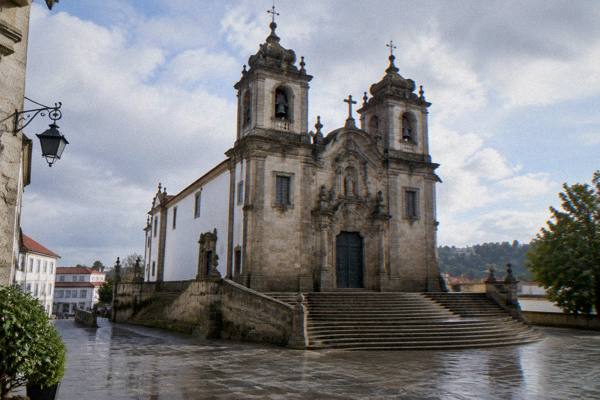
What Is Braga Famous For?
Braga, in northern Portugal's Minho region, is famous for the Bom Jesus do Monte sanctuary, the Sé de Braga cathedral, Holy Week processions and the vinho verde country around it. Here is what the city is actually known for.
Braga, the city in the Minho region of northern Portugal, is famous for a short list of things that most visitors can name before they arrive: the Bom Jesus do Monte sanctuary on its hill, the Sé de Braga cathedral at the heart of the old town, the Holy Week processions that fill the streets each spring, and the vinho verde country that begins at the city's edge. It is also the place people mean when they talk about the "Portuguese Rome" nickname, a label tour operators still use for its concentration of religious architecture. This site, Braga Travel Guide, covers the city itself, not the wider district of the same name, which contains Guimarães, Barcelos and part of the Peneda-Gerês park.
What Is Braga Famous For?
Braga, Portugal, is famous for four things above all: the Bom Jesus do Monte sanctuary, a UNESCO World Heritage Site inscribed in 2019; the Sé de Braga, one of the country's great medieval cathedrals; Semana Santa, the Holy Week processions held each spring; and vinho verde, the lightly sparkling wine of the surrounding Minho region. Add a baroque historic centre and a student-city energy, and the picture is complete.
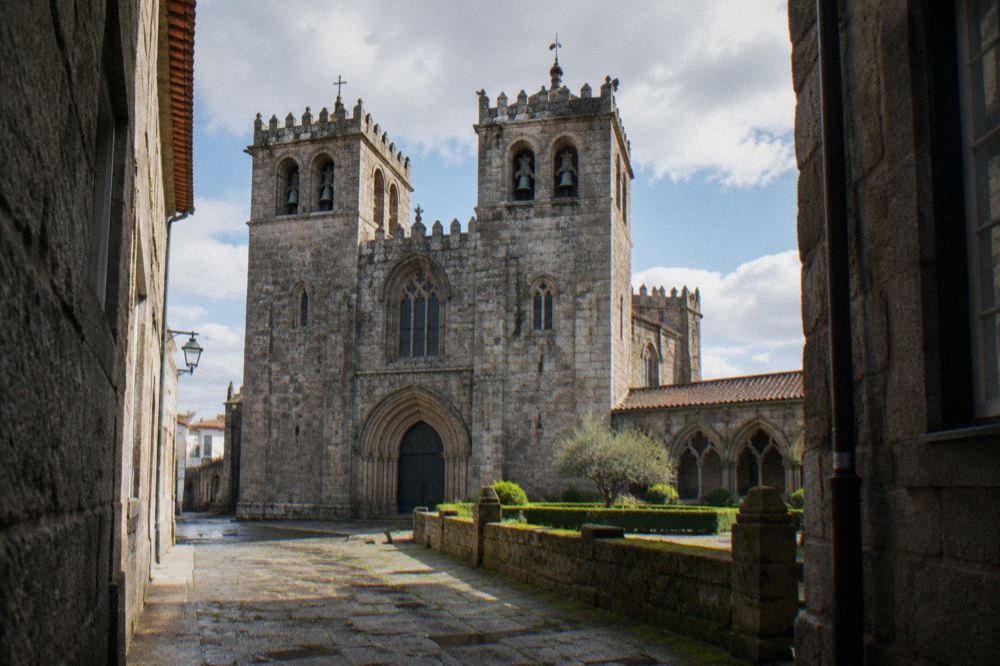
Those four anchors account for almost every reason a visitor boards a train to the city. The sanctuary alone draws day-trippers from Porto, pilgrims on the way to Santiago, and architecture enthusiasts who come for the zigzag baroque stairway. The cathedral anchors the historic centre and gives the city its religious weight, which is considerable even by Portuguese standards.
The nickname attached to all this deserves a word of care. Guides and tour listings regularly call Braga the "Portuguese Rome", and the nickname is real and widely used, but it is a label rather than a counted claim, and this page will not dress it up as a statistic. What can be said plainly is that the city holds a dense cluster of churches, monasteries and sanctuaries within a compact area, and that religious festivals still structure its calendar the way few other Portuguese cities' calendars are structured.
| What Braga is famous for | The concrete detail behind the fame |
|---|---|
| Bom Jesus do Monte | UNESCO World Heritage Site since 2019, with a 566-step baroque stairway, by the Confraria's count |
| Sé de Braga | Cathedral with three visit routes; the combined ticket covering all three costs 7.00 EUR |
| Semana Santa | Holy Week processions, 29 March to 5 April in 2026, listed in the National Inventory of Intangible Cultural Heritage |
| Vinho verde | The Minho's signature wine, produced in the countryside around the city |
| Festive calendar | São João in June, Braga Romana in late May, Noite Branca on the first September weekend |
For readers weighing the city against its neighbours, the comparison articles on whether Braga is worth visiting and whether to visit Braga or Guimarães go deeper on that decision.
Why Is Braga Famous?
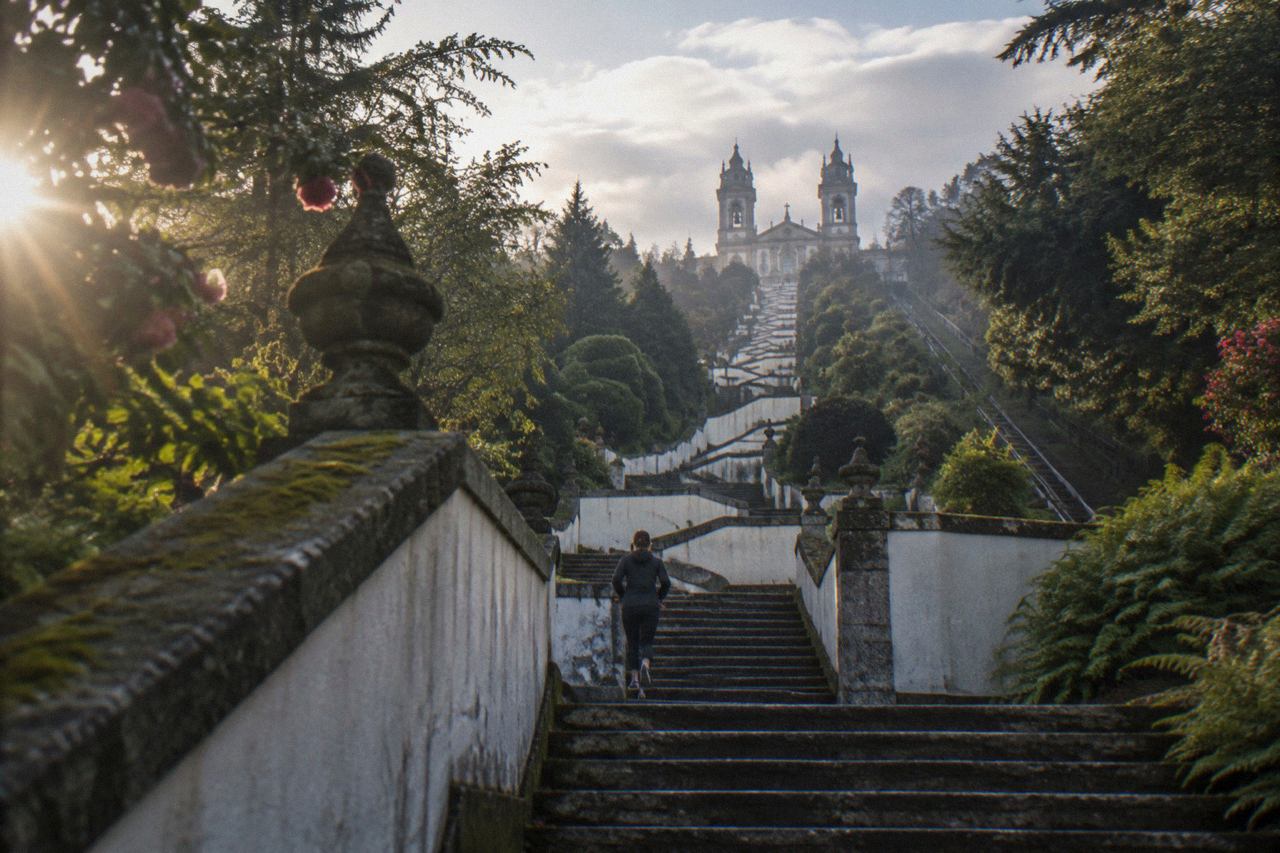
Braga is famous mainly because of Bom Jesus do Monte, the sanctuary on the hill east of the city that UNESCO inscribed on the World Heritage List in 2019 as "Sanctuary of Bom Jesus do Monte in Braga". Its stairway climbs 566 steps over 615 metres, with 116 metres of ascent, past chapels, fountains and formal gardens, and it is the single most photographed sight in the Minho region.
The Confraria do Bom Jesus do Monte, which operates the sanctuary, gives those figures on its own pages, and the step count is the Confraria's: 566, not the higher numbers that circulate on travel blogs. UNESCO describes the ensemble as built facing west over more than 600 years, with a Via Crucis of chapels, fountains, sculptures and gardens spread across a 26-hectare property.
One operational fact matters for anyone planning a visit. The Bom Jesus funicular, the water-counterweight lift inaugurated on 25 March 1882 and designed by the Swiss engineer Nikolaus Riggenbach, has been out of service since 26 September 2026, with no end date published. A replacement shuttle runs every day from 09:00 to 20:00, roughly every 30 minutes in each direction, between the Portico, where TUB Line 2 ends, and the sanctuary. The Confraria's own information page states that the sanctuary, its grounds and the basilica carry no admission charge at all; only the funicular, the high choir and bell tower at 1 EUR, the lake boats and the car park are priced.
The basilica keeps long hours, 08:00 to 19:00 in summer and 08:00 to 18:00 in winter, every day. Mass times are published by the Confraria, and the sanctuary stays busy on summer weekends with a mix of pilgrims and sightseers, which is exactly the mix the site was built for. For the meaning behind the name, the article on what Bom Jesus do Monte means in English unpacks the translation.
The stairway is the part most visitors remember, and it rewards a slow climb. The three named sections, the Escadório do Pórtico, the Escadório dos Cinco Sentidos and the Escadório das Virtudes, are laid out as a theological ascent, with each flight dedicated to a stage of devotion. Walking up rather than riding the shuttle means reading the ensemble the way its builders intended, from the fountains at the bottom to the church at the top.
To take in the stairway and the city in one guided outing, book a small-group walking tour here.
What Is Braga Known For In Food And Wine?
Braga is known for the food and wine of the Minho: vinho verde above all, the young, lightly sparkling wine grown in the region around the city, plus a table of northern dishes that includes bacalhau à Braga, the salt-cod dish that carries the city's name, and Pudim Abade de Priscos, a caramel egg pudding. Restaurants in the historic centre serve all three.
Vinho verde is the region's signature and the reason wine travellers base themselves in Braga. The wine is not a single grape but a style, made from local varieties across the green, rain-fed landscape of the Minho, and it pairs with the region's fish and grilled meats. The question of whether vinho verde is a sweet or dry wine comes up constantly, and the short answer is that most of it is dry, fresh and low in alcohol, with a light natural spritz.
The city's food fame is specific rather than generic. Bacalhau à Braga, salt cod layered with potatoes and fried onions, is a dish with the city's name on it, and the pudding associated with Abade de Priscos remains on nearly every traditional restaurant's dessert list. Frigideiras do Bom Jesus, small meat pastries associated with the sanctuary, are the snack that travels home in boxes.
A guided way into this is the Braga Small-Group Walking Tour & Bom Jesus, a three-hour small-group tour that pairs the historic centre with the sanctuary, the two things the city is most famous for; Check availability on the operator's live listing for current times and prices.
What Is Special About Braga'S Festivals?
Braga's festivals are special because the city's Holy Week, Semana Santa, is listed in Portugal's National Inventory of Intangible Cultural Heritage and was declared of Interest for Tourism by Turismo de Portugal. In 2026 it ran from 29 March to 5 April, with processions including the Burrinha on 1 April and the Enterro do Senhor on 3 April, and it transforms the historic centre each spring.
Semana Santa is the city's biggest annual event, organised by the Comissão da Quaresma e Solenidades da Semana Santa de Braga together with the cathedral chapter, the brotherhoods and the Santa Casa da Misericórdia. Because Holy Week moves with Easter, the dates shift every year, and the 2027 dates had not been announced, but the pattern is stable: the week before Easter, with evening processions through the old streets.
The rest of the calendar is nearly as strong. The Festas de São João ran from 17 to 24 June in 2026, peaking on the night of 23 June into the 24 June municipal holiday. Braga Romana, the municipality's Roman-themed festival, falls in late May. Noite Branca, the all-night arts and music weekend, takes over the centre on the first weekend of September, and the Encontros da Imagem photography festival runs from mid-September into early November.
| Festival | 2026 dates | What it is |
|---|---|---|
| Semana Santa | 29 March to 5 April | Holy Week processions, listed national intangible heritage |
| Braga Romana | Late May | Roman-themed festival organised by the municipality |
| Festas de São João | 17 to 24 June | City festival peaking on the night of 23 June |
| Noite Branca | 4 to 6 September | All-night culture and music weekend |
| Encontros da Imagem | 18 September to 1 November | Photography festival across city venues |
The practical effect for visitors is that the city changes character with its calendar. A quiet February week and a June festival week are two different trips, and the article on how many days you need in Braga is worth reading before choosing dates.
Is Braga Also Famous As A Base For The Minho Region?
Yes. Braga is famous as a base for the Minho region because it sits within easy reach of Guimarães, the Peneda-Gerês National Park, Ponte de Lima, Viana do Castelo and Barcelos, while the city itself holds enough for two full days. Regional buses leave from Braga's bus station, and the city is the region's transport hub.
The geography matters here, and it is worth being precise. Braga the city is not the same as Braga the district, which contains Guimarães, Barcelos, Famalicão and part of the Peneda-Gerês park. But the city sits at the centre of that district's transport web, and the intercity bus lines run from Braga to Guimarães, Ponte de Lima, the Gerês spa village and the coast at Póvoa de Varzim. There is no direct train from Braga to Guimarães, a fact that surprises many visitors; the train question between the two cities is answered separately.
The day-trip options are strong enough that some visitors sleep in Porto and day-trip in, while others base in Braga and radiate out. The article on whether Braga is worth a day trip from Porto covers the first strategy, and the guide to the most beautiful towns near Porto places Braga in the wider regional picture alongside its neighbours.
One more fame factor that is easy to overlook: Braga's own scale. The municipality counted 193,324 residents at the 2021 census, the only population figure that is properly sourced, and the city carries a university population that keeps the cafes and bars of the historic centre lively outside festival weeks. It is a working Portuguese city that happens to hold a UNESCO site, not a museum town, and that combination is a large part of its appeal.
Common Questions About What Braga Is Famous For
What is Braga, Portugal famous for?
Braga, the city in northern Portugal's Minho region, is famous for the Bom Jesus do Monte sanctuary, a UNESCO World Heritage Site since 2019 with a 566-step baroque stairway; the Sé de Braga cathedral; its Holy Week processions; and the vinho verde wine country around it.
What is Braga known for?
Beyond the sanctuary and the cathedral, Braga is known for Semana Santa, its Holy Week festival listed in the National Inventory of Intangible Cultural Heritage, for dishes like bacalhau à Braga and Pudim Abade de Priscos, and for its baroque historic centre.
Why is Braga famous?
Braga is famous chiefly because of Bom Jesus do Monte, the hilltop sanctuary UNESCO inscribed in 2019, and because its religious calendar, above all Holy Week, remains one of the most visible in Portugal. The city's nickname, "Portuguese Rome", reflects that religious density.
What is special about Braga?
What is special about Braga is the combination: a UNESCO World Heritage sanctuary on one hill, a working cathedral in the centre, a festival calendar that runs from Holy Week in spring to Noite Branca in September, and vinho verde country at the city's edge, all within walking or short bus distance of one another.
Is the Bom Jesus funicular running?
The Bom Jesus funicular has been out of service since 26 September 2026, with no return date published. A replacement shuttle runs every day from 09:00 to 20:00, roughly every 30 minutes each way, between the Portico, where TUB Line 2 ends, and the sanctuary. Check the operator's notice before you go.
Is Braga worth visiting compared to Guimarães?
Both are worth visiting and they are an hour apart by bus. Braga holds the UNESCO-listed sanctuary and the bigger religious calendar; Guimarães holds the castle and the medieval centre. Many visitors see both, and the comparison is covered in detail on the page comparing the two cities.