Is It Better To Visit Braga Or Guimarães?
Braga or Guimarães? A straight comparison of the two great cities of Portugal's Minho region: sights, atmosphere, food, transport between them, and which one fits your trip.
Braga, the historic city in Portugal's Minho region, and Guimarães, its neighbour across the hills to the east, are the two cities most visitors to northern Portugal try to squeeze into the same trip. They are close enough that the question is never really either or: the practical choice is which one gets your full day, which one gets your evening, and whether you can give both the time they deserve. This comparison on Braga Travel Guide sets out what each city is genuinely good at, using verified figures for Braga and plain description for Guimarães, so you can decide with a clear head.
Is It Better To Visit Braga Or Guimarães?
Braga is the better choice if you want a full city with layered history, a large historic centre, serious food and a hilltop sanctuary on the UNESCO World Heritage List, while Guimarães is the better choice if your day is short and you want one compact medieval core, a castle and a palace within easy walking distance of each other. If you have two days, visit both: they are linked by a direct bus and no traveller who sees both ever regrets it.
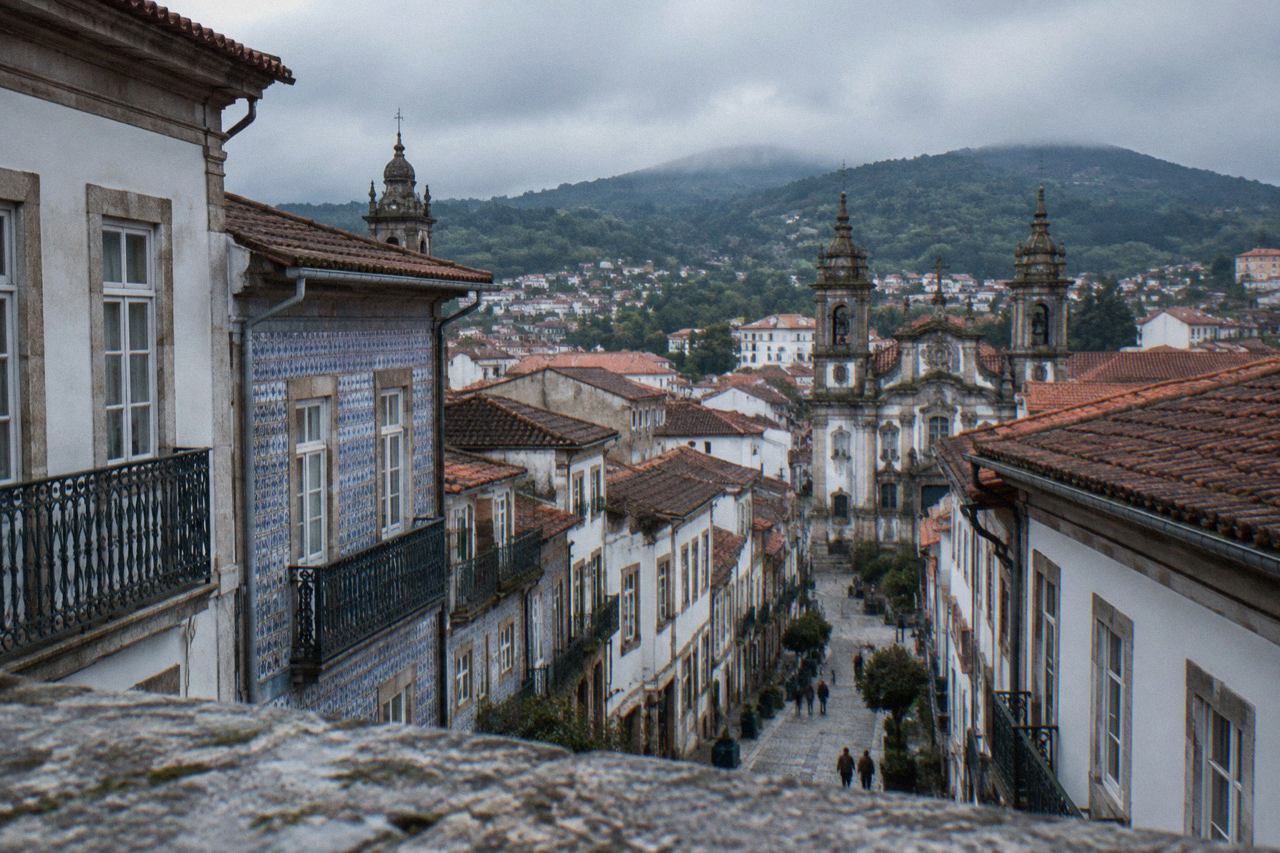
That is the honest short version. The longer version is that the two cities answer different questions. Braga rewards the visitor who settles in: its centre spreads from the Sé de Braga cathedral through Avenida da Liberdade to the Arco da Porta Nova, and its big sights, Bom Jesus do Monte and the Santuário do Sameiro, sit on hills just outside the centre, each worth half a day on its own. Guimarães answers with density: its historic core is small, walkable in a few hours, and organised around a castle, a ducal palace and a main square that carry the city's identity as the place where Portugal's first king is celebrated.
Neither city is the other one's understudy. Travel writers who call Guimarães "the cradle of Portugal" and Braga "the Portuguese Rome" are describing two genuinely different experiences, not two versions of the same one.
What Kind Of City Is Braga, And What Kind Is Guimarães?
Braga is a working religious capital: a city of churches, baroque stairways, museums and a large student population, spread across a historic centre and several hill sanctuaries, while Guimarães is a smaller, tightly packed medieval town whose castle, palace and old square sit at the centre of the Portuguese national story. Braga feels bigger and busier; Guimarães feels like a single well-preserved stage set.
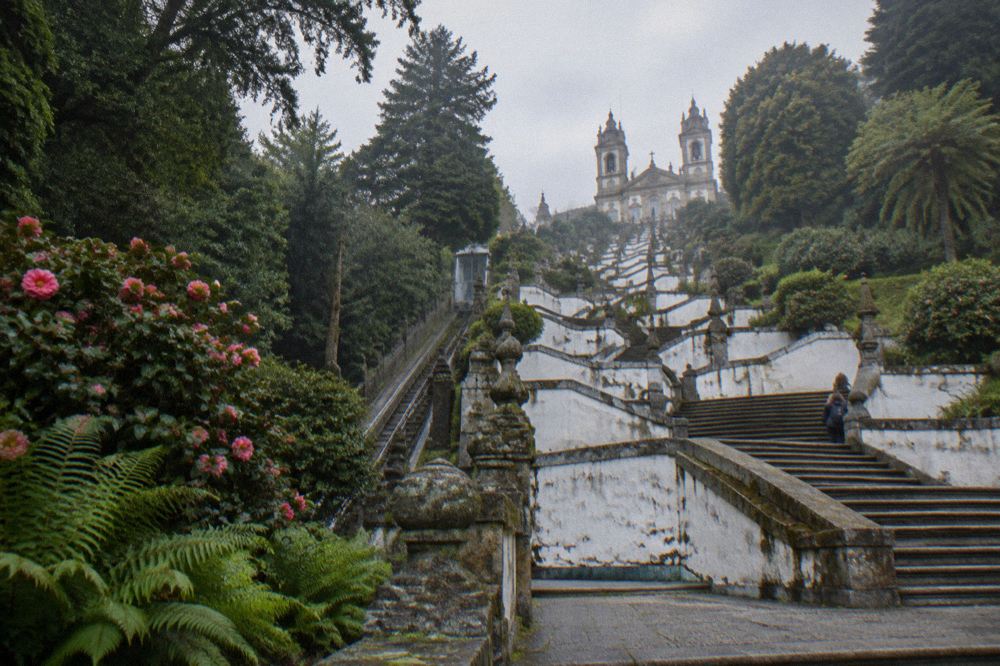
Braga's character comes from scale and from the hills. In the centre, the Sé de Braga offers three separate visit routes, the cathedral, the Treasury-Museum, and the chapels and high choir, each priced at 3.00 EUR with a combined ticket at 7.00 EUR for all three, and the Museu dos Biscainhos, the Museu de Arqueologia D. Diogo de Sousa and the Museu Pio XII fill out the museum side. Above the city, Bom Jesus do Monte climbs 566 steps by the Confraria's own count, a zigzag baroque stairway of chapels, fountains and statuary inscribed on the UNESCO World Heritage List in 2019. The Santuário do Sameiro and the Mosteiro de São Martinho de Tibães sit on neighbouring hills, each reachable by local bus.
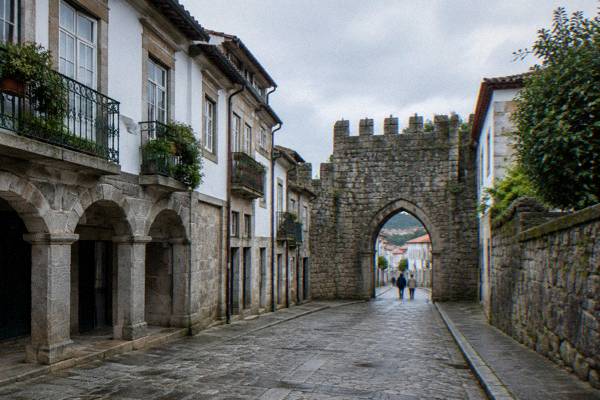
Guimarães trades that spread for concentration. Its castle, its Paço dos Duques and the Largo da Oliveira square form a medieval core that a visitor can cross on foot in minutes, and its historic centre is the reason it is on most northern Portugal itineraries. The city is proud of its role in the foundation of Portugal, and that story is what its main monuments exist to tell. What it does not have is Braga's depth of religious architecture, its hill sanctuaries or its museum circuit, which is why a day in Guimarães feels complete sooner than a day in Braga does.
If your time in Braga is short and the walking looks like too much, a tuk tuk tour is the efficient way to see the centre and the main squares: Check availability for the Braga tuk tuk city tour, which runs from under half an hour to two hours depending on the option.
How Do The Two Cities Compare On Sights, Food And Atmosphere?
Braga wins on religious architecture, museums, restaurants and the sheer number of things to see; Guimarães wins on compactness, on the castle-and-palace combination and on how little planning a visit takes. Braga needs at least one full day and rewards two; Guimarães can be absorbed well in a long half day, which is exactly why the two pair so easily.
| What you want | Braga | Guimarães |
|---|---|---|
| A single walkable historic core | Large centre, spread over several squares and streets | Small, compact, everything within a short walk |
| A castle | Braga's castle keep is a modest remnant | The castle is one of the city's main monuments |
| Religious architecture | Sé de Braga, hill sanctuaries, dozens of churches | A handful of churches in and around the centre |
| Museums | Several, including Biscainhos, D. Diogo de Sousa and Pio XII | Fewer, centred on the historic core's story |
| A hilltop sanctuary | Bom Jesus do Monte, UNESCO listed since 2019 | None on the same scale |
| Food and restaurants | A wide restaurant scene, from cafés to regional kitchens | A smaller scene focused on the historic centre |
| Time needed for the highlights | A full day, better with two | A long half day covers the core |
On food, Braga's regional kitchen is one of the reasons people come: bacalhau à Braga, the city's signature cod dish, and pudim Abade de Priscos, a caramel egg pudding, both appear on menus across the centre. The restaurant scene is large enough that a visitor eats well without planning. Guimarães eats well too, but its offer is smaller and clustered in the old streets around the square.
On atmosphere, the difference is between a city that lives its own life and a town that has been polished for visitors without losing its residents. Braga's population, 193,324 in the municipality at the 2021 census, keeps its streets, cafés and shops running year round. Guimarães' core is quieter outside peak hours, which some visitors love and others find thin by evening.
How Do You Travel Between Braga And Guimarães?
There is no direct train between the two cities, so the bus is the practical link: AITC line 101 runs from Braga bus station to Guimarães central bus station, and the two centres are also connected by guided day tours that cover both cities in one trip. If you are based in Porto, both Braga and Guimarães are reachable by train from Porto, just not from each other.
The train gap surprises people, and it shapes every plan. Guimarães is on its own rail line out of Porto. Between Braga and Guimarães, though, the rail map simply has no track, and the bus fills the gap.
The details that matter:
- AITC line 101 is the direct regional bus, departing from Braga's bus station, the Centro Coordenador de Transportes, and arriving at Guimarães' central bus station.
- Fares and exact journey times for regional buses are not published in a verified form, so check the AITC timetable before you travel rather than trusting a figure from a blog.
- If you would rather not organise the connection yourself, guided tours that visit both cities in one day exist from Porto, and a one-day itinerary covering both is realistic if you start early.
The full picture on the rail side is in Is There A Train From Braga To Guimarães?, and the case for basing yourself in one city rather than commuting is covered in Is It Better To Stay In Porto Or Braga?.
One practical note before you commit to the bus-and-walk plan: whichever city you pick as your base, the tuk tuk option in Braga pairs well with a morning arrival, because it covers the centre quickly and leaves the afternoon free for either the sanctuaries or the transfer east. Travellers who book it for their first hour in the city tend to see more of Braga than those who start on foot and run out of time.
Which City Suits Which Traveller?
Choose Braga if you care about religious architecture, museums, food and the UNESCO-listed Bom Jesus sanctuary, or if you have a full day or more; choose Guimarães if you have only a half day, if a castle and a palace are the priority, or if you are travelling with small children and want everything close together. Photographers and pilgrims lean Braga; families and short-stay visitors often lean Guimarães.
The traveller profile test works well here. If your ideal day ends with a long dinner after a full circuit of churches, museums and viewpoints, Braga is your city. The Sé de Braga's three routes, the stairway at Bom Jesus and the city's restaurants together fill a day without any filler. The Bom Jesus stairway is a real climb, 566 steps with 116 metres of ascent, so visitors who want the sanctuary without the effort should check the shuttle situation before setting out.
If that sounds like your ideal day in Braga, book a free walking tour here. (Guided in Spanish)
If your ideal day is one you can see the whole of, Guimarães fits. Its core is small enough that a visitor with mobility limits, a pushchair or a short attention span in the group still covers the castle, the palace and the square comfortably. The trade-off is that by late afternoon the list of remaining sights is short, and the evening belongs to the restaurants.
Budget barely separates them. Both cities are inexpensive by western European standards, and Braga's headline sights are cheap: the cathedral's combined ticket is 7.00 EUR, the Bom Jesus sanctuary grounds and basilica are free, and the municipal museums cluster in the 2 to 7.50 EUR range. Guimarães' costs sit in the same bracket, though this build verified no individual Guimarães admission prices, so treat any figure you see for its castle as something to confirm on the spot.
Can You Visit Braga And Guimarães In One Day?
Yes, one day is enough to see the highlights of both cities if you start early and are disciplined: give Braga the morning, with the cathedral and the historic centre, move to Guimarães by early afternoon for the castle and the old square, and finish in Guimarães' centre before evening. One day means choosing between Bom Jesus and Guimarães' castle, because both do not fit comfortably.
The one-day split works because each city has one unmissable cluster. In Braga, that cluster is the centre: the Sé de Braga, the streets around Rua do Souto and Praça da República, and the Arco da Porta Nova can be covered in a morning. In Guimarães, it is the castle-and-square core, which needs a few hours. The mistake to avoid is adding Bom Jesus do Monte to the Braga half: the sanctuary sits on a hill outside the centre, the funicular is currently out of service, and the round trip eats the time the Guimarães half needs.
| Time of day | Where | What to do |
|---|---|---|
| Morning | Braga | Sé de Braga, historic centre, Rua do Souto, Arco da Porta Nova |
| Midday | Braga | Lunch on a regional menu, bacalhau à Braga if it is on the list |
| Early afternoon | Between cities | AITC line 101 bus from Braga bus station to Guimarães |
| Late afternoon | Guimarães | Castle, palace and the old square around Largo da Oliveira |
| Evening | Guimarães | Dinner in the historic core before heading back |
For a fuller version of this plan, including where the sanctuaries fit when you have more time, the Braga and Guimarães in one day itinerary lays out the sequence in detail, and Is Guimarães Worth Visiting? makes the case for the eastern half of the pair. If your base is Porto rather than either Minho city, the day-trip maths change again, and Is Braga Worth A Day Trip From Porto? covers that decision.
Common Questions About Braga Or Guimarães
The short answers: most travellers with one day should pick the city that matches their interests rather than trying to rank them, Braga is the stronger choice for a two-day stay, Guimarães for a half day, and the two cities are close enough that a confident itinerary can include both. The bus connection between them is direct, there is no train, and neither city needs a car.
Which is better, Braga or Guimarães?
Neither is simply better. Braga offers more sights, a larger centre and the UNESCO-listed Bom Jesus do Monte sanctuary; Guimarães offers a compact medieval core with a castle and palace. Travellers with a full day or more tend to prefer Braga; travellers with half a day often prefer Guimarães.
Is it better to visit Braga or Guimarães?
It depends on your time. With one day or more, Braga's cathedral, museums, hill sanctuaries and restaurants give you more to do. With only a few hours, Guimarães' walkable core is easier to absorb. With two days, visit both.
Can you do Braga and Guimarães in one day?
Yes. Give Braga the morning and early afternoon, take the AITC line 101 bus between the two bus stations, and finish in Guimarães' historic core. Skip Bom Jesus do Monte on a one-day plan, because the hill sanctuary takes too much time from the Guimarães half.
Is there a train between Braga and Guimarães?
No. There is no direct rail line between the two cities. The direct link is the AITC line 101 regional bus. Both cities do have direct trains from Porto, on separate lines.
Which city is cheaper, Braga or Guimarães?
Both are inexpensive, and neither is meaningfully dearer than the other. Braga's main sights are cheap by any standard: the cathedral's combined ticket costs 7.00 EUR and the Bom Jesus grounds are free. Both cities charge a small municipal tourist tax, 1.55 EUR per night in Braga and 1.50 EUR per night in Guimarães in season, capped at four and two nights respectively.
Whichever city you choose, the honest advice is the same: decide by interest, not by reputation. Braga rewards the visitor with a day or two and an appetite for churches, stairways and long dinners, and Guimarães rewards the visitor who wants the whole story in one walkable square mile, and the bus between them means the only wrong answer is skipping the Minho altogether.