Is Braga Safe? What Visitors To Portugal's Northern City Should Know
Braga, the city in the Minho region of northern Portugal, is one of the country's most relaxed destinations for visitors, and the safety questions travellers ask are mostly about details, not danger.
Short answer
Yes. Braga is widely considered a safe, walkable city with low violent crime, and the practical risks visitors actually face are pickpocketing in crowds, wet cobblestones and the stairway at Bom Jesus do Monte. Normal city precautions are enough.
Braga, the city in the Minho region of northern Portugal, is a compact, church-steeped place where most safety questions have unexciting answers. The historic centre is walkable end to end, the hills around it hold sanctuaries and monasteries rather than no-go areas, and the concerns that genuinely matter to a visitor are practical ones: a wet flagstone in October, a crowded procession during Semana Santa, the 566 steps of the Bom Jesus do Monte stairway. This guide works through each of them with verified local facts, from bus fares to entry rules, so you can plan with a clear picture rather than a vague impression.
Is Braga Safe For Tourists?
Yes, Braga is considered a safe city for tourists, with the low-violence profile typical of northern Portugal and no neighbourhoods that visitor guidance treats as off limits. The risks that actually affect visitors are opportunistic rather than targeted: pickpocketing in busy crowds, bags left unattended at café tables, and slips on worn stone in the historic centre. Ordinary city precautions, the same ones you would take in Porto or Guimarães, cover almost every realistic scenario.
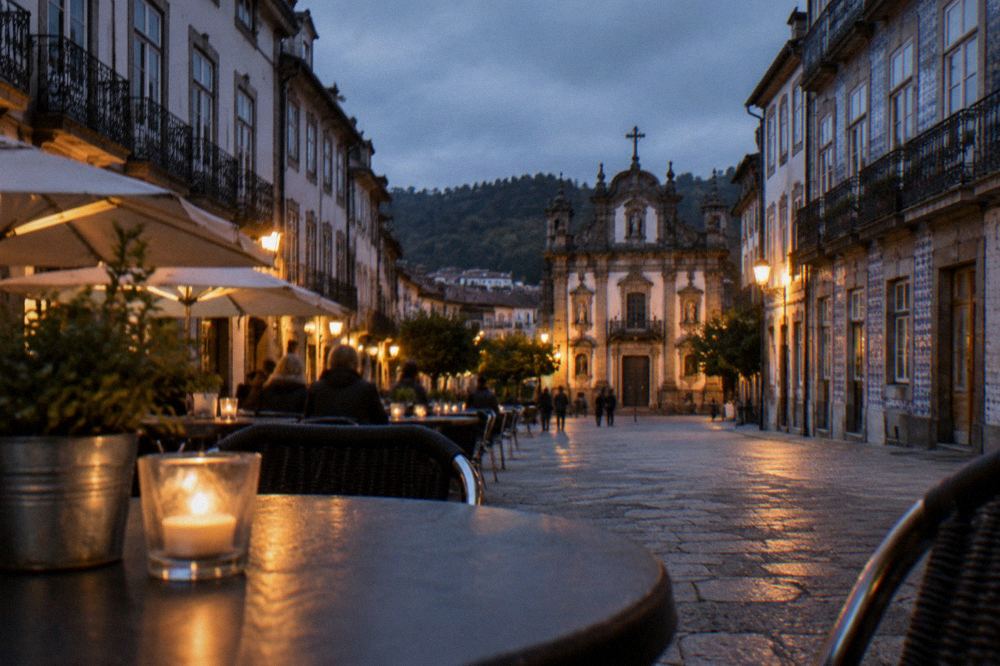
Portugal as a whole ranks among Europe's calmer destinations, and Braga, a university and religious city of 193,324 residents in the municipality by the 2021 census, has the social texture that produces: families on the street late, students in the cafés around the Rua do Souto pedestrian axis, pilgrims and churchgoers moving between the Sé de Braga and the hill sanctuaries. There is no nightlife district with a reputation for trouble, and the evening economy is centred on restaurants and pastelarias rather than bars that empty at 3 a.m.
That does not mean zero risk. Any city that draws crowds, and Braga draws them during Semana Santa, São João and the Braga Romana festival, creates the conditions for opportunistic theft. The municipal tourist tax of 1.55 EUR per person per night, charged by hotels and local accommodation to guests aged 16 and over for up to four nights, is a reminder that this is a city with a real visitor economy, and real visitor volumes, during festival weeks.
For a first orientation, a guided walk is a sensible way to learn the city's geography before exploring alone. The Braga: Personal & Flexible Walking Tour in Historic Center runs about three hours with a local guide and rates 4.7 from 62 reviews, from $11.33 per person, and there is also a free, tip-based option: the Essential Free Tour of Braga (guided in Spanish) on GuruWalk, led by a guide with a blue umbrella, rated 4.58 from 586 reviews. Check availability for the flexible walking tour if you want that orientation on your first day.
Our guide to Braga's walking tours compares the guided options in more detail if you are weighing them against going alone.
What Are The Main Safety Risks In Braga?
The main safety risks in Braga are petty theft in crowds, trips and falls on historic paving, traffic in the wider avenues, and heat or dehydration on the sanctuary hills in summer. None of these is unique to the city or severe, but each has a specific, cheap fix: a zipped bag, shoes with grip, care at crossings, and water on the climb. The city has no pattern of violence against visitors.
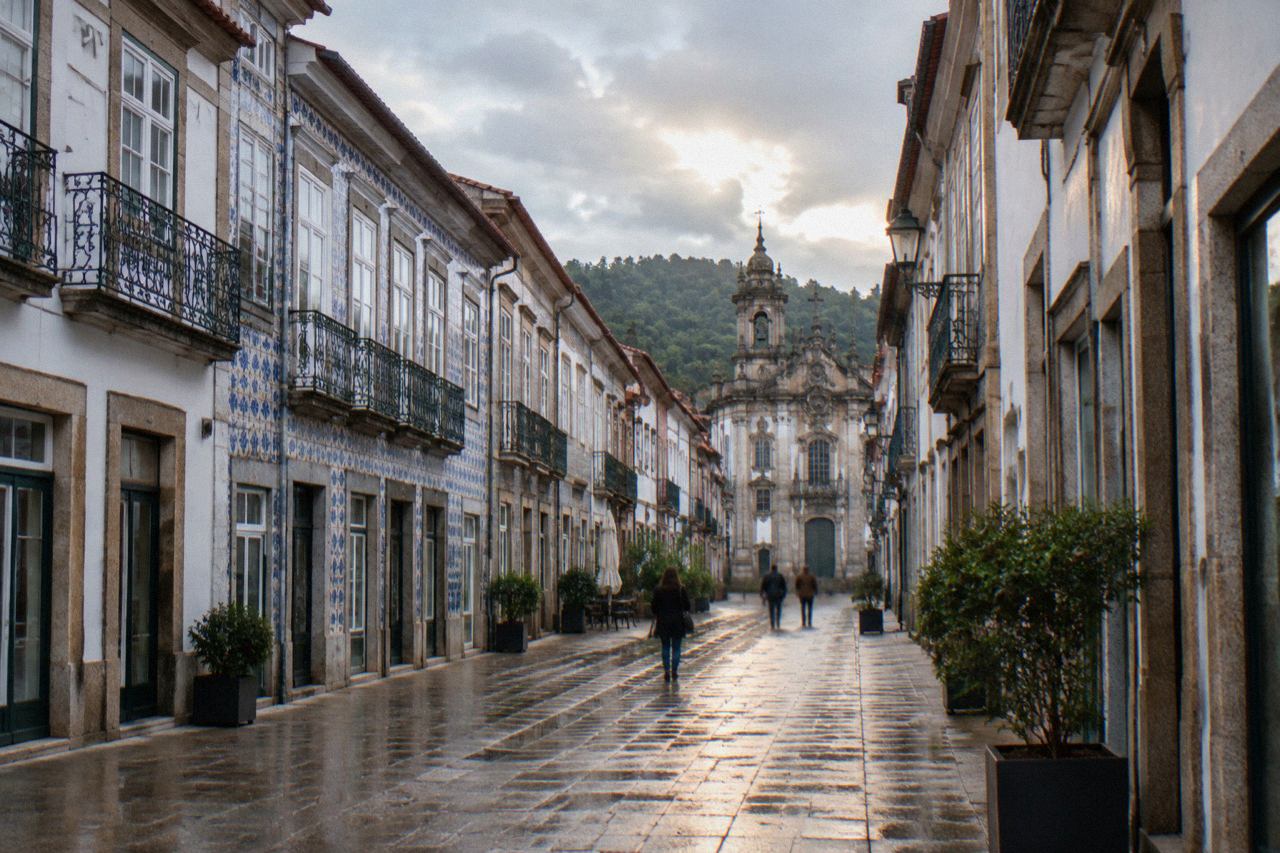
The historic centre's streets are largely pedestrianised around Rua do Souto, which removes the most common urban collision risk. Where cars do run, on Avenida da Liberdade and the ring roads, Portuguese driving is assertive but rule-bound, and crossings are marked. The genuine physical hazard in Braga is underfoot: polished granite and worn flagstones, wet from October's average 197.8 mm of rain, are slick in a way that surprises visitors used to rougher paving.
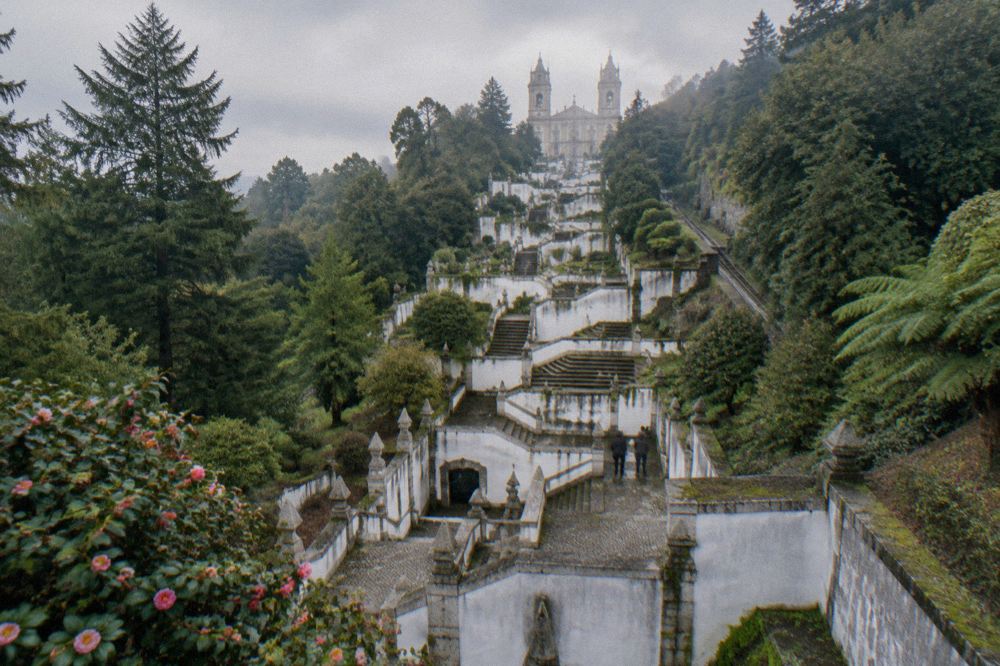
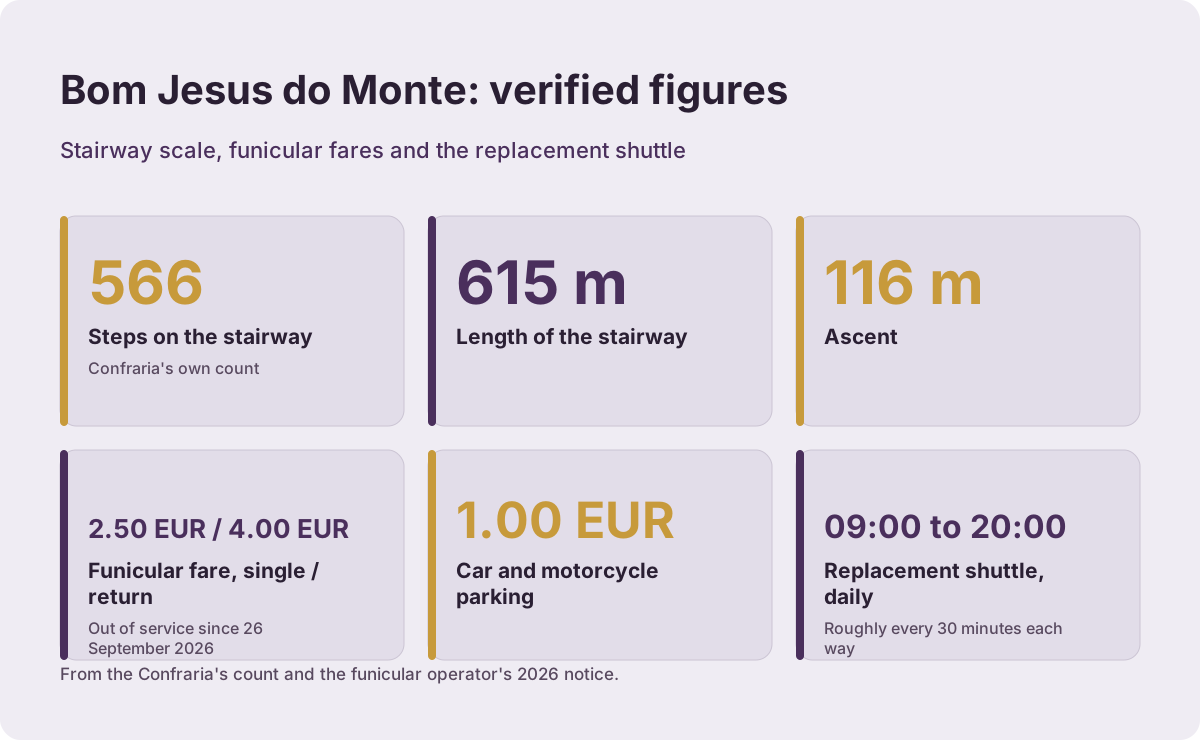
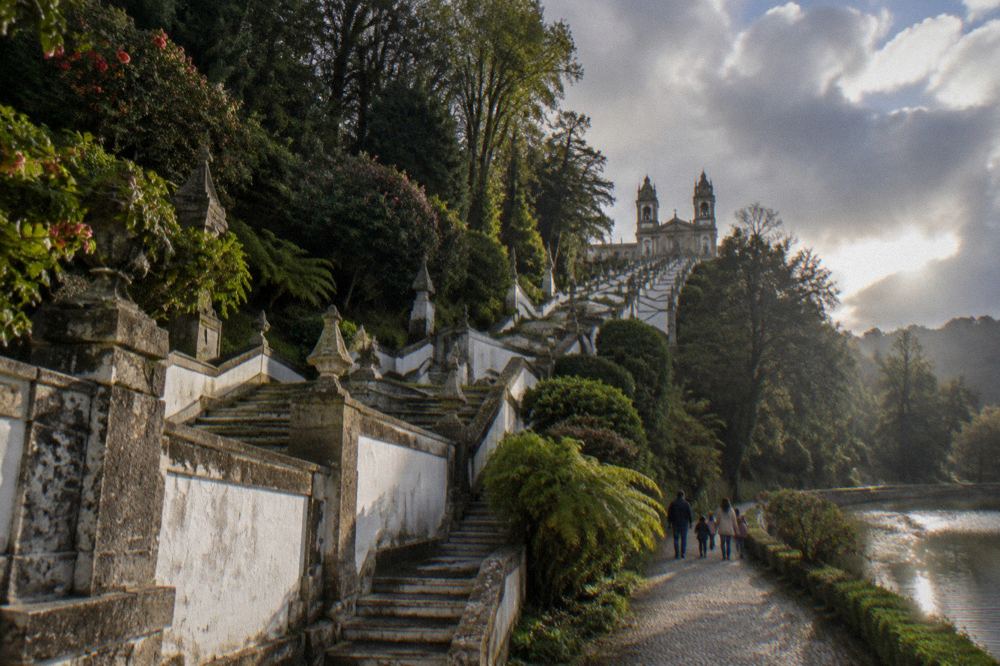
The stairway at Bom Jesus do Monte deserves its own mention. The Confraria's own count puts the Escadório do Pórtico and the sections above it at 566 steps, 615 metres long with 116 metres of ascent. It is a wide, well-built baroque stairway, not a mountain path, but it should be treated as exercise: taken slowly, in good shoes, and avoided entirely in rain or by anyone with knee, hip or heart concerns. The alternative is the road, served by TUB Line 2 to the Portico.
One standing fact for 2026: the Bom Jesus funicular has been out of service since 26 September 2026, with no end date published, and a replacement shuttle runs every day from 09:00 to 20:00, roughly every 30 minutes each way, between the Portico and the sanctuary. Check the operator's notice before you go rather than assuming a ride.
| Bom Jesus do Monte: verified figures | Value |
|---|---|
| Steps on the stairway (Confraria's count) | 566 |
| Length of the stairway | 615 m |
| Ascent | 116 m |
| Funicular fare (single / return, when running) | 2.50 EUR / 4.00 EUR |
| Car and motorcycle parking | 1.00 EUR |
| Basilica and grounds admission | Free |
Festival crowds are the one time when petty crime risk rises meaningfully. During Semana Santa, the processions (Burrinha, Ecce Homo and the Enterro do Senhor all start at 21:30) compress large numbers of people into the streets around the cathedral. Keep valuables in front pockets, avoid bags slung behind you, and agree a meeting point if you are separated from companions. Our Semana Santa guide covers the schedule so you can plan around the busiest nights.
If you would rather have a professional with you through the busy centre, the Braga Private Walking Tour with a Professional Guide, rated 5 from 3 reviews and from $259.43 per person, is the most sheltered way to see it, and the operator's live listing shows current availability.
Between the flexible group walk, the private option and the half-day tour below, the guided layer in Braga covers every comfort level, from a first-evening orientation to a fully escorted day. Choosing among them is a matter of budget and pace rather than safety, since all three keep you on the well-trodden routes with someone who knows the city.
Is Braga Safe At Night?
Yes, Braga is safe at night in the areas visitors actually use: the historic centre, Avenida da Liberdade, the streets around the Theatro Circo and the restaurant quarter stay lit and populated well past midnight, especially at weekends. The city's nightlife is restaurant- and café-based rather than club-based, which keeps the streets calm. Standard night-city habits, sticking to lit streets and keeping your phone away at ATMs, are sufficient.
The evening geography matters. Rua do Souto and Praça da República remain busy through dinner service, and the walk back from restaurants toward most central hotels passes through continuously occupied streets. The hills are a different matter: Bom Jesus do Monte, Sameiro and Falperra are lit but essentially empty after dark outside event periods, and the Santuário do Sameiro precinct is open 24 hours but is a place for a car or a bus at night, not a solitary walk. The Afternoon and Night Tour in Braga, rated 4.9 from 4 reviews and from $22.66 per person, exists precisely because the illuminated city is best seen in company.
ATMs, called Multibanco in Portugal, are the one night-time point of routine caution everywhere in the country: use machines inside bank lobbies or busy areas, shield your PIN, and put cash away before walking off. Card payment is near-universal in Braga's restaurants and shops, which reduces how much cash you need to carry at all. The Museu Nogueira da Silva even takes card payment only, a small signal of how cash-light the city has become.
Is Braga Safe For Solo Travellers And Women?
Yes. Solo travellers, including women travelling alone, report Braga as comfortable and low-hassle, and the city's social rhythm, daytime religious life and evening dining culture, produces streets that are neither empty nor rowdy. Street harassment is not a documented problem in the way it can be in larger southern capitals, and solo visitors who take the standard precautions, sharing their itinerary and choosing licensed accommodation, have little to manage beyond ordinary awareness.
The practical advice for a solo visitor is structural rather than defensive. Stay inside or beside the historic centre, where everything is within a walk and the streets are never deserted: our where to stay in Braga guide maps the central neighbourhoods. Book accommodation that is legally registered, which in Braga also means it will collect the municipal tourist tax of 1.55 EUR per night for up to four nights from guests aged 16 and over, a small confirmation that you are dealing with a legitimate operator.
Guided activities double as solo-friendly social time. The food tours are a good example: the Braga Small-Group Food Tour, rated 5 from 5 reviews, runs in small groups with a local guide, and the free GuruWalk walks, such as the Best of Braga Sunset & Night Free Walking Tour (guided in Spanish), rated 4.9 from 276 reviews, gather mixed international groups by definition. Neither requires you to arrive with anyone.
For women travellers specifically, the same baseline applies as anywhere in northern Portugal: the country's own tourism guidance treats visitors with ordinary courtesy norms, and unwanted attention is far more likely to be absent than aggressive. If a situation feels wrong, the European emergency number works everywhere in Portugal, and hotel reception desks in Braga are used to assisting foreign guests in English.
How Safe Is Getting Around Braga?
Getting around Braga is safe and simple: the historic centre is pedestrian-first, the TUB bus network is cheap and regular, and the main risks are mundane, crossing the avenues outside the pedestrian zone and using the hill buses in low light.
The 2026 TUB tariff lists an on-board fare of 1.55 EUR for one zone and 2.00 EUR for two, halved to 0.75 EUR and 1.50 EUR if pre-bought or digital, and a whole-network tourist ticket costs 3.35 EUR for one day.
The tourist ticket is genuinely good value for safety-adjacent reasons: it removes the need to handle cash on board and lets you board any bus without route anxiety. The 2026 tariff, in force since 21 February 2026, sets it at 3.35 EUR for one day, 6.05 EUR for two and 8.05 EUR for three, with the card itself at 1.50 EUR.
| TUB fare (2026 tariff, in force since 21 February 2026) | Price |
|---|---|
| On-board single, 1 zone | 1.55 EUR |
| On-board single, 2 zones | 2.00 EUR |
| Pre-bought or digital single, 1 zone | 0.75 EUR |
| Pre-bought or digital single, 2 zones | 1.50 EUR |
| Tourist ticket, whole network, 1 day | 3.35 EUR |
| Tourist ticket, 2 days | 6.05 EUR |
| Tourist ticket, 3 days | 8.05 EUR |
Taxis and ride apps operate in Braga as everywhere in Portugal; Turismo de Portugal's own guidance notes the custom of tipping drivers 5 to 10 percent or rounding up, which tells you the sector is regulated and routine. For arriving from Porto's airport, the Getbus direct coach, from 9.00 EUR and about 45 minutes, deposits you inside Braga's bus station, an staffed terminal rather than a roadside stop; our Porto Airport to Braga guide covers the options, and getting around Braga handles the rest.
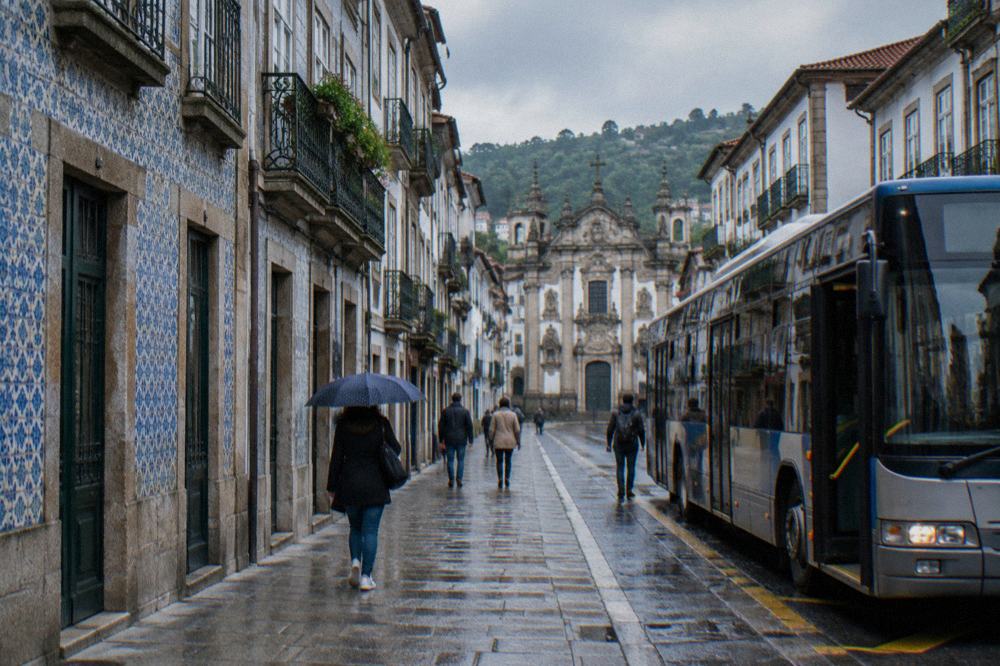
On foot, the one caution worth repeating is the paving. The centre's polished stone is beautiful and, when wet, slippery. October is the wettest month on the Braga / Merelim station's 1991 to 2020 normals at 197.8 mm of rain on average, with December and January close behind, so pack shoes with actual grip if you are visiting between October and March.
Is Braga Safe For Families With Kids?
Yes, Braga is a family-friendly city: the historic centre is pedestrianised, the parks and gardens are open and free, attractions like the Bom Jesus lake with its rowing boats (3 EUR per person per 15 minutes) are built for children, and the main family hazards are the same stairs and traffic noted above. Museums admit under-12s free at most municipal and state sites, which makes a family day out cheap as well as calm.
The rowing boats on the Bom Jesus lake run every day from 10:00 to 13:00 and 14:00 to 19:00, minimum two people per boat, and the sanctuary grounds and basilica are free to enter, so the hill works as a family outing with a single modest spend. The Santa Bárbara Garden beside the palace is the classic in-town stop for small children. Our things to do in Braga roundup collects the family options in one place.
| Attraction | Child admission | Notes |
|---|---|---|
| Bom Jesus do Monte grounds and basilica | Free | Rowing boats 3 EUR per person per 15 minutes |
| Sé de Braga (cathedral) | Free up to 12 | Single route 3.00 EUR per adult, all three routes 7.00 EUR |
| Museu dos Biscainhos | Free under 12 | Adult 7.50 EUR, garden included |
| Museu de Arqueologia D. Diogo de Sousa | Free under 12 with adult | Adult 5.00 EUR |
| Museu Pio XII and Medieval Tower | Free under 12 with paying adult | Whole museum 4.00 EUR |
| Theatro Circo guided tour | Free for under 18s from Braga | 3.50 EUR per adult, 45 minutes |
Stairs are the thing to plan around with toddlers and grandparents alike: 566 steps at Bom Jesus, and the medieval tower at the Museu Pio XII is a spiral climb. Both are doable with breaks, and neither should be rushed.
A small-group tour can absorb a family comfortably. The Small-Group Braga Half-Day Tour with Bom Jesus Sanctuary, rated 4.8 from 24 reviews and from $68.15 per person for three hours, covers the centre and the sanctuary in one escorted block, which spares you the logistics of the hill with children in tow.
What About Weather, Health And Medical Care?
Braga's weather is a bigger safety factor than its crime: summers are warm but rarely extreme, with mean maxima of 28.7 C in August, while October to January averages 12 to 13 rain days a month, so the hazards are heat on the hills in July and August and wet, slippery streets in winter. Portugal has a public health system with an emergency component, and the European emergency number reaches it anywhere in the city.
The IPMA 1991 to 2020 normals for the Braga / Merelim station give the honest picture: the record high at that station is 42.2 C in August, though the average August day tops out at 28.7 C with 10.4 days a month at 30 C or above. Carry water on the sanctuary climbs in summer, and do them in the morning.
| Month | Mean max C | Mean C | Rain mm | Rain days (1 mm+) |
|---|---|---|---|---|
| January | 14.1 | 8.6 | 179.5 | 13.1 |
| April | 19.6 | 13.7 | 127.9 | 12.0 |
| July | 28.2 | 21.2 | 27.9 | 4.0 |
| August | 28.7 | 21.4 | 34.6 | 3.8 |
| October | 22.2 | 16.1 | 197.8 | 12.0 |
| December | 14.9 | 9.3 | 190.3 | 13.3 |
Frost happens, 8.5 days a month drop below 0 C in January on average, so winter visitors should expect genuinely cold mornings on the hill viewpoints, not a Mediterranean winter. Our Braga weather and best time to visit guides break the year down month by month.
For health care, EU visitors should carry the European Health Insurance Card and everyone should carry travel insurance that covers medical repatriation, the standard advice for Portugal as for anywhere in Europe. Pharmacies in Portugal are well-staffed and used to dealing with tourists, and the central streets have several within a short walk.
What Are Portugal'S Entry Rules And Do They Affect A Braga Trip?
Yes, modestly: the EU Entry/Exit System has been fully operational at all external Schengen borders since 10 April 2026, meaning non-EU nationals on short stays have passport data, fingerprints and a facial image recorded at each entry and exit. Schengen allows 90 days in any 180-day period.
None of this is Braga-specific, but every non-EU visitor lands through it, usually at Porto or Lisbon. The passport rules are uniform: issued within the last 10 years and valid for at least three months beyond your planned departure from the Schengen area. The ETIAS fee will be 20 EUR when it starts, with exemptions for under-18s and over-70s, and the EU has committed to announcing the start date several months in advance, so check the official guidance close to travel rather than relying on any single article's timing.
| Entry requirement | Status at 2026-09-30 |
|---|---|
| EES registration (non-EU short stays) | Fully operational since 10 April 2026 |
| ETIAS travel authorisation | Not yet required; expected from late 2026 |
| ETIAS fee (when live) | 20 EUR; free for under-18s and over-70s |
| Maximum short stay | 90 days in any 180-day period |
| Passport validity | Issued within last 10 years, valid 3 months past departure |
| Exempt from EES | EU, Iceland, Liechtenstein, Norway, Switzerland nationals |
For getting to the city itself, our guides to Porto to Braga, Lisbon to Braga and how to get to Braga cover the train and coach routes with verified fares, including the Alfa Pendular from Lisbon at 38.50 EUR in second class and the airport coach from 9.00 EUR.
What Practical Habits Keep A Braga Trip Trouble-Free?
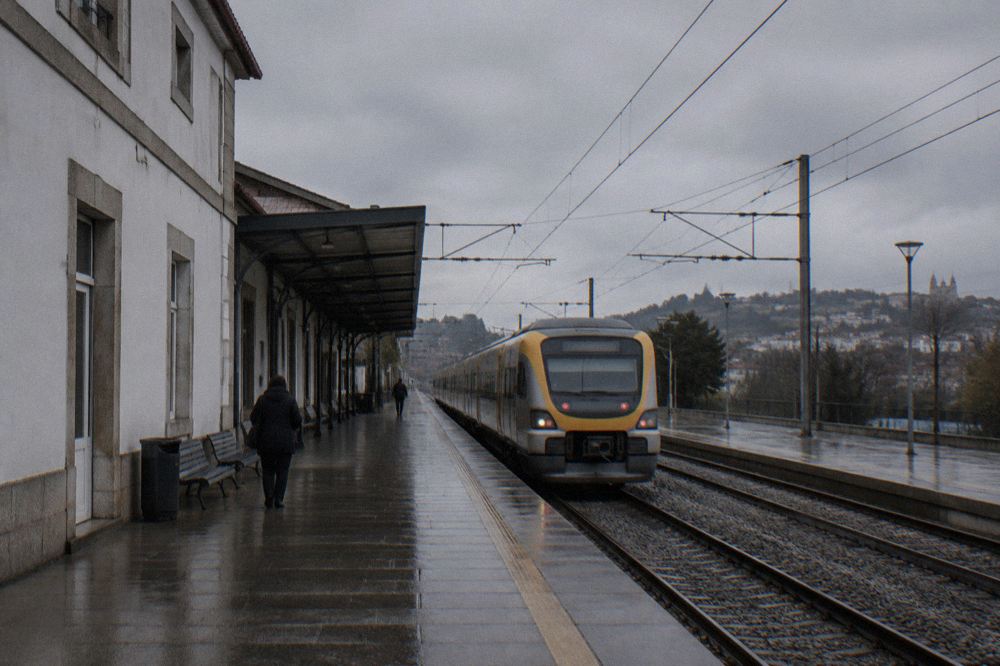
Five habits cover nearly everything: keep valuables zipped and in front in crowds, wear gripped shoes for the stone paving and the stairway, carry water on the hill sanctuaries in summer, use the TUB tourist ticket instead of cash on buses, and check the Bom Jesus notice before counting on the funicular. Beyond that, book registered accommodation and carry your EHIC or insurance card.
The accommodation point is worth a line of its own because Braga's tourist tax regime makes legitimacy visible. Every registered hotel and local accommodation collects 1.55 EUR per person per night for up to four nights from guests aged 16 and over, all year. A host who never mentions it may not be registered.
| Tourist tax (2026) | Rate | Max nights | Applies from |
|---|---|---|---|
| Braga | 1.55 EUR per night | 4 | Age 16 and over |
| Guimarães | 1.50 EUR per night | 2 | Age 21 and over, May to October |
| Porto | 3.00 EUR per night | 7 | Age 13 and over |
| Viana do Castelo | 1.50 EUR high season / 1.00 EUR low season | 5 | Age 17 and over |
For day trips out of the city, the same rules apply across the region: Guimarães, the Peneda-Gerês National Park and the coast towns are all ordinary, low-risk destinations where the drive or the bus ride is the main planning question. Our Peneda-Gerês guide covers the park's summer access limits in the Mata de Albergaria section, the one rural area where a bit of planning genuinely matters.
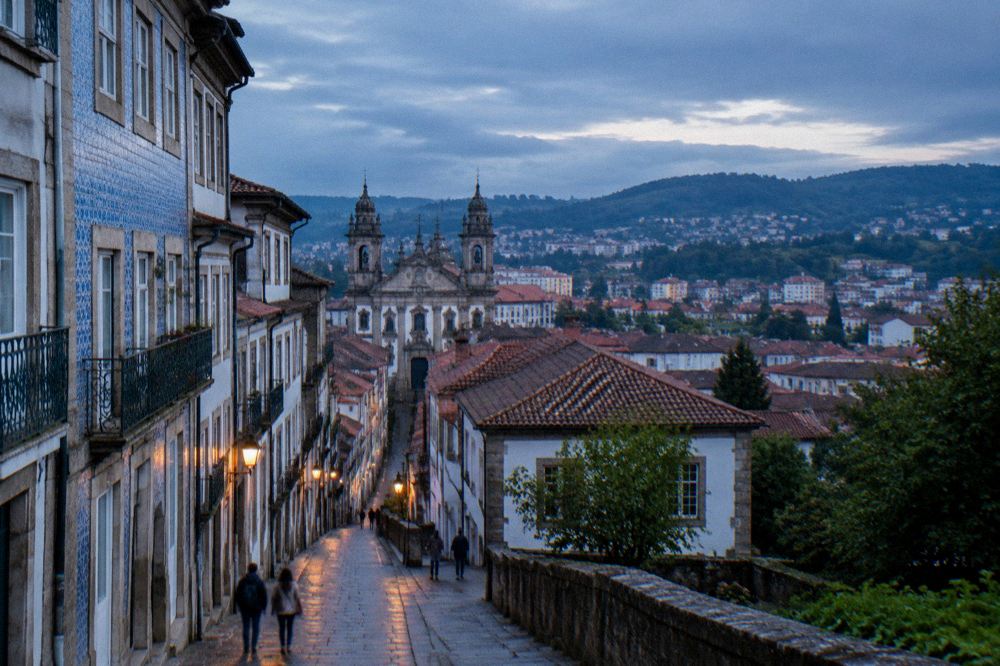
The short version of all of this: Braga rewards the same ordinary care as any small European city, and its specific hazards, wet stone, baroque stairs, festival crowds, are all visible in advance and cheap to avoid. Bring gripped shoes, a zipped bag and a water bottle, and the rest of the trip takes care of itself.
Common Questions About Safety In Braga
Is Braga safe at night for tourists?
Yes. The historic centre, Avenida da Liberdade and the restaurant streets stay lit and busy through the evening, and the city's nightlife is dining-based. Keep to lit streets and use bank machines in busy or indoor locations, as anywhere.
Is Braga safe for solo female travellers?
Yes. Braga has no documented street-harassment problem beyond the ordinary, and its daytime religious life and evening dining culture keep streets populated. Solo visitors should share their itinerary, stay in or near the historic centre and use the guided small-group tours if they want built-in company.
Are there any areas of Braga to avoid?
No neighbourhood in Braga is treated as off limits in visitor guidance. The hill sanctuaries, Bom Jesus do Monte, Sameiro and Falperra, are best visited by bus or car after dark simply because they are empty, not because they are unsafe.
Is the Bom Jesus stairway dangerous?
It is a wide, well-built baroque stairway of 566 steps by the Confraria's count, with 116 metres of ascent. It is safe in dry conditions for anyone used to moderate exercise, but it should be taken slowly, avoided in rain and skipped by visitors with knee, hip or heart concerns, who should use the bus or the replacement shuttle instead.
Is the tap water safe in Braga?
Portugal's public water supply is treated and monitored to EU standards, and tap water is generally drinkable across the country, including Braga. Bottled water is cheap and everywhere if you prefer it, and it is the better choice for the summer hill climbs.
What number do I call in an emergency in Braga?
The European emergency number works throughout Portugal, including Braga, and connects to police, fire and medical services. Hotel reception desks can also assist, and pharmacists are used to helping foreign visitors with minor problems.
The bottom line for any visitor weighing a trip: Braga is a city where the honest safety advice is about footwear and water bottles, and where the things that could go wrong are the things you can see coming. For more on planning the visit itself, Braga Travel Guide covers the city's sights, tours and day trips in depth.