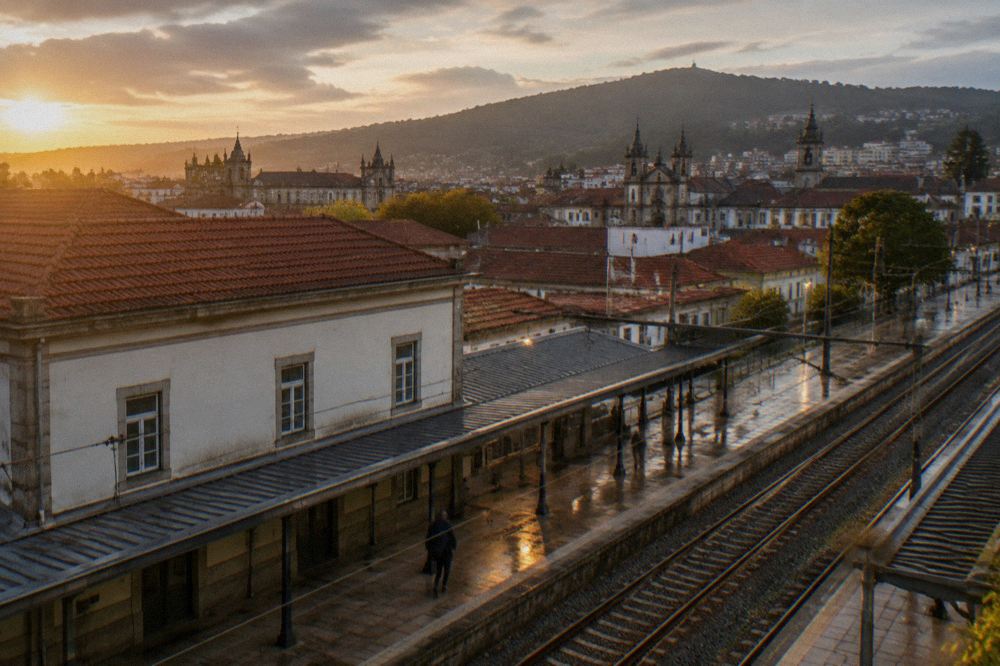
Vigo From Braga: A Day Trip To Galicia From Northern Portugal
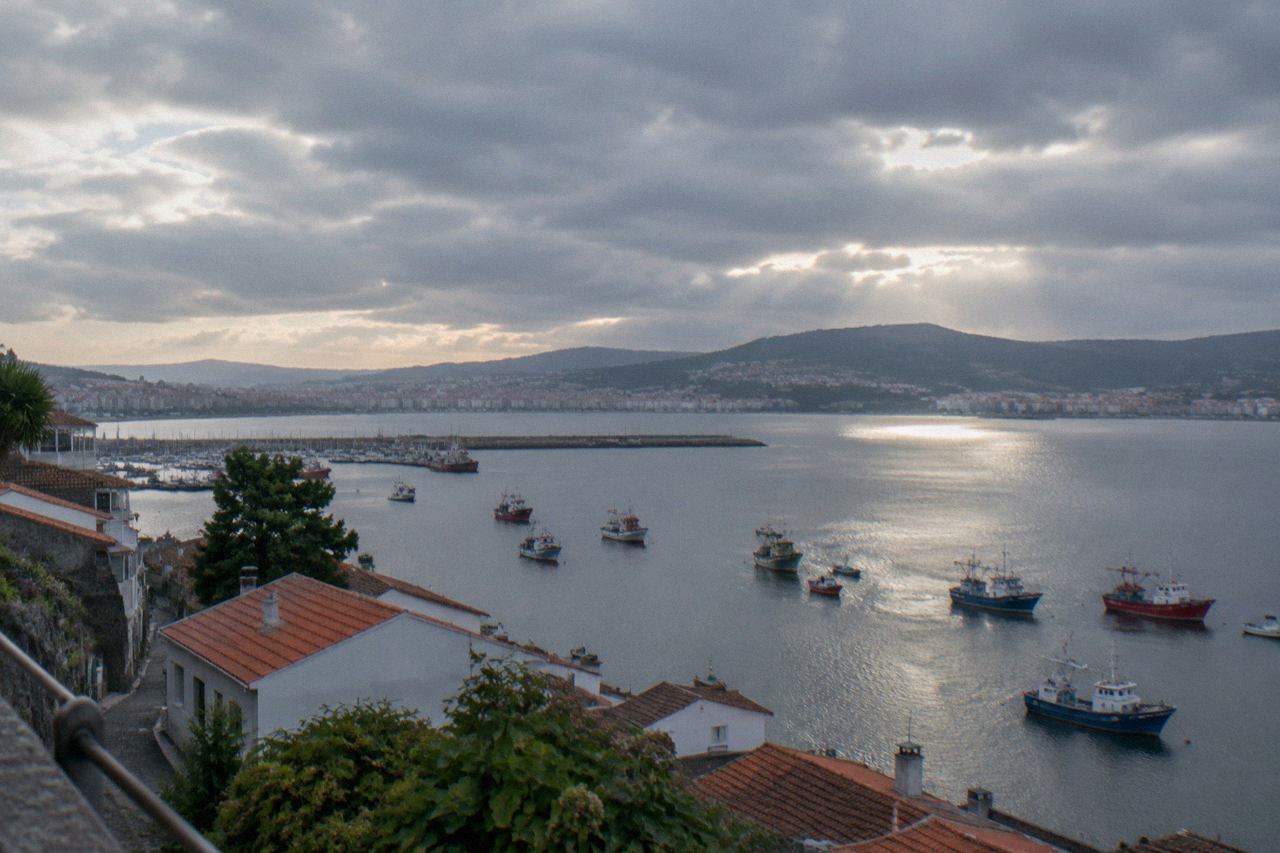
Vigo is the biggest city in Galicia, an Atlantic port across the Spanish border from Braga, Portugal, and a day trip there swaps Baroque churches for oysters, sea air and a different country.
Short answer
Vigo is worth the trip from Braga if you want seafood, coastal scenery and the novelty of crossing into Spain on a day out. There is no verified direct bus or train from Braga to Vigo, so plan a connection through Porto or the border towns and treat it as a full day.
Braga, the Baroque church city in Portugal's Minho region, sits close enough to the Spanish border that Galicia is a realistic day out, and Vigo is the first big city on the other side. It is an Atlantic port on the Ría de Vigo, a city of seafood plates, cruise calls and a walled old quarter climbing away from the water, and it feels nothing like the Minho you have just left. The border itself is now largely invisible, with no passport booth on most crossings, but the rules behind it changed in 2026 and are worth understanding before you go. This page from Braga Travel Guide covers what Vigo is, how the journey from Braga works in practice, what to do and eat there, and where the honest gaps in the transport picture are.
Is Vigo Worth A Day Trip From Braga?
Yes, for most travellers, because Vigo offers what Braga cannot: a working Atlantic fishing port, a Galician old town built for seafood rather than processions, and the Cíes Islands sitting offshore in the mouth of the ria. It is a different country reached without a flight, which is a rare thing. The trade-off is transport: no direct verified link from Braga makes it a longer, less certain day than Guimarães or Ponte de Lima.
The honest comparison is with the other day trips around Braga. Guimarães is closer and easier, the Peneda-Gerês National Park is wilder, and Ponte de Lima is prettier in a quiet way. Vigo's edge is scale and contrast. It is a real Spanish city of around a quarter of a million people in the wider urban area, a port that lands a large share of Europe's fish, and a place where a morning coffee comes with a plate of oysters rather than a pastel de nata. If your trip to northern Portugal already includes two or three Minho towns, Vigo adds a genuinely different note.
It is also the gateway to the Cíes Islands, the archipelago that closes the Ría de Vigo and is the region's best-known natural excursion. That alone pulls many visitors across the border. The islands are covered in detail further down, including the access rules you need to check before promising yourself a beach day.
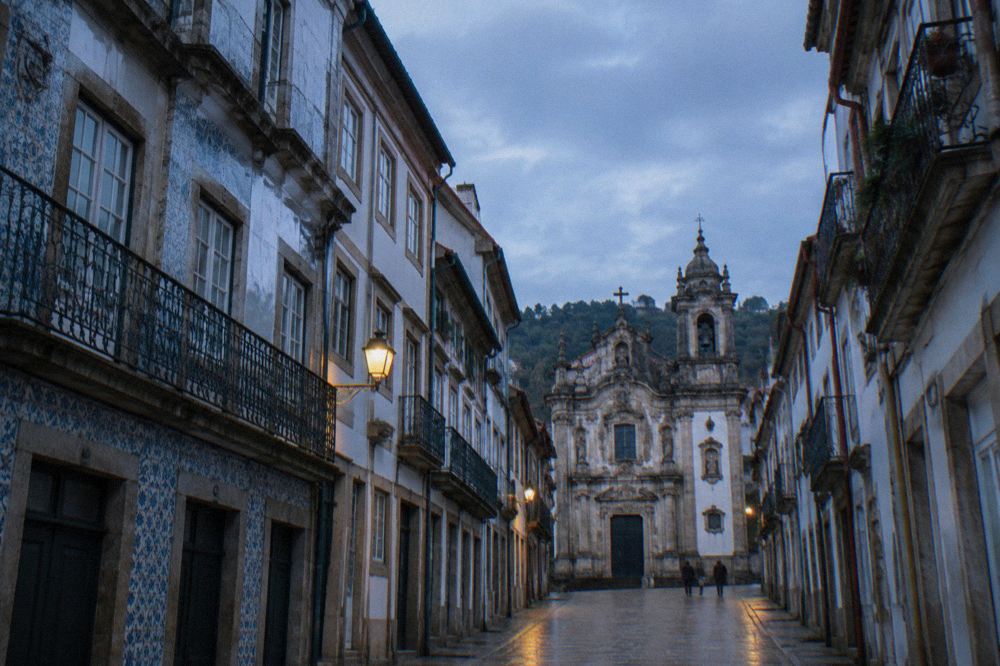
For travellers who prefer their day trips closer to base, the Peneda-Gerês National Park day trip keeps you in Portugal with mountains, waterfalls and reservoirs, and the Guimarães day trip is the easy historic-city option. The table below puts Vigo in that context.
| Day trip from Braga | What it is known for | Verified transport from Braga |
|---|---|---|
| Guimarães | Medieval birthplace city of Portugal, castle and palace | AITC regional bus line 101 |
| Ponte de Lima | Oldest chartered town in Portugal, riverside and Roman bridge | AITC regional bus line 105 |
| Viana do Castelo | Coastal city, basilica on the hill, Gil Eannes ship | Regional bus from Braga bus station |
| Peneda-Gerês | National park, waterfalls, hot springs, wolf country | AITC regional bus line 201 to Caldas do Gerês |
| Santiago de Compostela | Pilgrimage city, cathedral of St James | Direct buses, roughly 2 h 20 min to 4 h or more, fares from about 18 to 76 EUR |
| Vigo | Galician port city, seafood, Cíes Islands | No verified direct service from Braga, connection required |
If you would rather explore your own city before crossing a border, a tuk tuk tour is the quickest way to cover Braga's historic centre on the morning before you travel.
How Do You Get From Braga To Vigo?
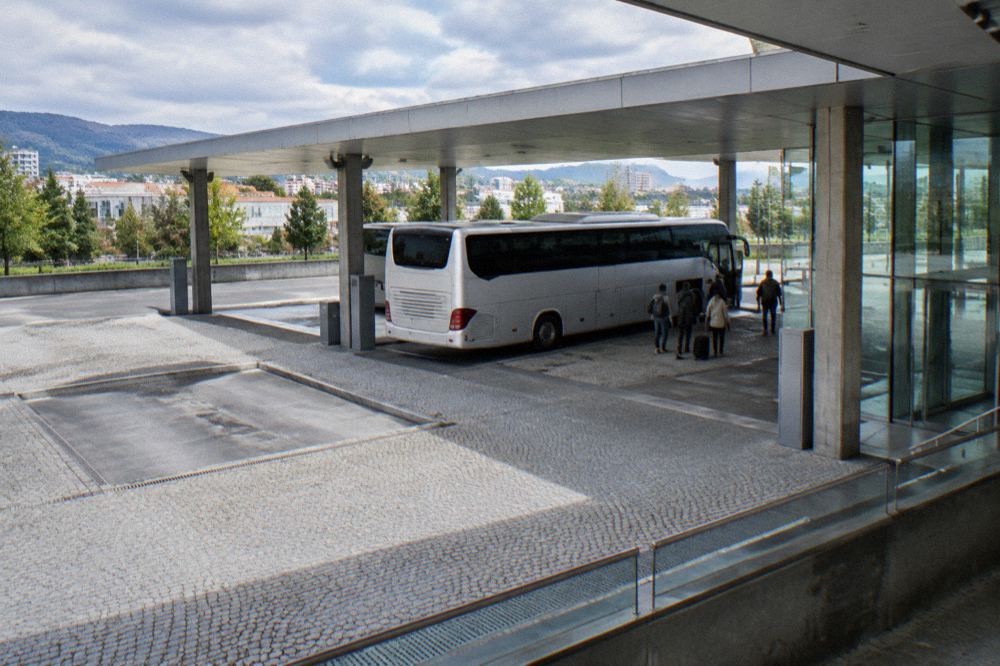
There is no verified direct bus or train from Braga to Vigo, so the journey needs a connection, most often through Porto or through the border towns of Valença and Tui. The practical advice is to treat it as a full-day round trip, book onward legs in advance where an operator allows it, and check the operator's live listing for the cross-border leg before you commit, because schedules on this corridor change with the seasons.
Since the journey needs a connection and some planning, book a rental car here.
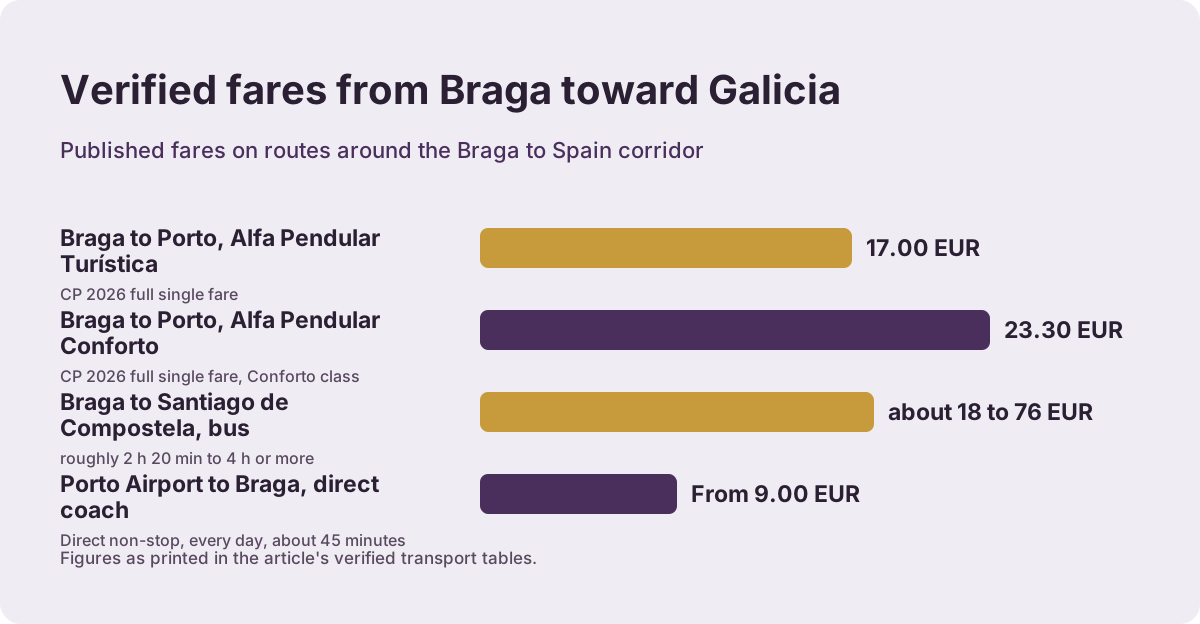
Start with what is verified. The regional bus lines from Braga bus station are confirmed for the Minho side: AITC line 100 runs towards Vila Verde and Arcos de Valdevez, line 105 towards Ponte de Lima, and line 101 to Guimarães, but regional fares and journey times are not published in a verified form, so no figure can responsibly be printed here. For the cross-border leg, the verified example on this corridor is the Braga to Santiago de Compostela bus market, where operators run direct services taking roughly 2 h 20 min to 4 h or more, with fares from about 18 to 76 EUR depending on operator and date. Vigo sits on the same coastal corridor, short of Santiago, and long-distance coaches heading to Galicia from Porto commonly serve it, but the specific Braga to Vigo leg is not verified, so check the operator's live listing rather than trusting a blog timetable.
The rail alternative runs through Porto. The urban train fare from Braga to Porto is priced by zone and stays at "a few euros" until CP's image-only price table is read reliably.
| Leg | What is verified | Figure |
|---|---|---|
| Braga to Porto, Alfa Pendular | CP 2026 full single fare, Turística | 17.00 EUR |
| Braga to Porto, Alfa Pendular | CP 2026 full single fare, Conforto | 23.30 EUR |
| Braga to Porto, urban train | Priced by zone, image-only price table | A few euros |
| Braga to Santiago de Compostela | Direct buses, journey and fare range | 2 h 20 min to 4 h+, from about 18 to 76 EUR |
| Braga to Vigo | No verified direct service | Connection required |
| Porto Airport to Braga, Getbus coach | Direct non-stop, every day | From 9.00 EUR, about 45 minutes |
Two planning notes matter. First, the border crossing itself has no routine checkpoint, but the entry rules described further down still apply to non-EU nationals, so carry your passport. Second, if you are basing the trip on a connection, build in buffer time on the way back: the last regional buses into Braga run earlier than you might expect, and a missed connection in Porto can turn a day trip into an unplanned overnight.
If a self-planned border crossing sounds like more logistics than a holiday needs, the alternative is a fully hosted Minho day out, and the options below compare three of them.
What Are The Best Things To Do In Vigo?
The core of a Vigo day is the Casco Vello, the granite old quarter that climbs from the fishing port, followed by the O Castro hill for the best panorama over the ria, and then the seafood, with oysters as the city's signature plate. Around those three sit the Puerta del Sol and Rúa do Príncipe shopping streets, the portside promenade, and, for those who plan ahead, the boat to the Cíes Islands.
The Casco Vello is small enough to wander without a map. It is the original fishing settlement, a mesh of stone alleyways and balconied houses, and it is where the oyster stalls cluster. The tradition is tied to the ria itself: the Ría de Vigo has long been a centre for oyster cultivation, and eating a plate of them within sight of the flats they came from is the local ritual. Nearby, the Co-cathedral of Santa María presides over the quarter, a neoclassical church that replaced an earlier building after the town was sacked in the early seventeenth century.
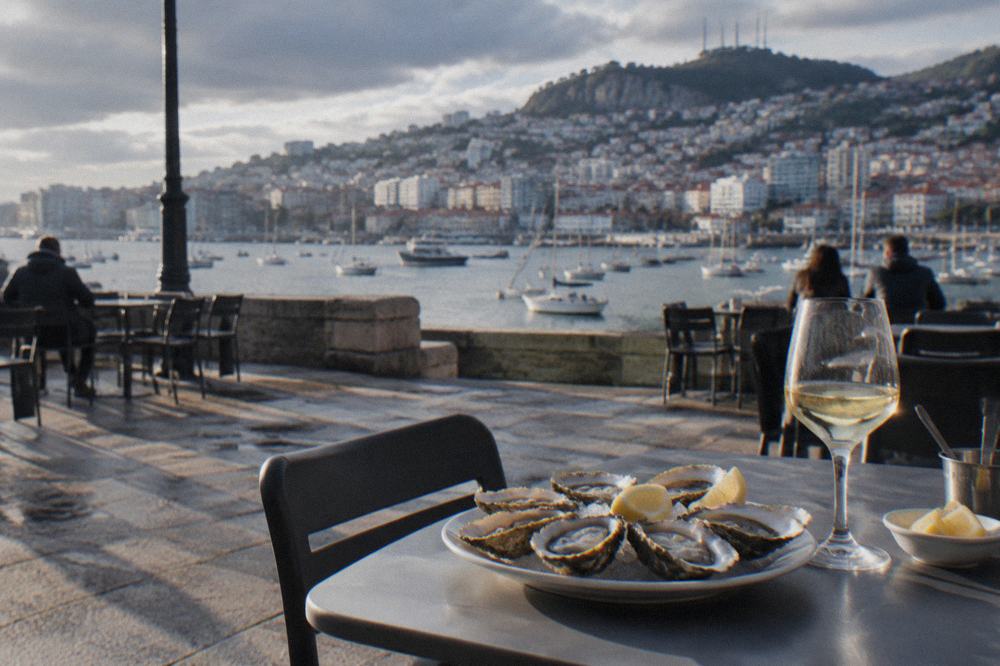
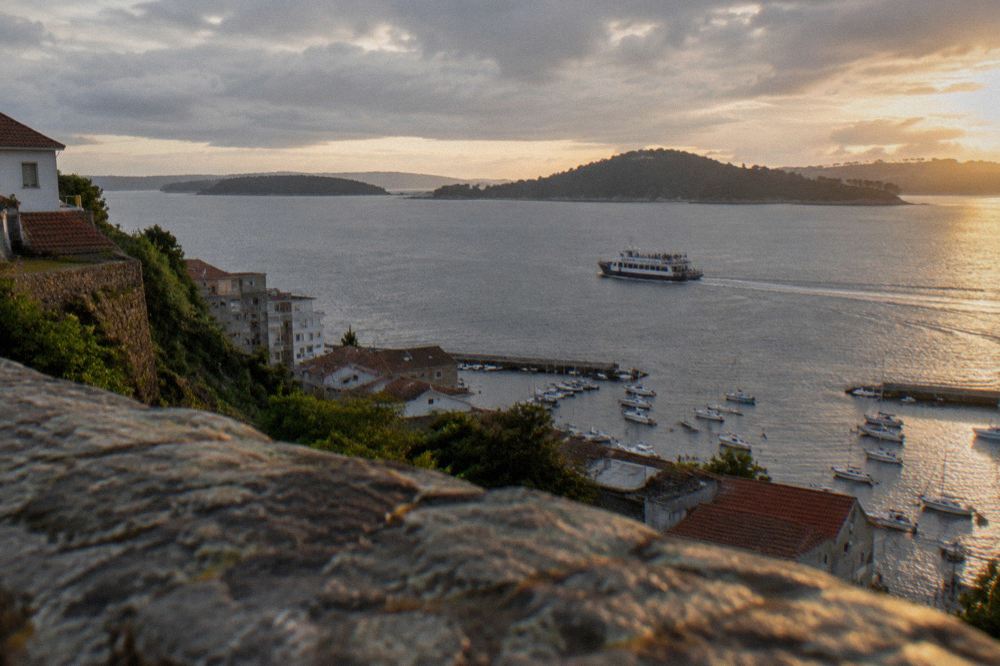
The O Castro hill sits just behind the old town. It carries the remains of a pre-Roman hillfort, one of the settlements of the Castro culture that predates the Romans in Galicia, and its park and viewpoint give the classic postcard of the ria, the harbour and, on clear days, the Cíes Islands on the horizon. It is a short, steep climb from the Casco Vello and the single best free thing to do in the city.
Below the hill, the modern city spreads along the water. The Puerta del Sol is the nominal centre, and Rúa do Príncipe, the pedestrian shopping street, runs down from it towards the sea, which makes Vigo a practical stop for Spanish high-street shopping that Braga does not offer. The port promenade, the O Berbés fish market quarter and the cruise-terminal area round out a walkable circuit that comfortably fills the middle of a day.
One honest caution: Vigo is a working city, not a museum piece. Parts of the waterfront are industrial, the traffic is real, and the charm is concentrated in the old quarter and the hill rather than spread evenly. Visitors expecting a second Guimarães will be disappointed; visitors wanting salt air, granite and shellfish will not.
If you are travelling with the family or want a day out with the planning done, a hosted small-group tour of Braga and Guimarães with lunch and entry tickets included is the site's featured option, and it pairs well with a self-organised Vigo day on either side of it.
Can You Visit The Cíes Islands On A Day Trip From Vigo?
The Cíes Islands, the archipelago closing the mouth of the Ría de Vigo and part of the Atlantic Islands of Galicia National Park, are Vigo's headline excursion, with a famous white-sand beach and a lighthouse walk, but access is controlled: visitor numbers are capped in the high season, boats run only from authorised ferry operators, and a day trip from Braga is tight because the sailing schedules eat into both ends of the day.
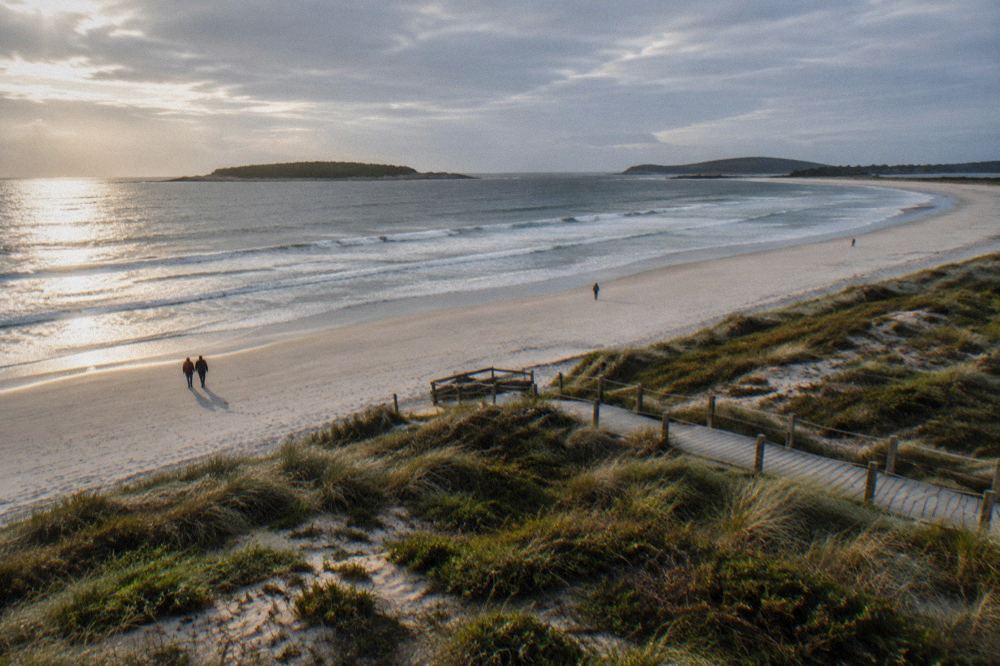
The islands are the reason many people cross the border at all. Rodas Beach, the long curved spit of white sand joining two of the islands, is one of the most photographed beaches in Spain, and the islands themselves are car-free, with walking trails, a campsite and very little else. The national park designation limits development, and the seasonal cap on visitors means that in July and August the ferries can sell out well ahead.
For a Braga-based traveller, the honest arithmetic is this. The connection from Braga to Vigo takes a chunk of the morning, the ferry takes another stretch, and the last sailings back leave well before dinner, so a Cíes day from Braga means starting early and accepting that you will see little of Vigo itself. The more relaxed pattern is to choose one or the other: a city day in Vigo, or an islands day with Vigo as a brief bookend. Check the official island reservation system and the ferry operators' live listings before you plan around a specific sailing, because the schedules and the cap rules are seasonal and no figure from them can be responsibly quoted here.
If a capped-access island beach sounds like more risk than a day trip needs, the Peneda-Gerês National Park offers Portugal's own protected landscape, with waterfalls and mountain trails, and a private hiking experience takes the navigation off your hands.
What And Where Should You Eat In Vigo?
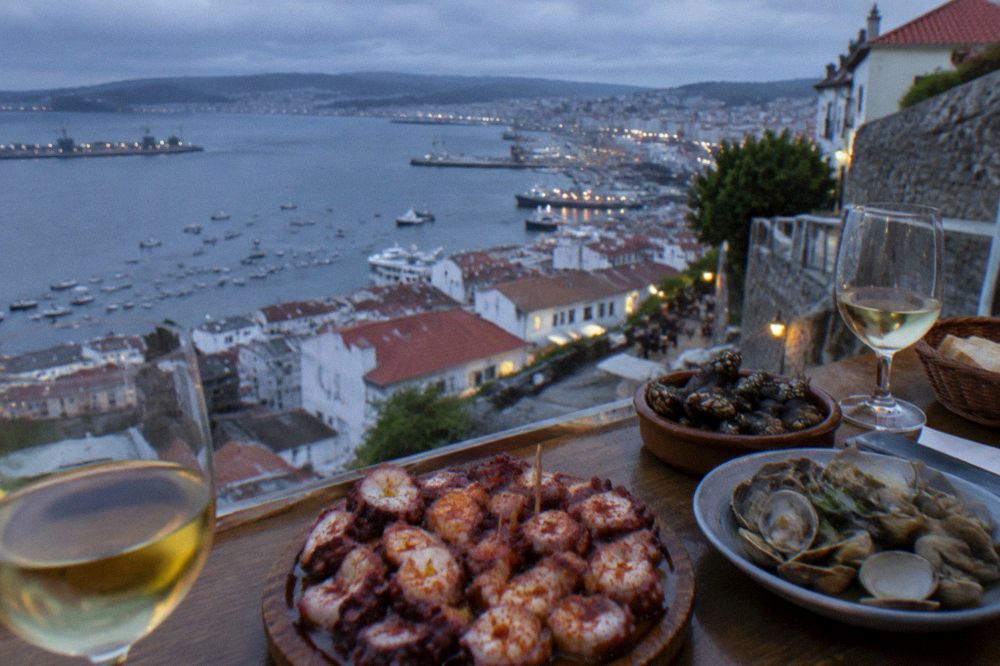
Vigo's food identity is shellfish: oysters from the ria eaten at stalls in the Casco Vello, octopus á feira, mussels, percebes and the pulperías and marisquerías of the old quarter, all washed down with the crisp Albariño whites of the Rías Baixas wine country that begins inland from the city. A tapas crawl through the old town is the best use of a long lunch stop on a day trip.
The oyster is the emblem. The stalls around the Puerta del Sol and the Casco Vello serve them by the dozen, and the Rúa de las Ostras, as the street of oyster bars is popularly known, exists for exactly this. Beyond oysters, Galician cuisine leans on the sea and the pig in equal measure: pulpo á feira, octopus boiled and dressed in olive oil and paprika, is the region's signature plate, and empanada gallega, the savoury pie, turns up everywhere from bars to bakery windows.
The wine is the quiet surprise for visitors who have been drinking Vinho Verde in Braga. Albariño, the flagship white of the Rías Baixas, is grown just north of the city, and the two wines are cousins in style: both are Atlantic, fresh and built for seafood. If the comparison appeals, the site's guide to Vinho Verde covers the Portuguese side of that family, and a day in Vigo is the easiest way to taste the Spanish answer. Rías Baixas is also a feasible detour of its own for travellers with a car, sitting between Vigo and the border.
For dessert, look for the tarta de Santiago, the almond cake dusted with the cross of St James, which links the city's café counters to the pilgrimage tradition running up the coast to Santiago de Compostela. Coffee culture in Vigo is quick and counter-based rather than leisurely, which suits a day trip's pace: stand at the bar, eat, and move on.
Do You Need A Passport To Cross The Border From Braga To Vigo?
Yes, carry a passport even though there is no routine checkpoint, because both Portugal and Spain are in the Schengen Area and the internal border is open, but the Entry/Exit System, fully operational at all external Schengen borders since 10 April 2026, applies to non-EU nationals entering the zone, and your first entry into Schengen, wherever that happens, is what triggers the biometric registration. A day trip from Braga to Vigo crosses an internal border and adds no new stamp.
The distinction matters and is often muddled. If you flew into Porto from the United States, the United Kingdom or another visa-exempt country, you registered with EES at the airport: passport scan, fingerprints and a facial image. Once inside Schengen, moving between Portugal and Spain is like moving between Portuguese districts, and there is nothing to do at the line beyond obeying the speed limit. EU nationals are not registered in EES at all.
| Rule | Status | Figure or wording |
|---|---|---|
| EES, the Entry/Exit System | Fully operational at all external Schengen borders since 10 April 2026 | Applies to non-EU short-stay nationals |
| ETIAS travel authorisation | Not yet in operation, expected from late 2026 | Fee will be 20 EUR, exemptions under 18 and over 70 |
| Schengen short stay | 90 days in any 180-day period | Calculated across the whole zone |
| Passport validity | Issued within the last 10 years, valid at least 3 months beyond departure | Applies to UK, US, Canadian and Australian visitors |
| Internal border, Portugal to Spain | Open, no routine checkpoint | Carry a passport anyway |
The one future change to know about is ETIAS, the electronic travel authorisation for visa-exempt visitors. It is not in operation, no applications are being collected, and the European Union has said it will announce the start date several months in advance. The fee will be 20 EUR. Until it launches, nothing is required beyond a valid passport, and a Vigo day trip needs no paperwork a Braga day trip does not.
How Should You Plan The Day: Money, Tax And Weather?
Budget in euros on both sides of the border, since Spain and Portugal share the currency, and expect a municipal tourist tax in Braga of 1.55 EUR per person per night for up to four nights, charged by your accommodation, while Vigo adds no equivalent for a day visitor; the weather planning should follow the Atlantic pattern the IPMA normals show for Braga, with October the wettest month on average and July the driest.
Money is the easy part. The euro is the currency in both countries, so there is nothing to change and no exchange rate to think about. Card acceptance in Vigo is broad in the city centre, though small oyster stalls and market counters can be cash-first, so carry some notes. Tipping culture is similar on both sides: in Portugal, Turismo de Portugal's own guidance says service is included in the bill and an additional tip of about 5 to 10 per cent is customary, and rounding up is normal; Galician bars expect small change rather than percentages.
| Item | Where | Verified figure |
|---|---|---|
| Municipal tourist tax | Braga | 1.55 EUR per person per night, up to 4 nights, all year |
| Tourist tax age rule | Braga | Applies to guests aged 16 and over |
| Tipping guidance | Portugal | About 5 to 10 per cent, service included in the bill |
| TUB tourist bus ticket, 1 day | Braga | 3.35 EUR |
| TUB tourist bus ticket, 2 days | Braga | 6.05 EUR |
| TUB tourist bus ticket, 3 days | Braga | 8.05 EUR |
Weather is the part worth planning around, and the only verified numbers are for the Braga side of the trip. IPMA's 1991 to 2020 normals for the Braga / Merelim station show a pattern that broadly carries over the border: dry, warm summers, and an Atlantic autumn and winter with frequent rain. October is the wettest month on average at 197.8 mm, July the driest at 27.9 mm, and rain days of 1 mm or more run 12 to 13 a month from October through January. September, often overlooked, is warmer at the top end than June, with a mean daily maximum of 26.9 C against June's 26.1 C, and less rain than either October or the spring months.
| Month | Mean daily max (C) | Mean temp (C) | Rain (mm) | Days with 1 mm or more |
|---|---|---|---|---|
| May | 23.0 | 16.7 | 89.8 | 8.9 |
| June | 26.1 | 19.7 | 40.6 | 5.7 |
| July | 28.2 | 21.2 | 27.9 | 4.0 |
| August | 28.7 | 21.4 | 34.6 | 3.8 |
| September | 26.9 | 19.7 | 67.6 | 6.2 |
| October | 22.2 | 16.1 | 197.8 | 12.0 |
The Galician coast is, if anything, more maritime than Braga's inland valley, so assume sea breezes, a jacket for the evening boat ride and a real chance of showers outside summer. The Cíes Islands in particular are exposed: a sailing can feel like two different trips depending on whether the Atlantic is in a good mood.
What Could Go Wrong On A Braga To Vigo Day Trip?
The three realistic failure points are the connection, the clock and the calendar: a missed cross-border coach or train with no same-evening alternative, a Cíes ferry schedule that does not fit a day trip, and Spanish public holidays or Monday closures that catch out visitors who assumed Portugal and Spain keep the same calendar. Build slack into the return leg and check the operator's notice for the border leg before you travel.
Transport is the obvious one. Because there is no verified direct Braga to Vigo service, every itinerary is a chain, and a chain has links that can break. Book the cross-border leg in advance where the operator allows it, screenshot the return times, and know the last realistic departure from Vigo before you linger over a second plate of oysters. If the chain breaks, the fallback is usually a night in Vigo or a slow way home through Porto, so travel with a card that works abroad and a phone that is charged.
The calendar is subtler. Spain and Portugal share most holidays but not all, and Galicia has its own local observances; a Monday in Vigo can also mean closed museums, echoing the pattern in Braga, where the cathedral's Treasury-Museum closes Mondays and the municipal museums close on Mondays and public holidays including 24 June, the municipal holiday. Before you leave Braga, the city's own headline sight has a live change to know about: the Bom Jesus do Monte funicular has been out of service since 26 September 2026, with no end date published, and a replacement shuttle runs every day from 09:00 to 20:00, roughly every 30 minutes each way, between the Portico and the sanctuary, so check the operator's notice if a funicular ride is on your list for another day.
| Before you leave Braga | Verified status | Figure or wording |
|---|---|---|
| Bom Jesus funicular | Out of service since 26 September 2026, no end date | Shuttle 09:00 to 20:00, about every 30 min |
| Sé de Braga tourist visits | Monday to Saturday 09:30 to 13:00 and 14:30 to 17:00 | Sunday 09:30 to 10:45 and 14:30 to 17:00 |
| Cathedral combined ticket | All three routes | 7.00 EUR, any two routes 6.00 EUR |
| Tourist office, Avenida da Liberdade 1 | Monday to Friday 09:00 to 18:30 | Weekends and holidays 09:30 to 13:00, 14:00 to 17:30 |
Finally, the border itself is not a risk in the security sense, but it is in the documentation sense. Non-EU visitors must have the passport they entered Schengen with, and while nobody will routinely ask for it at an open internal border, a random check or a ferry operator's ID requirement can surface at any point. Carry it, and the day stays boring in the best way.
If the logistics of border-crossing day trips feel like work, the hosted alternatives below keep you in northern Portugal with transport, lunch and tickets arranged.
For a fuller look at the Portuguese side of the border country, the Valença and Monção day trip covers the twin fortress towns sitting right on the line, and the Santiago de Compostela day trip is the natural companion to this page for travellers who want the pilgrimage city rather than the port. Back in Braga, the things to do in Braga roundup and the guide to Bom Jesus do Monte cover the days you are not crossing borders.
Common Questions About A Vigo Day Trip From Braga
Is Vigo worth a day trip from Braga?
Yes, if you want a contrast day: a Spanish Atlantic port with oyster stalls, a hillfort viewpoint and the Cíes Islands offshore. It is a longer and less certain day than the Minho trips because there is no verified direct link, so it suits travellers comfortable with a connection.
How do you get from Braga to Vigo?
There is no verified direct bus or train. The practical routes run through Porto, using the CP line between Braga and Porto, or on cross-border coach corridors towards Galicia, where the verified example is the Braga to Santiago de Compostela bus market at roughly 2 h 20 min to 4 h or more and fares from about 18 to 76 EUR. Check the operator's live listing for the specific Vigo leg.
Do you need a passport to go from Braga to Vigo?
Yes, carry it. The Portugal to Spain border is an open internal Schengen border with no routine checkpoint, but non-EU nationals must have the passport they entered Schengen with, and EES registration happened at first entry. A day trip across the internal border adds no new stamp.
Can you visit the Cíes Islands on a day trip from Braga?
It is possible but tight. The islands, part of the Atlantic Islands of Galicia National Park, cap visitor numbers in high season and are reached only by authorised ferries from Vigo, so the sailing schedules eat into both ends of the day. Check the official reservation system before planning around a specific boat.
What should you eat in Vigo?
Oysters from the ria, eaten at the stalls of the Casco Vello, are the city's signature, with octopus á feira, mussels and Albariño white wine from the Rías Baixas alongside them. A tapas crawl through the old quarter is the best use of a long lunch stop.
Is Vigo expensive compared with Braga?
Both cities use the euro, and prices are broadly comparable across the border. The one certain extra is Braga's own municipal tourist tax, 1.55 EUR per person per night for up to four nights, charged by your accommodation on the Braga side; a day visit to Vigo adds no equivalent charge.
A Vigo day from Braga rewards the traveller who plans the connection, carries a passport and books the ferry early: in exchange it hands you a second country, a plate of oysters and the best beach view on the Atlantic coast of Galicia, all within a single, long, satisfying day.