What Is The Oldest Cathedral In Portugal?
The question of Portugal's oldest cathedral has no verified single answer, and Braga's Sé de Braga is the name most often in the conversation. Here is what is actually confirmed, with real ticket prices and hours.
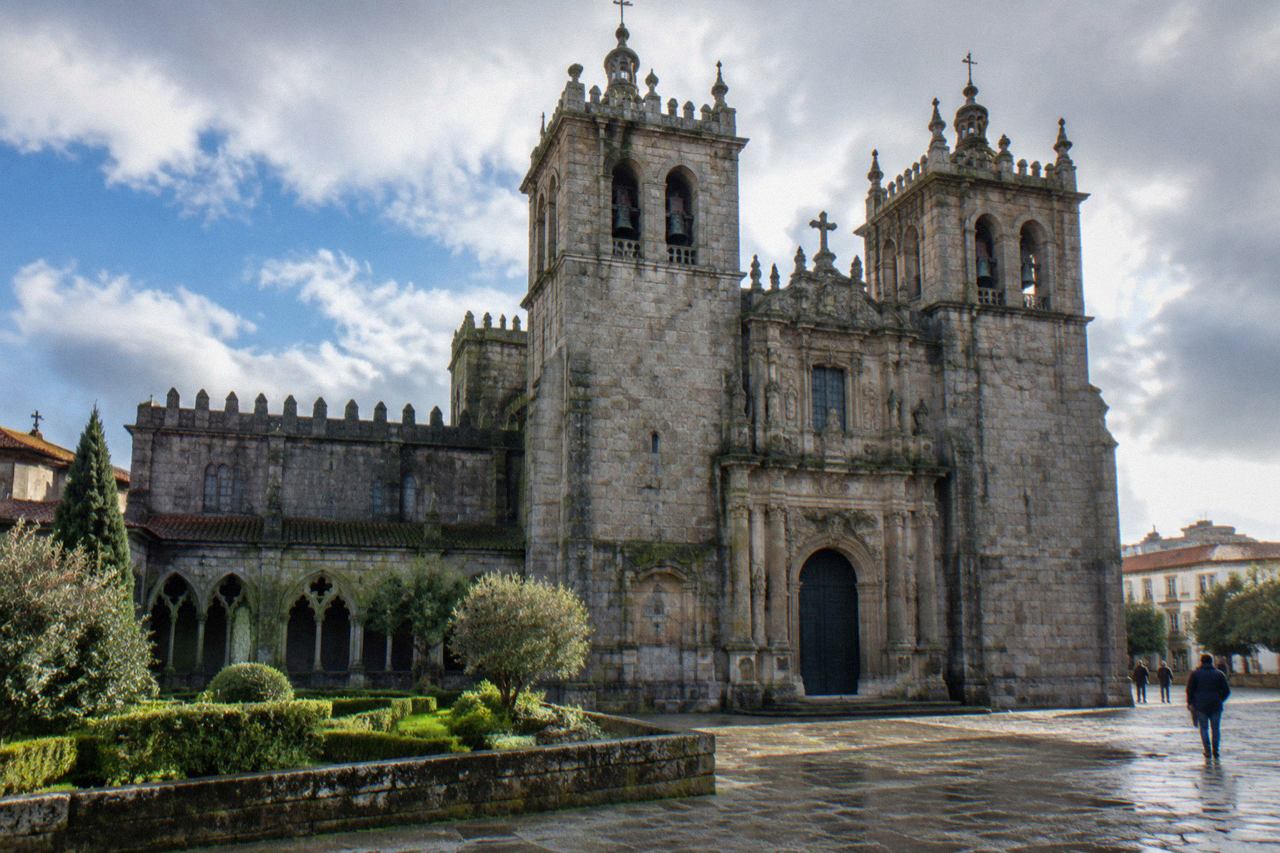
Braga, the city in northern Portugal's Minho region, is where the question of the country's oldest cathedral almost always ends up, because the Sé de Braga has stood at the centre of Portuguese religious life for so many centuries that guidebooks hand the title to it without a second thought. The honest answer is less tidy. No primary source this site has read confirms a founding date for any Portuguese cathedral with the precision the word "oldest" demands, and several sees, including Braga's, Coimbra's and Lisbon's, carry building fabric old enough to argue about. What can be stated with confidence is what the Sé de Braga's own box office publishes: how to visit it, what each route inside costs, and when the doors are open. That is what this page sets out, alongside the wider conversation the question belongs to.
What Is The Oldest Cathedral In Portugal?
There is no verified answer. No primary source read by this site confirms a founding date for the Sé de Braga, the Sé Velha de Coimbra or the Sé de Lisboa with the precision the superlative requires, and the claim circulates through guidebook repetition rather than documented evidence.
Braga's cathedral is the name most often attached to the title, and the city's long ecclesiastical history makes it a serious contender, but an honest answer stops at what can be checked: the Sé de Braga is visitable, and its ticket office publishes real prices and hours.
Why does the question keep landing on Braga? Because the city has been a bishopric since before Portugal existed as a kingdom, and because the cathedral sits at the top of the hill around which the whole historic centre grew. The building you see today is a palimpsest: Romanesque bones, Gothic chapels, a baroque organ case and a doorway added in the eighteenth century, all layered by centuries of rebuilding. That layering is exactly why the "oldest" claim resists a clean answer. A cathedral that has been rebuilt continuously is old in some stones and young in others, and no single year settles it.
The claim also travels with a companion slogan, that Braga is Portugal's oldest city. That claim is examined separately, and with the same caution, on this site's dedicated answer page: is Braga the oldest city in Portugal?. Both questions share a shape. They are asked because the city feels ancient, and answered by competing dates that no visitor can check at the door.
What a visitor can check is the cathedral itself. The Sé de Braga runs three separate visit routes, each priced at 3.00 EUR on its own, with a combined ticket covering all three at 7.00 EUR and any two at 6.00 EUR, according to the cathedral's own box-office page. For the practical side of a visit, the full guide is at Braga Cathedral, and the question of how the city rewards a longer stay is covered in how many days do you need in Braga, Portugal?.
What Can You Actually See Inside The Sé De Braga?
The cathedral sells three visit routes, each 3.00 EUR on its own: the Treasury-Museum, the funerary chapels and high choir, and the cathedral church itself, with all three combined at 7.00 EUR and any two at 6.00 EUR. Tickets are bought at the reception point in the cloister, reached from Rua do Cabido or the side entrance by Rua D. Diogo de Sousa, and tourist visits to the interior are suspended during services.
The three-route structure matters because it changes how long you spend. The cathedral route covers the nave and the main liturgical space. The chapels and high choir route takes you behind and above the worship space, into the funerary chapels where bishops and nobles were buried. The Treasury-Museum holds the liturgical silver, vestments and relics, and it keeps its own calendar: open Tuesday to Sunday and closed on Mondays, with summer hours of 09:30 to 12:30 and 14:30 to 18:30 and winter hours of 09:30 to 12:30 and 14:30 to 17:30, per the Visit Braga listing.
| Visit route | What it covers | Price alone | Combined options |
|---|---|---|---|
| Percurso 1, Tesouro-Museu | Treasury and museum, closed Mondays | 3.00 EUR | All three routes 7.00 EUR |
| Percurso 2, Capelas e Coro | Funerary chapels and the high choir | 3.00 EUR | Any two routes 6.00 EUR |
| Percurso 3, Catedral | The cathedral church and nave | 3.00 EUR | Tickets at the cloister reception |
A practical note on timing: because visits pause for services, a Sunday morning arrival can meet a closed visiting route even when the building is open for worship. The building itself opens earlier for mass than the tourist-visit window, so the distinction between the two schedules is worth keeping in mind rather than treating one listing as the whole story.
How Does The Sé De Braga Compare With Other Old Portuguese Cathedrals?
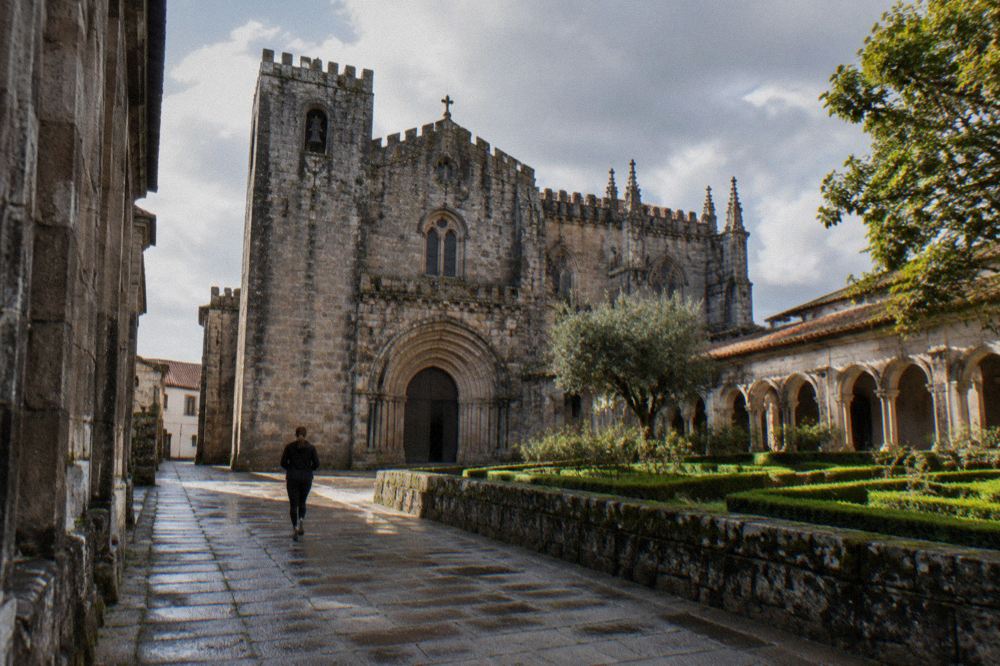
The comparison cannot be settled by dates, because none of the competing cathedrals has a verified founding year in the sources this site has read, but it can be settled by character. Coimbra's Sé Velha is a compact, fortress-like Romanesque building that survived largely intact; Lisbon's Sé was damaged by earthquakes and rebuilt; Braga's Sé grew by accretion around a medieval core and shows every era on its face. Each is old in a different way, and each is worth its own trip.
The Sé Velha de Coimbra is the strongest rival to Braga's claim, and the two cities' rivalry runs deeper than architecture: Coimbra was a medieval capital, Braga an archbishopric, and the argument about precedence is centuries old. Lisbon's cathedral, in turn, carries the trauma of the great earthquake that levelled much of the city, so much of what stands there is reconstruction. Braga's advantage is continuity. The city was never destroyed by a single catastrophe, so the cathedral accumulated rather than restarted, which is why its interior ranges across so many styles within one building. Everything else covered here is indexed on Braga Travel Guide.
For a traveller basing themselves in the north, the comparison is really a routing question. Braga pairs naturally with Guimarães, and the choice between the two cities is examined in is it better to visit Braga or Guimarães?. Coimbra sits further south and pairs better with a Lisbon-to-Porto drive, which is why some visitors treat it as a stop rather than a base.
How Should You Plan A Visit To Braga'S Cathedral?
Visit between Monday and Saturday, 09:30 to 13:00 or 14:30 to 17:00, or on Sunday between 09:30 and 10:45 and again from 14:30 to 17:00, with last entry 30 minutes before closing, and allow about an hour and a half if you take all three routes. Buy the combined ticket at 7.00 EUR if you want the full interior, and check the Treasury-Museum's Monday closure before planning a start-of-week visit.
That schedule is the tourist-visit window published by Visit Braga, the municipal tourism body. The building itself opens earlier for worship, so an early-morning visitor may find the church functioning as a church while the ticketed routes are not yet running. This is a working cathedral, not a museum with fixed doors, and the rhythm of services governs everything.
| Day | Visiting hours | Notes |
|---|---|---|
| Monday to Saturday | 09:30 to 13:00 and 14:30 to 17:00 | Last entry 30 minutes before closing |
| Sunday | 09:30 to 10:45 and 14:30 to 17:00 | Visits suspended during services |
| Mondays, Treasury-Museum | Closed | The other routes follow the cathedral calendar |
The cathedral sits in the middle of a walkable cluster. The Museu dos Biscainhos, a palace museum with gardens, charges 7.50 EUR for a normal ticket including the garden, per the state museum network's page. The Museu de Arqueologia D. Diogo de Sousa, which holds the Roman material excavated around the city, charges 5.00 EUR. The Mosteiro de São Martinho de Tibães, a short bus ride out, lists general admission at about 4 to 5 EUR depending on the circuit. A full day of ecclesiastical Braga is therefore easy to assemble, and the wider menu of options is in things to do in Braga.
Is The Cathedral The Main Reason To Visit Braga?
It is one of several. The Sé anchors the historic centre, but Braga's headline attraction by visitor attention is Bom Jesus do Monte, the UNESCO-inscribed sanctuary on the hill east of the city, whose stairway of 566 steps, by the Confraria's own count, is the most famous walk in the Minho.
A cathedral-first visit works best as part of a day that also takes in the sanctuary, the Santa Bárbara Garden and the Roman remains, which is why most travellers book a guided walk rather than self-navigate the quarter.
Want the cathedral quarter's story told aloud? Book a history and culture tour here. (Guided in English, Spanish and Portuguese)
The order of a day matters here. The cathedral quarter is flat and compact; Bom Jesus do Monte is on a hill, and the funicular that once carried visitors up has been out of service since 26 September 2026, with a replacement shuttle running every day between the Portico and the sanctuary, per the operator's notice. Anyone promising a funicular ride is working from an old page. The stairway is the honest alternative, and its step count is covered in detail in how many stairs are there in Bom Jesus do Monte?.
For the cathedral quarter itself, a guided walk adds context that a plaque cannot. The Personal & Flexible Walking Tour in the Historic Center covers the cathedral and the streets around it from 11.33 USD per person, rated 4.7 from 62 reviews, and the operator's live listing carries current dates and availability: Check availability.
Whether Braga justifies the trip at all is a fair question for anyone weighing it against Porto, and it is answered directly in is Braga, Portugal worth visiting? and, for the time-poor, is Braga worth a day trip from Porto?. The short version: the city rewards a night, and the cathedral is a large part of why.
Common Questions About The Oldest Cathedral In Portugal
What is the oldest cathedral in Portugal?
There is no verified single answer. The Sé de Braga is the cathedral most often given the title, but no primary source this site has read confirms a founding date for it or for its rivals in Coimbra and Lisbon, so the honest answer is that the claim is traditional rather than documented. Braga's cathedral is nonetheless among the country's most historically significant sees and fully open to visitors.
Is the Sé de Braga the oldest cathedral in Portugal?
It is the most common answer to the question, but this site does not state it as fact because no primary source with a founding date was found. The cathedral's own box-office page publishes tickets and hours, not a founding year, and that is the standard a verifiable claim has to meet.
How much does it cost to visit Braga Cathedral?
Each of the three visit routes costs 3.00 EUR on its own: the Treasury-Museum, the chapels and high choir, and the cathedral church. A combined ticket for all three routes is 7.00 EUR, and any two routes cost 6.00 EUR, per the cathedral's box-office page. Tickets are bought at the reception point in the cloister.
When is Braga Cathedral open for visits?
Monday to Saturday from 09:30 to 13:00 and 14:30 to 17:00, and on Sunday from 09:30 to 10:45 and again from 14:30 to 17:00, with last entry 30 minutes before closing, per Visit Braga. The building opens earlier for worship, and tourist visits are suspended during services. The Treasury-Museum is closed on Mondays.
Which other cathedrals compete for the title of oldest in Portugal?
Coimbra's Sé Velha and Lisbon's Sé are the usual rivals, and neither has a verified founding year in the sources this site read either. Coimbra's survives largely intact in Romanesque form, Lisbon's was rebuilt after the great earthquake that devastated the city, and Braga's grew by accretion around a medieval core, so each is old in a different sense.
Can you see the cathedral without paying?
The ticketed routes cover the Treasury-Museum, the chapels and high choir, and the cathedral visit. The building functions as a working church, and this site publishes no free-entry rule for it because none was sourced; check the notice at the cloister reception before assuming entry options.
The question of the oldest cathedral in Portugal will keep collecting confident answers from guides that never checked one, and Braga will keep receiving the credit. Visit the Sé de Braga for what it verifiably is: a working cathedral with three priced routes, a cloister ticket desk, and centuries of visible history, in the city that made the question worth asking.