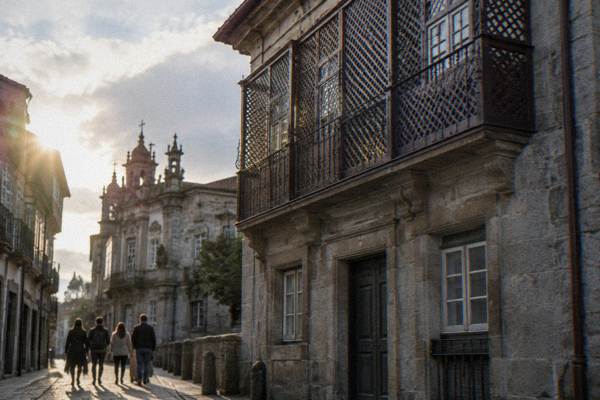
What Does Braga Mean In Portuguese?
The name Braga explained: how the Portuguese city in the Minho region got its name from Roman Bracara Augusta, and how to tell the city apart from the district, the surname and the football club.
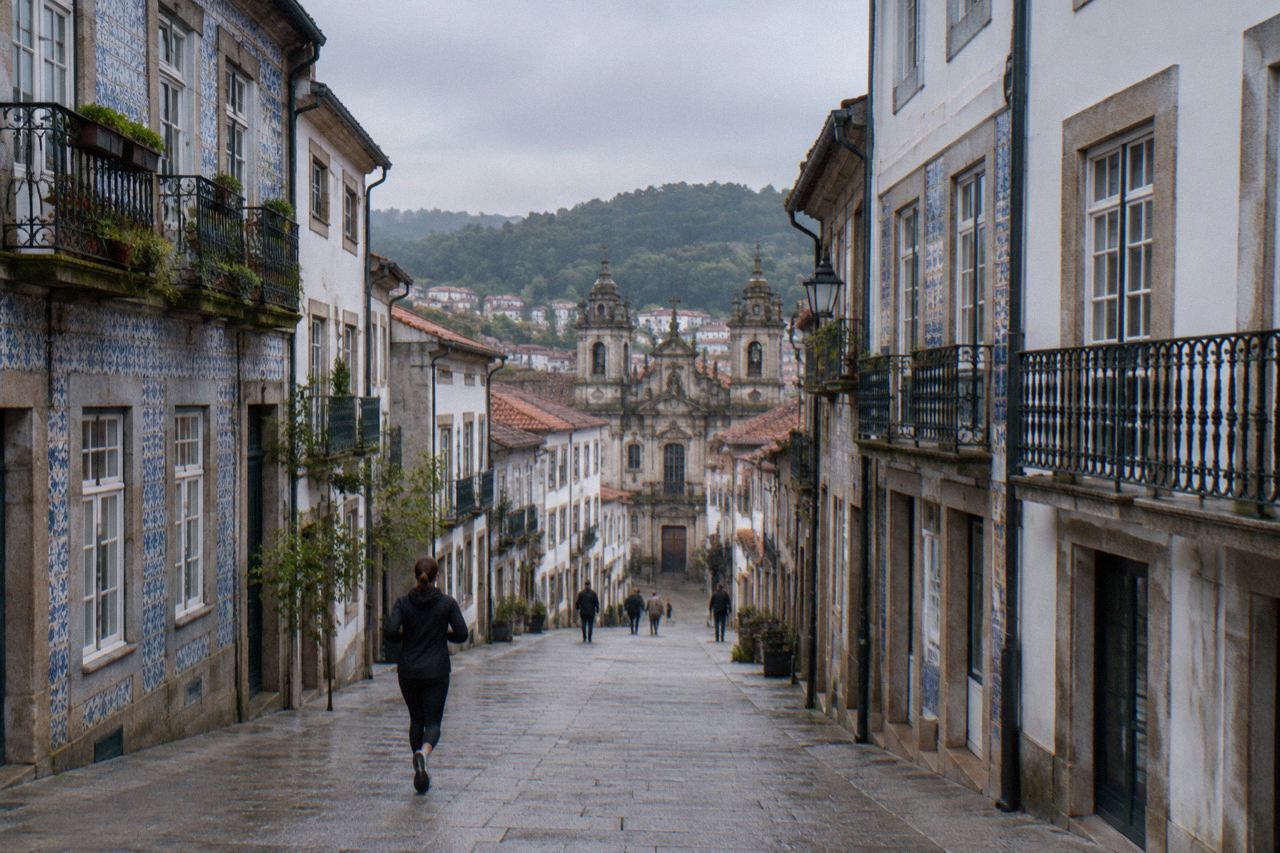
Braga, the city in the Minho region of northern Portugal, carries a name older than the Portuguese language itself. Visitors arriving by train, and readers scanning a search result, often ask what the name actually means, and the honest answer is more interesting than a one-word translation: Braga is not a Portuguese word with a dictionary definition, it is a place name inherited from the Roman city of Bracara Augusta, worn down by two thousand years of speech into its modern form. That single name also travels badly, because "Braga" is simultaneously a city, a district, a common Portuguese surname and a football club, and each of those is a different thing.
What Does Braga Mean In Portuguese?
Braga has no everyday meaning in modern Portuguese: it is a place name, and the name of the city in northern Portugal descends from Bracara Augusta, the Roman settlement built on the same ground. There is no common Portuguese noun that the city's name translates to, so the truest answer to the question is that Braga means "the city of Bracara", a Roman name the city has carried, in evolving form, since antiquity.
That answer surprises people who expect a tidy translation. Many Portuguese place names do translate cleanly: the sanctuary on the hill above the city, Bom Jesus do Monte, means "Good Jesus of the Mount", and the neighbouring town names read plainly too. Braga is different because its name is not descriptive. It is inherited, a survival of the Roman name Bracara Augusta that passed through centuries of spoken Latin and early Portuguese before settling into the form printed on maps today.
The practical consequence for a traveller is small but real. When a local says "Braga" they mean the city and its municipality, home to 193,324 residents at the 2021 census. When a search result or a news headline says "Braga" it could just as easily mean the district, the surname or the football club, and telling those apart matters if you are booking a hotel or planning a day trip. The rest of this page separates them cleanly.
Where Does The Name Braga Come From?
The modern name Braga is the Portuguese evolution of Bracara Augusta, the Roman city that stood on this ground in what is now the Minho region of northern Portugal. Centuries of everyday speech shortened Bracara to Braga, and the name survived through the medieval period into modern Portuguese, where it now names both the city and the municipality that surrounds it, counted at 193,324 residents in the 2021 census.
The Roman layer is still visible in the city. The Museu de Arqueologia D. Diogo de Sousa, a five-minute walk from the Sé de Braga, holds the material record of the ancient settlement, and the Roman baths at Alto da Cividade and the Fonte do Ídolo survive as in-place remains. The name is the most durable Roman artefact of all: empires, roads and administrative borders came and went, and the word people used for the place simply shortened itself, syllable by syllable, until Bracara became Braga.
No verified source gives a clean etymology for the pre-Roman root inside "Bracara", and this page will not invent one. What is documented is the chain of names: Bracara Augusta in the Roman period, Braga in the medieval and modern record. The "Augusta" honour fell away early, as honorifics usually do in spoken language, and the core of the name endured. If a guidebook offers a confident translation of "Braga" into some ancient word for hill, river or warrior, treat it as folklore rather than fact.
Walking the historic centre with a guide is the fastest way to see how the name's layers sit on top of each other: Roman remains under baroque churches, medieval streets inside a modern city. For a first visit, a small-group half-day tour with the Bom Jesus sanctuary pairs the Roman-ground city centre with the sanctuary on the hill, and Check availability before you lock your dates, since small-group numbers are limited. If you are still deciding whether the city deserves your time at all, the question "is Braga Portugal worth visiting?" has its own answer on this site.
Curious to see those layers of the city with a guide? Book a Portuguese Rome walking tour here.
Is Braga A City, A District, A Surname Or A Football Club?
In everyday use, "Braga" points to four different things: the city in northern Portugal, the administrative district that surrounds it and contains Guimarães, Barcelos, Famalicão and part of the Peneda-Gerês park, a common Portuguese surname carried by people worldwide, and SC Braga, the professional football club that plays at the Estádio Municipal de Braga. Only the first of these is a travel destination, and the other three regularly confuse search results.
The district is the biggest trap for planners. It is far larger than the city, and a hotel "in the Braga district" could be an hour's drive from the cathedral. The city and its municipality are what this site covers: the historic centre, the hill sanctuaries of Bom Jesus do Monte and Sameiro, and the Mosteiro de São Martinho de Tibães, all inside the municipality's borders. The neighbouring towns of Guimarães, Barcelos and Ponte de Lima are separate destinations with their own names, covered in their own guides.
The surname travels even further. People named Braga live across Portugal, Brazil and the Portuguese-speaking world, and the name has no connection to the city beyond sharing a root. A search for a famous Braga will land on people, not places. The football club, SC Braga, is the fourth Braga, and it is a genuine travel draw only in one narrow sense: the club sells guided tours of its stadium, at 6 EUR for the classic guided tour and 4 EUR self-guided, and match tickets are a separate topic covered on this site's stadium pages.
| The four Bragas | What it is | What it means for a visitor |
|---|---|---|
| The city | The historic city in the Minho region, northern Portugal | The destination: cathedral, Bom Jesus do Monte, historic centre |
| The district | An administrative area containing Guimarães, Barcelos, Famalicão and part of Peneda-Gerês | Check a hotel's exact town before booking "Braga district" |
| The surname | A common Portuguese family name | Not a place; ignore in travel searches |
| SC Braga | The professional football club at the Estádio Municipal de Braga | Stadium tours at 6 EUR guided, 4 EUR self-guided; match tickets are separate |
What Does The Word "Braga" Mean?
As a dictionary word rather than a place name, "braga" survives in older and regional Portuguese with the sense of a leg covering, and the plural "bragas" was an old term for breeches or leg wear. No verified source connects that word to the city's name: the place name comes from Bracara Augusta, and the clothing word is a separate item of vocabulary that happens to share its spelling.
This is the distinction that trips up machine translations and casual etymology alike. Feed the city's name into a dictionary and you may get the archaic garment word back, which is a coincidence of spelling, not a meaning. The city's name is a proper noun with a documented Roman ancestry, and the garment word is ordinary vocabulary with its own separate history. Treating the two as the same thing produces the folk etymologies this page deliberately avoids.
For a traveller, the practical takeaway is simple: nobody in Braga uses the word to mean clothing, and nobody thinks of the city as named after leg wear. The name functions the way "London" or "York" functions in English, as a fixed label whose original meaning, if there ever was one, lives far back in pre-Roman vocabulary that no verified source has recovered. What the name carries today is history rather than definition: it marks a place that has been continuously named, in one form or another, since the Roman city of Bracara Augusta.
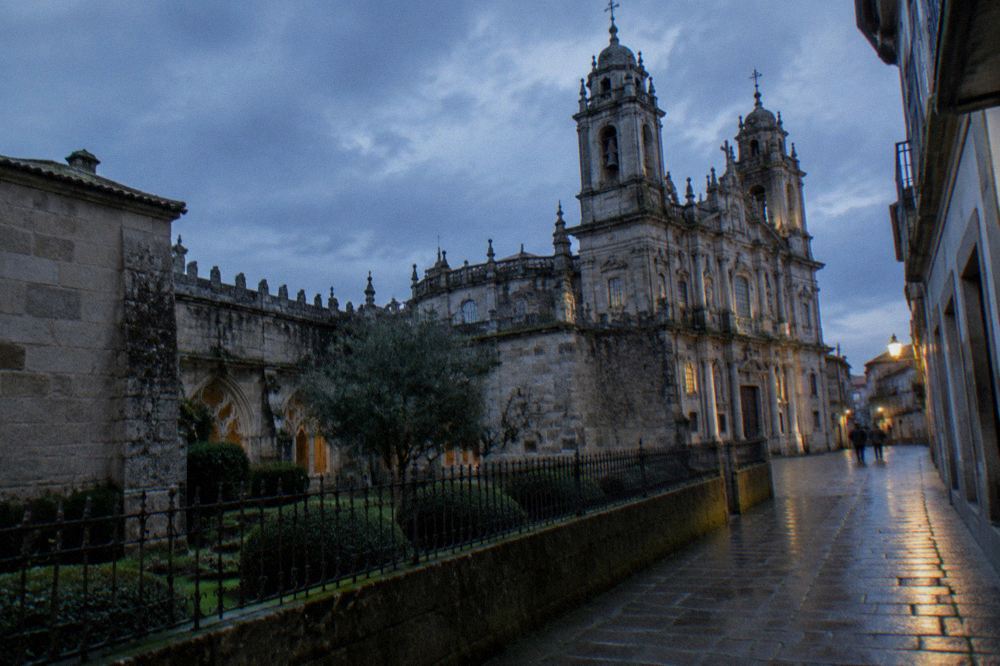
How Do The City'S Other Names Translate?
While Braga itself resists translation, the names around it mostly do not: Bom Jesus do Monte means "Good Jesus of the Mount", the Sé de Braga is the city's cathedral seat, and the Santuário do Sameiro, the Mosteiro de São Martinho de Tibães and the Arco da Porta Nova each carry plain devotional or descriptive meanings in Portuguese. The city's name is the one exception, a Roman inheritance among names that otherwise read literally.
That contrast is worth noticing on the ground. Climb the Escadório do Pórtico at Bom Jesus do Monte, 566 steps by the Confraria's count, and every stage of the stairway is labelled with words a Portuguese speaker can parse directly. Stand in front of the Sé de Braga, whose combined ticket for all three visit routes costs 7.00 EUR, and the building's function is written into its name. The city's own name is the odd one out, the single label in the skyline that is not a description but a survival.
| Name | What it is | What the name says |
|---|---|---|
| Braga | The city | Inherited from Roman Bracara Augusta; no translatable meaning |
| Bom Jesus do Monte | UNESCO-listed sanctuary above the city | "Good Jesus of the Mount" |
| Sé de Braga | The cathedral | "Sé" is the seat of a bishop |
| Arco da Porta Nova | The arch at the edge of the historic centre | "Arch of the New Gate" |
| Theatro Circo | The ornate theatre on Avenida da Liberdade | The venue's own historic spelling, kept as its name |
If the name's story has made you curious about the place itself, the natural next steps are practical: how long to stay is answered in "how many days do you need in Braga Portugal?", and the question of "where is Braga located?" covers the geography in detail. The site's own Braga Travel Guide homepage collects the rest, including the claim that has followed the city for centuries, examined honestly in "is Braga the oldest city in Portugal?".
Common Questions About The Name Braga
What does Braga mean in Portuguese?
Braga is a place name without an everyday dictionary meaning: it names the city in northern Portugal and comes from Bracara Augusta, the Roman settlement on the same site. There is no common Portuguese noun that the city's name translates to.
What does the word "braga" mean?
As an ordinary word, "braga" survives in older and regional Portuguese with the sense of a leg covering, and "bragas" was an old term for breeches. No verified source connects that word to the city's name, which descends from the Roman Bracara Augusta.
Is Braga the same as the Braga district?
No. The city is one municipality inside the district of Braga, which also contains Guimarães, Barcelos, Famalicão and part of the Peneda-Gerês park. A hotel listed "in the Braga district" can be a long way from the city centre, so check the exact town before booking.
Why is there a football club called Braga?
SC Braga is the city's professional football club and plays at the Estádio Municipal de Braga. It is one of the four things the name can refer to, alongside the city, the district and the surname. The club sells stadium tours at 6 EUR guided and 4 EUR self-guided.
Does the name Braga come from the Roman era?
Yes, in its documented form. The Roman city was called Bracara Augusta, and the modern name Braga is the shortened form that name took over centuries of spoken use. No verified source gives the meaning of the pre-Roman root "Bracara".
Is Braga a Portuguese surname?
Yes, Braga is a common Portuguese family name found across Portugal, Brazil and the wider Portuguese-speaking world. It shares a root with the city's name but is simply a family name, not a reference to the place.
The name on the map, in the end, is the city's oldest monument: Bracara Augusta shortened to Braga, spoken by every generation since the Romans, and still the first word a visitor learns on arrival.