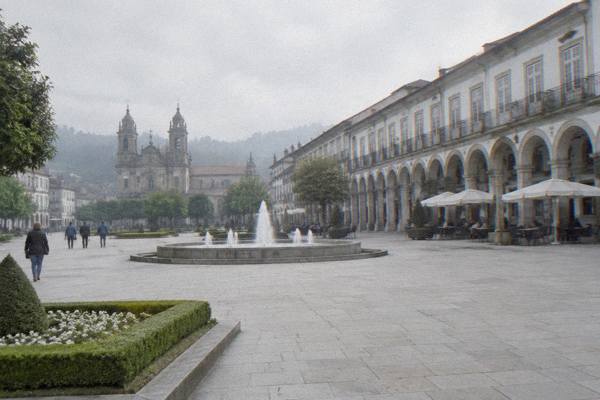
Where Is Braga Located?
Where Braga sits in Portugal: the Minho region, north of Porto, with verified travel times by train and coach, and how the city differs from the district of the same name.
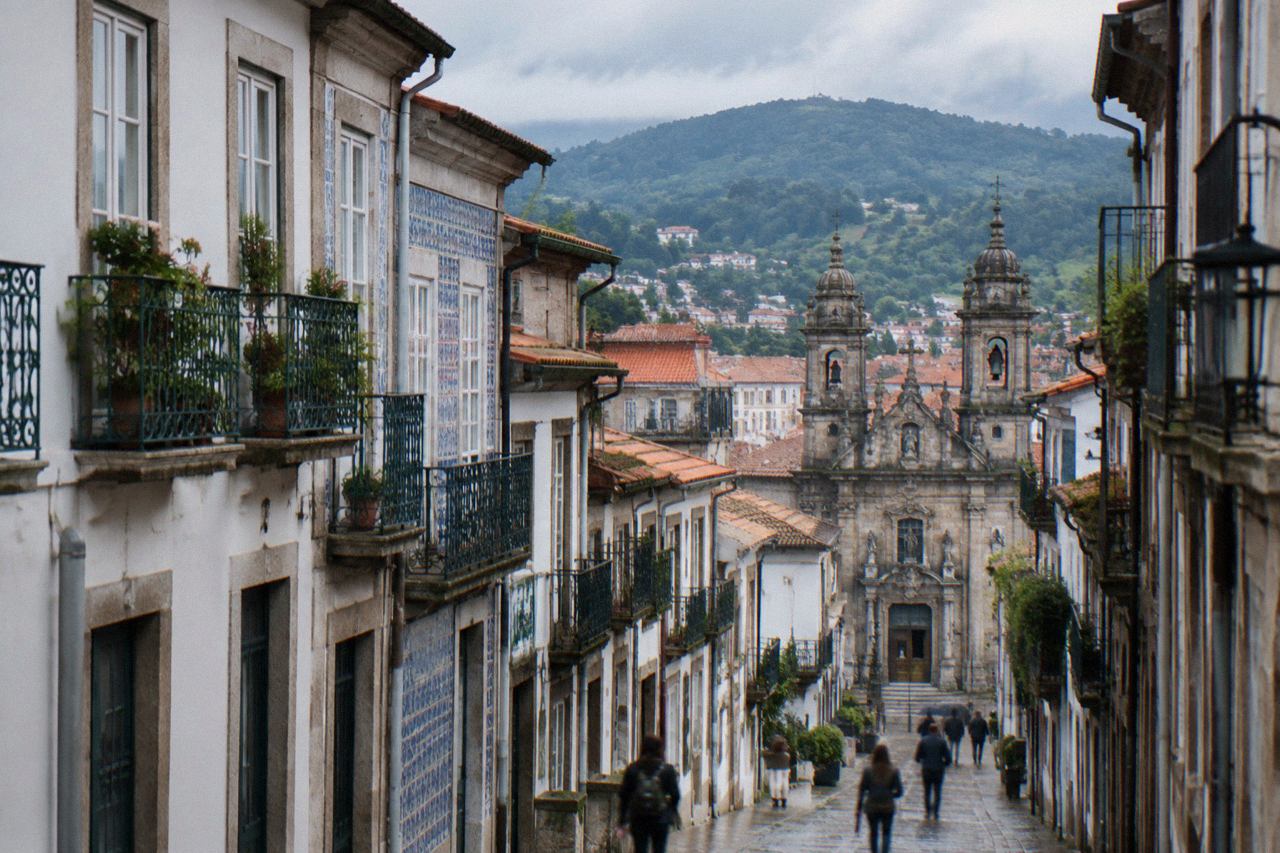
Braga, Portugal, is a city in the Minho region of northern Portugal, and it is the seat of both a municipality and a district that carry the same name. That triple naming is the reason a simple question like this one produces confusing search results: the district of Braga spreads far beyond the city and contains Guimarães, Barcelos, Famalicão and part of the Peneda-Gerês National Park, none of which is the city itself. The municipality of Braga counted 193,324 residents at the 2021 census, the only population figure the national statistics office has published for this page to quote. Everything below pins down the city, not the district.
Where Is Braga Located?
Braga is a city in northern Portugal, inland in the Minho region, and the administrative seat of the municipality of Braga, which the 2021 census recorded at 193,324 residents. It lies north of Porto, whose airport is the nearest major gateway, and the hilltop sanctuary of Bom Jesus do Monte, a UNESCO World Heritage property since 2019, rises on the eastern edge of the municipality. The historic centre is compact and walkable, ringed by the residential parishes that make up the rest of the concelho.
That is the short version. The slightly longer version is that Braga sits in a valley, with the sanctuary of Bom Jesus do Monte on one hillside and the Santuário do Sameiro and the Mosteiro de São Martinho de Tibães on others nearby, all of them still inside the municipality's boundaries. The city grew around its cathedral, the Sé de Braga, and the street pattern of the historic centre still bends around it. Visitors arriving by train come into the station on the western side and cross into the centre on foot in a few minutes, a layout that makes Braga unusually easy to explore without a car.
The name itself is old, and the question of what it means and how old the city really is has its own answer page, What Does Braga Mean In Portuguese?, for anyone whose curiosity runs deeper than geography. What matters for orientation is simpler: when a guide, a booking site or this page says Braga, it means this city and its municipality, not the wider district.
Where Is Braga In Portugal?
Braga sits in the far north of Portugal, in the Minho, the green strip of country between Porto and the Spanish border. The nearest major airport is Porto Airport, from which the Getbus coach runs direct to Braga in about 45 minutes. By train, Braga is the terminus of CP's urban line from Porto São Bento, a journey of a little over an hour, with roughly the same region's vineyards and small towns passing outside the window.
The Minho is Portugal's traditional northern province, and Braga is one of its two historic poles, the other being Guimarães. The two cities are close enough that visitors routinely ask Is It Better To Visit Braga Or Guimarães?, and the honest answer depends on whether the day belongs to Baroque churches or to a castle and a ducal palace. There is no direct train between them; the bus is the practical link, a detail that catches out plenty of travellers and has its own explanation at Is There A Train From Braga To Guimarães?.
Regionally, Braga makes a natural base. Peneda-Gerês National Park, Portugal's only national park, lies to the northeast, and the question Is Gerês National Park Worth Visiting? is answered emphatically by the waterfalls and granite villages packed into it. The Atlantic coast at Esposende and Póvoa de Varzim lies to the west, and the Spanish border region lies to the north and east. None of these are in the city, and only some are in the district, which is exactly the distinction the next section draws.
For a first visit, the city rewards a guide who knows the streets, and the trio below covers three good ways to see it.
How Do You Get To Braga?
Most visitors reach Braga through Porto. The Getbus coach runs direct from Porto Airport to Braga bus station in about 45 minutes, from 9.00 EUR one way, with departures spread across the whole day. From Porto's city-centre stations, CP's urban trains terminate at Braga on a line whose timetable has been valid since 26 July 2026, and the fastest Alfa Pendular from Lisbon covers the run in about three hours and twenty minutes.
The rail picture matters because Braga is a terminus, not a through station. Trains from the south end here, and the urban service from Porto São Bento and Porto Campanhã feeds the same platforms. A visitor heading onward to Guimarães or the coast changes mode, usually to a regional bus from the Central de Camionagem, where the intermunicipal lines to Guimarães, Ponte de Lima, Esposende and Póvoa de Varzim start. More of these guides are collected on Braga Travel Guide.
Curious about onward trains from Braga? Book a train or bus ticket here.
| Route | Best mode | Typical journey time | Note |
|---|---|---|---|
| Porto Airport to Braga | Getbus direct coach | About 45 minutes | From 9.00 EUR one way, runs daily |
| Porto São Bento to Braga | CP urban train | A little over an hour | Terminus of the line, timetable valid since 26 July 2026 |
| Lisbon to Braga | CP Alfa Pendular | About 3 h 20 min at fastest | Reservation required; promo fares from 8 EUR appeared for October 2026 |
| Braga to Guimarães | Regional bus (AITC line 101) | No rail link exists | Buses leave from Braga bus station |
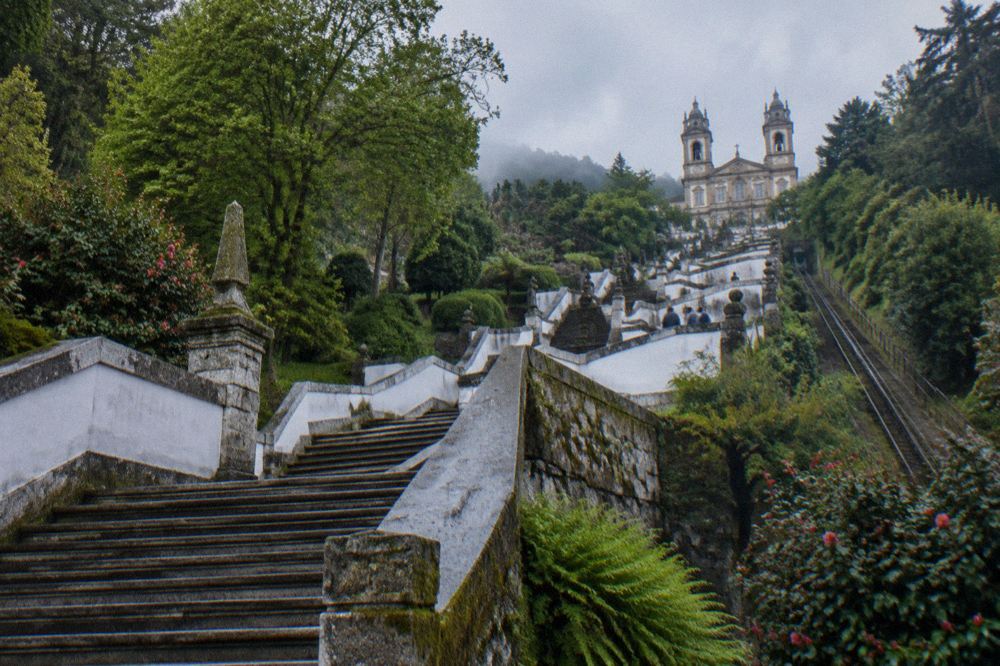
One practical point for anyone planning around the city itself: the Bom Jesus funicular has been out of service since 26 September 2026, with a replacement shuttle running every day between the Pórtico and the sanctuary, so check the operator's notice before promising anyone a ride. The stairway itself, 566 steps by the Confraria's count, remains open, and the full story is at How Many Stairs Are There In Bom Jesus Do Monte?.
What Sits Around Braga?
Inside the municipality, on the hills just outside the historic centre, stand Bom Jesus do Monte, the Santuário do Sameiro, the Falperra sanctuary and the Mosteiro de São Martinho de Tibães, all reachable by local bus. Beyond the municipality but within day-trip range lie Guimarães, the Peneda-Gerês National Park, Barcelos, Ponte de Lima and the Atlantic beaches at Esposende. Each is a separate place with its own identity, and none of them is Braga.
The hills deserve emphasis because first-time visitors often assume Bom Jesus is far out of town. It is not; TUB Line 2 runs from the centre to the Pórtico at the foot of the stairway, and the whole excursion fits comfortably into a half day. The monastery at Tibães, the mother house of the Portuguese Benedictine congregation, sits on another of these near hills, its church having reopened in March 2026 after a period closed for conservation works.
Beyond the municipality, the pick of the region depends on the day. Barcelos holds its famous Thursday market, Ponte de Lima claims Portugal's oldest chartered fair town status along a riverside setting, and the Gerês park carries the waterfalls. Deciding how long all this deserves is a planning question answered at How Many Days Do You Need In Braga, Portugal?, and whether the city justifies the trip from Porto at all is settled at Is Braga Worth A Day Trip From Porto?.
For travellers who prefer to have the geography explained while walking it, the flexible historic-centre walking tour below is built exactly for that.
Why Do Searches For Braga Get Confusing?
Because four different things are called Braga. The city is one; the district, which contains Guimarães, Barcelos, Famalicão and part of the Gerês park, is another; the surname Braga is a third; and SC Braga, the football club, is a fourth. A search that types only the name can return any of them, which is why this page, and this site's other answer pages, always specify the city in northern Portugal.
The district is the biggest source of confusion. It is an administrative area, one of Portugal's eighteen districts, and it is much larger than the city: a page about the district's attractions could legitimately describe Guimarães' castle or the Gerês park, neither of which a visitor to the city of Braga can see from its streets. The football club adds a second layer, since match results and transfer news dominate the name's news coverage for much of the year, and the club's home ground, the Estádio Municipal, sits inside the municipality on its northern side.
None of this ambiguity makes Braga hard to find. It makes Braga hard to search for, which is a different problem, and one solved by adding a single word, Portugal, or by trusting a source that does it for you. For what all this geography adds up to in terms of sights and food, see What Is Braga, Portugal Famous For?, and for the budget question, Is Braga, Portugal Expensive? covers it plainly. The three tours below are the site's pick of ways to turn the map into a walk.
Common Questions About Where Braga Is Located
Where is Braga located?
Braga is located in northern Portugal, inland in the Minho region, north of Porto. It is a city and the seat of a municipality of 193,324 residents as of the 2021 census, distinct from the larger district of the same name.
Where is Braga in Portugal?
In the country's far north. Braga sits in the Minho, between Porto to the south and the Spanish border to the north and east, with the Atlantic coast to the west and the Peneda-Gerês National Park to the northeast.
Is Braga near Porto?
Yes. The Getbus coach links Porto Airport to Braga in about 45 minutes, and CP's urban train runs from Porto São Bento to Braga in a little over an hour, making Porto the practical gateway for almost every visitor.
Is Braga the same as the district of Braga?
No. The district is a much larger administrative area that contains the city of Braga plus Guimarães, Barcelos, Famalicão and part of the Peneda-Gerês National Park. The city is the district's capital but only a fraction of its area.
What airport do you fly into for Braga?
Porto Airport (OPO). Getbus runs a direct, non-stop coach from the airport to Braga bus station, from 9.00 EUR one way, with departures spread across the day and the journey taking about 45 minutes.
Is Braga close to Spain?
The Minho region reaches the Spanish border to the north and east of Braga, and cross-border towns such as Valença and Monção are established day trips from the city. The border direction is certain even where published driving times are not, so plan the crossing by checking the regional bus timetables.
Braga Travel Guide keeps every location fact on this site pinned to the city and its municipality, so the Braga on any page here is always the one in northern Portugal.