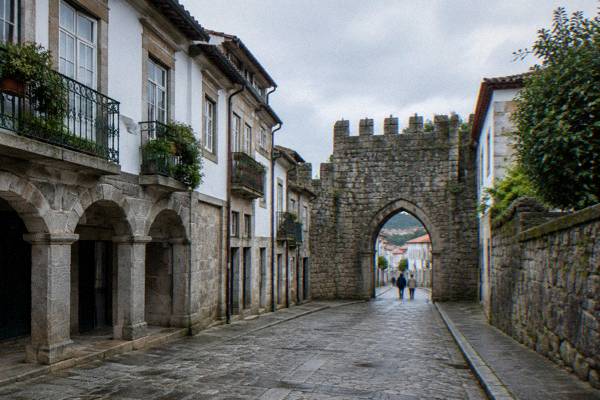
What Are The Most Beautiful Towns Near Porto?
The most beautiful towns near Porto, from Braga and its Bom Jesus do Monte sanctuary to Guimarães, Viana do Castelo, Ponte de Lima and the Gerês mountains, with verified prices, transport and planning advice.
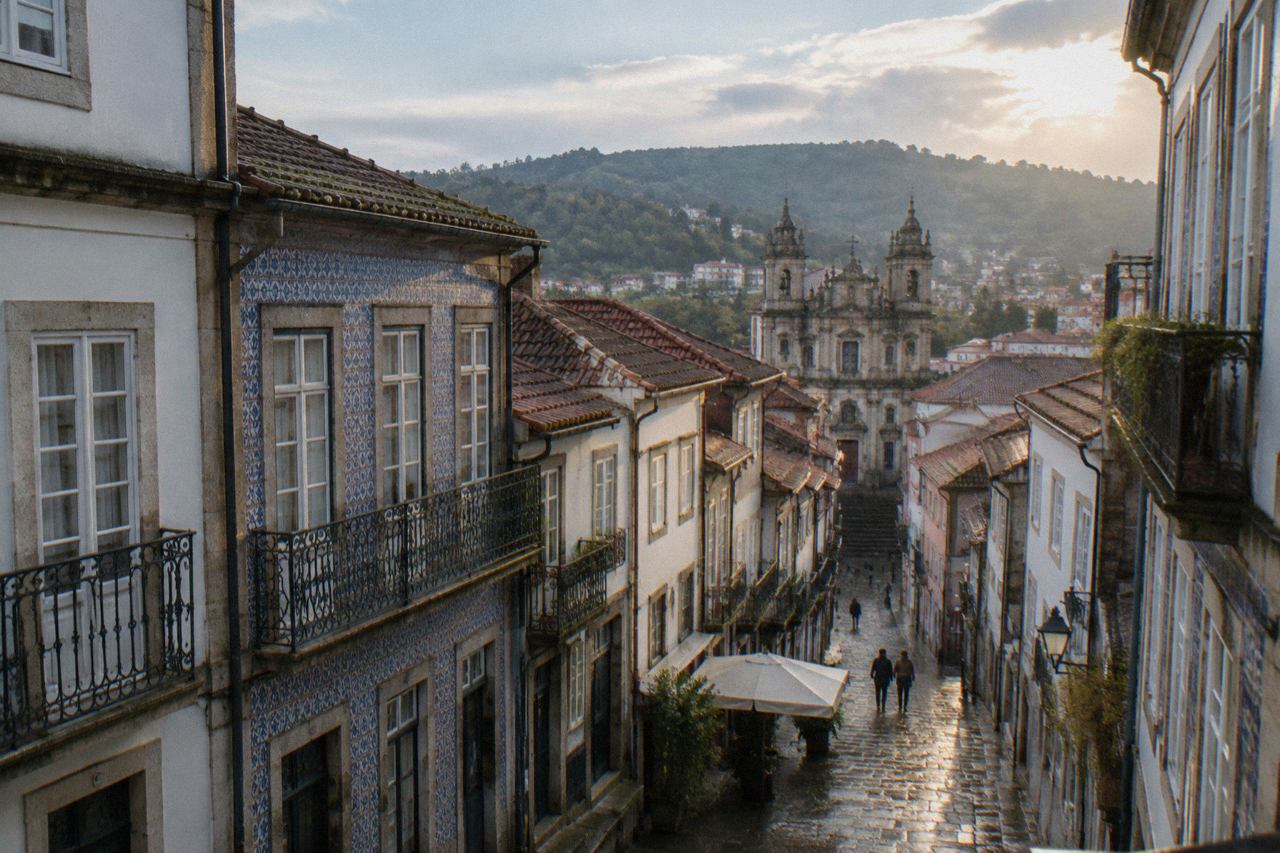
Porto's granite riverside and port-wine lodges deserve their fame, but the country north of the city holds some of the loveliest townscapes in Portugal. Braga, the city in the Minho region that gives this site its name, sits on the main rail line out of Porto and pairs a baroque historic centre with the hillside sanctuary of Bom Jesus do Monte. Around it lie Guimarães, Viana do Castelo, Ponte de Lima, Barcelos and the mountain villages of the Peneda-Gerês National Park, each close enough for a comfortable day out. This page sets out which towns reward the journey most, what each one costs to visit, and how to string them together.
What Are The Most Beautiful Towns Near Porto?
The most beautiful towns near Porto are Braga and Guimarães in the Minho interior, Viana do Castelo and Vila do Conde on the coast, Ponte de Lima and Barcelos in the Lima and Cávado valleys, and the spa village of Caldas do Gerês inside the Peneda-Gerês National Park. Braga and Guimarães are the easiest to reach, both roughly an hour from Porto by train or bus, and both carry enough churches, palaces and viewpoints to fill a full day each.
Braga and Guimarães anchor any answer to this question because they combine beauty with practicality. Braga's compact historic centre runs from the Arco da Porta Nova down Rua do Souto to the Sé de Braga, whose three visit routes cost 3.00 EUR each or 7.00 EUR combined, per the cathedral's own ticket-office page. Guimarães answers with a medieval castle, a ducal palace and a UNESCO-listed old town of granite lanes. The two cities sit roughly forty minutes apart by bus on AITC line 101, and there is no direct train between them, so most visitors do one per day or link both on a guided outing.
The coastal and valley towns come next. Viana do Castelo pairs a pilgrim square with a hilltop sanctuary above the Lima estuary. Ponte de Lima, reached on AITC line 105 from Braga, is built around Portugal's most photographed medieval bridge. Barcelos, on the train line via a change at Nine, holds a weekly market and the rooster legend every souvenir shop in the country trades on.
Here is how the leading candidates compare, using only figures the operators and municipal sources publish.
| Town | Signature sights | Verified entry costs | Getting there without a car |
|---|---|---|---|
| Braga | Sé de Braga, Bom Jesus do Monte, Sameiro sanctuary | Cathedral routes 3.00 EUR each, 7.00 EUR combined; Sameiro precinct free, dome viewpoint 2.00 EUR | Direct train from Porto São Bento, "a few euros", priced by zone |
| Guimarães | Castle, Paço dos Duques, UNESCO old town | Historic-centre streets free to wander | AITC bus 101 from Braga; no direct train |
| Viana do Castelo | Praça da República, Santa Luzia sanctuary | Old town free to wander | Rede Expressos bus from Braga bus station |
| Ponte de Lima | Medieval bridge, riverside gardens | Old town free to wander | AITC bus line 105 from Braga |
| Barcelos | Thursday market, Torre da Porta Nova | Market free | Train from Braga with a change at Nine |
| Caldas do Gerês | Waterfalls, spa village, trailheads | Park entry free | AITC bus line 201 from Braga |
Which Towns Near Porto Are Worth Visiting?
Every town on the list above is worth a visit, but Braga, Guimarães and the Peneda-Gerês National Park repay a full day each, while Viana do Castelo, Ponte de Lima and Barcelos work best as half-day stops. Braga rewards the most time: the Bom Jesus do Monte stairway counts 566 steps by the Confraria's own tally, and the sanctuary, the cathedral and the museums together fill a day. Guimarães is the strongest single old town. Gerês is the pick for mountains and water.
Braga's case rests on density. Within a walkable centre sit the cathedral with its Treasury-Museum, the Museu dos Biscainhos at 7.50 EUR normal admission, the Museu de Arqueologia D. Diogo de Sousa at 5.00 EUR, and the baroque stairway at Bom Jesus do Monte, a UNESCO World Heritage property since 2019. The funicular that normally climbs beside the stairway is out of service, so the 566 steps, a replacement shuttle, or TUB Line 2 are the ways up. The Braga day trip from Porto itinerary covers the sequencing in detail.
Guimarães markets itself as the birthplace of Portugal, and its old town delivers the strongest single impression in the region: granite squares, the castle on the hill, and the Paço dos Duques. The Guimarães worth visiting question gets a fuller answer elsewhere on this site, but the short version is that the old town alone justifies the journey.
Gerês belongs on the list for a different reason. The national park holds waterfalls, mountain roadways and river beaches, and the whether Gerês is a good day trip from Porto question matters here: it is, but a long one, and the mountain towns inside the park are villages rather than sightseeing cities. Park entry itself is free.
If you would rather not plan the trains and buses yourself, the From Porto: Braga & Guimarães Tour with Bom Jesus & Castle bundles both cities into one nine-hour day, Check availability if that shape of day suits you.
How Do You Fit Braga And Guimarães Into One Day?
It is realistic to see Braga and Guimarães in one day, and the practical route is Braga in the morning, Guimarães in the afternoon, travelling between them on AITC bus line 101, with the Alfa Pendular from Porto reaching Braga in about forty minutes. Independent travellers should start from Porto São Bento on the urban train, priced by zone at a few euros, and use the bus link between the two cities, since no direct train exists. A guided day trip removes the connection risk entirely.
Rather than plan the trains and buses yourself? Book a Braga and Guimarães day trip here. (Starts in Porto)
The one-day version of the Minho works because both cities are compact. A morning in Braga can cover the cathedral, Rua do Souto and, with an early start, the Bom Jesus sanctuary on TUB Line 2, whose day ticket costs 3.35 EUR. The afternoon belongs to Guimarães' castle quarter. The weak point is the intercity link: the bus runs on a regional timetable, and a missed connection eats the afternoon.
That is the honest argument for the organised option. The Braga and Guimarães in one day itinerary gives the independent version hour by hour, and the better to visit Braga or Guimarães page helps if only one city fits your calendar.
The organised option is not the only way to do this, but it is the one that removes the two failure points of the independent plan: the intercity bus connection and the Bom Jesus ascent. For travellers who value a fixed itinerary over schedule freedom, it is the shape of day most likely to deliver both cities in full.
What About The Coastal And Mountain Towns?
The coastal pick is Viana do Castelo, whose old town and Santa Luzia hilltop sanctuary sit above the Lima estuary, reached by Rede Expressos bus from Braga. The mountain pick is Caldas do Gerês on AITC line 201, the gateway village for the Peneda-Gerês National Park's waterfalls and trails. Between them, Ponte de Lima offers the medieval bridge and riverside walks on AITC line 105, and Barcelos holds its famous Thursday market, reached by train with a change at Nine.
Viana do Castelo is the most complete coastal town in the north: a pilgrimage church, a praça ringed with granite arcades, and a working port. Ponte de Lima trades sea for river and is at its best out of season, when the bridge and gardens are quiet. Barcelos is a scheduling decision more than a destination: the Thursday market is the event, and the rest of the week the town is a pleasant stop between Braga and the coast.
Gerês is the different proposition. The park's entry is free, summer car access to the Mata de Albergaria section is limited, and the village of Caldas do Gerês functions as the base for trails and waterfalls. For transport detail, the how to get from Porto to Gerês page covers the bus options, and the Peneda-Gerês National Park guide covers what to do once there.
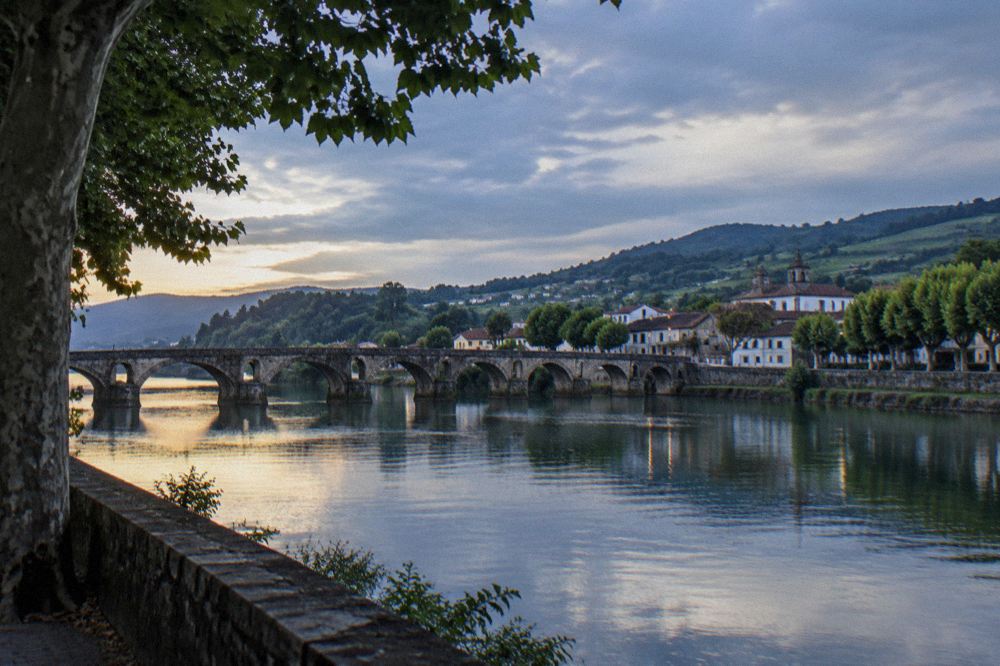
When Is The Best Time To Visit The Towns Around Porto?
The best months are May, June and September, when IPMA's 1991 to 2020 normals for the Braga / Merelim station show mean highs of 23.0 C, 26.1 C and 26.9 C with 89.8 mm, 40.6 mm and 67.6 mm of rain. July and August are the driest, 27.9 mm and 34.6 mm, but the busiest. October is the wettest month on the same series at 197.8 mm, and December and January combine cold nights with 13 rain days each.
The numbers matter more here than in most of Portugal because the Minho is the country's wettest corner. October's average of 197.8 mm at the Braga station is more than seven times July's 27.9 mm, and rain days of one millimetre or more run 12 to 13 a month from October through January. A late-autumn trip can still be beautiful, but it needs an indoor plan: Braga's museums, covered by the rainy day guide, are the region's best wet-weather set.
Spring carries one scheduling prize. Semana Santa in Braga, 29 March to 5 April in 2026, is the region's biggest event, with torchlit processions through the historic centre, and the Semana Santa guide explains how to plan around it. June brings the São João festival, 17 to 24 June in 2026, peaking on the night of 23 June into the municipal holiday.
| Month | Mean daily high (C) | Rain (mm) | Rain days 1 mm+ | Verdict for town-hopping |
|---|---|---|---|---|
| May | 23.0 | 89.8 | 8.9 | Excellent: warm, green, pre-crowd |
| June | 26.1 | 40.6 | 5.7 | Excellent, but São João week is busy |
| July | 28.2 | 27.9 | 4.0 | Driest, warmest, most crowded |
| August | 28.7 | 34.6 | 3.8 | Peak heat and peak crowds |
| September | 26.9 | 67.6 | 6.2 | Excellent: sea still warm, crowds gone |
| October | 22.2 | 197.8 | 12.0 | Wettest month; pack for rain |
One cost note that applies to every town in the region: Braga levies a municipal tourist tax of 1.55 EUR per person per night, up to four nights, all year, charged through your accommodation. Guimarães levies 1.50 EUR per night for up to two nights in season, and Porto 3.00 EUR per night for up to seven. None of these appear in the room price at booking, so budget a few euros per night on top.
Common Questions About The Most Beautiful Towns Near Porto
What are the most beautiful towns near Porto?
Braga and Guimarães lead the list, followed by Viana do Castelo on the coast, Ponte de Lima on the river Lima, Barcelos with its Thursday market, and the mountain villages of the Peneda-Gerês National Park. All lie in or beside the Minho region north of Porto and are reachable by train or bus.
What is the most beautiful town near Porto?
Guimarães has the strongest single old town, a UNESCO-listed core of granite squares beneath its castle, while Braga offers the richer full-day mix of cathedral, museums and the Bom Jesus do Monte sanctuary. If only one fits your trip, choose Guimarães for architecture and Braga for atmosphere and scale.
Which towns near Porto are worth visiting?
Braga, Guimarães, Viana do Castelo, Ponte de Lima, Barcelos and Caldas do Gerês are all worth visiting. Braga and Guimarães justify a full day each; the others work well as half-day stops or as stops on a coastal loop.
Can you visit Braga and Guimarães on the same day?
Yes. The two cities are linked by AITC bus line 101, and a Braga morning followed by a Guimarães afternoon is a standard one-day plan. There is no direct train between them, so the bus timetable, or a guided day trip that handles the transfer, is the deciding factor.
How do you get from Porto to Braga without a car?
A direct urban train runs from Porto São Bento to Braga, priced by zone at a few euros, and the Alfa Pendular covers the same route in about forty minutes from 17.00 EUR in second class. From Porto Airport, Getbus runs a direct coach to Braga bus station from 9.00 EUR. The Porto to Braga guide has the full detail.
Do you need a car for the towns around Porto?
Not for Braga, Guimarães or Barcelos, which sit on rail or frequent bus links. A car helps for the Peneda-Gerês National Park and for combining coastal towns like Viana do Castelo and Ponte de Lima in one day, though AITC regional buses serve both from Braga.
The honest summary: base yourself in Porto or Braga, give Braga and Guimarães the fullest days, and let the season decide between the coast and the mountains. Whichever towns make your shortlist, Braga Travel Guide carries a dedicated page for each of them, with verified prices and transport detail for every stop.